Opakapaka (Pink Snapper) Habits
Aloha, fellow anglers! If you've spent any time on the water chasing Hawaii's prized bottomfish, you know the opakapaka, or pink snapper, is one of the most sought-after catches. But these beautiful fish can be notoriously elusive, making them a true challenge for even seasoned fishermen. It's not just about dropping a line in deep water and hoping for the best; understanding the intricate habits of opakapaka is the real secret to consistently finding them. This guide is going to pull back the curtain on these deep-dwelling beauties, helping you unlock the mysteries of their underwater lives so you can better predict their movements and finally get them into your cooler.
Understanding Opakapaka: More Than Just a Pretty Face
Opakapaka are more than just a delicious plate lunch item; they're fascinating creatures perfectly adapted to their deep-water environment. When you're out on the boat, looking down into those impossibly blue depths, it's easy to forget there's a whole world thriving hundreds of feet below. Understanding the "who" and "where" of opakapaka is the first step to successful targeting.
What Exactly is an Opakapaka? Physical Characteristics and Taxonomy
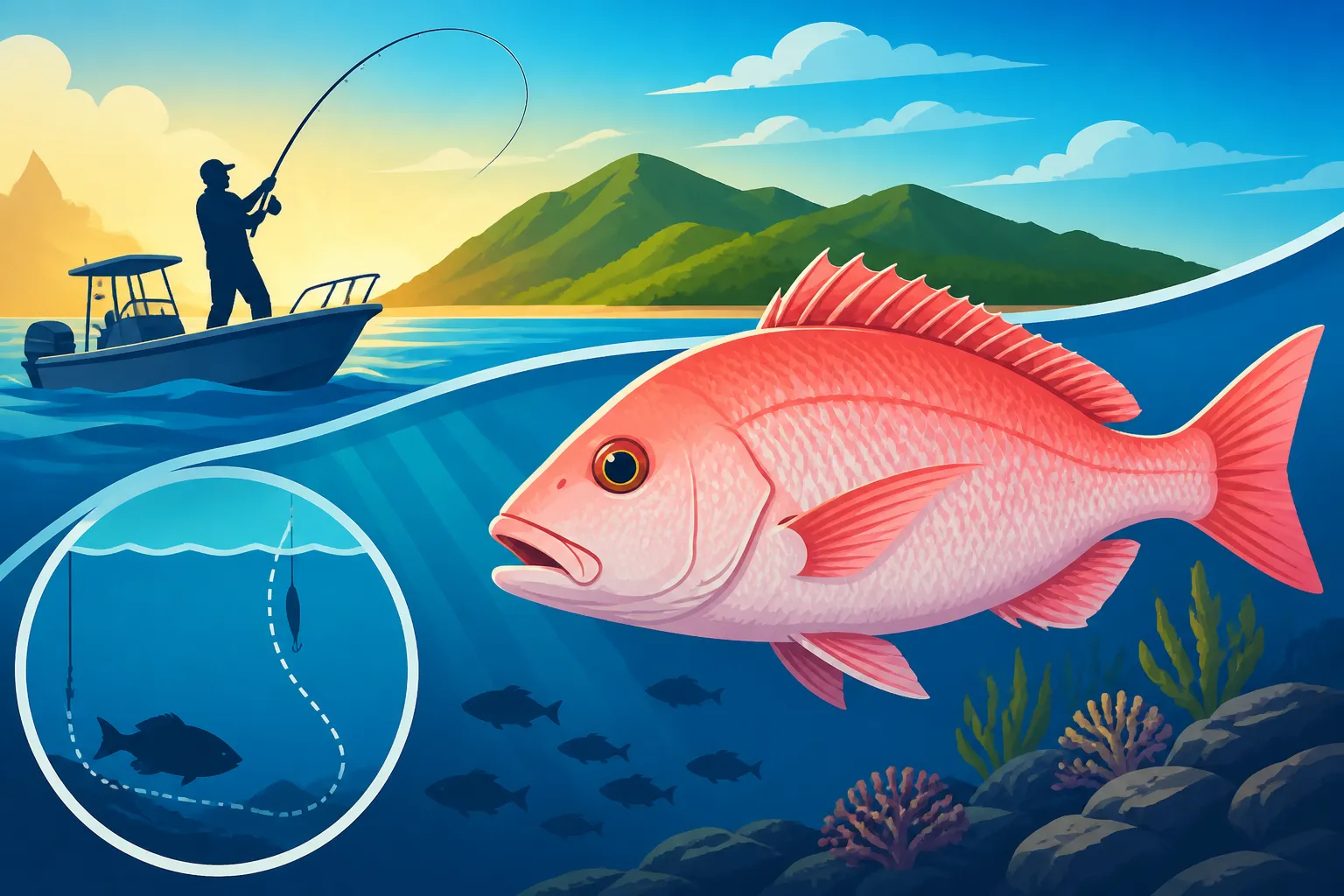
Let's talk about what makes an opakapaka an opakapaka. Scientifically, they belong to the snapper family (Lutjanidae), specifically Pristipomoides filamentosus. The name "pink snapper" comes from their distinctive, gorgeous rose-pink to reddish coloration, often fading to a silvery-white belly. They have large eyes, which are a tell-tale sign of a deep-dwelling species, helping them gather what little light penetrates to their preferred depths. Their body is streamlined, built for efficiency in the water column, and they possess a forked tail that aids in quick bursts of speed.
When you pull one up from the depths, you'll notice their relatively small mouths, but don't let that fool you—they're incredibly effective predators. While they might not be as aggressive-looking as some of our pelagic species, their design is perfectly suited for ambushing prey in the low-light environment they inhabit. Knowing these physical traits not only helps you identify your catch correctly but also gives you clues about their lifestyle. For instance, those big eyes tell us they rely heavily on sight, even in dim conditions, which can influence your bait and lure choices.
Where Opakapaka Call Home: Habitat and Depth Preferences
Now for the crucial part: where do these fish actually live? Opakapaka are truly creatures of the deep, typically found dwelling on hard bottom structures, rocky ledges, seamounts, and the outer slopes of reefs. We're talking about depths generally ranging from 180 to 600 feet, sometimes even deeper. They love areas where there's a good mix of rock and sand, providing them with shelter and ambush points. Think of it as their version of a cozy home with a built-in pantry.
You won't find them frolicking in the shallow reef flats or cruising close to shore like a papio. These fish prefer the cooler, stable temperatures of the deeper ocean. They're often associated with specific underwater topographies, like the edges of drop-offs or underwater canyons. This is why having a good fish finder is absolutely essential for bottomfishing in Hawaii. You're not just looking for "fish," you're looking for the right kind of structure that signals a potential opakapaka hangout. Knowing these preferences helps you narrow down your search immensely, preventing you from wasting precious bait and time over barren sand flats. Bottomfishing in Hawaii is an art form, and understanding their preferred habitat is your masterpiece's first stroke.
The Daily Grind: Feeding and Foraging Habits
Opakapaka, like any other living creature, spend a good portion of their lives focused on finding their next meal. Understanding what they eat and when they're most active can dramatically improve your chances of a successful trip. It's all about thinking like the fish, right?
What's on the Opakapaka Menu: Dietary Preferences
So, what makes an opakapaka say "yum"? These fish are primarily piscivores, meaning fish eaters, but they're not too picky about getting some crustaceans and cephalopods in their diet either. Their main diet consists of smaller reef fish, squids, and various types of shrimp and crabs that dwell in the deep water. They're opportunistic predators, meaning if it swims by and looks edible, they'll likely take a swipe at it.
For anglers, this translates directly into bait selection. Fresh squid, cut fish (like pieces of opelu or akule), or even whole small fish can be incredibly effective. The key is to offer something natural and appealing. They're not going to chase down a flashy lure as vigorously as a mahimahi might. They're more about that slow, tempting presentation right in their strike zone. Experimenting with different deep-sea baits available at your local tackle shop, or even those online at retailers like Amazon, can reveal what they're keying in on during a particular day or season. Don't forget, presentation matters—a fresh, natural bait drifting enticingly near the bottom is often irresistible. If you're wondering about other deep dwellers, you might find it helpful to compare with Onaga (Ruby Snapper) Habits, as there's some overlap in their diets.
When Opakapaka Hunt: Optimal Feeding Times
Unlike some surface feeders that are highly active at dawn and dusk, opakapaka, living in the perpetually dim environment of the deep, don't follow the same rigid sun-driven schedule. However, they do have periods of increased activity, often influenced more by currents, tides, and subtle pressure changes than by the position of the sun. Many experienced bottom fishermen report that opakapaka tend to feed more actively during periods of stronger current, which can bring a buffet of smaller prey right to their doorstep.
While you can catch them at any time of day, some anglers swear by early mornings or late afternoons for deep dropping, noting that the overall ocean activity seems to kick in during those windows. The important thing is to be persistent and pay attention to your sonar for signs of activity. If you're seeing bait balls or other fish holding on the structure, chances are the opakapaka aren't far behind. Strong tides can sometimes be a double-edged sword: while they bring food, they can also make it harder to hold bottom, requiring heavier weights. It's a delicate balance, but understanding these subtle shifts will give you a significant advantage.
Life in the Deep: Social Behavior and Spawning
Beyond just eating, fish have lives! Opakapaka exhibit certain social behaviors and, of course, they reproduce to keep their populations healthy. Knowing these aspects of their lives helps us appreciate them more and fish responsibly.
School's Out (or In!): Social Dynamics
Opakapaka are often found in aggregations, which many anglers refer to as schools. While they might not school in the dense, tightly packed formations you see with akule or opelu, they do tend to congregate in specific areas, especially around prime feeding and shelter structures. This is fantastic news for anglers because if you find one opakapaka, there's a very good chance there are more in the vicinity. This is where your sonar becomes your best friend; identifying these aggregations on your screen means you've hit a potential jackpot.
However, these aggregations can be fluid. They might disperse and reform based on feeding opportunities or perceived threats. When you hook up with one, try to get your lines back down quickly because the bite might last only for a short window. They're not necessarily competitive in the way some pelagics are, but they definitely share space. Think of them more like a casual dinner party than a mosh pit. Understanding this tendency to congregate reinforces the importance of precise boat positioning and repeatedly hitting those productive spots. It’s not uncommon to fish the same rock or ledge for Opakapaka (Pink Snapper) Habits year after year and find them in roughly the same area.
The Next Generation: Reproductive Habits and Seasons
Reproduction is vital for the health of any fish stock, and opakapaka are no exception. They typically reach sexual maturity when they are a few years old, and their spawning usually occurs during specific times of the year, often influenced by water temperature and lunar cycles. In Hawaiian waters, opakapaka are thought to have extended spawning periods, with peak activity sometimes observed during the warmer months, though exact timings can vary. During spawning, they gather in larger numbers in certain areas, increasing the chances of successful fertilization.
For anglers, understanding spawning seasons is important for responsible fishing. While there usually aren't specific closed seasons for opakapaka like there are for some other species, being aware of when they're reproducing can inform your fishing practices. Catch and release, especially of larger, egg-bearing females, can contribute to sustaining healthy populations. It's all part of being a good steward of our ocean resources. Knowing these patterns helps ensure that future generations can also enjoy the thrill of catching these magnificent fish.
Factors Influencing Opakapaka Behavior
Fishing for opakapaka isn't as simple as dropping a line. Their behavior is intricately linked to the complex dynamics of the deep ocean. Ignoring these environmental cues can leave you scratching your head while others are reeling in fish.
Ocean Currents and Water Temperature
Currents are a huge factor in deep-water fishing, and opakapaka are no strangers to their influence. Strong currents can bring a rich supply of plankton and baitfish, creating a feeding frenzy, but they can also make it incredibly challenging to get your gear down and hold bottom effectively. Opakapaka tend to position themselves strategically in relation to currents, often lurking on the leeward side of structures, using the current to bring food to them while expending minimal energy.
Water temperature also plays a role, albeit less dramatically than in shallower waters. The deep ocean is generally more stable, but even subtle shifts can influence where baitfish congregate, and consequently, where the opakapaka will be. We're talking about differences of just a few degrees that can sometimes mean the difference between an empty cooler and a full one. Keep an eye on your boat's temperature gauge if it has a deep-water sensor, and pay attention to what the local commercial guys are saying about current patterns. These insights are golden.
Moon Phases and Tides
The moon's gravitational pull on our oceans creates tides, and tides create currents, even in the deep. Many local fishermen have theories about how moon phases affect bottomfishing. Some swear by the new moon or full moon cycles, believing that the stronger tidal flows during these periods stir up the bottom and make opakapaka more active. Others find success during quarter moon phases when currents might be less extreme, allowing for a more stable presentation of bait.
While there's no hard and fast rule that guarantees success based on the moon alone, it's certainly a factor worth considering in your planning. Combine moon phase insights with knowledge of local tide charts. A strong outgoing tide, for instance, might create specific current lines or eddies that concentrate bait and, therefore, opakapaka. It's another piece of the puzzle, and often, the more pieces you fit together, the clearer the picture becomes. For more on how these things affect fish, check out Best Time of Year to Fish in Hawaii.
Pressure Changes and Weather Patterns
Just like how changes in atmospheric pressure can make us feel a little off, they can also influence fish behavior, even in the deep. A sudden drop in barometric pressure, often associated with approaching storms or fronts, can sometimes make fish less active or push them into deeper, more stable water. Conversely, stable high-pressure systems often coincide with consistent fishing. While you can't control the weather, you can certainly be aware of it.
Heavy weather on the surface, even if it doesn't directly affect the fish at 400 feet, certainly affects you and your ability to fish effectively. Choppy seas make it difficult to maintain boat position, feel subtle bites, and safely deploy and retrieve heavy gear. Many successful bottomfishing trips happen on calm days precisely because the conditions allow anglers to work their spots efficiently and comfortably. Always check the marine forecast before heading out to those deep-water grounds.
Targeting Opakapaka: Using Their Habits to Your Advantage
Now for the actionable stuff! Knowing all about opakapaka habits is great, but how do you actually translate that into more fish in the boat? It all comes down to leveraging what we've learned.
Best Baits and Rigs Based on Diet
Since opakapaka love small fish, squid, and crustaceans, your bait choice is critical. Fresh dead squid is a perennial favorite, often cut into strips or left whole if small enough. Cut baits from local fish like opelu, akule, or even mahimahi belly strips can be incredibly effective, emitting strong scent trails in the deep. For those really deep drops, some anglers even use live baits like small mackerel or akule, though keeping them alive on the way down is a challenge.
When it comes to rigs, the classic deep-drop rig usually consists of multiple hooks (often two to three) spaced above a heavy sinker. A typical setup might involve a three-way swivel or dropper loop rig, with heavy mono or fluorocarbon leader material (think 80-150 lb test, because you never know what else might bite down there!). Circle hooks are often preferred as they promote jaw hook-ups, which are better for fish health if you're releasing, and they're incredibly effective at catching these bottom nibblers. You can find pre-tied deep-drop rigs or components to tie your own on Amazon or at any good tackle shop. For targeting other deep dwellers, you might consider similar setups, like those discussed for Opakapaka (Pink Snapper) Habits.
| Habit Category | Specific Behavior/Preference | Angler's Strategy |
|---|---|---|
| Habitat | Deep water (180-600 ft), hard bottom, ledges, seamounts | Use reliable fish finder to locate structure; target specific contours. |
| Diet | Small fish, squid, shrimp, crabs (piscivorous & opportunistic) | Use fresh squid, cut fish (opelu, akule), or whole small fish as bait. |
| Feeding Time | Influenced by currents and tides; generally active any time in dim light | Fish during periods of moderate current; monitor sonar for activity. |
| Social | Aggregate around prime structure; often found in "schools" | If you catch one, drop back down quickly; target known productive spots. |
| Reproduction | Extended spawning periods, often warmer months | Practice responsible catch and release, especially for large females. |
| Environmental | Affected by currents, subtle temp changes, moon phases, pressure | Pay attention to marine forecasts, tide charts, and local knowledge. |
Locating Prime Opakapaka Territory
This is where your investment in good electronics pays off. A high-quality fish finder is non-negotiable for opakapaka fishing. You're not just looking for "blips" on the screen; you're actively searching for specific underwater topography. Look for sudden drops, ledges, pinnacles, or areas where the bottom transitions from soft sand to hard rock. These are the highways and neighborhoods where opakapaka reside.
Once you find a promising spot, mark it on your GPS. Then, it's about making precise drifts over that structure. You'll often find that opakapaka hold in very specific "lanes" or "pockets" along a ledge. If you get a bite, try to replicate that exact drift. The more you explore and mark these areas, especially along the deeper edges of the FAD buoys or around known seamounts, the more consistent your catches will become. Remember, fish don't move just for the sake of it; they're on these structures for food and shelter. Finding their address is half the battle. If you're wondering about deep-drop techniques, check out Jigging for Bottomfish in Hawaii for some ideas.
Essential Gear for Deep-Dropping
Deep-dropping for opakapaka requires specialized gear that can handle the immense pressures and weights involved. First, you'll need a stout rod with a powerful backbone and a sensitive tip, capable of detecting subtle bites hundreds of feet down. Paired with this, a conventional reel with a strong drag system and high line capacity is essential. Many anglers opt for electric reels for the sheer convenience of not having to crank up hundreds of feet of line and a heavy sinker repeatedly throughout the day. While an electric reel is an investment, it makes the experience much more enjoyable and less physically taxing.
Your main line should be braided, typically 80 to 150 lb test, due to its minimal stretch, which provides superior sensitivity and power. This also allows for thinner diameter lines, cutting through the water and current better. You'll need plenty of heavy lead sinkers, ranging from 1 to 5 lbs or even more, depending on the depth and current. Don't skimp on terminal tackle either: use robust swivels, heavy-duty hooks, and quality leader material. Having a good set of gloves for handling line and fish, and a sturdy gaff or net, will complete your setup. Investing in the right tools, whether from a local outfitter or an online store like Amazon, ensures you're prepared for the fight these deep-water fish can give you.
Disclaimer
This article is for general informational purposes only and does not constitute professional advice. Laws, prices and regulations vary by location and change over time. Consult a qualified professional for guidance on your specific situation.