Jigging for Bottomfish in Hawaii
The thrill of chasing big game pelagics off Hawaii's coasts is undeniable, but sometimes, the deep, dark ledges and pinnacles hold an equally compelling secret: a world of delicious and challenging bottomfish. Many anglers, especially those new to Hawaii, find themselves scratching their heads when it comes to consistently hooking these elusive deepwater dwellers. It’s not just about dropping a line; it’s a nuanced dance of gear, technique, and understanding the ocean's intricate structure. This guide will take a deep dive into the art of jigging for Hawaii's prized bottomfish, helping you unlock the secrets to success in these productive yet demanding waters.
Understanding Hawaii's Bottomfish and Their Habitat
Before you can even think about dropping a jig, you need to understand the incredible diversity of Hawaii's bottomfish and where they like to hang out. These aren't your shallow-water reef fish; we're talking about species that often inhabit depths hundreds of feet down, living in a world of immense pressure and unique ecosystems. Targeting them requires a specific approach because their behavior is intrinsically linked to the underwater topography.
Key Species You'll Encounter
Hawaii is renowned for its diverse deepwater bottomfish, many of which are highly sought after for their delectable flavor and fighting prowess. The main stars of the show when jigging are often the various snappers and groupers. You'll commonly be targeting opakapaka (pink snapper), known for its vibrant pink hue and delicate, flaky white meat. These schooling fish often congregate around rocky structures in depths ranging from 150 to 600 feet. Then there's the prized onaga (ruby snapper), identifiable by its striking red color and elongated tail. Onaga tend to be more solitary and prefer deeper, rougher bottoms, sometimes found well past 600 feet, making them a true deep-drop challenge.
Beyond these, you might also hook ehu (red snapper), kalekale (silverjaw snapper), and lehi (squirrelfish snapper), each with their own preferred depths and habitats, though often overlapping with opakapaka grounds. Deeper still, you could encounter hapu'upu'u (grouper), a powerful fighter that can grow to impressive sizes, usually dwelling around ledges and caves at similar depths to onaga. Understanding the specific habits and preferred depths of these species, as detailed in our guide on Bottomfish Species of Hawaii, will significantly improve your chances of success. Each species has a slightly different personality, and knowing them is half the battle.
Deepwater Structures and How Fish Relate to Them
Hawaii's underwater landscape is a dramatic extension of its volcanic origins, featuring steep drop-offs, submerged seamounts, pinnacles, ledges, and deep canyons. These structures are not just random rocks; they create complex ecosystems that provide shelter, feeding grounds, and current breaks for bottomfish. For instance, opakapaka often school along the edges of deep ledges or over broad, flat rocky bottom areas where currents bring food. Onaga, on the other hand, frequently prefer more isolated pinnacles or the steepest parts of seamounts where they can ambush prey.
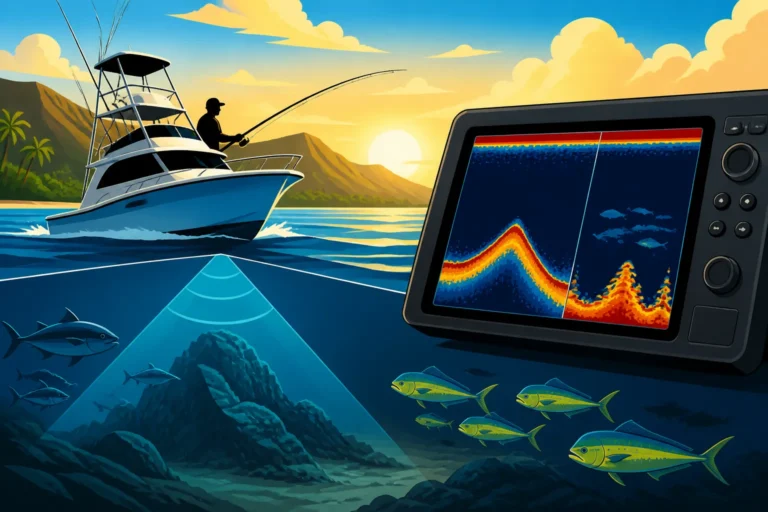
Your sonar becomes your best friend in this environment, acting as your eyes to the submerged world. Learning to interpret the squiggles and arches on your screen to identify potential fish-holding structure is paramount. These deepwater fish often position themselves slightly off the bottom, or tightly schooled against a vertical drop-off. Current also plays a huge role; fish will often orient themselves into the current, waiting for food to drift by. Understanding how these fish relate to specific structures at different depths and current conditions is critical for presenting your jig effectively and for predicting where the next bite might come from. Our guide on How to Locate Bottomfish Structure with Sonar delves deeper into this essential skill.
Essential Gear for Jigging Bottomfish in Hawaii
Deepwater jigging isn't like casting for papio in the shallows. The immense depths, strong currents, and the powerful pull of a hooked fish require specialized gear that can withstand the extreme conditions. Investing in the right equipment isn't just about catching more fish; it's about making the experience enjoyable and preventing costly break-offs when you finally hook that dream onaga.
Rods, Reels, and Line Selection
For Hawaiian bottomfish jigging, your rod and reel setup needs to be robust. You're looking for rods that are sensitive enough to detect subtle bites hundreds of feet down, yet powerful enough to lift heavy jigs and battle strong fish against immense pressure. Most serious bottomfish anglers opt for conventional reels, often lever-drag models, due to their superior cranking power and ability to handle heavy braided line. Reels like the Penn International or Shimano Talica are popular choices, known for their smooth drags and durability. Pairing these with a relatively short, heavy-action rod, typically 5 to 6.5 feet long, designed specifically for slow-pitch or speed jigging, will give you the necessary leverage and backbone.
Line selection is equally crucial. Braided line is king for deepwater jigging because of its minimal stretch, which provides unparalleled sensitivity to feel bites and maintain direct contact with your jig. You'll typically want to spool up with 60 to 100-pound test braided line, depending on the target species and average depth. A higher pound test not only offers more breaking strength but also has a slightly larger diameter which can help with jig presentation in strong currents. Always use a long, heavy fluorocarbon leader, usually 100-200 pound test and 15-30 feet long, tied directly to your braid with a strong knot like an FG or PR knot. The fluorocarbon provides abrasion resistance against sharp bottom structure and is less visible to wary fish. Many anglers find a good selection of quality braided line and fluorocarbon leaders available through online retailers like Amazon to keep their tackle box stocked.
Picking the Right Jigs and Terminal Tackle
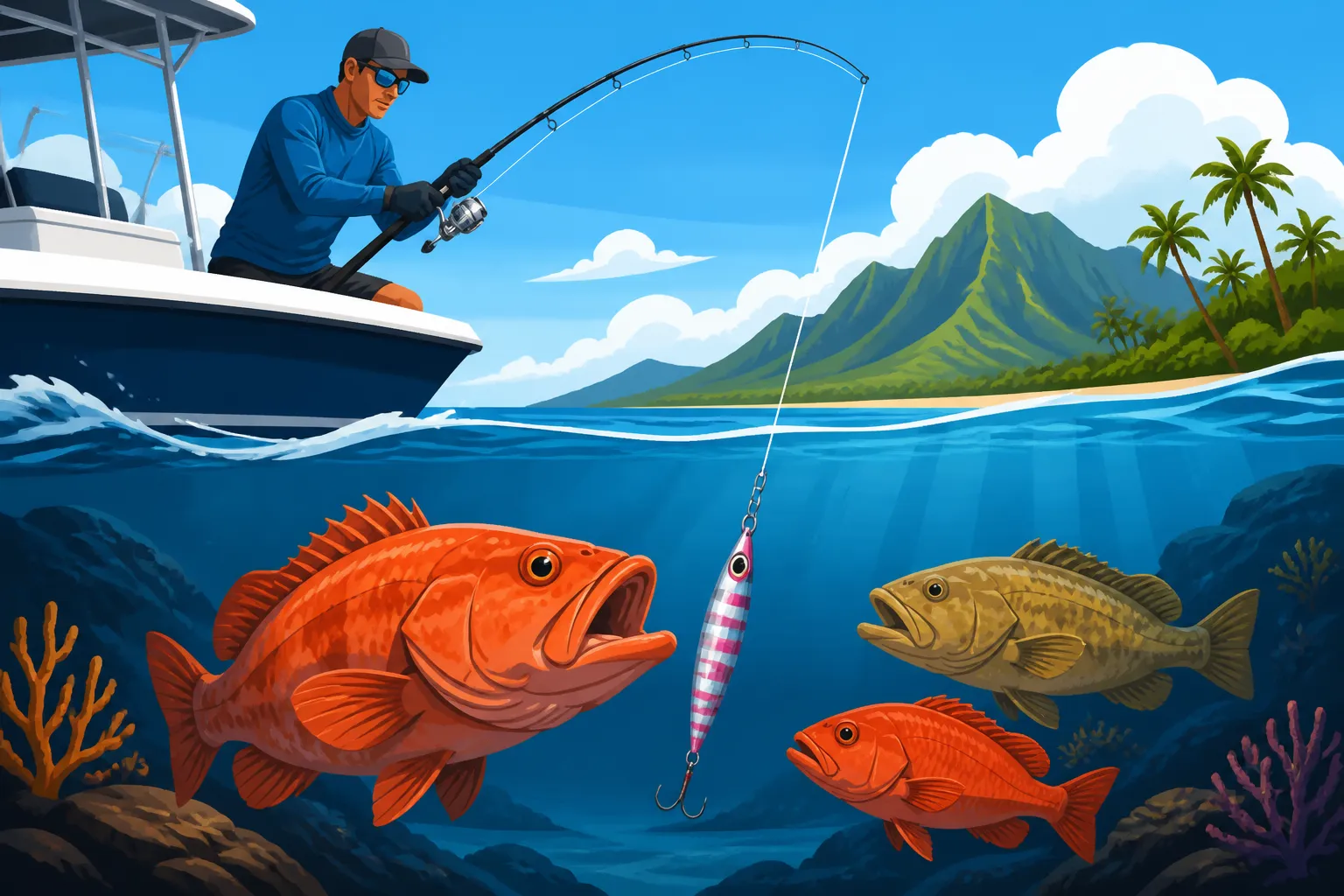
The world of jigging lures is vast, but for Hawaiian bottomfish, you'll primarily be using metal jigs designed to be fished vertically. These come in various shapes, weights, and colors, each with a specific action in the water. For deep drops, heavy jigs are essential to cut through the water column quickly and effectively. Jigs typically range from 200 grams (about 7 ounces) to well over 500 grams (over a pound), depending on the depth and current. As discussed in our Best Jig Weight for Bottomfishing in Deep Water guide, matching the jig weight to the conditions is paramount.
You'll want a selection of both "slow-pitch" jigs and "speed" jigs. Slow-pitch jigs are often asymmetrical, designed to flutter and fall erratically, mimicking an injured baitfish. Speed jigs are typically more streamlined and are meant to be retrieved rapidly with sharp jerks. Color can also play a role, with luminous (glow-in-the-dark) jigs being particularly effective in the low light of deep water. When stocking up on terminal tackle, don't skimp on quality. Use heavy-duty assist hooks, strong split rings, and robust swivels, as a trophy fish can easily exploit any weak link in your setup. Many specialized Japanese jigging brands like Shimano, Daiwa, and Jigging Master offer excellent options, and a quick search on Amazon will reveal a plethora of choices for assist hooks and split rings.
Mastering Jigging Techniques for Hawaiian Waters
Jigging for bottomfish isn't just a matter of dropping a lure and cranking it back up. It's a dynamic, active style of fishing that requires finesse, strength, and a keen understanding of what's happening hundreds of feet below your boat. The slight twitch of your rod tip or a subtle change in retrieve speed can be the difference between a barren drop and a bent rod.
Vertical Jigging vs. Yo-Yo Jigging
There are two primary jigging styles you'll employ for Hawaiian bottomfish: vertical jigging and yo-yo jigging.
Vertical Jigging (Slow-Pitch Style): This technique has gained immense popularity for its effectiveness on reluctant deepwater fish. The essence of slow-pitch jigging is to impart a very specific, erratic action to your jig. You drop the jig to the desired depth, often right on the bottom or a few feet above a marked school. Then, using a combination of gentle rod lifts (pitches) and reel handle turns, you make the jig dance. The rod does most of the work, flexing to impart action on the lift, then recoiling to allow the jig to "flutter" or "kick" on the fall. Bites often occur on the fall, so feeling for any unnatural slack or tick is crucial. The key is to match your jig selection and retrieve speed to mimic an injured baitfish trying to escape or a small invertebrate scurrying on the bottom. It's a methodical, often slower presentation that can entice bites from wary opakapaka and onaga. Our guide on Best Technique for Vertical Jigging for Opakapaka offers more in-depth advice on this precise method.
Yo-Yo Jigging (Speed Jigging Style): Yo-yo jigging, also known as speed jigging, is a more aggressive and physically demanding technique, often used when fish are more active or to cover more water quickly. This involves dropping a heavier, more streamlined jig to the desired depth, then rapidly retrieving it upwards with powerful, sweeping rod lifts and quick reel cranks. The goal is to make the jig dart and flash, simulating a fleeing baitfish. After a series of rapid retrieves, you might let the jig freefall for a few seconds to trigger a strike on the drop. This technique is often effective for larger, more aggressive predators like hapu'upu'u or even opportunistic ahi or ono that might be cruising the deeper edges. While less common for the typically demersal snappers, it can be deadly when conditions are right and the fish are in a chasing mood.
Reading Your Sonar and Interpreting Bites
Your boat's sonar is your direct link to the underwater world, and learning to interpret its readings is paramount for successful jigging. Before you even drop a line, you'll be scrutinizing the sonar for signs of structure – ledges, pinnacles, or areas of irregular bottom that typically hold fish. Once you identify promising structure, look for fish marks. These can appear as arches or dense clouds, depending on the species and how tightly they're schooled. Pay close attention to the depth at which the fish are holding relative to the structure; they might be right on the bottom, or suspended a few feet above. For example, Opakapaka Pink Snapper Habits often involve schooling tightly over specific ledges.
Interpreting a bite in deep water can be tricky, as the sheer length of line in the water dampens sensations. A strong, aggressive hapu'upu'u might give you a solid thump, but a more subtle opakapaka bite could feel like a slight "tick" or simply a momentary cessation of the jig's fluttering action. Sometimes, you won't feel anything until you start to lift the rod, only to find unexpected weight at the end of your line. This is where the non-stretch properties of braided line become invaluable. Always keep a hand on the line as it descends to feel for any resistance or sudden stops before the jig hits the bottom. When in doubt, set the hook! It's better to make a few false strikes than to miss a trophy. Our companion guide on Best Sonar Settings for Finding Structure off Kona can help you fine-tune your electronics for optimal bottomfish detection.
Fighting and Landing Deepwater Fish
Once you've hooked into a deepwater bottomfish, the real challenge begins. These fish often fight hard, using the immense water pressure to their advantage and diving straight back into the structure they came from. The key is to apply steady, relentless pressure and gain line whenever possible. Avoid pumping the rod too aggressively; a constant, smooth retrieve is often more effective, especially with a slow-pitch rod that's designed to bend deeply and absorb shock. If the fish makes a strong run, let your drag do its job, but be ready to regain line the moment it slows down.
One significant factor in deepwater fishing is barotrauma. When fish are brought up from extreme depths, the rapid change in pressure can cause their swim bladders to expand, sometimes pushing their stomach out through their mouth. If you intend to release a fish, it's crucial to minimize the time it spends out of water. For species you plan to keep, quickly bleeding them and placing them on ice will ensure the best quality meat. For a more in-depth understanding of regulations concerning what you can keep, consult the Hawaii Bag and Size Limits by Species guide to ensure compliance.
Prime Locations and Conditions for Bottomfish Jigging
Finding the right spot at the right time is half the battle when it comes to any type of fishing, and deepwater jigging for bottomfish is no exception. Hawaii offers numerous productive grounds, but success hinges on understanding the specific conditions that make them thrive.
Identifying Productive Bottom Structure
As we touched on earlier, Hawaii's underwater topography is a bottomfish angler's playground. The most productive areas are typically characterized by significant changes in depth and hard bottom. These include:
- Seamounts and Pinnacles: Submerged mountains or isolated rock formations that rise dramatically from the ocean floor. These act like underwater islands, creating upwellings and currents that concentrate baitfish and, consequently, larger predators. The Penguin Bank, southwest of Molokai, is a prime example of a large, productive seamount system.
- Ledges and Drop-offs: Where the continental shelf abruptly plunges into deeper water. These edges create current breaks and ambush points. The Kona Coast of the Big Island, with its incredibly steep drop-off just miles from shore, offers fantastic opportunities for
onagaandopakapakaalong its volcanic ledges. - Deep Reefs and Canyons: Extensive hard bottom areas with intricate reef systems, often intersected by deep canyons. These provide vast habitat for schooling bottomfish.
Identifying these structures often requires good nautical charts, bathymetric maps, and, most importantly, a reliable fishfinder. You're looking for that "rough" ground, the kind that might eat your jig if you're not careful, because that's where the food and shelter are for the fish. Many experienced captains spend years mapping out their own private spots, but public information and online resources, along with detailed charts, can get you started. If you're new to the area or without your own boat, considering a trip with one of the Best Bottomfishing Charters in Hawaii is an excellent way to learn the ropes and discover productive locations.
Tides, Currents, and Weather Considerations
Unlike some shallow-water fishing that can be highly tide-dependent, deepwater bottomfishing is often more influenced by subsurface currents than the immediate tidal swing at the surface. Strong currents can make it incredibly difficult to get your jig to the bottom, especially in very deep water. When the current is too strong, your line will scope out at a severe angle, making it hard to feel bites and present your jig effectively. Therefore, looking for periods of slack current, or at least manageable current, is often key. This might coincide with tidal changes, but it's not a direct correlation. Monitoring local current forecasts and observing water conditions can give you an edge.
Weather, particularly wind, also plays a crucial role. While bottomfish don't care about the wind, you certainly will. Strong winds create choppy seas, making it uncomfortable and potentially unsafe to be out on the water. More importantly, wind can cause your boat to drift too quickly, making it impossible to stay over a productive piece of structure and present your jig vertically. Ideally, you want calm seas and light winds (under 10-15 knots) for a comfortable and effective bottomfishing trip. Of course, the best time of year to fish in Hawaii can vary, but generally, calmer months might offer more opportunities for deep-dropping.
Responsible Angling and Conservation for Hawaii's Bottomfish
As with all fishing, especially for species that can be vulnerable to overfishing, responsible angling practices and adherence to conservation regulations are paramount. Hawaii's bottomfish populations are a precious resource, and it's up to us as anglers to help protect them for future generations.
Safety Protocols for Offshore Bottomfishing
Venturing offshore for deepwater bottomfish comes with inherent risks, and safety should always be your top priority. Ensure your boat is properly equipped with all necessary safety gear, including life jackets for everyone on board (and know the Hawaii Boating Laws for Anglers for specific requirements), a working VHF radio, an EPIRB or satellite messenger, flares, and a well-stocked first-aid kit. Always check the marine weather forecast before heading out, and be prepared to turn back if conditions deteriorate. Fishing in deep water means being prepared for the unexpected, and having reliable equipment and an experienced crew is non-negotiable.
Additionally, consider the physical demands. Hauling heavy jigs from deep water and fighting powerful fish can be exhausting. Stay hydrated, bring plenty of food, and know your limits. If you're prone to seasickness, take preventative measures; there's nothing worse than being miserable on an otherwise epic fishing trip. If you're new to offshore fishing, consider going out with a seasoned captain or charter to gain experience and learn local safety considerations.
Regulations and Conservation for Hawaii's Bottomfish
Hawaii's Division of Aquatic Resources (DAR) closely monitors bottomfish stocks and implements strict regulations to ensure their sustainability. These regulations often include bag limits, size limits, and sometimes seasonal closures for specific species or areas. For example, onaga and opakapaka typically have minimum size limits and daily bag limits per person. It's crucial to be familiar with these rules before you ever drop a line. The official Hawaii Fishing Regulations Explained document, often found on the DLNR website, is your authoritative source for this information.
One key conservation measure is the concept of a bottomfish restricted access area (FRA) or other management zones, which can limit fishing effort in certain high-value areas. Always verify if the area you plan to fish has any specific restrictions. Furthermore, consider practicing catch and release for fish you don't intend to eat or those that are undersized. While barotrauma can be an issue for deepwater releases, careful handling and the use of a descending device can improve survival rates. By understanding and adhering to these rules, we contribute to the health of Hawaii's unique marine ecosystem and ensure that the thrill of jigging for bottomfish remains for years to come.
Recommended Jig Types and Weights for Common Hawaiian Bottomfish
| Species | Typical Depth Range (feet) | Recommended Jig Weight (grams) | Jig Style Preference | Common Colors | Retrieve Speed | Notes |
|---|---|---|---|---|---|---|
| Opakapaka | 150 – 600 | 200 – 400 | Slow-Pitch, Long Fall | Pink, Silver, Glow, Blue | Slow to Medium flutter | Often school on ledges, subtle bites. |
| Onaga | 400 – 800+ | 300 – 600+ | Slow-Pitch, Short Jerk | Red, Pink, Glow, Natural | Slow, methodical bounces | Deeper, more isolated, highly prized. |
| Ehu | 100 – 500 | 150 – 300 | Slow-Pitch, Vertical Flutter | Orange, Red, Glow, Silver | Medium, erratic | Similar to Opakapaka but often shallower. |
| Hapu'upu'u | 200 – 800 | 300 – 700 | Speed Jig, Yo-Yo, Slow-Pitch | Green, Blue, Silver, Glow | Medium to Fast, aggressive | Powerful fighters, often near structure. |
| Kalekale | 200 – 500 | 200 – 400 | Slow-Pitch, Steady Lift | Silver, White, Glow | Slow, smooth lifts | Schooling fish, can be mixed with Opakapaka. |
Disclaimer
The information provided in this guide is for general informational purposes only and is not intended as legal advice regarding fishing regulations. Regulations are subject to change, and it is the angler's sole responsibility to consult the most current Hawaii Department of Land and Natural Resources (DLNR) Division of Aquatic Resources (DAR) rules and regulations before fishing. Always prioritize safety and practice responsible angling.