Best Techniques for Whipping for Papio
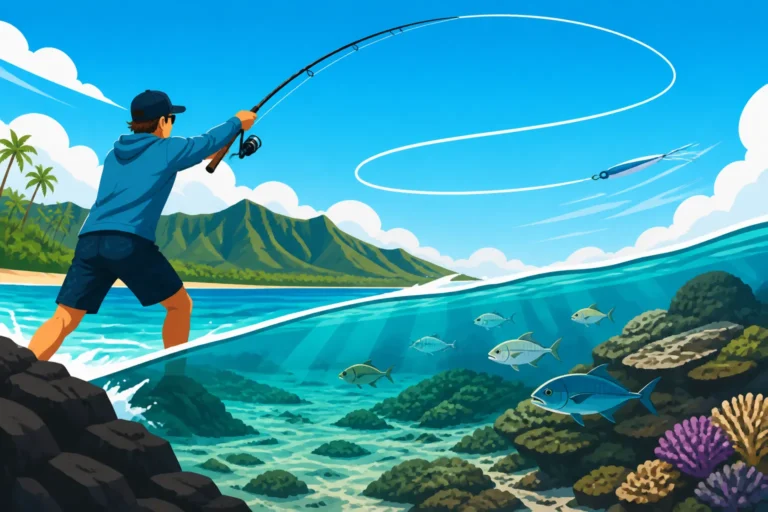
Many anglers, whether residents or visitors to our beautiful islands, have experienced the thrill and, let's be honest, occasional frustration of trying to catch papio from shore. These spirited juvenile trevally are abundant in Hawaii's shallow reefs and surf zones, offering a challenging yet incredibly rewarding fishing experience. Their darting speed and often finicky nature can test the patience of even seasoned fishermen, but with the right techniques, gear, and a bit of local know-how, you can consistently entice these thrilling fighters to bite. This comprehensive guide is dedicated to unraveling the best strategies for "whipping" for papio, ensuring your next shoreline adventure is a successful one.
Understanding Papio and Their Habits
Before you even make your first cast, truly understanding the papio is your greatest asset. Knowing their preferred habitats, feeding patterns, and how they react to different conditions will dramatically improve your chances of success. They're not just any fish; they're cunning, fast, and constantly on the hunt.
Identifying Papio Species and Sizes
When we talk about "papio" in Hawaii, we're generally referring to the juvenile stages of various trevally species, which will eventually grow into what locals call "ulua." The most common papio you'll encounter are the young of the giant trevally (Caranx ignobilis), often simply called pāpio, and the bluefin trevally (Caranx melampygus), locally known as omilu. You might also find other jacks like the leatherback jack (scomberoides lysan), or lai, in the mix, particularly in calmer, sandy areas.
These young jacks range significantly in size, from small, hand-sized fish that are incredibly fun on light tackle, up to specimens that are just shy of the legal size limit for a full-grown ulua. Distinguishing between them often comes down to their body shape and coloration. Giant trevally papio tend to have a deeper body profile and can range from silvery to a more brassy hue, sometimes with faint vertical bars. Omilu papio, on the other hand, usually have a more streamlined, silvery body with characteristic blue or black fins, even at a young age, and often exhibit small blue spots along their flanks. Understanding these distinctions isn't just for curiosity; it helps you appreciate their growth journey. It's fascinating to consider how these feisty little fish will one day mature into formidable predators, as detailed in our guide on Papio Growth Stages Into Trophy Ulua.
While most papio you catch will be smaller, below the typical minimum size for ulua, identifying the specific species can sometimes give you clues about their behavior and where their larger counterparts might be lurking. Moreover, being able to tell them apart allows you to better appreciate the incredible biodiversity of Hawaii's nearshore waters.
Feeding Patterns and Preferred Prey
Papio are highly opportunistic predators with a voracious appetite. They are visual hunters through and through, meaning they rely heavily on their eyesight to locate and ambush prey. Their diet primarily consists of small baitfish such as nehu (anchovies) and 'iao (silversides), but they won't pass up crustaceans like small crabs and shrimp, or even tiny cephalopods like juvenile octopus. This diverse diet means your lure choices can be varied, but ultimately, they need to mimic something appealing and alive.
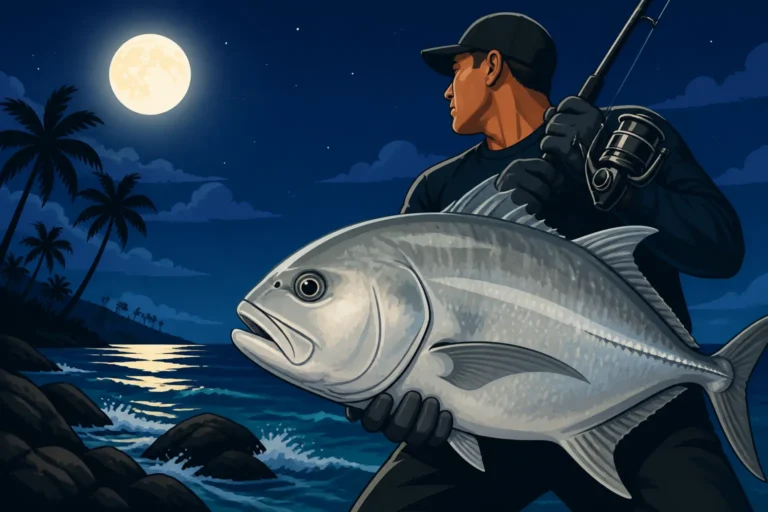
Their feeding activity is most intense during periods of low light, making dawn and dusk absolutely prime times for whipping. At these times, the reduced visibility gives them an edge over their prey, and they become far more aggressive in their hunting. During the brighter parts of the day, papio often retreat to the cover of deeper water or shaded areas around reefs, becoming more cautious. However, they can still be enticed by a well-presented lure, especially if you can get it right into their ambush zones.
The movement of currents and tides plays a pivotal role in concentrating their food sources. Papio are experts at positioning themselves in current seams, eddies, or along the edges of reefs where baitfish are swept past them. They expend minimal energy waiting for a meal to come to them, ready to explode into action with a burst of speed. This keen understanding of current flow is crucial; if you can anticipate where the bait will be, you can predict where the papio will be waiting.
Seasonal and Tidal Influences
While papio can generally be caught year-round in Hawaii, their activity levels and the presence of larger schools can fluctuate with the seasons and, more acutely, with tidal movements. For instance, certain times of the year might see a greater abundance of specific baitfish, which in turn can concentrate papio in particular areas. If you're looking for the absolute best conditions, our guide on the Best Time of Year to Fish in Hawaii can provide broader insights, but for papio, consistency is often key.
Tidal impacts are arguably more immediate and significant than seasonal shifts for shoreline papio fishing. Incoming tides often bring in fresh, clean water and push baitfish closer to shore, making shallower reefs and channels accessible hunting grounds. Conversely, an outgoing tide can sometimes pull bait out of lagoons and bays, concentrating papio at choke points or deeper channel mouths. Experienced anglers often find that the periods around the peak of the incoming tide and the beginning of the outgoing tide are particularly productive. Low tide, while often challenging for fishing, can be incredibly valuable for scouting, revealing submerged structures, channels, and rocky outcrops that are usually hidden, giving you vital intel for future high-tide sessions.
Local weather patterns, particularly the prevailing winds, also have a noticeable effect. Strong trade winds can create choppy conditions, reducing water clarity and making it harder for papio to see your lure, or for you to spot them. However, these same choppy conditions can also disorient baitfish, making them easier targets. Kona winds, on the other hand, can bring calmer, clearer water to the windward sides of the islands, potentially making fish more wary but also easier to spot with polarized sunglasses. Being adaptable to these ever-changing conditions is a hallmark of a successful papio whipper.
Essential Gear for Whipping Papio
"Whipping" implies active casting and retrieving, often with lighter tackle, to cover a lot of water. Having the right setup isn't just about comfort; it's about maximizing your casting distance, feeling the subtle takes, and having the power to land a surprisingly strong fish. Don't skimp on your gear; it's an investment in your enjoyment and success.
Choosing the Right Rod and Reel Setup
For whipping papio, a properly balanced spinning rod and reel combo is paramount. You'll typically want a spinning rod in the 7-foot to 9-foot range, leaning towards the longer end if you need to cast over a broad surf zone or reach distant reef edges. The ideal action is medium-light to medium, with a fast or extra-fast tip. This combination provides the sensitivity to feel delicate bites and imparts action to your lures, while the backbone offers the necessary power to handle a spirited papio and keep it away from abrasive coral. Brands like St. Croix, with their sensitive yet robust blanks, or even a reliable Ugly Stik for sheer durability, are popular choices among local anglers.
Pairing this with a 2500 to 4000 series spinning reel is generally ideal. A smooth, reliable drag system is non-negotiable, as papio, even at smaller sizes, can make blistering runs, especially when hooked near structure. Reels from reputable brands like Shimano or Daiwa are often favored for their consistent performance and excellent drag systems. Given the saltwater environment, always prioritize reels with good corrosion resistance to ensure longevity.
The balance of your rod and reel is more important than you might think. Since whipping involves countless casts, a setup that feels comfortable and isn't overly tip-heavy or butt-heavy will reduce fatigue and allow for more accurate, effortless casting throughout your session. While you can find excellent options at local tackle shops, many anglers also rely on online retailers like Amazon for a wide selection of quality rods and reels that suit their specific needs and budget.
Line Selection: Braid, Fluorocarbon, and Mono
Your choice of fishing line is just as critical as your rod and reel, influencing everything from casting distance to bite detection and abrasion resistance. Most experienced papio whippers opt for a braided main line.
For the main line, 10 to 20-pound test braided line is the go-to. Braid offers several distinct advantages: its incredibly thin diameter for its breaking strength allows for much longer casts, which is vital for reaching distant holding areas. More importantly, braid has virtually no stretch, providing unparalleled sensitivity. This means you can feel even the most subtle taps and bumps as your lure traverses the bottom or gets mouthed by a curious papio. This immediate feedback allows for quicker hook sets, significantly increasing your hook-up ratio.
Connected to your braided mainline, you'll need a leader, and this is where fluorocarbon shines. A 15 to 30-pound test fluorocarbon leader is recommended. Fluorocarbon is nearly invisible underwater, making it less likely to spook wary papio in clear Hawaiian waters. Crucially, it offers superior abrasion resistance compared to braid, which is essential when fishing around sharp lava rock, coral, or other underwater structures where papio love to hide. The length of your leader can vary, but typically 2 to 4 feet is sufficient to provide invisibility and protection. Learning to tie a strong, slim knot like the FG knot or a modified Albright will ensure a smooth transition between your braid and fluorocarbon, allowing it to pass easily through your rod guides. If you're unsure where to find quality leader material, many trusted brands are available on Amazon.
While less common for the main line in "whipping" due to its stretch, monofilament line still has its place. Some anglers might prefer it for its shock-absorbing qualities, especially when using lighter lures where a little stretch can prevent break-offs during violent strikes. However, for most active whipping scenarios, the benefits of braid and fluorocarbon far outweigh those of mono.
Top Lures and Baits for Papio
When it comes to lures for whipping papio, the market is flooded with options, but a few categories consistently outperform others. Since papio are visual and aggressive hunters, artificial lures are king, designed to mimic the small baitfish and crustaceans they feed on.
Small metal spoons are absolute classics for papio. Brands like Kastmaster or Acme Little Cleos, in sizes ranging from 1/4 ounce to 1 ounce, are incredibly effective. Their erratic flutter and flash imitate a wounded baitfish perfectly, and their density allows for exceptional casting distance, even into a headwind. Jigs are another staple, typically a lead-head jig paired with a soft plastic grub tail or a scent-infused bait like a Gulp! shrimp or minnow. The jig-and-grub combo allows for versatile retrieves, from bouncing along the bottom to swimming through the mid-water column. While our guide on Best Lures for Uhu on the Reef focuses on another species, many of the principles of selecting lures for reef-dwelling fish apply here, emphasizing smaller, flashier options.
For exhilarating surface strikes, small topwater poppers or walk-the-dog style lures are incredibly effective, especially during low light conditions or when papio are aggressively feeding on baitfish near the surface. The commotion these lures create can draw strikes from a surprising distance. Lipless crankbaits also have their place, offering a different vibration and profile that can entice bites when other lures are ignored. When choosing colors, think about natural baitfish patterns—silvers, whites, greens, and blues—for clear water. Brighter colors like chartreuse or pink can be effective in murky water or low light.
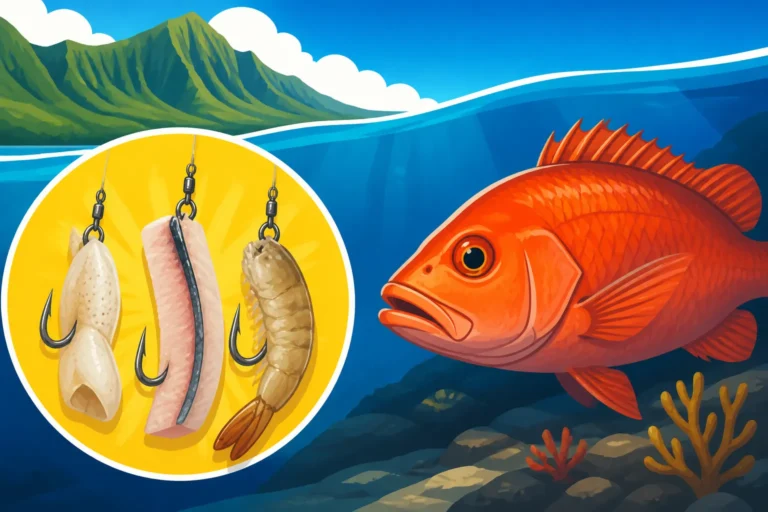
While artificials are the primary focus for whipping, don't completely discount natural baits. If papio are particularly finicky, a small live 'iao or nehu, if you can catch them with a throw net, rigged on a small hook and cast with minimal weight, can be irresistible. This isn't "whipping" in the traditional sense, but it's an ace up your sleeve for challenging days.
Here's a quick look at some popular lure types and their ideal applications:
| Lure Type | Best Conditions | Retrieve Style | Notes |
|---|---|---|---|
| Metal Spoons | Calm to moderate surf, deeper water | Steady retrieve, stop-and-go | Excellent casting distance, mimics fleeing bait. |
| Soft Plastics | Calm water, clear conditions | Jigging, slow retrieve, twitch | Very versatile, mimics shrimp/small fish. |
| Small Poppers | Calm water, dawn/dusk, aggressive fish | Pop-pause, walk-the-dog | Exciting topwater strikes, covers water. |
| Lipless Cranks | Moderate surf, varied depths | Steady retrieve, occasional twitch | Vibrating action attracts attention. |
Mastering Whipping Techniques
Whipping is an art form that blends casting accuracy, retrieve variation, and a keen sense of what the fish are doing. It’s not just about throwing a lure out and reeling it in; it’s about making that lure look as appealing and vulnerable as possible to a hungry papio.
Basic Casting and Retrieve Methods
The foundation of successful papio whipping lies in accurate casting. You're not just trying to cast far; you're aiming for specific pockets, channels, reef edges, and current seams where papio are likely to be ambushing prey. An overhead cast is great for maximum distance, but mastering a sidearm cast can be invaluable for placing lures precisely under overhanging branches or into tight gaps between rocks without spooking fish. Practice in your yard or a local park to build muscle memory and improve your pinpoint accuracy.
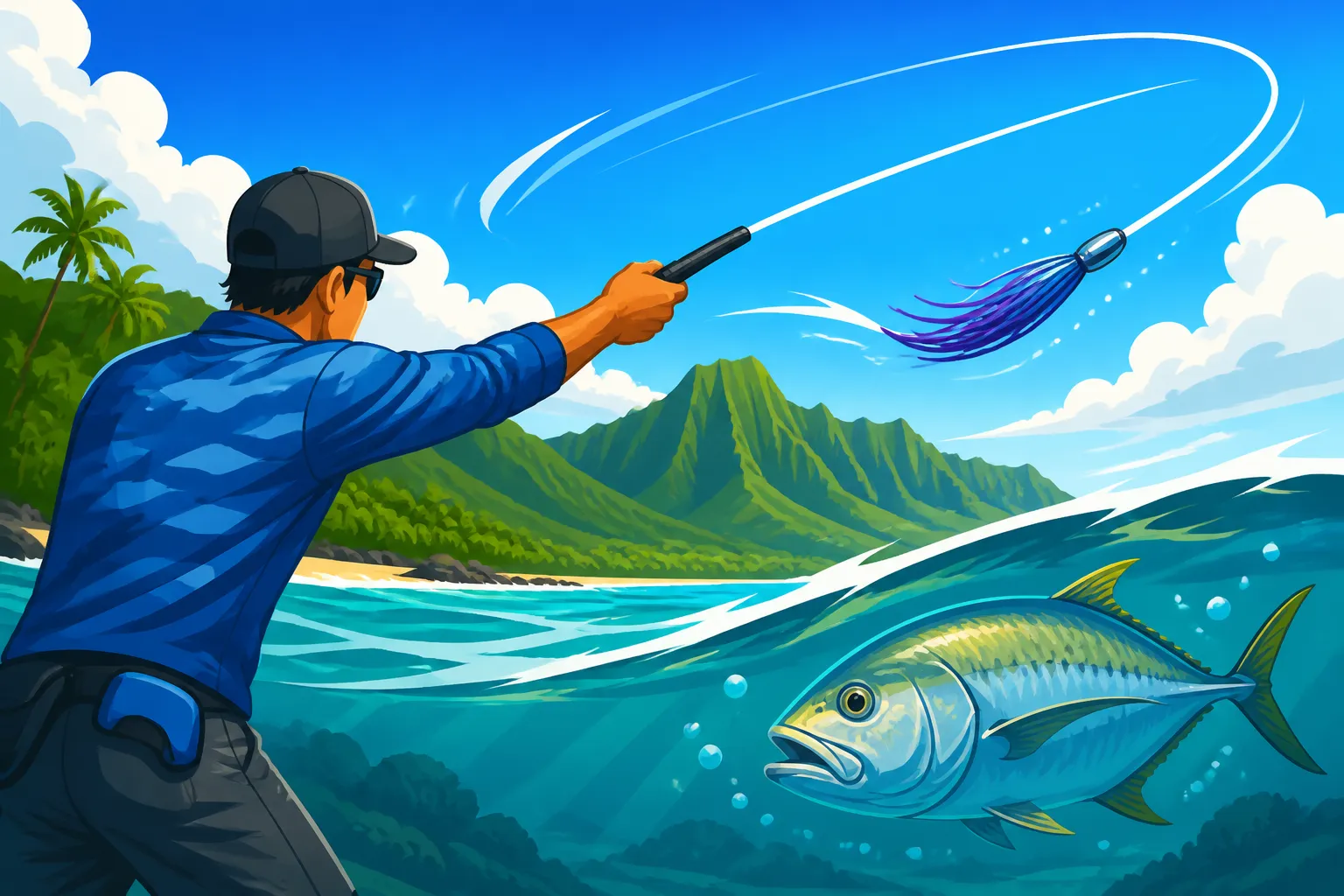
Once your lure hits the water, the "whipping" retrieve truly begins. This isn't a single, uniform motion but rather a dynamic combination of steady winding, punctuated by rhythmic rod tip twitches, jerks, or sweeps. The goal is to mimic the erratic, wounded movements of a baitfish or the scurrying of a crustacean. A common technique involves a few quick cranks of the reel handle, followed by a sharp twitch or two of the rod tip, then a brief pause. This stop-and-go action is often what triggers a predatory strike. Varying the speed of your retrieve is also crucial; sometimes papio want a fast, aggressive chase, while other times a slow, methodical presentation is more effective. Our detailed guide on Best Casting Technique for Shore-Based Papio offers even more insights into optimizing your delivery.
Line management throughout the retrieve is equally important. Keep your rod tip pointed towards the lure as much as possible to maintain a direct connection, which minimizes slack line. This constant connection allows you to feel even the most subtle "tick" of a papio inhaling your lure, enabling a quick, firm hook set. Without proper line management, those fleeting bites can easily go unnoticed.
Varying Your Presentation
One of the biggest mistakes an angler can make is getting stuck in a single retrieve pattern. Papio, like all fish, have their moods, and what worked yesterday or even an hour ago might not work now. Experimentation is key to unlocking their bite. If a fast, erratic retrieve isn't producing, try slowing it down significantly. A slow, steady retrieve with occasional, subtle twitches can sometimes entice wary fish that are hesitant to chase something moving too quickly.
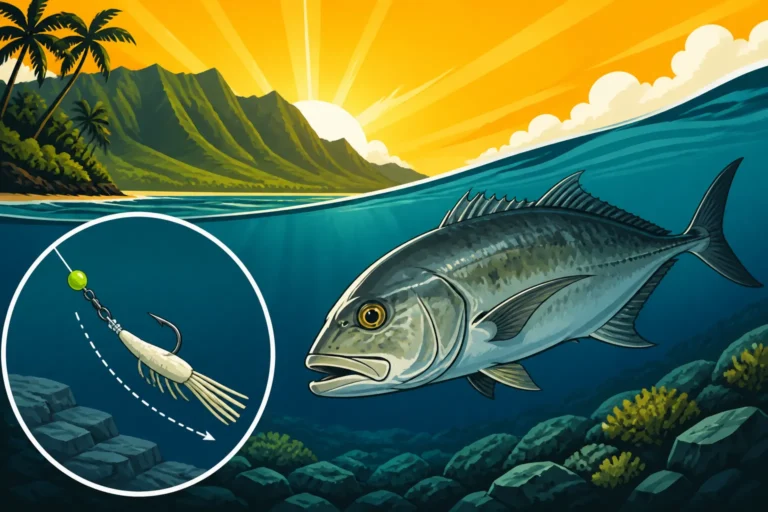
Depth is another critical variable. Don't assume papio are always at the surface or hugging the bottom. They can be found throughout the water column. When using spoons or jigs, allow your lure to sink for a few seconds after casting—this is called "counting down." By counting how long it takes for your lure to reach a certain depth, you can replicate that depth on subsequent casts. Work your lure through the bottom third, middle, and top third of the water column until you find where the fish are holding. Jigging a soft plastic off the bottom can imitate a shrimp, while swimming a spoon just below the surface mimics a fleeing baitfish.
Incorporating pauses into your retrieve can also be incredibly effective. Often, a papio will follow a lure for several feet, and it's that sudden, momentary pause—when the lure briefly tumbles or "dies"—that triggers an instinctive strike. The sudden change in movement can be irresistible to a predator. Think about how a wounded baitfish might behave, and try to replicate that vulnerability with your lure.
Advanced Lure Manipulation
Beyond the basic retrieves, mastering a few advanced lure manipulation techniques can truly elevate your papio whipping game. For topwater lures, the "walk-the-dog" technique is a must-learn. This involves a rhythmic series of downward rod twitches combined with retrieving slack, causing the lure to zigzag enticingly across the surface. It takes practice to get the rhythm right, but when executed correctly, it's incredibly effective at drawing aggressive topwater strikes, as highlighted in our dedicated guide to Topwater Fishing for Papio in Hawaii. The visual explosion of a papio smashing a surface lure is one of the most exciting experiences in shore fishing.
For jigs and soft plastics, varied jigging techniques can make a huge difference. Instead of just a steady retrieve, try sharp, short rips of the rod tip followed by slack line, allowing the jig to fall erratically. This "rip-and-fall" technique can imitate a panicking baitfish. Alternatively, a slow-pitch style jigging, with subtle lifts and drops, can make a soft plastic grub appear like a bottom-dwelling creature trying to escape, enticing papio that are focused on crustaceans.
Ultimately, truly advanced lure manipulation comes from understanding how your specific lure behaves in the water and how different currents affect its action. A light spoon might flutter differently in a strong current compared to calm conditions. Observe your lure as it moves through clear water near shore, learning its unique "dance." This awareness allows you to make subtle adjustments to your retrieve speed, rod tip angle, and pauses, ensuring your lure always looks its best, regardless of the conditions.
Reading the Water and Locating Papio
One of the most crucial skills for any successful shore angler in Hawaii, especially when targeting papio, is the ability to "read the water." This means observing the subtle cues the ocean provides to identify productive areas and predict where fish might be holding and feeding.
Identifying Productive Structure
Papio are ambush predators, and like most predators, they love structure. This refers to any underwater feature that provides cover, breaks current, or concentrates baitfish. In Hawaii, this often means lava rock outcroppings, coral reefs, submerged boulders, and the edges of sand channels. These structures create ambush points where papio can hide, conserving energy while waiting for an unsuspecting meal to pass by. Our guide to the Best Shore Fishing Spots in Hawaii often emphasizes areas rich in these types of features.
Pay close attention to "white water" zones where waves are crashing over reefs or rocks. This turbulent, oxygenated water disorients baitfish and creates an easy feeding ground for papio. Similarly, look for current breaks or "seams" – areas where two different currents meet, or where a current flows past an obstruction, creating an eddy. These seams are natural highways for baitfish and, consequently, prime hunting grounds for papio.
Also, don't overlook sandy pockets or depressions within larger reef systems. Papio will often patrol the edges of these sandy areas, darting out into the open to strike at prey before retreating to the safety of the reef. Understanding how these various structural elements combine to form an ideal papio habitat is key to making your casts count. It's not just about finding any reef; it's about finding the best part of that reef.
Understanding Tides and Currents
In Hawaii, tides and currents dictate much of the fish activity along the shoreline. An incoming tide often brings in cooler, cleaner ocean water and pushes baitfish closer to shore, making shallow reefs and channels more accessible to papio. This is frequently a highly productive period. Conversely, an outgoing tide can pull baitfish out of lagoons and shallow bays, concentrating papio at the mouths of these channels or along deeper drop-offs where they can intercept the exodus of prey. Always consult a local tide chart before heading out, and plan your fishing around the peak of the incoming tide and the early stages of the outgoing tide.
Current speed and direction are equally important. Papio, like most predatory fish, typically face into the current, allowing food to come to them. When casting, try to cast your lure slightly upcurrent and allow it to drift naturally into the strike zone. This natural presentation is often irresistible. If your lure is fighting the current or being swept away unnaturally, you might need to adjust your casting angle or use a heavier lure.
Even during slack tide, which can sometimes be slower for fishing, there can be productive areas. Fish might consolidate in deeper pockets or channels, waiting for the current to pick up again. Learning to interpret how these tidal and current forces interact with the local geography will transform you from a casual caster to a strategic angler.
Spotting Papio Activity
Sometimes, the ocean gives you direct clues that papio are present and feeding. Keep a keen eye out for any signs of surface activity. Diving birds, especially terns, are often a dead giveaway that schools of baitfish are present, and where there's bait, there are usually predators like papio. Look for subtle boils, splashes, or nervous baitfish scattering across the surface – these are tell-tale signs of papio actively pushing and ambushing their prey.
Observing other anglers can also provide valuable information. Are they casting in a particular direction? Are they hooking up? While respecting their space, you can learn a lot from local practices and where others are having success. Often, an area might look "fishy" but if no one's getting bites, it might be worth moving on.
In clear Hawaiian waters, a good pair of polarized sunglasses is an invaluable tool. They cut glare, allowing you to see through the water's surface to spot structure, baitfish schools, and even cruising papio themselves. This visual advantage can help you make incredibly precise casts directly to active fish or productive ambush points. Don't just cast blindly; take a few moments to observe the water before making your first retrieve.
Advanced Tips for Consistent Success
Moving beyond the basics of whipping for papio means refining your approach, adapting to challenging conditions, and practicing responsible angling. These advanced tips can often make the difference between an average day and a truly memorable one.
Stealth and Approach
Papio, particularly in Hawaii's exceptionally clear, shallow waters, can be surprisingly wary. A heavy footfall on the rocks, a loud voice, or casting a shadow over the water can instantly put them on high alert, causing them to scatter or cease feeding. Think like a hunter: move quietly and deliberately. Approach the water's edge slowly, keeping a low profile.
Long, accurate casts become even more critical when fish are skittish. Being able to reach distant structure or a school of feeding fish without approaching too closely gives you a significant advantage. Practice smooth, powerful casts that deliver your lure precisely where you want it without a huge splash that might spook the area.
Consider the angle of the sun and wind. Approaching from downwind means your scent won't be carried to the fish, and having the sun at your back can make it harder for fish to see you against the glare. Every little bit of stealth can contribute to getting a strike from a wary papio that might otherwise ignore your offering.
Finessing Finicky Fish
There will be days when the papio are present but refuse to bite. This is when finesse comes into play. If they're being picky, the first step is often to scale down your gear. Switch to a lighter fluorocarbon leader, perhaps dropping from 25lb to 15lb, and opt for smaller lures. A tiny metal spoon or a diminutive soft plastic grub that more closely mimics the natural bait in the area can sometimes be the magic ticket.
Don't be afraid to change colors drastically. If natural baitfish patterns aren't working, a vibrant chartreuse or hot pink might suddenly trigger a reaction strike, especially in slightly turbid water. Also, experiment with your retrieve speed and depth. A super slow, almost lethargic retrieve, with long pauses, might be what's needed to tempt a reluctant papio, imitating a dying or injured baitfish that's an easy meal.
Sometimes, the location is key. If the shallow flats aren't producing, try casting to deeper channels or pockets where fish might be holding more comfortably. The goal is to present something that not only looks appealing but also acts in a way that overcomes their hesitation. Persistent experimentation is the hallmark of a successful angler when the bite is tough.
Handling and Releasing Papio
Given that many papio are juvenile fish and often below the legal size for ulua, or simply too small to make a meal of, being prepared for catch and release is essential. It's not just good practice; it's vital for maintaining healthy fish populations. Consider using barbless hooks or pinching down the barbs on your trebles or single hooks. This makes hook removal much quicker and less traumatic for the fish. Always refer to the Hawaii Bag and Size Limits by Species to ensure you're compliant with current regulations for any fish you intend to keep.
When you land a papio, handle it with care. Wet your hands before touching the fish to protect its delicate slime coat, which acts as a barrier against disease. Support the fish horizontally, never vertically by its jaw, as this can cause internal damage. Avoid touching its gills or eyes. Use needle-nose pliers or a hook remover to quickly and gently remove the hook.
After hook removal, ensure the fish is fully revived before releasing it. Gently hold the fish in the water, facing into the current, allowing water to flow over its gills. If it's struggling, slowly move it back and forth until it regains its strength and can swim away on its own power. Responsible angling ensures that these magnificent papio grow up to become the trophy ulua of tomorrow.
Safety and Etiquette for Shoreline Anglers
Hawaii's beauty can sometimes mask its dangers, and our cherished fishing spots are often shared with others and teeming with unique marine life. Practicing safety and adhering to local etiquette isn't just about avoiding trouble; it's about showing respect for the environment, fellow anglers, and the ocean itself.
Navigating Rocky Shorelines
Hawaii's shoreline fishing often involves navigating slippery, jagged lava rock or uneven coral formations. This can be treacherous, especially when wet or during high surf. Always wear appropriate footwear with excellent grip, such as tabi boots or spiked wading shoes. Flip-flops or sandals are a recipe for disaster. Never, under any circumstances, turn your back on the ocean. Rogue waves can appear without warning, even on calm days, and sweep you off the rocks or into the water. Constant awareness of your surroundings is paramount.
If you're heading to a remote spot, always inform someone of your fishing plans – where you're going, and when you expect to return. Fishing alone can be incredibly peaceful, but it's always safer to have someone aware of your whereabouts. While not always practical for active whipping, consider carrying a small, inflatable personal flotation device if you're fishing particularly exposed or dangerous stretches of coastline. It’s better to be overprepared than caught unawares by the power of the Pacific.
Respecting Marine Life and Other Anglers
Part of the privilege of fishing in Hawaii is sharing the ocean with its incredible marine life. This includes protected species like the Hawaiian monk seal and green sea turtle. If you encounter these animals, give them a wide berth. Maintain a respectful distance and avoid disturbing them in any way. Never feed marine wildlife, as this can alter their natural behaviors and make them dependent on humans. Our comprehensive Hawaii Fishing Regulations Explained guide provides detailed information on protected species and interaction guidelines. Also, be mindful of specific areas, such as Hawaii Marine Life Conservation Districts, Explained, where fishing may be heavily restricted or entirely prohibited to protect these fragile ecosystems.
When fishing alongside others, common courtesy goes a long way. Give fellow anglers ample space, especially if they were there first. Casting over someone else's line or crowding their spot is a definite no-no and can quickly sour the atmosphere. A friendly "aloha" and a nod are usually appreciated. Be mindful of any traditional fishing rights or practices that might be present in certain areas, always showing respect for local customs and knowledge.
Lastly, and perhaps most importantly, always pack out what you pack in. Leave no trace of your presence. This includes disposing of all fishing line, bait containers, and any other trash responsibly. Discarded fishing line is a significant hazard to marine animals, so ensure every piece is collected and properly disposed of. Our ocean is a precious resource, and it's our collective responsibility to keep it clean and healthy for future generations of anglers.
Responsible Angling Practices
Beyond general etiquette, being a responsible angler means actively understanding and adhering to all local fishing regulations. The Hawaii Department of Land and Natural Resources (DLNR) website is your go-to resource for the most up-to-date information on minimum sizes, bag limits, and closed seasons for all marine species. A quick review of Reading the Hawaii DLNR Fishing Regulations before you head out can save you from unintentional violations and potential penalties.
Always be aware of areas with special restrictions. Certain bays, harbors, or designated Marine Life Conservation Districts (MLCDs) may have specific gear restrictions, catch-and-release only rules, or even complete fishing bans. Know the boundaries of these areas before you cast a line. For instance, some popular spots may have stricter rules about the types of lures or bait allowed.
Finally, consider the long-term health of the fishery. Using single, barbless hooks significantly reduces the harm to fish you intend to release, greatly improving their survival rates. If you're consistently catching undersized fish, it might be a good idea to move to a different spot or switch to a larger lure to target bigger specimens. Fishing is a passion, but it's also a stewardship. By practicing responsible angling, you're contributing to the sustainability of Hawaii's incredible fishing opportunities for years to come.
Disclaimer
The information provided in this guide is for general informational purposes only. Fishing regulations in Hawaii can change frequently. Always consult the most current regulations from the Hawaii Department of Land and Natural Resources (DLNR) before engaging in any fishing activity. Adherence to all local, state, and federal laws is the responsibility of the individual angler. Fishing can be a dangerous activity; always prioritize your safety and be aware of your surroundings.