Best casting technique for shore-based papio
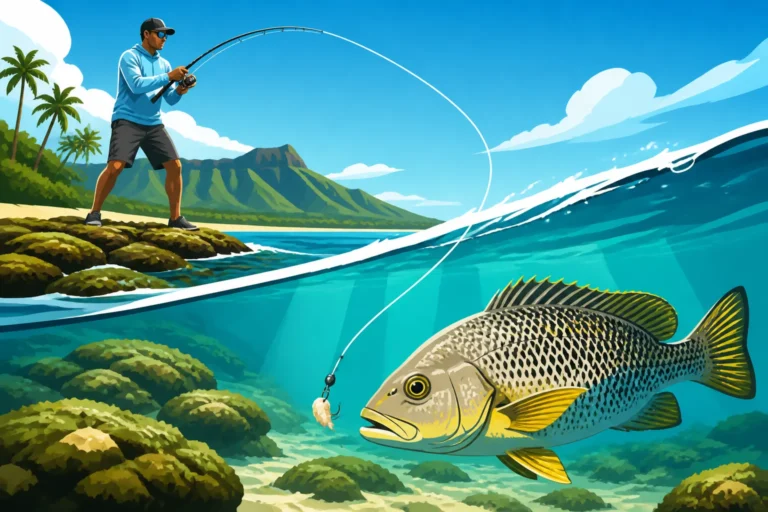
There’s nothing quite like the thrill of seeing a papio, or juvenile trevally, absolutely smash your lure right in the surf line or just off a rocky point. But if you’ve ever tried your hand at shore-based fishing in Hawaii for these feisty fighters, you know it can be incredibly frustrating when they’re just not biting, or worse, when your casting technique isn't quite reaching them in their feeding zones. This comprehensive guide is here to help you dial in the very best casting techniques for shore-based papio, ensuring you're not just throwing line, but actively hunting these awesome fish.
Understanding the Papio and Their Preferred Hangouts
Before we even talk about how to cast, it’s crucial to understand the target. Papio are juvenile Giant Trevally (ulua) or Bluefin Trevally (omilu), and they are incredibly opportunistic predators. They're built for speed and power, and they spend their younger years honing those hunting skills in the diverse shorelines of Hawaii. Knowing where they lurk will directly influence where and how you cast.
Reef Edges and Current Lines
Papio absolutely love structure and current. Think about it: reef edges provide ambush points and cover from larger predators, while current lines bring a constant conveyor belt of baitfish right to them. You'll often find them patrolling the transition zones where sandy bottoms meet rocky reefs, or along the edges of channels where the water flows faster. These areas are natural food funnels. If you're looking to target these fish effectively, you need to understand their behavior. For more on what makes these fish tick, you might want to check out our deep dive into Papio Growth Stages Into Trophy Ulua.
When the waves roll in and push water over a reef, creating white water and turbulence, papio will often position themselves just outside or within that chaotic zone, waiting for disoriented bait. They are not afraid to hunt in the churning water, as it provides both cover and a perfect hunting ground. Your casting needs to be precise enough to hit these seams and edges, not just wildly cast into the middle of a calm stretch. Look for areas with a mix of rock, sand, and deeper pockets of water near the shore.
Whitewater and Foam Lines
The frothy, aerated water created by waves crashing on the shore is a prime feeding zone for papio. This "whitewater" disorients baitfish, making them easy targets, and the bubbles and foam also provide excellent camouflage for a papio waiting to ambush. If you’re not targeting the whitewater, you’re often missing the most active feeding fish.
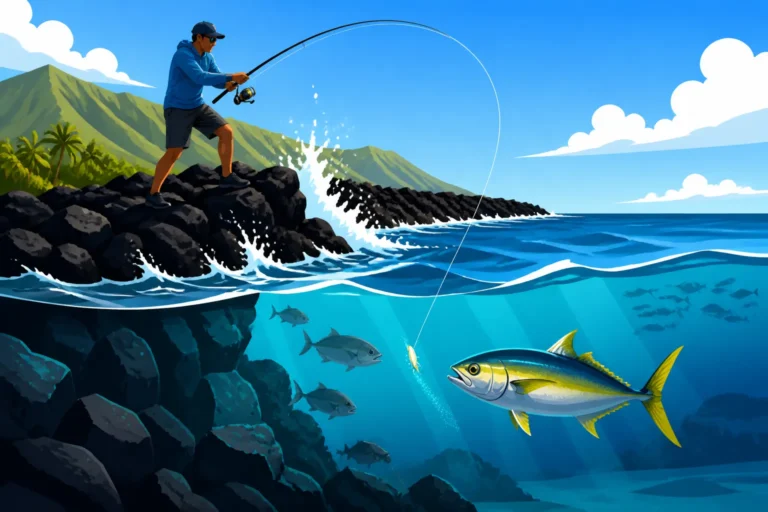
Picture yourself on a sandy beach adjacent to a rocky point. The waves are breaking, sending foamy water washing up the sand. Savvy anglers know that papio will dart into this shallow, turbulent water, often chasing small baitfish. Your cast needs to land your lure or bait right at the edge of this wash, allowing it to tumble and be presented naturally as if it were a stunned baitfish. This often means casting quite close to shore, sometimes just beyond the breaking wave, and then retrieving quickly. Sometimes, the fish are practically at your feet!
Essential Gear for Papio Casting
Having the right equipment isn't just about comfort; it's about maximizing your casting distance, accuracy, and fighting power when that papio inevitably strikes. Investing in good gear, often available conveniently from retailers like Amazon, makes a huge difference.
Rod and Reel Selection
For shore-based papio, you need a rod that can cast a decent distance but still has enough backbone to handle a strong, fast fish. A medium to medium-heavy spinning rod, typically in the 7 to 9-foot range, is ideal. The longer length helps with casting distance and keeping your line clear of obstacles. Pair this with a reliable spinning reel, a 3000 to 5000 size is perfect, capable of holding a good amount of line and delivering smooth drag performance.
When choosing a rod, consider its action. A fast or extra-fast action rod will give you the sensitivity to feel subtle bites and the power to set the hook quickly, which is crucial for the fast-moving papio. Look for a reel with a high retrieve ratio, typically 6.0:1 or higher. Papio are quick, and you often need to retrieve your lure at speed to entice a strike or keep up with a fish running towards you. Shimano and Daiwa both make excellent reels in this category that you can easily find on Amazon.
Line, Leader, and Lures
Your line choice is critical. Braided line, in the 15-30lb test range, is almost non-negotiable for shore fishing for papio. Its thin diameter allows for longer casts, and its lack of stretch gives you superior sensitivity and hook-setting power. You'll want to connect your braid to a fluorocarbon leader, usually 20-40lb test, with a strong knot like an FG knot. Fluorocarbon is nearly invisible in water and more abrasion-resistant, which is vital when fishing around rocks and reefs.
As for lures, papio are suckers for a variety of presentations. Small metal jigs (1/2 to 1.5 oz), often called "wobblers" or "casting spoons," are deadly. These mimic fleeing baitfish perfectly. Soft plastics rigged on jig heads are also effective, especially if you want a more subtle presentation. Topwater poppers and walk-the-dog lures can be incredibly exciting when the papio are actively feeding on the surface, creating explosive strikes. Many local tackle shops and online stores, like Amazon, carry a great selection of these specialized lures. For more specific insights, you can explore Best bait for whipping papio on reef flats.
Mastering the Casting Techniques
Now for the exciting part: actually getting your lure where it needs to go. Shore-based casting for papio isn't just about raw power; it's about precision, control, and adapting to the conditions.
The Overhead Cast for Distance
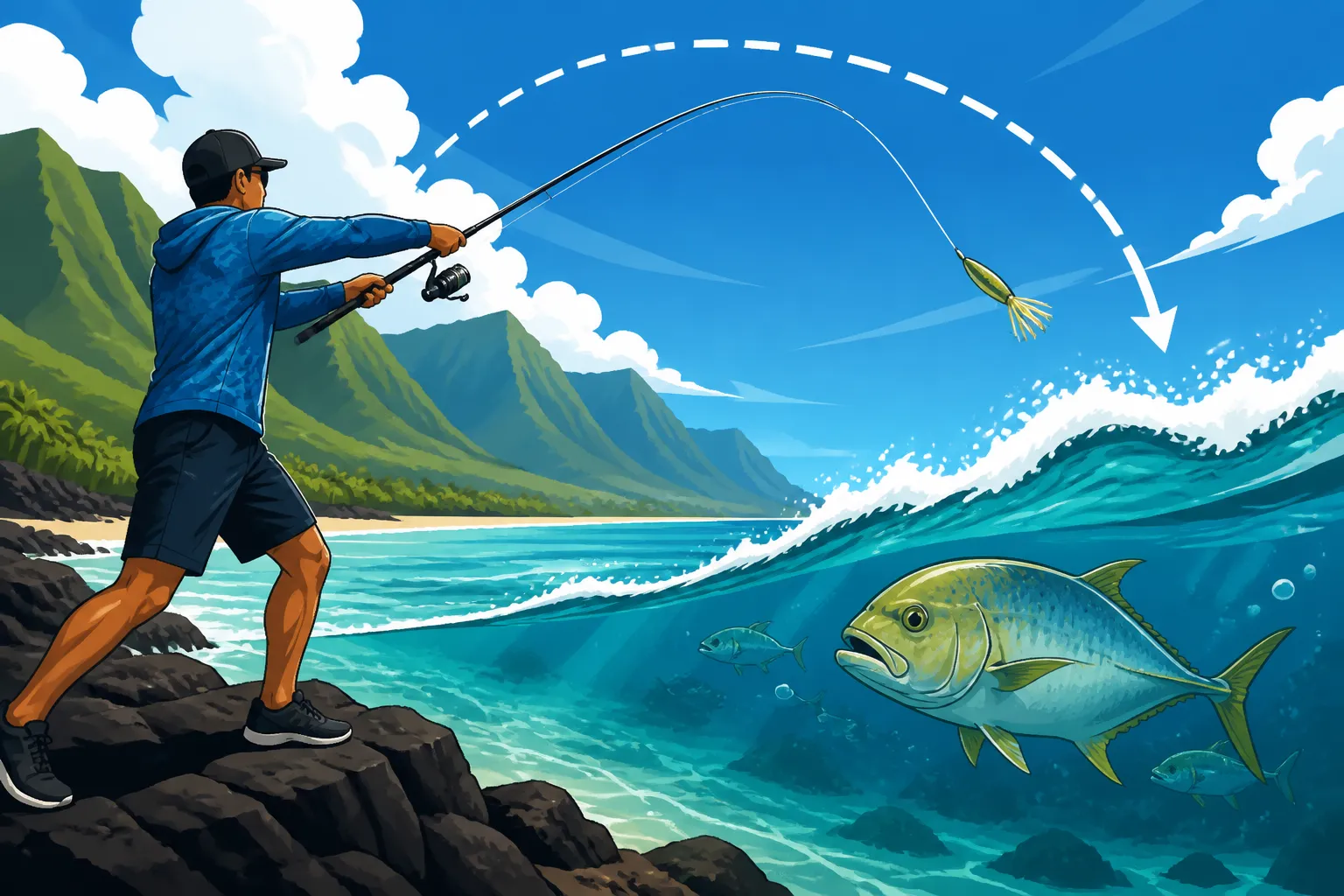
The overhead cast is your bread and butter for achieving maximum distance, especially when you need to reach that distant reef edge or bait school. It's a classic for a reason: it allows for a smooth, powerful delivery. To execute it effectively, stand with your feet shoulder-width apart, perpendicular to your target. Hold the rod over your shoulder, line tight to the lure, and then, with a fluid motion, bring the rod forward, releasing the line with your index finger at about the 10 or 11 o'clock position.
Practice makes perfect with this one. Focus on a smooth acceleration rather than a jerky snap. Let the rod load up properly, using its flex to propel your lure. As your lure flies, feather the line with your finger to control its trajectory and prevent backlashes, especially if you're using a baitcasting reel (though spinning reels are more common for papio). The goal is to launch your lure with enough force to cover significant water, reaching those distant feeding zones where bigger papio might be lurking.
The Sidearm or Skipping Cast for Accuracy
While distance is often key, accuracy is equally important, especially when you're targeting small pockets of water, skipping lures under overhangs, or trying to hit a tight seam between rocks. The sidearm cast is perfect for this. It keeps your lure lower to the water, reducing the impact of wind and making it easier to skip your lure across the surface.
To perform a sidearm cast, bring the rod back to your side, parallel to the ground, then sweep it forward in a horizontal arc. Release the line when your rod tip is pointing directly at your target. This cast is less about brute force and more about finesse and control. It's incredibly useful when fishing around docks, jetties, or steep rock faces where an overhead cast might get snagged on the backswing. It also minimizes splash, which can be crucial for not spooking wary fish in shallower water. If you're looking to hit specific structures, mastering this cast is non-negotiable. It's part of the broader skill set discussed in Shore Fishing Techniques for Hawaii.
Whipping Techniques and Retrieve Speed
"Whipping" is the local term for a specific style of lure fishing from shore, often involving casting and quickly retrieving small jigs or lures. It's one of the most effective ways to catch papio. The technique is dynamic and requires constant adjustment. After your cast, let the lure sink to the desired depth (this might be just below the surface, or deeper if you're working a drop-off). Then, begin your retrieve.
The key to successful whipping for papio is varying your retrieve speed and adding erratic movements. Papio react to sudden changes in speed, jerks, and pauses that mimic an injured or fleeing baitfish. Try a few quick cranks, then a pause, then a sharp twitch of the rod tip, followed by another retrieve. Some days they want it fast and steady; other days they prefer a slow, erratic retrieve. Experiment until you find what triggers a strike. Remember, papio are aggressive, and often a fast, almost panicked retrieve is what gets their attention. For advanced tips on how to make your lure irresistible, dive into Best Techniques for Whipping for Papio.
Reading the Water and Maximizing Your Chances
Casting technique is only half the battle. The other, equally important half, is knowing where to cast and when. The ocean in Hawaii is constantly changing, and understanding these dynamics is what separates a lucky catch from consistent success.
Identifying Productive Water
Successful papio anglers are keen observers of the water. Look for visual cues: diving birds indicating baitfish schools, nervous water (small ripples or splashes from bait being chased), or even the subtle presence of larger predators that papio often follow. Discolored water where currents meet, or areas with significant foam and turbulence from waves, are also hotspots.
Beyond just visuals, feel the water. Pay attention to how the current is moving your line. Cast into the current and let your lure drift naturally, or cast across it to allow your lure to swing through a productive zone. Understanding how the swell and tides influence the water movement near shore can give you a significant advantage. For instance, an incoming tide often pushes bait closer to shore, making for excellent papio fishing. Knowing how to read these patterns is critical, and it extends to understanding specific locations, such as explored in Best fishing spots for papio along Oahu's shoreline.
Timing Your Casts and Adjusting Retrieve
Timing is everything. Papio are often most active during dawn and dusk, when light levels are low, providing them with a predatory advantage. Overcast days can also extend these productive periods. However, don't rule out mid-day fishing, especially if there's significant whitewater or a strong current bringing in bait.
Once you’ve made your cast, pay close attention to the retrieve. If you're not getting bites, don't be afraid to change things up. Alter your retrieve speed: go faster, then slower. Add more pauses, or more aggressive twitches. Experiment with different lures or even different sizes of the same lure. If you're fishing a rocky point, for example, cast to different sides of the point, working both the current and the calmer eddies. Sometimes, the fish are holding in a very specific zone, and you need to cover the water thoroughly to find them. Don't be afraid to change your presentation based on what the fish are telling you. Even specific seasonal conditions, like those discussed in Best lure retrieve speed for papio in fall, can influence the ideal retrieve.
Dealing with Wind and Waves
Fishing in Hawaii often means dealing with wind and waves, which can make casting a challenge. A strong headwind will kill your casting distance, while a crosswind can make it difficult to achieve accuracy. When facing a headwind, try using a heavier lure to cut through the air, and focus on a lower trajectory cast (like a sidearm) to minimize wind resistance.
Waves can be your friend or your foe. Casting into large waves requires timing and careful line management. Cast just as a wave is breaking or receding to avoid your lure being immediately washed back. Use the energy of the wave to help carry your lure out, but be ready to quickly take up slack line to maintain contact with your lure. When fishing a rocky point or in high surf, always be aware of your surroundings and the power of the ocean, as highlighted in Best technique for fishing a rocky point.
Advanced Tactics for Elusive Papio
Sometimes, the papio are just plain finicky. When standard casting and retrieval don't cut it, it's time to pull out some advanced tactics. These often involve subtle adjustments or a completely different approach to lure presentation.
Targeting Topwater Action
When you see papio actively busting bait on the surface, or if the conditions (calm water, low light) just feel right for it, switching to topwater lures can be incredibly effective and exhilarating. Poppers and "walk-the-dog" style lures create commotion on the surface that mimics a struggling baitfish. The visual strike of a papio exploding on a topwater lure is something you won't soon forget.
Casting topwater lures requires a slightly different approach. You still want accuracy, but the retrieve is about creating action. For poppers, a sharp downward twitch of the rod tip will make the lure "pop" and splash water, mimicking a fish gulping or fleeing. For walk-the-dog lures, a rhythmic twitching of the rod tip while retrieving creates a side-to-side sashaying action. Vary the cadence until you find what elicits a strike. Often, a brief pause after a series of movements can be the trigger. Check out Topwater Fishing for Papio in Hawaii for more specific techniques.
Employing Live Bait Techniques
While artificial lures are incredibly effective, sometimes nothing beats live bait, especially for larger, more wary papio or ulua. Techniques like sliding bait rigs are excellent for presenting live opelu or akule just beyond the surf break. This involves casting a sinker out, then clipping a live bait rig to your main line, and letting the current or waves carry your live bait out to deeper water where the bigger fish might be waiting.
Another live bait approach is using a small baitfish (like a juvenile scad or sardine) hooked through the nose or back, and cast out with minimal weight. This allows the bait to swim naturally. You'll need to match your casting technique to the delicate nature of live bait, often requiring a softer, lob-like cast to keep the bait alive and on the hook. This method requires patience but can be incredibly rewarding, especially if the papio are ignoring everything else. For those serious about catching larger trevally, understanding live bait presentations is key.
Conclusion: Practice, Observe, and Adapt
Catching papio from shore in Hawaii is an incredibly rewarding experience, blending the challenge of reading the ocean with the thrill of a powerful fight. The best casting technique for shore-based papio isn't just one single method; it's a dynamic combination of understanding their habitat, selecting the right gear, mastering various casts for distance and accuracy, and constantly adapting your retrieve.
Remember, every fishing session is a learning opportunity. Pay attention to what works and what doesn't. Observe the water, the wind, the tides, and the behavior of the baitfish. Be willing to experiment with different lures and presentations. With patience, persistence, and a solid understanding of these techniques, you'll significantly increase your chances of hooking into those hard-fighting papio, making your time on the beautiful Hawaiian shoreline truly unforgettable.
Disclaimer
Fishing involves inherent risks. Always prioritize your safety, be aware of ocean conditions, and follow all local regulations and guidelines from the Hawaii Division of Aquatic Resources (DAR). This guide is for informational purposes only and does not replace professional advice or personal responsibility.