Best jigging spoon for deep bottomfish
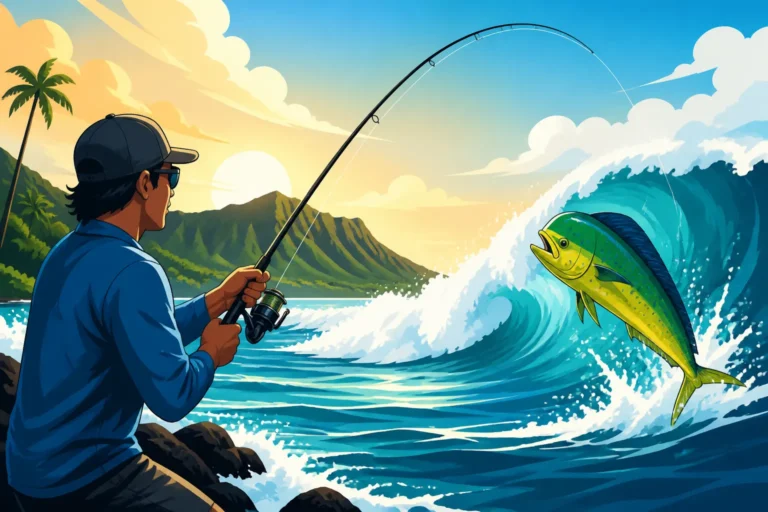
If you've ever tried deep bottomfishing in Hawaii, you know it's a completely different ballgame than shallow water casting. The currents are stronger, the depths are immense, and getting your lure down to where the fish are can be a real battle. Choosing the right jigging spoon isn't just a preference; it's absolutely crucial for success, ensuring your lure gets into the strike zone effectively and entices those elusive deepwater species. This guide is all about helping you cut through the noise and figure out the best jigging spoon for tackling Hawaii's deep bottomfish.
The Deep Dive: Why Deep Bottomfishing in Hawaii is Unique
Deep bottomfishing here in Hawaii is an adventure unto itself, distinct from fishing in shallower reefs or trolling offshore for pelagics. We're talking about depths that can easily stretch into hundreds of feet, sometimes even over a thousand, where light barely penetrates and the water pressure is immense. This environment shapes everything about how fish behave and, consequently, how we need to fish for them. It's a vertical game where gravity, current, and fish biology all play a critical role in your success.
Why Depth Demands Specific Lure Qualities
Picture this: you've dropped your standard jig, the one that slays papio in the shallows, down 600 feet. What happens? It might take forever to get down, flutter erratically in the strong currents, and once it's there, it might not even be visible. This isn't like casting a spinnerbait in a pond, where a light lure can be perfectly effective. The sheer depth and the characteristics of the deep ocean here in Hawaii mean that your lure needs to be purpose-built for the challenge.
Firstly, sheer weight is paramount. A lightweight spoon simply won't cut it against the strong subsurface currents that often run like rivers in the deep. You need something that can slice through that water column efficiently and reach the bottom relatively quickly. Secondly, the design of the lure, its profile and how it interacts with water, becomes critical. A poorly designed jig will tumble and snag, or worse, just get swept away from the target zone. Finally, once it is down there, it needs to have an action that appeals to deepwater dwellers, often in very low-light conditions. These aren't necessarily speed demons; they're often ambush predators or opportunistic feeders that respond to more subtle, erratic movements.
Understanding the Behavior of Deepwater Species
The deep reefs and rocky ledges around our islands are home to some truly magnificent fish, including prized species like opakapaka (pink snapper), onaga (ruby snapper), ehu (red snapper), uku (gray snapper), and gindai (deepwater alfonsino). These fish generally live in colder, darker waters, often congregating around specific underwater structures like seamounts, deep pinnacles, and ledges where they can find food and shelter. Unlike the fast-moving pelagics, many of these bottomfish are less reliant on speed and more on their keen senses to detect prey in their low-light environment.
Their feeding habits often involve ambushing prey or slowly cruising along the bottom. This means that a jig that mimics a wounded baitfish, or one that presents an easy meal with enticing flashes and thumps, can be incredibly effective. Color perception is different in the deep; some colors fade out quickly, while others (like red, which appears black) become less visible, and bioluminescence or reflective qualities become more important. Understanding these behaviors is key to selecting a spoon that will truly grab their attention. For a deeper dive into one of our most popular targets, you might want to read up on Opakapaka Pink Snapper Habits or even Onaga Ruby Snapper Habits.
Anatomy of the Ideal Deep Jigging Spoon
When you're shopping for a jigging spoon to tackle Hawaii's deep bottomfish, you're not just grabbing any shiny piece of metal. There's a science to it, and understanding the core characteristics of an effective deepwater jig is what separates a frustrating day from a productive one. It's about getting down to where the fish are and presenting an irresistible meal, all while battling the immense forces of the deep.
Weight, Profile, and Fall Rate
This is where the rubber meets the road, or more accurately, where the jig meets the bottom. For deep bottomfishing in Hawaii, you're generally looking at jigs that are significantly heavier than what you might use in shallower waters. Think anywhere from 200 grams (about 7 ounces) up to 500 grams (over a pound) or even more, depending on the depth and current. The heavier the jig, the faster and straighter it will drop through the water column, minimizing time spent drifting away from your target zone. This is absolutely critical when you've painstakingly located a fish school on your sonar.
Beyond just weight, the profile of the spoon plays a massive role in its fall rate and action. A sleek, knife-style jig with a narrow body will cut through the water like a dart, reaching the bottom with impressive speed. Other designs, like center-weighted or leaf-shaped jigs, might have a slightly slower fall but offer more flutter or wobble on the descent, which can sometimes be exactly what deepwater fish are looking for. The goal is to balance quick descent with an enticing fall action. You don't want it to just plumet like a rock; you want it to fall with purpose, looking like an injured or disoriented baitfish struggling downwards.
Durability, Hooks, and Finish
There's nothing worse than hooking into a monster deepwater fish, only to have your jig fall apart or the hook straighten out. When you're fishing at hundreds of feet, every retrieve is a workout, and every fish is a prize. That's why durability is paramount. You need jigs made from robust materials that can withstand the incredible pressure, constant contact with rocky bottoms, and the brutal fights with powerful fish.
The hooks that come with your jig are just as important. Many commercially available jigs come with decent hooks, but for the hard-fighting bottomfish we target in Hawaii, upgrading to stronger, razor-sharp assist hooks is often a wise investment. Look for hooks designed for heavy-duty saltwater use, with stout shanks and corrosion-resistant finishes. These hooks need to penetrate tough jaws and hold securely throughout a long, deep retrieve. The lure's finish also needs to be tough; it should resist chipping and peeling after repeated impacts.
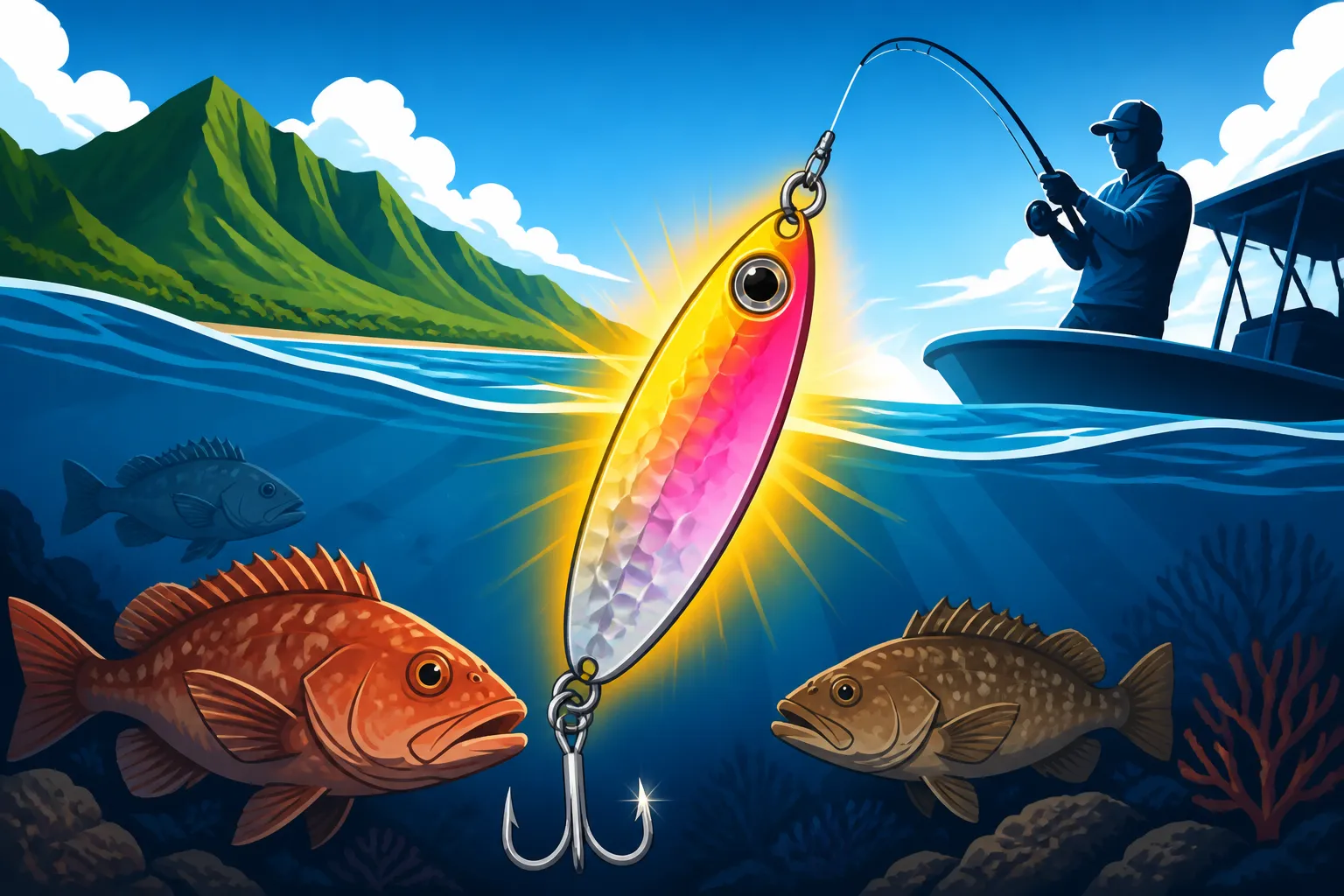
Finally, consider the finish itself. In the deep, where natural light is scarce, lures that boast luminous paint, glow-in-the-dark properties, or highly reflective UV finishes can make all the difference. These features help the jig stand out in the dark, mimicking the bioluminescence of many deep-sea creatures and drawing fish in from a distance. Think of these as beacons in the dark, giving your jig that extra edge.
Action and Presentation
Once your jig is down to the desired depth, its action – how it moves and behaves in the water – becomes key to triggering a strike. Deepwater jigging isn't just a matter of dropping and reeling; it's an art form that involves a variety of techniques. Different spoon designs lend themselves to different actions, and understanding this helps you choose the right tool for the job.
A "knife" jig, for example, typically has a fast, erratic darting action when ripped upwards, then a quick, shimmering fall. This can mimic a fleeing baitfish. A more leaf-shaped or center-weighted jig might have a slower, wider wobble or a "dying leaf" flutter on the fall, which can be very appealing to more lethargic or cautious bottomfish. The retrieve style, whether it's slow-pitch jigging with its subtle lifts and falls, or high-pitch jigging with aggressive rips, will significantly influence the lure's presentation.
The goal is to make the jig look alive, like an injured or disoriented prey item struggling in the water. You want it to flash, vibrate, and move in a way that signals "easy meal" to a hungry opakapaka or onaga. Experimentation is key, but starting with jigs known for reliable, enticing action will get you a head start. If you want to dive deeper into how to present these lures effectively, checking out resources like Jigging for Bottomfish in Hawaii can provide valuable insights into various techniques.
Fine-Tuning Your Gear: Hooks, Leaders, and Colors
Getting the right jigging spoon is a huge step, but it's only part of the equation for successful deep bottomfishing in Hawaii. The effectiveness of even the best jig can be hampered by poor rigging or an inappropriate color choice for the conditions. It's all about creating a cohesive system where every component works together to maximize your chances of connecting with those deepwater giants.
Essential Terminal Tackle
Your jig is the star, but the supporting cast of terminal tackle is what keeps it connected to your line and secures your catch. For deep bottomfishing, strength and reliability are non-negotiable. Firstly, let's talk about leaders. A heavy-duty fluorocarbon leader is typically the go-to. Not only is fluorocarbon highly abrasion-resistant – a must when fishing around rocky structures hundreds of feet down – but its low visibility in water can also be an advantage, especially for wary fish. You'll want to use a leader that's significantly stronger than your main line, often in the 80 to 150-pound range, depending on your target species and the size of your jig.
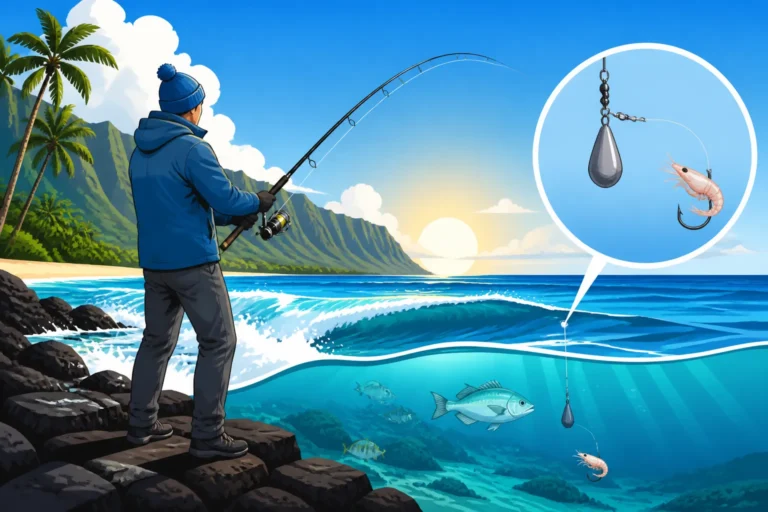
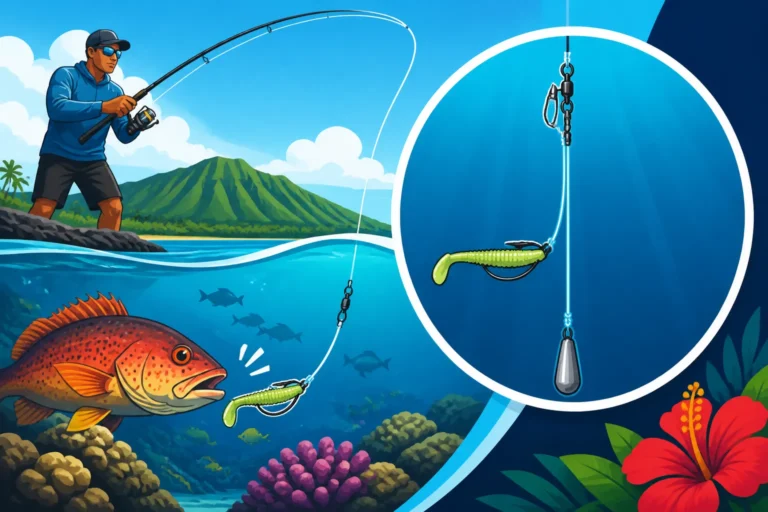
Next up are split rings and solid rings. Don't skimp on these! The cheap ones will fail, and often at the worst possible moment. Look for heavy-duty, corrosion-resistant stainless steel rings. Many anglers prefer solid rings for the main connection to the leader and split rings for attaching assist hooks to the jig itself. Speaking of hooks, assist hooks are generally preferred over treble hooks for jigging. They offer better hook-up ratios, are less prone to snagging the bottom, and are much safer for both the angler and the fish during release. You can use single or double assist hooks, often rigged on strong, braided line, positioned near the head or tail of the jig, or both. For more detailed insights on how to set up your entire rig, take a look at Best Rig for Bottomfishing in Deep Water.
Color and Luminescence
When you're fishing hundreds of feet down, the light spectrum changes dramatically. Reds disappear first, followed by oranges and yellows, leaving a world dominated by blues, greens, and eventually, total darkness. This means that color choice for your jig isn't just aesthetic; it's functional. While bright, natural baitfish patterns like silver, blue, and green are always good starting points, luminescence is often the secret weapon for deepwater applications.
Jigs with significant glow-in-the-dark features are almost a must-have for Hawaii's deep bottomfishing. These jigs absorb light before hitting the water and then emit a ghostly glow in the dark depths, making them highly visible to fish. Many anglers will even "charge" their glow jigs with a flashlight or UV light before dropping them down. Beyond glow, patterns that incorporate metallic flashes, holographic foils, or UV-reactive paints can also be incredibly effective, reflecting any ambient light or UV rays that penetrate the water column. Sometimes, surprisingly, a stark, simple white or black jig can also stand out powerfully against a dark background. Understanding Best Lure Color for Murky Water Bottomfishing can further refine your choices.
Brands and Availability
When it comes to deep jigging spoons, not all brands are created equal. You want to look for reputable manufacturers known for producing high-quality, durable saltwater tackle. Brands like Shimano, Daiwa, Hots, Shout!, and Z-Man are often highly regarded by experienced deepwater anglers. These companies invest in research and development to create jigs with optimal weights, profiles, and finishes specifically designed for demanding offshore conditions.
While many local tackle shops in Hawaii will carry a selection of popular deep jigs, sometimes you might be looking for a very specific model, weight, or color that's hard to find locally. This is where online retailers really shine. Websites like Amazon offer an incredible breadth of selection, often allowing you to find those specialized jigs that might not be stocked everywhere. You can often compare different brands, read reviews, and find exactly the jig you need to match your specific fishing conditions or target species. It’s a convenient way to get access to a wider variety of specialized gear, especially for niche items like specific jig weights for deep bottomfishing. Just make sure you're buying from a reputable seller! And when considering the optimal size, remember to factor in Best Jig Weight for Bottomfishing in Deep Water for your specific target depth.
Mastering the Drop: Techniques for Success
Having the best jigging spoon is a fantastic start, but it's only one piece of the puzzle. The way you present that jig, the essential terminal tackle you use, and your ability to interpret what's happening beneath your boat are equally critical for success when deep bottomfishing in Hawaii. This isn't just about dropping a line; it's about a nuanced approach to an often challenging environment.
Essential Terminal Tackle
We touched on this briefly, but it bears repeating: your terminal tackle is the connection between you and your fish, and it must be strong and reliable. Beyond the heavy fluorocarbon leader (which, by the way, often needs to be a good 10-20 feet long to provide ample abrasion resistance and stealth), consider your main line. Braided line is almost universally preferred for deep jigging due to its incredibly thin diameter, zero stretch, and exceptional strength-to-weight ratio. This allows for better feel of the jig and subtle bites at extreme depths, and helps cut through currents.
The knot connecting your braid to your leader is one of the most critical points in your entire setup. Learn a strong, reliable knot like the FG knot or a modified Albright. These knots are streamlined and maintain a high percentage of your line's breaking strength. Finally, ensure your assist hooks are tied with heavy-duty Kevlar or spectra cord that won't fray easily against toothy fish or sharp rocks. These small details might seem minor, but they collectively contribute to whether you land that once-in-a-lifetime opakapaka or onaga.
Effective Jigging Motions
Once your jig reaches the desired depth, the real work begins. Deep jigging isn't a passive fishing method; it's active and requires constant engagement. There are several effective jigging motions, and often, the key is to experiment to see what the fish prefer on a given day.
One common technique is the "lift and fall." This involves a relatively swift, upward sweep of the rod, followed by allowing the jig to flutter back down on a semi-slack or controlled slack line. The strike often comes on the fall. Another, more aggressive approach is the "rip and drop," where you make several quick, sharp rips upwards, generating a lot of erratic movement, followed by a pause to let the jig descend. This can mimic a fleeing or injured baitfish.
Slow-pitch jigging has also gained immense popularity for bottomfish. This technique uses specialized rods and reels to impart a rhythmic, slower, more fluttering action to the jig, often with short, precise lifts and pauses. The idea is to keep the jig in the strike zone longer and present it as an easy, vulnerable meal. Regardless of the motion, always pay attention to the slack line, feeling for those subtle taps or the sudden weightlessness that indicates a bite. Being adaptable and willing to change your retrieve can make a profound difference.
Reading the Sonar and Locating Fish
In the world of deep bottomfishing, your boat's electronics are your eyes into the unseen world below. A good sonar or fish finder isn't just a luxury; it's an indispensable tool for locating structure and, most importantly, the fish themselves. You're not just blindly dropping your line; you're actively hunting for productive ground.
Start by identifying promising underwater structures like ledges, pinnacles, seamounts, or even subtle changes in the bottom contour. These areas often hold baitfish, which in turn attract the larger bottom dwellers. Once you find structure, look for "arches" or marks that indicate fish. Sometimes these will be tight schools, other times individual large marks. Pay attention to the depth at which the fish are holding – they might not always be right on the bottom. Often, they'll suspend a few feet or even dozens of feet off the structure, creating a "strike zone" that you need to target precisely.
Learning how to interpret your sonar readings, adjust your settings for optimal clarity, and mark waypoints on your GPS are crucial skills. It allows you to make repeated, accurate drops to where the fish are concentrated. Without this ability to locate and stay on fish, even the best jigging spoon will spend most of its time in empty water. To truly understand how to leverage your electronics, consider looking into How to Locate Bottomfish Structure with Sonar. With the right gear, the right technique, and a keen eye on your electronics, you'll be well on your way to a successful deep bottomfishing adventure in Hawaii.
Disclaimer
This article is for general informational purposes only and does not constitute professional advice. Laws, prices and regulations vary by location and change over time. Consult a qualified professional for guidance on your specific situation.