How to catch papio through thick surf
There's nothing quite like the rush of the Hawaiian surf, but for many anglers, the sight of towering waves and churning whitewater can be incredibly daunting. Trying to catch papio (juvenile Giant Trevally or ōio, often called bonefish) when the ocean is roaring seems like a fool's errand to some, but I'm here to tell you it's not just possible, it can be incredibly rewarding. This guide is all about equipping you with the knowledge, gear, and techniques to confidently target papio and other opportunistic predators in Hawaii's most challenging surf conditions, turning those intimidating waves into your next productive fishing grounds.
Understanding Papio in the Surf Zone
Catching papio when the surf is thick isn't just about brute force; it's about understanding why they're there in the first place and how they behave in such turbulent environments. The ocean isn't always a calm, predictable place, and neither are the fish that call it home.
Why Papio Hunt in Thick Surf
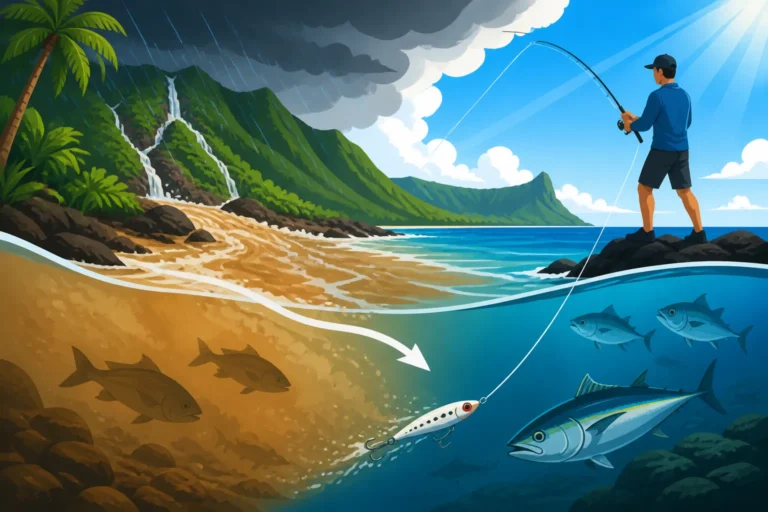
When those big swells roll in and the surf starts to pound, it might look chaotic to us, but to a papio, it's often a dinner bell. The crashing waves and strong currents do a fantastic job of dislodging all sorts of tasty morsels from the reef and sand. Think about it: crabs, small fish, shrimp, and other invertebrates get churned up and disoriented, making them easy prey. The whitewater also provides excellent cover for predators like papio, allowing them to ambush unsuspecting food items without being easily spotted.
It's a high-energy environment, which means the fish that thrive there are strong, aggressive, and always on the hunt. Papio are perfectly adapted for this. They're built for speed and power, able to navigate the powerful currents and surges to capitalize on the abundance of food. Plus, the reduced visibility from the aerated water means they can hunt more boldly, relying on their keen lateral line to detect vibrations from struggling prey. This makes thick surf an prime feeding ground, if you know how to present your bait or lure effectively.
Reading the Ocean: Identifying Productive Zones
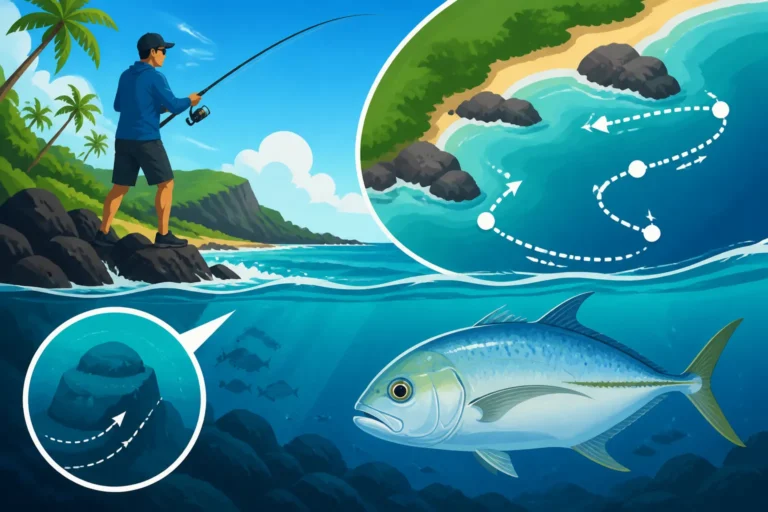
You can't just cast blindly into the whitewater and expect success. Learning to "read" the surf is perhaps the most crucial skill for any Hawaiian shore angler. Even in thick surf, there are always identifiable features that indicate where fish are likely to be holding or feeding. Look for areas where waves are breaking consistently, forming distinct channels, rips, or troughs. These are often deeper pockets or natural pathways where dislodged food accumulates, and fish will use them to move in and out with the current.
Pay close attention to what we call "foamy water" or "whitewater seams." These are lines where the turbulent, aerated water meets clearer water, often indicating a current line or a drop-off. Papio frequently cruise these edges, darting in and out of the cover to snatch prey. Also, look for any structure – submerged rocks, ledges, or even exposed reef points – that can break up the current and create calmer eddies or ambush points. Often, a strong rip current pulling out to sea can be a goldmine, as it carries food offshore and predatory fish will stack up on the edges to feed. Don't be afraid to move around and observe the waves for a bit before making your first cast. The ocean will tell you where the action is if you listen. You'll find that mastering these observations is key to How to Catch Papio on Hawaii's Shoreline.
Essential Gear for Battling Big Waves
Thick surf demands respect, and your fishing gear needs to be up to the challenge. Standard light tackle won't cut it when you're battling powerful currents, strong fish, and the sheer force of the waves. Investing in the right equipment will not only increase your chances of success but also make the experience safer and more enjoyable.
Rods, Reels, and Lines for Heavy Surf
When fishing in Hawaii's thick surf, you'll need a setup designed for power and endurance. Think about a medium-heavy to heavy action surf rod, typically ranging from 9 to 12 feet in length. These longer rods provide the leverage needed to cast heavier baits or lures over crashing waves and into the desired strike zones. They also offer crucial backbone to fight strong fish in turbulent conditions, preventing them from using the current to break you off. Many experienced anglers look for rods built with strong, corrosion-resistant components to stand up to the constant exposure to saltwater spray. You might even use a similar setup to what's described in Best Rod Setup for Surfcasting Ulua, as the demands are quite similar.
Pair your robust rod with a heavy-duty spinning reel that boasts a high line capacity and a smooth, powerful drag system. A reel in the 6000 to 10000 size range is usually a good starting point. Make sure it's sealed or highly resistant to saltwater intrusion, as it will inevitably get soaked. For line, braided line is almost universally preferred for its incredible strength-to-diameter ratio and lack of stretch, which gives you excellent sensitivity to feel bites through the whitewater. A 30 to 50-pound test braided line is a solid choice, often paired with a 60 to 100-pound fluorocarbon leader. The leader provides abrasion resistance against sharp coral or lava rock and is less visible to wary fish. You can find a wide array of these specialized lines and reels on platforms like Amazon, offering a good selection of durable gear suitable for these tough conditions. For more on line choices, check out Best Line for Surfcasting from a Rocky Shore.
The Right Lures and Baits to Cut Through the Chaos
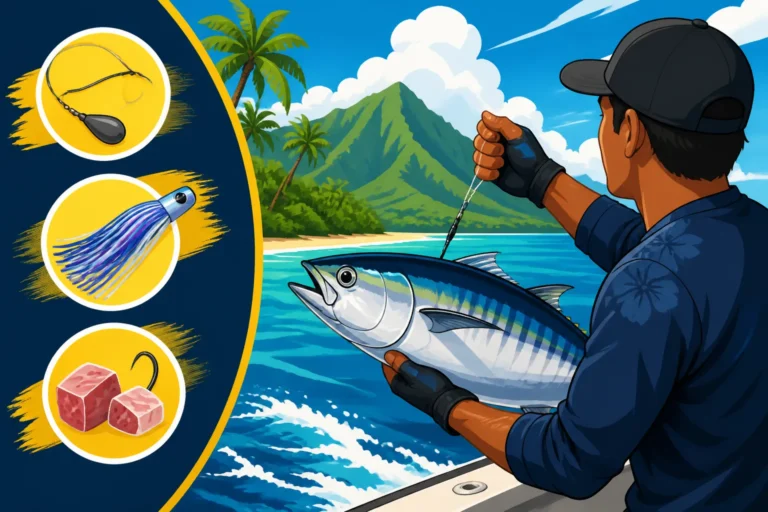
The thick surf environment requires specific types of lures and baits that can be seen, felt, and held in the current without getting immediately washed out. Heavy, dense lures are your friends here. Lead jigs, often called "iron," in weights ranging from 2 to 5 ounces or even heavier, are excellent for getting past the breaking waves and sinking quickly to where the fish are. These can be cast a country mile and retrieved with an erratic action that mimics a disoriented baitfish. Poppers and surface plugs, especially those with a cupped face that creates a lot of splash, can also be effective when papio are actively feeding near the surface in the whitewater. The commotion they create attracts attention even in noisy conditions.
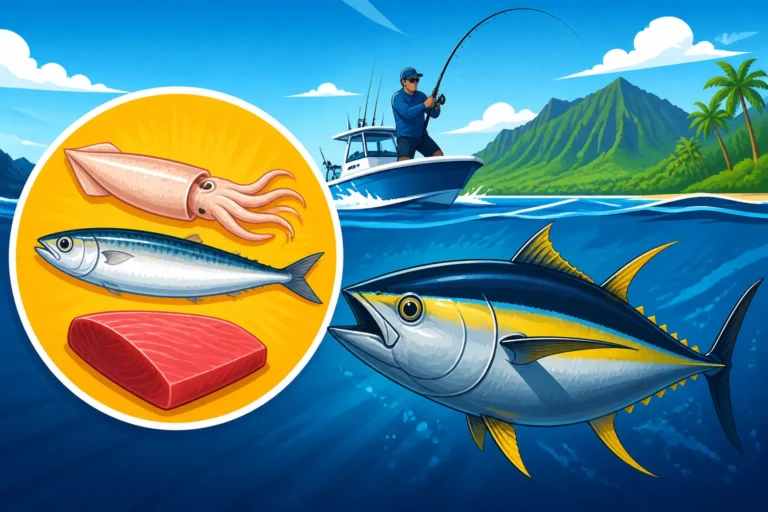
When it comes to bait, presentation is key. Whole or cut baits need to be robust enough to stay on the hook and withstand the current. Freshly caught opelu, akule, or `halalu are prime choices, either fished whole if small enough or in sturdy chunks. When using bait, a Carolina rig or a fish-finder rig with a heavy pyramid or Sputnik sinker is often best. These sinkers are designed to dig into the sand and hold your bait in place, preventing it from being swept away too quickly. Hook size should match your bait and target species, usually a strong 5/0 to 8/0 circle hook. Live bait, if you can procure it and keep it lively, is often irresistible in the surf, as its natural movements are hard for a hungry papio to ignore. Remember, durability and weight are paramount when selecting your terminal tackle and baits for these challenging conditions.
Proven Techniques for Thick Surf Papio
Now that you've got the gear, it's time to talk strategy. Fishing in thick surf isn't just about casting and reeling; it's a dynamic dance with the ocean, requiring precision, timing, and a healthy dose of patience. These techniques will help you navigate the chaos and put your offering in front of hungry papio.
Mastering the Cast in Challenging Conditions
Casting in thick surf is a beast of its own. You're not just fighting the wind; you're contending with massive waves and spray, and often trying to hit a relatively small, moving target zone. The key is to time your cast. Watch the sets of waves. There's usually a lull between them, a brief window where the water is less turbulent near the shore. That's your moment. A powerful overhead cast, using the full length of your long surf rod, is often necessary to get your lure or bait beyond the immediate shore break. You want to aim for those deeper channels, whitewater seams, or structure-laden areas you identified earlier. For some deeper insights into technique, check out Best Casting Technique for Shore-Based Papio.
Practice helps immensely. Start by casting a few times with just a weighted practice plug to get a feel for your gear and the conditions. Don't be afraid to put some muscle into it, but also focus on smooth, controlled movements to avoid tangles and maximize distance. When casting into a headwind, a lower trajectory cast can help your lure cut through the air more efficiently. If you're using bait, ensure it's securely rigged to prevent it from flying off mid-cast. The goal isn't just distance; it's accuracy. Landing your offering in the right zone, even if it's just a few feet difference, can be the key to getting a strike.
Retrieval Strategies and Hooksets in Whitewater
Once your lure or bait is in the water, the battle isn't over. The way you retrieve in thick surf is critical. For lures like heavy jigs, a "sweep and drop" or "lift and fall" retrieve often works wonders. Cast out, let the jig sink, then sweep your rod tip up to pull the jig through the water, allowing it to flutter or fall on the slack. This erratic motion mimics a distressed baitfish struggling in the current. Vary your retrieve speed; sometimes a slow, deliberate retrieve is best, other times a faster, more aggressive pace will trigger a strike. Pay attention to what the ocean is doing; if the current is strong, a slower retrieve might be necessary to keep your lure in the strike zone longer. You might even find parallels with Best lure retrieve speed for papio in fall.
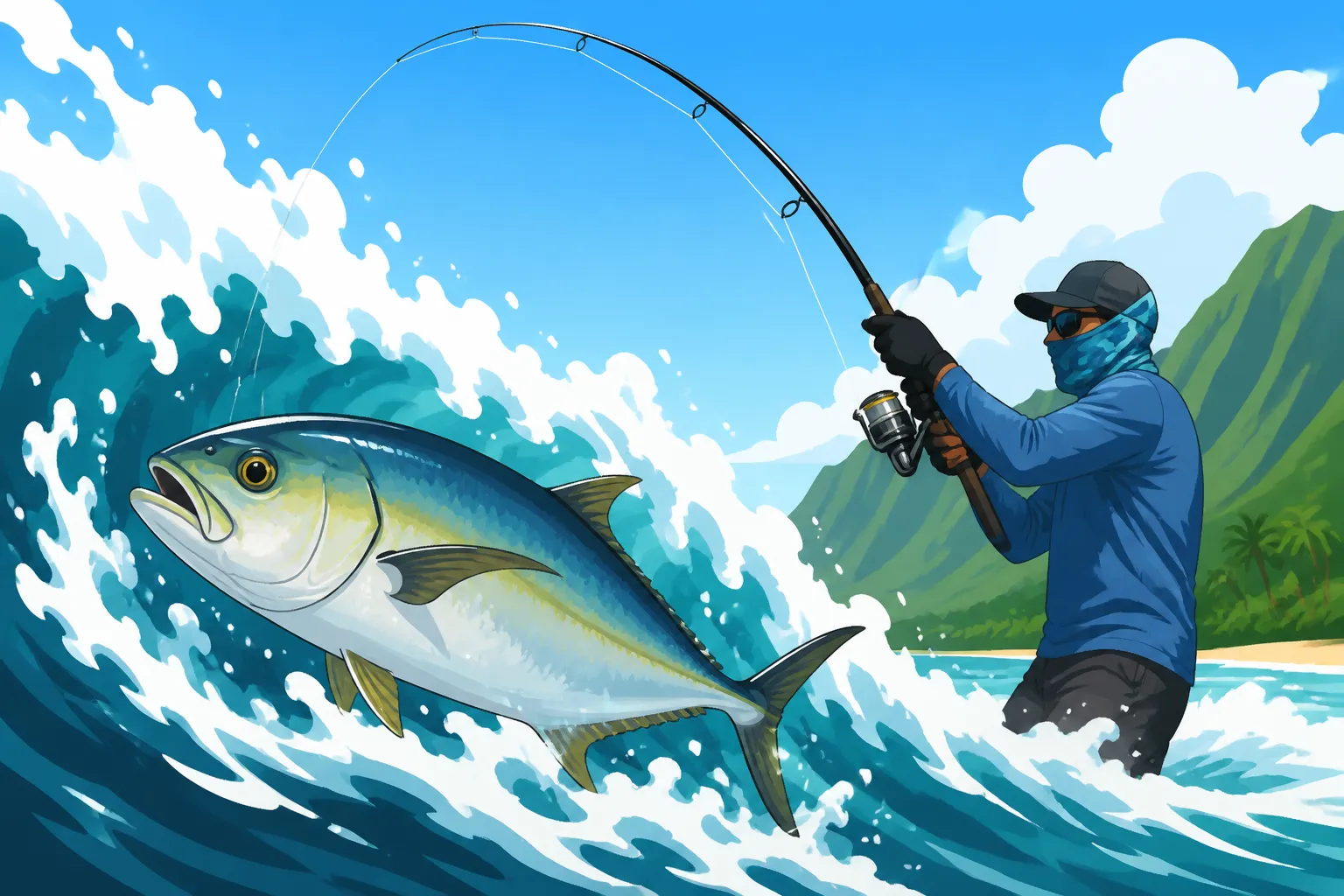
For bait fishing, once your sinker is dug in, you're essentially waiting for a bite. However, keep your rod in a holder or brace it firmly, and keep a watchful eye on your line. Even with braided line, feeling a bite can be tough in heavy current. Look for subtle twitches or a sudden pull. When you get a hit, resist the urge to immediately snatch the rod. With circle hooks, a steady lift of the rod as you retrieve slack will typically set the hook firmly in the fish's jaw. Avoid aggressive jerking. Once hooked, keep the pressure on. Papio are strong fighters, especially in the current, and they'll use the waves to their advantage. Pump and reel, slowly gaining line, and try to keep the fish from digging into any nearby structure. Be ready for sudden surges, and let your drag do its job.
Safety First: Staying Safe in Hawaii's Big Surf
Fishing in thick surf isn't just about the thrill of the catch; it's also about respecting the immense power of the ocean and prioritizing your safety. Hawaii's coastline can be unforgiving, and a lapse in judgment can quickly turn a fun day into a dangerous situation.
Assessing Conditions and Knowing Your Limits
Before you even think about heading out, always check the surf forecast. Pay attention to wave height, swell direction, and period. A large swell from a particular direction can create treacherous conditions on certain shorelines, even if another side of the island is calm. Also, be aware of the tides; sometimes a high or low tide can dramatically change the intensity of the shore break. Look for local knowledge or reports from other anglers familiar with the spot.
Once you're at the location, take time to observe the waves. Watch several sets to understand the pattern. Are there sneaker waves? How strong are the rip currents? Is the shore break manageable? Never turn your back on the ocean. If the conditions look too rough, or if you feel uneasy, trust your gut. There's no fish worth risking your life for. It's always better to err on the side of caution and come back another day when the ocean is more forgiving. Knowing your physical limits, especially regarding swimming ability and stamina, is paramount. Heavy gear can make falling in even more dangerous. If you're unsure about a spot, start with easier access points and gradually work your way up to more challenging locations as your experience grows.
Essential Safety Equipment
Beyond your fishing gear, there are several pieces of safety equipment that are non-negotiable when fishing in Hawaii's thick surf. First and foremost, sturdy, reef-safe footwear is a must. Those lava rocks and slippery moss can send you sprawling faster than you can say "papio." Boots with good grip are far better than sandals. Many anglers opt for reef shoes or even specialized tabi boots for better traction and protection. A waterproof bag for your phone and keys is also crucial, because even if you don't plan on getting wet, the ocean has a way of finding you.
Consider wearing a personal flotation device (PFD), especially if you're fishing near steep drop-offs or in areas with particularly strong currents. It might feel bulky, but it could be a lifesaver. A good quality wading belt, cinched tightly, can also prevent water from filling your waders (if you're using them) and weighing you down. Always tell someone where you're going and when you expect to return. Fishing with a buddy is always a safer option than going alone, especially in challenging conditions. Having a first-aid kit nearby, even a small one, is also a smart move for minor cuts and scrapes that can happen on rocky shores. You can find essential safety gear like waterproof phone cases and reef shoes on Amazon, making it easy to prepare for your adventures.
Table: Surf Fishing Safety Checklist
| Item | Importance in Thick Surf | Notes |
|---|---|---|
| Sturdy Reef Footwear | Essential for traction and protection | Lava rock and wet surfaces are extremely slippery. Look for tabi boots or high-grip reef shoes. |
| Personal Flotation Device (PFD) | Highly Recommended for strong currents | Provides buoyancy if swept into the water, crucial when carrying heavy gear. |
| Waterproof Bag | Critical for electronics and keys | Keep phone, keys, and wallet dry from spray and unexpected waves. |
| Wading Belt | Recommended if wearing waders | Prevents waders from filling with water and creating a dangerous weight if you fall in. |
| First-Aid Kit | Good to have for minor injuries | Cuts and scrapes are common on rocky shorelines. |
| Sun Protection | Essential (Hat, Sunglasses, Sunscreen) | Prolonged exposure to sun and glare can lead to burns and eye strain. |
| Hydration | Important for stamina | Stay hydrated, especially in Hawaii's warm climate and during strenuous activity. |
| Fishing Buddy | Highly Recommended | Provides an extra set of eyes and help in case of an emergency. Never fish alone in challenging conditions. |
| Float Plan | Essential | Inform someone of your location and expected return time. |
Always remember that the ocean is dynamic and powerful. While the thrill of catching a papio in big surf is incredible, your safety should always be your number one priority. Enjoy the challenge, but respect the conditions. For a broader overview of regulations, consider reading Hawaii Fishing Regulations Explained and for specifics on what fish you can keep, check Hawaii Papio and Ulua Size Rules.
Disclaimer
This article is for general informational purposes only and does not constitute professional advice. Laws, prices and regulations vary by location and change over time. Consult a qualified professional for guidance on your specific situation.