How to pattern papio on an unfamiliar shoreline
Stepping onto a new stretch of Hawaii's stunning shoreline, rod in hand, can be incredibly exciting, but also a little daunting. You see that beautiful blue water, feel the ocean breeze, and know there are papio (juvenile Giant Trevally, or ulua when grown) out there, but figuring out where they are biting on an unfamiliar beach, reef, or lava rock point can feel like finding a needle in a haystack. This comprehensive guide is here to unravel that mystery, teaching you how to "pattern" papio and increase your chances of a successful catch, even when fishing completely new waters.
The Puzzle of Papio on New Horizons: Understanding Their Habits
Before you even make your first cast on an unfamiliar shoreline, it's incredibly helpful to get into the mind of a papio. These feisty, hard-fighting fish aren't just swimming around randomly; they have specific preferences for habitat, food, and water conditions. Understanding these fundamental instincts is the first step in learning how to pattern them, no matter where you are in the islands. It's like learning the basic rules of a game before you try to master a new level.
Papio's Natural Instincts and Habitat Preferences
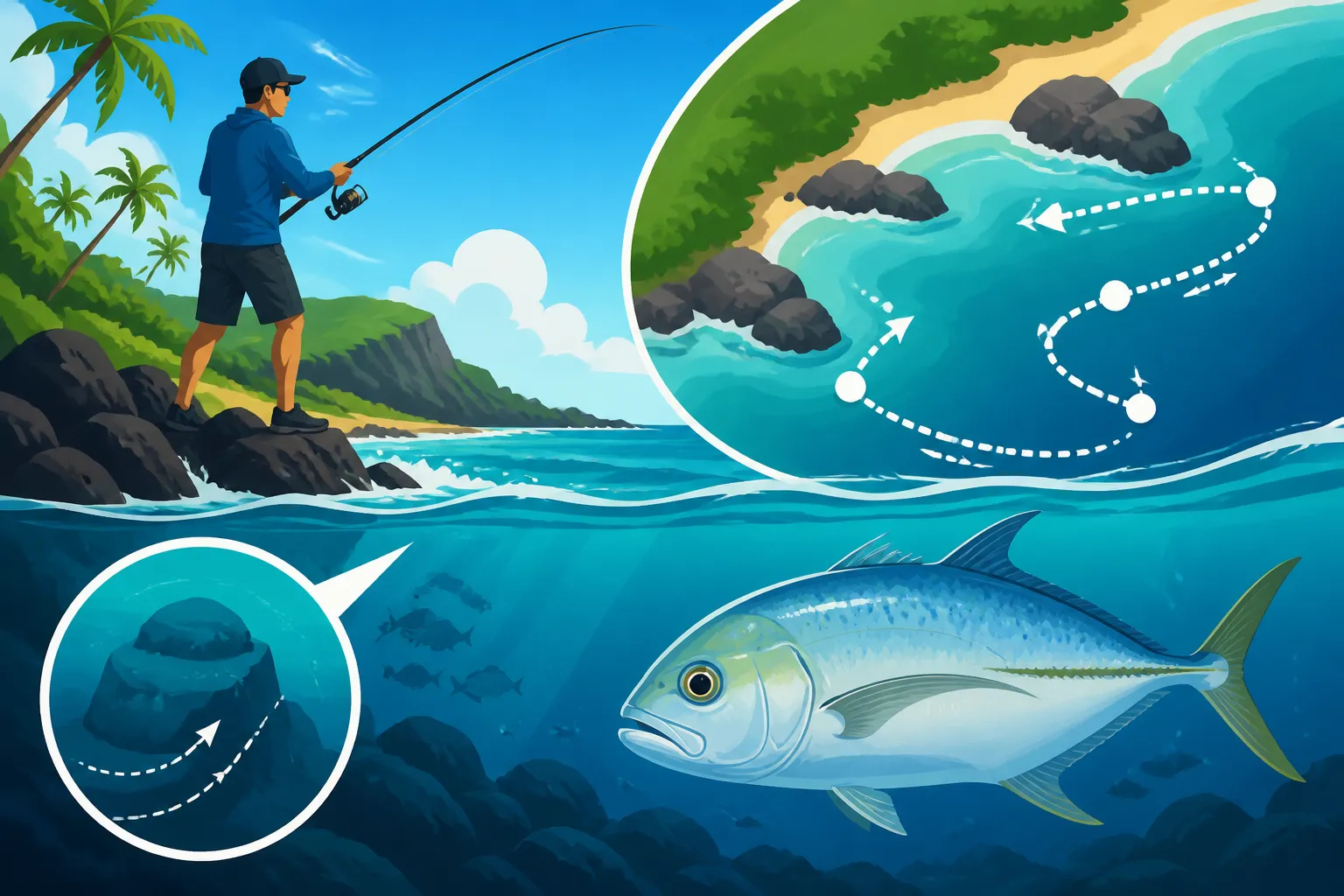
Papio are opportunistic predators, constantly on the lookout for an easy meal. They are often found lurking in areas that offer both cover and access to food sources. Think about it from their perspective: where would you hide if you were trying to ambush something? Reef flats, for instance, are prime papio territory, offering a labyrinth of coral and rock structures where smaller baitfish, crabs, and crustaceans can hide. Papio will patrol the edges of these reefs, darting out to snatch unsuspecting prey. Current breaks, where moving water meets a calmer patch, create natural eddies that concentrate bait and provide a perfect ambush point for a papio to lie in wait, conserving energy.
Likewise, rocky points and ledges that jut out into deeper water are magnets for papio. These geological features disrupt currents, creating feeding lanes and often attracting baitfish that are trying to escape the open ocean. The turbulent water around these points can also disorient prey, making them easier targets. You'll find that papio often hold in these areas, especially during incoming or outgoing tides when the water movement is most pronounced. They aren't afraid of a bit of rough water if it means a buffet is on offer. The trick is to recognize these patterns and translate them into your fishing strategy for new locations.
Tidal Influence and Feeding Patterns
Tides play a monumental role in Hawaii's shoreline fishing, particularly when targeting papio. It's not just about high tide or low tide; it's about the movement of water that the tides create. An incoming tide often pushes baitfish closer to shore, bringing them within striking distance of papio lurking in the shallows or along reef edges. Conversely, an outgoing tide can pull bait from estuaries and calmer bays out into the open ocean, concentrating them in channels or along drop-offs where papio will be waiting. Many experienced anglers here swear by the hours around the peak of an incoming or outgoing tide as the most productive.
However, it's not a one-size-fits-all rule. On some coastlines, a strong incoming tide might make the water too rough or churned up, scattering the bait and making fishing difficult. On other, more protected shores, that same tide could be exactly what's needed to bring papio in closer. The key is to observe. Look at how the water flows around different structures during various tidal stages. Does a particular channel get a strong current on the outgoing tide? Does an incoming tide flood a shallow flat with enough water for papio to hunt? These are the questions you'll be asking yourself, and the answers will help you unlock the secrets of an unfamiliar spot. For more on this, check out Best Time of Day to Catch Ulua.
Identifying Their Favorite Meals
Knowing what papio eat is crucial to choosing the right lure or bait, especially when you're trying to pattern them on a new shoreline. Papio are not picky eaters, but they do have preferences based on what's locally abundant. Their diet primarily consists of smaller baitfish like juvenile mackerel scad (opelu), sardines, anchovies, and various reef fish. They'll also readily strike at crustaceans like crabs and shrimp, or even cephalopods like squid, especially if those are disturbed by waves or current.
When you're exploring a new spot, take a moment to observe the baitfish activity. Are there schools of small fish flickering near the surface? Are birds diving nearby? This is a huge clue. If you see needlefish darting around, consider using a long, slender lure that mimics their profile. If you notice crabs scuttling along the rocks, a soft plastic crab imitation might be just the ticket. Even checking the stomach contents of a papio you catch (if you plan to keep it) can give you invaluable insight into what they're actively feeding on in that specific area. Many anglers will keep a variety of lures, from topwater poppers to diving plugs and soft plastics, ready to match whatever bait they observe. You can find a fantastic selection of these versatile lures on platforms like Amazon.
Decoding the Shoreline: Where Papio Hide and Hunt
Now that you have a grasp of papio's general behavior, it's time to become a detective and "read" the specific shoreline in front of you. Every stretch of Hawaiian coast, even just a few hundred yards, can hold unique features that concentrate fish. Learning to identify these key indicators is paramount to patterning papio efficiently. It’s about more than just casting blindly; it’s about strategic observation.
Key Structural Elements to Look For
The structure of the shoreline is your first big clue. Papio love structure because it provides cover, concentrates bait, and disrupts currents. Here are the big ones to watch for:
- Reef Edges and Drop-offs: These are classic papio haunts. Where a shallow reef suddenly drops into deeper water, it creates an ambush point. Papio will patrol these edges, darting out to grab prey moving between the depths and the shallows. Cast parallel to these drop-offs or slightly into the deeper water, working your lure back up.
- Rocky Points and Headlands: Land that juts out into the ocean acts like a funnel for currents and bait. Waves breaking around these points often dislodge small creatures and disorient baitfish. These are high-percentage spots, especially during strong tides. Cast around the very tip of the point and work your way back along both sides.
- Sand Channels and Gutters within Reefs: Even on predominantly reefy bottoms, you'll often find channels or "gutters" of sand. These act as highways for baitfish and deeper water access for predators. Look for darker lines in the water indicating deeper channels, especially at lower tides. These are excellent places to present a bait or lure.
- Piers and Harbors: While perhaps not "unfamiliar shoreline" in the wildest sense, man-made structures like piers, jetties, and harbor mouths offer structure, deep water access, and often attract a lot of bait. Papio will absolutely cruise these areas.
Understanding these features is key. A lava rock point might look daunting, but its rugged edges and crevices are perfect hiding spots for bait and excellent ambush points for papio. For more on navigating these spots, see Shore Fishing Techniques for Hawaii.
The Language of Water Movement and Current
The ocean's current and wave action are constantly telling a story, and learning to "read" this language is essential for patterning papio. Fish are incredibly sensitive to changes in water flow, using it to their advantage.
- Rips and Eddies: A rip current, which is a strong, narrow current flowing outward from the shore, can pull baitfish offshore, creating a feeding frenzy zone at its mouth. Conversely, eddies – swirling pockets of water often found behind structures or in protected bays – can concentrate bait. Look for visible lines on the water's surface, or areas where debris collects.
- Turbulent White Water vs. Calm Pockets: The crashing surf, or "white water," can be fantastic for papio. The turbulence disorients baitfish, makes it harder for them to see predators, and oxygenates the water. Papio will often patrol the edges of this white water, moving in and out to snatch struggling prey. Don't be afraid to cast into the whitewater itself, but also pay attention to the calmer zones adjacent to it.
- Current Funnels: Any natural constriction where water is forced through a narrower opening will create a stronger current – a "current funnel." This could be a gap in a reef, a channel between two rocky outcrops, or the mouth of a bay. These are prime papio ambush points as bait is swept through.
Observe how the waves are breaking, how the water is moving around rocks and reefs, and where calmer patches exist. These observations, combined with tidal knowledge, will guide your casting decisions on new grounds.
Spotting the Bait: A Direct Line to Papio
Papio follow their food, plain and simple. If you can find the bait, you're usually close to the predators. This might sound obvious, but actively looking for signs of baitfish on an unfamiliar shoreline is often overlooked by eager anglers.
- Visible Schools of Bait: Keep your eyes peeled for schools of small fish – flashes of silver, subtle disturbances on the water's surface, or even a nervous "shimmer" in the shallows. Sometimes, the schools are so dense they'll darken the water in patches. Cast right into or around these schools.
- "Nervous Water": This is a subtle but critical indicator. Nervous water refers to small, erratic splashes or ripples that aren't caused by wind or waves, but by baitfish frantically trying to escape a predator. It might be a quick "boil" on the surface, or a series of tiny jumps. This is often the sign of a papio or other predator actively busting through a school of bait.
- Diving Birds: Seabirds are excellent indicators of baitfish activity. If you see terns, boobies, or other shorebirds repeatedly diving into a specific area, especially offshore, it almost certainly means there's a baitfish school being pushed to the surface by predators from below. While you might not be able to cast directly to them from shore, it tells you that bait is active in the general vicinity, and those baitfish could eventually move closer to shore or into range.
Bringing a good pair of polarized sunglasses is a game-changer here. They cut the glare off the water, allowing you to see deeper into the shallows and spot baitfish, submerged structures, and even cruising papio that would otherwise be invisible. You can find many reliable options on Amazon for this essential piece of gear.
Your Angling Strategy: Techniques for Unlocking Unfamiliar Papio Grounds
With a solid understanding of papio behavior and how to read the water, it's time to put your angling strategy into action. On an unfamiliar shoreline, your approach needs to be systematic and adaptable. You're not just fishing; you're actively exploring and gathering information with every cast.
Choosing the Right Lures and Baits for Scouting
When you're first "scouting" an unfamiliar shoreline, versatility is your friend. You want lures and baits that can cover a lot of water and mimic a variety of prey until you figure out what the papio are keying in on.
- Versatile Lures:
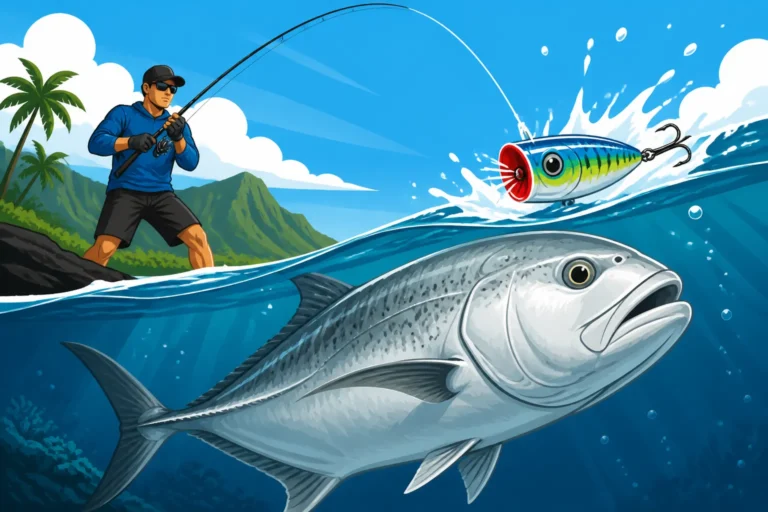
- Surface Poppers and Walk-the-Dogs: These are excellent for covering wide areas, creating a lot of commotion, and drawing fish up from deeper water, especially in low light or calm conditions. They mimic injured baitfish struggling on the surface. Try How to fish a popper for schooling papio for specific tips.
- Sub-Surface Stickbaits and Swimbaits: These can be retrieved just below the surface, mimicking baitfish cruising naturally. They're great for when papio aren't committing to a topwater strike or when there's a chop on the water.
- Metal Jigs and Spoons: Heavy and aerodynamic, these are fantastic for casting long distances, reaching deeper water quickly, and mimicking a fast-fleeing or injured baitfish. They're especially effective when current is strong or you suspect fish are holding deeper.
- Soft Plastics: Grubs, paddle-tail swimbaits, or even crab imitations on a jig head can be incredibly effective when worked slowly along the bottom or jigged through channels. They offer a very natural presentation.
- Local Bait Options: If you prefer natural bait, look for what's locally available and legal to collect. Small live baitfish (like juvenile opelu or akule) or crabs are irresistible to papio. If you can't catch live bait, fresh dead bait like squid or chunks of larger fish can also be very productive, especially when fished on a sliding rig in areas with strong current. Remember to check Hawaii Bag and Size Limits by Species for baitfish regulations.
Start with something versatile, observe the response (or lack thereof), and then adjust. If no surface action, go sub-surface. If that doesn't work, try jigs for deeper exploration.
Mastering Your Casting and Retrieve Game
It's not just what you throw, but how you throw and retrieve it. On an unfamiliar shoreline, your casting and retrieve techniques are your primary tools for gathering information.
- Fan Casting: This is your bread and butter for scouting. Start by casting directly in front of you, then make subsequent casts a few degrees to the left and right, slowly covering a wide, fan-shaped area. This systematic approach ensures you're presenting your lure to as much potential holding water as possible. For specific techniques, consider Best casting technique for shore-based papio.
- Varying Retrieve Speeds and Actions: Don't just reel in at a steady pace. Papio are often triggered by erratic movements.
- Stop-and-Go: Reel a few cranks, pause, twitch, reel again. This mimics an injured or disoriented baitfish.
- Fast Burn: Sometimes a rapid retrieve with a popper or jig is what's needed to trigger a chase instinct, especially if fish are active.
- Slow Roll: With soft plastics or sub-surface lures, a slow, steady retrieve along the bottom or through a channel can be deadly.
- "Whipping" Action: This involves casting and retrieving at a moderate to fast pace, punctuated by quick, sharp jerks of the rod tip to make the lure dart and flash. This is a very common and effective technique for papio in Hawaii, so much so that it has its own dedicated article: Best Techniques for Whipping for Papio.
- Targeting Features: Once you've identified key structural elements or water movements, focus your casts to hit them precisely. Cast beyond a rocky point and retrieve through the current funnel. Cast into the edge of the white water. Cast parallel to a reef edge. Each precise cast is an experiment.
Remember, the goal is to elicit a strike. If one retrieve isn't working, don't be afraid to change it up drastically. Papio can be surprisingly finicky one moment and aggressive the next.
The Art of Observation: Beyond Just Fishing
Fishing is often about more than just casting and reeling. On an unfamiliar shoreline, being a keen observer can be as important as your angling skill. Your eyes and ears are constantly collecting data.
- Watch for Surface Activity: Beyond nervous water, look for actual splashes, boils, or even glimpses of fish jumping or chasing bait. These are direct signs of active predators.
- Pay Attention to Your Lure: Is it getting picked up by smaller fish? Is it snagging on invisible reef? The way your lure behaves and interacts with the water column tells you about the bottom structure, current, and potential snags. A slight tick on your line might not be a papio, but it could be baitfish bumping your lure, indicating their presence.
- Consider the Sun's Position: The sun can dramatically affect where fish hold and how they feed. Early morning or late afternoon with the sun low on the horizon often provides the best light conditions for papio, as they can hunt effectively without being silhouetted. Midday sun can push them into deeper water or shaded areas under ledges. Also, consider glare – fishing directly into the sun can make spotting difficult.
- Listen: Sometimes you can hear fish busting bait, especially in calmer conditions. Keep an ear out for any unusual splashing or thrashing sounds.
Every unsuccessful cast is still a piece of information. Did you get a follow? Did you see any bait? Did the lure get fouled by weed? All these observations build a picture of the spot.
Beyond the Cast: Adapting and Learning from Every Outing
Patterning papio on an unfamiliar shoreline isn't a one-and-done deal. It's a continuous learning process that involves adapting to changing conditions, respecting local wisdom, and embracing the journey of discovery. Every outing, successful or not, adds to your knowledge base.
Time of Day and Weather: Shifting Conditions
Papio activity, like most fish, is heavily influenced by the time of day and prevailing weather conditions. What worked perfectly yesterday might be futile today, and knowing how to adapt is key.
- Dawn and Dusk: These "golden hours" are almost universally the best times to target papio. The low light provides cover for predators, baitfish are often more active, and the cooler temperatures can stimulate feeding. If you're exploring a new spot, these are the times to hit it hard. The papio are more likely to be cruising the shallows or busting bait on the surface during these periods.
- Overcast Days: Cloud cover can extend the prime feeding window beyond dawn and dusk. It reduces light penetration, making fish feel safer in shallower water throughout the day.
- Windy Conditions: A moderate chop or wind can be a blessing. It breaks up the water's surface, making it harder for papio to be seen by their prey, and can also concentrate bait. However, excessively strong winds can make casting difficult and stir up too much sediment, reducing visibility. You'll have to learn to gauge when the wind is a help or a hindrance for a particular spot.
- Rain Runoff: After heavy rains, streams and storm drains carry freshwater and often churn up sediment and organic matter into the ocean. While this can sometimes be detrimental, it can also attract baitfish seeking nutrients, which in turn attracts papio. Target the edges of these runoff plumes, where cleaner water meets the murky mix.
Don't be afraid to fish in less-than-perfect weather. Sometimes, those challenging conditions can lead to unexpected bites. Your waterproof gear from Amazon might get a workout, but the rewards can be worth it.
Tapping into Local Knowledge
One of the most valuable resources you have on an unfamiliar shoreline is often the local community. Fishermen who have spent their lives on these waters possess an incredible wealth of knowledge that no guide or map can fully replicate.
- Respectful Inquiry: If you see local anglers fishing, a polite "Aloha" and a respectful question about the general area or what they've been catching can sometimes open doors. Be humble, be genuinely interested, and never demand information. Offer to share your own observations if appropriate. Don't expect secret spots, but you might get clues about tides, general bait patterns, or even preferred lure colors for the area.
- Observe Other Anglers: Even if you don't engage in conversation, simply observing how local anglers fish can be incredibly informative. What kind of gear are they using? Where are they casting? What time of day are they showing up? Are they wading in certain areas? Do they use specific Wading Techniques for Hawaii Shore Fishing? These visual cues can quickly teach you about a spot's nuances.
- Bait Shops and Tackle Stores: The staff at local bait and tackle shops are often fonts of knowledge. They know what's biting, where, and on what. They're also invested in your success, as it means repeat business. Don't be shy about asking for general advice on fishing a new area.
Remember, local knowledge is a privilege, not a right. Be appreciative and respect the local fishing culture.
Patience and Persistence: The Angler's Mantra
Finally, patterning papio on an unfamiliar shoreline requires a healthy dose of patience and persistence. You won't always crack the code on your first try, or even your fifth. Fishing is about continuous learning and adapting.
- Embrace Trial and Error: Treat every fishing trip to a new spot as an experiment. Try different lures, different retrieve speeds, different casting angles. If one approach isn't working after a reasonable amount of time, change it up.
- Keep a Fishing Journal: This is an invaluable tool, especially when exploring new grounds. Note down the date, time, tide, weather conditions, moon phase, specific location, lures/baits used, and any observations (bait activity, current, strikes, fish caught). Over time, this journal will reveal patterns specific to different areas and conditions, helping you to "pattern" papio much more efficiently.
- Enjoy the Process: Even if the fish aren't biting, there's immense beauty and tranquility to be found on Hawaii's shorelines. Enjoy the scenery, the sounds of the ocean, and the challenge of the hunt. The learning itself is part of the reward.
Every time you step out onto a new stretch of Hawaiian coast, you're embarking on an adventure. By understanding papio behavior, diligently reading the shoreline, employing strategic angling techniques, and continuously learning, you'll significantly increase your chances of connecting with these magnificent fish. Aloha, and tight lines!
Disclaimer
This article is for general informational purposes only and does not constitute professional advice. Laws, prices and regulations vary by location and change over time. Consult a qualified professional for guidance on your specific situation.