Hawaii Papio and Ulua Size Rules
It's a common story: you're out on a beautiful Hawaii shoreline, reel screaming, and you land a fantastic fish. But then comes the moment of truth – is it a legal keeper? The rules around papio and ulua, two of Hawaii's most beloved and sought-after trevally species, can be notoriously confusing, leaving many anglers scratching their heads and fearing an accidental violation. This guide is here to untangle those regulations, specifically focusing on the crucial size rules for both papio and ulua, ensuring you can enjoy your time on the water with confidence and respect for Hawaii's precious marine life.
Navigating Hawaii's Trevally: Papio and Ulua Demystified
The thrill of hooking a trevally in Hawaii is something every angler dreams of. These powerful fish offer an incredible fight, and their presence is a testament to the health of our ocean ecosystems. But before you even think about putting one in your cooler, it's vital to understand what you're targeting and how Hawaii's regulations protect these magnificent creatures.
The Allure of Jacks: Why These Fish Matter to Anglers
Whether you're targeting small, feisty papio (the local term for juvenile trevally) from the shore or battling a monstrous ulua (the powerful adult Giant Trevally) from a rocky point or offshore boat, these fish hold a special place in Hawaii's fishing culture. They're not just a source of food; they're an icon of strength and a vital part of the reef ecosystem. The challenge they present, combined with their striking beauty and delicious flesh, makes them a prime target for both recreational and subsistence fishermen. For many local families, catching papio or ulua is a deeply rooted tradition, passed down through generations. The excitement of a bent rod and the sheer power of these fish pulling against your line create memories that last a lifetime, fostering a deep connection to the ocean.
Understanding the Life Stages: From Papio to Ulua
It's important to understand that "papio" and "ulua" aren't distinct species but rather terms used to describe different life stages and sizes of trevally in Hawaii. "Papio" generally refers to juvenile trevally, encompassing several species of jacks, while "ulua" typically refers to the larger, mature Giant Trevally (Caranx ignobilis). Other large jacks, like the Bluefin Trevally (Omilu) or White Trevally, might also be called ulua once they reach a significant size, but the Giant Trevally is the true ulua that most anglers are dreaming of. These fish start their lives in shallower, protected waters, feeding on small crustaceans and baitfish. As they grow, they move to deeper reefs and open ocean environments, their diet shifting to larger prey. This transition from vulnerable juvenile to apex predator is precisely why size limits are so crucial – they allow enough fish to mature and reproduce, ensuring future generations of trevally for everyone to enjoy. Understanding this lifecycle is key to appreciating why these regulations are in place.
Decoding Papio Size Regulations
If you're out "whipping" or "flicking" lures from the shoreline, chances are you'll encounter papio. These aggressive little fighters are a blast on light tackle, but it's essential to know the rules before you even think about keeping one. Misidentifying a papio or incorrectly measuring it can lead to unfortunate consequences, which we'll delve into later.
The Specifics: Minimum Lengths and Catch Limits for Papio
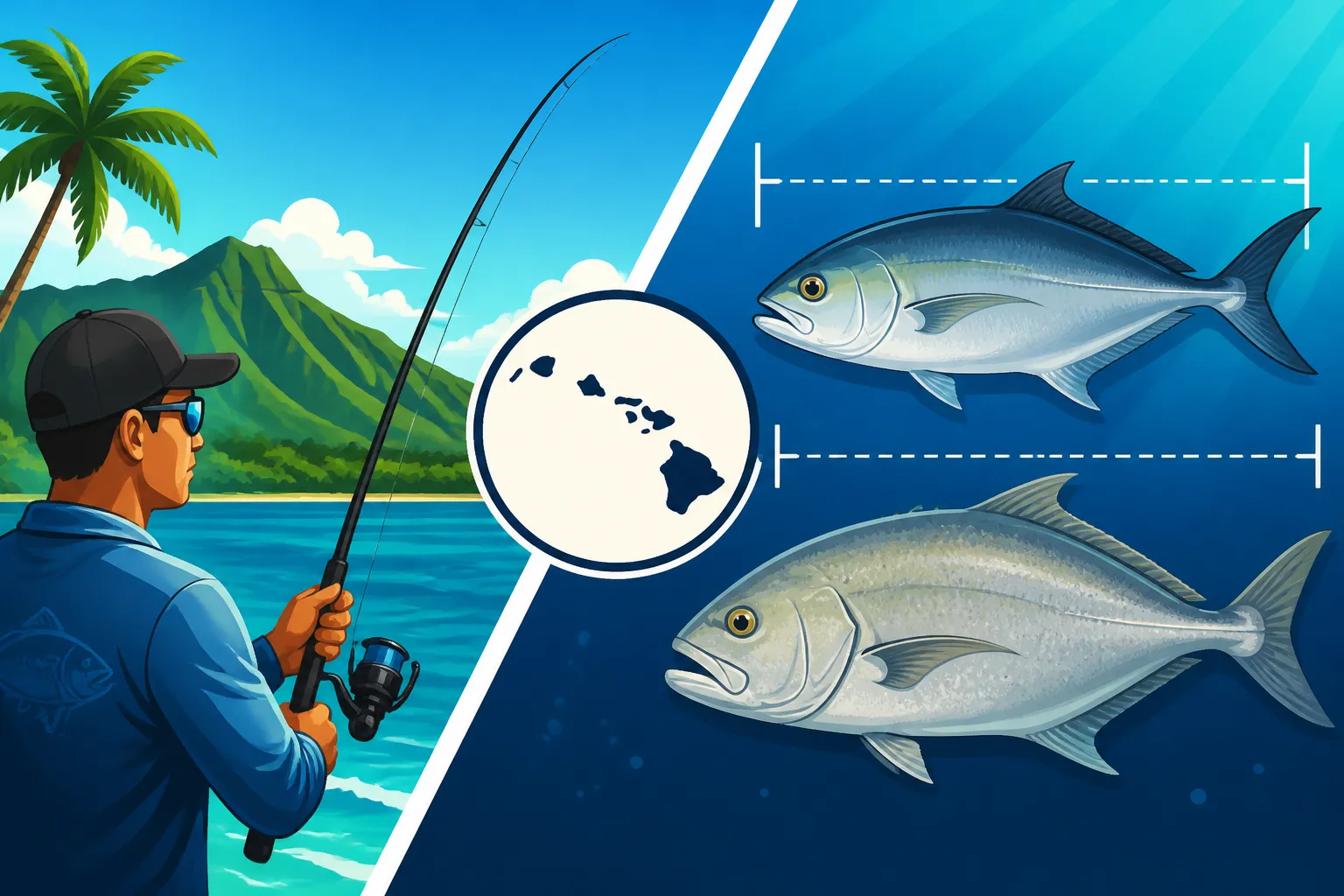
For most species of trevally commonly caught as "papio" in Hawaii, such as Bluefin Trevally (Omilu), White Trevally (Pa'u'u or Buta), and other Caranx species, the minimum size limit is 9 inches fork length. This "fork length" measurement is critical: it's taken from the tip of the snout to the fork of the tail, not the very end of the tail fin. This 9-inch rule helps protect these fish during their juvenile stage, giving them a chance to grow larger and contribute to the spawning population. While the statewide regulations generally don't impose a strict daily bag limit specifically for these smaller trevally species beyond general possession limits, responsible anglers often self-regulate, only taking what they need. You can find comprehensive details about these and other specific species limits in the official Hawaii Bag and Size Limits by Species guide.
Why Size Matters for Papio: Conservation and Sustainability
The 9-inch minimum size for papio isn't an arbitrary number; it's a carefully determined regulation designed to promote sustainability. These smaller fish are often still maturing and have not yet had a chance to reproduce. By allowing them to grow past this critical stage, we increase the likelihood that they will spawn, contributing to the overall health and abundance of the trevally population. Overfishing juveniles can have devastating long-term effects on fish stocks, leading to fewer large fish in the future. Imagine a scenario where everyone keeps every papio they catch – within a few years, the thrilling fights with big ulua could become a rare memory. This rule helps ensure that Hawaii's incredible fishing heritage continues for generations to come, allowing the papio to eventually grow into those magnificent ulua we all admire.
On-the-Water Measurement: Ensuring You Stay Compliant
Having the right tools and knowing how to use them is paramount when you're on the water. A soft tape measure or a dedicated fish measuring board is an absolute must-have. You can find a wide variety of reliable options, like a roll-up measuring tape or a rigid bump board, on Amazon to keep in your tackle box or boat. When you land a papio, lay it flat on its side, making sure its snout is against a solid surface or the zero mark of your tape. Gently pinch the tail lobes together to get the maximum length, then measure directly to the fork of the tail. Don't eyeball it! A fish that looks "close" often isn't. If there's any doubt, or if the fish is even slightly under, release it immediately and carefully. Remember, handling the fish minimally and gently is crucial for its survival, especially if it's going back into the water.
Essential Ulua Size Rules for Responsible Anglers
The sheer power of an ulua pulling line off your reel is an experience unlike any other. These are the giants of Hawaii's inshore waters, and landing one is a true test of skill and strength. Given their impressive size and the time it takes for them to reach maturity, ulua are subject to specific regulations that reflect their importance as a trophy species.
The Big Ones: Minimum Lengths and Catch Limits for Ulua
When we talk about "ulua," we're primarily referring to the Giant Trevally (Caranx ignobilis). For this specific species, the minimum legal size is either 24 inches fork length OR 10 pounds in weight. This dual standard provides anglers with some flexibility, as weighing a large fish on a rocking boat can be tricky. However, most anglers will go by length. The daily bag limit for Giant Trevally (Ulua) is 2 fish per person. This limit is incredibly important. Catching and keeping two substantial ulua is a significant feat and provides ample food, while the restriction prevents overharvesting of these long-lived, slow-growing predators. For a detailed overview of all regulations, including specific rules for other species and potential area-specific restrictions, always consult the Hawaii Fishing Regulations Explained from the Division of Aquatic Resources (DAR).
Protecting Our Trophy Fish: The Role of Ulua Size Limits
The minimum size and bag limits for ulua are cornerstones of responsible fisheries management in Hawaii. Giant Trevally are long-lived fish, capable of growing to impressive sizes (well over 100 pounds!). It takes many years for them to reach maturity and even longer to become truly "trophy" sized. By setting a minimum size of 24 inches or 10 pounds, the regulations ensure that these fish have had ample opportunity to reproduce multiple times, contributing significantly to the stability of the population. The bag limit of two fish further prevents the rapid depletion of these valuable predators. Imagine a scenario where every large ulua caught was kept without limits; the populations would quickly decline, impacting the entire food chain and the very fabric of Hawaii's marine ecosystem. These rules help balance the angler's desire for a trophy catch with the critical need to preserve a healthy and thriving marine environment.
Accurate Field Measurement: Gear and Techniques
Measuring a large, thrashing ulua on a boat or rocky shoreline requires precision and a good strategy. Just like with papio, a sturdy measuring device is essential. Many seasoned ulua fishermen prefer a robust measuring board that can handle a powerful fish, or even a reliable digital scale if going by weight. Ensure your scale is properly calibrated. For fork length, the same principle applies: tip of the snout to the fork of the tail. It’s a good idea to have a designated area on your boat or shore setup for measuring where the fish can be safely handled. When measuring, minimize the time the fish is out of the water. If you're planning to release a fish, having a ready-to-go release tool or a designated release area can make all the difference. Always prioritize the fish's well-being, especially for those powerful ulua destined for release to fight another day. Investing in a good quality measuring tape or scale can easily be done through retailers like Amazon, ensuring you're always prepared.
The Great Identification Challenge: Papio or Ulua?
This is where things can get a little tricky, and often leads to the most confusion. Is that 15-inch trevally an "ulua" that falls under the 24-inch rule, or is it a "papio" that just needs to be over 9 inches? The answer depends on the species. While "papio" is a general term for juvenile trevally, and "ulua" for large ones, the law distinguishes by species.
Key Distinguishing Features Beyond Size
While size is the most obvious differentiator in common parlance, understanding the specific characteristics of different trevally species is key to navigating the regulations.
- Giant Trevally (Ulua Aukea): These are the true "ulua" of trophy status. They have a steep, blunt head profile, a silvery-grey body (often darker on the back), and generally a much more robust, deep body shape compared to other trevally of similar length. Their pectoral fins are long and sickle-shaped. Juveniles of this species (which would be called papio) also show this blunt head profile, even at smaller sizes.
- Bluefin Trevally (Omilu): Often called "papio" when small, and sometimes "ulua" when large. They are easily identified by their striking blue fins (especially the anal and dorsal fins) and scattered dark spots on their flanks. Their body is more elongated than a Giant Trevally.
- White Trevally (Pa'u'u, Buta, or sometimes GT papio): These have a more compressed, silvery body, often with a yellow tint on their fins. They lack the distinct blue of the Bluefin and the deep body of a true Giant Trevally. Their profile is generally smoother.
A helpful tip is to focus on the head shape, fin coloration, and overall body profile rather than just length alone, especially when a fish is between the common "papio" and "ulua" sizes. Reference guides like the "Hawaii DLNR fishing regulations PDF" often include illustrations or photos to help with species identification.
Navigating the Legal Threshold: When a Papio Becomes an Ulua
Here's the critical distinction for legal purposes:
- Any Caranx species other than the Giant Trevally (Caranx ignobilis) – for example, a Bluefin Trevally (Omilu) or White Trevally – is subject to a 9-inch fork length minimum. So, a 15-inch Bluefin Trevally is perfectly legal if you want to keep it.
- The Giant Trevally (Caranx ignobilis) is the specific species that has the 24-inch fork length OR 10-pound minimum. If you catch a 15-inch Giant Trevally (which would still be called a papio by most anglers), it is undersized and must be released, even though a 15-inch Bluefin Trevally is perfectly legal.
This is the biggest source of confusion! It’s not about the local term "papio" or "ulua" primarily, but about the scientific species identification. A small Giant Trevally is still a Giant Trevally, and thus subject to the 24-inch/10lb rule, even if everyone calls it a papio. This highlights why understanding the key distinguishing features beyond just size is so crucial. A great resource for visual differentiation is a good fish identification book, which you can easily order from Amazon for your home or tackle bag.
Common Mistakes and How to Avoid Them
One of the most frequent mistakes anglers make is assuming all "papio" fall under the 9-inch rule. As explained above, if that papio is a juvenile Giant Trevally, it needs to be 24 inches or 10 pounds. Another common error is misjudging the fork length, especially on a lively fish. Rushing the measurement or not having a proper measuring device can lead to accidental non-compliance. Always take your time, and if there's any doubt about the species or the measurement, lean on the side of caution and release the fish. It's far better to let a potential keeper go than to face penalties for an undersized fish. Always be familiar with the regulations, which you can easily review in the Hawaii Fishing License Guide for 2026 or by visiting the official Hawaii DLNR website.
| Trevally Type (Local Term) | Scientific Species Example | Minimum Size (Fork Length) | Minimum Size (Weight) | Daily Bag Limit | Key Identification Features |
|---|---|---|---|---|---|
| Papio (juvenile) | Bluefin Trevally (Caranx melampygus), White Trevally (Caranx ignobilis – often confused with GT) | 9 inches | N/A | No specific* | Blue fins, dark spots (Bluefin); Silvery, more compressed body (White) |
| Papio (juvenile GT) | Giant Trevally (Caranx ignobilis) | 24 inches | 10 pounds | 2 | Blunt head profile, deep robust body, silvery-grey (even when small) |
| Ulua (adult) | Giant Trevally (Caranx ignobilis) | 24 inches | 10 pounds | 2 | Very deep, powerful body; blunt head; dark dorsal fin, silvery-grey body |
| Ulua (large Bluefin) | Bluefin Trevally (Caranx melampygus) | 9 inches (for species) | N/A | No specific* | Large version of Bluefin; retains blue fins and spots |
*Note: While no specific daily bag limit is listed for "other Caranx species," general possession limits and ethical angling practices always apply. Always confirm the latest regulations with the Hawaii DLNR.
Consequences of Non-Compliance and Enforcement
Ignoring Hawaii's fishing regulations, even unintentionally, can have serious repercussions. The state is committed to protecting its marine resources, and enforcement officers with the Division of Conservation and Resources Enforcement (DOCARE) take their jobs seriously. It's not just about avoiding a fine; it's about respecting the laws designed to preserve our unique environment.
Understanding Penalties: Fines and Legal Ramifications
Getting caught with an undersized fish or exceeding bag limits can lead to significant penalties. Fines for fishing violations in Hawaii can range from hundreds to thousands of dollars, depending on the severity and frequency of the offense. For instance, being caught with an undersized ulua could result in a substantial monetary penalty, and repeat offenders may face even harsher consequences, including confiscation of fishing gear, boats, and even potential jail time in extreme cases. Remember, ignorance of the law is not considered a valid excuse. The enforcement officers are primarily focused on conservation, and they have the authority to issue citations for any violation. This is why understanding Hawaii fishing without a license penalty and other regulations is so critical. Always ensure you are familiar with the current Hawaii fishing regulations.
The Broader Impact: Ecosystem Health and Future Fishing
Beyond the personal legal and financial consequences, non-compliance with size and bag limits has a profound negative impact on the entire marine ecosystem. When too many juvenile fish are removed, or too many large, breeding adults are taken, it disrupts the natural balance of fish populations. This can lead to a decline in fish stocks, affecting not only the target species like papio and ulua but also the many other species that rely on them as prey or competitors. A diminished fish population means less food for predators, less successful reproduction, and ultimately, a less vibrant and healthy ocean for everyone. Every undersized fish kept, or every extra fish taken beyond the limit, chips away at the future of Hawaii fishing for all of us. Responsible angling is a direct contribution to preserving these precious resources.
Best Practices for Sustainable Trevally Fishing in Hawaii
Being a successful angler in Hawaii means more than just catching fish; it means being a responsible steward of the ocean. Adhering to regulations and adopting ethical practices are crucial for ensuring that the incredible fishing opportunities we have today will still be around for generations to come.
Keeping Current with DLNR Regulations
The marine environment is dynamic, and so are the regulations designed to protect it. Laws can change due to new scientific data, shifts in fish populations, or community input. It is every angler's responsibility to stay informed. The primary source for official and up-to-date regulations is the Hawaii Department of Land and Natural Resources (DLNR), specifically the Division of Aquatic Resources (DAR). You can usually find the most current regulations on their website or by calling their offices. Many local tackle shops also provide summaries or printed guides. Never rely solely on anecdotal advice from other fishermen, as rules can be misinterpreted or outdated. Make it a habit to periodically review the official Hawaii DLNR Fishing Regulations Explained to avoid any surprises.
Embracing Ethical Angling: Catch and Release for the Future
Even when a fish is legal to keep, many anglers in Hawaii choose to practice catch and release, especially for larger ulua. These magnificent older fish are often significant spawners, contributing greatly to the gene pool. Releasing them ensures they continue their vital role in the ecosystem. When practicing catch and release, swift and careful handling is paramount. Minimize the fish's time out of water, use dehooking tools to remove hooks quickly, and support the fish properly when releasing it. For valuable information on how to properly handle and release these powerful fish, check out our guide on Ulua (Giant Trevally) Fishing in Hawaii. Consider using circle hooks, which tend to hook fish in the corner of the mouth, making release easier and less harmful.
Essential Tools for the Responsible Angler
Beyond your rod and reel, having the right gear for compliance and responsible angling can make all the difference.
- Reliable Measuring Device: As discussed, a sturdy measuring board or a flexible tape measure is non-negotiable. Don't leave home without it.
- Dehooking Tools: Long-nose pliers, dehookers, or even specialized hook removers help extract hooks quickly and minimize stress to the fish, especially for catch and release.
- Proper Landing Gear: A net or a lip gripper can help control a lively fish for measurement and unhooking, preventing injury to both the fish and the angler. For larger ulua, a gaff might be used by those planning to keep the fish, but extreme care must be taken to ensure it's a legal size before gaffing.
- Knowledge: The most important tool is your brain! Stay educated on Hawaii Bag and Size Limits by Species and species identification. Consider carrying a laminated fish identification card, which you can often print from the DLNR website or purchase from local tackle shops or online at Amazon.
By equipping yourself with the right knowledge and tools, you're not just ensuring your compliance with the law, but you're actively participating in the conservation of Hawaii's incredible marine resources.
Disclaimer
The information provided in this guide is for general informational purposes only and is not a substitute for official legal advice or the most current regulations. Fishing regulations in Hawaii are subject to change by the Department of Land and Natural Resources (DLNR). Anglers are solely responsible for knowing and abiding by all current federal, state, and local fishing laws and regulations before engaging in any fishing activity. Always consult the official Hawaii DLNR Division of Aquatic Resources (DAR) website or contact them directly for the most up-to-date and accurate information.