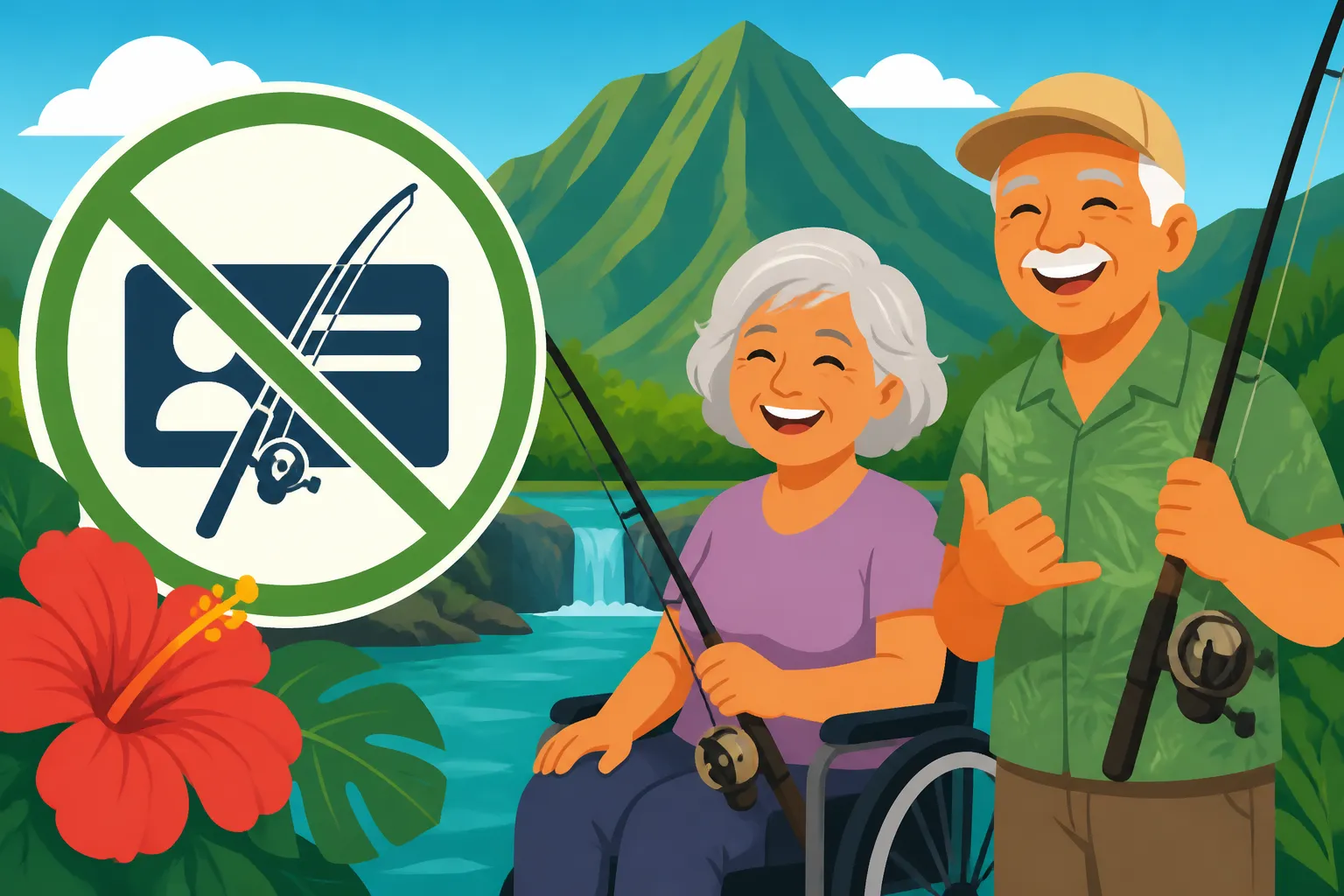
Hawaii Senior and Disabled Freshwater License Exemption
Navigating the intricate web of fishing regulations in Hawaii can feel like trying to untangle a particularly stubborn fishing line – frustrating, time-consuming, and often confusing. Many anglers, especially our cherished kupuna (seniors) and those living with disabilities, often wonder if they still need to jump through the same hoops for a freshwater fishing license. It's a valid question, and the good news is, Hawaii does offer some compassionate exemptions. This guide is here to shed light on who qualifies for a Hawaii senior and disabled freshwater license exemption, what documentation you’ll need, and how to ensure you're fishing legally and responsibly.
Understanding Hawaii's Freshwater Fishing License Requirements
Before diving into exemptions, it's helpful to understand the baseline. Freshwater fishing in Hawaii, while not as prevalent as ocean fishing, still offers unique opportunities, particularly for species like rainbow trout in Kokee or the various bass and tilapia in reservoirs. Unlike marine fishing, which historically didn't require a recreational license for residents, freshwater angling has always been regulated.
Who Needs a Freshwater Fishing License in Hawaii
Generally speaking, anyone aged 16 or older who intends to fish in Hawaii's freshwater bodies – think Wahiawa Reservoir, Nuuanu Reservoir, or the Kokee Public Fishing Area – needs a valid freshwater fishing license. This applies to both residents and non-residents, though the costs and types of licenses can differ significantly. The state uses these license fees to fund conservation efforts, maintain public fishing areas, and manage fish stocking programs, ensuring future generations can also enjoy the sport. It's a system designed to protect our precious natural resources.
For non-residents, the options typically include annual, 30-day, or 7-day tourist licenses, each with its own price point. Residents usually have an annual option. You can find detailed breakdowns of the costs for residents and nonresidents, along with specific age requirements, by checking out resources like the guide on the Hawaii freshwater license cost for residents or the comprehensive article on Hawaii Freshwater Fishing License and Rules. Knowing these basic requirements is the first step before exploring any potential exemptions.
Why These Regulations Exist
It’s easy to feel like regulations are just more bureaucracy, but there’s a real, vital reason behind them, especially in a delicate ecosystem like Hawaii’s. Freshwater fisheries, being finite and often confined, are particularly susceptible to overfishing and environmental degradation. The Hawaii Department of Land and Natural Resources (DLNR), through its Division of Aquatic Resources (DAR), implements these rules to manage fish populations sustainably. This includes setting catch limits, size restrictions, and fishing seasons, such as the specific dates for the Hawaii Kokee Trout Fishing Season Dates.
License fees directly support these crucial conservation efforts, from habitat restoration to invasive species management and the stocking of game fish. Without these funds and regulations, our freshwater fishing opportunities would quickly diminish, impacting not just anglers but the overall health of Hawaii's unique aquatic environments. It’s about balance – providing recreational opportunities while ensuring the long-term health of the resource.
Senior Exemptions for Freshwater Fishing in Hawaii
Hawaii recognizes the contributions of its elder community and offers specific exemptions to make fishing more accessible and enjoyable for them. If you’re a kupuna, you might be pleasantly surprised to learn you don’t always need to purchase a freshwater fishing license.
Age Criteria for Senior Exemptions
In Hawaii, residents who are 65 years of age or older are generally exempt from needing a freshwater fishing license. This isn't just a discount; it's a full exemption from the requirement. This policy acknowledges that many seniors live on fixed incomes and aims to reduce financial barriers to enjoying the outdoors. It's a small gesture of aloha that allows experienced anglers to continue their passion or for new retirees to discover the tranquility of freshwater fishing without an added cost.
This specific age requirement for an exemption means that if you've hit that 65-year mark and are a bona fide Hawaii resident, you're good to go for freshwater fishing. It’s a common question that often comes up, and you can delve deeper into this specific topic by looking at Do Seniors Need a Freshwater Fishing License in Hawaii?. Just remember, while the license itself is waived, you still need to adhere to all other fishing regulations, such as bag limits and season dates, which apply to all anglers regardless of their license status.
How to Prove Eligibility for Senior Exemption
Okay, so you're 65 or older and a Hawaii resident – fantastic! But how do you prove it to a conservation officer if you’re out on the water? It's pretty straightforward, but crucial. You'll need to carry a valid form of identification that clearly shows your age and residency status. This could be your Hawaii State ID card, a valid Hawaii driver's license, or even a passport. The key is that it must be a government-issued photo ID.
Think of it like this: while you don't need the physical license, you still need to prove why you don't need one. An officer needs to quickly verify that you meet the age and residency criteria. It's a simple step, but forgetting your ID could lead to unnecessary complications, even if you are legitimately exempt. Always double-check your wallet before heading out for a day of fishing, just as you would with your tackle box or a good hat. Sometimes, having a waterproof ID holder, which you can easily find on Amazon, is a great idea to protect your documents while enjoying your time on the water.
Disabled Angler Exemptions for Freshwater Fishing in Hawaii
Beyond age, Hawaii also extends an exemption to residents living with certain disabilities, recognizing that accessibility to outdoor recreation is incredibly important for everyone. This thoughtful provision ensures that physical challenges don't completely prevent individuals from enjoying the therapeutic benefits of fishing.
Defining Disability for License Exemption
The Hawaii DLNR offers a freshwater fishing license exemption for disabled residents, but it's important to understand how "disabled" is defined in this context for the purpose of a fishing license. Generally, this exemption applies to residents who have a permanent and severe disability that substantially impairs one or more major life activities, as recognized by state or federal programs. This isn't just any minor impairment; it's typically for those who qualify for specific disability benefits, such as Social Security Disability, or who have been certified as disabled by a licensed physician.
It's not an automatic exemption; you usually need to apply and provide proof of your disability. The intent is to support those with genuine, long-term impairments that might make purchasing or even obtaining a license more burdensome. For a detailed overview of the specific criteria, you can refer to the guide on Hawaii disabled resident freshwater license exemption. This distinction is important because simply having a temporary injury, for example, typically wouldn't qualify one for this exemption.
Required Documentation for Disabled Anglers
To claim the disabled angler exemption, you’ll need more than just a quick flash of your ID. The process involves submitting an application and providing specific documentation to the DLNR to certify your disability status. This often includes:
- A Physician's Statement: A letter or form completed by a licensed physician attesting to the nature and permanence of your disability.
- Proof of Disability Benefits: Documentation showing you are a recipient of state or federal disability benefits (e.g., Social Security Disability Income, Veteran Affairs disability compensation).
- Proof of Hawaii Residency: Standard identification like a Hawaii State ID or driver's license.
The DLNR wants to ensure that the exemption is granted to those who truly qualify, so a thorough review of documentation is necessary. It’s not about making it difficult, but ensuring fairness and proper allocation of resources. Once approved, the DLNR will issue a certificate or card verifying your exemption status, which you must carry with you while fishing. This is your official proof, much like a regular license is for others. It might be a good idea to keep a copy of your approved documentation on file and a laminated version of your exemption card in your tackle box, perhaps even a durable, waterproof case you can order from Amazon.
Specific Waters and Species Considerations
Even with an exemption, you're not entirely off the hook when it comes to understanding Hawaii's fishing rules. Exemptions primarily cover the need for a license, not the rules of fishing.
Exemptions in Special Regulation Waters
Hawaii has certain bodies of water designated as "Special Regulation Waters." These areas, like specific sections of the Kokee Public Fishing Area or the Nuuanu Reservoirs, often have unique rules that go above and beyond the general statewide regulations. These might include:
- Gear Restrictions: Only certain types of bait or lures might be allowed.
- Catch and Release Only: Some areas, like certain streams in Kokee, are strictly catch-and-release, regardless of species. You can read more about these areas in Hawaii Catch and Release Only Freshwater Waters.
- Limited Access: Specific permits might be required to even enter certain areas.
- Different Season Dates: While a general season might apply, special regulation waters could have their own, more restrictive dates.
Even if you are exempt from needing a license due to age or disability, these special rules still apply to you. It's crucial to consult the DLNR's Division of Aquatic Resources (DAR) regulations specific to the body of water you intend to fish. A general rule of thumb is: always check the local rules, because exemptions don't grant permission to disregard conservation measures. A quick search for "Special Regulation Waters in Hawaii" can lead you to the official resources.
Species-Specific Rules and Exemptions
Beyond the general freshwater fishing license exemption, it's vital to remember that each fish species often comes with its own set of rules. For instance, while you might be fishing for rainbow trout in Kokee, those trout have specific size and bag limits. The same goes for bass or tilapia in reservoirs like Wahiawa.
Your senior or disabled angler exemption waives the need to purchase the license, but it doesn't exempt you from adhering to the regulations designed to protect specific species. This includes:
- Bag Limits: The maximum number of fish you can keep per day.
- Size Limits: The minimum or maximum length a fish must be to be legally kept.
- Season Dates: Specific times of the year when certain species can or cannot be harvested.
For example, when fishing in the Hawaii Wahiawa Reservoir Fishing Rules, you'll find regulations pertaining to peacock bass or largemouth bass. These rules apply universally to all anglers, licensed or exempt. Ignorance of the law is never an excuse, and officers regularly patrol these areas to ensure compliance. It's always best to download the latest copy of the Hawaii DLNR fishing regulations PDF or pick up a physical copy from a local fishing shop or the DAR office.
Applying for and Understanding Your Exemption Status
Getting your exemption squared away correctly is a crucial step. While seniors typically don't "apply" in the traditional sense, disabled anglers do. And both groups need to understand how to maintain their status.
The Application Process for Disabled Exemptions
For disabled residents seeking the freshwater fishing license exemption, the process involves a formal application through the Hawaii DLNR Division of Aquatic Resources (DAR). It's not as simple as just showing up; there's paperwork involved, and you'll need to be patient.
Here’s a general outline of what you can expect:
- Obtain the Application Form: You can usually download this form from the DLNR DAR website or pick one up in person at one of their regional offices.
- Complete Your Section: Fill out all your personal information accurately.
- Physician Certification: This is a critical step. Your licensed physician will need to complete a section of the application, certifying the nature and permanence of your disability. They may need to provide medical records to support this.
- Provide Proof of Residency: Attach copies of your Hawaii State ID or driver's license.
- Submit the Application: Once all sections are complete and supporting documents are gathered, submit the application to the appropriate DLNR DAR office.
After submission, there will be a review period. If approved, you will receive official documentation or a special exemption card from the DLNR. This card is your proof of exemption and must be carried when fishing. It's a bit of a process, but it’s designed to be a one-time hurdle for a long-term benefit. If you ever have questions, don't hesitate to reach out to the Hawaii Division of Aquatic Resources customer service phone number.
Carrying Proof of Exemption
This cannot be stressed enough: whether you're a senior or a disabled angler, you must carry proof of your exemption when you are fishing. For seniors, this means a valid government-issued photo ID showing your age and Hawaii residency. For disabled anglers, it means the official exemption card or documentation issued by the DLNR, along with a photo ID.
Imagine this scenario: you're enjoying a peaceful morning fishing for bass at Wahiawa Reservoir, completely relaxed. A conservation officer approaches and asks to see your license. If you're 65+ but left your ID at home, or if you're a disabled angler but forgot your exemption card, you could be cited for fishing without a required license. This is a common and avoidable mistake. The penalties for Fishing Without a Required License in Hawaii: Penalties can include fines, and nobody wants that to ruin a perfectly good fishing trip. Whether it's a physical card or even a digital version, as discussed in Printing or Carrying a Digital Fishing License in Hawaii, having it accessible is non-negotiable.
Important Considerations and Reminders
Even with exemptions, staying informed is key. Regulations can change, and common misunderstandings can lead to unexpected issues.
Not All Waters Are Exempt
One of the biggest misconceptions is that if you're exempt from a license, all fishing rules for all waters somehow relax. That's simply not true. Your exemption specifically relates to the license requirement for freshwater fishing. It does not mean you can fish anywhere you want, or keep whatever you catch.
Hawaii has numerous protected areas, Marine Life Conservation Districts (MLCDs), and private lands where fishing might be restricted, require separate permits, or be entirely prohibited. For example, fishing in specific state park waters or certain wildlife sanctuaries might have additional layers of rules. Always verify the regulations for the specific body of water you plan to visit. Assuming an exemption covers everything can lead to legal trouble and potential harm to protected ecosystems. Always do your homework before casting a line in unfamiliar waters.
Staying Informed About Regulation Changes
Fishing regulations are not set in stone; they can and do change. The Hawaii DLNR periodically reviews and updates its rules based on scientific data, conservation needs, and public input. What was true last year might not be true next year. This is particularly relevant for things like age requirements, definitions of disability, or even specific rules for certain fishing areas or species.
It's your responsibility as an angler, whether licensed or exempt, to stay current with these changes. The best ways to do this include:
- Checking the DLNR DAR Website: This is the most authoritative source for up-to-date regulations.
- Subscribing to DLNR Notifications: Many government agencies offer email alerts for regulation changes.
- Visiting Local Fishing Shops: Often, local tackle shops are excellent hubs of information and can provide insight into current conditions and rule updates.
- Reviewing Annual Regulation Booklets: These are typically available online or at government offices and license vendors.
By actively staying informed, you not only avoid potential citations but also contribute to the larger goal of responsible fishing and conservation in Hawaii. Don't rely solely on what you remember from years past; a quick check can save you a lot of hassle. For instance, a quick search on Amazon for "Hawaii fishing regulations guide" might even point you to the latest official publications or educational materials.
| Exemption Type | Eligibility Criteria | Required Proof | Notes |
|---|---|---|---|
| Senior Exemption | Hawaii Resident, 65 years of age or older | Valid government-issued photo ID (e.g., State ID, Driver's License) showing age and residency | Automatic exemption; no application needed. Still subject to all other fishing rules. |
| Disabled Angler | Hawaii Resident with a permanent, severe disability as certified by physician/benefits | DLNR-issued exemption card/certificate + Photo ID; formal application required | Requires physician statement or proof of federal/state disability benefits. Still subject to all other fishing rules. |
Disclaimer
Please remember that while this guide provides comprehensive information, fishing regulations can be complex and are subject to change. It is always the angler's responsibility to consult the most current regulations directly from the Hawaii Department of Land and Natural Resources (DLNR) Division of Aquatic Resources (DAR) before fishing. This content is for informational purposes only and should not be considered legal advice.