Hawaii fishing without a license penalty
It’s a common scenario: you’re visiting Hawaii, eager to cast a line into those beautiful turquoise waters, or perhaps you’re a longtime resident who's always fished without a hitch. But suddenly, you find yourself wondering, "Do I really need a fishing license here?" The confusion is understandable, but ignoring the rules can lead to some pretty unwelcome surprises. This guide is here to shed light on the very real penalties you face if you're caught fishing without the proper license in Hawaii, helping you avoid those costly mistakes.
Understanding Hawaii's Fishing License Requirements
Navigating the waters of Hawaii's fishing regulations can feel a bit like trying to untangle a stubborn fishing knot. Many anglers, both visitors and long-time residents, often operate under assumptions that, while well-intentioned, can lead to trouble. It’s critical to understand that the rules are in place to protect Hawaii's precious marine and freshwater resources for generations to come, and adherence is not optional.
Who Needs a License and When
The first big hurdle is often understanding who, exactly, needs a license. This isn't a one-size-fits-all answer, and it largely depends on where you plan to fish and if you're a resident or a nonresident.
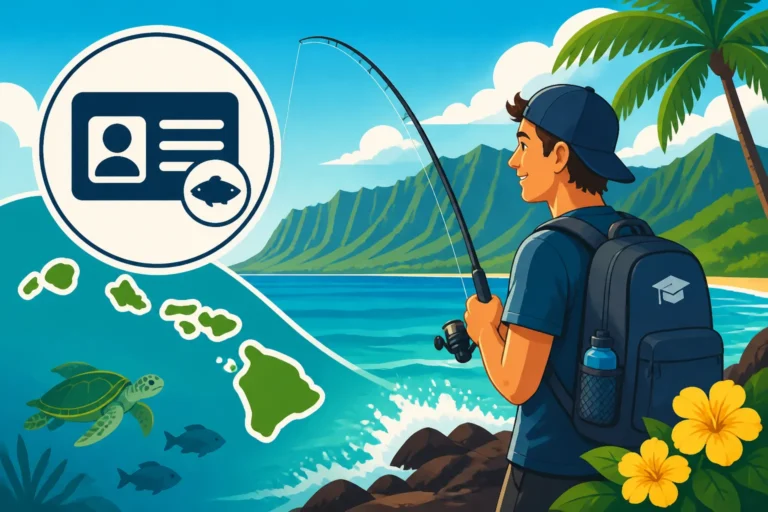
For marine (ocean) fishing, the rules have seen some significant changes over the years. Historically, Hawaii residents didn't need a license for most recreational marine fishing. This has changed! As of 2024, if you're engaging in any form of recreational marine fishing in Hawaii's state waters (which extend three nautical miles from shore), you do need a license, whether you're a resident or a nonresident. This applies to shorecasting, spearfishing, kayak fishing, or even just dropping a line from a pier. The only exception often involves being a passenger on a licensed charter boat where the charter operator typically covers the vessel's licensing, though it's always wise to confirm this with your specific charter captain. For a deep dive into who needs what, check out our comprehensive guide on Do You Need a Fishing License in Hawaii.
When it comes to freshwater fishing, the situation is a bit more straightforward and has generally remained consistent. Anyone aged 18 years or older engaging in freshwater fishing in Hawaii's public waters, such as Wahiawa Reservoir or the Kokee Public Fishing Area, must possess a valid freshwater fishing license. This applies to both residents and nonresidents. Children under 18 can often fish freshwater without a license, but they are still subject to all other regulations like bag and size limits. It's a completely different system from marine licenses, and having one doesn't exempt you from needing the other. You can learn more about these specific rules in our article on Hawaii Freshwater Fishing License and Rules.
Common Misconceptions About Licenses
It's amazing how many myths circulate regarding fishing licenses in paradise. Let’s bust a few of the most persistent ones that can land unsuspecting anglers in hot water.
One of the biggest misconceptions, especially for visitors, used to be, "I'm just a tourist, I don't need a license for ocean fishing." For many years, this was actually true for marine recreational fishing, but as mentioned, that rule has changed significantly. Now, everyone participating in marine recreational fishing needs one. This shift has caught many off guard, leading to potential violations. So, if you're visiting and planning to fish the shoreline, whether it's for papio, ulua, or anything else, make sure you're properly licensed. You can find specific details for visitors in our guide on Hawaii Nonresident Marine Fishing License, Explained.
Another common misunderstanding is, "If I’m on a private boat, I don't need a license." While the vessel itself might be properly registered and permitted, individual anglers are generally responsible for their own recreational fishing licenses. It's not like a hunting party where one group license covers everyone. Every person actively fishing needs their own valid license, unless they fall under a specific age exemption. Always double-check with the Hawaii Department of Land and Natural Resources (DLNR) Division of Aquatic Resources (DAR) if you're unsure, as it's your responsibility to comply.
Finally, some people mistakenly believe that buying a license once means you're good forever, or that licenses last for a full calendar year regardless of when purchased. Most recreational fishing licenses in Hawaii are annual and expire on a specific date, often December 31st of the year they were issued, regardless of when you bought it. Always check the expiration date on your license. Don't let a simple oversight lead to a penalty. For comprehensive information on staying compliant, consider reviewing the Hawaii Fishing License Guide for 2026.
The Real Consequences: Penalties for Fishing Without a License in Hawaii
When you’re out on the water, whether it’s the vast Pacific or a tranquil freshwater reservoir, the last thing you want is a run-in with enforcement. The officers with the DLNR Division of Conservation and Resources Enforcement (DOCARE) are dedicated to protecting Hawaii’s natural resources, and they take violations seriously. Fishing without a license isn't just a slap on the wrist; it comes with tangible, and often expensive, consequences.
Fines and Monetary Penalties
The most immediate and common penalty for fishing without a required license is a monetary fine. These fines aren't insignificant and are designed to deter future violations. For a first offense, you might be looking at a minimum fine, but it can quickly escalate depending on the discretion of the enforcement officer, the specific circumstances, and whether there are other concurrent violations (like exceeding bag limits or fishing in a restricted area).
Imagine you’re enjoying a peaceful morning shore fishing at Kaʻena Point, completely unaware that you needed a marine recreational license. A DOCARE officer approaches, asks for your license, and you can’t produce one. You might be issued a citation on the spot. While specific fine amounts can vary and are subject to change by legislative action, historically, first offenses for minor fishing violations, including not having a license, could start in the hundreds of dollars. For example, a fine could be in the range of $50 to $500 for a first offense. Repeat offenders or those committing more egregious violations could face significantly higher penalties, potentially thousands of dollars, along with court appearances. These aren't just traffic tickets; they're citations for violating state conservation laws, and they go on your record. These fines are often non-negotiable, and failing to pay them can lead to further legal troubles.
Confiscation of Gear and Catch
This is where the penalty hits particularly hard for many anglers. It's not just about the money; it's about losing your hard-earned catch and potentially expensive fishing equipment. Enforcement officers have the authority to confiscate any gear used in the commission of a violation. This could include your rod and reel, tackle box, cooler, net, speargun, kayak, or even your boat if it's deemed integral to the illegal activity.
Consider a scenario: you've been bottomfishing off the Kona Coast all day and finally landed a beautiful opakapaka, enough for a celebratory dinner. A DOCARE officer checks your credentials, and you don't have a valid license. Not only could you face a hefty fine, but that prized opakapaka, along with your rod and reel, could be confiscated. That means you lose your dinner and your means to fish. The value of confiscated gear, especially specialized equipment, can often far exceed the initial fine. You might then find yourself needing to replace your gear, and while you can find some great options on Amazon to get back on the water, it's an expense you could have easily avoided. This consequence alone is often enough to convince most anglers that buying a license is a far more sensible investment than risking confiscation.
Potential Legal Ramifications
While most unlicensed fishing offenses are handled with citations and fines, serious or repeated violations can lead to more severe legal ramifications. These situations are rare for a simple first-time oversight, but they can occur if the lack of a license is coupled with other significant violations, or if an individual consistently flouts the law.
For instance, if you're found fishing without a license in a protected Marine Life Conservation District (MLCD) where fishing is strictly prohibited, or if you’re caught with an illegal take of a protected species, the consequences extend far beyond just a license issue. These acts can be deemed more serious offenses, potentially leading to criminal charges, higher fines imposed by a court, and even community service or jail time in extreme cases. Furthermore, a conviction for a fishing violation can impact your ability to obtain future licenses or permits, not just in Hawaii but potentially in other states as well, as conservation agencies often share enforcement data. It’s a stark reminder that Hawaii takes the preservation of its unique aquatic ecosystems very seriously, and ignorance of the law is generally not considered a valid defense. Understanding all aspects of Hawaii Fishing Regulations Explained is key to staying clear of these serious troubles.
Avoiding the Pitfall: How to Ensure You're Legally Covered
Nobody wants to deal with fines or the hassle of gear confiscation, especially when you’re trying to enjoy the stunning waters of Hawaii. The good news is that avoiding these penalties is incredibly simple: get your license and understand the rules. A little preparation goes a long way in ensuring your fishing adventures are worry-free and compliant.
How to Properly Obtain a Fishing License
Getting your Hawaii fishing license is generally a straightforward process, designed to be accessible to both residents and nonresidents. The primary source for licenses is the Hawaii Department of Land and Natural Resources (DLNR) Division of Aquatic Resources (DAR).
The most convenient way for many people, especially those living outside the immediate vicinity of a DLNR office, is to purchase their license online. The DAR website typically offers an easy-to-use portal where you can select the appropriate license type (marine or freshwater, resident or nonresident, annual or short-term) and complete the transaction. You'll usually need to provide some personal information, such as your name, address, date of birth, and a form of identification. Once purchased online, you'll receive a digital copy that you can print or save to your phone. Our article on How to Buy a Hawaii Fishing License Online walks you through this process step-by-step.
Alternatively, if you prefer an in-person transaction or have specific questions, you can visit a local DLNR/DAR office. There are offices on various islands, including Oahu, Maui, Kauai, and the Big Island. Additionally, many authorized vendors across the islands, such as tackle shops, sporting goods stores, and some convenience stores, are licensed to sell fishing permits. These vendors can often provide valuable local insights into the regulations or fishing conditions. To find a location nearest you, check out our guide on Hawaii fishing license vendors near me. It’s always a good idea to call ahead to confirm their operating hours and that they stock the specific type of license you need.
Best Practices for Carrying and Presenting Your License
Once you've got your license, the next crucial step is to ensure you carry it with you whenever you're fishing and can present it upon request from a DOCARE officer. This might sound obvious, but it's surprising how many people leave their license in their car, at home, or discover it's damaged and unreadable when needed most.
For digital licenses obtained online, it's smart to save the PDF or image file directly to your smartphone, rather than relying solely on email access. This way, even if you lose cellular service while out on the water or in a remote area, you can still access your license. However, technology can fail, so having a printed physical copy as a backup is highly recommended. For physical licenses, whether printed at home or obtained from a vendor, consider laminating it or keeping it in a waterproof case or pouch. You can find excellent, durable waterproof pouches on Amazon that will protect your license from splashes, sweat, and general wear and tear, ensuring it remains legible throughout your fishing season.
When a DOCARE officer requests to see your license, be polite, cooperative, and produce it promptly. They are simply doing their job to enforce conservation laws. Trying to argue or delay can only make the situation more difficult. Always have a valid photo ID with you as well, as they may need to verify your identity against the information on your license. Remember, compliance makes everyone's experience better, and officers appreciate anglers who are well-prepared and respectful. For more tips on this, our article on Printing or Carrying a Digital Fishing License in Hawaii is a fantastic resource.
Staying Informed About Regulations
Hawaii's fishing regulations, like those in many other places, are not static. They can change due to new scientific data, environmental concerns, legislative actions, or public input. What was legal last year might not be legal this year. This is particularly true for bag and size limits for specific species, closed seasons, or protected areas.
Therefore, it's your responsibility as an angler to stay up-to-date with the latest rules. The best way to do this is to regularly check the official DLNR Division of Aquatic Resources website. They are the authoritative source for all regulations. They often publish updates, emergency rules, and comprehensive guides like the Hawaii DLNR Fishing Regulations PDF, which is an invaluable resource. Before heading out on a trip, especially if it's been a while since you last fished or if you're trying a new area or targeting a new species, take a few minutes to review the current regulations. Pay close attention to specifics like Hawaii Bag and Size Limits by Species, or any seasonal closures for particular fish, like the Hawaii Moi Closed Season, Explained.
You can also sign up for email newsletters or alerts from the DLNR, if available, to receive direct notifications of changes. Local tackle shops and fishing clubs are also great community resources for understanding current conditions and rules. Don’t rely solely on outdated information or hearsay from other anglers. A simple cross-reference with official sources can prevent a lot of headaches and keep you on the right side of the law.
Summary of Hawaii Fishing License Penalties and Prevention
To help solidify your understanding, here’s a quick overview of potential penalties and key preventative measures.
| Violation Type | Typical First Offense Fine (Approximate) | Additional Penalties | Prevention Strategy |
|---|---|---|---|
| Fishing without a required license | $50 – $500 | Confiscation of gear, confiscation of catch | Always purchase the correct license before fishing. |
| Fishing in a closed area | $100 – $1,000+ | Confiscation of gear, confiscation of catch, court | Research fishing spots and check for restrictions. |
| Exceeding bag/size limits | $100 – $1,000+ | Confiscation of catch, confiscation of gear | Know and abide by all Hawaii Bag and Size Limits by Species. |
| Using illegal gear/methods | $200 – $2,000+ | Confiscation of gear, court, potential jail time | Familiarize yourself with legal fishing methods in Hawaii. |
| Repeat Offender (any violation) | Significantly higher fines | Potential license suspension, court, jail time | Consistent compliance and staying informed. |
Always remember that these are general guidelines, and actual penalties can vary based on the specific circumstances, the discretion of the enforcement officer, and court rulings. The best defense is always a good offense—meaning, proactive compliance.
Disclaimer
The information provided in this guide is for general informational purposes only and does not constitute legal advice. Fishing regulations in Hawaii can change, and it is the responsibility of each individual angler to be aware of and comply with all current federal, state, and local laws and regulations before engaging in any fishing activity. Always consult the official Hawaii Department of Land and Natural Resources (DLNR) Division of Aquatic Resources (DAR) website or contact their offices directly for the most up-to-date and accurate information.