Hawaii Fishing Regulations Explained
Navigating the myriad of fishing regulations in Hawaii can feel like trying to untangle a giant knot of fishing line, especially when you're just eager to cast a line into our beautiful waters. It's easy to get overwhelmed by all the different rules for licenses, species limits, and protected areas, leading to anxiety about accidentally doing something wrong. This comprehensive guide is here to unravel that knot for you, breaking down Hawaii's fishing regulations into clear, understandable sections so you can fish with confidence and aloha.
The Foundation: Why Regulations Exist
When you look out at the sparkling blue waters surrounding our islands, or the lush green valleys cradling our streams, it’s easy to understand why we need to protect them. Hawaii’s natural beauty is incredibly unique, and so are its aquatic inhabitants. The regulations aren't there to make your life harder; they're thoughtfully designed to safeguard this precious environment and ensure that the joys of fishing can be experienced for generations to come. Think of them as a shared responsibility, a way for all of us to be good stewards of the 'aina (land) and kai (ocean).
Protecting Hawaii's Unique Ecosystems
Our islands are home to an incredible array of marine life, much of which is found nowhere else on Earth. From vibrant reef fish like the uhu (parrotfish) that graze our corals, to the majestic kumu (goatfish) that forage on the sandy bottom, each species plays a vital role in the health of our reefs and ocean environments. If you’ve ever snorkeled or dove here, you’ll have seen this incredible diversity firsthand. Without proper management, overfishing or destructive practices could quickly decimate these delicate populations, leading to irreversible damage. These rules help maintain the balance, ensuring that the corals stay healthy, the fish populations remain robust, and the entire ecosystem continues to thrive. It’s not just about the big fish you want to catch; it’s about the tiny creatures and plants that support the whole system.
Ensuring Sustainable Fishing for Future Generations
Imagine telling your grandkids that you used to catch moi (Pacific threadfin) right off the beach, but now they're rarely seen. That's a future no one wants. Fishing regulations are essentially a long-term investment. They set limits on what you can catch, how many, and during what times of year, all based on scientific research about fish spawning cycles and population health. For instance, you'll find that there are specific rules for certain species during their breeding seasons, like the Hawaii Moi Closed Season, Explained. This ensures that enough fish can reproduce, replenishing the stocks so there will always be fish for future anglers, for cultural practices, and for our local communities. It's about thinking beyond just today's catch and preserving the tradition of fishing in Hawaii for our children and their children.
Understanding General Fishing Licenses in Hawaii
One of the first things many visitors and new residents wonder about is whether they need a fishing license at all. The answer depends on where you plan to fish and what you're targeting. While ocean fishing is generally exempt for residents, there are crucial exceptions, especially for non-residents and for freshwater pursuits. Getting this right from the start saves you a lot of hassle and potential fines later on. If you're looking for a complete overview, be sure to check out our Hawaii Fishing License Guide for 2026.
Who Needs a License and Who is Exempt
This is where it can get a little confusing, so let's break it down clearly. For marine (ocean) recreational fishing, Hawaii residents typically do not need a license. This is a unique aspect of our state's regulations, stemming from traditional fishing rights. However, if you are a non-resident, you absolutely do need a license for marine recreational fishing. This applies whether you're fishing from shore, a kayak, or a private boat. If you’re fishing on a licensed charter boat, the charter company usually covers the vessel's licensing, but it's always wise to confirm if individual angler licenses are still required by your specific charter, especially for certain species or if you plan to take your catch off the boat.
For freshwater recreational fishing, everyone — residents and non-residents alike — needs a freshwater fishing license. This includes targeting species like rainbow trout in Kokee or bass in Wahiawa Reservoir. There are some age exemptions; for example, young children might not need a license. You can learn more about specific age requirements in our guide on What age requires a freshwater fishing license in Hawaii.
Types of Licenses Available for Residents and Non-Residents
Hawaii offers different license types to cater to various needs.
For non-resident marine fishing, you'll typically find:
- 1-Day and 7-Day Tourist Licenses: These are perfect for short visits if you plan on doing some ocean fishing. They're convenient for tourists who might only fish for a couple of days. You can find details on the Hawaii nonresident 1-day marine fishing license cost and Hawaii nonresident 7-day marine fishing license cost.
- Annual Non-Resident Marine License: If you're staying longer or plan multiple trips within a year, an annual license might be more cost-effective. Check out the Hawaii nonresident annual marine fishing license cost.
For freshwater fishing (for both residents and non-residents):
- Annual Licenses: These are valid for a full year from the date of purchase.
- Tourist Licenses: Similar to marine licenses, shorter-term options (like 7-day or 30-day) are available for visitors. If you're looking into freshwater options, our guide on Hawaii freshwater license cost for nonresidents has all the details.
There are also potential exemptions or discounts for specific groups, such as Hawaii Senior and Disabled Freshwater License Exemption, so it’s worth investigating if those apply to your situation.
Where and How to Acquire Your License
Getting your license is generally a straightforward process. The most convenient method for many is purchasing it online through the Hawaii Department of Land and Natural Resources (DLNR) Division of Aquatic Resources (DAR) website. This allows you to print it at home or save a digital copy on your phone – a handy option, as explained in Printing or Carrying a Digital Fishing License in Hawaii.
If you prefer an in-person transaction or need immediate assistance, licenses can also be purchased from authorized vendors across the islands. These vendors often include tackle shops, sporting goods stores, and some convenience stores. A quick search for "Hawaii DLNR license agent list" will give you locations near you. Always make sure to bring a valid form of identification, and if you're claiming residency, be prepared to show proof. For non-residents, a valid ID from your home state or country is sufficient. Remember, having your license in hand before you head out is crucial to avoid any unwelcome encounters with enforcement officers.
Navigating Species-Specific Rules: Bag and Size Limits
Once you've got your license sorted (if needed!), the next big hurdle is understanding what you can actually keep. Hawaii's waters are teeming with a fantastic variety of fish, but each one comes with its own set of rules regarding how many you can take (bag limit) and how big they need to be (size limit). These aren't arbitrary numbers; they're carefully determined to protect individual fish populations from overharvesting. It’s important to remember that these rules can change, so always double-check the latest regulations from the DLNR before your trip. Our guide on Hawaii Bag and Size Limits by Species provides a great overview.
Why Species-Specific Rules Matter
Imagine everyone decided to keep every ahi (yellowfin tuna) they caught, regardless of size. The population wouldn't stand a chance! Species-specific rules are designed to protect immature fish, allowing them to grow, mature, and reproduce before they can be harvested. They also prevent the depletion of adult breeding stock. For example, a minimum size limit on a fish like ulua (giant trevally) ensures that the young fish have a chance to contribute to the next generation. Maximum size limits, though less common, can sometimes protect the largest, most productive breeders. These rules are a testament to the DLNR's commitment to ensuring the long-term health of our fisheries.
Common Pelagic Species Regulations (e.g., Ahi, Mahimahi)
When you're out deep-sea fishing, targeting those prized pelagic species like ahi (yellowfin tuna), mahimahi (dolphinfish), ono (wahoo), and marlin, it's essential to know the rules. These powerful migratory fish are a big draw for anglers worldwide, especially off the Kona Coast.
- Ahi (Yellowfin Tuna): While ahi are generally managed with generous bag limits, there might be specific regulations regarding commercial vs. recreational harvest. It's usually a per-person or per-vessel limit, often quite high for recreational anglers to accommodate those incredible days when the schools are running. You can often find specifics on Hawaii ahi bag limit rules.
- Mahimahi (Dolphinfish): Mahimahi are fast-growing and reproduce quickly, so their limits are often quite liberal. Still, there will be a minimum size limit to ensure they've had a chance to mature. For details, refer to Hawaii mahimahi size limit rules.
- Ono (Wahoo): Similar to mahimahi, ono have generally healthy populations, but always check for minimum sizes and bag limits.
- Marlin: Blue, striped, and spearfish marlin are often prized for sport, and while there might be bag limits, many anglers practice catch-and-release for these magnificent creatures, particularly the larger ones. Knowing the Hawaii marlin bag limit rules is key.
These pelagic species often have federal regulations that intertwine with state rules, especially further offshore, so staying informed is crucial.
Inshore and Reef Fish Regulations (e.g., Moi, Uhu, Opihi)
Closer to shore, the regulations become even more specific, reflecting the vulnerability of reef ecosystems and the cultural significance of certain species.
- Moi (Pacific Threadfin): This revered fish has very specific regulations. There's a strict closed season to protect them during their spawning period. If you're planning to target moi, you absolutely need to know the Hawaii moi closed season dates and the Hawaii moi minimum size limit.
- Uhu (Parrotfish): Uhu are critical grazers that help keep our reefs clean and healthy. Because of their ecological importance, there are specific size and bag limits, and often a closed season, for certain uhu species. Check out Hawaii uhu daily bag limit and Hawaii uhu minimum size limit for the latest.
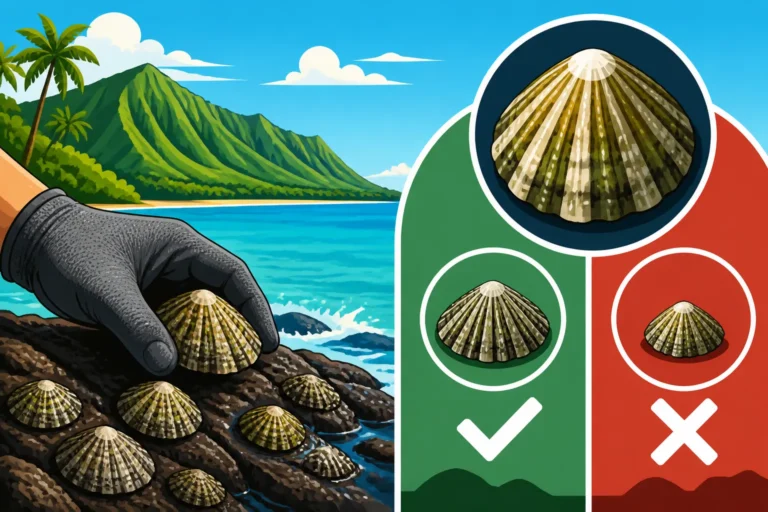
- Opihi (Limpet): While not a fish, opihi are a highly prized delicacy and have cultural significance. Their harvest is strictly regulated with daily bag limits and legal shell size ranges to prevent over-collection. Make sure you understand the Hawaii opihi daily limit per person and Hawaii opihi legal shell size range before you even think about gathering them.
- Papio and Ulua: These are juvenile and adult giant trevally. There are clear minimum size limits for both papio and ulua to allow them to grow to maturity. Our guide on Hawaii Papio and Ulua Size Rules will give you the necessary information.
Here’s a simplified table for some common species, but remember, always consult the official DLNR website for the most current and complete information.
| Species | Minimum Size (inches) | Daily Bag Limit (per person) | Notes |
|---|---|---|---|
| Ahi (Yellowfin) | None (recreational) | Often 5 (check current) | Regulations can vary; often higher for recreational. |
| Mahimahi | 7 fork length | None | |
| Ono (Wahoo) | 9 fork length | None | |
| Moi | 7 total length | 10 | Closed Season: June, July, August. Hawaii Moi Closed Season, Explained |
| Uhu (Parrotfish) | 10 total length | 2 (of certain species) | Check specific species. Often closed season for uhu 'ahu'ula. |
| Opihi | 1.25 shell diameter | 20 | Must be between 1.25-2.00 inches; no more than 2 inches. |
| Ulua | 10 fork length | 5 (of certain species) | Specific regulations for different trevally species. |
Gear and Method Restrictions to Be Aware Of
Just as important as what you catch is how you catch it. Hawaii has specific rules about the types of gear and methods you can use, all designed to promote sustainable fishing practices and prevent harm to the environment. This means that while some traditional methods are permitted, others are strictly regulated or outright banned due to their potential for widespread damage. It’s not just about compliance; it’s about responsible angling.
Permitted and Prohibited Fishing Methods
Many common recreational fishing methods are allowed, but there are nuances. Hook and line fishing (rod and reel, handline, throw-net for baitfish) is generally permitted. However, certain types of gear, such as the use of gillnets in specific areas or nets of particular mesh sizes, are restricted. For instance, any net that could indiscriminately catch large numbers of small, immature fish might be prohibited.
Prohibited methods typically include destructive practices like:
- Explosives or poisons: This should go without saying, but using any substance that stuns or kills fish indiscriminately is highly illegal and incredibly damaging to the ecosystem.
- Spearfishing with SCUBA: While freediving spearfishing is popular, the use of SCUBA gear for spearfishing is prohibited in Hawaii. You can find more information about this in our article on Hawaii SCUBA Spearfishing Ban.
- Certain types of traps: Some traps that could capture endangered species or are too effective at overfishing specific areas are also banned.
Always verify the legality of any specific gear you plan to use, especially if it's not a standard rod and reel setup.
Spearfishing and Net Fishing Regulations
Spearfishing is a time-honored tradition in Hawaii, but it comes with stringent regulations to ensure its sustainability.
- Spearfishing: You do not need a separate license for spearfishing if you are a Hawaii resident and are spearfishing in the ocean. Non-residents, however, would still need their marine fishing license. There are strict rules about where you can spearfish, with Marine Life Conservation Districts (MLCDs) being off-limits. There are also regulations on target species, ensuring you only take legal-sized fish. Our guide on Hawaii Spearfishing Regulations offers a deep dive into this topic. Remember, using artificial lights to attract fish for spearfishing at night is also regulated.
- Net Fishing: The use of nets is also heavily regulated. While throw nets are often allowed for catching baitfish, certain types of large nets, particularly gillnets, have strict size restrictions and are prohibited in designated areas, such as the Hawaii Net Fishing Restricted Areas. These regulations aim to protect reef fish and prevent bycatch of non-target species. Always double-check mesh size requirements and geographical restrictions before deploying any net.
Hook and Line Gear Requirements
For most recreational anglers, hook and line fishing is the most common method. While there aren't typically strict regulations on the type of rod, reel, or line you use, there are considerations regarding hook types and bait.
- Hook Types: Circle hooks are often encouraged or even required in some fisheries, particularly when targeting certain species, as they tend to hook fish in the corner of the mouth, increasing survival rates for released fish.
- Bait: The use of certain types of live or dead bait might be restricted in specific freshwater bodies to prevent the introduction of invasive species or diseases. Always check the rules for the specific body of water you're fishing. For example, when fishing for trout in Kokee, only artificial lures are permitted.
- Number of Lines: Some regulations may limit the number of lines an individual can actively fish at one time, especially in freshwater environments or crowded shorelines. This helps prevent snagging and ensures fair access for all anglers.
For those looking to get their hands on compliant gear, many local tackle shops or online retailers like Amazon offer a wide range of fishing equipment suitable for Hawaii's regulations. Just make sure to read product descriptions carefully to ensure they meet any specific requirements, such as biodegradable weights or lead-free tackle if applicable to a certain area.
Special Management Areas: MLCDs and FRAs
Hawaii is incredibly proactive in protecting its marine resources, and part of that effort involves designating special management areas. These aren't just arbitrary lines on a map; they are scientifically designated zones where specific rules apply to help fish populations recover, thrive, and ultimately spill over into surrounding waters. Understanding these areas is absolutely crucial for any angler in Hawaii. Fishing in a restricted zone, even accidentally, can lead to serious penalties.
Marine Life Conservation Districts (MLCDs) Explained
Marine Life Conservation Districts (MLCDs) are like underwater national parks. These are specific ocean areas designated for the conservation of marine life and habitats, and they often come with very strict rules, sometimes even outright bans on fishing. The primary goal of MLCDs is to protect and restore marine ecosystems, allowing fish and coral to flourish undisturbed. This provides vital breeding grounds and safe havens for numerous species.
Common restrictions in MLCDs include:
- No fishing or gathering of any kind: This is the most common rule. Activities like spearfishing, net fishing, and even hook-and-line fishing are often prohibited.
- No taking of any marine life: Even collecting shells or rocks might be forbidden.
- Restrictions on vessel entry or anchoring: Some MLCDs have designated mooring buoys, while others might restrict anchoring to prevent coral damage.
Examples of MLCDs include Hanauma Bay on Oahu, which is famous for its snorkeling but where fishing is strictly prohibited. If you're wondering Is Fishing Allowed at Hanauma Bay?, the answer is generally no for active recreational fishing. Other examples include Kealakekua Bay on the Big Island and Lapakahi State Historical Park on the Big Island. Always check the specific rules for each MLCD, as regulations can vary slightly. These areas are truly treasures, and respecting their boundaries ensures their continued health. Our guide, Hawaii Marine Life Conservation Districts, Explained, provides a comprehensive overview.
Fish Replenishment Areas (FRAs) and Their Impact
Fish Replenishment Areas (FRAs) are another critical tool in Hawaii's conservation efforts. These areas, particularly prominent along the Kona Coast of the Big Island, were established primarily to help rebuild populations of certain reef fish and other marine life. Unlike MLCDs, FRAs may allow some forms of fishing, but they often have very specific and often stricter regulations than general waters.
Key characteristics of FRAs often include:
- Restrictions on aquarium collecting: FRAs were initially established to combat the impacts of aquarium fish collection.
- Regulations on commercial fishing methods: Certain commercial fishing methods might be prohibited or heavily restricted.
- Specific gear or harvest limitations: Even recreational fishing within an FRA might have additional rules on what gear you can use or how many fish you can take.
The idea behind FRAs is that by protecting these areas, fish populations within them can grow and reproduce, with the excess "spilling over" into adjacent, open-fishing areas. This effectively creates a self-sustaining system that benefits the entire fishery. Knowing the Hawaii Fish Replenishment Area boundaries in West Hawaii is vital if you're fishing in that region. Always consult the official DLNR maps and regulations for any area you plan to fish to understand if it falls within an FRA and what specific rules apply.
Navigating Other Restricted Waters
Beyond MLCDs and FRAs, other waters might have specific regulations. These can include:
- Harbor areas: Many harbors have restrictions on fishing due to vessel traffic, safety concerns, or to protect infrastructure.
- Military installations: Waters adjacent to military bases often have restricted access or require special permits. Fishing on military installations generally follows federal and base-specific rules, which may differ from state regulations.
- Private property: While Hawaii has public access laws for shorelines, accessing fishing spots via private land requires permission.
- Seasonal closures: Specific areas might be closed to fishing during certain times of the year to protect spawning aggregations or recovering populations.
- Special Regulation Waters: Certain freshwater reservoirs or ponds might have unique rules regarding bait, gear, or catch limits. For example, Wahiawa Reservoir, a popular freshwater spot, has specific rules that you should know before casting a line. This is detailed further in our article on Hawaii Wahiawa Reservoir Fishing Rules.
It's your responsibility as an angler to be informed about the specific regulations for the exact location you intend to fish. A few minutes of research before you go can save you a lot of trouble. The DLNR website is always your best friend here, offering detailed maps and the most up-to-date information.
Freshwater Fishing Rules: A Different Set of Guidelines
While Hawaii is globally renowned for its incredible ocean fishing, our islands also offer unique freshwater fishing opportunities, particularly on Oahu and Kauai. However, the rules for freshwater are distinctly different from marine regulations, and it's essential not to confuse the two. If you're used to the ocean's general license exemption for residents, you'll find freshwater fishing operates under a different set of requirements. Our Hawaii Freshwater Fishing License and Rules guide covers everything you need to know.
Freshwater License Requirements and Costs
As mentioned earlier, for freshwater fishing in Hawaii, everyone needs a license, regardless of residency status, unless they fall under specific age exemptions. This is a crucial distinction from ocean fishing for residents.
- Who Needs One: If you're 15 years or older, you'll need a freshwater fishing license to fish in any of Hawaii's public freshwater bodies, such as reservoirs and streams designated for fishing.
- Age Exemptions: Generally, children under the age of 15 do not need a license. However, always confirm the specific age cutoffs with the DLNR, as these can be subject to change. Our Hawaii Freshwater License Age Requirements article provides the current details.
- License Types and Costs:
- Resident Annual: This is typically the most affordable option for residents who plan to fish regularly. For the specific pricing, you can check Hawaii freshwater license cost for residents.
- Non-Resident Annual: A more expensive option for visitors planning extended freshwater trips.
- Tourist Licenses (7-day, 30-day): These are convenient for visitors on shorter trips who want to experience freshwater fishing. You can find costs for these, such as the Hawaii 7-day tourist freshwater license cost, in our specialized guides.
Purchasing a freshwater license is similar to marine non-resident licenses; you can do it online through the DLNR website or at authorized vendors. Keep your license with you while fishing, either a printed copy or a digital version on your phone.
Specific Rules for Wahiawa and Kokee
Two of Hawaii's most popular freshwater fishing destinations, Wahiawa Public Fishing Area on Oahu and Kokee Public Fishing Area on Kauai, have their own specific rules due to the unique species they host and their management strategies.
- Wahiawa Public Fishing Area (Oahu): Located in central Oahu, Wahiawa Reservoir is famous for its peacock bass, as well as largemouth bass, channel catfish, and tilapia.
- License Required: Yes, a freshwater license is mandatory for all anglers 15 and older.
- Permitted Gear: Only artificial lures with single barbless hooks are generally allowed. The use of live bait is typically prohibited to prevent the introduction of invasive species. This means no live minnows or worms you might bring from elsewhere!
- Bag and Size Limits: There are specific bag and size limits for each species, such as peacock bass and largemouth bass, to ensure sustainable harvest. For example, peacock bass usually have a daily bag limit.
- Access: Access points and fishing zones are clearly marked. It's important to respect these boundaries and avoid trespassing on private land surrounding the reservoir. Our comprehensive guide on Hawaii Wahiawa Reservoir Fishing Rules will provide all the necessary details.
- Kokee Public Fishing Area (Kauai): High in the mountains of Kauai, Kokee State Park offers a unique rainbow trout fishery, Hawaii's only one.
- License Required: Absolutely, a freshwater license is needed.
- Seasonality: The trout season at Kokee is highly regulated and only open for a specific period each year, typically from August to September, with an official opening date. Missing this season means no trout fishing! You can find the exact dates in Hawaii Kokee Trout Fishing Season Dates.
- Gear Restrictions: Only artificial lures with single barbless hooks are allowed. Bait fishing is strictly prohibited to protect the delicate stream ecosystem.
- Bag Limit: There's a strict daily bag limit for trout.
- Catch and Release: While a bag limit exists, many anglers practice catch and release to preserve the fishery, though keeping your legal limit for dinner is certainly allowed.
These specific rules highlight the importance of checking regulations for the exact location you plan to fish, even within the same island.
Protecting Hawaii's Native Stream Life
Beyond the popular game fish, Hawaii's streams and rivers are home to unique native aquatic species, including several species of gobies (like o'opu) and shrimp (opae). These native species are incredibly important to the health of our freshwater ecosystems and are often protected.
- No Take Zones: Many streams, particularly in pristine or ecologically sensitive areas, might be designated as "no take" zones for native species.
- Conservation Efforts: Regulations are in place to prevent the introduction of invasive species into these delicate environments, which is why bait restrictions are so common in freshwater areas. Invasive species can outcompete native ones, disrupting the entire food web.
- Respecting the Environment: When fishing in freshwater, always practice "leave no trace" principles. Pack out all your trash, avoid disturbing stream banks, and be mindful of your impact on these precious natural habitats. The health of these streams is vital not only for fishing but for the overall ecological balance of the islands.
Boating Laws Every Angler Must Know
If you're planning to fish from a boat in Hawaii, whether it's a small kayak, a powerful center console, or a grand sportfishing yacht, you'll need to be well-versed in our boating laws. These regulations are in place for safety, environmental protection, and to ensure everyone can enjoy our beautiful waters responsibly. Ignoring them isn't just risky for you; it can endanger others and lead to significant penalties. Our Hawaii Boating Laws for Anglers guide is an essential read for anyone hitting the water.
Vessel Registration and Safety Equipment
Operating any motorized vessel, and even some non-motorized ones, in Hawaii requires proper registration and specific safety equipment on board.
- Boat Registration:
- Motorized Vessels: All motorized vessels, regardless of size, must be registered with the Hawaii Department of Transportation, Harbors Division. This includes larger fishing boats, personal watercraft (PWCs), and even small inflatable boats with an outboard motor. Registration typically involves a fee and an annual renewal. Our guide on Hawaii Boat Registration Requirements details the process.
- Non-Motorized Vessels: While generally exempt from registration, non-motorized vessels like kayaks, canoes, and stand-up paddleboards still need to adhere to certain safety equipment rules, especially if used more than minimally for fishing or venturing offshore. For example, Are Kayaks Required to Be Registered in Hawaii? clarifies the nuances.
- Required Safety Equipment: This is non-negotiable for all vessels. The minimum requirements are set by the U.S. Coast Guard and enforced by local authorities. Essential items include:
- Life Jackets (PFDs): You must have a U.S. Coast Guard-approved life jacket for every person on board. Children under a certain age (typically 12 or 13, but check current rules) are required to wear a life jacket at all times while underway. See Life Jacket Requirements for Hawaii Boaters for specifics.
- Throwable Flotation Device: For vessels 16 feet or longer, a throwable flotation device (like a cushion or ring buoy) is required.
- Visual Distress Signals: Depending on the size of your vessel and the waters you operate in, you might need flares, an orange flag, or other visual distress signals.
- Sound-Producing Device: A whistle, horn, or bell is required to signal other vessels.
- Fire Extinguisher: Required for most motorized vessels, especially those with enclosed engine compartments or fuel tanks.
- Navigation Lights: If operating between sunset and sunrise, proper navigation lights are a must.
Make sure all your safety equipment is in good working order and easily accessible. Before you head out, do a quick safety check. You can even find essential marine safety gear on Amazon if you need to stock up.
Navigation Rules and Restricted Zones
Knowing the "rules of the road" on the water is just as important as on land. These navigation rules prevent collisions and ensure a smooth experience for everyone.
- Right-of-Way Rules: Understand which vessel has the right-of-way in different situations (e.g., meeting head-on, crossing paths, overtaking). Generally, smaller, less maneuverable vessels have more rights.
- Speed Limits: Observe posted speed limits in harbors, near shore, and in designated "no wake" zones. Respecting these limits is crucial for safety and to prevent erosion or disturbance to marine life.
- Restricted Zones: Beyond fishing-specific MLCDs and FRAs, there are other zones where boating may be restricted:
- Swim Zones: Stay clear of marked swimming areas and beaches.
- Military Exclusion Zones: Certain areas around military bases are off-limits for all civilian vessels.
- Wildlife Protection Zones: Areas critical for marine mammals (like monk seals or whales during certain seasons) might have speed restrictions or require vessels to maintain a safe distance. For instance, there are strict Hawaii turtle and monk seal proximity rules for anglers.
- Commercial Shipping Lanes: Be aware of large commercial vessel traffic and give them a wide berth.
Always keep a current nautical chart handy, especially if you're venturing into unfamiliar waters. GPS chartplotters are incredibly helpful, but a paper chart can be a lifesaver if electronics fail.
Life Jacket and PWC Regulations
Let's dive a little deeper into two specific areas: life jackets and Personal Watercraft (PWCs), like jet skis.
- Life Jackets: As mentioned, a life jacket for every person is mandatory. But the "wearing" requirement is key. All children under 13 (this age can sometimes vary, so always confirm with the latest DLNR info) must wear a U.S. Coast Guard-approved life jacket when on board any vessel that is underway, unless they are below deck or in an enclosed cabin. Even for adults, wearing a life jacket is a smart move, especially in rough conditions or if you're not a strong swimmer. Modern life jackets are lightweight and comfortable, making them easy to wear without impeding your fishing.
- Personal Watercraft (PWCs): PWCs are exhilarating but come with specific regulations due to their speed and maneuverability.
- Operator Age: There's a minimum age requirement for operating a PWC in Hawaii. Typically, operators must be at least 15 years old. Our guide on Hawaii PWC operator minimum age has the details.
- Boater Education: Often, PWC operators (and sometimes all motorized vessel operators) are required to complete a boater education course and carry a certificate of completion.
- Operating Restrictions: PWCs often have restrictions on where they can operate (e.g., keeping a safe distance from shore, swimming areas, and other vessels). They are generally prohibited in certain protected zones.
- Life Jacket Requirement: Everyone on a PWC must wear a U.S. Coast Guard-approved life jacket at all times while operating.
Understanding these boating laws is not just about avoiding fines; it's about ensuring a safe and enjoyable experience on the water for yourself, your passengers, and everyone else sharing Hawaii's beautiful marine environment.
The Consequences of Non-Compliance: Penalties
It’s a tough subject, but it’s one we need to address head-on. The regulations we've discussed throughout this guide aren't just suggestions; they are laws designed to protect Hawaii's fragile ecosystems and ensure sustainable fishing. Violating these laws can lead to significant consequences, ranging from fines to imprisonment, and can put a real damper on your aloha fishing adventure. It’s always better to be safe, informed, and compliant.
What Happens If You Break the Rules
The penalties for fishing violations in Hawaii vary widely depending on the severity of the offense, the species involved, and whether it's a first-time or repeat offense. However, even seemingly minor infractions can carry substantial weight.
- Fines: This is the most common penalty. Fines can range from a few hundred dollars for minor offenses like not having a required license to thousands of dollars for more serious violations such as taking undersized fish, exceeding bag limits, or fishing in a closed area. For example, if you're caught Fishing Without a Required License in Hawaii: Penalties, you can expect a hefty fine. Repeat offenses typically incur higher fines.
- Forfeiture of Catch and Equipment: Enforcement officers have the authority to confiscate any illegally caught fish. In more serious cases, fishing gear, including rods, reels, nets, and even boats, can be seized. Imagine losing your prized fishing setup because of an oversight!
- License Revocation or Suspension: For licensed activities (like freshwater fishing or non-resident marine fishing), violations can lead to your fishing privileges being suspended or revoked for a period of time, or even permanently.
- Criminal Charges and Imprisonment: For egregious violations, such as using illegal explosives or poisons, large-scale poaching, or repeated serious offenses, individuals can face criminal charges, including potential jail time. These are rare for recreational anglers, but the possibility exists for the most severe breaches.
- Community Service: In some cases, especially for first-time offenders with less severe violations, a judge might assign community service related to conservation or environmental cleanup.
The intent behind these penalties isn't merely punitive; it's to deter destructive behavior and underscore the importance of responsible fishing. The cost of a fine is often far greater than the value of the fish you might illegally take, making compliance the far more sensible and responsible choice.
Reporting Violations and DLNR Enforcement
The Hawaii Department of Land and Natural Resources (DLNR) Division of Conservation and Resources Enforcement (DOCARE) is the primary agency responsible for enforcing fishing and boating regulations in Hawaii. Their officers patrol land, sea, and even conduct aerial surveillance to ensure compliance. They are trained professionals dedicated to protecting our natural resources.
- How Enforcement Works: DOCARE officers conduct routine patrols, respond to reported incidents, and investigate potential violations. They have the authority to stop vessels, inspect catches, and request to see licenses and safety equipment. Cooperation with enforcement officers is always advised. Being disrespectful or obstructing an officer can lead to additional charges.
- Reporting Violations: If you witness a fishing or boating violation, you have a responsibility to report it. This could be anything from someone taking too many moi during the closed season, to someone using illegal nets, or even unsafe boating practices.
- DLNR Tip Line: The DLNR has a dedicated tip line or reporting system. You can often find their contact information on the DLNR website or by searching for "Hawaii Division of Aquatic Resources customer service phone number."
- Provide Details: When reporting, try to provide as much detail as possible: date, time, location, description of the individuals, boat registration numbers, specific violation observed, and any photographic or video evidence (if safe to obtain).
- Anonymity: You can usually report violations anonymously, but providing contact information allows officers to follow up if they need more details.
By reporting violations, you're not "tattling"; you're actively participating in the conservation efforts that keep Hawaii's fisheries healthy for everyone. It’s a vital part of being a responsible steward of our unique natural environment. Remember, the rules are there for a reason, and understanding them helps keep our oceans and freshwater vibrant for all to enjoy.
Disclaimer
Please note that fishing regulations in Hawaii are subject to change. While this guide aims to provide accurate and up-to-date information, it is not a substitute for the official regulations published by the Hawaii Department of Land and Natural Resources (DLNR). Always consult the official DLNR website or contact the Division of Aquatic Resources directly for the most current and specific rules before engaging in any fishing activities. Compliance with all federal, state, and local laws is solely the responsibility of the individual angler.