Hawaii opihi legal shell size range
Stepping out onto Hawaii's rugged shorelines, with the waves crashing and the sun warming your back, it's easy to feel connected to generations of local gatherers. For many, harvesting opihi – those delicious limpets clinging stubbornly to the rocks – is a cherished tradition, a link to the past, and a source of sustenance. But as much as we love our opihi, confusion often swirls around the rules designed to protect them, especially when it comes to the legal shell size range. This guide is here to clear up that confusion, giving you the precise details you need to enjoy this beloved resource responsibly and legally.
The Cultural and Ecological Value of Opihi
Opihi aren't just a tasty snack; they're a vital part of Hawaii's natural and cultural landscape. For centuries, these resilient shellfish have sustained communities and played a critical role in the delicate balance of our coastal ecosystems. Understanding their importance helps us appreciate why strict regulations, like shell size limits, are so necessary today.
Opihi's Deep Roots in Hawaiian Culture
Imagine ancient Hawaiians, adept at living off the land and sea, carefully prying opihi from the wave-battered rocks. Opihi were a staple food, providing essential protein and a unique flavor cherished by aliʻi (chiefs) and commoners alike. The act of gathering opihi, known as ʻohi opihi, was more than just collecting food; it was a deeply ingrained practice, often passed down through families, teaching respect for the ocean, its bounty, and its rhythms. Stories and chants speak of opihi, highlighting their perseverance and the skill required to harvest them safely from dangerous, wave-swept ledges. This isn't just about food; it's about heritage, a connection to the ʻāina (land) and kai (sea) that runs deep in the veins of Hawaii. Modern regulations aim to ensure that future generations can continue this tradition, but only if the opihi populations remain healthy.
Why Opihi are Vital to Hawaii's Reef Ecosystems
Beyond their cultural significance, opihi are ecological workhorses. As grazers, they play a crucial role in maintaining healthy reef systems by scraping algae off rocks and preventing it from overgrowing corals and other marine life. Think of them as the lawnmowers of the intertidal zone, keeping things tidy and allowing other species to thrive. Without healthy opihi populations, algae could proliferate, potentially smothering young corals and disrupting the delicate balance of our nearshore environments. Unfortunately, decades of unregulated harvesting, coupled with environmental changes, have put a strain on opihi populations across the islands. Size limits, along with bag limits and restrictions in certain areas, are direct conservation measures designed to protect juvenile opihi so they can mature and reproduce, ensuring a robust population for the future. It’s a classic example of sustainable management, recognizing that we must take care of our resources if they are to continue taking care of us.
Navigating Hawaii's Legal Opihi Shell Size Ranges
When it comes to gathering opihi, knowing the rules is paramount. The legal shell size range isn't a suggestion; it's a critical regulation designed to protect these precious limpets. Falling afoul of these rules, even unintentionally, can lead to significant penalties, not to mention harming the very resource we cherish.
Specific Size Limits for Different Opihi Species
Hawaii is home to several species of opihi, and surprisingly, the legal size limits can vary slightly between them. It’s not a one-size-fits-all situation, so paying close attention to what you’re harvesting is essential. The two most commonly targeted opihi, and therefore the ones with the most specific regulations, are the ʻOpihi Koele (also known as the "cellar door" opihi due to its flat, broad shell) and the ʻOpihi Pueone (the "blackfoot" opihi, often found higher up on the rocks).
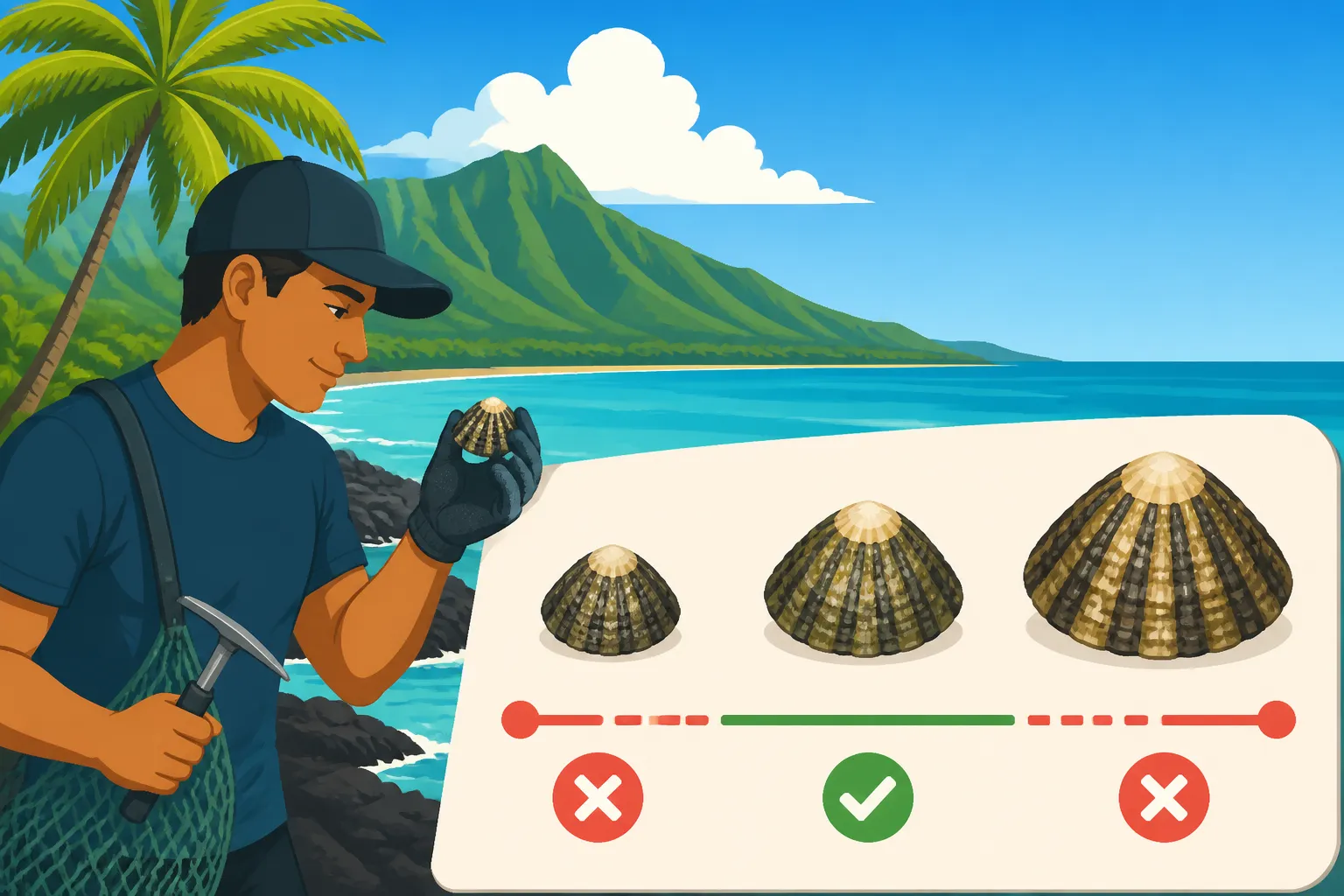
For both the ʻOpihi Koele and the ʻOpihi Pueone, the minimum legal shell size is 1.5 inches (approximately 3.8 cm) at its widest point. This means you cannot harvest any opihi of these species if its shell measures less than 1.5 inches across. The idea behind this minimum size is to allow these opihi to grow large enough to reproduce at least once, contributing to the next generation before being harvested.
Then there's the ʻOpihi ʻAlinalina (the "yellowfoot" opihi), which tends to be smaller overall. For this species, the minimum legal shell size is 1.0 inch (approximately 2.5 cm) at its widest point.
It's crucial to understand these distinctions. You can't just assume all opihi have the same 1.5-inch rule. Always double-check what type of opihi you're targeting. These regulations are laid out clearly by the Department of Land and Natural Resources (DLNR) Division of Aquatic Resources (DAR), and a quick review of the official guidelines, such as those detailed in the Hawaii Bag and Size Limits by Species guide, can prevent any misunderstandings.
Accurate Measurement: How to Ensure You're Compliant
Okay, so you know the numbers, but how do you actually measure an opihi accurately when you're out on the rocks, often with waves washing over you? This is where preparation and precision come in.
First and foremost, you'll need a reliable measuring tool. A simple ruler works, but many experienced gatherers prefer a specialized opihi gauge or caliper. These tools, often made of plastic or metal, have specific cutouts or markings that make it easy to quickly check if an opihi meets the minimum size without having to fumble with a tape measure. You can often find these at local fishing supply stores, or even order a suitable, sturdy plastic ruler or caliper from Amazon before your trip.
Here's a step-by-step guide to accurate measurement:
- Safety First: Before you even think about measuring, ensure you are in a safe position. Never compromise your safety for an opihi. Wait for a calm moment between waves.
- Gently Remove: If you intend to harvest, gently but firmly pry the opihi from the rock. Be careful not to damage the shell or the animal. If you're unsure if it's legal, it's often best to measure it before prying it off, if possible, especially if you plan to return undersized ones to the rock immediately.
- Identify the Widest Point: Hold the opihi shell and visually identify its widest point. This is usually across the center of the oval-shaped shell.
- Measure Across: Place your ruler or gauge across this widest point. Read the measurement carefully. For an opihi gauge, simply try to fit the shell into the appropriate slot. If it slides in and the shell is smaller than the minimum marker, it's undersized. If it sits firmly against the minimum marker or is larger, it's a keeper.
- Return Undersized Immediately: If an opihi is undersized, return it to the exact spot on the rock where you found it, if possible. Press it gently back onto the rock to help it re-adhere. The faster it's returned, the better its chances of survival. Do not toss it into the water or onto another random rock.
It's a good practice to carry your measuring tool on a lanyard or attached to your gear so it's always accessible. Don't eyeball it – that's a surefire way to make a mistake and potentially face legal trouble. Being diligent about accurate measurement is a sign of a responsible gatherer, showing respect for both the law and the resource.
Beyond Size: Daily Limits and Restricted Areas
While shell size is a primary concern, it's just one piece of the regulatory puzzle for opihi. To truly be a responsible gatherer, you need to be aware of other critical rules that govern Hawaii Opihi Harvest Limits and Size Rules.
First up, the daily bag limit. For opihi, the current statewide daily bag limit is 30 opihi per person per day. This limit applies to all legal-sized opihi, regardless of species. So, whether you're collecting ʻOpihi Koele or ʻOpihi ʻAlinalina, you cannot take more than 30 total in a single day. This limit is in place to prevent overharvesting by individuals, ensuring that the resource is shared among many and that enough opihi remain to reproduce. It's a key part of managing the resource sustainably.
Secondly, you absolutely must be aware of restricted areas. Hawaii has designated several Hawaii Marine Life Conservation Districts, Explained (MLCDs) and other protected areas where all forms of fishing and gathering, including opihi harvesting, are either strictly prohibited or heavily restricted. Famous examples include parts of Hanauma Bay (though some areas nearby might have specific rules for traditional gathering) or certain coastal areas around specific islands. Before you even head out to your favorite spot, take the time to check if it falls within a protected zone. The DLNR website is your best friend here, offering maps and detailed explanations of these areas. Ignoring these boundaries can lead to severe fines and a confiscated catch, far outweighing the reward of a handful of opihi. Always consult up-to-date regulations, perhaps even by Reading the Hawaii DLNR Fishing Regulations PDF, to confirm you're in a legal gathering zone.
Lastly, while there isn't a general statewide closed season for opihi like there is for some other marine species (such as moi or uhu), it’s always wise to stay informed. Regulations can change, and localized management measures, often based on traditional knowledge or scientific assessment, might occasionally be implemented in specific areas. Staying connected with local fishing communities or regularly checking the DLNR website will keep you updated.
The Serious Consequences of Illegal Opihi Harvesting
Nobody wants to face legal trouble, especially when out enjoying Hawaii's beautiful coastline. But violating opihi regulations isn't just a minor infraction; it carries serious penalties and, perhaps more importantly, undermines the very spirit of conservation that protects these cherished resources.
Understanding Fines and Penalties
Let's not mince words: if you're caught taking undersized opihi, exceeding the Hawaii opihi daily limit per person, or harvesting in a prohibited area, the consequences can be significant. Fisheries enforcement officers, whether from the DLNR Division of Conservation and Resources Enforcement (DOCARE) or local police, take these violations very seriously.
Here's what you might be looking at:
- Hefty Fines: Monetary fines are almost always a part of the penalty. These aren't just a slap on the wrist; they can range from several hundred dollars to potentially thousands, depending on the severity of the offense and whether it's a repeat violation. Imagine losing a week's pay, or more, just for a handful of undersized opihi.
- Confiscation of Catch and Gear: Any illegally harvested opihi will be confiscated. This means all your hard work, and potentially dangerous rock-climbing, yields absolutely nothing. In some cases, your gathering tools, or even your fishing gear if related, might also be seized.
- Administrative Penalties: Beyond court fines, you might face administrative penalties from the DLNR, which could include the suspension of any other fishing licenses you hold (though a general marine fishing license isn't required for residents collecting opihi, commercial licenses could be impacted, or even freshwater licenses like those covered in the Hawaii Freshwater Fishing License and Rules guide).
- Community Service: In some instances, particularly for repeat offenders or more egregious violations, you might be sentenced to community service, often related to environmental restoration or conservation efforts.
- Criminal Charges: While rare for a single, small violation, repeated or severe infractions (especially commercial-level poaching) could escalate to criminal charges, leading to even more serious legal repercussions and a permanent record.
The bottom line is that the cost of illegal harvesting far outweighs any perceived benefit. It's simply not worth the risk. The law is designed to be a deterrent, and for good reason: to safeguard a dwindling resource.
Long-Term Impacts on Opihi Populations and Community Trust
Beyond the immediate legal and financial pain, illegal opihi harvesting has a far more insidious and damaging effect: it harms the opihi populations themselves and erodes community trust.
When individuals ignore size limits and take undersized opihi, they are directly removing individuals that haven't had a chance to reproduce. This reduces the number of new opihi entering the population, creating a downward spiral over time. Imagine if everyone took small opihi – soon, there would be no big ones left, and eventually, very few opihi at all. This kind of unsustainable practice is what has led to declines in many marine species around the world, and it's a future we must actively avoid for opihi. Every undersized opihi taken is a blow to the future of the species.
Furthermore, illegal harvesting damages the trust within the community. When responsible gatherers see others flouting the rules, it breeds resentment and frustration. It undermines the collective effort to manage resources sustainably and can even lead to a feeling that adherence to regulations is pointless if others aren't following suit. It's a sad reality that a few bad actors can spoil it for everyone, putting a cloud over a deeply respected cultural practice. The enforcement agencies rely heavily on community members reporting suspicious or illegal activity, and fostering that trust is vital for conservation efforts. When you choose to follow the rules, you're not just avoiding a fine; you're actively participating in the preservation of Hawaii's natural heritage and upholding the values of your community.
Responsible Opihi Gathering Practices
Responsible opihi gathering is about more than just knowing the rules; it's about embracing a mindset of respect, sustainability, and foresight. It ensures that this cherished tradition can continue for generations to come, much like the responsible practices outlined in Hawaii Traditional and Customary Fishing Rights Explained.
Choosing the Right Tools and Techniques
When you head out to gather opihi, your approach matters. It's not just about what you take, but how you take it.
Firstly, your tools: A good, sturdy opihi knife or pry bar is essential. These tools are designed to slip under the opihi shell with minimal damage to the rock or the opihi itself. Avoid using crude tools like screwdrivers or chisels, which can break apart the rock face, destroying habitat for future opihi and other marine life. Similarly, don't use anything that scrapes the rock aggressively; the goal is a clean, swift removal. If you're a beginner, ask experienced local gatherers or staff at a local tackle shop for recommendations on proper tools and techniques. Some tools might even be available for purchase through Amazon, but always prioritize tools designed for minimal impact.
Technique is equally important. Opihi cling to rocks with incredible strength. Rather than brute force, a quick, decisive pry is often more effective and causes less damage. Position your tool carefully under the edge of the opihi's shell, then apply firm, consistent pressure upwards and outwards. The goal is to pop the opihi off cleanly. If an opihi is particularly stubborn, move on. Don't risk injury to yourself or damage to the rock trying to get a single opihi.
Remember the measurement guidelines we discussed: always measure your opihi immediately after removal. If it’s undersized, return it gently to the exact spot on the rock, pressing it firmly to help it re-adhere. Opihi have an amazing ability to reattach, but they need help and care to do so successfully. If you find yourself consistently getting undersized opihi in a certain area, it's a clear sign to move to a different spot or consider that the population there needs more time to recover. This patience is a hallmark of truly sustainable harvesting.
Supporting Sustainable Opihi Populations
Being a responsible gatherer means actively contributing to the long-term health of opihi populations. This goes beyond just following the legal minimum Hawaii opihi legal shell size range and bag limits.
- Harvest for Need, Not Greed: Only take what you and your family can reasonably consume or share. Don't fill coolers to the brim if much of it will go to waste. Overharvesting, even within legal limits, can still stress local populations. The spirit of the Hawaii opihi daily limit per person is about subsistence and sharing, not excessive take.
- "Pick the Big Ones, Leave the Small Ones": While minimum size limits are legally binding, a truly sustainable approach often means choosing larger opihi, even if smaller legal ones are available. Larger opihi have likely reproduced multiple times, and leaving the slightly smaller, but still legal, ones allows them to grow larger and contribute more to future generations.
- Respect the Habitat: Be mindful of your footsteps and movements on the rocks. Avoid dislodging other marine life or causing unnecessary erosion. Treat the shoreline with the same reverence you'd show a sacred site. Also, be aware of broader conservation issues, like avoiding areas near Hawaii turtle and monk seal proximity rules for anglers to minimize disturbance to these protected species.
- Report Violations: If you witness illegal opihi harvesting, report it to DLNR DOCARE. It might feel uncomfortable, but reporting is crucial for protecting the resource for everyone. You can usually find contact information on the DLNR website or even through a quick search on Amazon for fishing regulation guides.
- Stay Informed: Regulations can change. Make it a habit to check the DLNR website regularly for updates, especially regarding specific areas or seasonal changes. Attending community meetings or talking to local experts can also provide valuable insights into local conditions and traditional management practices.
By adopting these practices, you become a steward of Hawaii's natural resources, ensuring that the legacy of opihi gathering, and the vibrant ecosystems they inhabit, continue to thrive for years to come.
Summary of Opihi Regulations
For quick reference, here's a summary of the key opihi regulations:
| Opihi Species | Minimum Shell Size (Widest Point) | Daily Bag Limit Per Person | Specific Closed Season (Statewide) | Harvest Method | Restricted Areas |
|---|---|---|---|---|---|
| ʻOpihi Koele | 1.5 inches (3.8 cm) | 30 (total all species) | None (check local areas) | Hand Picking | MLCDs & Protected Areas |
| ʻOpihi Pueone | 1.5 inches (3.8 cm) | 30 (total all species) | None (check local areas) | Hand Picking | MLCDs & Protected Areas |
| ʻOpihi ʻAlinalina | 1.0 inch (2.5 cm) | 30 (total all species) | None (check local areas) | Hand Picking | MLCDs & Protected Areas |
Remember, this table is a summary. Always consult the official Hawaii DLNR regulations for the most current and detailed information.
Disclaimer
Please be aware that fishing and gathering regulations in Hawaii are subject to change by the Department of Land and Natural Resources (DLNR). While this guide strives for accuracy, it is your responsibility to verify all current rules and regulations before engaging in any fishing or gathering activity. Always consult the official Hawaii DLNR Division of Aquatic Resources website or contact them directly for the most up-to-date information.