What a Marine Life Conservation District means for anglers
For many of us who love to fish in Hawaii, the idea of hitting a prime spot only to realize it's a Marine Life Conservation District (MLCD) can be a real head-scratcher. It's frustrating trying to decipher all the nuances of regulations when all you want to do is cast a line or dive for dinner. This comprehensive guide will pull back the curtain on Hawaii's MLCDs, breaking down exactly what these protected areas mean for you as an angler, so you can navigate our beautiful waters responsibly and avoid any unwelcome surprises.
Understanding Marine Life Conservation Districts (MLCDs)
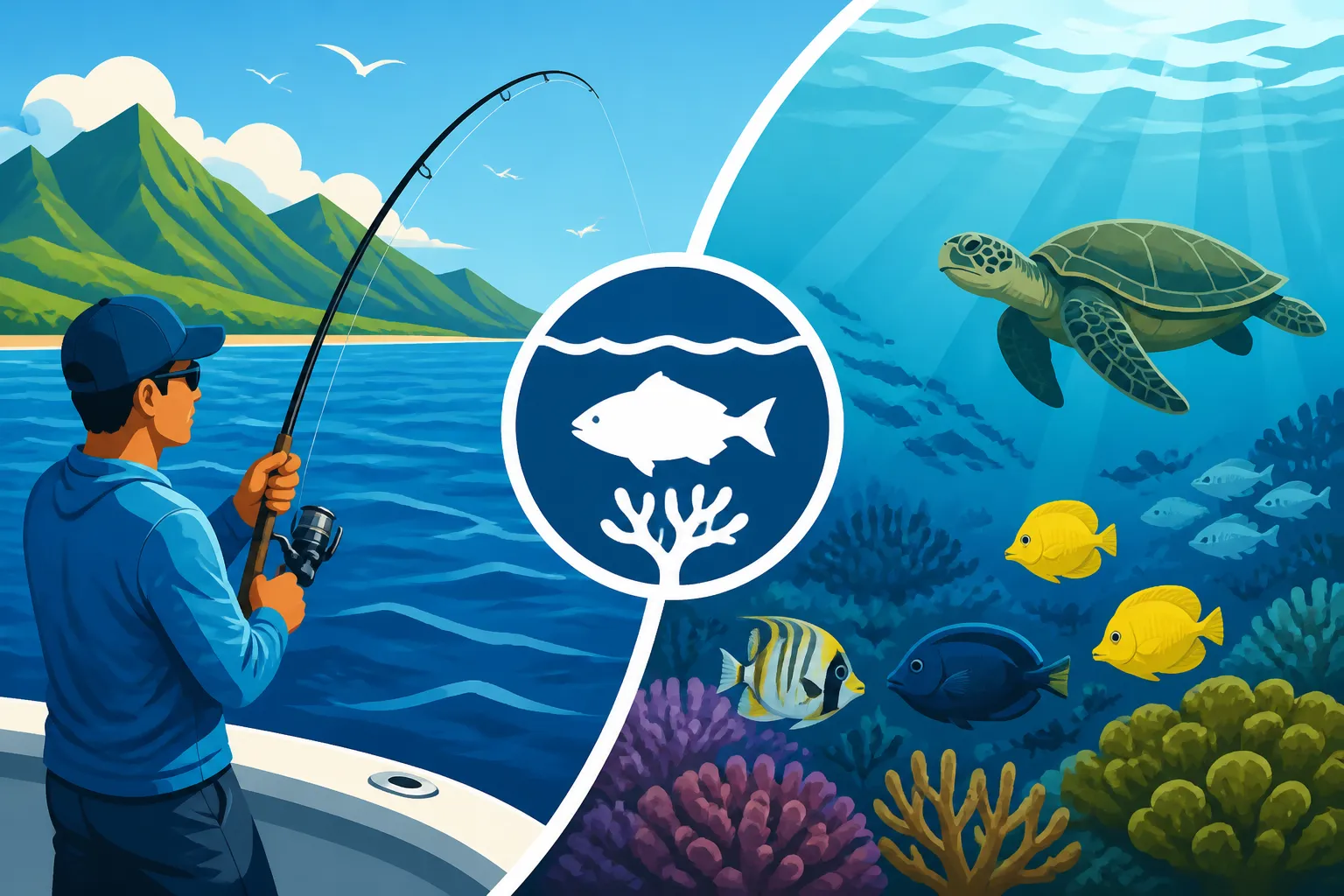
Imagine a vibrant underwater garden, teeming with life, where fish swim freely and corals flourish. That's essentially the vision behind Hawaii's Marine Life Conservation Districts (MLCDs). These designated ocean areas are established to protect and preserve our unique marine ecosystems, allowing them to thrive largely undisturbed by human extraction. They're like underwater parks, set aside for scientific study, education, and observation, but with very specific rules about what activities are allowed – especially when it comes to fishing.
What Exactly is an MLCD?
An MLCD, at its core, is a special marine area designated by the Hawaii Department of Land and Natural Resources (DLNR) to protect and conserve marine resources. Unlike general fishing regulations that might focus on specific species, size limits, or seasons, MLCDs often take a broader approach, limiting or prohibiting all forms of marine life take within their boundaries. The primary goal is to create sanctuaries where marine populations can grow, reproduce, and spill over into adjacent, non-protected areas, ultimately benefiting the wider fishing community in the long run. They serve as critical refuges for a myriad of species, from tiny reef fish to larger pelagics that might venture closer to shore.
The concept isn't just about stopping fishing; it's about fostering ecological health. Think of it this way: if a garden is constantly being picked, it can't grow to its full potential. By setting aside these areas, the state aims to ensure that future generations can still experience the rich biodiversity that makes Hawaii's oceans so special. It's a long-term investment in the health of our fisheries.
The Goal of MLCDs: Conservation and Education
The primary purpose of MLCDs isn't to prevent people from enjoying the ocean, but rather to ensure its long-term health and vitality. These districts are vital for conservation, providing safe havens where marine life can flourish without the pressures of fishing or harvesting. This allows fish populations to rebound, enhances biodiversity, and protects critical habitats like coral reefs, which are the nurseries for countless species. When fish are allowed to grow larger and reproduce more often within these zones, their offspring often disperse, helping to replenish fish stocks in areas open to fishing. It's a testament to sustainable resource management.
Beyond conservation, MLCDs play a crucial role in public education. They serve as living classrooms where both residents and visitors can observe marine life in a near-natural state. Snorkelers and divers get to experience incredibly vibrant ecosystems, fostering a deeper appreciation and understanding of the importance of marine conservation. Many MLCDs have interpretive signs or educational programs that highlight the local marine species and the ecological principles at play, turning a simple visit into a learning opportunity. This educational aspect is critical for cultivating a culture of responsible ocean stewardship.
Types of Protected Areas in Hawaii
It’s easy to get confused with all the different designations, so let's clarify. While MLCDs are strictly focused on marine conservation and generally prohibit or severely restrict fishing, Hawaii has other types of protected areas too. For instance, there are Fish Replenishment Areas (FRAs) like the ones in West Hawaii, which are designed to protect specific species or life stages, often for certain periods or with specific gear restrictions, but don't typically involve a blanket ban on all take. FRAs often focus on areas important for the spawning or growth of target fish species, ensuring they have a chance to mature and reproduce. Our guide on Hawaii Fish Replenishment Areas in West Hawaii dives deeper into those specific rules.
Then there are simply areas with special management rules, like specific bays or harbors that might have size or bag limits for certain species, or prohibitions on certain gear types, without being a full MLCD. The key takeaway is that MLCDs are generally the most restrictive in terms of fishing activities, prioritizing the complete protection of the ecosystem within their boundaries. Understanding these distinctions is crucial for any angler who wants to stay on the right side of the law and respect our precious marine resources. If you're wondering about general fishing rules across the islands, our comprehensive Hawaii Fishing Regulations Explained guide can provide a broader overview.
Permitted and Prohibited Activities for Anglers within MLCDs
Alright, let's get down to brass tacks: what can you actually do, and what's absolutely off-limits, when you're in an MLCD? This is where the rubber meets the road for anglers, and the rules are typically quite stringent. The overarching theme in most MLCDs is "no take," meaning you cannot remove any marine life, living or dead, from these areas. This includes fish, corals, shells, rocks, and even sand in some instances. The idea is to leave everything exactly as you found it, allowing the ecosystem to function undisturbed.
General Fishing Restrictions and Allowances
For most MLCDs, recreational fishing, in any form, is outright prohibited. This means no rod and reel, no throw nets, no handlining, no traps, and absolutely no spearfishing. The ban extends to collecting bait, gathering limu (seaweed), or harvesting opihi, crab, or lobster. These areas are designed as true sanctuaries where marine life can exist without human extractive pressure. This might sound tough, especially if you've stumbled upon what looks like a perfect fishing spot, but it's essential for their conservation purpose.
However, there are a few nuances, and it's absolutely critical to check the specific regulations for each MLCD, as some might have very limited exceptions. For example, some MLCDs might allow for certain types of passive observation, or transit through the area. But for the vast majority, when you see "MLCD," assume a complete fishing ban. You'll need to know your boundaries precisely to avoid accidental violations. Anglers often face fines and equipment confiscation if caught fishing in these zones, so ignorance of the law is truly no excuse here.
Gear Restrictions and Specific Prohibitions
Because the general rule is "no take," it naturally follows that all fishing gear typically used for harvesting marine life is prohibited within MLCD boundaries. This includes:
- Rod and Reel: Even if you intend to "catch and release," it's generally not permitted, as the act of fishing itself can stress marine life and introduce foreign objects (hooks, lines) into the environment.
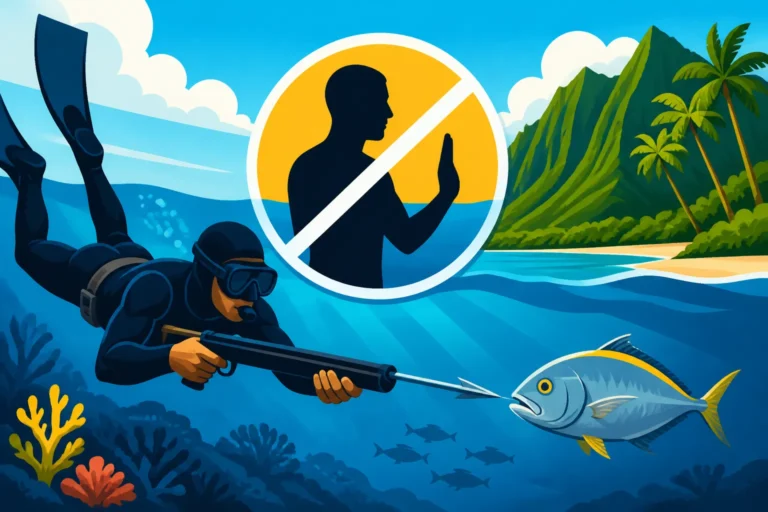
- Spearfishing: This is universally banned in MLCDs. The very nature of spearfishing involves actively hunting and taking marine life, which directly contradicts the conservation goals. To learn more about general regulations, check out our guide on Hawaii Spearfishing Regulations.
- Net Fishing: Whether it's throw nets for bait, gill nets, or lay nets, all forms of netting are prohibited. These methods can indiscriminately catch marine life and disturb the delicate balance of the reef. Our guide on Hawaii Net Fishing Restricted Areas offers more details on where net fishing is generally banned.
- Traps and Snares: Any device designed to capture marine life, such as fish traps, lobster traps, or crab nets, is not allowed.
- Harvesting Tools: This includes anything used for gathering shellfish like opihi knives, or tools for collecting limu or corals. Our guide on Hawaii Opihi Harvest Limits and Size Rules explains legal harvesting outside of MLCDs.
The rationale is clear: by removing the means of extraction, the marine ecosystem can recover and flourish. It's not just about the target species; it's about protecting the entire food web and habitat. Even having fishing gear "ready for use" in an MLCD can sometimes be interpreted as a violation, so it's best to secure or stow your gear while transiting through or observing within these zones.
Other Activities: Snorkeling, Diving, and Boating
While fishing is heavily restricted, many MLCDs are fantastic for other ocean-based activities that don't involve taking marine life. These areas are often prime spots for snorkeling, free diving, and SCUBA diving because the marine life is so abundant and unafraid. Imagine snorkeling over a vibrant reef teeming with parrotfish (uhu) and colorful tangs – an experience that MLCDs make possible. In fact, many people visit MLCDs specifically for these non-extractive activities.
Boating is generally allowed within MLCDs, but often comes with specific rules. You might be required to stay within marked channels, adhere to speed limits, or use designated mooring buoys instead of anchoring, to protect sensitive coral beds. Activities like kayaking and paddleboarding are usually permitted, again, with the understanding that no marine life is to be disturbed or removed. It's always a good idea to research the specific rules for boating and other activities within any MLCD you plan to visit, as they can vary. Our guide on Hawaii Boating Laws for Anglers provides a general overview of Hawaii's marine vessel regulations.
Navigating Specific MLCDs: Rules and Examples
Hawaii is home to several Marine Life Conservation Districts, each with its own unique characteristics and, in some cases, slightly varied rules, though the "no take" principle remains universal. Knowing the specifics for popular locations can save you a lot of headache and help you appreciate the conservation efforts behind them.
Hanauma Bay: A Strict No-Take Zone
Hanauma Bay, located on the southeast coast of Oʻahu, is perhaps Hawaii's most famous and strictly regulated MLCD. It's renowned for its crystal-clear waters and incredible abundance of colorful reef fish, making it a world-class snorkeling destination. Here, the rules are unequivocally clear: absolutely no fishing, no taking of any marine life (not even shells or sand), and touching marine life is strictly prohibited. You'll often see signs reinforcing these rules, and staff are present to educate visitors and enforce compliance.
The bay was designated an MLCD in 1967, and since then, its marine ecosystem has made a remarkable recovery, demonstrating the effectiveness of such strict protection. Visitors are required to watch an educational video before entering the bay, emphasizing the importance of respecting the marine environment. If you've ever wondered Is Fishing Allowed at Hanauma Bay?, the answer is a definitive no, and for very good reason – it's a living example of a thriving, protected reef.
Kealakekua Bay MLCD: Historical Significance and Strict Enforcement
On the Big Island, Kealakekua Bay holds immense historical and ecological significance, serving as the site where Captain Cook first landed and was later killed. It's also a vibrant MLCD with strict regulations. While some historical fishing practices might have occurred here in the past, today, the bay is a protected sanctuary. Within the MLCD boundaries, which are clearly marked, all fishing and taking of marine life are prohibited. This includes spearfishing, net fishing, and even collection of limu or opihi.
The bay is a popular spot for kayaking and snorkeling, offering incredible visibility and diverse marine life, including spinner dolphins that often rest and play in its calm waters. The enforcement in Kealakekua Bay is quite strict due to its protected status and historical importance. Anglers must be vigilant about its boundaries; straying into the MLCD while fishing can lead to significant penalties. It's one of those places where you absolutely need to know where you are at all times.
Lapakahi State Historical Park MLCD: Balancing History and Conservation
Moving up the Kona coast of the Big Island, Lapakahi State Historical Park offers a unique blend of cultural history and marine conservation. This MLCD aims to preserve both the rich marine ecosystem and the traditional Hawaiian fishing village archaeological sites. The marine portion of Lapakahi, extending from the shoreline seaward, is designated as an MLCD where all fishing and gathering of marine life are prohibited.
The park itself provides an immersive experience into ancient Hawaiian life, showcasing traditional practices and structures. This dual focus means that visitors are encouraged to appreciate both the land and sea environments in their natural, undisturbed state. For anglers, this means enjoying the cultural richness of the area from shore, but keeping all fishing activities outside the clearly defined MLCD boundaries. It’s a place to learn and observe, not to harvest.
Waiʻōpae Tidepools (Kapaho) MLCD: Unique Rules
On the Big Island's eastern side, near Kapoho (though significantly altered by recent lava flows), the Waiʻōpae Tidepools MLCD historically offered a unique example of marine protection, specifically focused on its incredible tide pool ecosystems. While the area has seen dramatic changes due to volcanic activity, the concept of this MLCD highlights how varied these districts can be. Before the lava flows, this MLCD specifically prohibited the taking of any marine life, including small fish, crabs, and limu from the tide pools, ensuring that this delicate intertidal zone remained pristine for scientific study and passive observation.
The rules reflected the delicate nature of tide pool habitats, which are highly sensitive to disturbance. While the physical landscape of Waiʻōpae has transformed, it serves as a powerful reminder that each MLCD is established with specific ecological features and conservation goals in mind. Anglers thinking about visiting any MLCD must always consult the most current DLNR Division of Aquatic Resources (DAR) regulations for precise, up-to-date information, as circumstances can change.
Here’s a quick overview of key MLCDs and their general restrictions:
| Marine Life Conservation District (MLCD) | Island | General Fishing | Spearfishing | Net Fishing | Take of Marine Life | Unique Rules/Focus |
|---|---|---|---|---|---|---|
| Hanauma Bay | Oʻahu | Prohibited | Prohibited | Prohibited | Prohibited | Strict no-take, no touching marine life; educational video required. |
| Kealakekua Bay | Hawaiʻi | Prohibited | Prohibited | Prohibited | Prohibited | Historical site, dolphin resting area; strict enforcement. |
| Lapakahi State Historical Park | Hawaiʻi | Prohibited | Prohibited | Prohibited | Prohibited | Preserves cultural sites and marine ecosystem. |
| Mokulēʻia Bay (Shark's Cove) | Oʻahu | Prohibited | Prohibited | Prohibited | Prohibited | Popular snorkeling spot, tide pools; no removal of anything. |
| Honolua Bay | Maui | Prohibited | Prohibited | Prohibited | Prohibited | Very popular snorkel/surf spot; no take, respect the reef. |
| Molokini Shoal | Maui | Prohibited | Prohibited | Prohibited | Prohibited | Volcanic crater, world-famous dive spot; only permitted commercial tours allowed. |
Note: This table provides general guidance. Always consult official DLNR resources for the most current and specific regulations for each MLCD.
Finding MLCD Boundaries and Staying Compliant
Understanding that MLCDs exist is the first step, but knowing exactly where they are and how to avoid accidental violations is paramount for any responsible angler. The ocean doesn't come with clearly painted lines, so relying on official resources and local knowledge is key. Getting caught fishing in an MLCD, even unintentionally, can lead to serious consequences.
Resources for Identifying MLCD Locations
The best way to identify MLCD boundaries is through official channels. The Hawaii Department of Land and Natural Resources (DLNR), Division of Aquatic Resources (DAR) is the primary authority. Their website is a treasure trove of information, often featuring maps, detailed descriptions of each MLCD, and specific regulations. You can typically find a downloadable Hawaii DLNR Fishing Regulations PDF that outlines all the rules, including MLCD boundaries.
Beyond the official website, here are some practical tips:
- Charts and GPS: Many modern marine charts, especially those used with GPS plotters, will indicate MLCD boundaries. Investing in a good marine GPS unit and regularly updating its charts can be an invaluable tool for boaters.
- Local Knowledge: Talk to local tackle shop owners, experienced local anglers, or charter captains. They often have firsthand knowledge of exact boundaries and subtle cues that aren't always obvious on a map.
- Signs on Shore: Many MLCDs, particularly those easily accessible from shore like Hanauma Bay or parts of Kealakekua Bay, will have prominent signage indicating the protected area and outlining the rules. Always look for these signs before you cast a line or enter the water.
- Mobile Apps: A growing number of fishing and boating apps now integrate regulatory maps, including MLCDs, which can be incredibly useful when you're out on the water. Do your research to find reputable apps that stay updated with DLNR regulations.
When in doubt, err on the side of caution. If you're unsure if an area is an MLCD, it's safer to move to a clearly designated fishing area.
Penalties for Violations
Let's be blunt: fishing without a required license or violating MLCD rules in Hawaii can carry significant penalties. These aren't just slaps on the wrist; they're designed to deter harmful activities and protect our precious marine resources. Penalties can range from substantial fines to confiscation of your fishing gear, boat, and even your catch. Depending on the severity and frequency of the offense, some violations can even lead to misdemeanor charges, resulting in court appearances, community service, or even imprisonment in extreme cases. Our guide on Fishing Without a Required License in Hawaii: Penalties provides more context on the general consequences of violating fishing laws.
The DLNR and its enforcement arm, the Division of Conservation and Resources Enforcement (DOCARE), actively patrol these areas. They are committed to upholding these regulations to protect Hawaii's unique marine environment. It's not just about getting caught; it's about the broader impact of illegal fishing on an ecosystem that's already facing numerous challenges. Respecting these rules is a vital part of being a responsible steward of our oceans.
How Anglers Can Support Conservation Efforts
Even with the restrictions, anglers have a crucial role to play in supporting marine conservation efforts, both within and outside MLCDs. It's not just about avoiding prohibited areas, but actively contributing to the health of our fisheries.
Here's how you can help:
- Practice Catch and Release Responsibly: In areas where fishing is permitted, if you're not keeping your catch for food, learn and practice proper catch and release techniques to ensure the fish's survival. This includes minimizing handling, using appropriate tackle, and quick release methods.
- Adhere to Bag and Size Limits: Always respect the Hawaii Bag and Size Limits by Species and seasonal closures for species like Hawaii Moi Closed Season, Explained or Hawaii Uhu (Parrotfish) Size and Bag Limits. These limits are based on scientific data to ensure sustainable populations.
- Report Violations: If you witness illegal fishing or other harmful activities within an MLCD or any other protected area, report it to the DLNR (DOCARE). You can remain anonymous, and your report can make a real difference.
- Educate Others: Share your knowledge about MLCDs and responsible fishing practices with friends, family, and fellow anglers. A more informed community is a more compliant one.
- Support Conservation Organizations: Many local non-profits are actively involved in marine conservation, habitat restoration, and advocating for sustainable fisheries management. Consider volunteering or donating to their efforts.
- Minimize Your Footprint: Whether you're fishing or simply enjoying the ocean, pack out everything you pack in. Avoid leaving trash, fishing line, or other debris that can harm marine life. Every piece of plastic left behind can become a hazard for a fish or a sea turtle.
By understanding and respecting the purpose of MLCDs, and by adopting responsible practices in all our ocean activities, anglers can become powerful advocates for the very resources that bring us so much joy and sustenance. It’s about ensuring that the thrill of fishing remains for generations to come.
Disclaimer
Please remember that fishing regulations and marine zone designations in Hawaii can change. While every effort has been made to provide accurate and up-to-date information in this guide, it is your responsibility to verify all current rules and regulations with the Hawaii Department of Land and Natural Resources (DLNR) Division of Aquatic Resources (DAR) before engaging in any fishing activities. This guide is for informational purposes only and should not be considered legal advice.