List of Hawaii freshwater fishing waters
It’s easy to get swept away by the allure of Hawaii’s sparkling blue ocean, imagining epic battles with marlin or mahi-mahi. But if you’re a dedicated angler, or perhaps just looking for a different kind of fishing experience, you might find yourself wondering: are there even any good freshwater fishing spots in Hawaii? The good news is, absolutely! While not as abundant as some mainland states, Hawaii offers some surprisingly rich freshwater opportunities. This guide will take you through the islands' best freshwater fishing waters, helping you uncover these often-overlooked inland treasures.
The Unique Landscape of Hawaii's Freshwater Fishing
When most people picture fishing in Hawaii, their minds immediately conjure images of deep-sea charters chasing pelagics or casting into the surf from a beautiful sandy beach. And for good reason – the ocean here is truly magnificent. However, this focus on marine environments often leads people to believe that freshwater fishing in the islands is either non-existent or not worth pursuing. That couldn't be further from the truth, although you do need to know where to look.
More Than Just Ocean Angling
It’s a common misconception that Hawaii, being a volcanic archipelago, simply doesn't have the kind of large rivers or natural lakes that support robust freshwater fisheries. And while it's true you won't find vast natural lakes like those in the continental U.S., the islands do host a network of streams, rivers, and, most importantly for anglers, man-made reservoirs. These areas, often developed for irrigation or water storage, have become thriving habitats for a variety of introduced freshwater species.
The surprise on many anglers' faces when they learn about the vibrant peacock bass fishery on Oahu, or the rainbow trout opportunities on Kauai, is always a delight to witness. It's a different kind of challenge, requiring different gear and techniques than ocean fishing, but it offers a unique connection to the 'aina (land) and its diverse ecosystems. Many local families have grown up fishing these spots, passing down traditions that highlight the richness of Hawaii's lesser-known aquatic environments.
Understanding Hawaii's Geography and Aquatic Resources
Hawaii's geological history plays a huge role in its freshwater landscape. Formed by volcanic hotspots, the islands rose from the ocean, leaving little room for extensive natural river systems to develop over eons. Instead, the terrain is often steep, leading to short, fast-flowing streams. To meet agricultural and residential water needs, reservoirs were constructed, fundamentally changing the freshwater opportunities available.
These reservoirs, fed by mountain streams and rainfall, created stable, nutrient-rich environments perfect for stocking various game fish. The Department of Land and Natural Resources (DLNR), specifically its Division of Aquatic Resources (DAR), is the primary agency responsible for managing these precious freshwater resources. They oversee stocking programs, regulate fishing seasons, and enforce rules to ensure these fisheries remain healthy and sustainable for future generations. Their commitment is what makes these inland fishing adventures possible for both residents and visitors alike.
Premier Freshwater Fishing Destinations Across the Islands
Alright, let's get down to the brass tacks: where can you actually wet a line in Hawaii's freshwater? While options are limited compared to some places, the quality of the fishing in these select spots often makes up for the lack of quantity. Each location offers a unique experience, from chasing aggressive bass to delicate trout.
Oahu's Inland Oasis: Wahiawa Public Fishing Area
Without a doubt, the Wahiawa Public Fishing Area on Oahu stands as the crown jewel of Hawaii’s freshwater fishing scene. Located in the central part of the island, this large reservoir (also known as Lake Wilson) is a true angler's paradise, especially if you're keen on bass fishing.
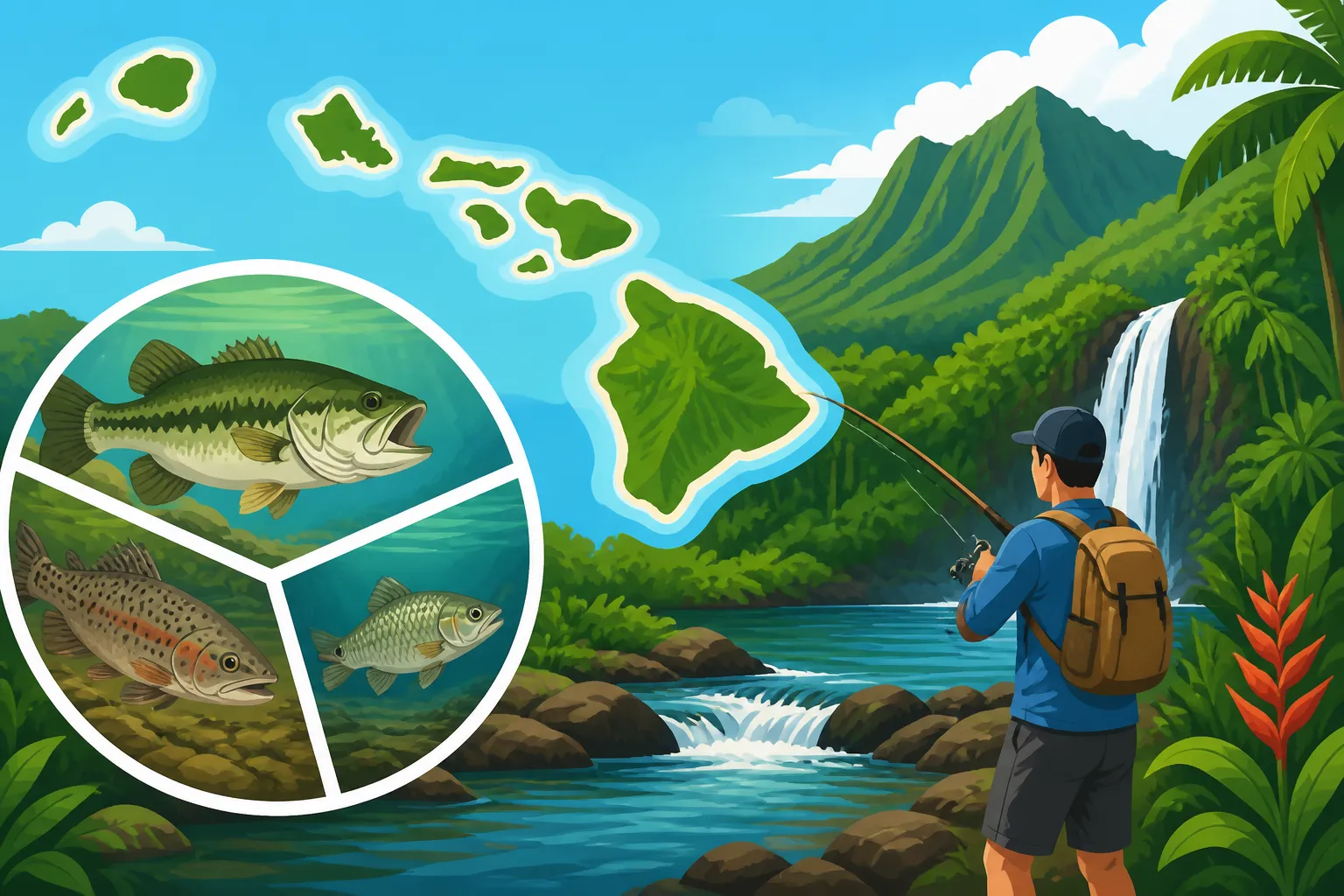
Wahiawa Reservoir is renowned for its exceptional population of largemouth bass, and more famously, its vibrant peacock bass fishery. These introduced species thrive in the warm, fertile waters, offering exciting action for both conventional and fly anglers. Beyond the bass, you can also hook into respectable channel catfish and various species of tilapia. It's truly a diverse fishery that can keep you guessing with every cast.
Access to Wahiawa is generally good, with several designated fishing areas along the shoreline. Many anglers prefer to fish from kayaks, canoes, or small boats (electric motors only are permitted) to cover more water and access hidden coves. The fishing can be phenomenal, particularly in the early mornings or late afternoons when the peacock bass are actively feeding on the surface. Make sure you're properly licensed; you'll need a freshwater fishing license, whether you're a Hawaii freshwater license cost for residents or looking into the Hawaii freshwater license cost for nonresidents. You can find a decent selection of lures and soft plastics suitable for Wahiawa's bass on Amazon, often with quick delivery to the islands. Be sure to check the specific Hawaii Wahiawa Reservoir fishing rules before heading out, as regulations can change.
The Garden Isle's Mountain Stream: Kokee Public Fishing Area (Kauai)
Shifting gears entirely, let's head to the lush, mountainous interior of Kauai, where you'll discover Hawaii's unique rainbow trout fishery at the Kokee Public Fishing Area. This isn't your typical Hawaiian beach scene; imagine cool, misty mountains, dense forests, and crystal-clear streams.
The Kokee fishery is truly special because it's the only place in Hawaii where you can fish for rainbow trout. These fish are stocked annually by the DLNR into the network of streams within Kokee State Park, creating a thrilling, albeit seasonal, opportunity for anglers. The main streams include the Kawaikoi Stream and the Waiakeakua Stream, among others. The fishing here is primarily catch-and-release, focusing on the experience of stalking trout in a pristine mountain environment.
Unlike Wahiawa, Kokee is a highly seasonal fishery. The season typically opens in early August and runs for a few months, with specific dates announced by the DLNR each year. It’s crucial to check the Hawaii Kokee trout fishing season dates before planning your trip, as fishing outside of these dates is strictly prohibited. Access often involves hiking into the various stream sections, so good hiking shoes and appropriate gear are a must. Fly fishing is a popular and effective method here, but spin fishing with light tackle and small lures or bait (like worms) can also be productive. Remember, Hawaii Freshwater License Age Requirements apply, so ensure everyone in your party has the necessary permits.
Other Notable Freshwater Spots
While Wahiawa and Kokee are the undisputed stars of Hawaii's freshwater fishing, a few other locations offer limited or specialized opportunities, though they often come with more restrictions or require specific access.
Nuuanu Reservoir (Oahu): Also located on Oahu, the Nuuanu Reservoir system (Nuuanu 1, 2, and 4) historically offered fishing for largemouth bass, smallmouth bass, and tilapia. However, access to these reservoirs is highly restricted and often closed to public fishing due to watershed protection and other concerns. It's critical to verify the current status and specific Hawaii Nuuanu Reservoir fishing rules with the DLNR before even thinking about visiting these areas, as unauthorized entry can lead to significant penalties. While the potential is there, public access is rare.
Waita Reservoir (Kauai): On Kauai, Waita Reservoir is the largest private reservoir in Hawaii. While it holds good populations of largemouth bass, peacock bass, and tilapia, it’s not publicly accessible for general fishing. Access is typically through guided fishing tours offered by private operators who have secured leases or agreements with the reservoir's owners. If you're visiting Kauai and interested in a guided bass fishing trip, this would be your primary option.
Smaller Streams and Ponds: Across the islands, smaller streams and various ponds might hold tilapia or other small introduced species. However, these are often on private property, within residential areas, or in highly protected watershed zones, making public access difficult or illegal. It's always best to assume a stream or pond is off-limits unless explicitly stated by the DLNR or a clear public access point is available. Always defer to official regulations and respect private property. For any and all freshwater excursions, keeping up-to-date with official guidelines by frequently Reading the Hawaii DLNR Fishing Regulations is paramount.
Here's a quick overview of Hawaii's main freshwater fishing opportunities:
| Location | Island | Target Species | Key Considerations |
|---|---|---|---|
| Wahiawa Public Fishing Area | Oahu | Largemouth Bass, Peacock Bass, Tilapia, Channel Catfish | Requires freshwater license; electric motors only for boats; shore & boat access. |
| Kokee Public Fishing Area | Kauai | Rainbow Trout | Requires freshwater license; seasonal fishery (Aug-Sep/Oct); fly and spin fishing; hiking access. |
| Nuuanu Reservoir | Oahu | Largemouth Bass, Tilapia | Access highly restricted/often closed to public. Check DLNR. |
| Waita Reservoir | Kauai | Largemouth Bass, Peacock Bass, Tilapia | Private access only; typically via guided tours. |
Essential Preparations for Your Freshwater Adventure
So, you've picked your spot and you're ready to go! Before you cast your first line, there are a few important things to know to ensure your freshwater fishing trip in Hawaii is both successful and responsible.
Licensing and Regulations: Don't Get Caught Off Guard
This cannot be stressed enough: you absolutely need a freshwater fishing license to fish in Hawaii's public freshwater fishing areas. This applies to places like Wahiawa Reservoir on Oahu and the Kokee Public Fishing Area on Kauai. Unlike ocean fishing, which is generally exempt for recreational anglers in Hawaii, freshwater fisheries are managed through a licensing system.
Licenses are issued by the Hawaii Department of Land and Natural Resources (DLNR) Division of Aquatic Resources (DAR). You can purchase them in a few different ways:
- Online: The easiest and most convenient method is often to buy your license directly from the DAR's online portal. This is a quick process and allows you to print your license immediately. If you're tech-savvy, knowing How to Buy a Hawaii Fishing License Online can save you a trip.
- Authorized Vendors: Various retail locations across the islands, such as tackle shops or sporting goods stores, are authorized to sell fishing licenses. This can be a great option if you prefer to speak with someone locally and get some tips. You can typically find a list of vendors by searching for Where and How to Buy a Hawaii Fishing License.
Beyond the license, it’s critical to understand the specific regulations for each water body. These can include:
- Bag and Size Limits: How many fish of a certain species you can keep, and what their minimum or maximum legal size is.
- Gear Restrictions: Are only certain types of bait or lures allowed? For instance, some areas might restrict live bait to prevent the spread of invasive species.
- Boat Restrictions: As mentioned for Wahiawa, only electric motors or non-motorized vessels are permitted.
- Seasonal Closures: Kokee's trout fishery is a prime example of a seasonal opening and closure.
Always consult the most current DLNR fishing regulations for the specific area you plan to fish. Getting caught without a license or violating regulations can result in hefty fines and a spoiled trip.
Gear, Bait, and Tactics for Success
The gear you bring will largely depend on your target species and chosen location. However, a general rule of thumb for Hawaii's freshwater is to lean towards lighter tackle, as many of the fish, while strong, aren't necessarily behemoths requiring heavy offshore setups.
-
For Bass (Wahiawa): A medium-light to medium action spinning or casting rod paired with a reel spooled with 8-15 lb test line (monofilament or fluorocarbon leader is good for clear water) is ideal. For lures, think about small crankbaits, spinnerbaits, soft plastic worms, swimbaits, and topwater lures for peacock bass. Live bait like worms or small freshwater shrimp can also be effective. You can find a wide range of suitable tackle and lures on Amazon, often with local shops also stocking popular brands like Rapala or Yamamoto Baits. If you're keen on targeting the larger ones, learning the Best technique for freshwater largemouth bass in Hawaii will certainly give you an edge.
-
For Trout (Kokee): Light to ultra-light action spinning rods with 2-4 lb test line are perfect for Kokee's streams. Fly fishing is also incredibly popular here, requiring a 3-5 weight fly rod. Small spinners (like Rooster Tails or Mepps), salmon eggs, or worms work well for spin anglers. For fly fishers, small nymphs, dry flies (caddis, mayflies), and streamers imitating baitfish are productive. Specific tips on the Best techniques for freshwater trout at Kokee can dramatically improve your chances.
-
General Essentials: Regardless of where you go, pack basics like a small tackle box, pliers, a cutting tool, a tape measure (for fish sizes), and a small cooler if you plan to keep legal fish. Don't forget bug spray, especially in lush, vegetated areas, and a good pair of polarized sunglasses to spot fish or navigate clear water.
Safety and Respecting the 'Aina (Land)
Fishing in Hawaii's freshwater environments offers a different set of safety considerations than the ocean.
- Stream and Bank Safety: Many stream banks can be slippery, uneven, or steep. Always wear appropriate footwear with good grip. Be mindful of flash floods, especially during or after heavy rains, as water levels can rise quickly in mountain streams.
- Sun Protection and Hydration: Even in the mountains, Hawaii's sun is strong. Wear a hat, sunglasses, and use reef-safe sunscreen. Carry plenty of water, as hiking to some spots can be strenuous.
- Respect Private Property: Always be aware of property boundaries. Much of Hawaii, even seemingly remote areas, is privately owned. Trespassing is a serious offense. Stick to clearly designated public fishing areas or access points. Remember, your Hawaii fishing license for state park waters is only valid in those designated areas.
- Invasive Species Prevention: Hawaii's delicate ecosystems are highly vulnerable to invasive species. Before moving between different freshwater bodies, or even between freshwater and saltwater, thoroughly clean all your gear – boots, waders, boats, and tackle – to prevent the unintentional transfer of aquatic hitchhikers. This "Clean, Drain, Dry" principle is crucial for protecting Hawaii's unique biodiversity.
- Leave No Trace: Practice strict Leave No Trace principles. Pack out everything you pack in, and perhaps even a little more. Dispose of all trash, including fishing line and bait containers, properly. Let's keep these precious freshwater gems beautiful for everyone.
Following these guidelines will not only enhance your fishing experience but also ensure that you are a responsible and respectful visitor to Hawaii’s beautiful freshwater environments.
Disclaimer
Please be aware that fishing regulations in Hawaii, including license requirements, bag limits, and open seasons, are subject to change by the Hawaii Department of Land and Natural Resources (DLNR). It is always the angler's responsibility to consult the most current official regulations before engaging in any fishing activity. This guide is for informational purposes only and does not supersede official government regulations.