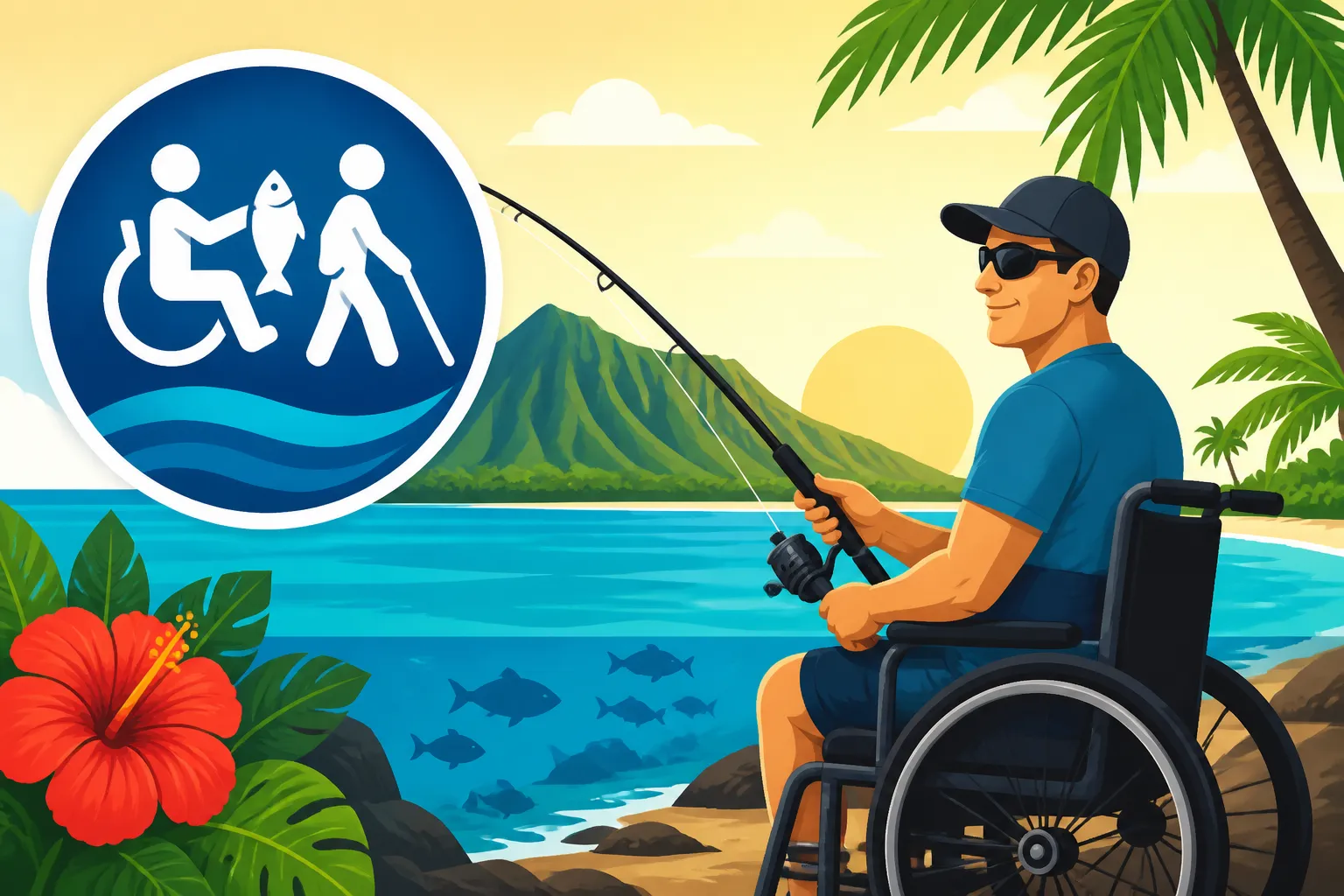
Hawaii fishing license for blind or disabled anglers
It can be incredibly frustrating to want to enjoy the peace and thrill of fishing in Hawaii, only to feel bogged down by unclear regulations, especially if you’re an angler living with a disability or visual impairment. You just want to know if you need a license, what kind, and how to get it without jumping through endless hoops. This comprehensive guide is here to cut through that confusion, clearly outlining Hawaii’s fishing license requirements and exemptions specifically for blind and disabled resident anglers, so you can spend less time worrying and more time casting a line.
Understanding Hawaii's Fishing License Landscape for Anglers with Disabilities
Navigating the world of fishing licenses can be tricky, even for experienced anglers, and it becomes even more complex when you factor in specific needs. Hawaii, like many states, has a system designed to manage its precious aquatic resources. However, it also recognizes the importance of making these activities accessible to everyone, including those with disabilities.
General Hawaii Fishing License Requirements
First, let's set the baseline. For most recreational ocean fishing in Hawaii, residents generally don't need a marine fishing license. This is a unique aspect of Hawaii's regulations compared to many other states. However, this rule typically doesn't apply to freshwater fishing. If you plan to fish in freshwater reservoirs or streams for species like rainbow trout, largemouth bass, or tilapia, you will need a freshwater fishing license, regardless of residency. This distinction is crucial because the exemptions for disabled and blind anglers primarily apply to these freshwater licenses. Understanding these general rules is the first step before diving into the specific accommodations available. For a broader overview, you might want to read our guide on whether you need a fishing license in Hawaii.
Specific Exemptions for Blind and Disabled Residents
Here's where the good news comes in for eligible resident anglers. The State of Hawaii's Department of Land and Natural Resources (DLNR) offers specific exemptions for residents who are legally blind or permanently disabled, specifically for the freshwater fishing license. This means that if you meet the defined criteria, you may be eligible for a free freshwater fishing license, removing a significant barrier to enjoying Hawaii's unique inland fisheries.
Who Qualifies?
- Legally Blind Residents: To qualify as legally blind, an individual typically needs to meet specific visual acuity standards defined by the state. This usually involves a doctor's certification of visual impairment that falls below a certain threshold.
- Permanently Disabled Residents: For permanent disability, the criteria are often broader but still require official medical documentation. This might include individuals with severe mobility impairments, cognitive disabilities, or other long-term health conditions that significantly limit their ability to perform major life activities. The key here is "permanent" – a temporary injury, while challenging, usually wouldn't qualify for this specific exemption.
These exemptions are a fantastic way to ensure that Hawaii's natural beauty and recreational opportunities are inclusive. It's not just about saving a few dollars; it's about validating the right to participate and enjoy a beloved pastime.
Applying for the Exemption or Discount
The process for obtaining your exempted or discounted freshwater fishing license is straightforward, but it requires careful attention to detail and the right documentation. This isn't something you can typically do online; you'll generally need to apply in person or via mail to ensure all necessary certifications are reviewed.
You'll need to submit an application form, which can usually be obtained from a DLNR Division of Aquatic Resources (DAR) office. Alongside this form, you'll need official proof of your disability or legal blindness. This usually means a statement from a licensed physician or a recognized state or federal agency verifying your condition. For example, a doctor's note detailing your visual acuity or a copy of your Social Security Disability Insurance (SSDI) award letter could serve as appropriate documentation. It’s always best to call your local DAR office first to confirm the exact documents they require, as slight variations might exist or updates might occur. This helps prevent wasted trips and frustration. For more details on other available discounts, check out the guide on Free and Discounted Fishing License Options in Hawaii.
Adaptive Fishing Considerations and Accessibility in Hawaii
Beyond the license itself, many anglers with disabilities face practical challenges in accessing fishing spots and handling gear. Hawaii is making strides in accessibility, but knowing where to go and what tools can help makes all the difference.
Accessible Fishing Locations
Finding truly accessible fishing spots can be a challenge anywhere, and Hawaii is no exception, with its rugged coastlines and sometimes steep terrains. However, there are definitely places that stand out as more welcoming for anglers with mobility challenges or visual impairments. Piers, in particular, often offer great accessibility.
For example, on Oahu, spots like Kewalo Basin or some sections around Honolulu Harbor might offer easier access to the water, with paved pathways and railings. On the Big Island, areas around Honokohau Harbor fishing access can be quite good for boat-based charters, and some shorelines might be manageable with assistance. Freshwater reservoirs like Wahiawa Reservoir Fishing Guide on Oahu, known for peacock bass and largemouth bass, often have designated parking and relatively flat bank access, making them more accessible than remote stream fishing. It's always a good idea to research specific locations beforehand, looking for details on ramps, accessible restrooms, and paved surfaces. Some local fishing clubs or disability advocacy groups might even maintain lists of accessible spots.
Gear and Techniques for Adaptive Angling
Fishing doesn't have to be a strenuous activity that limits participation. With the right adaptive gear and techniques, anglers of all abilities can enjoy success on the water. Technology has really opened doors in this area, making fishing more inclusive than ever.
Consider specialized rod holders that can attach to wheelchairs or sit-on-top kayaks, allowing for hands-free fishing or making it easier to manage a rod with limited hand dexterity. There are also grips and handles designed for easier holding, and even casting aids that help launch a line further with less effort. For visually impaired anglers, voice-activated fish finders or depth sounders can provide crucial information about underwater structure and fish presence. These tools, often available through online retailers like Amazon, can be game-changers, transforming what might seem impossible into a rewarding experience. You can find a vast array of adaptive fishing equipment on Amazon, from simple rod holders to advanced electronic aids. Think about products like ergonomic reel handles or even specialized casting gloves that provide better grip and comfort. For those who enjoy the convenience of online shopping, Amazon offers a wide selection that can be delivered right to your door, making it easier to get the gear you need without extensive travel to specialty stores.
Techniques can also be adapted. For instance, instead of active casting and retrieving, a stationary bait fishing setup from a pier or shore can be highly effective and less physically demanding. Live bait or cut bait can be incredibly productive, requiring only patience and a gentle retrieve once a fish bites. Fishing with a buddy who can assist with baiting hooks or netting fish can also greatly enhance the experience, fostering a sense of community and shared enjoyment.
Support Services and Community Groups
Connecting with local communities and support services can provide invaluable assistance and camaraderie. While Hawaii might not have as many specific "disabled fishing" organizations as some mainland states, there are general disability advocacy groups that can point you to resources. The DLNR itself might be able to offer guidance on accessible programs or initiatives.
Joining local fishing clubs, even general ones, can also be beneficial. Many anglers are incredibly generous with their knowledge and time, and you might find fellow enthusiasts willing to share tips, accessible spots, or even offer to go fishing with you. There’s a special bond among anglers, and often, the fishing community is one of the most welcoming and supportive. Don't hesitate to reach out and ask for advice or companionship – you might be surprised by the positive response.
Navigating the Application Process and Common Hurdles
Getting that license in hand is the ultimate goal, and while the exemption exists, navigating the bureaucratic steps can sometimes feel like trying to land a marlin on light tackle. Knowing what to expect can smooth the waters considerably.
Required Documentation and Verification
As mentioned earlier, the key to a smooth application is having all your ducks in a row. For the Hawaii fishing license for disabled residents, you'll need to demonstrate both your residency and your qualifying disability or blindness.
Proof of Hawaii Residency:
This typically means a valid Hawaii driver's license or state ID card. If you're a long-term resident but don't have one, documents like a utility bill with your name and address, voter registration, or property tax statements can sometimes be accepted. The DLNR wants to ensure that these valuable exemptions are reserved for those who truly call Hawaii home.
Proof of Disability/Blindness:
This is the most critical part. You'll need official certification from a licensed medical doctor or a recognized government agency. For legal blindness, an ophthalmologist's statement confirming your visual acuity level is usually required. For other permanent disabilities, a physician's letter detailing the nature and permanence of your condition, and how it impacts your daily life, is generally sufficient. If you receive federal disability benefits (like SSDI), a copy of your award letter can often serve as proof. Always make copies of all documents before submitting them, and keep the originals safe.
Where to Submit Your Application
Once you have all your documents ready, you'll need to submit your application. The DLNR Division of Aquatic Resources (DAR) offices are your primary point of contact. You can find DAR offices on each of the main islands. For example, on Oahu, there's an office in Honolulu. On the Big Island, you'll find offices in places like Hilo or Kailua-Kona.
While some general Hawaii fishing licenses can be purchased online, the specific disability or blind exemptions often require an in-person visit or mailing in your application to a DAR office. This allows staff to review your documentation carefully and ensure eligibility. It's a good idea to call ahead to your nearest DAR office to confirm their operating hours and any specific procedures for submitting these types of applications. They can also tell you if there are any local license agents who are authorized to process these special licenses, which might be more convenient depending on your location.
What to Do If You Encounter Challenges
Even with all the preparation, sometimes things don't go as smoothly as planned. Perhaps a document is deemed insufficient, or there's a delay in processing. If you encounter any hurdles:
- Don't Panic: Bureaucratic processes can be slow or confusing, but there's usually a way to resolve issues.
- Contact the DLNR DAR Directly: If your application is denied or you have questions, reach out to the specific DAR office where you applied. Ask for clarification on why it was denied and what steps you can take to rectify it. Be polite but persistent.
- Seek Advocacy: Disability advocacy groups or legal aid services in Hawaii might be able to offer guidance or even direct assistance if you feel you're being unfairly denied. They can often help interpret regulations or communicate with government agencies on your behalf.
- Review the Regulations: Re-read the specific regulations for Hawaii disabled resident freshwater license exemption. Understanding the letter of the law can help you argue your case or understand what additional information might be needed. Sometimes, it’s just a matter of providing more precise wording from your doctor.
Beyond the License: Essential Regulations for All Anglers
Even with an exemption from purchasing a freshwater license, all anglers, including those who are blind or disabled, must adhere to Hawaii's other crucial fishing regulations. These rules are in place to protect marine and freshwater ecosystems and ensure sustainable fishing for generations to come. It’s important to familiarize yourself with these guidelines to avoid accidental violations.
Bag and Size Limits for Common Species
Hawaii has specific bag and size limits for many popular fish species, whether you’re targeting ulua and papio from the shore or fishing for moi in specific seasons. These limits are designed to prevent overfishing and allow fish populations to reproduce and grow. For example, there are strict rules for moi minimum size limit and Hawaii moi closed season dates to protect this highly prized fish during its spawning season. Similarly, species like uhu (parrotfish) have specific Hawaii uhu daily bag limit and minimum size limits.
Always check the current regulations before heading out. The DLNR Division of Aquatic Resources (DAR) website is the best source for the most up-to-date information. Carrying a small laminated card with common species limits, or having an accessible app on your phone, can be incredibly helpful. This applies to freshwater species too; for instance, there are limits on how many rainbow trout you can keep from the Kokee Public Fishing Area.
Prohibited Areas and Methods
Certain areas and fishing methods are restricted or entirely prohibited in Hawaii to protect sensitive habitats and marine life. These rules apply universally to all anglers, regardless of license status or physical ability.
- Marine Life Conservation Districts (MLCDs): These are designated areas where fishing activity is severely restricted or entirely prohibited. A well-known example is Hanauma Bay, where all fishing is banned. Understanding what a Marine Life Conservation District means for anglers is crucial to avoid serious penalties. Always know if you're fishing near or in one of these protected zones.
- Fish Replenishment Areas (FRAs): Found primarily in West Hawaii, these areas have specific regulations aimed at replenishing fish stocks, particularly for aquarium trade species, but they can also impact recreational fishing. Familiarize yourself with Hawaii Fish Replenishment Area boundaries in West Hawaii if you plan to fish in those waters.
- Prohibited Methods: Certain fishing methods are illegal, such as using poisons, explosives, or certain types of nets in restricted areas. Specific rules also govern spearfishing; for instance, Hawaii SCUBA spearfishing ban means you cannot use SCUBA gear while spearfishing. Even breath-hold spearfishing has its own set of Hawaii breath-hold spearfishing rules that must be followed.
Being aware of these restrictions not only keeps you compliant with the law but also contributes to the conservation efforts that make Hawaii such a unique and bountiful fishing destination.
Here's a quick overview of freshwater license costs for residents:
| License Type | Resident Adult | Resident Blind/Disabled |
|---|---|---|
| Annual Freshwater Fishing | $6.00 | FREE |
| 30-Day Freshwater (Non-Resident) | $20.00 | N/A |
| 7-Day Freshwater (Non-Resident) | $10.00 | N/A |
| Ocean Fishing (Residents) | No license required | No license required |
Note: This table reflects typical costs. Always verify current prices and exemptions with the Hawaii DLNR Division of Aquatic Resources, as regulations can change.
Disclaimer
Please note that fishing regulations and policies, including those pertaining to disability exemptions, can change. This guide provides general information based on current understanding. It is always best to consult the official Hawaii Department of Land and Natural Resources (DLNR) Division of Aquatic Resources (DAR) website or contact their offices directly for the most accurate and up-to-date information before planning your fishing trip.