Free and Discounted Fishing License Options in Hawaii
The complex world of fishing regulations can feel like navigating a maze, and for many people, the idea of getting a fishing license in Hawaii immediately brings up questions about cost, eligibility, and whether they even need one in the first place. It's a common frustration, especially when you're just looking to enjoy the beautiful waters of the islands. This comprehensive guide is here to untangle the specifics of free and discounted fishing license options in Hawaii, ensuring you understand if you qualify for an exemption or a reduced fee, and how to go about securing your legal right to fish.
Understanding Hawaii's Fishing License Landscape
Before diving into the nitty-gritty of discounts and exemptions, it's crucial to grasp the fundamental structure of Hawaii's fishing license requirements. Unlike many mainland states, Hawaii has a unique approach, particularly concerning marine (ocean) fishing versus freshwater fishing. This distinction often trips up visitors and even some kama'āina (residents). Knowing the baseline rules helps clarify why certain groups might qualify for special considerations.
Who Needs a Freshwater Fishing License in Hawaii?
When it comes to freshwater fishing in Hawaii, the rules are pretty clear-cut. If you're planning to cast a line in any of the state's public freshwater bodies, such as Wahiawa Reservoir or the streams in the Kōkeʻe Public Fishing Area, you generally need a license. This applies to both residents and non-residents, and it's a critical point that often surprises people who assume all fishing in Hawaii is regulated the same way. The Hawaii Division of Aquatic Resources (DAR) manages these licenses to ensure the sustainability of our precious freshwater resources and to fund conservation efforts. Without a valid freshwater license, you could face penalties, which is the last thing anyone wants when they're trying to relax and enjoy the outdoors. To understand more about the general requirements, you can check out our guide on Hawaii Freshwater Fishing License and Rules.
The Exemptions: Why Some Anglers Don't Need a License at All
While the general rule for freshwater is "get a license," there are indeed situations where certain individuals are completely exempt. These exemptions are not always widely advertised, which can lead to unnecessary purchases or, worse, people thinking they're breaking the law when they're perfectly within their rights. For instance, specific age groups (which we'll delve into shortly) are automatically exempt from needing a freshwater license. Furthermore, landowners or their designated guests might have exemptions when fishing on private freshwater ponds, provided those waters are entirely contained within their property and don't connect to public waterways. It's always best to verify the specific conditions, but these exemptions are a genuine relief for many.
Marine Fishing: A Different Set of Rules for the Ocean
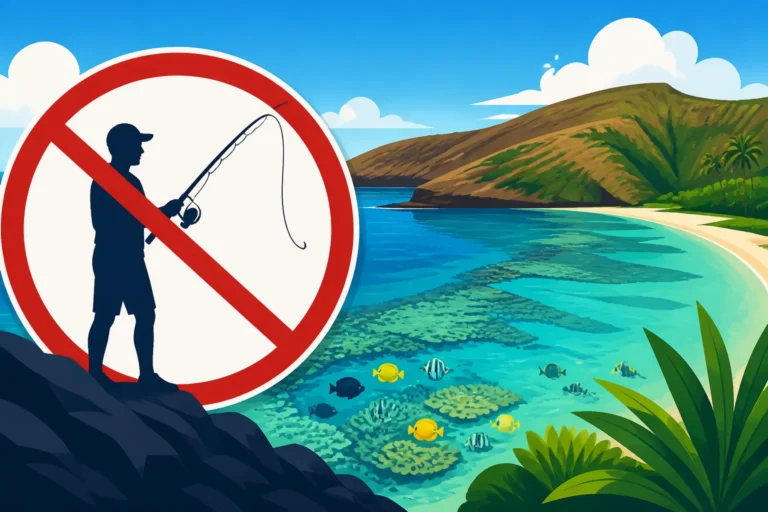
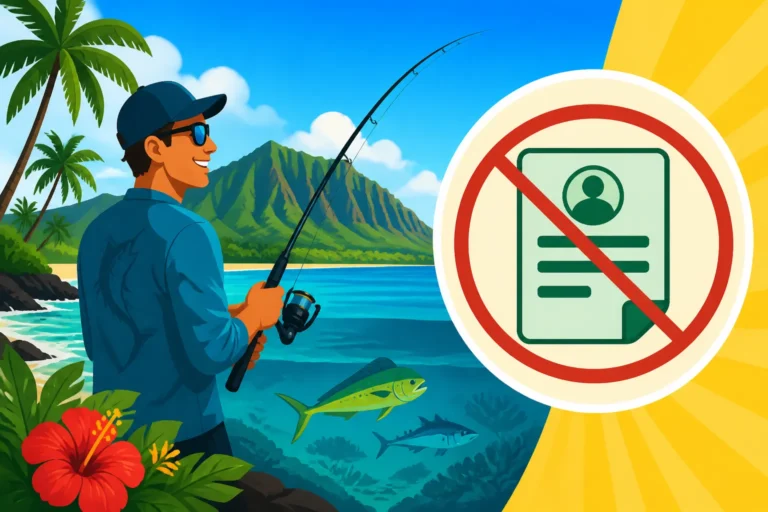
Now, here's where Hawaii truly stands apart. For recreational marine fishing, the vast majority of anglers do not need a state-issued license. That's right, you can cast your line from the shore, head out on a kayak, or even go deep-sea fishing with friends without needing to buy a specific marine fishing license for yourself. This long-standing policy makes ocean fishing incredibly accessible. However, it's vital to remember that "no license required" doesn't mean "no rules." All marine fishing is still subject to strict regulations regarding bag limits, size limits, closed seasons, and protected areas, such as Marine Life Conservation Districts. Charter boat operators, for instance, are licensed, but their passengers typically aren't required to hold individual licenses. If you're curious about whether you need a license for ocean fishing, our article Do You Need a Fishing License in Hawaii provides a detailed overview.
Age-Based Exemptions and Discounts
Hawaii, like many places, recognizes that fishing can be a lifelong passion, and it encourages participation across all age groups by providing specific exemptions and discounts. These policies make it easier for young keiki (children) to learn the ropes and for kūpuna (elders) to continue enjoying their favorite pastime without added financial burden.
The Younger Anglers: Fishing Without a License Below a Certain Age
For our youngest aspiring anglers, Hawaii makes it wonderfully simple: no freshwater fishing license is required for children under the age of nine. This exemption is fantastic for families introducing their kids to the joys of fishing. Imagine taking your little one to Wahiawa Reservoir for their very first peacock bass experience – they can cast their line, feel the thrill of a bite, and start a lifelong hobby without any bureaucratic hurdles for you to navigate. This policy is a clear nod to fostering the next generation of conservationists and outdoor enthusiasts. It's all about making those initial fishing memories positive and stress-free. If you're unsure about the exact age cutoffs for different license types, you might find our guide on Hawaii Freshwater License Age Requirements helpful.
Senior Discounts and Exemptions: Honoring Our Kūpuna
Our kūpuna are highly respected in Hawaiian culture, and this respect extends to fishing regulations. Hawaii offers significant benefits for senior residents when it comes to freshwater fishing licenses. Specifically, residents who are 65 years of age or older are completely exempt from needing a freshwater fishing license. This means if you're a long-time resident who has reached this milestone, you can continue to enjoy the tranquility of freshwater fishing without having to worry about purchasing or renewing a license. It’s a thoughtful way to acknowledge their contributions to the community and ensure they can continue to enjoy the natural beauty and recreational opportunities Hawaii offers. This exemption makes fishing more accessible and affordable for those who have been part of our community for many years. To learn more about this, check out the Hawaii Senior and Disabled Freshwater License Exemption post.
Youth Fishing Programs and Events
Beyond individual age exemptions, various organizations and the State of Hawaii occasionally sponsor youth fishing programs and events. These events are often designed to introduce children and teenagers to fishing, promote conservation ethics, and provide hands-on learning experiences. While participation in such events typically doesn't require individual participants to hold a license (as they're often covered under a blanket permit for the event organizer), they are a fantastic opportunity for young people to gain experience and learn from seasoned anglers. These programs often take place in designated public fishing areas or even on private ponds with special permission, offering a safe and educational environment. It’s worth keeping an eye on the Hawaii Division of Aquatic Resources (DAR) calendar or local community boards for announcements about these types of enriching opportunities.
Disabled Resident Fishing License Options
Hawaii is committed to ensuring that fishing remains accessible to all its residents, including those with disabilities. Recognizing that certain physical or mental challenges can impact an individual's ability to participate in recreational activities, the state offers specific provisions for disabled residents regarding freshwater fishing licenses. These options aim to reduce barriers and support inclusivity in outdoor recreation.
Eligibility Criteria for Disabled Anglers
To qualify for a disabled resident freshwater fishing license exemption, applicants must meet specific criteria established by the State of Hawaii. Generally, this involves providing proof of permanent and total disability. This isn't just a casual "I have a bad knee" type of claim; it typically requires official documentation from a medical professional or a government agency like the Social Security Administration or the Department of Veterans Affairs. The intent is to provide genuine support to those who face significant, long-term challenges. It's important to have these documents ready and in order when you apply, as the DAR will need to verify your eligibility before granting the exemption. Understanding these requirements beforehand can save you a lot of time and frustration during the application process. Our detailed article on the Hawaii Fishing License for Disabled Residents can provide more in-depth information.
Applying for a Disabled Resident License
Once you've confirmed your eligibility, the application process for a disabled resident fishing license exemption generally involves submitting a specific form to the Hawaii Division of Aquatic Resources (DAR). This form will typically ask for your personal details, proof of Hawaii residency, and crucially, your documentation proving permanent and total disability. You might also need to sign an affidavit affirming the information provided is accurate. It’s not an instantaneous process, so it’s advisable to apply well in advance of any planned freshwater fishing trips. You can usually find the necessary forms on the DAR website, and they often have specific instructions for how and where to submit them, whether by mail or in person at one of their offices. Remember, thoroughness in your application is key to a smooth approval process.
Specific Benefits and Limitations
The primary benefit of qualifying for the disabled resident fishing license exemption is, of course, the ability to freshwater fish without the annual cost of a license. This alleviates a financial burden and recognizes the additional challenges some individuals may face. However, it's crucial to understand that this exemption is specifically for freshwater fishing and still adheres to all other statewide fishing regulations. This means bag limits, size restrictions, and season dates still apply. The exemption doesn't grant special privileges beyond the license itself. It's simply about making recreational fishing more accessible for disabled residents. For a clearer picture of the financial aspect, our guide on the Hawaii disabled resident fishing license discount delves into the exact savings.
Active Military and Veteran Fishing License Discounts
Hawaii proudly supports its active military personnel and veterans, acknowledging their service and sacrifice. This appreciation extends to various state programs, including provisions for fishing licenses. While it's important to differentiate between federal lands and state regulations, Hawaii does offer specific benefits for service members when it comes to freshwater fishing licenses, recognizing their unique circumstances and contributions.
Who Qualifies for Military Benefits?
Generally, active duty military personnel stationed in Hawaii, along with their dependents, may qualify for resident rates on freshwater fishing licenses. This is a significant benefit, as nonresident freshwater licenses are considerably more expensive. To qualify, you’ll typically need to provide official military identification and proof of being stationed in Hawaii, such as orders or a military ID card. It’s important to note that specific criteria can vary slightly, so always consult the latest Hawaii Division of Aquatic Resources (DAR) guidelines. For veterans, particularly disabled veterans, there might be additional specific exemptions or discounts, often requiring proof of service-connected disability from the Department of Veterans Affairs. These provisions aim to ensure that those who serve, or have served, our country can enjoy the peace and recreation that fishing offers at a reduced cost. More details can be found in our article on Hawaii active military fishing license discount.
The Application Process for Service Members
The application process for military personnel and veterans seeking discounted or exempt freshwater fishing licenses is similar to that for other residents, but with the added requirement of presenting military documentation. When applying in person at a DAR office or an authorized license vendor, you'll need to show your valid military ID. If applying online, you might be required to upload scanned copies of these documents. For veterans claiming a disability exemption, VA documentation confirming service-connected permanent and total disability will be essential. It’s always best to call ahead or check the DAR website for the most current list of required documents to ensure a smooth application. Having all your paperwork organized before you start will undoubtedly make the process much easier.
Understanding the Residency Requirements
Residency is often a tricky component when it comes to state-issued licenses, and military personnel are a special case. While most states define residency based on domicile, military members stationed away from their home state often maintain residency in their home state for voting and tax purposes. However, for fishing licenses in Hawaii, being stationed here often qualifies active duty personnel (and sometimes their dependents) for resident rates, even if Hawaii isn't their permanent "home of record." This is a crucial distinction that makes the resident freshwater license much more accessible and affordable for military families living on the islands. It’s a common misunderstanding, but one that can lead to significant savings for those serving. Clarifying these rules is important, as covered in our broader guide on Hawaii fishing license residency requirements.
Exploring Special Permits and Exemptions
Beyond the common age, disability, and military categories, there are other, more niche situations where fishing licenses or permits might be handled differently in Hawaii. These often relate to specific types of fishing, property rights, or organized activities, and it’s important to be aware of them to ensure full compliance.
Private Pond Owners and Their Guests
Imagine having a beautiful, completely self-contained pond on your property in Hawaii, stocked with tilapia or even some local freshwater prawns. If this pond has no direct, flowing connection to public waterways, the owner and their invited guests are generally exempt from needing a state freshwater fishing license to fish exclusively within that private pond. This exemption acknowledges property rights and the private nature of the resource. However, if the pond does connect to public streams or rivers, or if fish from public waters can freely enter and exit, then state regulations, including licensing requirements, would likely apply. It's a nuanced distinction that hinges on the ecological isolation of the water body. Always verify the status of any private pond you plan to fish in.
Commercial Fishing vs. Recreational Exemptions
It's absolutely critical to understand the stark difference between recreational fishing and commercial fishing in Hawaii. The rules, licenses, and regulations for commercial activities are vastly more stringent and complex, designed to manage large-scale harvesting and sales. If you're fishing purely for sport or for personal consumption by your family and friends, you fall under recreational rules. As established earlier, recreational ocean fishing generally doesn't require a license. However, as soon as you start selling your catch, or harvesting above recreational bag limits with the intent to sell, you transition into the realm of commercial fishing, which requires specific commercial marine licenses, reporting, and adherence to an entirely different set of regulations. Attempting to sell recreational catches without the proper commercial licensing can lead to severe fines and penalties. Our article on Hawaii Commercial vs Recreational Fishing License Rules clarifies this important distinction.
Unique Situations: Tournaments and Education Programs
Sometimes, fishing activities fall outside the typical individual recreational trip. Organized fishing tournaments, for example, might operate under a special event permit issued to the tournament organizers, which could cover the participants from individual licensing requirements for the duration of the event. Similarly, educational programs conducted by accredited institutions or government agencies, often for research or public outreach, may have blanket permits or exemptions that allow participants to fish without individual licenses. These are not common scenarios for the everyday angler, but they exist to facilitate structured events and studies. If you plan to participate in such an event, the organizers should be able to confirm any license exemptions for their participants.
Navigating the Application Process and Required Documentation
For those who do need a freshwater fishing license, even if it's a discounted or exempt one, understanding the application process and gathering the right documents is key. It's not overly complicated, but being prepared can save you a lot of time and potential headaches. The Hawaii Division of Aquatic Resources (DAR) aims to make the process as straightforward as possible, but like any government agency, they require specific paperwork.
Essential Documents You'll Need
Regardless of whether you're applying for a standard, discounted, or exempt freshwater fishing license, certain foundational documents are almost always required. For residents, this typically means a valid Hawaii State ID or driver's license to prove your residency. For military personnel, official military identification and proof of stationing in Hawaii are essential. For those seeking age-based exemptions, a birth certificate or ID showing proof of age will suffice. If applying for a disabled resident exemption, documentation from a recognized medical authority or government agency proving permanent and total disability is paramount. Always have originals or certified copies available, especially if applying in person, as they may need to be visually verified. Making copies of everything for your own records before you submit is a smart move.
Where to Apply: Online, In-Person, and Mail Options
Hawaii offers several convenient ways to apply for or renew your freshwater fishing license.
- Online: For many standard licenses, the Hawaii Division of Aquatic Resources (DAR) website provides an online portal where you can complete your application, pay fees (if applicable), and often print a temporary license immediately. This is usually the quickest and most convenient method.
- In-Person: You can visit a DAR office located on various islands, or an authorized license vendor (often a sporting goods store or bait shop). Applying in person allows you to ask questions, get immediate assistance, and walk out with your physical license. This is often the best option if you have complex documentation for an exemption.
- Mail: While less common now with online options, you can still mail in your application form and supporting documents. This method requires more lead time as processing and mail delivery can take several weeks.
It's advisable to check the DAR website for the most up-to-date information on application methods, as they can sometimes change. For those specifically looking to buy a license online, we have a helpful guide titled How to Buy a Hawaii Fishing License Online.
Common Pitfalls and How to Avoid Them
When applying for any license or exemption, there are a few common mistakes that people make. One of the biggest pitfalls is submitting incomplete or incorrect documentation. Double-check all forms to ensure every required field is filled out and all necessary supporting documents are attached. Another common issue is failing to verify residency requirements, especially for military personnel or out-of-state college students (though the latter typically won't qualify for resident rates unless they establish formal residency). Lastly, don't wait until the last minute! Processing times, especially for mail-in applications or those requiring special verification, can take longer than anticipated. Planning ahead ensures you have your license in hand when you're ready to hit the water. Remember, an invalid or missing license can lead to fines, so proactive preparation is your best defense. If you're concerned about potential repercussions, our article on Fishing Without a Required License in Hawaii: Penalties offers important information.
Staying Informed and Compliant
Fishing in Hawaii is an incredible experience, but it’s one that comes with a responsibility to understand and respect the regulations designed to protect our precious marine and freshwater ecosystems. Even with a free or discounted license, staying informed about the rules is paramount. Regulations aren't static; they can change based on scientific assessments, conservation needs, or community input.
Regularly Checking for Regulation Changes
The natural world is dynamic, and so are the regulations designed to manage it. Fish populations fluctuate, environmental conditions shift, and new scientific data emerges. Because of this, the Hawaii Division of Aquatic Resources (DAR) periodically updates its fishing rules and regulations. What might be perfectly legal one year could have new restrictions the next. This applies to bag limits, size limits, season closures, and even designated fishing areas. It's not uncommon for changes to be made to specific species like uhu (parrotfish) or moi (Pacific threadfin) to ensure their sustainability. The best practice is to check the DAR website at the beginning of each year, or before any significant fishing trip, to ensure you are up-to-date. Don't rely solely on what you heard from a friend last season; verify it yourself to avoid any unpleasant surprises. A general overview can be found in Hawaii Fishing Regulations Explained.
The Importance of Carrying Your License (or Exemption Proof)
If you are an angler required to have a freshwater fishing license, or if you qualify for an exemption, it is absolutely crucial to have proof of this with you while fishing. This means carrying your physical license, a digital copy on your phone, or official documentation proving your age or disability exemption. Enforcement officers have the right to ask for proof of your legal status to fish. If you're found without it, even if you technically have a valid license or exemption, you could still be cited for not having it on your person. Think of it like a driver's license – you need to have it with you when you're driving. Having your documentation readily available demonstrates your compliance and makes interactions with enforcement personnel smooth and quick. Our post on Printing or Carrying a Digital Fishing License in Hawaii might offer useful tips here.
Consequences of Fishing Without Proper Documentation
The penalties for fishing without a required license or without proper documentation of an exemption can range from monetary fines to confiscation of gear and catch, and in some cases, even more severe legal consequences. These penalties are designed to deter illegal fishing activities and reinforce the importance of conservation and respectful resource management. For example, getting caught fishing for freshwater trout in Kōkeʻe Public Fishing Area without a valid license, or exceeding the bag limits for moi, could quickly turn a relaxing day into a costly one. The enforcement officers with the Department of Land and Natural Resources (DLNR) are dedicated to protecting Hawaii's aquatic resources, and they take their job seriously. Ignorance of the law is generally not considered an excuse, so it’s always in your best interest to be fully compliant.
Table of Hawaii Freshwater License Exemptions and Discounts
To summarize the various free and discounted freshwater fishing license options in Hawaii, here's a handy table outlining the key eligibility criteria:
| Category | Eligibility Criteria | License Requirement | Notes |
|---|---|---|---|
| Youth | Under 9 years of age | Exempt | Applies to freshwater fishing. No license needed. |
| Senior Residents | Hawaii Resident, 65 years of age or older | Exempt | Applies to freshwater fishing only. Proof of age and residency required. |
| Disabled Residents | Hawaii Resident with permanent and total disability | Exempt | Applies to freshwater fishing only. Requires official documentation of disability and residency proof. |
| Active Military | Active Duty military stationed in Hawaii (and dependents) | Resident Rates | Not an exemption, but qualifies for significantly lower resident freshwater license fees. Requires military ID and proof of stationing. |
| Private Pond Owners/Guests | Fishing in completely contained private freshwater ponds without public access | Exempt | Applies only if the pond is truly isolated from public waterways. Owner's discretion for guests. |
| Marine Fishing | Recreational ocean fishing (any age, resident/non-resident) | Exempt | No state license required for recreational marine fishing. Subject to all other marine regulations (bag limits, size, seasons, protected areas). Charter passengers are covered by the charter's permits. |
Important Considerations for All Anglers
While this guide focuses on free and discounted license options, there are overarching principles that apply to all anglers in Hawaii, regardless of their license status. These considerations are fundamental to responsible and enjoyable fishing in our islands.
Conservation and Sustainability Practices
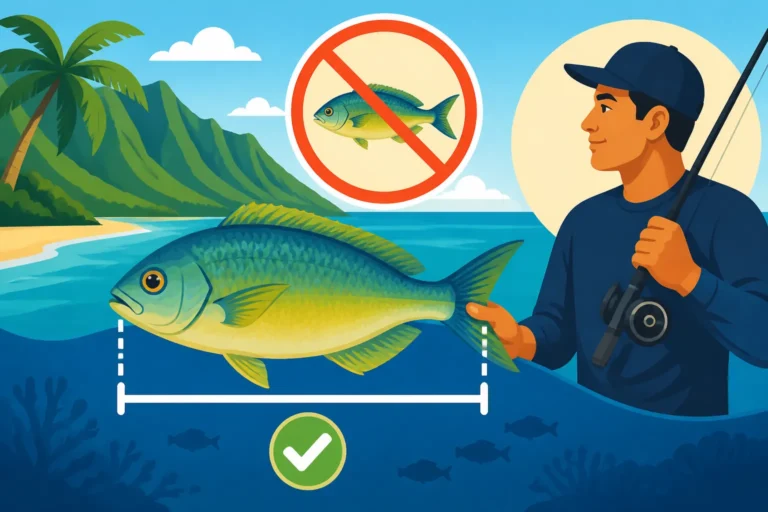
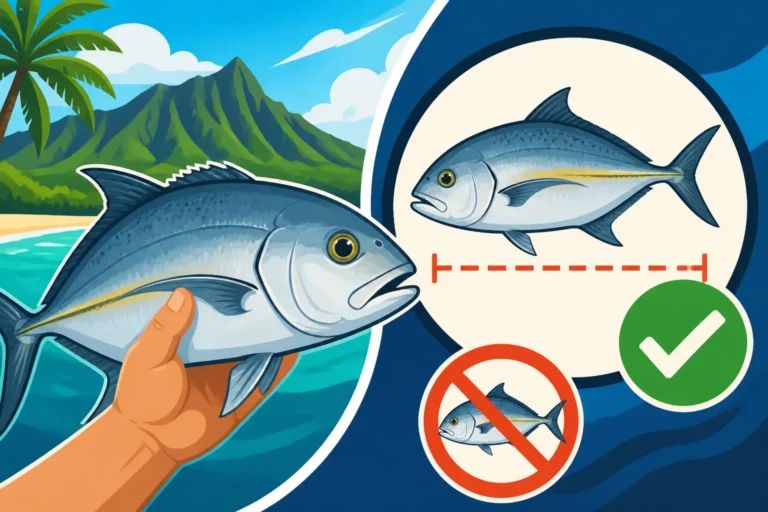
Hawaii's natural beauty and rich aquatic life are precious resources, and it's incumbent upon every angler to practice responsible conservation. This means adhering strictly to all regulations, including bag and size limits, which are in place for a reason – to ensure fish populations can thrive for generations to come. It also means minimizing your impact on the environment: properly disposing of trash, avoiding damage to coral reefs, and understanding catch-and-release best practices for species you don't intend to keep. Being a good steward of the ocean and freshwater habitats isn't just a recommendation; it's a vital part of the fishing culture here. Learning about Hawaii Bag and Size Limits by Species is a great first step.
Understanding Specific Species Regulations
Beyond general licensing, specific rules apply to different species. For instance, the coveted moi has a strict closed season and minimum size limit, crucial for its reproductive cycle. Uhu (parrotfish), popular for subsistence fishing, also have specific size and bag limits. Then there are invasive species like taape and roi, which often have no limits and are encouraged to be removed from the ecosystem. Knowing these species-specific regulations is just as important as knowing your license requirements. Always consult the Hawaii Division of Aquatic Resources (DAR) rules for each species you plan to target. Information on specific species like Hawaii Moi Closed Season, Explained or Hawaii Uhu (Parrotfish) Size and Bag Limits can be invaluable.
Public Access and Private Property
Even if you have a license or an exemption, knowing where you can legally fish is critical. While Hawaii boasts excellent public shoreline access, not all land is public. Always be mindful of private property boundaries, especially when accessing the shoreline or freshwater areas. Respecting "No Trespassing" signs is paramount. Familiarize yourself with public access points, shoreline fishing rights, and designated public fishing areas. If you're unsure, it's always better to err on the side of caution and seek clarification rather than risk trespassing. Our article on Hawaii shoreline fishing rights and public access rules provides a good foundation for understanding these important boundaries.
Final Thoughts on Accessible Fishing in Hawaii
Hawaii offers incredible fishing opportunities, and it's wonderful that the state provides various avenues for free and discounted freshwater fishing licenses, along with the general exemption for recreational marine fishing. These policies help make the sport accessible to a wider range of people, from the youngest keiki to our respected kūpuna, and those who have served our country.
However, the responsibility remains with each individual angler to understand the rules that apply to them. Whether you're a long-time resident, a military family new to the islands, or a visitor just trying your hand at freshwater fishing, a little bit of research goes a long way. Always confirm your eligibility, gather the correct documentation, and stay informed about current regulations. By doing so, you ensure your fishing experience is not only enjoyable and successful but also fully compliant with Hawaii’s efforts to protect its irreplaceable natural resources.
Disclaimer
The information provided in this guide is for general informational purposes only and is not intended as legal advice. Fishing regulations in Hawaii can change, and interpretations may vary. Always consult the most current regulations published by the Hawaii Division of Aquatic Resources (DAR) and other relevant government agencies before engaging in any fishing activities. It is your responsibility to ensure full compliance with all applicable laws and regulations.