Hawaii shoreline fishing rights and public access rules
One of the most common headaches for any angler in Hawaii, especially those new to the islands or just visiting, is figuring out where you can actually cast a line from shore without trespassing. It’s a frustrating maze of private property signs, locked gates, and often confusing legal nuances that can make what should be a relaxing day of fishing feel like a constant battle against uncertainty. This guide is here to untangle those rules, clarify your rights as a shoreline angler, and help you understand the public access laws in Hawaii so you can fish with confidence.
Understanding Hawaii’s Public Access Doctrine
Hawaii has a long-standing tradition of public access to its shorelines, deeply rooted in both ancient Hawaiian custom and modern legal statutes. The core principle often referred to as "mauka to makai" – from the mountains to the sea – essentially ensures that the public has the right to access the ocean for traditional and customary practices, which absolutely includes fishing. This isn't just a courtesy; it's a fundamental right embedded in the state constitution and upheld by the courts.
The Public Trust Doctrine and Shoreline Boundaries
At the heart of this is the Public Trust Doctrine, which dictates that the state holds certain resources, like navigable waters and shorelines, in trust for the benefit of its citizens. For anglers, this means you generally have the right to access the shoreline up to the "high water mark." Now, defining that high water mark can sometimes be tricky. Legally, it's typically identified as the upper reaches of the wash of waves, where the highest annual tides or storm surges leave debris. Practically speaking, it's the wet sand area up to where the vegetation begins or where the beach transitions to something else, like a rock wall or a cliff. This area, known as the "beach transit corridor," is almost always public, even if the land mauka (towards the mountain) is privately owned.
Imagine you're walking along a beautiful stretch of beach on Maui, heading to a promising looking rocky point. You see a fence running down towards the sand from a private home. The fence might mark the private property line, but you still have the right to walk along the sandy area between that fence and the ocean, provided you stay within the public shoreline area. The trick is understanding where that public area begins and ends. It's not always obvious, and property owners sometimes put up misleading signs. Always err on the side of caution, but also know your rights. The goal isn't to provoke conflict, but to confidently and respectfully access areas that are legally yours to enjoy. For a broader understanding of fishing rules, check out our Hawaii Fishing Regulations Explained.
Public Right-of-Way and Access Trails
Beyond the shoreline itself, the state also mandates public access to get to the shoreline. This is where "public rights-of-way" come into play. These are specific paths, roads, or trails that the public can use to reach the coast. Many of these access points are clearly marked, especially in newer developments, as developers are often required to dedicate public access easements. You might see signs like "Shoreline Public Access" or "Beach Access." These are your green light!
However, it's not always that easy. In older neighborhoods or less developed areas, these access points might be narrow, unmarked paths between houses, or even just traditional trails that have been used by locals for generations. Sometimes, you'll encounter a situation where what looks like a private driveway or a secluded path is actually a historic public access point. The key is to look for official signage from the County or the Department of Land and Natural Resources (DLNR). If there’s no signage, and you're unsure, it's often best to seek local advice or consult online maps that sometimes highlight these public easements. Always remember, when using these accessways, respect private property by staying on the designated path and not disturbing residents. If you're looking for where to apply these rules, our guide on Best Shore Fishing Spots in Hawaii offers some fantastic locations.
Identifying Public Access Points and Navigating Restrictions
Knowing the general law is one thing; finding actual, clear access points in the real world is another. Hawaii's islands offer a diverse landscape, from bustling urban beaches to remote, rugged coastlines, and each presents its own set of access considerations.
Designated Public Access Points
The easiest access is usually through designated public parks, state beaches, and clearly marked shoreline access points. Counties like Honolulu, Maui, Kauai, and Hawaii (Big Island) often have websites or maps that show these public access points. For instance, on Oahu, you'll find numerous clearly marked access trails between homes in areas like Kailua or along the North Shore. These are ideal because they remove all doubt. Look for brown or green signs, often with a beach symbol, indicating public access.
When parking, always make sure you are in a legal parking spot. Many public access points will have limited street parking, or even small designated parking lots. Don't block driveways, fire hydrants, or park in restricted zones. A simple parking ticket can quickly ruin an otherwise perfect day of fishing! If you're driving an older vehicle, it's worth investing in a good car organizer and some car covers on Amazon to keep your gear tidy and protect your vehicle from sandy, wet clothes after a day on the shore.
Understanding Marine Life Conservation Districts (MLCDs) and FRAs
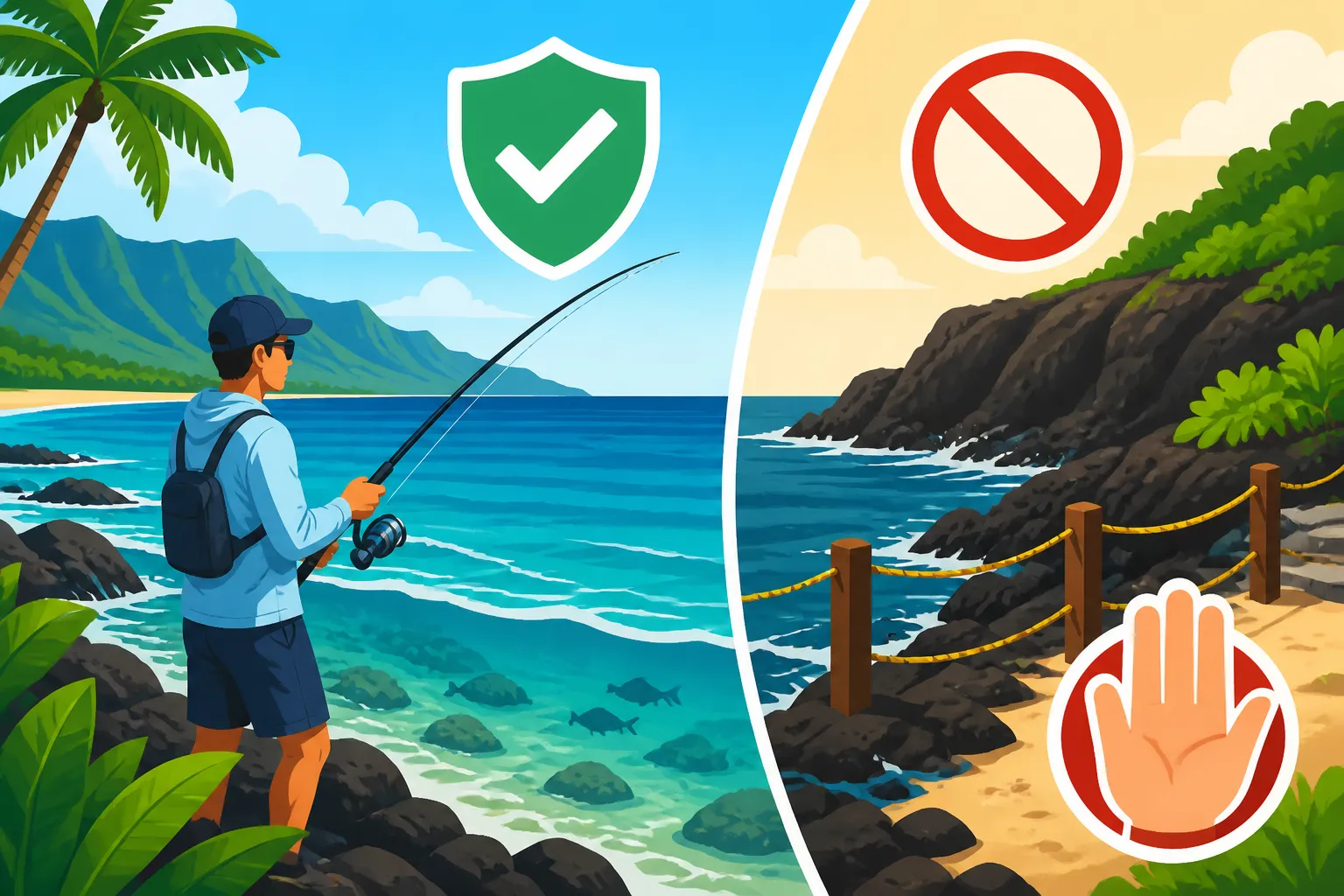
While you have public access rights, those rights come with responsibilities and sometimes specific restrictions. Certain areas in Hawaii are designated as Marine Life Conservation Districts (MLCDs) or Fish Replenishment Areas (FRAs). These are highly protected zones where fishing is often completely prohibited or heavily restricted.
For example, famous spots like Hanauma Bay on Oahu are MLCDs where all fishing and even taking of marine life are strictly forbidden. Kealakekua Bay on the Big Island is another MLCD with significant restrictions, though some traditional fishing might be permitted in specific zones under strict rules. It’s absolutely crucial to know if you're entering one of these areas. Ignoring these rules can lead to hefty fines and confiscation of gear. Before heading out, make it a habit to quickly consult the DLNR's Division of Aquatic Resources (DAR) website or pick up a copy of their regulations booklet. Our article on Hawaii Marine Life Conservation Districts, Explained provides an in-depth look at these areas. Similarly, West Hawaii has specific Hawaii Fish Replenishment Areas in West Hawaii that anglers need to be aware of.
Table: Common Shoreline Access Scenarios & Rules
| Scenario | Public Access Status | Key Considerations |
|---|---|---|
| Designated Public Access (e.g., parks) | Fully Accessible | Look for official signage and parking. Follow park hours and specific rules (e.g., no camping, designated fishing areas). |
| Unmarked Path between Homes | Potentially Accessible (if a public right-of-way) | Research county maps or ask locals. Be respectful of private property boundaries. Do not block driveways or pathways. |
| Private Property with "No Trespassing" | No Access (unless it's an emergency or public beach) | Respect signage. You can usually still walk the public beach transit corridor in front of the property. Do not cross private land to reach the beach. |
| Rocky Point/Lava Flow | Generally Accessible (up to high water mark) | Assess safety. Some areas may be dangerous to traverse. Be mindful of sea conditions. Your right to traverse is limited by physical safety and access from public land. |
| Commercial Harbors/Piers | Variable Access (check local rules for each location) | Some harbors have designated public fishing areas, others are restricted for commercial use only. Always look for signage or inquire with harbor authorities. For general rules, our guide on Best Harbor Fishing Spots in Hawaii has more details. |
| MLCDs/FRAs | Highly Restricted or Prohibited | Absolutely verify regulations before fishing. Fines are severe. Often marked with specific signage or buoy lines in the water. |
Respecting Boundaries and Traditional Rights
It’s one thing to know your rights, but it’s another to exercise them respectfully and harmoniously within the community. Fishing in Hawaii is a privilege and a tradition, and maintaining good relationships with residents and property owners is paramount.
Navigating Private Property
While the shoreline itself is generally public, the land above the high water mark is often private. This means you can't walk across someone's manicured lawn, use their private stairs to the beach, or set up camp on their property, even if you’re just trying to get to a good fishing spot. If you encounter a "No Trespassing" sign, take it seriously. Your right is to the shoreline, not necessarily to cross private land to reach it. Sometimes, the only way to get to a specific point is by boat, kayak, or by walking a considerable distance along the public beach from a legitimate access point. For serious shoreline anglers, a sturdy, waterproof backpack for your gear, available on Amazon, can make these longer treks much more manageable.
A common scenario is when you’re walking along a beach and come across a private property line that extends to the sand, effectively blocking your path forward. While you have the right to the beach transit corridor, if the natural topography (like a cliff or impassable rocks) makes continuing along the shoreline dangerous or impossible without entering private land, then your access may be limited to that point. It's frustrating, I know, but safety and respecting explicit boundaries are key.
Traditional and Customary Fishing Rights
Hawaii’s laws also acknowledge and protect traditional and customary native Hawaiian rights, which can sometimes intersect with general public access. These rights, passed down through generations, often involve specific practices in particular areas that might seem different from standard recreational fishing. For instance, certain families or communities may have specific fishing grounds or methods that are considered traditional.
As a recreational angler, it's important to be aware of these traditions and show respect. While the average visitor or newcomer won't be directly exercising these rights, understanding them fosters a better sense of community and connection to the land and sea. If you see someone engaging in a traditional fishing practice, like throwing net for bait or harvesting limu (seaweed) in a specific way, it's a good reminder that fishing here isn't just a sport; it's a deep part of the culture. Our detailed article on Hawaii traditional and customary fishing rights explained delves much deeper into this important aspect.
Common Challenges and How to Handle Them
Even with a good understanding of the rules, real-world situations can be tricky. Here’s how to navigate some common issues.
Unclear Signage or Lack of Markers
This is probably the most frustrating challenge. You see a promising path, but there's no "Public Access" sign, nor is there a "No Trespassing" sign. What do you do?
- Look for subtle cues: Is the path well-worn? Does it look like it leads to the beach? Are there other anglers or beachgoers using it?
- Consult online resources: Government websites, local forums, or even Google Maps satellite views can sometimes reveal established access points.
- Ask locals (politely): If you see someone who looks like a resident, a friendly inquiry about public access can often clear things up. Just be prepared for different answers; not everyone is fully aware of the legal specifics.
- Err on the side of caution: If in doubt, and no one can confirm it's public, it's usually safer to find another access point rather than risk trespassing.
Confrontations with Property Owners
It's an unfortunate reality, but sometimes property owners might confront you, claiming you're on private land, even when you believe you're on the public shoreline.
- Stay calm and polite: Getting into an argument won't help. Explain calmly that you believe you are on public land/shoreline.
- Know your rights: Having a basic understanding of the public trust doctrine and the high water mark can help you articulate your position respectfully.
- Avoid escalation: If the situation becomes heated, or if the property owner is aggressive, it's best to disengage and leave. Your safety is more important than a fishing spot. You can always report a false claim of trespassing to the DLNR or local authorities later if you feel your rights were genuinely violated.
- Document if necessary: If you feel strongly that you were wrongfully denied access, take a photo of the area, any signs, and note the time and location. This can be useful if you decide to report it.
Parking Dilemmas
Finding parking near popular shoreline access points can be a real struggle, especially on weekends or during peak tourist seasons.
- Plan ahead: Arrive early, especially if you're targeting specific bite windows like dawn for ulua. Our guide on Best Time of Day to Catch Ulua can help you plan your trips.
- Utilize rideshares/carpooling: If you're with a group, carpooling can ease the parking burden.
- Be prepared to walk: Sometimes, the only legal parking is a bit of a trek from your desired fishing spot. Comfortable, sturdy sandals or water shoes from Amazon are a must for Hawaiian shoreline fishing.
- Never block access: This includes driveways, fire lanes, or even narrow shoulder areas that might be needed for emergency vehicles or local access. Not only is it illegal, but it also creates resentment towards anglers.
Remember, fishing in Hawaii, particularly from shore, is an incredible experience that connects you directly to the ʻāina (land) and kai (sea). By understanding and respecting the rules and the culture, you ensure these precious resources remain accessible and enjoyable for everyone. Before heading out, make sure you're squared away on any necessary permits or licenses. For instance, while ocean fishing from shore generally doesn't require a license for residents, there are specific rules for freshwater fishing, and non-residents might have different requirements. Our article Do You Need a Fishing License in Hawaii covers this in detail.
Disclaimer
The information provided in this guide is for general informational purposes only and does not constitute legal advice. Fishing regulations and public access laws in Hawaii can be complex and are subject to change. Always consult the official Hawaii Department of Land and Natural Resources (DLNR) Division of Aquatic Resources (DAR) website, county planning departments, or legal counsel for the most accurate and up-to-date information before engaging in fishing activities or accessing specific areas.