Hawaii SCUBA Spearfishing Ban
It's incredibly common for both seasoned anglers and first-time visitors to feel a bit overwhelmed or confused by Hawaii's unique fishing regulations. Many people arrive assuming spearfishing is a free-for-all, only to discover that certain methods, like using SCUBA gear while spearfishing, are strictly prohibited. This comprehensive guide will meticulously break down the Hawaii SCUBA spearfishing ban, clarifying exactly what the law entails, why it exists, and what legal alternatives are available so you can enjoy the islands' incredible aquatic bounty without running afoul of the rules.
Understanding the SCUBA Spearfishing Ban in Hawaii
The concept of spearfishing with SCUBA gear might sound like an efficient way to hunt underwater, but in Hawaii, it's a practice that's firmly against the law. This isn't just a minor technicality; it's a significant regulation designed to protect marine life and ensure fair and sustainable fishing practices across the islands. For anyone planning to engage in underwater hunting, understanding this ban is absolutely critical before you even think about getting in the water with a speargun and a tank.
The Core Prohibition
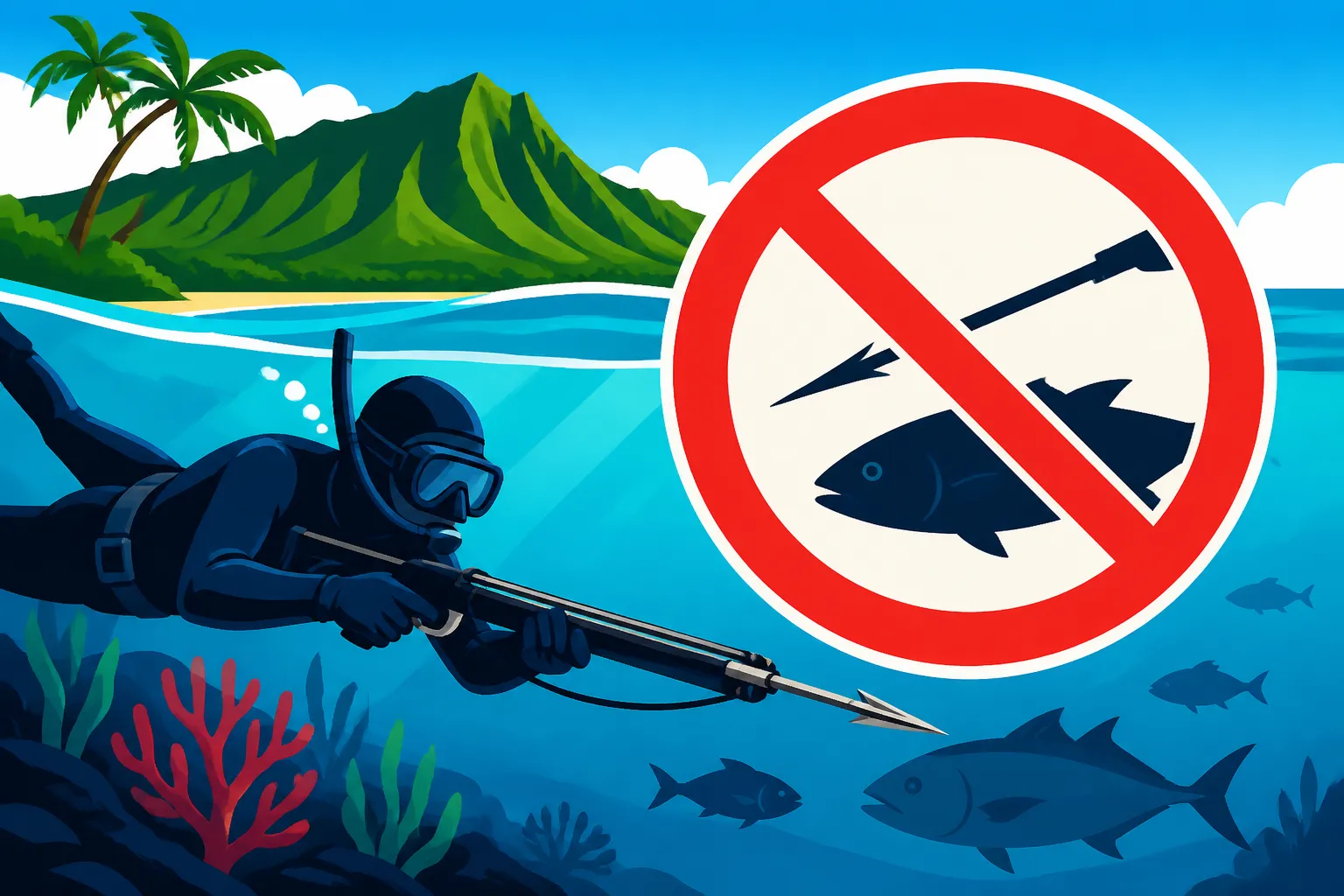
At its heart, the Hawaii SCUBA spearfishing ban makes it illegal for any person to spearfish while using self-contained underwater breathing apparatus (SCUBA). This means if you've got a tank on your back and a regulator in your mouth, you cannot also be carrying a speargun or pole spear with the intent to catch fish. The prohibition is clear-cut and applies statewide, covering all marine waters under Hawaii's jurisdiction. It doesn't matter if you're targeting invasive species or highly prized table fish; the method itself is what's outlawed. This is a fundamental rule that every angler needs to grasp, whether they're new to the sport or have been diving for years. Ignorance of the law is never an excuse, and enforcement by the Division of Aquatic Resources (DAR) and other agencies is consistent.
Historical Context of the Ban
The ban on SCUBA spearfishing isn't a new development; it's a regulation that has been in place for a significant period, stemming from a growing awareness of marine conservation and the impact of certain fishing methods. Over time, as SCUBA technology became more accessible, concerns arose about the unfair advantage it provided to spearfishers. Being able to breathe underwater for extended periods, move slowly and methodically, and pursue fish into their hiding spots far beyond the capabilities of a breath-hold diver, led to increased pressure on fish populations. The legislative intent behind the ban was to level the playing field, promote more sustainable harvesting, and protect the delicate balance of Hawaii's unique reef ecosystems. It was a proactive step to prevent overfishing and depletion of key species that are vital to both the ecological health and cultural heritage of the islands. This is part of the broader framework of Hawaii Fishing Regulations Explained.
Defining "SCUBA" in the Context of Spearfishing
When we talk about "SCUBA," we're referring to any device that allows a diver to breathe underwater independently of surface air supply. This includes standard compressed air tanks, rebreathers, and any other self-contained apparatus that provides a continuous or extended air supply while submerged. It's not just about the typical single tank setup; if you're using specialized equipment that grants you prolonged underwater breathing, the spearfishing ban applies. The key is the ability to breathe continuously underwater, which provides the spearfisher with an undeniable advantage over fish that cannot escape by simply out-swimming a single breath. It's crucial not to confuse this with simple snorkeling, where you're breathing surface air through a tube, which is completely legal for spearfishing. The distinction lies in the self-contained nature of the breathing apparatus.
Why the Ban Was Implemented
Understanding the reasons behind the SCUBA spearfishing ban helps to appreciate its importance to Hawaii's marine environment and local fishing culture. It's not just about making things difficult for anglers; it's rooted in deeply considered principles of conservation, fairness, and the long-term health of the ocean. These regulations reflect a commitment to preserving Hawaii's unique aquatic resources for future generations.
Conservation Efforts and Marine Ecosystem Health
One of the primary drivers for the SCUBA spearfishing ban is marine conservation. Hawaii's coral reefs are incredibly diverse and fragile ecosystems, home to countless species of fish, corals, and other invertebrates. When spearfishers are able to use SCUBA gear, they can spend significantly more time underwater, delve into deeper or more secluded parts of the reef, and pursue fish into their natural hiding places. This dramatically increases their catch potential and efficiency, leading to a higher risk of overharvesting specific species, especially those that are territorial or slower-moving. Overfishing can quickly deplete local populations, disrupt the food web, and degrade the overall health of the reef. The ban aims to reduce this pressure, allowing fish populations to thrive and contributing to the resilience of these vital marine habitats. It’s a key component of Hawaii's efforts to protect its precious underwater world.
Fair Chase Principles and Sportfishing Ethics
Beyond pure conservation, the ban also upholds long-standing principles of fair chase and sportfishing ethics. In many forms of hunting and fishing, the idea is to give the animal a reasonable chance to escape, ensuring that the act of catching is a test of skill, patience, and knowledge, rather than an unfair advantage granted by technology. Spearfishing with SCUBA gear is often seen as providing an "unfair chase" because the diver can remain submerged for extended periods, tracking fish without needing to surface for air. This gives the fish less opportunity to elude capture, turning the hunt into more of an execution than a challenge. The ban promotes breath-hold spearfishing, which demands exceptional physical conditioning, breath control, and intimate knowledge of fish behavior – a true test of a diver's skill. This approach is more aligned with traditional Hawaiian fishing practices and the spirit of ethical sportfishing.
Concerns from the Commercial Fishing Sector
While the ban primarily targets recreational spearfishing, concerns from the commercial fishing sector also played a role in its implementation and continued enforcement. Unregulated or overly efficient recreational harvesting, particularly of popular food fish species, can directly impact the livelihoods of commercial fishermen who rely on these same resources. If recreational divers using SCUBA were allowed to take large quantities of fish, it could diminish the availability for commercial operations, leading to economic strain. The ban helps manage the overall take from Hawaii's waters, ensuring that commercial fishermen, who often operate under different licensing and quota systems, still have viable resources. It's part of a broader management strategy to balance the interests of various fishing communities and maintain the economic viability of traditional fishing practices, all while prioritizing the health of the marine ecosystem.
Specifics of the Regulation: What's Covered
Navigating Hawaii's fishing laws requires a clear understanding of the specifics. The SCUBA spearfishing ban, while seemingly straightforward, has particular nuances regarding where it applies, what gear is prohibited, and whether any species are exempt. It's essential to be fully informed to avoid accidental violations. If you're wondering, "Do You Need a Fishing License in Hawaii?", it's important to remember that even if one isn't required for recreational ocean fishing, compliance with method-specific bans like this one is still mandatory.
Geographical Scope of the Ban
The SCUBA spearfishing ban applies to all "waters of the State of Hawaii." This is a broad definition that essentially covers all marine waters extending from the shoreline out to the federal limit, including bays, harbors, and nearshore reefs around every island. It's not limited to specific conservation districts or popular diving spots; if you're in the ocean off Hawaii, this rule applies. This means whether you're diving off the Kona Coast of the Big Island, exploring the reefs of Maui, or hunting near Oahu's numerous dive sites, the prohibition remains in effect. There are no "loopholes" or designated areas where SCUBA spearfishing becomes permissible within state waters. This widespread application underscores the statewide commitment to protecting marine resources through this specific regulation. Even within a Hawaii Marine Life Conservation Districts, Explained, the ban would still apply on top of any additional restrictions.
Prohibited Gear and Methods
The regulation explicitly targets the combination of spearfishing equipment with SCUBA gear. "Spearfishing equipment" generally refers to any device used to spear or impale fish, including spearguns, pole spears, and Hawaiian slings. "SCUBA gear" includes the tank, regulator, BCD (buoyancy control device), and any other apparatus that facilitates self-contained underwater breathing. The ban focuses on the method of hunting while using this equipment. So, you can still SCUBA dive for observation, photography, or even to collect certain invertebrates (with the proper permits and adherence to other regulations), but you cannot carry a speargun or pole spear, or engage in any act of spearing fish, while doing so. This distinction is crucial: SCUBA diving itself is not banned, but the act of spearfishing while SCUBA diving is. Even if you're just carrying the gear and haven't shot anything, the intent to spearfish while using SCUBA can lead to violations.
Species Not Exempted by the Ban
Some anglers might mistakenly believe that certain "invasive" or "undesirable" species are exempt from the SCUBA spearfishing ban, but this is not the case. The regulation prohibiting SCUBA spearfishing applies across the board, regardless of the species you are targeting. Whether you're after popular game fish like ulua or ahi, or reef fish like Uhu (Parrotfish) in Hawaii or moi, the method of using SCUBA with a speargun is strictly forbidden. There are no exemptions for specific fish species. This approach simplifies enforcement and ensures that the protective intent of the ban isn't diluted by exceptions. While Hawaii does encourage the removal of certain invasive species through specific programs, those programs typically do not override fundamental method prohibitions like the SCUBA spearfishing ban.
Legal Spearfishing Alternatives in Hawaii
For those passionate about spearfishing, the good news is that Hawaii offers abundant opportunities to engage in this thrilling activity legally. The key is to understand and embrace the allowed methods, which predominantly revolve around breath-hold diving. These methods are not only legal but are also deeply rooted in traditional Hawaiian fishing practices, offering a more challenging and authentic connection to the ocean. You can find more details on general rules in the Hawaii Spearfishing Regulations.
Breath-Hold (Free Diving) Spearfishing
Breath-hold spearfishing, also known as free diving spearfishing, is the quintessential legal method in Hawaii. This technique relies entirely on a diver's ability to hold their breath while descending, hunting, and ascending. It requires significant physical fitness, excellent breath control, and a keen understanding of fish behavior and underwater environments. Divers use masks, snorkels, and fins to move efficiently through the water, but no external breathing apparatus is allowed. This method is considered highly ethical, as it gives the fish a fairer chance of escape due to the diver's limited bottom time and constant need to return to the surface for air. Many local spearfishers hone their skills for years, developing incredible lung capacity and hunting prowess. For newcomers, it's a skill that can be developed over time with practice and proper training. Investing in good quality free-diving specific equipment, like a comfortable mask and snorkel, and long fins, is crucial. You can find excellent options for these on platforms like Amazon to get started. Learning Hawaii breath-hold spearfishing rules is essential.
Pole Spear and Three-Prong Use
When engaging in breath-hold spearfishing, the type of spearing device is also important. Pole spears and three-prong (or "trident") spears are popular and legal choices. A pole spear is essentially a long, handheld shaft with a pointed tip, often featuring a small barb or a three-pronged tip, propelled by elastic tubing attached to the diver's hand. Unlike a speargun, it's a more primitive and direct tool, requiring the diver to get much closer to the target fish. Three-prong spears are particularly effective for reef fish that might dart into coral crevices, as the multiple prongs increase the chance of impaling a fast-moving target. These tools require precision and stealth, further emphasizing the skill element of breath-hold spearfishing. They are fantastic for stalking fish like uhu, kumu, and even papio on the reefs. Many experienced spearfishers prefer the challenge and intimacy these simpler tools offer compared to a powerful speargun. If you're looking to purchase your first pole spear, Amazon has a wide selection suitable for various skill levels and budgets.
Slings and Hawaiian Slings
Another traditional and legal spearfishing tool is the Hawaiian sling. This device functions much like an underwater bow and arrow. It consists of a long, open-ended tube with a rubber loop, which the diver holds while inserting a separate shaft (often a shaft from a speargun). The shaft is then pulled back, loading tension into the rubber loop, and released, propelling the spear forward. Hawaiian slings are highly regarded for their power and accuracy, making them effective for larger reef fish and even some pelagic species if the diver has the skill to approach them. The act of loading and firing a Hawaiian sling underwater adds another layer of challenge, again reinforcing the fair chase principle. It's a tool that requires practice to master but offers immense satisfaction when a catch is made. Like pole spears, Hawaiian slings are excellent tools for developing advanced spearfishing skills and can often be found at local dive shops or online retailers. Many local fishers also construct their own, a testament to the cultural connection.
Penalties for Violating the SCUBA Spearfishing Ban
Ignoring Hawaii's SCUBA spearfishing ban carries serious consequences that can range from hefty fines to the confiscation of valuable gear and even legal action. It’s not just a slap on the wrist; the state takes these violations very seriously to protect its precious marine resources. Understanding these potential penalties is crucial for anyone considering picking up a speargun and a tank in Hawaii.
Fines and Legal Consequences
If caught violating the SCUBA spearfishing ban, individuals can face significant monetary fines. These fines are often substantial, designed to be a deterrent rather than a mere inconvenience. The exact amount can vary depending on the severity of the offense, whether it's a first-time violation or a repeat offense, and whether any protected species or excessive bag limits were involved. Beyond the immediate fine, offenders may also face legal charges that could lead to court appearances and potentially impact their criminal record. This isn't just about a ticket; it can escalate into a full legal process. For example, a violation might cost hundreds or even thousands of dollars, far more than the value of any fish caught. It's a stark reminder that adhering to Hawaii Fishing License Guide for 2026 and all other regulations is non-negotiable for responsible anglers. The consequences of Fishing Without a Required License in Hawaii: Penalties can be similar in their severity.
Gear Confiscation and Revocation of Privileges
One of the most immediate and often painful consequences for violators is the confiscation of their fishing and diving equipment. This can include expensive SCUBA gear (tanks, regulators, BCDs), spearguns, pole spears, and even the vessel used during the illegal activity. Imagine losing thousands of dollars worth of equipment on the spot – that's a very real possibility. This confiscation serves as both a penalty and a means to prevent immediate repeat offenses. In addition to losing gear, individuals may also face the revocation of their fishing privileges in Hawaii. This means they could be banned from fishing in state waters for a specified period, or even permanently in severe cases. Such a revocation can be particularly devastating for passionate anglers or those who rely on fishing for sustenance.
Potential Impact on Future Fishing Opportunities
A violation of the SCUBA spearfishing ban can have lasting repercussions that extend beyond immediate fines and gear loss. Having a record of such an offense can make it more difficult to obtain future fishing permits or licenses, not just in Hawaii but potentially in other jurisdictions as well. It paints a picture of an angler who disregards conservation laws, which can be a significant black mark. For visitors, it could impact their ability to return to Hawaii without issue, or at least affect their ability to participate in legal fishing activities during future trips. Ultimately, violating these regulations jeopardizes not only your own future fishing opportunities but also undermines the collective efforts to preserve Hawaii's marine resources for everyone, now and for generations to come. Responsible angling ensures that the unique fishing experiences Hawaii offers remain accessible.
Exceptions and Misconceptions
Despite the clear ban, there are often misunderstandings about what constitutes SCUBA spearfishing and whether any exceptions exist. It's vital to clarify these points to ensure full compliance and avoid unintended violations. Distinguishing between legal and illegal activities is key to enjoying Hawaii's waters responsibly.
Distinguishing from SCUBA Collecting for Aquarium Trade
A common area of confusion lies in distinguishing SCUBA spearfishing from SCUBA collecting, particularly for the aquarium trade. While SCUBA spearfishing is banned, SCUBA collecting for the aquarium trade, for certain approved species and within strict permit guidelines, has historically been a legal activity in some areas (though heavily regulated and subject to ongoing changes and restrictions, especially concerning certain reef fish). The critical difference is the method of capture. Aquarium collectors typically use fine nets, hand scoops, or small hand-held barrier nets to gently capture fish, rather than spearing them. They operate under specific commercial licenses and harvest permits, often targeting smaller, ornamental species. This is a very distinct activity from spearfishing, which uses pointed implements to kill fish. It's crucial for recreational anglers to understand that just because someone might be using SCUBA for commercial collection doesn't mean the spearfishing ban has an exception.
Research Permits and Special Circumstances
Like many strict regulations, there can be very specific and rare exceptions, primarily for scientific research or authorized resource management activities. Government agencies, universities, or accredited research institutions might apply for special permits to use SCUBA gear in conjunction with collecting or even sampling marine life for scientific purposes. These permits are extremely difficult to obtain, highly regulated, and granted only under specific, peer-reviewed research protocols. They are not available to the general public for recreational or personal use. For instance, a scientist studying Moi Spawning Season in Hawaii might get a permit for data collection, but this doesn't apply to a recreational fisher. Such activities are strictly controlled, typically involve non-lethal methods where possible, and are aimed at generating data crucial for marine conservation and management. Unless you are part of an approved scientific study with an explicit permit, assume the ban applies to you.
Common Misunderstandings Among New Anglers
Many new anglers, especially those visiting from areas where SCUBA spearfishing might be legal, arrive in Hawaii with a fundamental misunderstanding of the local laws. They might assume that because they see SCUBA diving happening, they can also spearfish while diving. Another common misconception is that the ban only applies to certain species or certain depths, which, as discussed, is incorrect. Some might also believe that if they are only targeting invasive species like taape or roi, the rule doesn't apply. However, the ban is method-specific and comprehensive. This highlights the importance of doing your homework and reviewing the official Hawaii Division of Aquatic Resources (DAR) regulations before engaging in any fishing activity. A quick search for "Hawaii SCUBA Spearfishing Ban" can save you a lot of trouble and ensure you have a safe and legal time on the water.
Here's a quick overview to clarify the distinction between legal and illegal spearfishing methods:
| Method | Breathing Apparatus | Legality in Hawaii for Spearfishing | Advantages | Disadvantages |
|---|---|---|---|---|
| SCUBA Spearfishing | Self-Contained Underwater (Tank) | ILLEGAL | Extended bottom time, deeper access | High risk of overfishing, unfair chase, heavy penalties |
| Breath-Hold Spearfishing | Snorkel (surface air), none | LEGAL | Ethical, sustainable, physically challenging | Limited bottom time, requires skill & fitness |
| Shore Spearfishing | Snorkel (surface air) or none | LEGAL | Accessible from shore, good for shallow reefs | Limited range, can be affected by surf |
| Kayak/Paddling Spearfishing | Snorkel (surface air) or none | LEGAL | Access to slightly deeper reefs, wider range | Requires boat handling skills, weather dependent |
Learning Best Spearfishing Techniques for Hawaii Reefs will primarily focus on these legal breath-hold methods.
Disclaimer
The information provided in this guide is for general informational purposes only and does not constitute legal advice. Fishing regulations in Hawaii can change, and it is the angler's responsibility to consult the most current regulations published by the Hawaii Division of Aquatic Resources (DAR) before engaging in any fishing activities.