Life Jacket Requirements for Hawaii Boaters
The sparkling waters of Hawaii call to us all, whether you're a seasoned angler, a casual kayaker, or just enjoying a sunset cruise. But amidst the beauty, it’s easy to get tangled up in the rules, especially when it comes to something as crucial as life jackets, or personal flotation devices (PFDs). The specific requirements can feel like a moving target, leading to genuine frustration and, more importantly, potentially compromising safety. This guide aims to clear the air, breaking down Hawaii’s PFD regulations to ensure you're compliant, prepared, and able to enjoy our precious marine environment responsibly and safely.
The Fundamentals of Personal Flotation Devices in Hawaii
Navigating the rules for life jackets, or Personal Flotation Devices (PFDs), in Hawaii can feel a bit like reading the fine print on a complicated contract. It's not just about having any life jacket; it's about having the right kind, in the right condition, and knowing when it needs to be worn. Many boaters, particularly those visiting or new to specific types of watercraft, assume a "one size fits all" approach, only to find themselves mistaken. The Hawaii Department of Land and Natural Resources (DLNR) is quite specific, and understanding these nuances is key to both legal compliance and personal safety on the water.
Understanding Different PFD Types and Their Approval
Before we dive into who needs to wear what, let's talk about the different types of PFDs. The U.S. Coast Guard (USCG) classifies PFDs into five types, and Hawaii adheres to these classifications. It’s absolutely critical that any PFD you have on board is USCG-approved, indicated by a label printed directly on the device. Without this label, it doesn't count, no matter how buoyant it looks.
Each type is designed for different conditions and uses. Type I PFDs are "Offshore Life Jackets," offering the highest buoyancy and designed to turn an unconscious person face-up in rough, remote waters where rescue might be delayed. They’re bulky but provide maximum protection. Type II PFDs, or "Near-Shore Buoyant Vests," are less bulky than Type Is, suitable for calm, inland waters where quick rescue is likely. They might not turn an unconscious person face-up in all situations. Type III PFDs are "Flotation Aids," the most common for recreational boating, fishing, and watersports. They're comfortable for continuous wear and allow a greater range of motion, but the wearer usually needs to turn themselves face-up if unconscious. Many reputable brands, available on platforms like Amazon, clearly label their products with USCG approval and their type, making selection easier.
Beyond these three, there are Type IV "Throwable Devices," such as ring buoys or buoyant cushions. These are not designed to be worn but are meant to be thrown to someone in distress. They are required on vessels 16 feet or longer, as a supplement to wearable PFDs. Finally, Type V PFDs are "Special Use Devices," approved for specific activities, like kayaking vests or deck suits. These often offer features tailored to the activity but must be worn to meet the legal requirement, unlike Type I-III which only need to be readily accessible for adults on many vessels. Knowing the distinctions between these types is fundamental to equipping your vessel correctly.
General Requirements for Who Needs a PFD On Board
The general rule for recreational vessels in Hawaii is straightforward: you must have a USCG-approved PFD on board for every single person on the vessel. This includes adults, children, and even infants. The PFDs must be in serviceable condition, meaning no rips, tears, or excessive sun damage that compromises their integrity. They also need to be the appropriate size for the intended wearer, which we'll get into more detail about, especially for keiki (children).
The critical distinction often overlooked is between "having a PFD on board" and "wearing a PFD." For adults, on most vessels, the law dictates that PFDs must be "readily accessible." This means they can't be stowed away in a locked compartment under a pile of gear. They need to be easily reachable in an emergency. However, while accessibility meets the legal minimum for adults in many situations, it's widely recommended that everyone, regardless of age, consider wearing a PFD, especially in unfamiliar waters, rough conditions, or if they're not strong swimmers. Accidents happen fast in the ocean, and having a PFD on, rather than just accessible, can be a lifesaver when an unexpected wave or capsize occurs. Furthermore, beyond PFDs, don't forget about other essentials like proper Hawaii Boat Registration Requirements and a complete Hawaii required boat safety equipment checklist.
Specific Requirements for Young Boaters
When it comes to children on the water, Hawaii's PFD laws become much stricter, and for very good reason. The ocean, even on a calm day, can be unpredictable, and children are naturally more vulnerable. This is an area where there's absolutely no room for error or misunderstanding, as the safety of our youngest generation is paramount. Many parents, especially those new to boating in Hawaii or visitors from states with different regulations, often express confusion about the exact age cut-offs and enforcement, but the rules are designed for their protection.
Age-Specific PFD Laws for Keiki (Children)
In Hawaii, any child under 13 years of age must wear a USCG-approved PFD while on board any vessel that is underway. The key phrase here is "underway," which means when the vessel is not anchored, moored, or aground. So, if you're cruising through the bay, fishing a calm spot, or just moving from one picturesque cove to another, your child under 13 needs to have their life jacket on. There are no exceptions for strong swimmers or for calm conditions – this rule is absolute.
This regulation places a clear responsibility on parents, guardians, or anyone operating a vessel with young children aboard. Imagine you’re on a family vacation, renting a small boat to explore the Kona coast, and your 10-year-old is excited to be on the water. Even if they’re just sitting, enjoying the ride, that PFD needs to be snugly fitted and worn. The Hawaii Department of Land and Natural Resources (DLNR) officers patrol our waters, and they are vigilant about enforcing this. Violations can lead to citations, which can put a damper on any family outing. For a deeper dive into all aquatic regulations, refer to the Hawaii DLNR Fishing Regulations Explained. And speaking of age, it's worth noting the comprehensive Hawaii fishing license age exemptions summary for other related rules.
Ensuring a Proper Fit for Keiki (Children)
Just having a PFD for your child isn't enough; it must fit properly. A PFD that is too large can ride up around a child's ears or even slip off entirely in the water, rendering it useless or even dangerous. Conversely, one that's too small will be uncomfortably tight and may not provide adequate buoyancy. Children grow quickly, so regularly checking the fit of their PFDs is essential, particularly at the start of each boating season or before any water activity.
To check for a proper fit, have your child put on the PFD and fasten all straps and zippers. Then, lift the PFD by the shoulders. If it slides up past their ears or chin, it’s too big. A properly fitting PFD should be snug, not restrictive, allowing them to move their arms and breathe comfortably while remaining securely in place. When shopping online, perhaps on Amazon, pay close attention to the weight and chest size ranges specified by the manufacturer, as these are crucial for selecting the correct size. Investing in a good quality, comfortable PFD that fits well can make a huge difference in your child's willingness to wear it and, more importantly, in their safety should an emergency arise.
PFD Requirements by Vessel Type
It's tempting to think that all vessels have the same life jacket rules, but Hawaii's regulations are actually quite specific, differentiating between various types of watercraft. This is a common point of confusion, particularly with the surge in popularity of non-motorized vessels like kayaks and stand-up paddleboards. Understanding these distinctions is crucial not only for compliance but also for ensuring the safety of everyone on board, given the unique challenges each vessel type presents in our diverse Hawaiian waters.
Kayaks, Canoes, and Stand-Up Paddleboards (SUPs)
For many, a kayak or a stand-up paddleboard is an idyllic way to explore Hawaii's calm bays and shorelines. However, don't let their serene appearance fool you; these vessels are still subject to PFD laws. Every single person on a kayak, canoe, or SUP must have a USCG-approved PFD readily accessible. While the law often doesn't explicitly state you must wear it for adults (unless you're under 13), it is highly, highly recommended that you do, especially if you're venturing out of a sheltered cove or if you're not an expert swimmer.
Think about it: if you capsize suddenly, perhaps from an unexpected wave or a shift in weight, trying to don a PFD while in the water, possibly separated from your board or kayak, can be incredibly difficult, if not impossible. The "readily accessible" rule means it could be bungee-corded to your deck or tucked under your seat, but having it on provides immediate buoyancy and reduces panic. Many PFDs designed for paddling are slim and comfortable, allowing full range of motion, so there's really no good excuse not to wear it. Remember, while there might be a Hawaii non-motorized boat registration exemption, PFD rules still apply universally to ensure everyone's safety.
Motorized Vessels and Personal Watercraft (PWCs)
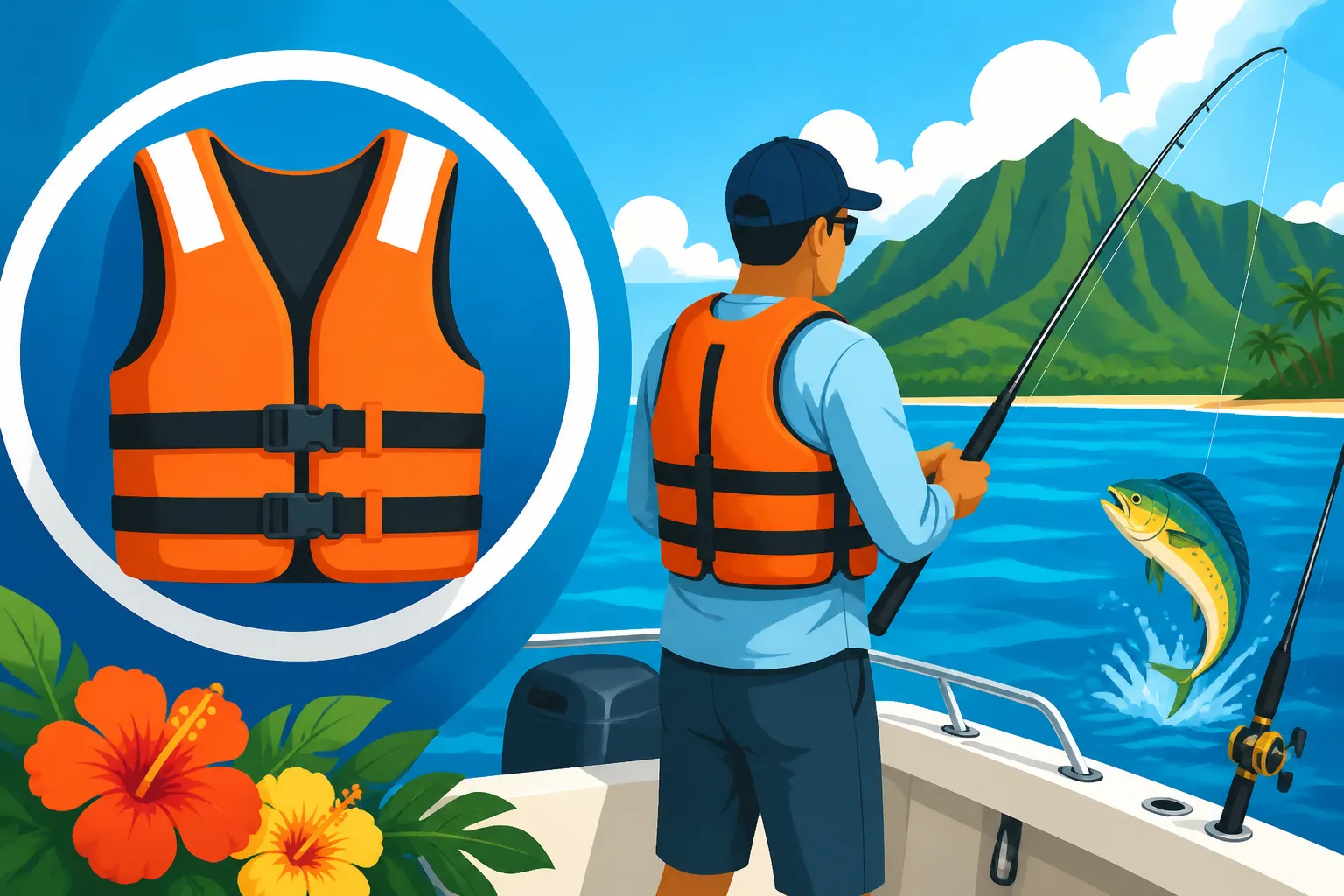
When it comes to motorized vessels, the "one PFD per person readily accessible" rule still applies as the baseline. This covers everything from small skiffs and runabouts to larger fishing boats and yachts. For example, if you're heading out from Honokohau Harbor on a fishing trip, every individual on that vessel needs a properly sized, USCG-approved PFD that can be easily reached if an emergency occurs. This is a fundamental aspect of Hawaii Boating Laws for Anglers that all operators must respect.
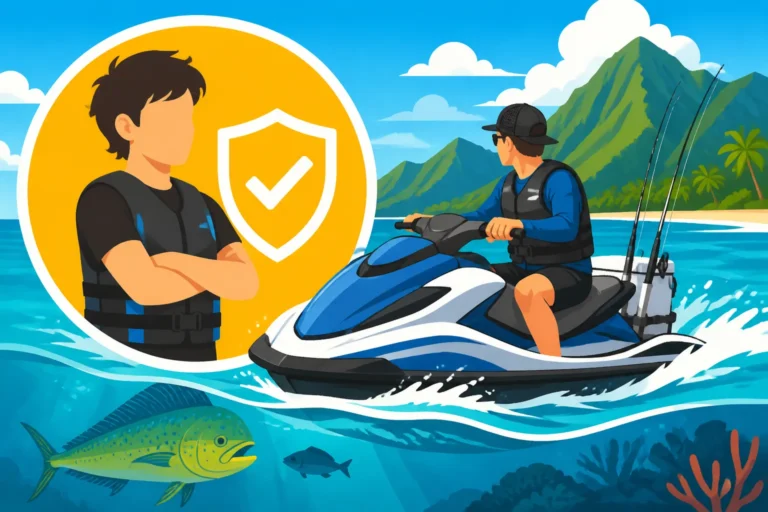
However, Personal Watercraft (PWCs), like Jet Skis or WaveRunners, have a stricter requirement. Anyone operating or riding on a PWC must wear a USCG-approved PFD. This isn't just about having it on board; it's about wearing it continuously while the PWC is in operation. This rule makes perfect sense when you consider the nature of PWCs – they are fast, maneuverable, and riders are often exposed to direct water impact. If you're thrown off a PWC, having a PFD already on can prevent serious injury and assist flotation until you can regain control of your craft. Additionally, further regulations exist, such as the Hawaii PWC operator minimum age and mandatory engine cutoff lanyards, which are just as critical for PWC safety.
Common Misconceptions and Best Practices
Despite the clear guidelines, confusion around PFDs persists, often leading to common mistakes that could have serious consequences. Many boaters believe they're compliant simply by having life jackets somewhere on their vessel, or they might not realize the importance of the PFD's condition. As an experienced lifestyle blogger, I've heard countless stories where these little oversights turn into big problems, and validating that frustration is key. It's not always intentional neglect; sometimes, it's just a lack of detailed understanding.
The "Having It On Board" vs. "Wearing It" Dilemma
This is perhaps the biggest gray area and the source of the most common misunderstandings. For adults (aged 13 and over) on most vessels, Hawaii law generally requires a USCG-approved PFD to be "readily accessible" for each person. This means it needs to be where you can grab it quickly, like under a seat, in an open storage locker, or hanging on a railing. It does not mean it needs to be worn at all times by adults.
However, relying solely on "readily accessible" can be a dangerous gamble. In a sudden emergency—a rogue wave, an unexpected collision, or engine failure that leads to capsizing—you might not have those precious seconds to retrieve a PFD and put it on. I've heard too many heartbreaking accounts of skilled swimmers who found themselves in distress because an unforeseen event left them disoriented and unable to reach their PFDs. The difference between having it on hand and having it on your body can be the difference between life and death. For small craft, during rough weather, or if you have non-swimmers aboard, strongly consider making "wearing it" the default, regardless of age. For those new to boating, consider checking out the Hawaii required boater education certificate rules to gain a more comprehensive understanding of safe practices.
Checking Your PFD for Condition and Accessibility
Another frequent oversight is the condition and actual accessibility of the PFDs. It's not enough to simply have the right number of PFDs; they must be in serviceable condition. Over time, sun exposure, salt, and general wear and tear can degrade a PFD. Fabric can rot, straps can fray, buckles can break, and the foam inside can become waterlogged or compressed, significantly reducing its buoyancy. A PFD that looks fine on the surface might be dangerously compromised internally.
Make it a habit to inspect your PFDs at least annually, and certainly before any significant boating trip. Look for tears in the fabric, especially around seams and straps. Test all zippers and buckles to ensure they function properly. If you have an inflatable PFD, check its CO2 cartridge and inflation mechanism regularly. Beyond condition, ensure they are truly accessible. This means not buried under fishing gear, tackle boxes, or beach towels. Imagine the boat is rocking violently, and you have to fight your way through clutter to get to a PFD – that's not readily accessible. They should be in an obvious, easy-to-reach location, where anyone on board could quickly grab one if needed. Even a seemingly minor detail like storage can make a critical difference in an emergency.
Enforcement, Penalties, and Prioritizing Safety
Nobody wants to face a citation or, worse, an accident on the water. Hawaii's DLNR officers are out there not to ruin your day, but to ensure everyone's safety and protect our natural resources. Understanding the potential consequences of non-compliance can be a powerful motivator to always adhere to the rules, but ultimately, the real motivation should always be the well-being of yourself and your loved ones.
What Happens if You're Caught Without a Required PFD
The Hawaii Department of Land and Natural Resources (DLNR) is the primary enforcement agency for boating safety regulations, including PFD requirements. Their officers conduct regular patrols, especially in popular boating and fishing areas. If they stop your vessel and find that you are in violation of PFD laws—whether it's not having enough PFDs, having unserviceable ones, or a child under 13 not wearing one while underway—they will issue a citation.
The penalties for PFD violations can vary, but they are not insignificant. Fines can range from several tens to several hundreds of dollars, depending on the specific infraction and whether it's a repeat offense. This can quickly turn a relaxing day on the water into a costly headache. Compared to, say, a Hawaii fishing without a license penalty, PFD violations are generally in a similar range, signaling that the state takes both resource management and safety very seriously. While the financial penalty is certainly a deterrent, the most severe consequence, of course, isn't a fine at all—it's the increased risk of serious injury or drowning should an emergency unfold without proper PFDs.
Prioritizing Safety Beyond Just Legal Compliance
It's easy to view PFD requirements as just another set of rules to follow to avoid a ticket. However, true ocean safety goes far beyond simply meeting the bare legal minimums. The laws are a baseline, a foundation for safety, but they cannot account for every possible scenario or individual risk factor. Prioritizing safety means thinking proactively and making choices that go beyond what's merely mandated by law.
Consider an adult who is a strong swimmer. While not legally required to wear a PFD on a larger vessel, what if they fall overboard unexpectedly and hit their head? Or what if sudden, severe weather rolls in, and the vessel gets swamped? Having a PFD on could prevent a minor incident from escalating into a life-threatening situation. Even for experienced boaters, the ocean commands respect and humility. Embracing a safety-first mindset means always assessing the conditions, the capabilities of those on board, and making the most responsible decision, even if it means voluntarily wearing a PFD when the law doesn't strictly require it. Understanding broader regulations, like those for Hawaii Marine Life Conservation Districts, Explained, helps paint a full picture of responsible boating, but personal responsibility for safety remains paramount.
Choosing and Acquiring the Right PFDs
With so many types and styles of PFDs available, selecting the right one can feel a bit overwhelming. It's not a one-size-fits-all situation, and what works perfectly for one activity might be cumbersome or even inappropriate for another. Taking the time to consider your specific needs and priorities will ensure you end up with PFDs that are not only compliant with Hawaii’s regulations but also comfortable and truly effective for your aquatic adventures.
Factors to Consider When Selecting a PFD
When choosing a PFD, comfort is king. If a PFD is uncomfortable, bulky, or restrictive, you (or your passengers) will be less likely to wear it, even when you should. So, when trying on PFDs, consider the activities you'll be doing. Are you primarily fishing? Kayaking? Waterskiing? There are PFDs specifically designed for each of these, offering features like larger armholes for paddling, ample pockets for fishing gear, or streamlined designs for watersports.
Beyond comfort, re-evaluate the USCG Type. For general recreational boating, a Type III (Flotation Aid) is often the most popular choice due to its comfort and versatility. However, if you plan to venture into more remote or rough waters, a Type I (Offshore Life Jacket) might be a more prudent choice for its superior buoyancy and ability to turn an unconscious person face-up. Always check the PFD's buoyancy rating, typically listed in pounds, to ensure it’s appropriate for the wearer’s weight. Features like reflective tape, a whistle, or even a small light can also be invaluable in an emergency, especially during low-light conditions or if you find yourself separated from your vessel.
Finding Quality PFDs for Your Hawaiian Adventures
Once you know what kind of PFD you need, the next step is finding them. In Hawaii, you'll find a wide range of options, from local fishing and marine supply stores to larger sporting goods retailers. These local shops often have knowledgeable staff who can help with sizing and specific recommendations for Hawaiian waters.
However, for convenience and a vast selection, online retailers are an excellent resource. Platforms like Amazon often provide detailed product descriptions, customer reviews, and a wide variety of brands and styles, making it easy to compare options and find exactly what you’re looking for. When buying online, pay extra attention to sizing charts and customer feedback regarding fit. Whether you prefer the convenience of ordering from Amazon or browsing in person, investing in good quality, USCG-approved PFDs is an investment in safety that pays dividends. Remember, a cheap, ill-fitting, or unapproved PFD is no substitute for a quality one that could truly save a life.
Here’s a quick overview of PFD types and their typical uses:
| PFD Type | Description | Best Use Cases | Key Features & Considerations |
|---|---|---|---|
| Type I | Offshore Life Jacket | Rough, remote, or open ocean waters where rescue may be delayed. | Highest buoyancy, designed to turn unconscious wearer face-up. Bulky. |
| Type II | Near-Shore Buoyant Vest | Calm, inland waters or where quick rescue is probable. | Less bulky than Type I, may not turn unconscious person face-up. |
| Type III | Flotation Aid | General recreational boating, watersports, fishing, kayaking, SUP. | Comfortable for continuous wear, allows freedom of movement. User must turn self face-up. Most common for recreational use. |
| Type IV | Throwable Device | Vessels 16 ft and over (as supplemental equipment). | Ring buoys, buoyant cushions. Not worn; designed to be thrown to someone in distress. |
| Type V | Special Use Device | Specific activities like whitewater rafting, sailboarding, work vests. | Designed for specific use (e.g., inflatable PFDs). Must be worn to be considered valid PFD. |
Disclaimer
The information provided in this guide is for general informational purposes only and does not constitute legal advice. While we strive to provide accurate and up-to-date information, boating regulations can change. It is always the responsibility of the boater to consult the most current Hawaii Revised Statutes and administrative rules, particularly those published by the Hawaii Department of Land and Natural Resources (DLNR) Division of Boating and Ocean Recreation (DOBOR), or to contact DOBOR directly for specific legal requirements.