Hawaii nonresident license class details
Venturing out for a fishing adventure in Hawaii as a nonresident can feel like navigating a maze, especially when it comes to understanding the specific license requirements. It's easy to get tangled up in questions about what kind of license you need, how long it lasts, and if it covers all the amazing fishing opportunities the islands offer. This comprehensive guide is designed to cut through that confusion, breaking down the nonresident fishing license classes in Hawaii so you can cast your line with confidence and stay on the right side of the law.
Understanding Nonresident Fishing License Classes in Hawaii
The thrill of fishing in Hawaii is undeniable, whether you're dreaming of reeling in a magnificent marlin offshore, casting for papio from the shore, or even trying your hand at freshwater trout in the cooler uplands of Kauai. But before you can experience any of that, understanding the local regulations, particularly as a visitor, is paramount. The State of Hawaii, through its Department of Land and Natural Resources (DLNR) Division of Aquatic Resources (DAR), has specific requirements for nonresidents, and they differ significantly from what residents need.
Why Nonresidents Need a License
Unlike residents who often enjoy certain exemptions, especially for marine recreational fishing in ocean waters, nonresidents generally need a license for all types of fishing they undertake in Hawaii. This isn't just a formality; it’s a crucial component of managing the state's precious aquatic resources. The funds generated from license sales contribute directly to conservation efforts, habitat restoration, and enforcement, ensuring that these incredible fisheries remain vibrant for future generations. Imagine showing up ready to fish the renowned Kona Coast, only to find out you can't because you overlooked this fundamental step – it's a frustrating scenario many visitors unfortunately encounter. For a full breakdown of the rules, you might find our guide on the Hawaii Fishing License Guide for 2026 particularly helpful.
The Different Nonresident License Options
Hawaii offers several different license classes tailored to the needs of nonresidents, primarily distinguished by duration. You won't find a single "nonresident fishing license" that covers everything for an entire year if you're just visiting for a short while. Instead, the options are designed to align with typical vacation lengths or specific fishing plans. These classes typically include short-term options, perfect for quick trips, and a longer-term option for those planning extended stays or multiple visits within a year. Each class has its own specific fees and validity periods, which we'll delve into in more detail shortly.
Key Considerations for Choosing Your License
Deciding which nonresident license is right for you boils down to a few critical factors. First and foremost, consider the length of your stay. Are you here for a weekend getaway, a week-long family vacation, or are you lucky enough to be enjoying an extended winter escape? Secondly, think about the type of fishing you plan to do. While most focus on ocean fishing, Hawaii does offer unique freshwater opportunities. Finally, the cost is always a factor. Comparing the various options against your planned activities and budget will help you make the most economical and compliant choice. It’s better to invest a little time upfront to understand these distinctions than to face potential fines or, worse, have your fishing trip cut short.
Detailed Breakdown of Nonresident Marine Fishing Licenses
For most nonresidents visiting Hawaii, the primary focus is on marine recreational fishing—the vast and vibrant ocean waters that surround our islands. The DLNR has created specific license categories to accommodate visitors looking to fish for everything from ulua (giant trevally) from the shore to pelagic species like ahi (yellowfin tuna) and marlin offshore. These licenses are distinct and must be purchased before you begin your fishing activities.
The 1-Day Marine Fishing License
This is the most flexible and often the first choice for nonresidents planning a very short fishing excursion. The 1-Day Marine Fishing License is exactly what it sounds like: it grants you the legal right to fish in Hawaii's ocean waters for a single calendar day. It's perfect for those spur-of-the-moment decisions to try some shoreline casting, or if you're joining a charter for just one day of deep-sea adventure.
- Who it's for: Tourists on a tight schedule, those who might only get one chance to fish during their trip, or individuals participating in a single-day fishing charter.
- Cost and Validity: As of my last check, the Hawaii nonresident 1-day marine fishing license cost is quite affordable, making it an easy add-on to your vacation budget. It's valid from 12:00 AM to 11:59 PM on the specific date you select at the time of purchase.
- Typical Scenario: Imagine you're staying in Waikiki and decide you want to try fishing off a pier near Kewalo Basin. This license covers you for that day. Or perhaps you're on the Big Island and found a last-minute spot on a Kona charter boat for a morning trip. This license is your ticket. Remember, even if you’re fishing from a charter boat, you are individually responsible for having your own license unless the charter explicitly states it covers all passenger licenses (which is rare for recreational permits).
The 7-Day Marine Fishing License
For visitors planning a slightly longer stay or those who anticipate several fishing sessions during their trip, the 7-Day Marine Fishing License offers a more cost-effective and convenient option than buying multiple 1-day licenses. This license covers you for a full week, giving you the flexibility to fish on different days without the hassle of daily purchases.
- Who it's for: Families on a week-long vacation, anglers planning a few days of shore fishing interspersed with other activities, or those taking multiple charter trips throughout their stay.
- Cost and Validity: The Hawaii nonresident 7-day marine fishing license cost provides good value compared to buying seven individual day licenses. It’s valid for seven consecutive calendar days starting from the date you specify upon purchase.
- Typical Scenario: Let's say you're spending a week on Maui and want to try fishing off Ma'alaea Harbor one day, then maybe some remote shore fishing near La Perouse Bay a few days later. This single 7-day license streamlines the process, allowing you to enjoy your fishing pursuits without constantly worrying about renewal. It’s an ideal choice for a standard week-long vacation.
The Annual Marine Fishing License
While many nonresidents opt for the shorter-term licenses, Hawaii also provides an annual option. This license is geared towards those who visit the islands frequently throughout the year, or for snowbirds who spend several months here. It offers the most comprehensive coverage for marine fishing over an extended period.
- Who it's for: Nonresidents who make multiple trips to Hawaii within a year, individuals on extended stays (e.g., several weeks or months), or anyone who prefers the simplicity of a single annual purchase.
- Cost and Validity: The Hawaii nonresident annual marine fishing license cost is generally the most economical choice if you plan on fishing for more than a couple of weeks in a 12-month period. It's valid for 365 days from the date of purchase, or sometimes through the end of the calendar year, depending on specific DLNR regulations that can change. Always confirm the exact validity period when purchasing.
- Typical Scenario: Perhaps you visit family in Honolulu every spring and fall, and on each trip, you dedicate a few days to fishing around Oahu's shoreline. An annual license would prevent you from having to purchase a new short-term license for each visit, ultimately saving you time and money. It's also a great option for those extended winter retreats where you want the freedom to fish whenever the mood strikes.
Freshwater Fishing Licenses for Nonresidents
While Hawaii is primarily known for its incredible ocean fishing, the islands also offer unique freshwater angling opportunities. These are typically found in reservoirs and stream systems, particularly on islands like Oahu and Kauai, where species like rainbow trout, largemouth bass, and peacock bass thrive. The regulations for freshwater fishing are separate from marine fishing, and nonresidents will need a specific license for these activities.
When a Freshwater License is Required
Anytime you plan to fish in Hawaii's inland waters, such as lakes, reservoirs, or designated streams, a freshwater fishing license is required for nonresidents. This is a crucial distinction, as your marine license will not cover you for these specific environments. These freshwater bodies are managed distinctly to protect their unique ecosystems and often contain introduced species that provide a different kind of angling experience. For instance, if you're planning to visit the Kokee Public Fishing Area on Kauai, you'll definitely need a freshwater license. Similarly, fishing at Wahiawa Reservoir on Oahu has its own set of rules, including the need for this specific license.
Nonresident Freshwater License Options
Similar to marine licenses, nonresident freshwater licenses come in various durations to suit your needs, though the options might be slightly more limited.
- Tourist 7-Day Freshwater License: This is a popular choice for visitors. It allows you to fish in Hawaii's freshwater bodies for seven consecutive days. It's perfect if you're planning a dedicated freshwater excursion during your vacation, perhaps targeting trout in the Kokee streams or peacock bass in Wahiawa.
- Tourist 30-Day Freshwater License: For longer freshwater adventures, or if you're spreading out your freshwater fishing over an extended trip, the 30-day option offers more flexibility.
- Annual Freshwater License: For nonresidents who spend significant time in Hawaii and frequently pursue freshwater species, an annual license is available. This is often the most cost-effective choice for long-term or repeat visitors.
- Cost and Validity: The Hawaii freshwater license cost for nonresidents varies by duration, with the 7-day and 30-day options being ideal for most tourists. An annual license provides coverage for 365 days from purchase or through the calendar year, similar to its marine counterpart.
Special Regulations for Freshwater Fisheries
It's important to remember that Hawaii's freshwater fisheries often come with their own set of very specific rules, beyond just needing a license. Areas like the Hawaii Kokee Trout Fishing Season Dates have limited seasons, specific bag limits, and gear restrictions. The Hawaii Wahiawa Reservoir Fishing Rules might dictate specific access points or allowable methods. Always check the latest DLNR regulations for the specific freshwater body you intend to fish, as these can change annually. Ignoring these can lead to penalties, even if you have the correct license.
Important Details and Purchasing Your License
Now that you know the various nonresident license classes available, let's cover the practicalities of acquiring one and other vital information to ensure a smooth fishing experience in Hawaii. Getting your ducks in a row before you head out is key to a stress-free day on the water.
Age Requirements for Nonresident Licenses
One common question is about age. Generally, in Hawaii, children under the age of 18 are not required to have a fishing license for marine waters for recreational purposes. This is a fantastic opportunity for families, making it easier to introduce younger anglers to the joys of ocean fishing without the added cost of a license for each child. However, this exemption typically applies to recreational fishing and not commercial activities. For freshwater fishing, the age requirements can differ slightly, so it's always best to consult the specific regulations, but usually, minors fishing recreationally are also exempt. For a detailed guide, check out Hawaii Fishing License Age Requirements. Always double-check current DLNR guidelines, as these specifics can sometimes be updated.
Where to Purchase Your License
Gone are the days when you had to hunt down a specific office. Hawaii has made purchasing fishing licenses quite convenient for nonresidents.
- Online: The easiest and most recommended method is to purchase your license directly through the Hawaii DLNR's Division of Aquatic Resources (DAR) website. This allows you to select your license type, input your information, and pay securely from anywhere with internet access, often even before you arrive in Hawaii. You can usually print your license at home or carry a digital copy on your phone. Learn more about How to Buy a Hawaii Fishing License Online.
- Authorized Vendors: You can also purchase licenses in person at various authorized retail agents across the islands. These often include tackle shops, sporting goods stores, and even some convenience stores. Look for signs indicating they are a "Hawaii DLNR License Agent." While online is usually quicker, buying in person offers a chance to chat with local experts about current conditions or hot spots.
- Bring Your Gear: While you're at it, whether you buy online or in-store, make sure you have all the other essentials. You can find a huge variety of fishing gear, from basic hooks and lines to specialized lures and rods, on platforms like Amazon, ensuring you're ready for any type of fishing Hawaii has to offer.
Penalties for Fishing Without a License
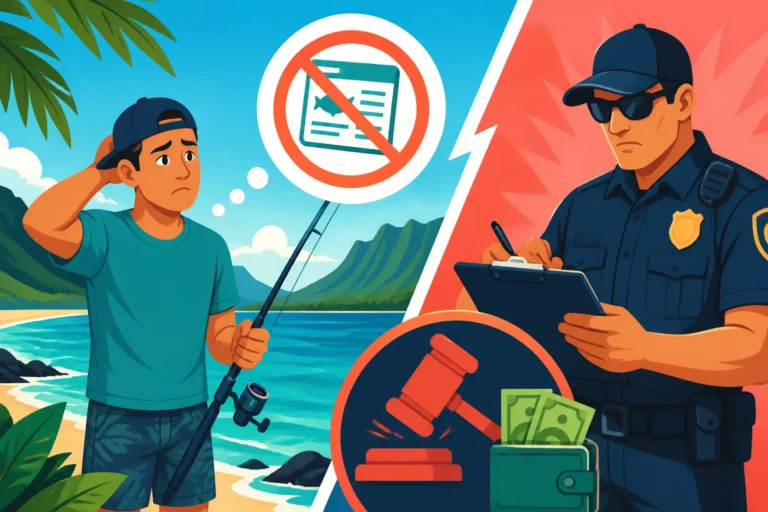
This is where realism comes into play: fishing without the proper license in Hawaii is not just a minor oversight; it carries significant penalties. Enforcement officers (DLNR Enforcement Officers, also known as DOCARE) actively patrol fishing areas, both on land and at sea, to ensure compliance with all fishing regulations.
- Fines: The most common penalty is a monetary fine, which can range from several hundred dollars for a first offense. These fines can quickly overshadow the cost of the actual license you neglected to purchase.
- Confiscation: In some cases, your fishing gear, and even your catch, can be confiscated. Imagine losing that trophy ulua you just spent hours battling, all because of an expired or missing license.
- Legal Action: Repeated offenses or more severe violations (like fishing in a protected area or using illegal methods) can lead to more serious legal consequences, including court appearances.
It's simply not worth the risk. Always ensure you have the correct, valid license on your person (physical or digital) whenever you are fishing. Ignorance of the law is not considered a valid defense. For more detailed information on the repercussions, you can read about Fishing Without a Required License in Hawaii: Penalties.
Hawaii Nonresident Fishing License Overview
To help you quickly grasp the options, here's a table summarizing the main nonresident fishing license classes for Hawaii:
| License Type | Covers | Duration | Typical Cost (Approx.) | Best For |
|---|---|---|---|---|
| Marine Fishing Licenses | ||||
| 1-Day Marine | Ocean Waters | 1 Calendar Day | $10-$15 | Single-day trips, short visits |
| 7-Day Marine | Ocean Waters | 7 Consecutive Days | $20-$30 | Week-long vacations, multiple short trips |
| Annual Marine | Ocean Waters | 365 Days | $50-$70 | Frequent visitors, extended stays |
| Freshwater Fishing Licenses | ||||
| Tourist 7-Day Freshwater | Freshwater | 7 Consecutive Days | $10-$15 | Short freshwater excursions |
| Tourist 30-Day Freshwater | Freshwater | 30 Consecutive Days | $20-$30 | Longer freshwater trips, dispersed fishing |
| Annual Freshwater | Freshwater | 365 Days | $30-$40 | Frequent freshwater anglers, extended stays |
Note: Costs are approximate and subject to change. Always verify current prices on the official DLNR website.
Disclaimer
The information provided in this guide is for general informational purposes only and does not constitute legal advice. Fishing regulations, license requirements, and fees in Hawaii are subject to change by the Department of Land and Natural Resources (DLNR). Always consult the official Hawaii Division of Aquatic Resources (DAR) website or contact them directly for the most current and accurate information before engaging in any fishing activities.