Best technique for fishing after heavy rain runoff
You’ve just watched a beautiful Hawaiian shower drench the landscape, turning streams into raging torrents and muddying the ocean near shore. It's a common sight here, and many anglers throw up their hands, assuming the fishing will be terrible. But don't give up hope! This guide will walk you through the very best techniques for adjusting your approach and finding success when fishing after heavy rain runoff in Hawaii.
Understanding Rain Runoff's Impact on Hawaiian Waters
When those tropical downpours hit, it’s not just a little extra water making its way to the ocean. We’re talking about a significant influx of freshwater, sediment, and often cooler temperatures impacting the coastal environment. This massive change can completely alter where fish are holding and what they're willing to bite. It’s a challenge, for sure, but also an opportunity for those who know how to adapt.
How Freshwater Changes Ocean Conditions
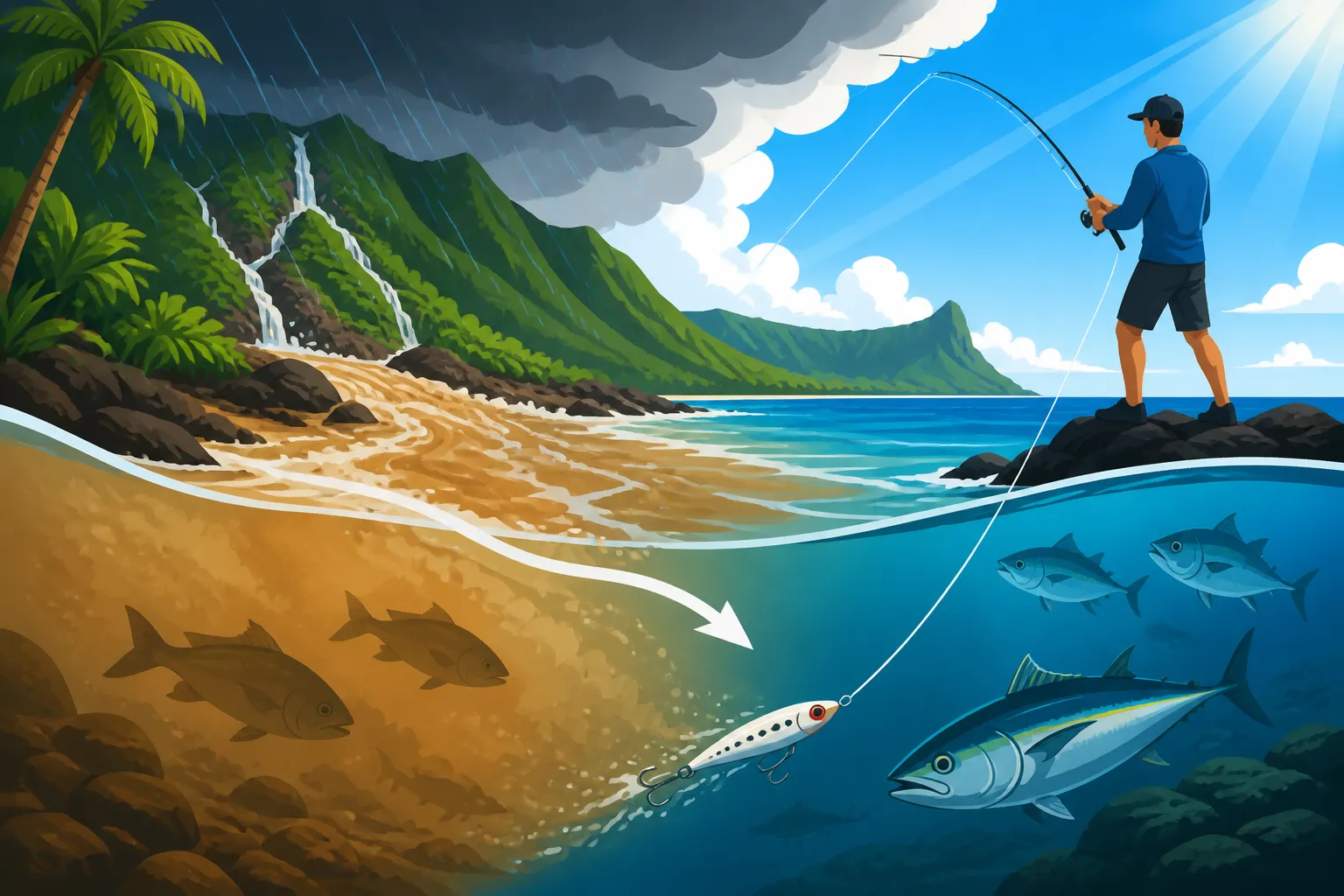
The most obvious change is the color of the water. That reddish-brown plume stretching out from stream mouths and harbors is all the soil and debris carried by the freshwater. This murkiness reduces visibility drastically, which can put off sight-feeding predators. Beyond the visual, freshwater is less dense than saltwater, so it often creates a distinct layer on the surface, sometimes even pushing warmer, saltier water deeper. This layering can significantly impact fish behavior, driving some species away from the surface while concentrating others in specific thermoclines or salinity gradients.
Furthermore, the temperature itself can drop, especially if the rain has been sustained or if it's coming from higher, cooler elevations. Fish are highly sensitive to temperature shifts, and a sudden drop can make them sluggish or prompt them to seek out more stable, warmer waters. This is particularly true for many of our reef fish species that prefer consistent conditions. The influx of freshwater also temporarily lowers the salinity in affected areas, which can be another deterrent for marine species accustomed to a specific salt content. Understanding these fundamental shifts is the first step to figuring out where the fish might have gone and what they’re doing.
What Happens to Baitfish and Predators
This sudden change in water conditions sends ripples through the entire food chain, especially for smaller baitfish. Many small schooling baitfish, like nehu or akule, are extremely sensitive to salinity and clarity changes. They might scatter, move further offshore to cleaner water, or seek refuge in areas less affected by the runoff. However, this disruption can also concentrate them. For example, some baitfish might be pushed against clearer water lines or into areas where the freshwater mixes, creating a distinct current seam.
Predatory fish, the ones we're usually after, react in a few ways. Some, like ulua (giant trevally) or papio (trevally), are incredibly opportunistic. The runoff often washes out all sorts of terrestrial creatures—insects, worms, even small lizards—into the ocean, creating an unexpected buffet. These fish aren't deterred by murky water; in fact, they often thrive in it, using their lateral lines and keen sense of smell to hunt. Other pelagic species, like mahimahi or ono, might avoid the highly turbid water close to shore, preferring the cleaner, bluer water further out, but even they might cruise the edges of the plume looking for disoriented bait. The key is knowing which species are likely to stay and which will leave, and then targeting the specific conditions they prefer.
Adjusting Your Strategy for Shoreline Fishing After Rain
Shoreline fishing after heavy rain runoff is a whole different ballgame. You can't just cast where you usually do and expect the same results. The water might be chocolate milk, currents might be strong, and there could be all sorts of debris. But with the right approach, these conditions can actually present some of the most exciting fishing opportunities, especially for some of Hawaii's prized fighters like ulua and papio. It’s all about understanding where fish will congregate and how they'll be feeding.
Targeting Estuaries and Muddy Inflows
The most obvious place to start is right where the freshwater meets the ocean: estuaries, stream mouths, and harbor entrances. These areas, despite their often unappealing color, become prime feeding grounds. As mentioned, the runoff washes a smorgasbord of food into the ocean, attracting bottom feeders and opportunistic predators. Fish will often sit right at the edge of the muddy plume, or even within it, ambushing anything edible that drifts by. This can be one of the Best Shore Fishing Spots in Hawaii under these specific conditions.
When fishing these zones, focus on areas where the freshwater begins to mix with the saltwater. Look for seams, eddies, and points where currents might concentrate debris and food. Casting into the dirtiest water might seem counterintuitive, but if there's an active flow of new food, the fish will be there. Consider also how the tides affect these inflows; an outgoing tide will often push the runoff further out, while an incoming tide might draw cleaner ocean water back into the affected zones, creating more distinct mixing layers. Be prepared for strong currents and potential snags due to the increased debris.
Lure and Bait Choices for Murky Water
With reduced visibility, visual lures that rely on flash or natural color patterns become less effective. This is where you need to shift your tactics to appeal to other senses. For lures, think loud and proud. Big, noisy poppers or chuggers that create a lot of surface disturbance can attract attention from opportunistic predators that are listening for struggling bait. Subsurface lures with strong vibrations, like lipped diving plugs or spoons that wobble intensely, can also be effective, helping fish locate them via their lateral line.
Color also plays a role in murky water. While natural colors might blend in, brighter, contrasting colors can stand out better. Chartreuse, orange, or even dark, silhouetted lures can be surprisingly effective. Don't forget glow-in-the-dark options, especially if you're fishing at dawn or dusk when light penetration is already low. For bait, scent is king. Fresh cut bait, like opelu or akule, will release a strong scent trail that fish can follow even in zero visibility. Consider using scent enhancers on your lures or even adding a small piece of bait to a jig. Stuff you'd typically find on a great site like Amazon for fishing scents can really give you an edge. When employing Shore Fishing Techniques for Hawaii in these conditions, prioritizing scent and vibration is crucial.
Reading the Currents and Debris Lines
Heavy rain runoff brings with it a host of currents and debris that can either frustrate or guide you. The discharge from streams and rivers creates strong outward flows that can be difficult to fish against. However, these currents also create distinct seams where the fresh and saltwater meet, and where debris, and therefore food, accumulates. These "debris lines" are often visible as a line of foam, leaves, or other flotsam on the surface. Fish will often patrol these lines, waiting for an easy meal to drift by.
Pay close attention to how these lines move with the tide and wind. Sometimes, they'll form large eddies or circulate in predictable patterns within a bay or near a point. Casting parallel to these lines or just inside the clean water side can be incredibly productive. For species like How to Catch Ulua from Shore you might find them sitting just outside the main current, waiting to dart into the churn for food. Be mindful of floating debris itself; it can snag your line or even carry your rig off course. Adjust your retrieve speed and depth to work with the currents, not against them, allowing your bait or lure to drift naturally into strike zones.
Boat Fishing Adaptations for Post-Rain Conditions
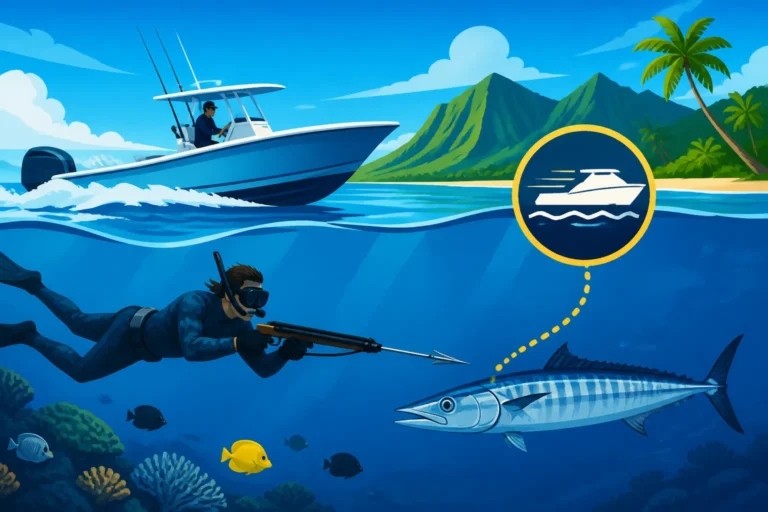
Taking a boat out after heavy rains offers a different set of challenges and opportunities. While shoreline anglers are dealing with localized muddy water, boaters have the flexibility to chase the cleaner water or work the edges of the runoff plumes. It requires a keen eye for changes in water quality and a willingness to adjust your usual offshore tactics. Understanding Hawaii Boating Laws for Anglers is especially important when navigating waters with potential debris.
Finding the Cleaner Water Edges
One of the primary goals for boat anglers after heavy rain is to find the "clean water line." This is the visible boundary where the muddy, fresh runoff meets the clear, blue ocean water. This line acts like a floating wall, concentrating baitfish and attracting predators who will patrol its length. Often, you'll find birds working these lines, diving on bait pushed to the surface. Trolling along this distinct boundary can be incredibly effective, presenting lures to fish that are actively hunting.
Sometimes, the runoff will create vast, discolored plumes that extend miles offshore. In these cases, you might need to run further out to find truly clean water, or you can look for pockets of cleaner water closer to shore, perhaps behind a point or within a protected bay that wasn't directly impacted by a stream. Your fish finder will be crucial here, not just for finding fish, but for identifying temperature and salinity breaks that might indicate where fish are holding. Remember, the fish don't disappear; they simply relocate to where conditions are more favorable or where food is concentrated.
Sound and Scent Tactics for Offshore Species
Even when you find the cleaner water, the overall clarity might still be reduced, or the fish might be a bit more finicky due to the recent environmental changes. This is where incorporating sound and scent into your offshore game can make a huge difference. For trolling, use lures that have built-in rattles or produce a lot of vibration. Skirted lures with concave faces that push a lot of water create a larger pressure wave, making them easier for fish to detect from a distance. You can also add natural bait, like a strip of bonito or a ballyhoo, to your trolling lures to add a powerful scent trail.
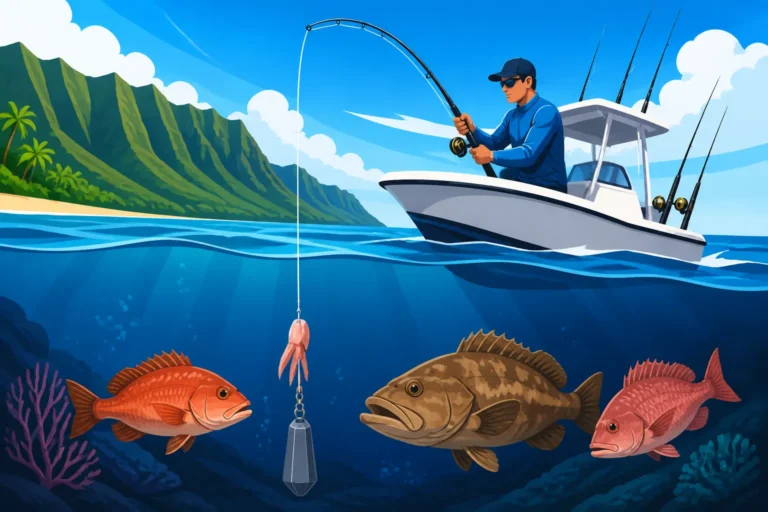
Chumming can also be a highly effective strategy when boat fishing after heavy rain. A consistent flow of finely ground bait will create a scent slick that can draw in pelagic species like ahi (yellowfin tuna) or mahimahi from further away. If you're targeting specific bottomfish after the rains, using strong-smelling cut bait or squid can entice them, as they rely heavily on scent in deeper, darker water. Sites like Amazon offer various scent-attracting products and high-quality cut baits that can be invaluable. Remember that species like Marlin Fishing off the Kona Coast and Ahi Yellowfin Tuna Fishing in Hawaii are still out there, just potentially in different concentrations or depths.
| Condition | Typical Fishing Strategy (Pre-Runoff) | Post-Rain Runoff Strategy |
|---|---|---|
| Water Clarity | Clear, blue ocean water | Murky, brown plumes near shore; defined clean water lines offshore |
| Location Focus | Reef edges, deep drops, offshore FADs | Stream mouths, harbor entrances, estuaries; edges of runoff plumes |
| Lure/Bait Type | Natural colors, flashy lures, live bait | Loud, vibrating lures, strong scents, cut bait, bright/dark contrasting colors |
| Retrieve Speed | Varied, often faster for pelagics | Slower, deliberate retrieves; allowing bait to drift with current |
| Target Species | Marlin, Ahi, Mahi, Ulua, Moi, Reef Fish | Ulua, Papio, Barracuda, Sharks; Pelagics on plume edges |
| Key Sense | Sight, movement | Scent, vibration, sound |
Safety Considerations and Gear Maintenance
Fishing after heavy rain isn't just about changing your tactics; it's also about prioritizing safety and taking care of your valuable gear. The conditions can be more hazardous, and the freshwater exposure can be tough on your equipment. A little extra caution and maintenance go a long way in ensuring a successful and safe outing.
Navigating Debris and Stronger Currents
The most immediate safety concern after heavy rains, especially if you're on a boat, is the increased amount of floating debris. Logs, tree branches, plastics, and all sorts of refuse get washed into the ocean, posing significant hazards. These can damage your prop, foul your anchor line, or even cause structural damage to your hull if you hit them at speed. Maintain a vigilant lookout, especially in turbid waters where visibility is already poor. Reducing your speed is always a wise choice in these conditions.
Stronger currents near river mouths and within harbors are also a factor. What might normally be a calm area can turn into a powerful rip current, making boat handling difficult or even dangerous for smaller craft. If you're shoreline fishing, be extremely careful near swollen rivers or stream mouths. The banks can be unstable, and the currents surprisingly powerful, potentially sweeping you off your feet. Always let someone know where you're going and when you expect to return, and carry a fully charged phone in a waterproof case. For kayakers, paddling in these conditions can be particularly challenging, so checking Best Kayak Fishing Spots in Hawaii for protected areas might be a better idea after heavy rains.
Post-Fishing Gear Cleanup
Freshwater, while vital for life, is not a friend to saltwater fishing gear. The sediment and silt carried by runoff can get into reel mechanisms, guides, and rod ferrules, causing corrosion and wear. It's imperative to perform a thorough cleanup after fishing in these conditions. Rinse all your rods, reels, and tackle boxes with fresh, clean tap water immediately upon returning. Pay special attention to your reels, flushing them carefully to remove any trapped silt or debris. Many anglers will then apply a light, anti-corrosive lubricant to reel parts and spray down their rods.
Don't forget your line! Muddy water can degrade fishing line, especially braided lines that can absorb fine particulates. It's a good idea to strip off and discard the first 20-30 feet of your main line if it's been exposed to heavy runoff. For monofilament, wipe it down thoroughly. Your hooks, swivels, and lures also need attention. Rinse them, dry them, and consider applying a thin layer of protective oil to prevent rust. Investing in good quality, corrosion-resistant terminal tackle, often found readily on Amazon, will certainly pay off in the long run, reducing the frequency of replacement. Diligent maintenance ensures your gear lasts longer and performs reliably for your next Hawaiian fishing adventure.
Disclaimer
This article is for general informational purposes only and does not constitute professional advice. Laws, prices and regulations vary by location and change over time. Consult a qualified professional for guidance on your specific situation.