Best Techniques for Deep Drop Bottomfishing
There’s a unique thrill, and a fair bit of frustration, that comes with targeting the deep-water denizens of Hawaii’s ocean floor. Dropping lines hundreds, sometimes thousands, of feet into the vast blue can feel like sending a message in a bottle – you hope for a reply, but the odds sometimes feel stacked against you. This guide is all about cutting through that uncertainty, sharing the best techniques for deep drop bottomfishing here in Hawaii so you can bring home some of those incredible, sought-after deep-sea treasures.
The Allure and Challenge of Deep Drop Bottomfishing in Hawaii
Deep drop bottomfishing isn't just another day on the water; it's an expedition into a world most people never see. The depths off Hawaii's coasts hold some truly remarkable fish, many of which are considered delicacies. But getting your bait to them and then bringing them back up is a whole different ball game from shallow water angling.
What Exactly is Deep Drop Bottomfishing?
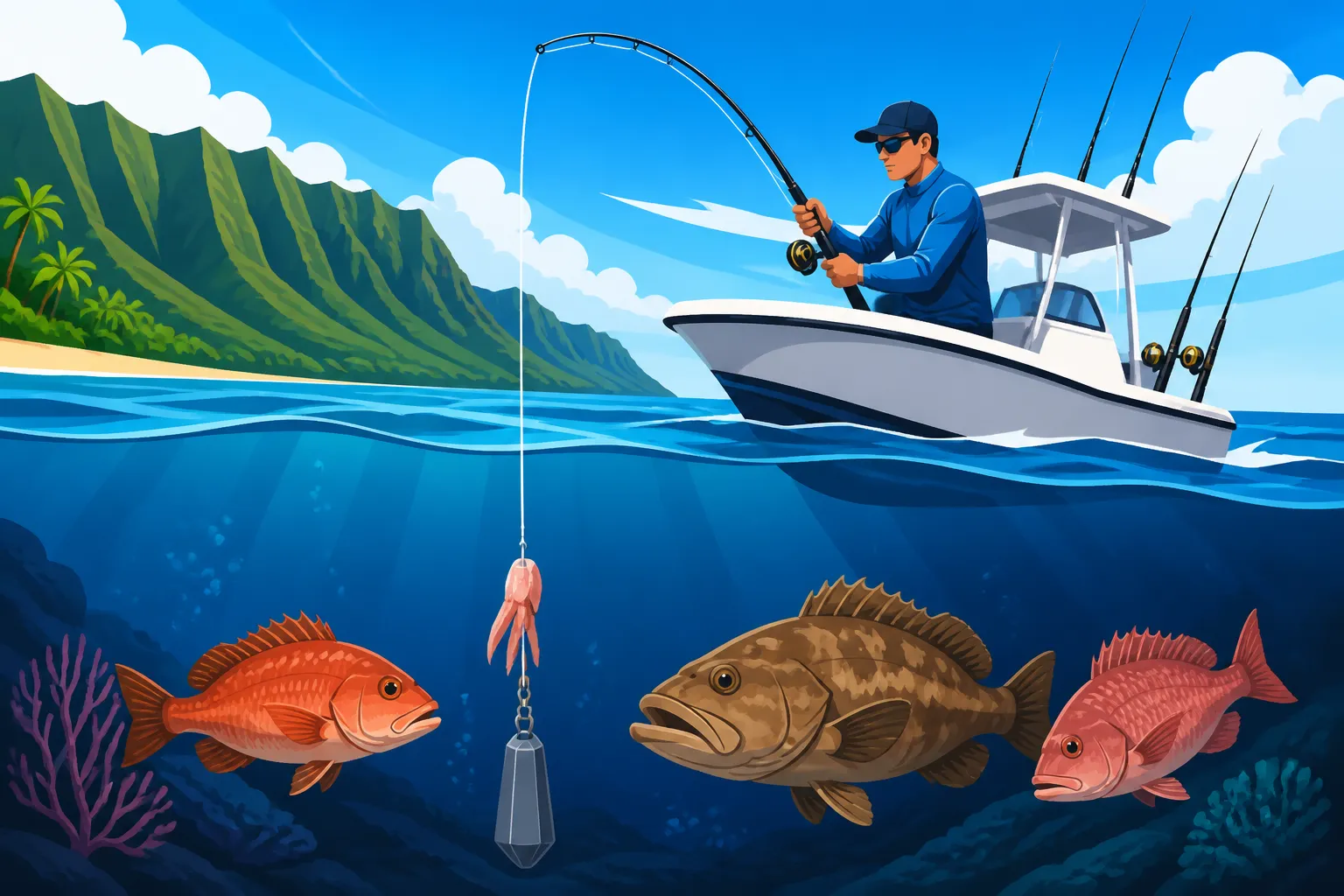
At its heart, deep drop bottomfishing is about targeting fish that live on or near the ocean floor in extremely deep waters – think anywhere from 300 feet down to over 2,000 feet, or even more. Unlike traditional bottomfishing, which might target snapper or grouper in 100-300 feet, deep dropping is about going truly deep, often into the twilight zone of the ocean. Here in Hawaii, this means chasing prized species like opakapaka (pink snapper), onaga (ruby snapper), ehu (red snapper), and hapu'upu'u (sea bass or grouper). These fish aren't just big; they're incredibly delicious and command a high price at market, making them highly sought after by both commercial and recreational anglers. The technique requires specialized gear to combat immense pressure, strong currents, and the sheer effort of retrieving your catch from such profound depths. It’s a game of precision, patience, and often, significant physical exertion if you're not using electric reels.
Why Deep Dropping is So Challenging
Let's be real, deep dropping isn't for the faint of heart, or for those easily discouraged by a slow bite. The challenges are numerous and can quickly turn a promising day into a frustrating one. First and foremost, you're dealing with incredible depths, which means your line is exposed to currents for a very long time as it sinks. What seems like a straight drop from the surface can become a massive bow in your line below, making it incredibly difficult to tell when you've hit the bottom or if you're even over the right spot. Then there's the sheer weight – you need serious lead, often 5-10 pounds or more, just to get your bait down effectively. Imagine pulling that much weight, plus a big fish, from 1,000 feet by hand! This is where electric reels become almost a necessity for many, saving your back and arms for the fight rather than the retrieve.
Furthermore, the environment itself is harsh. The cold, dark depths are unforgiving, and gear failures can be catastrophic. Hooks can straighten, knots can fail under pressure, and reels can seize. The long retrieve times also mean that every dropped fish or missed bite feels like a punch to the gut after all that effort. It truly takes a dedication to the craft and a deep understanding of the ocean's dynamics to consistently succeed in Hawaii's deep drop fishery.
Gearing Up for the Abyss: Essential Deep Drop Equipment
You wouldn't bring a butter knife to a sword fight, and you certainly wouldn't bring light tackle to the deep-sea battlegrounds of Hawaii. Success in deep drop bottomfishing hinges almost entirely on having the right equipment. This isn't a place to skimp; reliable, heavy-duty gear is your best friend when you're targeting fish hundreds of feet down.
Rods and Reels Built for Battle
When it comes to deep drop bottomfishing, your rod and reel setup is paramount. For many, especially those who make a regular habit of it, electric reels are a game-changer. Brands like Daiwa and Tanacom are popular choices, offering models that can handle immense line capacity and have the brute force to haul up heavy weights and big fish from extreme depths with the push of a button. While they come with a hefty price tag, the ability to effortlessly retrieve your rig repeatedly from 1,000+ feet is invaluable. Think of a 10-pound lead weight, a multi-hook rig, and then adding a 15-pound opakapaka to that; an electric reel can make what would be a 20-minute struggle a simple five-minute retrieve, allowing for more fishing time and less fatigue.
For the purists or those just starting out who want to feel every head shake, heavy conventional reels are still an option, but be prepared for a workout. We're talking 80-size reels or larger, spooled with plenty of braided line. The rods themselves need to be incredibly stout, often rated for 80-130 pound line, with a fast taper and a strong backbone to handle the heavy weights and the powerful runs of deep-water fish. Look for rods with a parabolic bend that can absorb the shock of a big fish while still providing enough lifting power. You can find a good selection of high-quality electric and conventional reels suitable for Hawaii deep dropping on platforms like Amazon. Just remember, the deeper you go, the more critical the strength and capacity of your reel become.
Line Choices and Terminal Tackle
Your fishing line is the lifeline to your catch, and in deep dropping, it faces incredible stress. Braided line is almost universally preferred for deep dropping due to its minimal stretch, which provides superior sensitivity for detecting subtle bites at extreme depths. It also has a much smaller diameter for its breaking strength compared to monofilament, meaning less water resistance and less "bow" in your line from currents, allowing your weight to drop faster and more vertically. Most anglers will opt for 80 to 200-pound test braid, depending on the target species and depth. A good quality braid like those from PowerPro or Daiwa J-Braid offers the reliability you need.
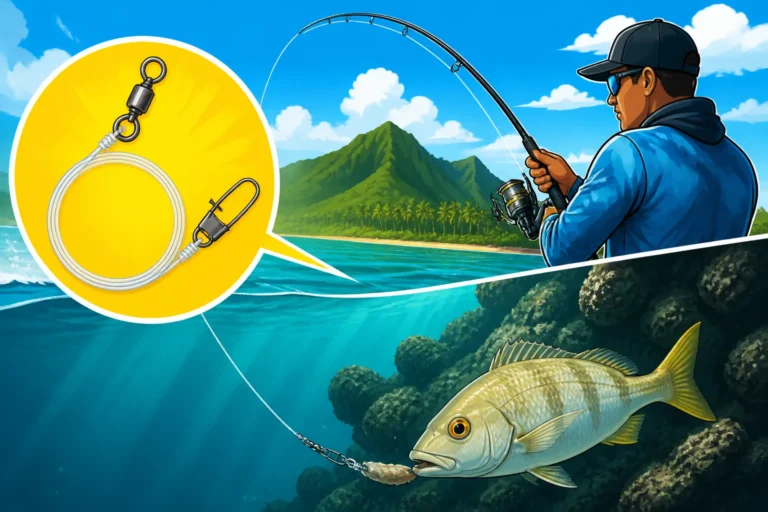
For your leader, a heavy monofilament or fluorocarbon is essential. Fluorocarbon is less visible underwater and more abrasion-resistant, which is crucial around rocky bottom structures. Typically, a 150-300 pound test leader is used, connected to your main braid with a strong knot like an FG or a crimped connection. The terminal tackle consists of heavy-duty swivels, often large ball-bearing swivels, and stout hooks appropriate for the mouth size of your target species. Circle hooks are often favored, as they tend to hook fish in the corner of the mouth, reducing gut-hooking and improving survival rates for released fish. And, of course, the sinkers. These are the unsung heroes, often weighing 5-10 pounds (or even more if currents are screaming). Pyramid or cannonball sinkers are common, but sometimes specialized deep drop weights with fins are used to help them sink faster and reduce drift. Finding specialized tackle can sometimes be a challenge locally, but a quick search on Amazon can reveal many options for heavy-duty swivels, crimps, and specialized hooks perfect for the job.
The Critical Role of Electronics
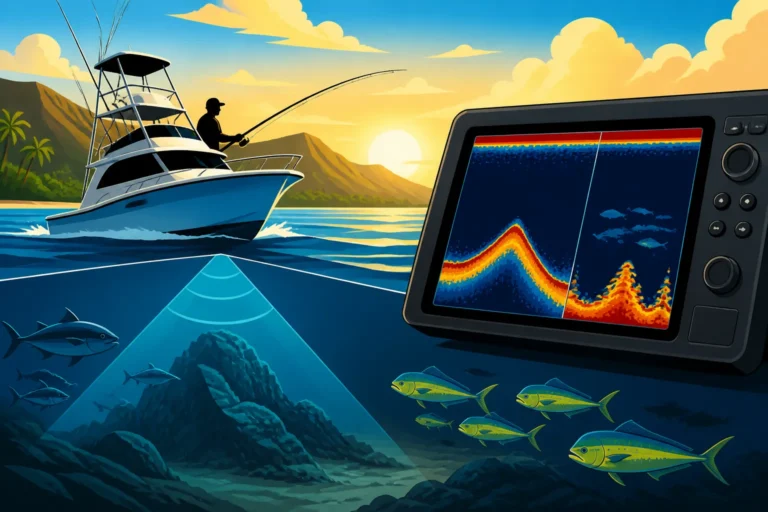
In deep drop bottomfishing, you are effectively blind without reliable electronics. Your sonar (fish finder) is your eyes, allowing you to "see" the underwater topography, identify potential fishing grounds, and even spot fish holding on structures. High-frequency transducers (like 1kW or 2kW) with CHIRP technology are invaluable, providing crisp, detailed images of the bottom and separating individual fish from the structure they're holding on. You want to be able to distinguish a ledge from a pile of rocks, and more importantly, discern small "clouds" of baitfish or target species congregating near structure.
Beyond simply seeing the bottom, your GPS chartplotter is crucial for marking productive spots, drifts, and hazards. You'll want to mark every "hit," every piece of structure, and every change in depth that holds fish. This allows you to return to productive areas repeatedly and refine your drifts. Modern units from Garmin, Raymarine, and Furuno often integrate sonar and GPS seamlessly, providing a powerful toolkit for deep-water exploration. Learning to interpret the sonar display – identifying bait, discerning rock from sand, and spotting the tell-tale arches of fish – is a skill that takes time and practice but is absolutely fundamental to consistent success in deep dropping. Without good electronics, you’re just dropping a line into the unknown, hoping for a lucky strike, which is never a great strategy.
Unlocking the Deep: Finding Hawaii's Bottomfish Hotspots
Hawaii's volcanic origins mean its ocean floor is a labyrinth of seamounts, ridges, ledges, and drop-offs. These underwater features are the key to finding deep-water fish. It's not just about finding "deep" water; it's about finding the right deep water that holds life.
Reading the Ocean Floor with Sonar
Your sonar is your most important tool for scouting deep drop spots. As you cruise slowly over potential areas, you're looking for significant changes in depth, sharp ledges, pinnacles that rise from the seafloor, or deep canyons. These features provide shelter, ambush points, and often concentrate baitfish, which in turn attract larger predators like opakapaka and onaga. Look for "hard returns" on your sonar, indicating rocky bottom, which is often preferred by many bottomfish. Soft returns usually indicate sand or mud, which can hold different species, but rocky structure is typically where the action is.
Beyond the structure itself, pay close attention to any marks that indicate fish. Sometimes they'll appear as distinct arches or blobs hugging the bottom; other times, you might see "clouds" or dense schools of baitfish suspended above structure. These baitfish schools are like a flashing neon sign for predators. Modern CHIRP sonar systems are especially good at penetrating these depths and providing the clarity needed to interpret these signals. It takes practice to discern a school of smaller baitfish from a cluster of larger bottomfish, but with experience, you'll learn to read the screen like a map of the underwater world. You can get more detailed insights into this with a guide on How to locate bottomfish structure with sonar.
The Importance of FADs and Natural Structure
While sonar helps you find natural contours, Hawaii also has an extensive network of Fish Aggregating Devices (FADs). These buoys are anchored in very deep water (often thousands of feet) and are well-known magnets for pelagic species like tuna and mahimahi. However, the deep anchors and the structure they create can also attract deep-water bottomfish. While FADs are primarily known for pelagics, it's worth exploring the areas immediately surrounding their anchor lines with your sonar to see if any deep-water residents have taken up residence.
More commonly, specific natural structures are the true honey holes. Seamounts, which are underwater mountains, and deep-water ridges that extend far offshore, are prime deep drop territory. These features interrupt the current, creating eddies and upwellings that bring nutrient-rich water and baitfish to the area. For instance, some of the most productive deep dropping grounds are found along the edges of the 1,000-fathom curve off the Kona Coast or around specific features in the Hawaii Fish Replenishment Areas in West Hawaii, where conservation efforts aim to sustain fish populations. Lava tubes and extensive reef systems that extend into deeper waters also provide ideal habitats. Always cross-reference your sonar findings with local knowledge and charts that detail underwater topography.
Using Current and Drift to Your Advantage
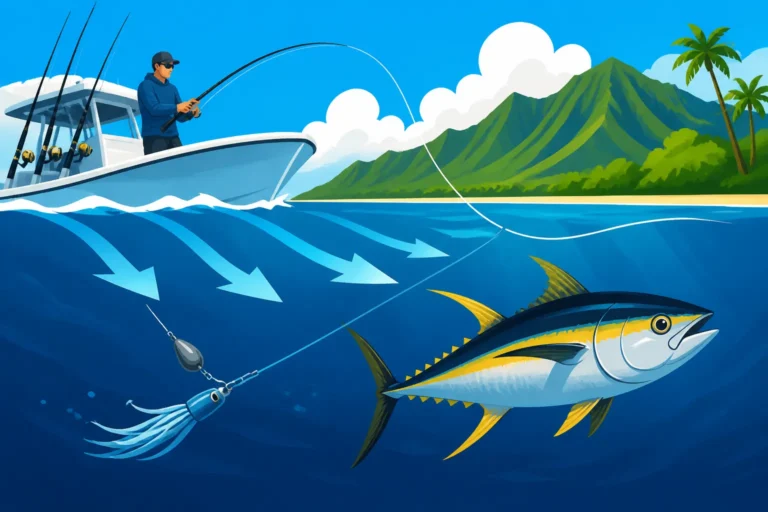
One of the most challenging aspects of deep drop bottomfishing in Hawaii is dealing with strong currents. The sheer volume of water moving around the islands can make it incredibly difficult to get your bait straight down and keep it on target. You might drop your line directly over a promising rock pile, only to find your weight has drifted hundreds of feet away by the time it reaches the bottom. This is where understanding current and drift becomes crucial.
Before you even drop a line, take the time to observe the surface currents and, if possible, use your sonar to get a sense of subsurface currents. Many experienced deep droppers will do a "test drift" without bait, simply dropping a heavy weight and observing how their boat drifts and how the line bows. This helps you calculate where you need to start your drift to hit your target. Often, you'll need to drop your line far "up-current" from your desired fishing spot, letting the current carry your rig over the structure. You might also use your boat's engines to "stem the current," maintaining a slower drift or even holding position to keep your line as vertical as possible. This requires constant attention to your GPS and sonar, making small adjustments to your boat's position to stay in the strike zone. Mastering this dance with the current is a mark of a truly skilled deep drop angler.
Precision and Patience: Deep Drop Techniques That Work
Getting your bait to the right depth is one thing, but presenting it effectively and converting bites into fish is another. Deep dropping demands a delicate balance of precision, patience, and the right rigging.
The Art of Controlled Drift Fishing
For many deep drop scenarios, a controlled drift is the most effective technique. This involves letting your boat move naturally with the current and wind while keeping your line as vertical as possible over promising structure. The key word here is "controlled." Simply letting your boat drift aimlessly often leads to your line being dragged far off the target zone. Instead, you'll use your boat's engines to slow down your drift, or even "back-drift" against the current to keep your bait hovering precisely where you want it. This could mean pulsing your engines in and out of gear, or even using a sea anchor (drogue) to slow your boat's movement.
The goal is to maintain minimal tension on your line while still feeling the bottom occasionally. When your weight touches down, reel up a few feet to avoid snagging, but keep it close to the structure. This allows your bait to gently waft in the current, mimicking a natural food source. Detecting bites can be subtle at these depths due to the sheer amount of line in the water. Watch your rod tip for even the slightest twitch, or feel for an unusual weight or pull. With braided line's sensitivity, you'll often feel a series of thumps or a steady pull rather than a dramatic strike. Remember, you can also learn more about specific setups that help with this by checking out Best rig for bottomfishing in deep water.
Anchoring for Stability and Accuracy
While drift fishing is popular, there are times when anchoring directly over a deep-water hotspot is the superior approach. This is particularly true for very small, isolated structures like a single pinnacle or a tight ledge that you've identified as holding a lot of fish. If the current isn't too strong, anchoring provides unparalleled stability, allowing you to drop your bait precisely onto the target repeatedly. However, anchoring in deep water is no small feat. You need a robust anchor system with plenty of chain and line – often several hundred feet of chain and a thousand feet or more of anchor rope, depending on the depth.
The technique involves approaching your target slowly, deploying your anchor up-current, and then letting out line as you drift back over the spot. Once you're positioned correctly, you can set your anchor. This can take several attempts to get just right, and it often involves a significant commitment of time and effort. The reward, however, is being able to saturate a small, productive area with bait, often leading to multiple hookups once the fish start biting. Just be mindful of your anchor's holding power, as losing an anchor in 1,000 feet of water is a costly and frustrating experience.
Rigging for Success
The typical deep drop rig in Hawaii is a multi-hook "hapai" rig, designed to present several baits at different depths just above the ocean floor. These rigs often feature 3-5 snelled hooks, usually large circle hooks (8/0 to 12/0), spaced 18-36 inches apart on heavy monofilament or fluorocarbon leader, with a heavy sinker attached to the very bottom. The idea is to target fish that might be schooling at slightly different levels or to increase your chances of a hookup by presenting multiple offerings.
Many anglers also incorporate light strips or small, battery-operated LED strobes onto their deep drop rigs. Remember, down at 1,000 feet, it's pitch black, so any light source can act as an attractor, drawing curious fish to your bait. These lights, often green or blue, can make a noticeable difference in your catch rates. You can find a good variety of these deep-sea lights and pre-made deep drop rigs on Amazon, which can save you time compared to building every component yourself. Ensure all connections – crimps, knots, and swivels – are of the highest quality, as a single weak point can lead to a lost fish and a lot of wasted effort from those extreme depths.
Hawaii's Deepwater Treasures: Target Species and Their Habits
The reason we put in all this effort for deep dropping is the incredible array of fish that call Hawaii's depths home. These are not just any fish; they're some of the most beautiful and best-eating species in the ocean.
Opakapaka, Onaga, and Ehu: The Snapper Kings
These three species are the holy grail for many deep drop anglers in Hawaii.
- Opakapaka (Pink Snapper): These beautiful pink-hued fish are highly prized for their firm, delicate white flesh. They typically inhabit depths ranging from 300 to 900 feet, often found in aggregations over rocky bottoms, ledges, and slopes. Opakapaka are opportunistic feeders, responding well to baits like squid, cut fish, and even small live baits. They tend to school, so if you catch one, there's a good chance there are more in the area. Understanding their habits is key, as covered in Opakapaka (Pink Snapper) Habits.
- Onaga (Ruby Snapper): With their striking red color and long, flowing caudal fin streamers, onaga are arguably the most beautiful and highly sought-after of the deep-water snappers. They live even deeper than opakapaka, typically from 600 to 1,200 feet, preferring rocky areas and ledges. Onaga are predatory and will aggressively strike squid and small fish baits. Their flesh is famously rich and flaky. For more on these incredible fish, check out Onaga (Ruby Snapper) Habits.
- Ehu (Red Snapper): Smaller than opakapaka and onaga, ehu are a deep red snapper found in similar depths (300-900 feet) and habitats. They're often caught alongside their larger cousins and make for excellent table fare. Ehu are also strong fighters for their size, providing a good challenge on the retrieve.
All three species are excellent eating, making them top targets for both recreational anglers and commercial fishermen supplying Hawaii's finest restaurants.
Hapu'upu'u (Grouper) and Other Deep Dwellers
Beyond the snappers, the depths of Hawaii host other impressive fish:
- Hapu'upu'u (Sea Bass/Grouper): These large, powerful groupers are found in deeper waters, often over rocky structures or near seamounts. They can grow to significant sizes and offer a tremendous fight, especially from deep water. Their white, firm flesh is highly regarded. They are bottom dwellers and will readily take larger baits like whole squid or substantial chunks of fish.
- Buta (Amberjack): While often associated with shallower reefs, some species of amberjack can be found in deeper waters, especially around seamounts. They are incredibly strong fighters, known for their powerful, relentless runs.
- Uku (Grey Snapper): Although more commonly found in shallower waters, large uku can sometimes be found in the upper ranges of deep drop depths, especially around pinnacles and ledges that rise significantly from the seafloor.
- Kalekale (Rosy Snapper): Another beautiful pinkish snapper species, usually found in very deep waters, similar to onaga.
Understanding the unique characteristics of these fish, from their fighting styles to their preferred baits, is what turns a good day into a great one. You can dive deeper into the full range of species you might encounter in a detailed guide on Bottomfish Species of Hawaii.
Best Baits and Presentation for Deep Drops
When fishing in the deep, freshness and presentation are absolutely paramount. The fish down there aren't accustomed to seeing a wide variety of food, so what you offer needs to be enticing.
- Squid: This is the universal deep drop bait. Fresh squid, whole or cut into strips, is incredibly effective for nearly all deep-water species. Its natural scent, tough texture (which helps it stay on the hook during the long drop), and high visibility make it a go-to.
- Small Fish: Live or fresh dead baitfish like opelu, akule, or mackerel scad are highly effective. For species like onaga and hapu'upu'u, a small whole fish presented naturally can be irresistible. Make sure to present it well, often threading the hook through the body to keep it streamlined during the descent.
- Octopus (Tako): Chunks of fresh octopus can also be very effective, especially for larger bottomfish. Its tough texture ensures it stays on the hook, and its strong scent attracts fish from a distance.
Presentation is key. Ensure your bait is securely hooked so it doesn't spin wildly on the drop, which can tangle your line. For multi-hook rigs, use a combination of baits or vary their size to see what the fish prefer on a given day. Keep your bait fresh, and if you're not getting bites, don't hesitate to reel up and re-bait. Sometimes just a fresh piece of squid can make all the difference.
Here's a quick comparison of common deep drop target species:
| Species | Common Depths (feet) | Average Size (lbs) | Preferred Habitat | Best Baits | Notes |
|---|---|---|---|---|---|
| Opakapaka | 300-900 | 5-15 | Rocky bottoms, ledges | Squid, cut fish, small live bait | Pink, excellent eating, often school. |
| Onaga | 600-1200 | 8-20 | Rocky areas, deep ledges | Squid, small fish | Ruby red, highly prized, delicate flesh. |
| Ehu | 300-900 | 3-8 | Rocky bottoms | Squid, cut fish | Deep red, strong fighters for their size. |
| Hapu'upu'u | 400-1500 | 10-50+ | Seamounts, rocky structures | Whole squid, large fish chunks | Large grouper, powerful, excellent eating. |
| Kalekale | 800-1500 | 5-12 | Very deep rocky areas | Squid, small fish | Rosy snapper, similar to onaga in depth. |
Navigating the Regulations and Ensuring Safety
Deep dropping takes you far from shore and into a sensitive ecosystem. It's not just about catching fish; it's about respecting the ocean, its creatures, and the rules put in place to protect them. Ignoring regulations or safety protocols can have serious consequences.
Understanding Hawaii's Bottomfishing Rules
Hawaii's Division of Aquatic Resources (DAR) under the DLNR sets specific regulations to ensure the sustainability of its precious marine resources. For deep drop bottomfishing, you need to be acutely aware of bag limits, size limits, and any seasonal closures for the species you are targeting. For example, popular species like opakapaka, onaga, and ehu often have specific size minimums and daily bag limits that vary for recreational and commercial anglers.
It's crucial to consult the most current Hawaii DLNR fishing regulations before each trip. These regulations can change, so what was valid last year might not be this year. Ignoring these rules can lead to hefty fines, confiscation of gear, or even loss of your vessel. Beyond species-specific rules, be aware of any restricted areas, such as Marine Life Conservation Districts (MLCDs) or specific Fish Replenishment Areas, where fishing may be prohibited or heavily restricted. Always refer to the Hawaii Bag and Size Limits by Species and the overarching Hawaii Fishing Regulations Explained to ensure you're fishing legally and responsibly.
Prioritizing Safety in Deep Water
Deep drop bottomfishing often takes you many miles offshore, far from immediate assistance. Safety should always be your number one priority.
- Weather Monitoring: Always check the marine forecast before heading out, and continuously monitor it throughout your trip. Conditions can change rapidly in Hawaii, and getting caught in rough seas miles offshore is a dangerous situation.
- Emergency Gear: Ensure your boat is equipped with all required safety gear, including life jackets for everyone on board (and know the Life Jacket Requirements for Hawaii Boaters), flares, a first-aid kit, a VHF radio, and an EPIRB (Emergency Position Indicating Radio Beacon) or PLB (Personal Locator Beacon). Having redundant communication systems is crucial. You can find a comprehensive list and even purchase many of these items on Amazon.
- Hydration and Sun Protection: Even on a cloudy day, the tropical sun can be intense. Stay hydrated, wear protective clothing, a wide-brimmed hat, and polarized sunglasses.
- Handling Heavy Weights: Be extremely careful when deploying and retrieving heavy sinkers. A swinging lead weight in rough seas can cause serious injury. Use proper lifting techniques, and if you're using an electric reel, ensure it's securely mounted and you understand its operation fully.
- Tell Someone Your Plan: Always inform a reliable person onshore of your float plan – where you're going, who's with you, and when you expect to return. This simple step can be a lifesaver if something goes wrong. If you are considering a charter, remember that the captains are experts in safety protocols. Read more about finding one at Best Bottomfishing Charters in Hawaii and plan your trip accordingly, perhaps even consulting Best Time of Year to Book a Bottomfishing Charter.
Respecting the Resource
Hawaii's deep-water resources are not infinite. Practicing ethical angling ensures these fisheries remain healthy for future generations.
- Catch and Release: If you catch a fish that is undersized, out of season, or a species you don't intend to keep, release it quickly and gently. Bottomfish brought up from great depths often suffer from barotrauma (swim bladder expansion). If you plan to release, consider having a venting tool or a descending device on hand to help fish recover and return to their depth.
- Avoid Waste: Only keep what you can eat or share. Overharvesting puts unnecessary pressure on fish stocks.
- Minimize Bycatch: Use appropriate bait and hook sizes to target desired species and minimize catching non-target fish.
- Leave No Trace: Pack out everything you pack in. Never leave trash, broken lines, or other debris in the ocean.
By adhering to regulations, prioritizing safety, and practicing responsible angling, we can all contribute to the long-term health and enjoyment of Hawaii's extraordinary deep drop bottomfishing.
Disclaimer
Please note that fishing regulations, conditions, and best practices can change. Always consult the latest official Hawaii Department of Land and Natural Resources (DLNR) Division of Aquatic Resources (DAR) guidelines before engaging in any fishing activities. This guide is for informational purposes only and does not constitute professional advice.