Best rig for bottomfishing in deep water
Let's be real, tackling the deep waters off Hawaii for those prized bottomfish like opakapaka, onaga, and ehu isn't for the faint of heart. It's an investment in time, tackle, and sometimes, a whole lot of frustration when your rig isn't quite right. This guide is all about demystifying the essential components and techniques to build the most effective deep-water bottomfishing rig, helping you spend less time re-tying and more time pulling up dinner from the depths.
Understanding Deep Water Bottomfishing in Hawaii
Deep water bottomfishing in Hawaii is a world away from shallow reef fishing or trolling for pelagics. We're talking about depths that can range from a few hundred feet to well over a thousand, targeting species that thrive in these cold, dark environments. It's a challenging but incredibly rewarding pursuit, offering up some of the most delicious and sought-after fish in the islands.
The Allure of the Deep: Targeting Prized Species
When we talk about deep-water bottomfishing in Hawaii, we're primarily focused on the "opakapaka" (pink snapper), "onaga" (ruby snapper), "ehu" (squirrelfish snapper), and sometimes "gindai" (silverjaw snapper) or "hapu'upu'u" (grouper). These are not your everyday reef fish; they are true denizens of the deep, often found near submerged ledges, seamounts, and deep-water pinnacles. The sheer size and beauty of an onaga, with its vibrant red scales, or the delicate flavor of an opakapaka, make the effort worthwhile. Anglers often spend hours dropping and retrieving lines, sometimes across vast distances, just for a few bites. It's a testament to the quality of these fish that so many people dedicate themselves to this particular style of fishing. If you're curious about the full lineup, we've got a detailed guide on the various Bottomfish Species of Hawaii that you might encounter.
Navigating the Challenges of the Deep
Fishing in such extreme depths presents unique obstacles. The most immediate challenge is the immense pressure, which can affect everything from your line's performance to how fish fight. Then there's the current; even a slight surface current can become a raging river hundreds of feet down, making it incredibly difficult to keep your bait on the bottom. Add to that the sheer amount of line you need to deploy, the difficulty in detecting subtle bites, and the ever-present risk of snags on unseen structure, and you've got a recipe for a tough day if you're not prepared. Many a seasoned angler has learned the hard way that a flimsy rig simply won't cut it when you're battling the elements and deep-dwelling creatures simultaneously.
Key Components of an Effective Deep Water Bottomfishing Rig
Building a deep-water bottomfishing rig isn't about slapping some hooks on a line; it's a carefully considered assembly where every component plays a crucial role. Each part needs to withstand immense pressure, sharp teeth, and the abrasion of structure, all while delivering your bait effectively to the target zone.
Mainline and Leader Selection
Your mainline is the lifeline to your catch, and in deep water, strength and sensitivity are paramount. Most seasoned Hawaiian bottomfishers swear by braided line, and for good reason. Braid has almost no stretch, which translates to incredible sensitivity, allowing you to feel even the most subtle bites from the bottom. It also cuts through the water better than monofilament, reducing drag from current and helping your weight get down faster. You'll typically want a main line in the 80 to 150 lb test range, depending on your target species and the average size of fish in the area. Brands like PowerPro or Daiwa J-Braid are popular choices, known for their reliability and thin diameter.
However, braided line is highly visible underwater and can be easily cut by sharp coral or fish teeth. This is where your leader comes in. A long section (typically 20-50 feet) of heavy monofilament or fluorocarbon leader, usually in the 100 to 200 lb test range, is essential. Fluorocarbon is less visible to fish and more abrasion-resistant than mono, but good quality mono works well too. This leader acts as a shock absorber, provides a buffer against structure, and keeps your mainline out of the fish's sight. The connection between your braid mainline and your leader needs to be incredibly strong, with knots like the FG knot or a good quality crimp being the preferred methods. You can find robust leader material and crimping tools on platforms like Amazon.
Hooks, Swivels, and Snaps
The business end of your rig needs to be robust. For bottomfishing, circle hooks are almost universally recommended. They are incredibly effective at hooking fish in the corner of the mouth, minimizing gut hooks, which is crucial for releasing undersized fish or protecting breeding stock. Sizes typically range from 12/0 to 20/0, depending on the bait size and target species. Make sure they are heavy-gauge, high-carbon steel hooks that won't bend under the strain of a big fish or the pressure of deep water.
Heavy-duty swivels are equally important. You'll need barrel swivels or ball-bearing swivels in the 300-500 lb test range. These prevent line twist, which can be a major headache when dropping hundreds of feet of line. Snap swivels can be useful for quickly changing weights, but ensure they are equally robust. You'll be using multiple hooks on your deep-water rig, and each connection point needs to be bulletproof.
The All-Important Weight
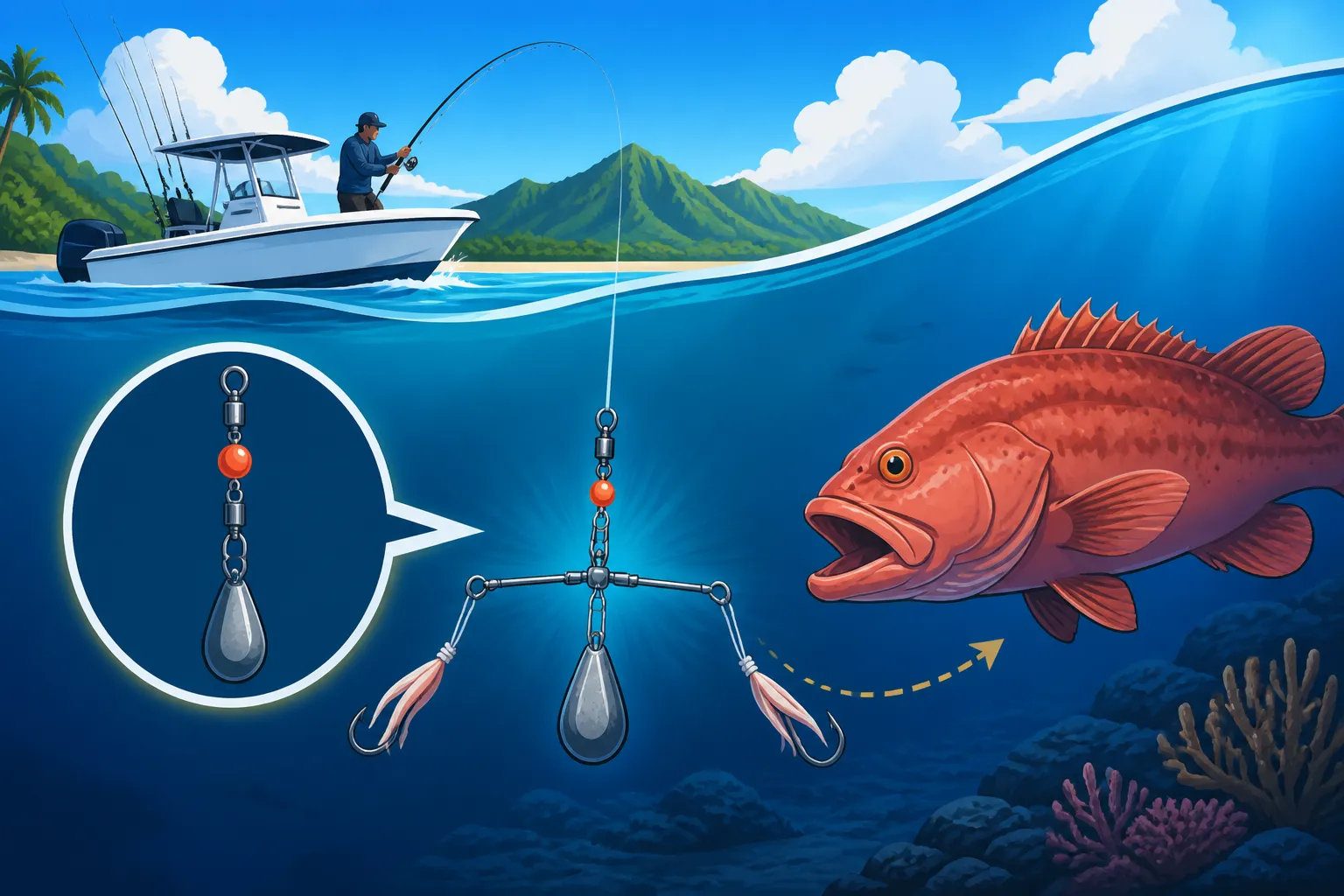
Without adequate weight, your bait will never reach the bottom in deep water, especially with current. This is often the most significant component in terms of sheer mass. You'll be using lead weights ranging from 2 to 10 pounds, sometimes even more depending on the depth and current conditions. Pyramid weights or torpedo weights are common due to their ability to sink relatively quickly and resist rolling on the bottom. Some anglers opt for cannonball weights for maximum sink rate.
The weight is typically attached to the very end of your leader, or to a dedicated dropper loop at the bottom of your rig. It's not uncommon for anglers to rig their weights with a lighter "breakaway" line, so if the weight gets snagged, you only lose the weight and not the entire rig, including hooks and potentially a fish. This sacrificial approach can save you a lot of grief and tackle in the long run.
Bait Presentation
For deep-water bottomfish, natural bait is king. Fresh cut bait or whole dead bait is generally preferred over artificial lures, though some anglers do find success with deep-jigging techniques. Popular choices include opelu (mackerel scad), squid, mackerel, or strips of skipjack tuna (aku). The key is freshness and proper presentation. The bait needs to be securely hooked to withstand the long drop and any nibbles from smaller fish, while still looking natural enough to entice the target species. Sometimes, anglers will use glow-in-the-dark beads or small LED lights just above the hooks to attract fish in the dark depths. We've got more in-depth advice on Best Bait for Opakapaka Bottomfishing and Best Bait for Onaga Deep Drop Fishing if you want to dive deeper into bait selection.
Assembling Your Deep Water Bottomfishing Rig: Step-by-Step
Now that you know the components, let's talk about how to put them together. While there are many variations, a couple of tried-and-true rigs dominate the Hawaiian deep-water bottomfishing scene: the classic ledger rig and its cousin, the chicken rig.
The Hawaiian Ledger Rig (Dropper Loop)
This is perhaps the most fundamental and widely used deep-water bottomfishing rig in Hawaii. It's simple, effective, and relatively easy to tie.
- Start with your Leader: Take a long section of your heavy leader material (e.g., 100-200 lb fluorocarbon or monofilament), typically 20-50 feet.
- Attach the Weight: At one end of your leader, tie on a heavy-duty swivel. This swivel will be where you attach your lead weight. You can use a Palomar knot or a heavy-duty Clinch knot for this. Remember the breakaway line tip if you're prone to snags.
- Create Dropper Loops: Moving up from the weight, you'll create several "dropper loops" for your hooks. The number of hooks can vary, but 3-5 is common. Space them out about 2-4 feet apart. To make a dropper loop, double your line, twist it several times, and then pass the loop through the middle of the twists. Moisten and pull tight. Make sure these loops are substantial enough to hold your snelled hook.
- Attach Snelled Hooks: Instead of tying hooks directly to the dropper loops, many anglers prefer to pre-tie their hooks to shorter, slightly lighter leader material (e.g., 80-150 lb test, 1-2 feet long) with a loop at the end. This is called "snelling" your hook. You then attach these snelled hooks to your dropper loops using a loop-to-loop connection or a robust snap swivel. This allows for quick hook changes if a hook gets damaged or you want to try a different size.
- Connect to Mainline: At the very top of your leader, tie another heavy-duty barrel or ball-bearing swivel. This is where your deep-water rig will connect to your braided mainline using your chosen knot (e.g., FG knot).
This setup allows your bait to be presented at various depths just off the bottom, covering more ground and increasing your chances of a bite.
The "Chicken Rig" or Multiple Hook Rig
Often used interchangeably with the ledger rig, the "chicken rig" generally refers to a setup where multiple hooks are tied directly to the main leader line using snood knots or dropper knots, rather than pre-made dropper loops.
- Leader Prep: Again, start with a long, heavy leader.
- Snood Knots: Instead of creating a loop and attaching a pre-snelled hook, you'll directly tie a hook to the main leader at desired intervals (2-4 feet apart) using a snood knot. The snood knot allows the hook to stand out from the main line, giving the bait more action. You can snell your hooks onto short lengths of leader and then tie these short leaders to the main leader with a knot like an offshore swivel knot or a spider hitch for ultimate strength.
- Weight Connection: The weight is still at the bottom, typically tied directly to the end of the leader or via a heavy-duty snap swivel.
- Mainline Connection: A heavy-duty swivel at the top connects to your braided mainline.
The primary difference lies in how the hooks are attached. The dropper loop method offers more flexibility for quick changes, while the snood knot method often creates a slightly cleaner profile with fewer components. Both are highly effective for deep dropping. Just remember, the exact spacing and number of hooks might need to be adjusted based on local regulations found in the Hawaii Bag and Size Limits by Species guide.
| Component | Recommended Type | Breaking Strength / Size | Purpose |
|---|---|---|---|
| Mainline | Braided Line (e.g., PowerPro, Daiwa J-Braid) | 80 – 150 lb test | Sensitivity, strength, reduced drag |
| Leader | Fluorocarbon or Heavy Monofilament | 100 – 200 lb test | Abrasion resistance, stealth, shock absorption |
| Hooks | Heavy-Gauge Circle Hooks | 12/0 – 20/0 | Jaw hooking, secure hold |
| Swivels | Heavy-Duty Barrel or Ball-Bearing Swivels | 300 – 500 lb test | Prevent line twist, strong connections |
| Weight | Lead (Pyramid, Torpedo, Cannonball) | 2 – 10+ lbs (depending on conditions) | Get bait to bottom, hold position |
| Bait | Fresh Cut Bait (Opelu, Squid, Mackerel, Aku) | Varied | Primary attractant for bottomfish |
Knot Tying Essentials for Deep Water
Strong, reliable knots are non-negotiable in deep-water bottomfishing. A poorly tied knot is a guaranteed lost fish and rig. Here are a few must-know knots:
- FG Knot: This is the gold standard for connecting braid mainline to heavy monofilament or fluorocarbon leader. It's incredibly strong, slim, and passes through rod guides smoothly. It takes practice, but it's worth mastering.
- Palomar Knot: Excellent for tying hooks or swivels to your leader. It's strong and relatively easy to tie, even with heavy line.
- Offshore Swivel Knot / Dropper Loop Knot: Crucial for creating those side loops where your snelled hooks will attach on a ledger rig. Practice making them uniform and strong.
- Crimping: For lines 200 lb test and above, crimping connections with high-quality aluminum or copper sleeves and a proper crimping tool is often stronger and more reliable than knots. Ensure you use the correct size crimp for your leader material. Again, for these specialized tools, checking on Amazon for reputable brands can be a good starting point.
Tips for Success and Troubleshooting
Even with the perfect rig, deep-water bottomfishing requires patience, skill, and an understanding of the environment. Here are some extra tips to help you succeed.
Reading the Bite and Setting the Hook
Deep-water bottomfish bites can be incredibly subtle. Because of the vast amount of line out and the lack of stretch in braid, you might feel just a slight twitch or a subtle change in the pressure on your rod tip. It won't be a jarring strike like a mahi-mahi! When you feel something, resist the urge to violently yank the rod. Remember, you're using circle hooks. Instead, simply lift the rod tip smoothly and steadily, taking up any slack. The circle hook is designed to slide into the corner of the fish's mouth as pressure is applied. A firm, steady retrieve is all you need to set the hook. This technique is often discussed in guides like Best Techniques for Deep Drop Bottomfishing.
Managing Current and Drift
Current is your biggest enemy in deep-water bottomfishing. Too much current and your line will "belly" out, taking your bait far away from the bottom and making it almost impossible to feel a bite. Pay close attention to current conditions before and during your trip. Sometimes, anchoring directly over a seamount is an option, but often you'll be drift fishing. If drifting, use your boat's engine (or even a sea anchor) to control your speed and direction, trying to match the current to keep your line as vertical as possible. This is where having plenty of weight really helps. If the current is ripping too hard, it might be a day for different fishing, or you might have to move to a more sheltered area. Keep an eye on local conditions, sometimes the Hawaii Fishing Seasons by Month can provide insights into typical current patterns.
Preventing Snags and Tackle Loss
Losing expensive tackle to unseen structure is a rite of passage in deep-water bottomfishing, but there are ways to minimize it.
- Know Your Ground: Use a good fish finder and chart plotter to identify bottom structure. If you see jagged peaks or dense coral, try to drift over or near them, not directly into them.
- "Bouncing" the Bottom: Once your weight hits the bottom, retrieve a few feet of line. You want your bait just above the bottom, not dragging on it. Periodically lower and raise your weight to "bounce" the bottom and confirm you're still in the strike zone.
- Sacrificial Weights: As mentioned earlier, rig your main weight on a lighter leader (e.g., 50-80 lb test mono) that's tied directly to the bottom swivel of your main rig. If your weight snags, that lighter leader will break before your main rig, saving your hooks and any fish already on.
- Retrieve Quickly: Once you hook a fish, try to retrieve it steadily and quickly away from the bottom to prevent it from burying itself in structure.
Gear Maintenance and Storage
Deep-water fishing is incredibly tough on your gear. Saltwater corrosion is a constant threat. After every trip:
- Rinse Thoroughly: Rinse your rods, reels, and all tackle with fresh water to remove salt.
- Inspect and Re-tie: Check all your knots, leaders, and hooks for fraying, nicks, or damage. Replace any compromised components immediately. Hooks dull quickly in deep-water environments; sharpen or replace them often.
- Lubricate: Lightly lubricate your reels as per the manufacturer's instructions.
- Store Properly: Store your rods and reels in a dry, cool place, away from direct sunlight. Having a good supply of pre-tied snelled hooks and pre-cut leader material can save valuable time on the water. You can often purchase bulk packs of quality hooks and line on Amazon, allowing you to stock up for your next adventure. Taking good care of your equipment ensures it will be ready for that next big battle from the deep.
Disclaimer
Fishing regulations in Hawaii can change. Always consult the latest rules and guidelines from the Hawaii Division of Aquatic Resources (DAR) before heading out. This guide provides general information and recommendations, but it is your responsibility to ensure compliance with all current laws and regulations, including those related to bag limits, size limits, and protected species.