How to Catch Ahi in Hawaii
The thrill of chasing ahi, Hawaii's magnificent yellowfin tuna, is a dream for many anglers, but it can also be incredibly frustrating when you're out there, the ocean feels vast, and the fish just aren't biting. It’s disheartening to invest time and effort only to come up empty-handed. This comprehensive guide is here to unravel the mysteries of how to catch ahi in Hawaii, providing you with the knowledge, techniques, and local insights needed to turn those dreams into a reality.
Understanding Ahi: Hawaii's Prized Yellowfin Tuna
Before you can hope to hook one of these powerful pelagic beauties, it's crucial to understand the fish itself. Ahi, or yellowfin tuna (Thunnus albacares), aren't just any fish; they are apex predators of the open ocean, known for their incredible speed, strength, and delectable meat. They are a staple of Hawaiian fishing, deeply ingrained in the culture and economy, and catching one feels like winning the lottery. But their migratory nature and preferred habitats make them a challenging, yet rewarding, target.
Ahi Biology and Behavior
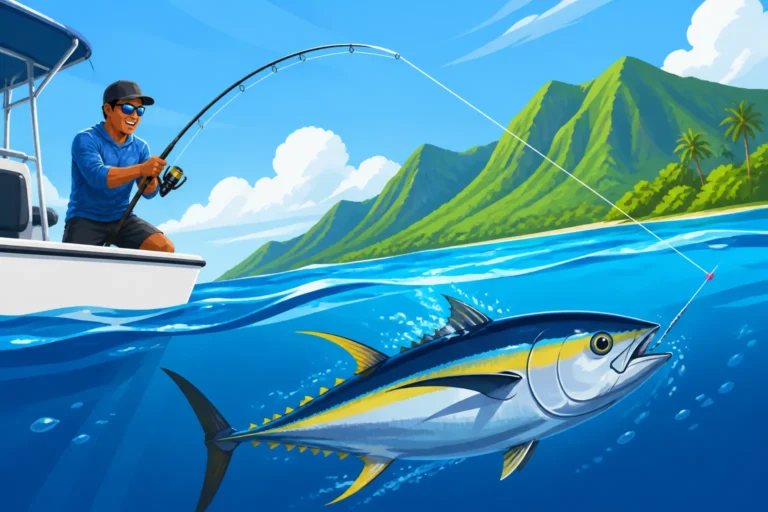
Ahi are built for speed and endurance. Their sleek, torpedo-shaped bodies, paired with a powerful caudal fin (tail), allow them to slice through the water at impressive speeds, essential for hunting their fast-moving prey. They get their "yellowfin" name from the distinctive bright yellow dorsal and anal fins, as well as the finlets that trail along their backs and bellies. These fish are warm-blooded, which means they can maintain a body temperature higher than the surrounding water, granting them a metabolic advantage in cooler deep waters and enabling them to hunt more effectively across different depths.
Their diet is varied but primarily consists of smaller schooling fish like mackerel, squid, and crustaceans. Ahi are opportunistic feeders, often keying in on whatever baitfish is most abundant in an area. This is why understanding local bait schools is paramount to finding ahi. They tend to school together, especially when actively feeding, creating a frenzied scene on the surface that can be spotted from a distance. Larger ahi, often called "cows" or "grander" ahi, are more solitary or found in smaller groups, making them even more elusive and a true test of an angler's skill. Their behavior is often tied to temperature breaks, current lines, and deep-water structures, where baitfish congregate.
Migration Patterns and Seasonal Hotspots
Ahi are highly migratory, constantly on the move across vast expanses of the Pacific Ocean. While they are present in Hawaiian waters year-round, their abundance and size can fluctuate significantly with the seasons. Generally, the warmer months, roughly from May through September, are considered prime time for larger ahi, coinciding with their peak spawning season and abundant baitfish populations. During these months, these powerful tuna move closer to the Hawaiian islands, following currents that bring rich feeding opportunities.
However, smaller "schoolie" ahi can be found throughout the year, especially around offshore FADs (Fish Aggregating Devices) and other deep-water structures. The Kona Coast of the Big Island, with its deep-water canyons and proximity to prime fishing grounds, is legendary for its consistent ahi action, especially during the summer. Maui and Oahu also have excellent ahi fishing, often around similar FADs or areas where current lines converge. Tracking the movements of these fish requires a keen understanding of oceanographic conditions, which can often be predicted by experienced captains and local knowledge. You might find it useful to check out articles like Ahi Migration Patterns Around Hawaii to get a more in-depth understanding of their movements.
Identifying Prime Ahi Habitat
Finding ahi is less about random searching and more about understanding where they should be. Ahi prefer offshore, deep water environments, typically ranging from 600 to 1,000 feet deep, but they will come to the surface to feed. The key to locating them lies in finding aggregations of baitfish, which in turn are often attracted to specific oceanic features. One of the most common and productive habitats for ahi in Hawaii are the FADs – large, often brightly colored buoys deployed by the state's Division of Aquatic Resources (DAR). These FADs act like magnets, attracting entire ecosystems of baitfish, which then draw in larger predators like ahi.
Beyond FADs, ahi can be found along current lines, which are essentially seams in the ocean where two different currents meet. These lines often concentrate plankton, baitfish, and other marine life, creating a feeding highway for tuna. Look for changes in water color, temperature, or debris floating along these lines. Underwater topography also plays a huge role; deep-water seamounts, drop-offs, and canyons create upwellings and eddies that bring nutrients to the surface, attracting bait and ultimately ahi. Savvy anglers also pay close attention to bird activity – flocks of diving seabirds are often a dead giveaway that schools of baitfish, and potentially ahi, are being pushed to the surface from below.
Essential Gear and Tackle for Ahi Fishing
Trying to land a powerful ahi with inadequate gear is like bringing a butter knife to a sword fight. These fish are renowned for their brutal strength and blistering runs, capable of stripping hundreds of yards of line in seconds. Having the right rods, reels, lines, and terminal tackle isn't just about making the catch; it's about giving yourself a fighting chance and minimizing the risk of losing a prized fish due to equipment failure. Trust me, losing a big ahi because of a snapped line or a cheap hook is a heartbreak no angler wants to experience.
Rods, Reels, and Line Selection
For ahi fishing, you're going to need heavy-duty, purpose-built gear.
- Rods: Look for conventional trolling rods that are 5.5 to 7 feet in length, rated for 50 to 80-pound test lines. These rods should have a fast to extra-fast action to handle the shock of a strike and the sustained pressure of a long fight. Graphite or composite blanks are common, offering a good balance of strength and sensitivity. You'll want a rod with a strong backbone to lift the fish and absorb its powerful headshakes. Brands like Penn, Shimano, and Accurate are popular choices among serious ahi anglers.
- Reels: Matching the rod with a high-quality conventional reel is paramount. Two-speed reels are highly favored as they allow you to switch to a lower gear ratio for increased cranking power during the toughest parts of the fight. Look for reels with smooth, powerful drag systems that can withstand sustained pressure without overheating or becoming jerky. Reels in the 50W to 80W class (like a Shimano Tiagra 50WLRSA or a Penn International VISX 50) are standard. Ensure the reel has a large line capacity, capable of holding at least 600-800 yards of 80-pound test line.
- Line: Braided line (like PowerPro or Daiwa J-Braid) is the preferred main line due to its incredible strength-to-diameter ratio and zero stretch, which provides excellent sensitivity. A common setup involves spooling the reel with 80-100 lb braided line, then adding a top shot of 80-130 lb monofilament. The mono top shot provides a bit of stretch to absorb sudden shocks, and it's less visible to the fish in clear Hawaiian waters. The length of the top shot can vary, but 100-200 yards is typical. This combination offers the best of both worlds: the strength of braid for capacity and the shock absorption of mono for fighting a powerful fish like ahi. When you're searching for these items, you can often find a great selection of high-quality gear on Amazon, making it convenient to compare different brands and models.
Terminal Tackle: Hooks, Leaders, and Swivels
The terminal tackle is the business end of your fishing setup, and any weak link here will result in a lost fish. Ahi have incredibly powerful jaws and a tendency to fight dirty, often trying to rub the line on their rough skin or the boat.
- Hooks: Heavy-duty, corrosion-resistant hooks are a must. Sizes typically range from 7/0 to 10/0 for J-hooks or 10/0 to 14/0 for circle hooks, depending on the bait or lure size. Circle hooks are highly recommended for their ability to consistently hook fish in the corner of the mouth, minimizing gut-hooking and making releases easier if you're practicing catch and release. Brands like Mustad, Owner, and Gamakatsu are reliable choices.
- Leaders: Fluorocarbon leader material is essential for ahi fishing. Its low visibility in water makes it nearly invisible to the fish, and its abrasion resistance is superior to monofilament, which is crucial when an ahi starts thrashing. Leader strength should match or exceed your main line, typically 100-200 lb test, and leader length can range from 10 to 30 feet, depending on the technique. For trolling, a longer leader might be used, while chunking might call for a shorter, more manageable length. Crimps are preferred over knots for connecting heavy leader material, ensuring maximum strength.
- Swivels: High-quality ball-bearing swivels are vital to prevent line twist, especially when trolling or drift fishing. Sizes from 300 lb to 500 lb test are common, providing reliable connection between your main line and leader, or between your leader and lure. Look for reputable brands like Spro or Sampo. Don't skimp on swivels; a cheap swivel can fail under the immense pressure of a fighting ahi.
Lures, Baits, and Chumming Strategies
This is where the art of ahi fishing truly comes into play. Ahi are opportunistic but can also be finicky, and having a variety of options for lures, baits, and chumming can make all the difference.
- Lures: For trolling, jet heads, bullet heads, and pusher lures are incredibly effective. These lures create significant commotion and bubble trails that mimic fleeing baitfish, attracting ahi from a distance. Popular colors vary, but often include green/yellow, blue/silver, black/purple, and pink. Lures from companies like Marlin Magic, Black Bart, and Mold Craft are highly regarded. Consider different sizes and shapes to see what the ahi are keying into on a particular day. Remember, the presentation is key: a well-tuned lure swimming correctly is far more appealing than a tangled mess.
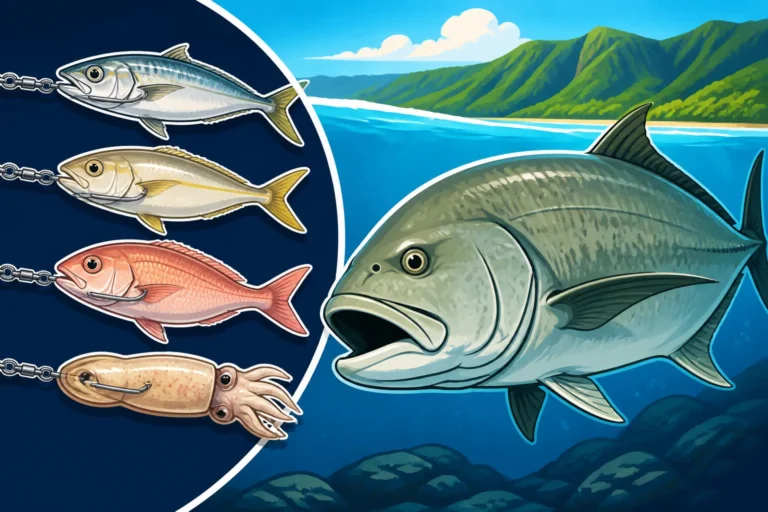
- Baits: When it comes to natural bait, fresh is always best. Live bait, such as mackerel scad (opelu), bigeye scad (akule), or skipjack tuna (aku), is often irresistible to ahi. If live bait isn't available, dead bait like bonito, squid, or mackerel can also be effective, especially when chunking or deep dropping. Rigging dead bait correctly to swim naturally is crucial. For live bait, rigging it through the nose or dorsal fin allows it to swim freely and entice a strike.
- Chumming Strategies: Chumming is a powerful technique for attracting ahi and keeping them close to the boat, particularly when they are finicky or deep. This involves continuously dispensing small pieces of bait into the water, creating a scent trail that draws fish in. Frozen blocks of chum (often made from ground fish) are effective, as are small cut pieces of opelu, aku, or even squid. The goal is to create a steady, irresistible trail without overfeeding the fish. When the ahi are shy, a well-executed chumming plan, sometimes involving a mix of cut bait and live bait, can turn a slow day into a productive one. You can read more on this technique in our guide on How to Chum for Ahi. For acquiring bait, many local tackle shops carry frozen chum blocks, and if you're looking for specific baitfish jigs or chum bags, you'll often find a wide array on Amazon.
Top Ahi Fishing Techniques in Hawaii
Hawaii's unique deep-water environment and pelagic fish populations necessitate specific techniques to effectively target ahi. It's not just about getting a line in the water; it's about understanding the nuances of how ahi feed and behave, and then presenting your bait or lure in the most enticing way possible. The local captains and seasoned anglers have honed these methods over generations, and learning them is key to success.
Trolling for Ahi
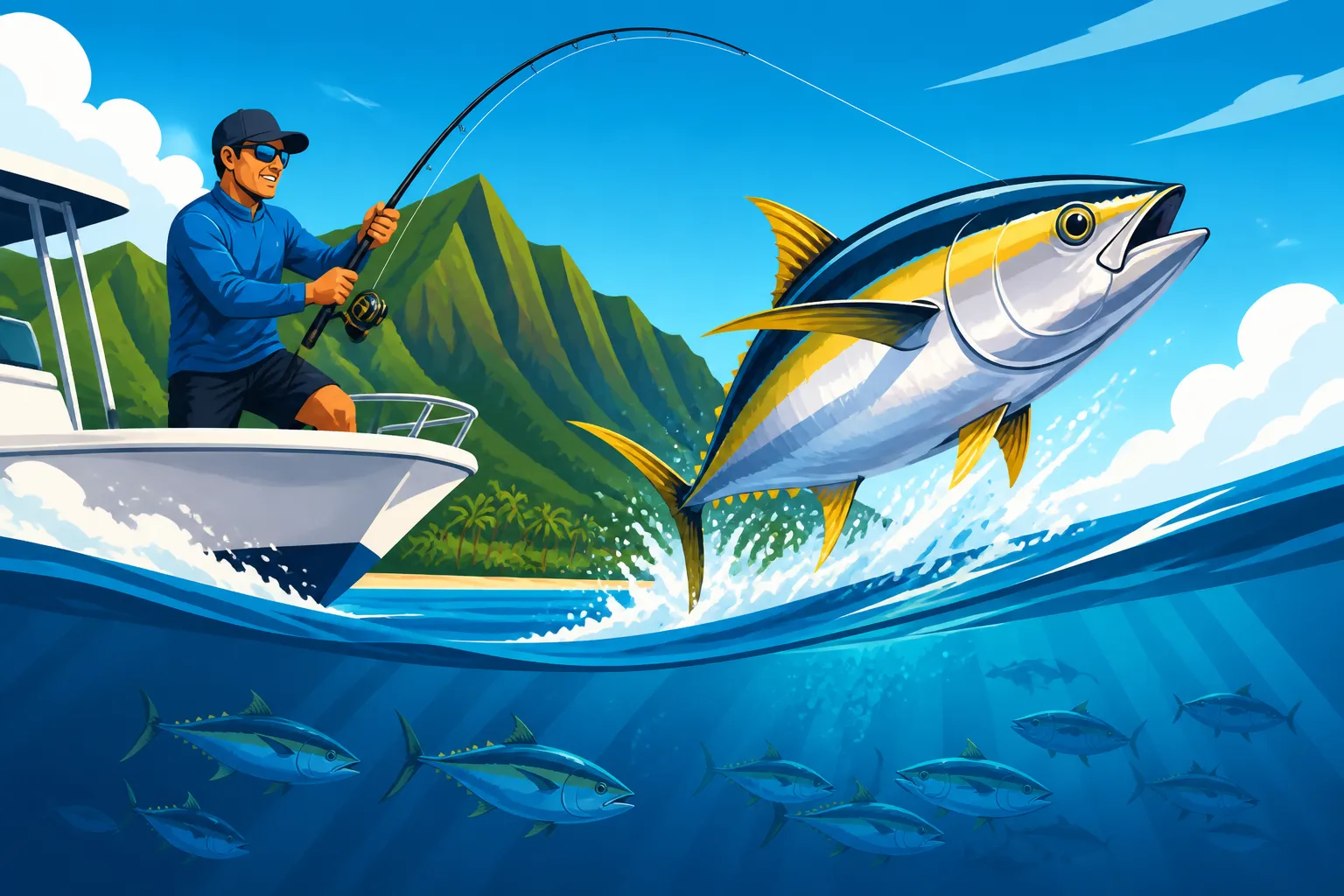
Trolling is perhaps the most iconic and widely used method for catching ahi in Hawaii. It involves dragging multiple lures or baits behind a moving boat, covering a wide area of ocean in search of active fish. The goal is to simulate a school of fleeing baitfish, triggering a predatory response from ahi.
When trolling, boat speed is critical, typically ranging from 7 to 10 knots, but often adjusted based on sea conditions and how the lures are performing. A common spread involves 4 to 6 lines, each with a different lure, set at varying distances and depths to cover the water column. Outriggers are invaluable for spreading lines wide, preventing tangles, and creating a more realistic "school" of lures. Flat lines run directly off the stern, while shotgun lines run far back, sometimes from a center rigger, to target shy fish. You might also use a dredge or teasers, which are non-hooked attractants designed to bring fish into the spread. Monitoring your spread constantly, adjusting lure positions, and watching for current lines are all part of the trolling game. A successful troll is a combination of speed, lure choice, and knowing where to run your boat. Our article on Trolling Techniques for Hawaii Pelagics provides even more detail on this method.
Chunking and Live Baiting
When ahi are located but not actively chasing trolled lures, or when you're targeting specific deep-water aggregations, chunking and live baiting can be incredibly effective. These techniques rely on attracting ahi to the boat and presenting a natural, irresistible meal.
- Chunking: This method involves anchoring (or drift-fishing) over a known ahi hotspot, often a FAD or deep-water structure, and creating a continuous chum slick. As the chum drifts away from the boat, it draws ahi closer. When fish are spotted on sonar or at the surface, a "bait" line, rigged with a hook concealed in a piece of chum, is free-spooled down the chum slick. The goal is for the bait to drift naturally, indistinguishable from the chum pieces, until an ahi takes it. This requires careful line management, often leaving the bail open with just enough pressure to prevent a bird's nest. Ahi are very sensitive to unnatural resistance, so a subtle approach is key.
- Live Baiting: This is often done in conjunction with chunking or drifting. Once ahi are attracted to the boat with chum, a live baitfish (like an opelu or aku) is bridled to a heavy-duty hook and gently put into the water. The live bait's frantic swimming is a powerful attractant. It can be fished on a flat line near the surface, or on a weighted line to target fish holding deeper. Sometimes, a "kite fishing" technique is used, where the live bait is suspended from a kite far from the boat, creating a natural, splashy presentation that can trigger explosive strikes. Fresh, lively bait is paramount; a sluggish bait will be ignored. For the best bait options, check out our guide on Best Bait for Ahi Fishing.
Vertical Jigging and Popping
These more active techniques are gaining popularity for their effectiveness and the exhilarating fight they offer, especially when targeting ahi that are holding deeper or busting on the surface.
- Vertical Jigging: This technique involves dropping heavy metal jigs (typically 200-500 grams or more, depending on depth and current) directly down to where ahi are marked on the sonar. The angler then rapidly lifts and drops the rod, imparting an erratic, wounded-baitfish action to the jig. This vigorous motion often triggers aggressive reaction strikes from ahi, particularly when they are grouped up on structure or bait balls. Specialty jigging rods and reels, designed for powerful retrieves and cushioning powerful strikes, are usually employed. It's a physically demanding technique but incredibly rewarding when you hook into a powerful ahi.
- Popping: When ahi are actively feeding on the surface, pushing baitfish into "boiling" frenzies, casting large topwater poppers or stickbaits can be incredibly exciting. These lures are designed to create explosive splashes and commotion on the surface, mimicking a struggling baitfish. Anglers cast these lures into the feeding frenzy and work them back with aggressive retrieves, pausing occasionally to entice a strike. The visual spectacle of a massive ahi exploding on a topwater lure is unforgettable. This method requires accurate casting and powerful spinning gear capable of handling heavy lures and the immense strain of a topwater strike.
Best Times and Locations for Ahi in Hawaii
One of the biggest frustrations for anglers is putting in the time without knowing if they're even in the right place at the right time. Hawaii's ocean environment is dynamic, and understanding the seasonal ebb and flow of ahi, along with their preferred haunts, is crucial for improving your chances. It's not always about luck; it's often about local knowledge and keen observation.
Seasonal Peaks and Lunar Influences
While ahi can be caught year-round in Hawaii, there are definitely periods when they are more abundant and larger. The "peak season" for larger yellowfin tuna in Hawaii generally runs from late spring through early fall, roughly May through September. During these warmer months, ocean temperatures are ideal, and baitfish populations flourish, bringing ahi closer to the islands. This is when you'll see a surge in tournament activity and charter boats targeting grander ahi. However, "schoolie" ahi, smaller but still powerful, are often available throughout the year, especially around FADs.
Lunar phases also play a significant role in ahi behavior, particularly concerning their feeding patterns and migration. Many experienced captains swear by the periods around the new moon and full moon. The stronger tidal currents associated with these phases can concentrate baitfish, leading to more aggressive feeding from ahi. On the flip side, some believe the full moon can make ahi more nocturnal and harder to catch during the day. It's not a hard and fast rule, but understanding these natural cycles can give you an edge. Checking out the Hawaii Fishing Season Dates and Closures can also give you an idea of peak times for various species, including ahi.
Key Fishing Grounds: FADs, Buoys, and Deepwater Structures
Hawaii's unique bathymetry and proactive fisheries management provide specific "hotspots" that consistently hold ahi.
- FADs (Fish Aggregating Devices): These are the absolute bread and butter for ahi fishing in Hawaii. Maintained by the Hawaii Department of Land and Natural Resources (DLNR), these buoys are strategically placed in deep water around the islands. They act as entire ecosystems, attracting plankton, then small baitfish, then larger predators like mahimahi, ono, and, of course, ahi. Many charter captains will make a circuit of FADs, trolling between them or stopping to chunk around them. Each FAD can be different; some hold fish better than others at certain times, and conditions around them can change daily.
- Buoys (Non-FADs): Beyond the official FADs, any floating debris or navigational buoy can also act as an aggregation point. While not as consistently productive as FADs, they can sometimes hold a surprise school of ahi, especially if they've been drifting for a while and accumulated marine growth.
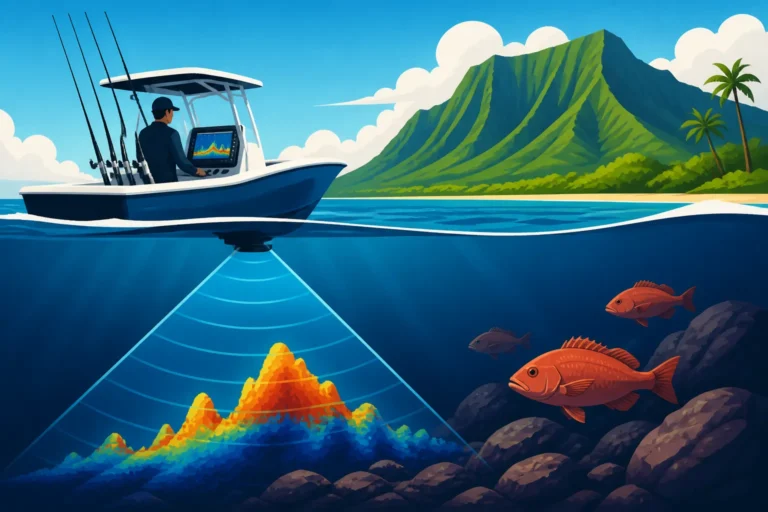
- Deepwater Structures: The Hawaiian Islands are essentially the tops of massive volcanoes, meaning there are incredible underwater mountains, seamounts, ledges, and canyons just offshore. These structures create upwellings and eddies that concentrate nutrients and baitfish, making them prime ahi habitat. The Kona coast, for example, is famous for its close-to-shore deep water, allowing anglers to target ahi within a short run from the harbor. Learning to read your sonar and understanding the underwater topography around the islands is crucial for pinpointing these natural hot spots. Check out our guide to Best Deep Sea Fishing Spots in Hawaii for more specific locations.
Reading the Ocean: Current Lines and Bird Activity
Beyond fixed structures, the dynamic nature of the ocean provides critical clues to where ahi are hunting. Learning to "read the water" is a skill developed over years, but even beginners can start observing these key indicators.
- Current Lines and Temperature Breaks: Ahi thrive where food is abundant, and current lines are often nature's conveyor belts for baitfish. Look for visible seams in the water where two currents meet, often marked by a change in water color, a line of floating debris (like leaves, logs, or even plastic), or a noticeable ripple. These lines concentrate bait, attracting ahi. Similarly, temperature breaks – where warmer and cooler water masses meet – can also be highly productive. Tuna are sensitive to temperature, and often patrol these zones looking for feeding opportunities. Your boat's fishfinder, with its temperature gauge, can be an invaluable tool for identifying these breaks.
- Bird Activity: Perhaps the most obvious and exciting sign of ahi activity is bird play. Flocks of diving seabirds like terns, boobies, and shearwaters feeding aggressively are a near-certain indicator of baitfish being pushed to the surface by predators below. When you see a "bird school" or "meatball" of bait being hammered from above and below, it's often ahi, skipjack, or mahimahi. A common tactic is to head straight for these bird schools, cautiously approaching them without spooking the fish, and then trolling lures or casting jigs/poppers into the feeding frenzy. The type of birds, their flight patterns, and how they're feeding can give clues to the size and type of fish beneath them.
Safety and Sustainable Ahi Fishing Practices
Chasing ahi in the vast Hawaiian waters is an incredible adventure, but it's vital to prioritize safety, not just for yourself and your crew, but also for the marine environment. The ocean can be unpredictable, and responsible fishing practices ensure that future generations can enjoy the same thrilling experiences. Understanding local regulations and ethical considerations is part of being a respected angler in these islands.
Essential Safety Gear and Protocols
Even on a beautiful Hawaiian day, conditions can change rapidly offshore. Being prepared for emergencies is non-negotiable.
- Required Safety Gear: Any vessel heading offshore must have essential safety equipment onboard. This includes Coast Guard-approved life jackets for everyone on board (and specifically, Hawaii life jacket rules for children are strict), visual distress signals (flares or an orange flag), sound-producing devices (horn or whistle), fire extinguishers, and a first-aid kit. A VHF radio is crucial for communication, and a GPS unit with updated charts is indispensable for navigation. For a comprehensive list, you can refer to general Hawaii Boating Laws for Anglers.
- Communication and Float Plan: Before leaving the dock, always tell someone responsible your float plan: where you're going, who's with you, and when you expect to return. This simple act can be a lifesaver if you encounter trouble. Consider carrying a personal locator beacon (PLB) or an Emergency Position Indicating Radio Beacon (EPIRB) for offshore trips, which can transmit your location to rescue authorities in an emergency.
- Weather Monitoring: Always check the marine forecast before heading out and continue monitoring it throughout your trip. Sudden squalls or changes in swell can turn a pleasant day into a dangerous one. If conditions deteriorate, don't hesitate to cut your trip short and head back to safety. It’s always better to be safe than sorry.
Understanding Bag Limits and Regulations
Hawaii has specific regulations in place to manage its valuable fisheries, including ahi. These rules are designed to ensure the sustainability of the species and prevent overfishing. Ignorance of the law is no excuse, and penalties can be severe.
- Hawaii's DLNR (Department of Land and Natural Resources): The Division of Aquatic Resources (DAR) within the DLNR is responsible for setting and enforcing these regulations. It's your responsibility as an angler to be familiar with the current rules. Always check the official DLNR website or acquire a physical copy of the regulations before you head out.
- Bag Limits and Size Restrictions: Ahi, like many other pelagic species, are subject to daily bag limits and sometimes minimum size requirements. These can change, so always ensure you have the most up-to-date information. For instance, there are specific Hawaii ahi bag limit rules that dictate how many yellowfin tuna you can keep per person per day. These limits help distribute the catch among anglers and prevent a few individuals from depleting the resource.
- Seasonal Closures and Prohibited Practices: While ahi generally don't have strict closed seasons like some reef fish, it's wise to be aware of any potential area closures or specific restrictions on gear types. For example, some Marine Life Conservation Districts (MLCDs) or Fish Replenishment Areas (FRAs) may have unique rules that impact fishing. Always consult the official regulations, perhaps by Reading the Hawaii DLNR Fishing Regulations guide.
Catch and Release vs. Harvest Best Practices
Ahi are magnificent creatures, and responsible angling involves making informed decisions about whether to keep or release your catch, and how to do so ethically.
- Catch and Release: If you plan to release an ahi, ensure you have the proper tools ready before you even hook the fish. This includes a de-hooker and line cutters. Minimize the fight time to reduce stress on the fish. Avoid bringing the fish into the boat if possible; unhook it boatside. If you must bring it aboard for a quick photo, handle it gently, supporting its body, and return it to the water quickly. Revive the fish by moving it forward through the water to allow water to flow over its gills until it can swim strongly away on its own. This helps maximize survival rates.
- Harvesting for Consumption: If you intend to keep your ahi, prioritize immediate and proper fish care to ensure the best possible quality for consumption. The goal is to cool the fish down as quickly as possible and prevent spoilage. This typically involves bleeding the fish out immediately after landing, then gutting it and packing the body cavity with ice.
- Ethical Considerations: Think about your personal consumption needs. Do you really need to keep every fish allowed by the bag limit? Practicing selective harvest, perhaps keeping only one or two fish for personal consumption and releasing the rest, is a commendable approach that contributes to the long-term health of the fishery. It's a balance between enjoying the fruits of your labor and preserving the resource for everyone.
Preparing Your Ahi Catch
Congratulations! You've successfully landed one of Hawaii's most prized fish. Now, the journey isn't over. How you handle your ahi immediately after the catch and how you prepare it for storage or consumption can dramatically impact the taste and texture of the meat. A properly cared-for ahi is a culinary delight, while a neglected one can be a huge disappointment.
On-Boat Fish Care for Quality Ahi
The moment an ahi hits the deck, the clock starts ticking for maintaining its quality. Tuna are warm-blooded, and their core temperature needs to be reduced rapidly to prevent lactic acid buildup and spoilage.
- Bleeding: This is the absolute first step. Immediately after landing, dispatch the fish humanely (a sharp blow to the head or brain spike) and then bleed it thoroughly. A quick way is to make a deep cut across the throat (behind the pectoral fins) and sever the main arteries, or cut the caudal artery near the tail. Let the fish bleed out in a bucket of seawater or hang it over the side of the boat for several minutes. This removes blood from the flesh, which significantly improves taste and extends shelf life.
- Ikejime (Optional but Recommended): For superior quality, especially if you're aiming for sushi-grade fish, consider performing ikejime. This involves spiking the fish's brain to induce immediate death, which minimizes stress and lactic acid production. Then, a wire is often inserted down the spinal column to destroy nerve endings. This process can dramatically enhance the texture and flavor of the meat.
- Gutting and Icing: Once bled, gut the fish immediately. Remove all internal organs and gills. Rinse the body cavity with seawater to clean it thoroughly. Then, pack the body cavity and surround the entire fish generously with ice in a large cooler or fish bag. The goal is to bring the core temperature down to around 35-40°F (1.7-4.4°C) as quickly as possible. Don't skimp on ice; a good rule of thumb is twice as much ice as fish by weight. This rigorous care ensures that when you get back to shore, you have firm, delicious, sushi-grade ahi.
Filleting and Storage Tips
Once back at the dock, the next critical step is proper filleting and storage.
- Filleting: Ahi are large fish, and filleting them requires a sharp, long knife and a sturdy cutting surface. There are many excellent tutorials online, but generally, you'll start by making a cut behind the gills and pectoral fin, running down towards the tail, then along the backbone. You'll typically yield four large, boneless loins. The dark red "blood line" down the center of each loin should be trimmed away as it has a strong flavor and can spoil quickly. For smaller ahi, you might get smaller loins, but the process is similar.
- Storage for Fresh Consumption: For immediate consumption, wrap the cleaned, bloodline-removed loins tightly in plastic wrap, then in a layer of paper towels, and place them on a bed of ice in a sealed container in the coldest part of your refrigerator. Change the paper towels daily. Properly stored, fresh ahi can last 2-3 days while maintaining excellent quality.
- Freezing for Longer Storage: For longer storage, vacuum sealing is the gold standard. Cut the loins into manageable portions, wrap them tightly in plastic wrap (to prevent freezer burn), then vacuum seal them. If you don't have a vacuum sealer, wrap them very tightly in multiple layers of plastic wrap and then foil, trying to eliminate as much air as possible. Freeze them rapidly at the lowest possible temperature. Properly frozen ahi can last for several months. When ready to use, thaw slowly in the refrigerator overnight.
Delicious Ways to Enjoy Your Ahi
The beauty of ahi is its versatility. From raw preparations to seared steaks, there's a delicious way to enjoy every bit of your catch.
- Poke: This is Hawaii's quintessential raw fish dish, and ahi is the star. Cubed ahi, mixed with soy sauce, sesame oil, limu (seaweed), Maui onions, and sometimes chili flakes, makes for an incredibly fresh and flavorful appetizer or meal. There are countless variations, so feel free to experiment with your favorite seasonings.
- Sushi and Sashimi: For truly fresh, properly handled ahi, eating it raw as sashimi or in sushi rolls is an unparalleled experience. The delicate, buttery texture and clean flavor are best appreciated with minimal preparation. A little soy sauce and wasabi are all you need.
- Seared Ahi Steaks: Ahi steaks, quickly seared on a hot pan or grill, leaving the center rare, are a favorite preparation. Season simply with salt and pepper, or a light rub of spices. The key is high heat and short cooking times to avoid overcooking and drying out the fish.
- Grilled and Baked: For those who prefer their fish cooked through, ahi is also excellent grilled or baked. Marinate steaks in a teriyaki sauce, lemon-garlic butter, or a spicy glaze, and cook until just opaque. Be mindful not to overcook, as ahi can become dry if cooked too long.
- Smoked Ahi: Smoking ahi loins can create a deeply flavorful, flaky product that's fantastic in salads, dips, or on crackers. This process adds another dimension of flavor and preserves the fish for longer enjoyment.
Disclaimer
Please remember that fishing regulations in Hawaii, including bag limits and size restrictions, can change. It is always your responsibility to consult the most current rules and regulations published by the Hawaii Department of Land and Natural Resources (DLNR) before engaging in any fishing activity. This article is intended for informational purposes only and should not be considered legal advice.