Best whole bait for ulua sliding rigs
There's nothing quite like the heart-pounding anticipation of targeting a trophy ulua, only to find your bait isn't quite hitting the mark. It can be incredibly frustrating to put in all that effort, from scouting the perfect rocky point to meticulously setting up your gear, only to have the biggest prize elude you. But often, the secret to success lies not just in your technique, but in choosing the absolute best whole bait for your sliding rig. This guide will dive deep into the most effective options, helping you present an irresistible meal to those powerful Hawaiian giants.
Understanding Ulua and the Sliding Rig Technique
Landing a formidable ulua, also known as Giant Trevally, is a badge of honor for any angler in Hawaii. These powerful predators are known for their incredible strength, blistering runs, and relentless fight, making them one of the most sought-after catches from the shorelines of our islands. To consistently hook into these giants, however, you need more than just luck; you need the right strategy, and that almost always begins with the sliding rig.
Why Ulua are a Prized Catch in Hawaii
Ulua aren't just big fish; they're an experience. From the smallest papio (juvenile ulua) to the massive granders that can weigh well over a hundred pounds, these fish demand respect. They inhabit a wide range of habitats, from shallow reef flats to deep drop-offs near shore, constantly on the prowl for their next meal. Their sheer power, especially when hooked from the shore on heavy tackle, is legendary. Anglers dedicate countless hours, often through the night, to targeting these apex predators. The thrill of feeling that initial smash, the screaming drag, and the grueling battle that follows is what keeps us coming back for more. It's not just about the fish; it's about the challenge, the connection to the ocean, and the deep satisfaction of outsmarting one of Hawaii's most magnificent gamefish.
The Mechanics of a Sliding Rig
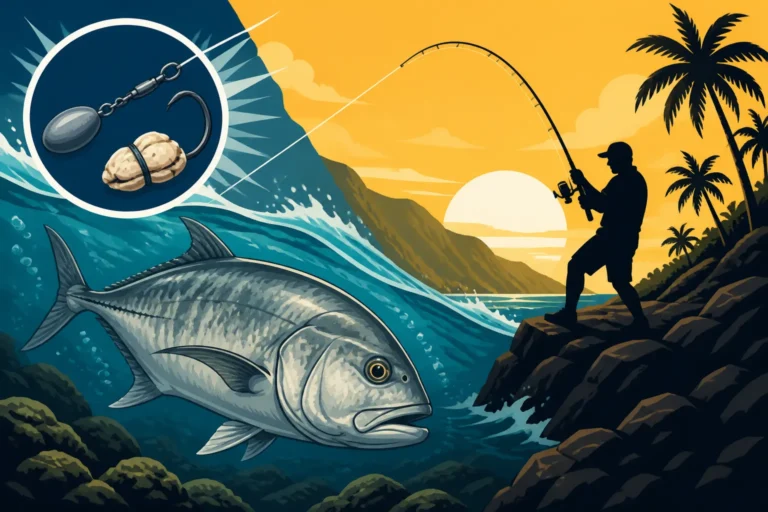
The sliding rig is a cornerstone technique for ulua fishing because it allows your bait to behave as naturally as possible, even in strong currents or over rough bottoms. Unlike a fixed sinker rig where the weight is attached directly to the main line near the hook, a sliding rig employs a sinker that can move freely up and down the main line or a heavy leader. This setup typically involves a heavy lead sinker (often a pyramid or surf sinker, sometimes weighing many ounces) threaded onto your main line, followed by a large swivel that acts as a stop for the sinker. Below the swivel, a robust leader, usually made of heavy monofilament or fluorocarbon, extends to your hook.
The genius of this setup is twofold. First, when an ulua takes the bait, they feel minimal resistance because the line can still slide through the sinker. This means they are less likely to drop the bait, giving you a better chance to set the hook. Second, it allows your live or dead whole bait to drift or swim more naturally in the current, mimicking an injured or free-swimming fish, which is incredibly enticing to a cruising ulua. The sinker holds your bait in the strike zone, whether it's on the bottom or suspended just above it, while the bait itself can move freely, creating a very convincing presentation. When you're dealing with the powerful strikes of a species like ulua, having a rig that minimizes suspicion is absolutely critical for success.
Top Whole Baits for Ulua Sliding Rigs
Choosing the right bait for your ulua sliding rig is like selecting the perfect tool for a specialized job – it makes all the difference. While ulua are opportunistic feeders, some baits stand out above the rest for their effectiveness, attracting these giants with their scent, size, and natural movement.
Oama (Juvenile Goatfish): The Gold Standard
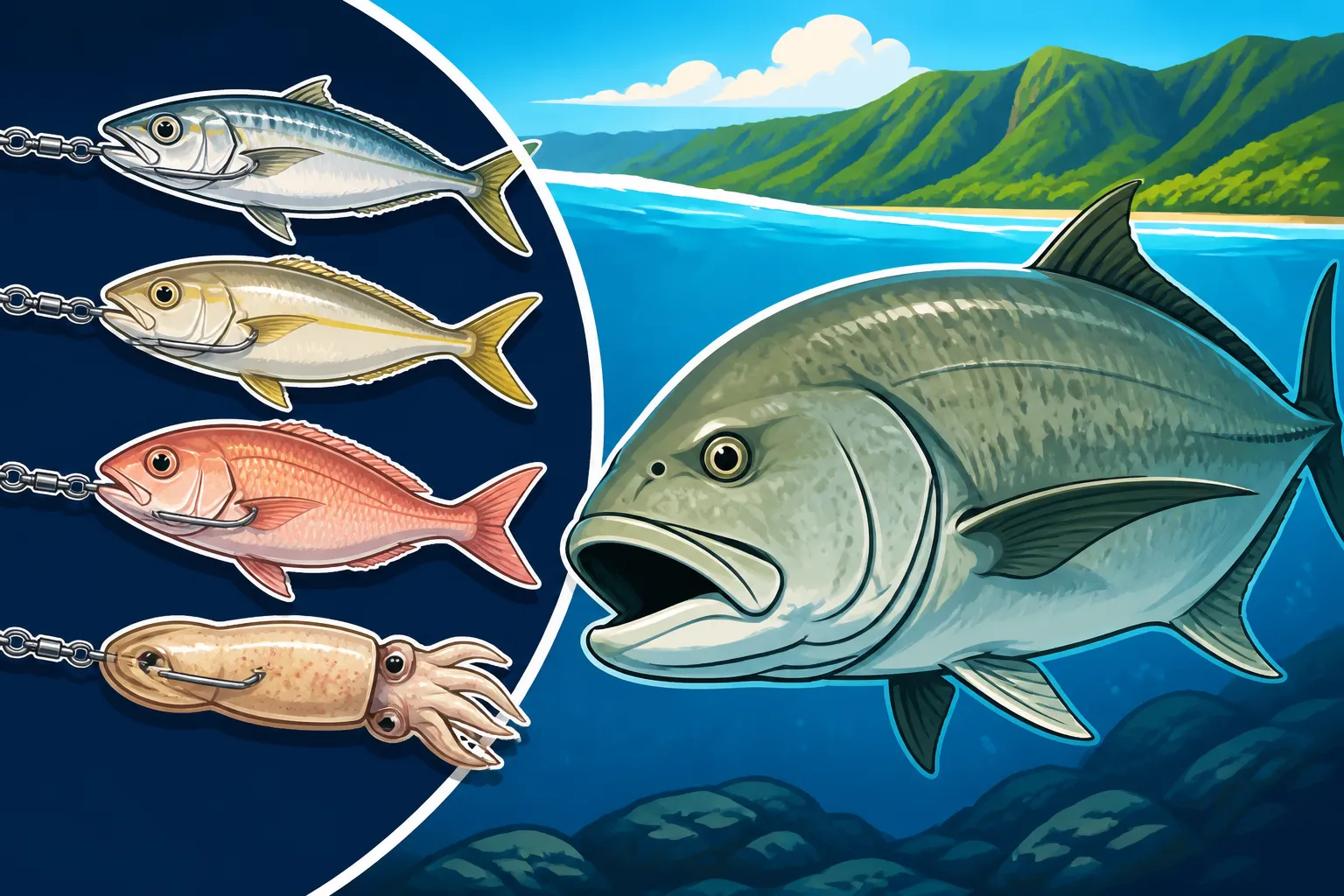
When it comes to live bait for ulua, oama are often considered the undisputed champions. These small, silvery goatfish are abundant in Hawaii's shallow reef flats and nearshore waters, making them a natural food source for ulua. Their lively movements and shimmering scales make them irresistible to cruising predators. The best way to get oama is to catch them yourself using small hooks, nets, or even by hand in shallow pools. They require careful handling and a well-aerated bait tank to keep them lively.
Once you have a healthy supply, rigging them correctly on a sliding rig is crucial. A single, strong hook through the nose or upper lip allows them to swim naturally and stay alive longer. The frantic, darting movements of a live oama are a powerful attractant, sending vibrations through the water that ulua can't ignore. If you're serious about landing a trophy, investing the time to gather and maintain live oama is well worth the effort. You might even find specialized oama fishing gear, like small bait hooks or aerators, readily available on Amazon.
Akule (Bigeye Scad): A Reliable Performer
Akule are another phenomenal whole bait choice for ulua, especially when you're looking for something that offers a strong scent trail and a bit more resilience than delicate oama. These oily, schooling fish are a staple in the Hawaiian food chain, and ulua absolutely devour them. You can often find akule by casting a net in harbors or near points where schools are known to aggregate, or by purchasing them frozen from local tackle shops. While live akule are fantastic, even fresh dead akule can be incredibly effective due to their rich scent.
For a sliding rig, a whole akule can be rigged through the eyes or the nose, ensuring it stays securely on the hook during long casts and in strong currents. If using a dead akule, you might consider making a few strategic cuts along its body to release more of that enticing oil and scent into the water. The size of the akule should match the size of the ulua you're targeting; larger akule for larger ulua, naturally. Always check Hawaii Akule Net Fishing Rules to ensure your methods comply with local regulations.
Opelu (Mackerel Scad): The Live Bait King
Opelu are another top-tier live bait, often vying with akule for the "live bait king" title in Hawaii. These streamlined, fast-swimming scad are highly energetic and, when hooked on a sliding rig, they put on a spectacular show that screams "easy meal" to any nearby ulua. Like akule, opelu can be caught using sabiki rigs or small nets, often found congregating in deeper harbor areas or near offshore FADs. Keeping them alive and active in a bait tank is paramount, as their natural vigor is a huge part of their appeal.
Rigging a live opelu is similar to oama or akule: a single stout hook through the nose or upper lip ensures maximum natural movement and longevity. Their strong swimming action, combined with their reflective scales, makes them an irresistible target for ulua. They're especially effective when fishing deeper waters or areas with stronger currents where their robust swimming can cover more ground and attract attention. To ensure you're fishing legally, be sure to review Hawaii Opelu Harvest Limits and Size Rules.
Other Effective Whole Baits
While oama, akule, and opelu are often the go-to choices, resourceful anglers know that other whole baits can also be incredibly effective, especially when your primary options are scarce.
- Small Moi (Pacific Threadfin): If you can get your hands on legal-sized juvenile moi, they make exceptional ulua bait. Moi have a similar profile and lively action to oama, and ulua readily feed on them. However, be mindful of Hawaii Moi Closed Season, Explained and Hawaii Moi Minimum Size Limit, as moi are a regulated and highly prized food fish.
- Hage (Triggerfish): Various species of triggerfish, often considered "trash fish" by some, can actually make surprisingly good dead bait for ulua, particularly when cut into chunks or used whole if they are small enough. Their tough skin can help them stay on the hook longer.
- Small Papio (Juvenile Trevally): In some areas, small papio (under legal ulua size) can be used as live bait if caught specifically for that purpose and legal to possess. Ulua are cannibals, and a struggling papio is a prime target. Always ensure you understand Hawaii Papio and Ulua Size Rules before using them as bait.
- Frozen Squid or Mackerel: While not as effective as fresh live bait, in a pinch, a large whole frozen squid or a defrosted whole mackerel can still get the job done. These rely heavily on scent, so a few cuts to release juices can help. You can often buy quality frozen baits in bulk from local tackle shops or even larger boxes of frozen squid online through retailers like
Amazon.
Preparing and Presenting Your Whole Bait
The effectiveness of your whole bait isn't just about what you choose; it's also about how you prepare it and present it to the ulua. A perfectly rigged, lively bait vastly increases your chances of a successful hook-up.
Sourcing and Keeping Bait Fresh
The golden rule for ulua fishing with whole bait is fresh is best, live is king. For the absolute best results, live bait is almost always preferred. Sourcing live bait often involves waking up before dawn to cast net for akule or opelu in local harbors, or spending time in shallow waters carefully hooking oama. Having the right tools, such as a sturdy cast net, is essential, and you can find a variety of sizes and mesh types available from fishing suppliers, including those on Amazon.
Once acquired, keeping your bait lively is critical. This means having a quality bait tank with excellent aeration and circulation. A good bait tank will have a reliable pump and filtration system to keep the water cool, clean, and oxygenated. Avoid overcrowding your tank, and if you're transporting bait, minimize temperature fluctuations and handle them as little as possible. For dead bait, ensuring it's as fresh as possible (preferably never frozen, but if frozen, thawed slowly and only once) and kept on ice until immediately before use will maximize its appeal.
Rigging Your Whole Bait for Maximum Appeal
Properly rigging your whole bait ensures it looks natural, swims correctly (if live), and stays on the hook through powerful casts and strong currents. For live baits like oama, akule, or opelu, a single, strong circle hook (size 10/0 to 16/0, depending on bait and target ulua size) is typically preferred.
There are a few common rigging techniques:
- Lip or Nose Hooking: This is the simplest and often most effective for live baits. Pass the hook through both lips from the bottom up, or through the cartilage just above the upper lip. This allows the bait to swim freely and stay alive for a long time. It also presents a good hook-up angle when an ulua strikes.
- Bridle Rigging: For larger live baits, a bridle rig is excellent. This involves using a small rubber band or floss to secure the hook to the bait's nose or eye socket, allowing the hook to hang freely alongside the bait. This method ensures the hook is fully exposed for a solid hook-up, and the bait remains lively. You can find specialized bridle rigging needles and bands on
Amazonto make this easier. - Through the Eye/Gill Plate: For dead baits like akule or moi, you can pass the hook through one eye socket and out the other, or thread it through the gill plate and out the mouth. This keeps the bait straight for casting and helps it present naturally in the current.
- Tail Hooking (less common for sliding rigs): Sometimes, for very large live baits, hooking through the base of the tail can entice a strike by making the bait appear injured. However, this method can also kill the bait quicker and make casting more challenging.
The goal is always to make your bait look as natural and appealing as possible. A poorly rigged bait will spin unnaturally in the current or quickly die, reducing its effectiveness significantly.
Factors Influencing Bait Choice
Beyond just the species of bait, several environmental and situational factors should influence your ultimate choice:
- Water Conditions: In clear, calm waters, very lively, natural-looking baits like oama or opelu are often best. In murky or rougher water, a scent-heavy bait like akule, possibly with some strategic cuts, can be more effective at attracting fish that rely more on smell than sight.
- Time of Day: Ulua are often most active during periods of low light – dawn, dusk, and especially throughout the night. During these times, their senses of smell and vibration are heightened, making live, struggling baits or oily dead baits particularly effective. For night fishing, the silhouette of a larger bait can also be a key factor. If you're fishing Night Fishing for Ulua in Hawaii, consider how your bait will appear in the dark.
- Fishing Location: Are you fishing over a sandy bottom, a rocky reef, or a deep drop-off? The type of bait you use might depend on what natural prey is most abundant in that specific area. For example, if you're fishing a spot known for schools of akule, using akule as bait makes perfect sense. Similarly, if you're fishing a shallow flat where oama are plentiful, those would be a prime choice.
- Current and Swell: Strong currents can kill delicate live baits quickly or cause them to spin unnaturally. More robust live baits like opelu or even fresh dead baits rigged to minimize spin might be better in these conditions. When there's a big swell, ulua often cruise closer to shore, and a well-presented whole bait can be irresistible. Consider how to adapt your technique to How to catch ulua during a big surf swell.
Tips for Success with Ulua Sliding Rigs
Beyond just picking the right bait and rigging it properly, there are several nuances that can elevate your ulua sliding rig game from merely hopeful to consistently successful.
The Importance of Freshness and Liveliness
We've touched on this already, but it bears repeating: live and fresh bait is critical. An ulua is an apex predator, and they are incredibly perceptive. A struggling, vibrant live bait fish emits distress signals, vibrates enticingly, and generally looks like an easy meal. A sickly or dead bait, while still capable of drawing a bite with its scent, lacks that crucial element of lifelike movement. If your live bait starts looking sluggish, it might be time to replace it. Likewise, if using dead bait, ensure it has been kept on ice and is as fresh as possible right up until the moment you cast it out. The oilier the bait, the better the scent trail it will leave, which can be a huge advantage.
Reading the Conditions
Understanding your fishing environment is just as important as your bait choice. Ulua activity is heavily influenced by factors like tide, current, and moon phase. Often, the incoming or outgoing tide can create advantageous currents that funnel baitfish past your fishing spot, making ulua more active. New moon and full moon phases, with their stronger tidal movements, are also often favored by ulua anglers.
Pay attention to how the current is moving your bait. A sliding rig allows the bait to drift naturally, but if the current is too strong, it can kill your live bait or cause dead bait to tumble unnaturally. Adjust your sinker weight accordingly to ensure your bait stays in the strike zone without being pinned to the bottom or swept away too quickly. Knowledge of the Best time of day to catch ulua often correlates directly with optimal tidal and light conditions.
Gear Considerations for Heavy Hitters
Targeting ulua with a sliding rig isn't a job for light tackle. These fish are built for brute strength, and you need gear that can withstand their powerful runs and head shakes.
- Rod: Look for heavy-action surf rods, often 10-14 feet long, designed for casting heavy weights and fighting large fish. A robust backbone is essential to turn an ulua away from structure. You can learn more about choosing the right setup in Best rod setup for surfcasting ulua.
- Reel: A large, powerful spinning reel or conventional reel with a strong drag system and high line capacity is a must. Ensure it's spooled with heavy braided line, typically 80-150 lb test, for maximum strength and casting distance.
- Leader: Given the ulua's powerful jaws and abrasive fighting style around rocks, a heavy monofilament or fluorocarbon leader is non-negotiable. Many anglers use 150-300 lb test leader material to prevent bite-offs or abrasion. For detailed advice, check out How thick a leader you need for ulua fishing.
- Hooks: Use only the strongest, sharpest circle hooks in appropriate sizes (10/0 to 16/0 for most whole baits) to ensure solid hook-ups and minimize gut-hooking.
- Sinker: Match your sinker weight to the conditions. You might need anywhere from 6 oz to over 16 oz in strong currents or heavy surf to hold your bait in place.
Investing in quality gear is not just about catching fish; it's about having the confidence that your setup can handle the immense power of a Hawaiian ulua when that long-awaited strike finally comes.
| Bait Type | Pros | Cons | Best Use |
|---|---|---|---|
| Oama | Highly natural, irresistible movement | Delicate, hard to keep alive, seasonal | Clear water, calm conditions, trophy hunting |
| Akule | Oily scent, durable, strong swimmer | Can be hard to catch/buy live, prone to tangles | All conditions, day or night, good all-rounder |
| Opelu | Very lively, great visibility, strong | Can be hard to catch/buy live, fast swimmers | Deeper water, strong currents, active ulua |
| Small Moi | Natural ulua prey, good profile | Heavily regulated, difficult to acquire | Specialized, specific regulatory knowledge |
| Hage | Tough skin, good scent (when cut) | Not as natural movement, relies on scent | Dead bait, when other options are scarce |
| Frozen Squid | Easy to acquire, stays on hook well | Lacks natural movement, less potent scent | Last resort, when live bait is impossible |
Disclaimer
This article is for general informational purposes only and does not constitute professional advice. Laws, prices and regulations vary by location and change over time. Consult a qualified professional for guidance on your specific situation.