Hawaii akule net fishing rules
Navigating the specific rules and regulations around fishing in Hawaii can feel like trying to untangle a particularly stubborn fishing knot, especially when it comes to traditional methods like net fishing for akule. Many anglers, both seasoned kama'aina and eager visitors, find themselves scratching their heads, wondering exactly what kind of net they can use, where they can use it, and when. This guide is here to cut through that confusion, giving you a clear, comprehensive breakdown of Hawaii's akule net fishing rules so you can enjoy the ocean's bounty responsibly and legally.
The Allure and Importance of Akule Fishing in Hawaii
Akule, also known as bigeye scad, are a cornerstone of Hawaii's nearshore fisheries, deeply intertwined with local culture and cuisine. These schooling fish are not just a favorite among recreational anglers; they're also a vital food source and a testament to the islands' rich marine ecosystem. Understanding their significance helps us appreciate why their harvest is carefully managed.
Why Akule are a Prized Catch
Akule are truly special. They're found in vast, shimmering schools close to shore, making them accessible to many. For generations, catching akule has been a community affair, with families and friends working together to bring in the day's catch, often shared among neighbors. Their firm, flavorful meat is highly sought after for grilling, frying, or preparing as sashimi. Beyond the plate, akule play a crucial role as a baitfish for larger pelagic species like marlin and tuna, making them indirectly important to the sportfishing industry as well. When you’re out on the water, seeing a school of akule boil on the surface is an electrifying experience, a vibrant display of Hawaii’s marine life.
Traditional and Modern Akule Net Fishing
Net fishing for akule in Hawaii has a long and storied history, predating Western contact. Ancient Hawaiians developed sophisticated techniques using expertly woven nets, demonstrating a profound understanding of ocean currents and fish behavior. These traditional methods, often involving large groups of people surrounding a school of fish with a seine net, were both efficient and sustainable, guided by deep-rooted respect for the ocean, or "malama ke kai."
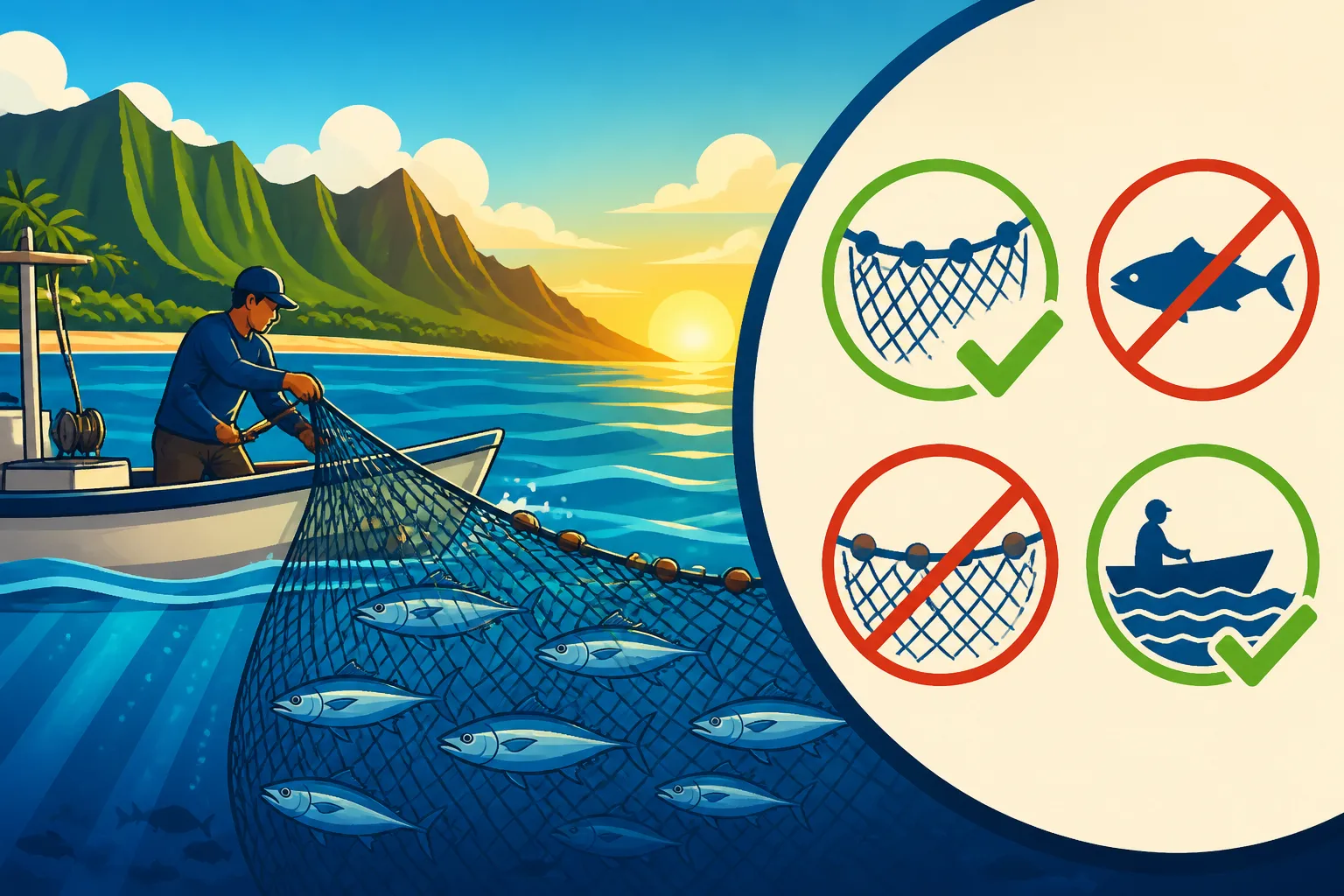
Fast forward to today, and while the spirit of community fishing remains, the tools and regulations have evolved considerably. Modern akule net fishing still employs methods like throw nets (also known as cast nets) and surround nets (similar to traditional seine nets), but the gear itself is often made of synthetic materials. This shift, combined with increasing fishing pressure, necessitated the implementation of specific rules by the Hawaii Department of Land and Natural Resources (DLNR) Division of Aquatic Resources (DAR). These regulations aim to preserve akule stocks for future generations, ensuring that this cherished resource remains abundant. It's a delicate balance between honoring tradition and ensuring ecological health, and it's a balance we all have a part in upholding.
Decoding Hawaii's Akule Net Fishing Regulations
Hawaii's fishing regulations can sometimes feel like a complex puzzle, with different rules applying to different species, locations, and gear types. For akule net fishing, it’s not just about getting the fish; it’s about understanding the specific parameters set by the state to protect this valuable resource. Ignoring these rules can lead to serious consequences, so let's dive into the specifics.
Net Specifications and Gear Restrictions
When it comes to akule net fishing, the type of net you use and its specifications are paramount. Not just any net will do, and these rules are designed to prevent overfishing and minimize harm to non-target species.
- Throw Nets (Cast Nets): These are a popular choice for recreational akule fishing from shore or a small boat. The key restriction here often revolves around the mesh size. Generally, a minimum mesh size of two inches stretched is required for throw nets. This allows smaller, juvenile fish to escape, ensuring they have a chance to grow and reproduce. There may also be restrictions on the overall diameter of the throw net, typically not exceeding 10 feet in radius (20 feet in diameter) when fully deployed. It’s important to always double-check the latest regulations because these details can be updated. You can find a good selection of compliant throw nets on Amazon, but always verify the mesh size against current DLNR rules before purchasing.
- Surround Nets (Wai Nets/Bag Nets): These are larger nets used to encircle a school of fish. These are typically used in commercial operations or by experienced fishing groups. For surround nets, the regulations become even more specific. There are often maximum length and depth restrictions. For instance, a common rule is that a surround net (or any similar type of net) cannot exceed 150 feet in length and 10 feet in depth, or 100 feet in length and 20 feet in depth, depending on the specific application or area. The mesh size for surround nets also typically follows the two-inch stretched minimum. The goal is to allow larger, more sustainable catches while still protecting the overall fish population and preventing the capture of undersized akule or other species.
- Drag Nets (Hukilau Nets): While historically used, drag nets (nets pulled through the water from shore) are heavily restricted or outright prohibited in many areas due to their potential to damage fragile reef ecosystems and indiscriminately capture marine life. Always consult the most current Hawaii Net Fishing Restricted Areas before considering any form of drag netting.
It's crucial to remember that these mesh sizes and dimensions are for recreational net fishing for akule. Commercial fishing often has different, and sometimes more stringent, requirements and permits. The DLNR's detailed brochures, which you can often find by searching for the Hawaii DLNR fishing regulations PDF, are an invaluable resource for precise measurements and updated information.
Time and Area Specific Restrictions
Just knowing what kind of net to use isn't enough; you also need to know when and where you can deploy it. Hawaii has a strong commitment to marine conservation, which means certain areas and times are off-limits or have stricter rules for net fishing.
- Marine Life Conservation Districts (MLCDs): These are designated areas established to conserve and replenish marine resources. Net fishing, and often all forms of fishing, are strictly prohibited within MLCDs. Famous examples include Hanauma Bay on Oahu and Kealakekua Bay on the Big Island. Attempting to net fish in an MLCD can lead to significant penalties, including hefty fines and confiscation of your gear. It is absolutely vital to know the boundaries of these areas. For a deeper dive into these protected zones, check out Hawaii Marine Life Conservation Districts, Explained.
- Fish Replenishment Areas (FRAs): Primarily found along the Kona Coast of the Big Island, these areas are designed to protect and enhance fish populations, especially certain bottomfish and reef fish. While some FRAs may allow limited forms of fishing, net fishing is often restricted or regulated to specific types and times. Understanding the Hawaii Fish Replenishment Areas in West Hawaii is crucial if you plan to fish in those waters.
- Time of Day Restrictions: For certain types of nets, like throw nets, there might not be explicit time-of-day restrictions for recreational use, but for larger commercial-style netting operations, there could be rules to prevent night fishing or fishing during specific tidal conditions that could lead to excessive catch or bycatch. Always err on the side of caution and check for any localized ordinances.
- Species-Specific Closures: While akule typically don't have a specific closed season like some other species (e.g., moi), it's always good practice to be aware of the Hawaii Fishing Season Dates and Closures for other fish you might encounter. Incidental catch of protected or out-of-season species should be immediately released unharmed.
The general principle is that if you're unsure, it's best to refrain until you can confirm the legality. Local knowledge is invaluable here, so don't hesitate to ask experienced local anglers or consult the DLNR directly.
Catch and Species Limitations
When fishing with nets, especially for schooling fish like akule, it's easy to catch more than you intend or even accidentally capture non-target species. While akule themselves generally don't have a recreational bag limit or minimum size for net fishing (though commercial limits do exist), there are overarching principles you need to follow regarding what you catch.
- No Bag Limits (Recreational Akule): For recreational anglers using nets for akule, there isn't typically a specific daily bag limit set by the state. This doesn't mean you should take every fish in the ocean. The spirit of sustainable fishing encourages taking only what you need. However, commercial akule fishing does have reporting requirements and can have limits based on permits.
- Incidental Catch: It's inevitable that when you cast a net for akule, you might unintentionally catch other species. If you catch any fish that are regulated by Hawaii Bag and Size Limits by Species (e.g., papio, ulua, uhu, moi), or if you catch any protected or endangered species, they must be released immediately and unharmed. This is particularly important for juvenile fish or species whose seasons are closed. Make sure your net mesh size is large enough to allow smaller non-target fish to escape.
- Protected Species: Hawaii is home to many protected marine animals, including sea turtles, Hawaiian monk seals, and various species of sharks and rays. If any of these animals become entangled in your net, you are legally obligated to release them as quickly and safely as possible without causing further harm. Know the Hawaii turtle and monk seal proximity rules for anglers to ensure you maintain a respectful distance. Intentional harassment or harming of protected species carries severe federal penalties.
- Invasive Species: On the flip side, if you accidentally catch invasive species like taape or roi, there are often no limits on their harvest, and in some cases, anglers are encouraged to remove them. Be familiar with Hawaii taape and roi invasive species harvest rules.
Responsible net fishing means being aware of the entire ecosystem around you, not just the akule you're targeting. Always be prepared to release unwanted or illegal catch quickly and gently.
Licensing and Permits for Akule Net Fishing
Understanding the regulations around nets is one thing, but knowing whether you need a license or permit to even use that net for akule is another. This is where many people get confused, as Hawaii's system is a bit unique compared to mainland states.
Recreational vs. Commercial Net Fishing
The distinction between recreational and commercial fishing is probably the most critical factor in determining your licensing needs for akule net fishing in Hawaii.
- Recreational Ocean Fishing (General Rule): This is often the biggest surprise for visitors and even some newer residents. For most recreational ocean fishing activities in Hawaii, including hook-and-line fishing and often throw-net fishing for akule for personal consumption, Hawaii residents generally do NOT need a marine fishing license. This exemption is a longstanding tradition, rooted in the historical practice of subsistence fishing. So, if you're a Hawaii resident casting a throw net for akule to feed your family, you likely don't need a specific license for that activity alone, but you must still adhere to all net specifications, time, and area restrictions. If you're a non-resident, the situation is different. While general marine recreational fishing for non-residents also doesn't typically require a license, the use of nets is more scrutinized and may have different rules, or it might be implicitly limited to commercial license holders for larger nets. It's always best to consult the most recent DLNR guidelines or even their Hawaii Division of Aquatic Resources customer service phone number for clarification. This topic is also detailed in Do Hawaii Residents Need an Ocean Fishing License?.
- Commercial Net Fishing: If you intend to catch akule (or any marine species) with nets for sale, barter, or any form of commercial transaction, you absolutely DO need a Commercial Marine License (CML). This license is issued by the DLNR and requires strict adherence to commercial fishing regulations, including specific gear types, reporting requirements, and potentially catch limits. Commercial operations often utilize larger surround nets and have a much higher impact on fish populations, hence the more rigorous oversight. The requirements for a CML are extensive and involve annual renewal, catch reports, and often vessel registration. For more information on this, check out Hawaii Commercial vs Recreational Fishing License Rules. If your goal is to sell your catch, you'll need to go through the proper commercial channels, which includes getting the right licenses.
The "no license needed for recreational residents" rule for ocean fishing is a privilege, not a free pass to ignore other rules. All net specifications, restricted areas, and species limitations still apply, regardless of whether you need a license.
Obtaining Necessary Approvals
Even if you don't need a general marine fishing license for recreational akule net fishing as a resident, there are specific situations or types of gear where you might need a permit or special approval from the DLNR.
- Special Permits for Certain Net Types or Locations: For instance, the use of certain types of large surround nets, or fishing in specific management areas that are not outright prohibited, may require a special permit even for recreational groups. These permits are usually designed to monitor and manage fishing effort in sensitive areas. The application process would go through the DLNR Division of Aquatic Resources (DAR). They will require detailed information about your intended fishing activity, gear, and location.
- Freshwater Fishing Licenses: It's worth noting that if you're planning to use a net (or any fishing method) in Hawaii's freshwater systems (which aren't typically where akule are found, but for context), a freshwater fishing license is required for both residents and non-residents aged 18 and older. This guide focuses on marine akule fishing, but it's an important distinction to make. For details on that, you could read about the Hawaii Freshwater Fishing License and Rules.
- DLNR Consultation: The best way to ensure you have all the necessary approvals is to directly consult the DLNR Division of Aquatic Resources. Their website is a treasure trove of information, and their staff can provide clarification on specific scenarios. This is especially true if you are unsure about the legality of a particular net type or fishing location. Don't rely solely on word-of-mouth; the regulations are dynamic and subject to change. They've made significant updates over the years, and staying current with resources like the Hawaii Fishing License Guide for 2026 is always a good idea.
Remember, the goal of these permits and licenses is conservation. They help the state track fishing effort and catch data, which is crucial for making informed decisions about resource management. Being a responsible angler means doing your homework and getting all your ducks (or in this case, akule) in a row.
Avoiding Pitfalls: Penalties and Responsible Net Fishing
Nobody wants to get into trouble while enjoying Hawaii's beautiful waters. The rules around akule net fishing, like all fishing regulations, are in place to protect the marine environment and ensure sustainable access for everyone. Understanding the potential consequences of non-compliance and embracing best practices is essential for any angler.
Consequences of Non-Compliance
The DLNR takes violations of fishing regulations seriously, and ignorance of the law is generally not considered an excuse. The penalties for violating akule net fishing rules can range from mild to severe, depending on the nature and extent of the offense.
- Fines: Monetary fines are the most common penalty. These can start in the hundreds of dollars for minor infractions (like using a net with an incorrect mesh size) and quickly escalate into thousands for more serious offenses, such as fishing in a protected area like an MLCD or catching protected species. For example, being caught with an illegal net in a restricted zone could easily cost you a significant portion of your vacation budget or more.
- Confiscation of Gear: Law enforcement officers (DLNR Enforcement Officers, known as DOBOR officers) have the authority to confiscate illegal fishing gear. This means your net, boat, or any associated equipment used in the violation could be seized. Imagine losing a brand-new net you bought on Amazon because you didn't check the mesh size first – that's a costly lesson.
- Criminal Charges: For egregious violations, such as repeated offenses, fishing in critically protected areas, or harming endangered species, you could face criminal charges, leading to jail time, probation, and a permanent record. This is especially true for commercial-level poaching. While rare for a recreational angler, the potential is there for serious environmental offenses.
- Suspension or Revocation of Commercial Licenses: If you hold a Commercial Marine License and violate regulations, you risk having your license suspended or even permanently revoked, effectively ending your ability to fish commercially in Hawaii.
- Public Perception and Community Impact: Beyond the legal penalties, there's also the impact on public perception. The local community values its marine resources deeply. Violating fishing rules can generate negative sentiment and erode trust, which is a significant factor in a close-knit island community. This aspect often goes unmentioned, but it's a very real consequence in Hawaii.
It's clear that the stakes are high, not just for your wallet and freedom, but for the health of Hawaii's unique ocean environment. Always ensure you're in compliance to avoid these potentially devastating outcomes. You can learn more about general penalties by looking at Fishing Without a Required License in Hawaii: Penalties.
Best Practices for Sustainable Akule Net Fishing
Being a responsible angler goes beyond simply avoiding penalties; it's about actively contributing to the health and abundance of Hawaii's marine ecosystems. When it comes to akule net fishing, a few best practices can make a huge difference.
- Know Your Rules, Inside and Out: This cannot be stressed enough. Before you even head out, take the time to review the most current regulations for Hawaii akule net fishing rules. The DLNR Division of Aquatic Resources (DAR) website is your best friend. Their guides and Reading the Hawaii DLNR Fishing Regulations documents are constantly updated, and a quick check can save you a lot of grief. Don't rely on outdated information or hearsay.
- Use Compliant Gear: Ensure your nets meet all specified mesh sizes, lengths, and depths. If you're buying a new net, especially online from a platform like Amazon, make sure the product description clearly states the dimensions, and ideally, that it's compliant with Hawaii's regulations. If in doubt, ask an experienced local fishing tackle shop for guidance. They often carry gear specifically designed for local compliance.
- Minimize Bycatch and Handle with Care: Nets can be indiscriminate. Aim to fish where akule schools are dense and other species are less likely to be present. If you do catch non-target species, especially juveniles or protected animals, release them immediately and gently. Wet your hands before handling fish to protect their slime coat, and try to keep them in the water as much as possible during release.
- Fish for What You Need, Not for the "Score": While there may not be recreational bag limits for akule, taking only what you and your family can reasonably consume or share is a core tenet of responsible fishing. This aligns with the traditional Hawaiian ethic of "malama," or care, for resources. Waste is disrespectful to the fish and the ocean.
- Report Violations (Responsibly): If you witness illegal net fishing or other fishing violations, you can report them to the DLNR Enforcement Division. This helps protect the resource for everyone. Do so responsibly and safely, without directly confronting individuals.
- Support Conservation Efforts: Consider participating in local beach cleanups, marine conservation initiatives, or educational programs. The more you understand and contribute to the health of the ocean, the better the fishing will be for all of us.
By following these guidelines, you not only protect yourself from legal trouble but also ensure that the tradition of akule net fishing can continue sustainably, preserving this cherished resource for generations to come.
Disclaimer
The information provided in this guide is intended for general informational purposes only and does not constitute legal advice. Fishing regulations in Hawaii are subject to change and may vary by specific location, time, and circumstance. Always consult the most current official regulations published by the Hawaii Department of Land and Natural Resources (DLNR) Division of Aquatic Resources (DAR) or other relevant authorities before engaging in any fishing activities. Compliance with all applicable laws and regulations is solely the responsibility of the individual angler.