Best technique for sight fishing bonefish
There’s a unique thrill to hunting bonefish on the flats here in Hawaii. But let's be real, seeing those ghostly shapes blend seamlessly into the sand and coral can be incredibly frustrating. Many anglers spend hours staring at seemingly empty water, wondering if they’re even looking for the right thing. This guide is all about cutting through that challenge, focusing on the very best techniques for sight fishing bonefish so you can turn those elusive sightings into exhilarating hookups.
Understanding Hawaii's Bonefish and Their Habitat for Sight Fishing
When you’re talking about bonefish in Hawaii, you’re talking about Oio, our local superstars of the flats. These fish are masters of camouflage, and truly understanding their habits and preferred hangouts is the first, most crucial step to successful sight fishing. They aren't just swimming around aimlessly; they're actively foraging, and knowing where and how they feed will dramatically increase your chances of spotting them before they spot you.
Our Hawaiian flats aren't always vast, sandy expanses like some other famous bonefishing destinations. Here, you'll often encounter a mix of sand, coral rubble, scattered patch reefs, and even grassy areas. Oio absolutely love these diverse environments because they offer a smorgasbord of their favorite meals: small crabs, shrimp, worms, and tiny baitfish. They’ll cruise shallow water, often with their heads down, rooting around in the substrate. This is where the magic happens – look for any disturbance, any subtle movement that breaks the pattern of the water. Sometimes it’s a puff of mud, other times it’s a tail breaking the surface as they dig. Understanding the Bonefish (Oio) in Hawaii article can give you more insights into their specific behaviors. The clearer the water, the better your chances, as Hawaii’s vibrant sun is your best friend in piercing the surface glare.
Think about the tides, too. Bonefish are opportunistic feeders, and they often push up onto the shallowest parts of the flats with the incoming tide, seeking out newly covered feeding grounds. As the tide recedes, they'll often drop back into slightly deeper channels or troughs. These transition zones are prime spots to focus your efforts. Early morning and late afternoon often offer the best light conditions for spotting, minimizing the harsh overhead glare that can make visibility tough around midday. Areas like the expansive flats near Keehi Lagoon Bonefishing on Oahu are textbook examples of these diverse habitats where understanding the tidal movements and bottom structure pays off big.
Essential Gear for Successful Hawaii Bonefish Sight Fishing
Having the right equipment can make or break your sight fishing day. It’s not just about having a rod and reel; it’s about having tools that enhance your ability to spot, cast, and fight these incredibly powerful fish. You'll want a setup that prioritizes stealth and precision.
For your rod and reel, a lightweight yet powerful combination is key. A 7 or 8-weight fly rod is generally ideal for Hawaii's bonefish, offering enough backbone to cast into a stiff breeze and handle a strong fighting fish, yet delicate enough for soft presentations. Pair this with a reliable, smooth-dragging reel loaded with appropriate fly line – a weight-forward floating line specifically designed for saltwater is a must. Don't skimp on your leader and tippet; bonefish have excellent eyesight. A long, tapered leader (9-12 feet) with a fluorocarbon tippet in the 10-15 lb range provides the necessary stealth. You can find excellent leader material options on retailers like Amazon, ensuring you have reliable gear. The right leader can make all the difference, especially when you consider options from articles like Best leader material for reef structure. As for flies, don’t overthink it. Small, tan, and olive colored patterns that mimic shrimp and crabs are usually spot-on. Think about patterns like Squimp, Gotchas, or a simple Crazy Charlie.
Beyond the rod and reel, your personal gear is equally vital. High-quality polarized sunglasses are arguably the most important piece of equipment for sight fishing; they cut the glare off the water, allowing you to see into the depths and spot those subtle movements. Look for lenses that offer excellent contrast, often in amber or copper tones. A good pair of flats boots or wading shoes will protect your feet from sharp coral and urchins as you stalk the flats, and quick-drying clothing will keep you comfortable under the Hawaiian sun. Many anglers also carry a small backpack for water, snacks, and extra gear, and a solid pair of pliers or forceps for hook removal. Checking out selections for these items on Amazon before your trip can save you time and ensure you're well-prepared.
Mastering the Art of Spotting and Presenting to Bonefish
This is where the true "sight" in sight fishing comes in, and it's a skill that develops with practice and patience. Bonefish are often called "ghosts of the flats" for a reason—they are incredibly hard to see, but there are tell-tale signs once you learn what to look for.
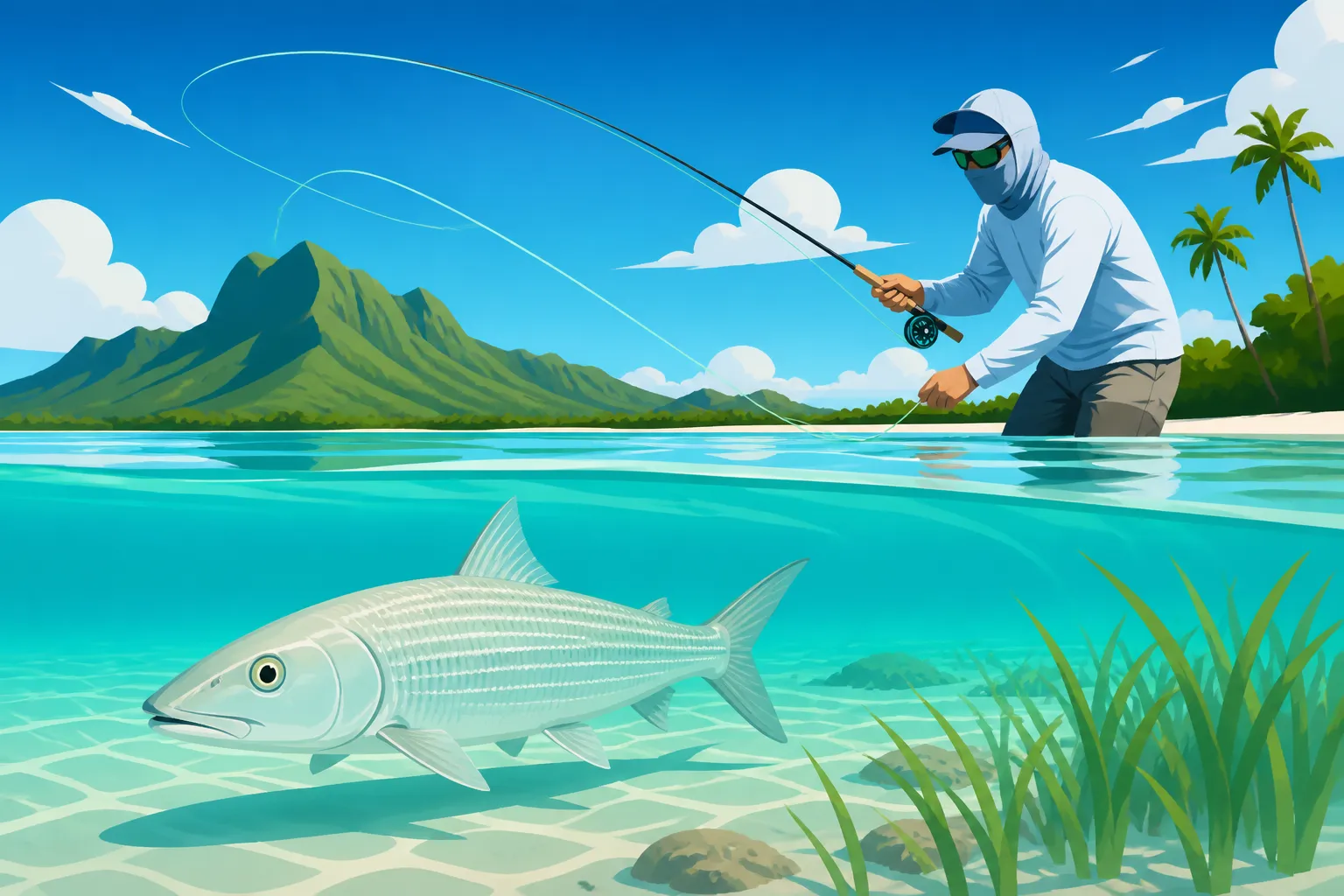
The primary goal is to spot the fish before it sees you. This usually means scanning the water ahead, looking for anything out of place. Tailing fish are the holy grail—a tail breaking the surface as the fish feeds head-down. This tells you exactly where they are and that they're actively eating. More often, you'll be looking for subtle movements: a slight "nervous water" ripple, a dark shape against the lighter bottom, or a "mud"—a cloud of disturbed sand or silt kicked up by a feeding fish. Sometimes it's just a flash of silver as they turn. Remember, the fish are almost always moving, so a stationary "rock" might just be a very spooky bonefish. Our article on Best time to fish for bonefish on the flats also delves into conditions that optimize spotting opportunities. Walk slowly, deliberately, and always scan with your polarized lenses. It takes incredible discipline to walk without looking down, but that's where the fish are!
Once you spot a bonefish, the next critical step is presentation. This is where many anglers falter. The cast needs to be accurate, gentle, and delivered ahead of the fish's path, allowing the fly to sink naturally. Aim about 3 to 5 feet in front of the fish, leading it slightly. The goal is for the fly to land softly without spooking the fish, and then settle near its line of travel. Once it's on the bottom, a series of short, quick strips—just enough to make the fly "hop" or "dart" like a fleeing shrimp or crab—is usually all it takes to entice a bite. Watch the fish's reaction closely; if it turns, speeds up, or flashes, it's likely seen your offering. If it spooks and bolts, you've learned something valuable about your approach or presentation. Accuracy is paramount, much like the Best casting technique for shore-based papio where precise placement is key.
Common Challenges and Troubleshooting for Sight Fishing Hawaii Bonefish
Even with the best techniques, sight fishing for bonefish can throw some curveballs. Hawaii's dynamic environment presents unique challenges that you'll need to adapt to on the fly. Don't get discouraged if things don't go perfectly right away; it’s a continuous learning process.
One of the most persistent challenges is wind. A strong breeze can make accurate casting incredibly difficult, and it can also create ripples on the water's surface, severely reducing visibility. When the wind picks up, you might need to adjust your casting angle, use a heavier fly to cut through the gusts, or even switch to a slightly shorter, more powerful rod. If visibility drops too much, you might need to switch tactics, perhaps targeting channels or deeper areas where the wind's effect on the surface is less pronounced. Another factor is spooky fish. Bonefish are extremely wary, and even the slightest splash, shadow, or sound can send them rocketing across the flat. Move slowly, wade quietly, and try to cast with the sun at your back so your shadow doesn't fall over the fish. Sometimes, simply backing off and waiting for a less pressured fish is the best strategy. This kind of nuanced approach is similar to the patience required for How to fish a channel for bonefish, where timing and technique are paramount.
Another aspect to troubleshoot is your retrieve. Not all bonefish respond to the same retrieve speed or action. Some days they want a fast, erratic dart; other days, a slow, subtle crawl. If you're not getting bites, try varying your retrieve until you find what triggers a strike. It might be a couple of short strips, a pause, then another strip. Or perhaps a longer, continuous retrieve. Observe how the fish reacts to your fly and adjust accordingly. If you're still struggling, consider booking a trip with one of the Best guide services for Oahu's bonefish flats or looking into Best fly fishing charters for bonefish on the flats. Local guides have an intimate knowledge of the flats, the fish's behavior, and the subtle cues that will help you refine your technique and overcome specific challenges. They can often provide immediate feedback and insights that would take years to acquire on your own. Remember, the journey to becoming a skilled bonefish angler is a rewarding one, full of learning and incredible experiences.
Disclaimer
This article is for general informational purposes only and does not constitute professional advice. Laws, prices and regulations vary by location and change over time. Consult a qualified professional for guidance on your specific situation.