Best Techniques for Calm Water Reef Fishing
There’s nothing quite as frustrating as planning a relaxing day of fishing, only to arrive at your favorite spot and find the ocean whipped into a frenzy. Choppy waves, strong currents, and murky water can make shore fishing nearly impossible, and even small boat angling a real challenge. But when the water turns glassy and the reef below becomes a vibrant, visible world, a whole new realm of fishing opportunities opens up. This guide will dive deep into the best techniques for calm water reef fishing in Hawaii, helping you capitalize on those perfect conditions to find success and truly connect with the island's incredible marine life.
The Serene Allure of Calm Water Reef Fishing
When the ocean lies still, it reveals secrets that are often hidden by turbulent conditions. For anglers, these calm days aren't just about comfort; they're about unparalleled visibility, enhanced fish behavior, and a more intimate connection with the underwater world.
Why Calm Waters are a Reef Angler's Dream
Imagine standing on the shoreline or paddling your kayak over a crystal-clear reef, seeing the intricate coral structures, the swaying limu (seaweed), and even the fish themselves moving through their natural habitat. That's the magic of calm water reef fishing. The absence of strong currents and wave action means fish are often less wary and more predictable in their movements. They might venture out from cover more readily, actively foraging for food without expending excess energy fighting the surge. For you, the angler, this translates to easier sight fishing opportunities, more precise lure presentations, and a far more enjoyable and relaxing experience. It's the ideal scenario for observation, learning the patterns of the reef, and refining your technique. The peace and quiet of a glassy ocean also make it easier to detect subtle bites, as your line isn't constantly being buffeted by waves.
Understanding Hawaii's Reef Ecosystems
Hawaii's reefs are incredibly diverse, a mosaic of vibrant life that provides shelter and sustenance for countless marine species. To truly excel at calm water reef fishing, it’s crucial to understand these different components. You'll encounter sprawling coral gardens, jagged lava rock formations, sandy channels winding between rock outcrops, and even deeper ledges just beyond the immediate shoreline. Each of these habitats attracts different fish species. For example, parrotfish (uhu) often graze directly on coral, while goatfish (kumu, weke) prefer sandy bottoms or rubble where they can root around for invertebrates. Jacks (papio, ulua) might patrol the edges of the reef or cruise through sandy channels looking for smaller baitfish. Recognizing these distinct zones and understanding what each one offers to its inhabitants is key to knowing where to cast your line. Remember, a thriving reef is a complex habitat, and understanding its nuances will significantly improve your chances of finding the fish you're targeting.
Essential Gear for Your Calm Reef Adventure
You don't need heavy-duty offshore gear for calm water reef fishing. In fact, lighter tackle often provides a more sporting and sensitive experience, allowing you to feel every subtle bite and enjoy the fight of even smaller reef dwellers.
Light Tackle Setups for Reef Success
For most calm water reef fishing scenarios, a sensitive yet sturdy light tackle setup is ideal. Think about a 7 to 9-foot spinning rod with a fast action, paired with a 2500 to 4000 series spinning reel. This combination offers the casting distance needed from shore or a kayak, while still having enough backbone to handle a decent-sized fish. For line, a 10-20 lb braided main line is a fantastic choice due to its sensitivity and strength-to-diameter ratio, allowing you to feel those delicate nibbles on the reef. Attach a 15-30 lb fluorocarbon leader, about 3-5 feet long, which is virtually invisible underwater and abrasion-resistant against sharp coral and lava rock. When looking for a reliable setup, you can find a wide range of quality spinning rods and reels, as well as fluorocarbon leader spools, readily available on Amazon. A good light tackle setup allows you to cast lighter lures and baits with precision, a critical factor when targeting specific pockets or structures on the reef.
Baits and Lures That Entice Reef Dwellers
The choice of bait or lure largely depends on what you're trying to catch and the specific conditions of the reef.
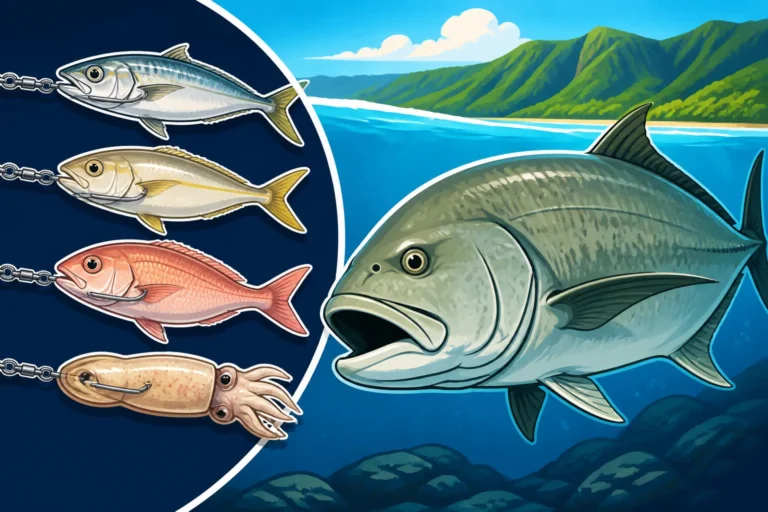
- Live Bait: If you can catch or buy small baitfish like opelu (mackerel scad) or akule (bigeye scad), they are often irresistible to larger predators like papio and small ulua. Shrimp and crabs are also excellent natural baits for many reef fish, including moi and goatfish. The lively action of a natural bait can be incredibly effective in clear, calm waters.
- Dead Bait: Cut pieces of squid, akule, or even small strips of opelu can be very productive. Rig them on a single hook or a snell rig. These are particularly good for bottom-dwelling species or for drift fishing over a wider area of the reef.
- Artificial Lures:
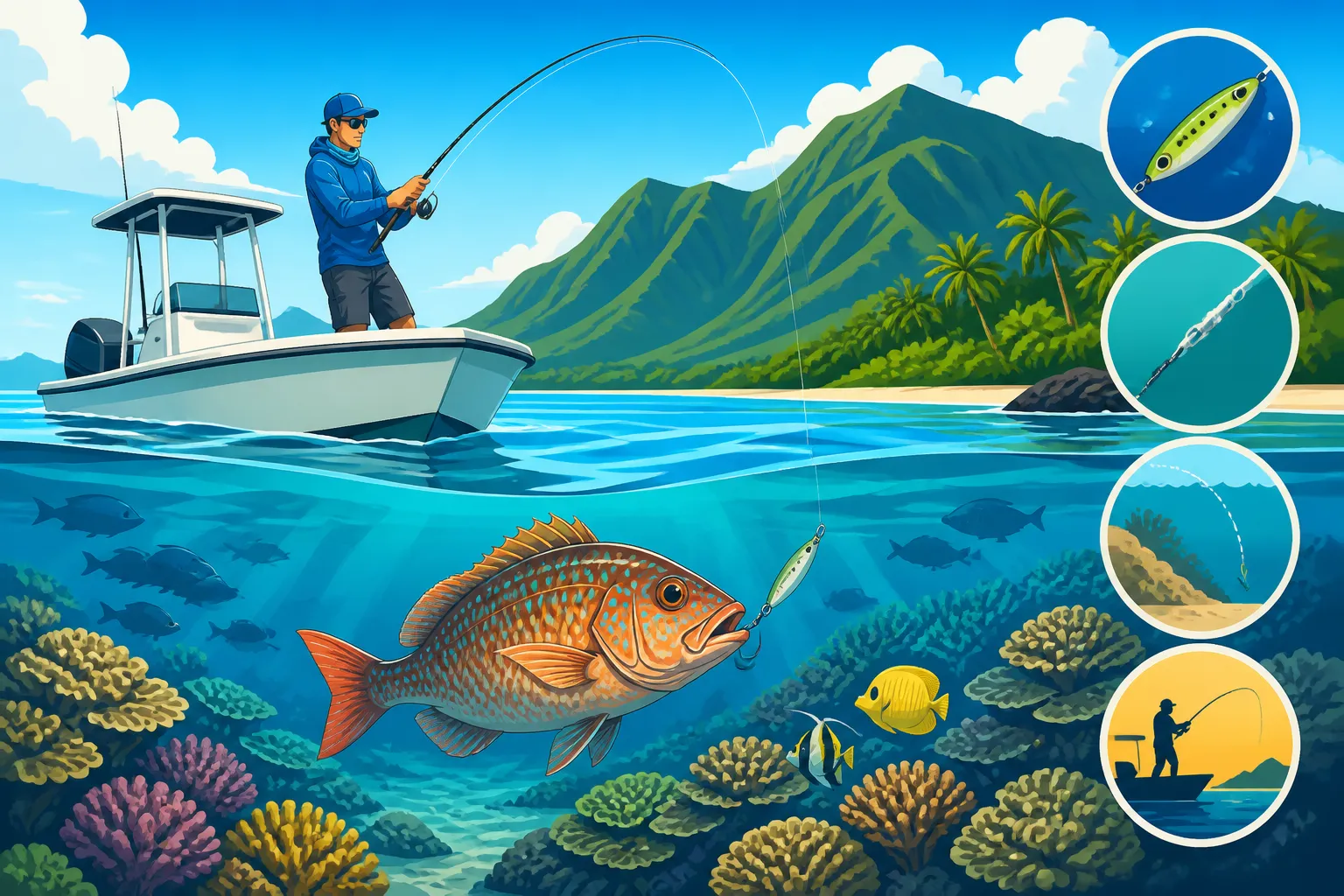
- Small Jigs: Soft plastic grub tails, paddle tails, or small metal jigs (1/8 oz to 1 oz) are excellent for "whipping" (a local term for casting and retrieving rapidly) for papio. Vary your retrieve speed and depth to see what triggers a strike.
- Poppers and Walk-the-Dogs: These topwater lures can be incredibly exciting in calm conditions, creating splashes and commotion that draw in aggressive feeders from below.
- Spoons: Small, flashy spoons can imitate fleeing baitfish and work well for a variety of reef fish.
You'll find an extensive selection of soft plastic grubs, metal jigs, and various topwater lures perfect for calm reef fishing on Amazon, often with multiple color options to match local baitfish. Experimentation is key; what works one day might not work the next.
Must-Have Terminal Tackle
Beyond your rod, reel, and line, a well-stocked tackle box is essential for calm water reef fishing.
- Hooks: A variety of strong, sharp hooks is crucial. Circle hooks (sizes #1 to 3/0) are excellent for live or cut bait, promoting jaw hookups and increasing catch-and-release survival rates. J-hooks (sizes #1 to 2/0) can be used for artificials or when a more aggressive hook set is desired. Make sure they are saltwater-resistant.
- Weights: Keep an assortment of lead or tungsten weights, from small split shot to 1-ounce egg sinkers. These help get your bait or lure down to the desired depth and can be used to hold bottom in gentle currents.
- Swivels: Barrel swivels or ball bearing swivels (sizes 10-20 lb test) prevent line twist, especially when using spinning lures or natural baits that might spin in the water.
- Leader Material: Always have extra fluorocarbon leader material on hand. As mentioned before, it's less visible and more abrasion-resistant, crucial for success around sharp coral and lava rock. You can easily stock up on various test strengths of leader material through Amazon.
- Pliers and Line Cutters: Essential for safely removing hooks, cutting line, and making quick rig adjustments.
- Sun Protection: Don't forget polarized sunglasses for spotting fish and structure, a wide-brimmed hat, and reef-safe sunscreen. A good pair of polarized sunglasses will not only protect your eyes but also enhance your ability to spot fish and structure in the clear waters, and you can find many options on Amazon.
Mastering Techniques for Productive Calm Water Reef Fishing
Calm waters allow for a finesse approach, where precise casting, subtle presentations, and careful observation become paramount.
Shoreline Casting and Whipping Strategies
Shoreline fishing on Hawaii’s reefs, especially in calm conditions, is incredibly rewarding. "Whipping" is a popular and effective technique, particularly for catching fast-swimming predators like papio. This involves casting a small jig or lure and retrieving it rapidly, often with erratic jerks and pauses, to mimic a fleeing baitfish. In clear water, fish can be quite visual, so varying your retrieve is key.
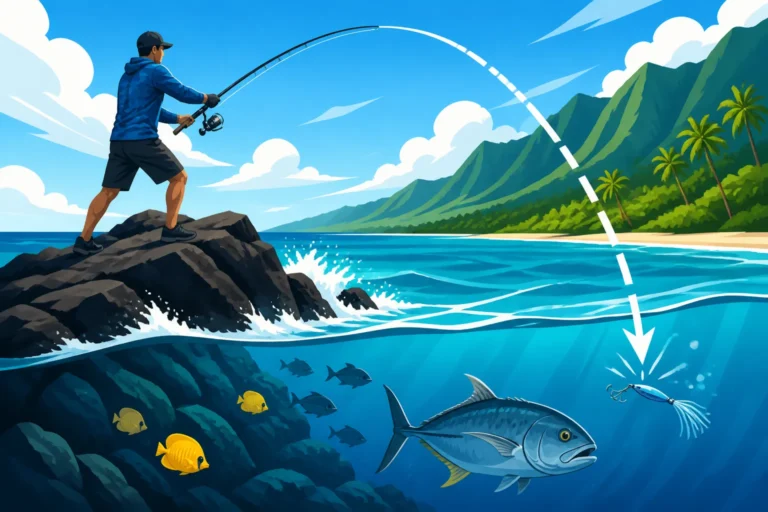
When fishing from shore, look for channels, pockets, or the edges of reef ledges where fish might ambush prey. Casting accurately to these spots, sometimes just a few feet from the shoreline, can make all the difference. The calm surface allows for perfect presentation, so avoid heavy splashes that might spook fish. For detailed guidance, check out our guide on how to Catch Papio on Hawaii's Shoreline. Remember, a stealthy approach and keen observation are your best friends here. Watch for any signs of baitfish scattering or subtle swirls on the surface—these often indicate actively feeding fish.
Kayak and SUP Fishing Advantages
For anglers willing to venture just beyond the immediate shoreline, kayaks and stand-up paddleboards (SUPs) offer unparalleled advantages in calm reef waters. Their stealth allows you to approach fish without spooking them, and their shallow draft lets you access areas that larger boats simply can’t.
From a kayak or SUP, you can quietly paddle over extensive reef flats, sight-casting to visible fish or probing deeper ledges. You gain a significant advantage in mobility, allowing you to follow bait schools or target specific reef features. Drifting silently with the current, while casting soft plastics or small live baits, can be incredibly effective. Always be mindful of the currents and wind, even in calm conditions, as they can change quickly. Remember to check out our comprehensive guide on the Best Kayak Fishing Spots in Hawaii for prime locations to launch your next reef adventure. Always be sure to have all necessary safety equipment, as outlined in our guide to Hawaii Boating Laws for Anglers.
Live Baiting and Drifting Over Reefs
When targeting larger reef inhabitants or those that prefer a slower presentation, live baiting or drifting can be highly effective in calm conditions.
- Live Baiting: If you've managed to catch some small baitfish like opelu or small akule, rig them lightly through the nose or back with a small circle hook. Allow them to swim naturally over structure, under ledges, or into channels. The clear water means fish will have ample opportunity to see and track your bait, so make sure your presentation is as natural as possible. This technique is particularly deadly for hungry papio or even small ulua cruising the reef fringes.
- Drifting: From a kayak, SUP, or even from shore with a float, drifting a bait (live or dead) with the gentle current can cover more ground and present your offering to fish that might not be actively chasing lures. Use just enough weight to keep your bait at the desired depth, whether it’s just above the coral or on the sandy bottom. This method is excellent for species like Moi (Pacific Threadfin), which often school in sandy pockets near reefs. You can learn more about this coveted species in our Moi Spawning Season in Hawaii guide.
Identifying and Targeting Hawaii's Calm Water Reef Species
Hawaii's reefs are teeming with diverse fish, each with its own habits and preferred habitats. Knowing what to look for and how to target them can drastically increase your success.
Common Catches in Shallow Reefs
The shallow, calm reef waters are home to a vibrant array of species, many of which are fantastic eating fish and provide exciting light tackle action.
- Papio (Juvenile Trevally): These are perhaps the most common and sought-after inshore reef fish. They are aggressive, strong fighters for their size, and can be caught on a wide variety of lures and baits. Look for them patrolling reef edges, channels, and rocky points. They love fast-moving lures.
- Uhu (Parrotfish): These colorful grazers are often seen nibbling on algae from coral. While challenging to catch on traditional tackle, they can sometimes be enticed by small pieces of limu or bread on tiny hooks. They are a protected species in certain sizes and seasons, so be aware of Hawaii Uhu (Parrotfish) Size and Bag Limits. For identification, refer to our Uhu Species Identification Guide.
- Kumu (Goatfish): Known for their distinctive barbels ("whiskers") used to root through sand, kumu are a prized table fish. They prefer sandy bottoms near reef structure and are often caught on small pieces of squid or shrimp fished on the bottom. Find out more about them in Kumu (Goatfish) in Hawaii.
- Weke (Goatfish): Similar to kumu, weke are also bottom feeders found in sandy areas adjacent to reefs. They respond well to similar baits and can provide consistent action. Learn more about these fascinating fish in Weke (Goatfish) in Hawaii.
The Elusive Bonefish (Oio) on the Flats
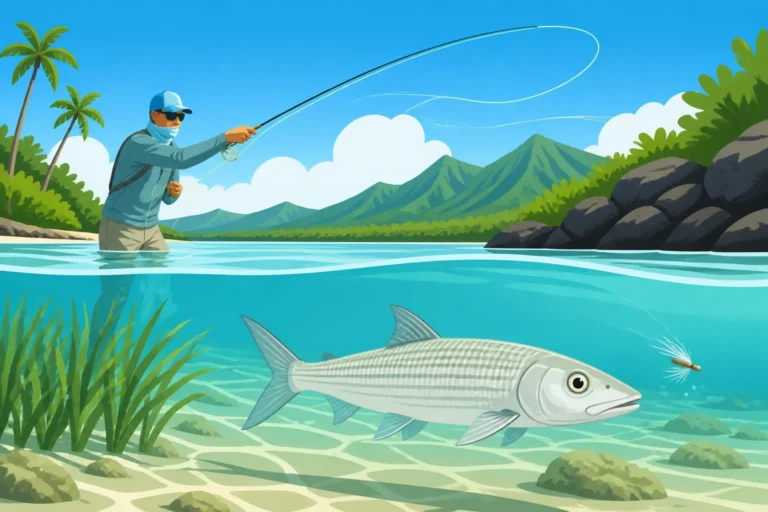
For many anglers, the ultimate calm water reef challenge is the bonefish, locally known as oio. These "ghosts of the flats" are incredibly wary and possess blistering speed, making them a true trophy on light tackle. In Hawaii, bonefish frequent expansive, shallow sand flats adjacent to reefs, often visible in calm, clear water as they "tail" (their tails break the surface as they feed on the bottom) or create subtle puffs of mud.
Sight fishing for bonefish is an art form. You need polarized sunglasses to spot them, a stealthy approach (especially from a kayak or by wading), and precise casts with small, natural-looking jigs or fly patterns. Presentation is everything; a clumsy cast will send them rocketing away. For dedicated bonefish anglers, Hawaii offers some incredible opportunities, particularly on Oahu's extensive flats. Master the techniques by exploring our guide on Best Bonefishing Techniques for Oahu Flats.
Reef Predators: Small Ulua and Moi
While not as common as papio, patient anglers fishing calm reefs can occasionally hook into a small ulua (Giant Trevally) – the larger, more powerful version of papio. These fish are opportunistic predators and will snatch a live bait or a large jig intended for papio. They typically cruise the deeper edges of shallow reefs or move into channels, especially during periods of high tide.
Moi, or Pacific Threadfin, are another highly prized fish in Hawaii. They are typically found over sandy bottoms in calm, clear waters near reefs, often in schools. Moi are known for their delicate bite and prefer small, natural baits like shrimp, squid, or limu fished on the bottom with light line. They have a closed season to protect their spawning, so it's always critical to be aware of the Hawaii Moi Closed Season, Explained before targeting them. Their beautiful silvery bodies and delicious flesh make them a truly special catch.
Reading the Reef: Locating Productive Structure
In calm, clear conditions, the reef becomes an open book. Learning to read its features is perhaps the most crucial skill for consistent success.
Visual Cues and Water Clarity
The beauty of calm water fishing is the ability to use your eyes. Look for color changes in the water – darker areas often indicate deeper pockets, coral heads, or rock formations, while lighter areas suggest sandy flats.
- Channels and Guts: These are pathways for fish to move between the open ocean and the shallower reef. They often funnel baitfish and concentrate predators.
- Ledges and Drop-offs: Where the reef abruptly changes depth, creating an edge. These are prime ambush points for larger fish.
- Bommies and Coral Heads: Isolated coral or rock formations that provide shelter and feeding grounds. Casting around these structures can yield bites.
- Limu Beds: Patches of seaweed offer cover for baitfish and invertebrates, attracting larger species.
- Turbidity: Even in generally calm water, subtle areas of stirred-up sand can indicate feeding activity from bottom-dwellers like goatfish or bonefish.
Always wear polarized sunglasses to cut the glare and enhance your underwater vision. A high-quality pair can make the difference between spotting a cruising fish and missing it entirely. Taking the time to simply observe before making your first cast will give you invaluable insight into where the fish might be holding. Our guide to Reef Fish Species Identification Guide for Hawaii can help you recognize common species once you spot them.
Understanding Tides and Currents
Even in "calm" conditions, tides and subtle currents play a significant role in fish behavior on the reef.
- Tidal Flow: Incoming or outgoing tides can stimulate feeding activity by moving baitfish and stirring up food sources. An incoming tide often pushes cleaner, cooler water onto the reef, which can energize fish. Outgoing tides can draw baitfish out of the reef, creating feeding opportunities for predators waiting at the channels.
- Current Rips and Eddies: Even light currents can create subtle rips or eddies around points and channels. These are natural congregation points for baitfish and, consequently, predators. Position yourself to cast into or along these current seams.
- Slack Tide: While sometimes slower, slack tide can also offer a unique opportunity. Fish may be less active, but in clear water, they might be easier to spot in their holding patterns, allowing for a precise, patient presentation.
Paying attention to the tidal charts and observing the water movement will help you predict where fish will be positioned to feed. A small current, rather than dead still water, is often preferred by many reef species, as it brings them food.
Responsible Angling and Safety on Hawaii's Reefs
Fishing Hawaii's reefs is a privilege, and it comes with the responsibility of protecting these fragile ecosystems and ensuring your own safety.
Reef Etiquette and Conservation
The vibrant corals and diverse marine life are what make Hawaii's reefs so special. Anglers have a crucial role in protecting them.
- Avoid Contact with Coral: Coral is a living organism and can be easily damaged or killed by contact. Try not to stand on or drag your line across live coral. If fishing from a kayak or SUP, use a push pole in shallow areas instead of paddling near coral.
- Practice Catch and Release: For many species, especially those not intended for consumption, practice responsible catch and release. Handle fish minimally, keep them in the water as much as possible, and use de-hooking tools for quick release. For information on specific regulations, refer to the Hawaii Fishing Regulations Explained.
- Know Your Limits: Always be aware of the Hawaii Bag and Size Limits by Species for any fish you plan to keep. This helps ensure sustainable populations for future generations.
- Pack it In, Pack it Out: Leave no trace. Take all your trash, including discarded fishing line and broken lures, with you. Even better, pick up any litter you find.
- Respect Protected Areas: Hawaii has Marine Life Conservation Districts (MLCDs) and other protected areas where fishing may be restricted or prohibited. Always check local regulations before fishing a new spot.
Safety Considerations for Shore and Small Boat Anglers
Even on calm days, the ocean demands respect. Prioritizing safety ensures a relaxing and incident-free fishing trip.
- Footwear: When shore fishing on lava rock or slippery reef, wear appropriate footwear with good grip. Closed-toe reef shoes or tabi boots are a must to prevent cuts and falls.
- Watch the Waves: Even on calm days, rogue waves can occur. Always keep an eye on the ocean and be aware of your surroundings, especially on exposed rock ledges. Never turn your back on the ocean.
- Sun Protection: The Hawaiian sun is intense. Wear a hat, sunglasses, long-sleeved sun shirts, and apply reef-safe sunscreen liberally and often. Dehydration can happen quickly.
- Hydration: Bring plenty of water or other fluids to stay hydrated throughout your fishing session.
- First Aid: Carry a basic first aid kit for minor cuts, scrapes, or hook injuries.
- Communicate Your Plans: If you're heading to a remote spot, let someone know where you're going and when you expect to return.
- Kayak/SUP Safety: If using a kayak or SUP, always wear a personal flotation device (PFD), carry a whistle, and consider attaching a visible flag. Be aware of changing weather conditions and strong currents that can pull you offshore.
By being prepared and respectful, you can enjoy the magic of calm water reef fishing safely and responsibly.
Disclaimer
Fishing regulations can change frequently. Always consult the latest rules and regulations from the Hawaii Division of Aquatic Resources (DAR) before heading out. The information provided in this guide is for general informational purposes only and should not be considered legal advice.