Best Techniques for Largemouth Bass in Hawaii Reservoirs
If you've ever dreamt of fishing in Hawaii, chances are you pictured crystal-clear ocean waters, fighting a majestic marlin, or reeling in a vibrant mahimahi. But what if I told you there’s a whole other world of angling here, tucked away in our serene freshwater reservoirs, where a different kind of fight awaits? Many visitors and even some kama'aina are surprised to learn that Hawaii offers fantastic largemouth bass fishing, though it presents its own unique set of challenges compared to mainland fisheries. This guide will walk you through the very best techniques to target and successfully land these hard-fighting freshwater giants in Hawaii's unique reservoir environments.
Understanding Hawaii's Largemouth Bass Habitat
Fishing for largemouth bass in Hawaii's reservoirs isn't quite like heading out to a Texas lake or a Florida swamp. Our islands have a distinct freshwater ecosystem, shaped by volcanic landscapes, unique hydrology, and, often, a different kind of vegetation. To be successful, you need to understand where these fish live and how their environment influences their behavior.
The Unique Freshwater Environment
Hawaii's freshwater reservoirs are often man-made, created for irrigation or water supply, and are characterized by varying depths, water clarity, and bottom compositions. Unlike many mainland lakes, our reservoirs can experience significant changes in water levels due to seasonal rains and irrigation demands, which constantly reshapes the available cover and structure for bass. For instance, some reservoirs might have extensive submerged hydrilla beds, while others are dominated by rock piles, standing timber, or steep ledges. The water can range from surprisingly clear, especially in higher elevation reservoirs or during dry spells, to stained or murky after heavy rainfall and runoff. This variability means that a "one-size-fits-all" approach simply won't cut it. You need to be adaptable and observant to pick up on the subtle clues the environment offers. Remember that a specific Hawaii freshwater license cost for residents or Hawaii freshwater license cost for nonresidents might be required, so always check the current regulations before heading out.
Structure and Cover Preference
Just like their mainland cousins, Hawaiian largemouth bass are ambush predators that rely heavily on structure and cover for both feeding and protection. The difference lies in what type of structure and cover is available. You might not find sprawling fields of lily pads everywhere, but you will find unique substitutes. Think about submerged branches, fallen trees that have washed down from heavy rains, rock outcroppings, old bridge pilings, and even subtle changes in bottom contour like humps, ledges, or channels. In reservoirs like Wahiawa, massive beds of hydrilla or coontail grass become prime real estate, offering dense cover for baitfish and bass alike. Learning to "read" the water and identify these features, either visually or with sonar if you're on a boat, is paramount. Bass will often position themselves on the edges of these structures, waiting for an unsuspecting meal to swim by, or deeper within the cover for security.
Essential Gear and Tackle for Reservoir Bass
Having the right tools for the job can make a world of difference, especially when you're targeting largemouth bass in Hawaii's diverse reservoir conditions. While you don't need a boatload of specialized gear, understanding what works best here can save you a lot of frustration and increase your chances of success.
Rod, Reel, and Line Choices
For most largemouth bass fishing in Hawaii, a versatile medium-heavy to heavy action spinning or baitcasting setup will serve you well. A 7' to 7'6" rod offers a good balance of casting distance and backbone for setting hooks and pulling fish out of cover. If you're planning on throwing heavier jigs or punching through dense hydrilla, lean towards the heavier action rods. For spinning gear, a 3000-4000 series reel spooled with 20-30 lb braided line is a solid choice, often with a 10-15 lb fluorocarbon leader for stealth. For baitcasting, consider a reel with a fast retrieve ratio (7.1:1 or higher) to quickly take up slack, paired with 30-50 lb braided line or 15-20 lb fluorocarbon. The braid is excellent for sensitivity and strength, particularly when fishing around abrasive cover, while fluorocarbon offers near invisibility in clearer waters. Many anglers find great deals on quality braided line and fluorocarbon leaders on platforms like Amazon, ensuring they're well-stocked. It's also worth checking out posts like Best Techniques for Largemouth Bass in Hawaii Reservoirs for more specific recommendations on tackle setups.
Lure and Bait Essentials
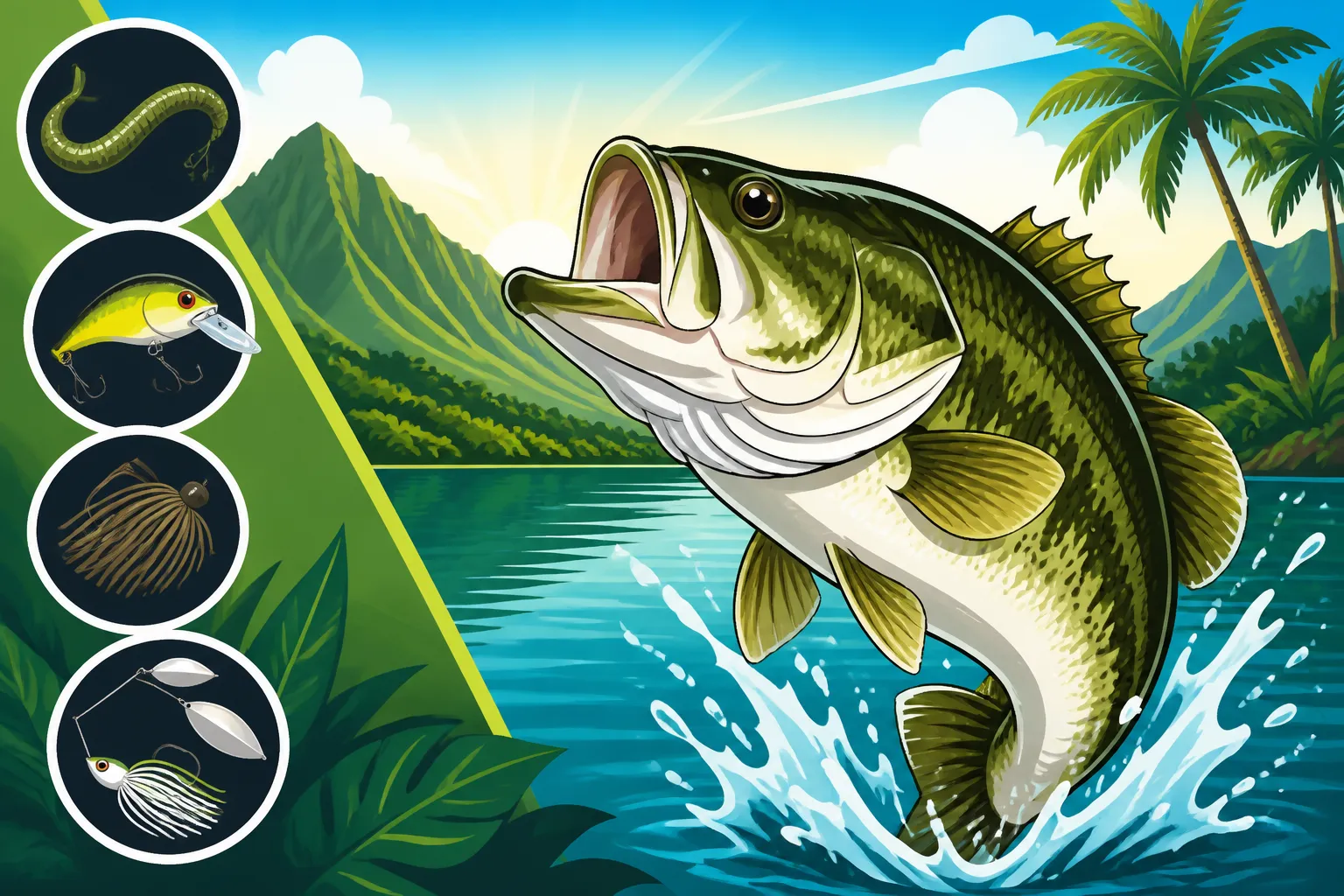
The range of effective lures for Hawaiian largemouth bass is broad, but a few stand out as consistent producers. Soft plastics are king, especially Texas-rigged worms, Senkos, creature baits, and swimbaits. Colors like green pumpkin, junebug, and black-and-blue are universally effective. Jigs, both pitching jigs and swim jigs, in similar dark or natural colors, are also highly productive around heavy cover. For topwater action, frogs and poppers can be exhilarating, especially during low-light conditions or over matted vegetation. Crankbaits, particularly shallow to medium diving models, are great for covering water and triggering reaction strikes, while spinnerbaits with willow or Colorado blades can be deadly in stained water or around sparse cover. Don't forget that live bait, if permitted and legal, can also be incredibly effective, though artificial lures tend to be more popular among dedicated bass anglers here. Ensure you have a good selection, perhaps grabbing a variety pack of soft plastics from Amazon to experiment with different shapes and sizes.
Top Largemouth Bass Techniques for Hawaii
Now that we've covered where they live and what gear you'll need, let's dive into the most effective techniques for coaxing these Hawaiian largemouths to bite. Adaptability is key, as conditions can change rapidly.
Whipping and Casting Techniques
"Whipping" is a local term for a fast, active style of fishing, often involving casting and retrieving lures quickly to cover water and trigger aggressive strikes. While it's more commonly associated with shore fishing for papio or ulua, a modified version is excellent for bass. For largemouth, this means making numerous casts to different pieces of structure, varying your retrieve speed, and experimenting with different lures like spinnerbaits, crankbaits, or even smaller swimbaits. The goal is to provoke a reaction bite from an active fish. Precision casting is crucial when targeting specific pieces of cover like submerged trees or rock piles. A technique often called "power fishing" involves systematically working an area with fast-moving baits to locate active fish quickly. Once you've identified a productive zone, you can slow down and focus with more finesse presentations. Learning Best Techniques for Whipping for Papio can even cross over to some bass scenarios.
Soft Plastics and Jig Fishing
Soft plastics and jigs are arguably the most consistent producers for largemouth bass in Hawaii's reservoirs, particularly when the fish are holding tight to cover or are less aggressive.
- Texas Rigging: This weedless setup is perfect for fishing through dense vegetation, submerged timber, or rocky bottoms without snagging. Use a bullet weight (1/8 oz to 1 oz, depending on depth and cover density) pegged or unpegged, a wide gap worm hook, and your choice of plastic worm, creature bait, or Senko. Cast it into thick cover, let it sink, and slowly work it back with subtle twitches and pauses. Pay close attention to your line for any unusual movement, as bites can be very subtle.
- Wacky Rigging: For a more finesse approach, especially in clearer water or when fish are finicky, wacky rigging a Senko or similar stick bait can be deadly. Simply hook the worm through its center, allowing both ends to wiggle seductively as it sinks. Cast it near cover and let it freefall on a slack line; most bites will occur on the fall.
- Jig Fishing: Jigs are excellent for penetrating dense cover or targeting deeper structure. Pitching jigs (often dressed with a soft plastic trailer) into holes in vegetation or around fallen trees allows you to get right into the bass's living room. A slow, crawling retrieve along the bottom or gentle hops can entice strikes. Swim jigs, designed to be retrieved horizontally through the water column, are fantastic for covering water and imitating baitfish, especially around grass lines or sparse cover. Colors matching crawfish or local baitfish are often best.
Topwater and Crankbait Strategies
When the conditions are right, there's nothing quite like a topwater explosion. Largemouth bass will readily strike lures on the surface, especially during low-light hours (dawn and dusk) or on overcast days.
- Topwater Frogs: In reservoirs with heavy matted vegetation, like parts of Wahiawa, weedless hollow-bodied frogs are indispensable. Cast them directly onto the mats and work them slowly across the surface, pausing frequently. When a bass blows up on your frog, resist the urge to set the hook immediately. Wait until you feel the weight of the fish before delivering a strong hookset.
- Poppers and Walk-the-Dog Baits: In open water areas, along shorelines, or over sparse cover, poppers and walk-the-dog style baits (like a Zara Spook) can be incredibly effective. Poppers create splashes and commotion, while walk-the-dog baits mimic an injured baitfish struggling on the surface. Experiment with retrieve speeds and cadences to see what the fish prefer.
- Crankbaits and Spinnerbaits: These lures excel at covering water quickly and triggering reaction strikes. Shallow-diving crankbaits are great for fishing flats or along submerged grass, while medium-diving models can probe deeper ledges or humps. Spinnerbaits are versatile, working well in various water clarities and around different types of cover. Vary your retrieve, adding pauses and accelerations, to make them appear erratic and irresistible. Consider stocking up on a variety of these lures, perhaps buying a discounted multi-pack from Amazon to ensure you have options for different conditions.
Seasonal and Weather Considerations
Just like anywhere else, largemouth bass behavior in Hawaii's reservoirs is heavily influenced by the seasons and daily weather patterns. Understanding these shifts can help you predict where the fish will be and what they'll be willing to bite.
Year-Round vs. Spawning Season Patterns
Hawaii's tropical climate means we don't experience the dramatic temperature swings of more temperate regions, so bass fishing can be a viable option year-round. However, there are still distinct seasonal patterns, largely centered around the bass's spawning cycle.
- Pre-Spawn (Winter/Early Spring): As water temperatures begin to rise (typically late winter into early spring, depending on the specific reservoir and elevation), bass will start moving from their deeper wintering grounds toward shallower staging areas. They're often feeding aggressively to build energy for the spawn. This is an excellent time for crankbaits, spinnerbaits, and even large soft plastics fished slowly on the bottom. Look for transition areas where deep water meets shallower flats or points.
- Spawn (Spring): Once water temperatures hit the mid-60s to low 70s Fahrenheit, bass will move onto shallow flats, protected coves, and pockets of vegetation to build nests and spawn. During this time, male bass guard the nests aggressively. Sight fishing with soft plastics (Senkos, lizards) or small jigs can be very effective, carefully casting to visible beds. Remember to practice Hawaii Catch and Release Only Freshwater Waters during this sensitive period to protect the future of the fishery.
- Post-Spawn (Late Spring/Early Summer): After spawning, bass can be exhausted and may move to slightly deeper water near spawning flats to recover. They'll start feeding again, often on smaller baitfish or crawfish. This is a good time for a mix of techniques, from topwater in the mornings to Texas-rigged plastics or small crankbaits throughout the day.
- Summer/Fall: During the warmer months, bass typically move to deeper, cooler water during the hottest parts of the day, relating to main lake points, ledges, and submerged timber. Early mornings and late evenings can still produce excellent topwater or shallow crankbait bites. As fall approaches and temperatures slightly cool, bass may become more active and start schooling up, chasing baitfish, making spinnerbaits and lipless crankbaits effective.
Impact of Rain and Runoff
Hawaii is known for its sudden, heavy downpours, and these can significantly impact reservoir fishing. Rain and subsequent runoff can bring several changes to the water:
- Increased Turbidity: Runoff often carries sediment, making the water stained or muddy. In these conditions, bass rely more on their lateral line (vibration sensing) and smell. Darker colored lures (black-and-blue, junebug) or those that create a lot of vibration (spinnerbaits with large blades, rattling crankbaits) tend to be more effective.
- New Food Sources: Runoff can wash terrestrial insects, worms, and small creatures into the reservoir, providing an easy meal for bass. Focus your efforts near incoming feeder creeks or culverts where this "buffet" is entering the main body of water.
- Water Level Fluctuations: Prolonged rain can raise water levels, flooding new areas of shoreline vegetation. This creates new cover and feeding grounds for bass, allowing them to push further into previously dry areas. Conversely, drought periods can significantly lower water levels, concentrating fish in deeper channels or shrinking pockets of cover. Always consult local regulations, such as those detailed in Hawaii Wahiawa Reservoir Fishing Rules, as water level changes can sometimes impact access or specific rules for certain areas.
Navigating Specific Hawaii Reservoirs
While the general techniques apply, each of Hawaii's accessible freshwater reservoirs presents its own unique personality, demanding slightly different approaches. The two most prominent for public bass fishing are Wahiawa Reservoir on Oahu and Nuuanu Reservoir also on Oahu.
Wahiawa Reservoir Specifics
Wahiawa Reservoir, often affectionately called "Lake Wilson" by many anglers, is Hawaii's largest public freshwater fishing destination and a true gem for largemouth bass enthusiasts. This reservoir is famous for its dense submerged vegetation, primarily hydrilla and coontail grass, which provides incredible cover for bass, but also presents a challenge for anglers.
- Key Features: Extensive hydrilla beds, standing timber in some sections, numerous points, coves, and a main channel. The water clarity can vary from stained to moderately clear.
- Effective Techniques:
- Punching/Flipping: This is a go-to technique in Wahiawa. Use heavy tungsten weights (1 oz or more) with creature baits or beaver-style plastics on heavy braided line to punch through the matted hydrilla. This gets your bait directly into the bass's lair.
- Frogs: When the hydrilla mats are thick on the surface, weedless hollow-bodied frogs are unbeatable. Work them slowly over the mats, pausing often, especially near open pockets or edges.
- Swim Jigs/Spinnerbaits: For fishing the edges of the hydrilla lines or over sparser grass, swim jigs with a grub trailer or spinnerbaits are excellent for covering water and triggering reaction strikes.
- Texas-Rigged Worms/Senkos: Fished slowly along the edges of the grass, or pitched into isolated clumps of cover, these are consistent producers.
- Challenges: The dense vegetation can be frustrating, leading to snags. Heavy gear is a must to extract fish. Access is mostly limited to shore fishing in designated areas, or through permitted kayaks/paddle craft launched from specific points. Always check the current Hawaii Wahiawa Reservoir Fishing Rules for updates on access, boat permits, and specific regulations.
Nuuanu Reservoir Challenges and Opportunities
Nuuanu Reservoir, located in the lush Nuuanu Valley on Oahu, offers a vastly different experience from Wahiawa. It's generally deeper, often clearer, and typically has less submerged vegetation, making it more challenging but also rewarding for those who adapt.
- Key Features: Deeper ledges, steep drop-offs, rocky banks, some standing timber (especially in the upper reaches), and clearer water.
- Effective Techniques:
- Finesse Tactics: Given the clearer water, finesse techniques often shine. Drop-shotting small worms or creature baits, shaky head jigs, or wacky-rigged Senkos can be highly effective, especially when fish are suspended or less active.
- Deep Diving Crankbaits: These can be used to probe the deeper ledges and points. Choose natural baitfish colors.
- Jigging Spoons: For targeting deeper schooling bass or those holding on bottom structure, jigging spoons can be deadly.
- Topwater (Low Light): In clearer water, topwater baits like poppers or walk-the-dog lures can still be very effective during dawn, dusk, or overcast conditions, particularly along rocky banks or points.
- Challenges: Access is more restricted than Wahiawa, often requiring special permits or being limited to specific times. The deeper, clearer water means fish can be spooky, requiring longer casts and stealthier approaches. You'll need to focus on identifying subtle depth changes and structure with sonar or by carefully mapping the bottom if fishing from a boat. Familiarize yourself with the Hawaii Nuuanu Reservoir fishing rules before planning a trip, as regulations are strictly enforced.
Here's a quick comparison of popular bass lures and their recommended uses:
| Lure Type | Best Conditions | Target Area | Retrieve Style | Notes |
|---|---|---|---|---|
| Soft Plastics | Versatile; clear to stained water; around heavy cover | Grass beds, timber, rock piles, open water | Slow drag, twitch, hop; wacky rig for slow fall | Extremely versatile, weedless options for heavy cover. |
| Jigs | Heavy cover, deeper water, cooler temps | Punching grass, pitching to timber, ledges | Hop, crawl, pitch, swim; pause frequently | Imitates crawfish or baitfish. Excellent for big fish. |
| Topwater | Low light (dawn/dusk), overcast, calm water | Surface, over mats, shallow flats | Walk-the-dog, pop, chug, pause | Exciting visual strikes. Frog patterns best for dense mats. |
| Crankbaits | Covering water, reaction strikes, varying depths | Flats, points, ledges, open water | Steady retrieve, stop-and-go, deflection | Dive to specific depths. Good for finding active fish. |
| Spinnerbaits | Stained/murky water, sparse cover, windy conditions | Grass lines, submerged timber, open water | Steady retrieve, slow-roll, erratic jerks | Creates vibration and flash. Good "search bait." |
Conservation and Best Practices
As stewards of Hawaii's unique freshwater fisheries, it's our kuleana (responsibility) to practice ethical fishing. Largemouth bass are an introduced species, but they provide a valuable recreational fishery. Protecting this resource ensures future generations can enjoy it too.
Catch and Release Ethos
While it's legal to harvest bass in Hawaii's reservoirs, many dedicated bass anglers practice catch and release, especially for larger, trophy-sized fish. These larger fish are the prime breeders and contribute significantly to the genetic health and trophy potential of the population. When practicing catch and release:
- Handle Fish Gently: Minimize air exposure. Wet your hands before handling to protect the fish's slime coat.
- Use Barbless Hooks: Consider crimping down barbs on your hooks. This makes hook removal quicker and less damaging to the fish.
- Proper Hook Removal: Use needle-nose pliers or a hook remover tool. If a fish is deeply hooked, especially in the gills or gut, it's often best to cut the line as close to the hook as possible rather than trying to rip it out.
- Revive the Fish: Hold the fish gently in the water, supporting its belly, and allow water to flow over its gills until it regains strength and swims off on its own.
- Know the Rules: Even with catch and release, always be aware of Hawaii Bag and Size Limits by Species for bass, though they are usually quite generous, it's good to be informed.
Preventing Invasive Species Spread
One of the most critical aspects of responsible freshwater fishing in Hawaii is preventing the spread of invasive species. Our delicate island ecosystems are particularly vulnerable. When moving between different freshwater bodies, even between sections of the same reservoir, you must take precautions:
- Clean, Drain, Dry: This mantra is essential.
- Clean: Remove all visible mud, plants, fish, and other organisms from your boat, trailer, waders, boots, and fishing gear (rods, reels, tackle boxes).
- Drain: Drain all water from your boat (livewells, bilge, transom), and any other gear that holds water, before leaving the access point.
- Dry: Allow all equipment to thoroughly dry before using it in another body of water. A minimum of 5 days is often recommended, especially in Hawaii's humid climate. If you can't dry, consider freezing for 24 hours.
- Inspect Your Gear: Pay special attention to waders, fishing nets, and the treads of your shoes, as these can easily harbor tiny plant fragments or aquatic organisms.
- Never Transport Live Bait: Only use bait acquired from the body of water you are fishing, or artificial lures. Transporting live bait from one reservoir to another is a major pathway for invasive species.
- Report Sightings: If you encounter an unusual or suspected invasive species, report it to the Hawaii Department of Aquatic Resources (DAR).
By following these best practices and embracing a respectful approach to our natural resources, you'll not only enhance your own fishing experiences but also help preserve Hawaii's unique and valuable freshwater fisheries for everyone.
Disclaimer
Please note that fishing regulations in Hawaii are subject to change. Always consult the latest rules and regulations from the Hawaii Division of Aquatic Resources (DAR) before heading out on any fishing trip. This guide is for informational purposes only and does not supersede official government regulations.