How to fish drop-offs for pelagic species
If you've ever found yourself staring out at the vast, shimmering blue waters surrounding our beautiful Hawaiian islands, you've probably dreamt of hooking into a powerful pelagic fish. These open-ocean hunters, like marlin, ahi, ono, and mahimahi, are often found patrolling the edges of deep underwater drop-offs, where the seafloor plummets dramatically from shallower reefs into the abyss. It can feel a bit daunting to figure out how to effectively target these elusive species in such specific, deep-water environments, but this guide is here to demystify the art of fishing Hawaii's pelagic drop-offs.
Understanding Hawaii's Pelagic Drop-Offs
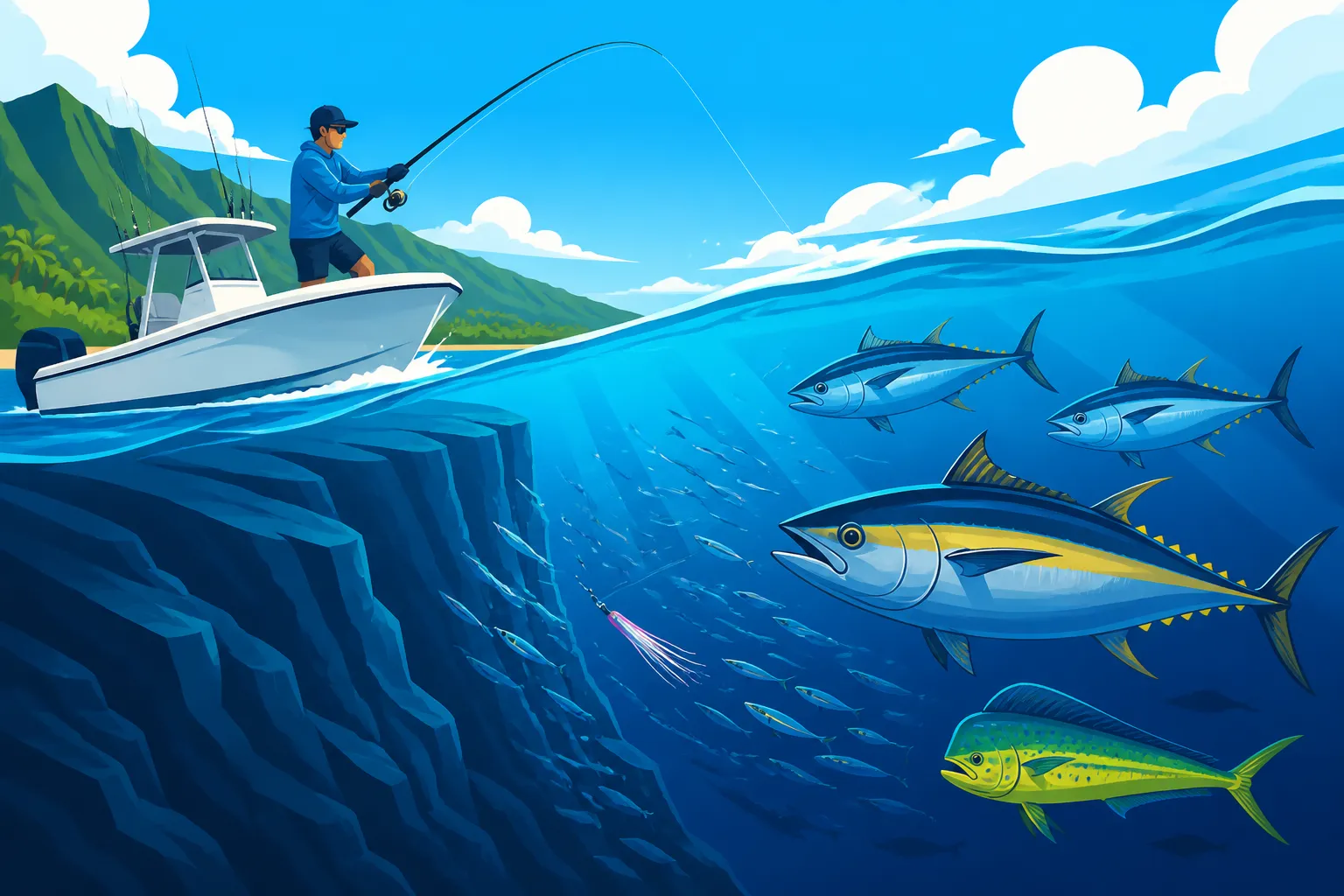
When we talk about "drop-offs" in the context of pelagic fishing here in Hawaii, we're not just talking about any old underwater ledge. We're referring to those dramatic topographical features where the ocean floor plunges hundreds or even thousands of feet within a relatively short horizontal distance. Think of it as an underwater cliff face or a steep, submerged canyon wall. These aren't just cool geological formations; they are bustling highways and feeding grounds for some of the most sought-after game fish in the world.
Why Drop-Offs Attract Pelagic Species
Pelagic species are nomadic by nature, constantly roaming the open ocean in search of food. So, why do they congregate around these deep drop-offs instead of just staying in the vast open water? The answer lies in the incredible biodiversity and nutrient upwelling these structures create. As currents flow against these underwater walls, they push nutrient-rich deeper water upwards towards the surface. This upwelling brings plankton and other small organisms closer to the sunlit zone, which in turn attracts baitfish – and where the baitfish go, the predators follow.
It's a complete food chain in action. Smaller fish like opelu and akule, which are common baitfish in Hawaii, will school up along these drop-offs, feeding on the abundant smaller organisms. Larger predators like ahi (yellowfin tuna), ono (wahoo), and mahimahi (dorado) then cruise these edges, ambushing the baitfish. And at the very top of that food chain, you'll find the majestic marlin, patrolling for any larger fish that stray from the safety of the deeper water. The drop-off acts as a natural ambush point, offering structure and a consistent food supply in an otherwise featureless ocean.
Common Depths and Features to Look For
While "drop-off" sounds straightforward, these areas can have varied features. You might encounter sheer vertical cliffs, gradual slopes, submerged seamounts rising from the deep, or even underwater canyons. In Hawaii, many of our islands rise steeply from the ocean floor, so these drop-offs are often found relatively close to shore, making them accessible to a wider range of anglers. For instance, off the Kona Coast of the Big Island, the drop-off occurs incredibly close to land, sometimes within a mile or two.
When you're out on the water, whether you're using a fancy fish finder or just looking for signs on the surface, pay attention to depth contours. Look for areas where the depth changes rapidly from, say, 100 feet to 1,000 feet or more. These are prime locations. Often, you'll find specific "ledges" or "shelves" at certain depths where baitfish might hold, or where currents create eddies. Keep an eye out for current lines, diving birds, or even floating debris, as these can all indicate areas where baitfish are congregating, and where game fish are likely to be present. It's truly a puzzle you're trying to solve out there, and the drop-offs are often the key pieces.
Essential Gear and Tackle for Drop-Off Fishing
Fishing these deep water drop-offs for powerful pelagic species isn't like casting a line off a pier. You're going to need robust gear that can handle the immense strength of these fish, the heavy drag requirements, and the often deep and challenging environment. Investing in quality equipment isn't just about catching more fish; it's about making sure your gear doesn't fail when that fish of a lifetime strikes. Many anglers find it convenient to research and purchase specialized offshore tackle directly from online retailers like Amazon, especially for those hard-to-find items.
Rods, Reels, and Lines
For pelagic species off drop-offs, you'll generally be using heavy-duty conventional tackle, though some enthusiasts might opt for large spinning setups.
- Rods: Look for sturdy, offshore conventional rods in the 50-80 pound class, or even 130-pound class for targeting monster marlin. These rods need strong backbone to pull against powerful fish and a fast action tip to detect subtle bites. Lengths typically range from 5.5 to 7 feet, with shorter rods often preferred for stand-up fighting.
- Reels: Matching your rod with a high-quality, large-capacity conventional reel is crucial. Brands like Penn, Shimano, and Accurate are popular choices among seasoned Hawaiian anglers. These reels need excellent drag systems that can be smoothly adjusted under heavy load, as well as high line capacity to let a big fish run. For species like ahi or marlin, 50W, 80W, or even 130-pound class reels are standard.
- Lines: Most offshore setups will utilize braided main line due to its incredible strength-to-diameter ratio and lack of stretch, which gives you better feel and hook-setting power. You might run 80 to 130-pound braided line, often topped with a monofilament "topshot" of 100 to 200 pounds. The mono provides some stretch, which can act as a shock absorber during violent strikes and head shakes, and is also more abrasion-resistant around the boat.
Leaders, Hooks, and Swivels
This is where the direct connection to the fish happens, so don't skimp on quality.
- Leaders: Fluorocarbon or heavy monofilament leaders are essential. Fluorocarbon is less visible underwater, which can be an advantage with wary fish like ahi. Leader strength will vary widely depending on the target species. For mahimahi or smaller ono, 80-100 pound fluorocarbon might suffice, but for large marlin or ahi, you're looking at 200-400 pound monofilament or even heavier cable or stiff mono leaders for toothy critters like wahoo. The length can vary too, from short 6-foot leaders to much longer "wind-on" leaders that allow the leader to be wound onto the reel.
- Hooks: Only use heavy-duty, corrosion-resistant hooks designed for offshore use. Circle hooks are mandatory in many areas for certain species, and they promote mouth hooks, reducing gut-hooking and improving catch-and-release survival. Sizes will depend on your bait and target, ranging from 7/0 for smaller baits to massive 14/0 or larger for big live baits for marlin.
- Swivels: High-quality ball bearing swivels are a must to prevent line twist, especially when trolling or fishing with natural baits. Barrel swivels might work for some applications, but the smoother rotation of ball bearings is invaluable when fighting powerful, spinning fish. Look for swivels with a breaking strength well above your main line. You can find a wide selection of robust swivels and other terminal tackle to order conveniently from sites like Amazon.
Lures and Baits
The choice of lure or bait depends heavily on your target species and the technique you're employing.
- Trolling Lures: For marlin, ahi, ono, and mahimahi, a spread of skirted trolling lures is often deployed. These come in a dizzying array of shapes, sizes, and colors, designed to imitate baitfish or squid. Popular colors often include green, blue, pink, and purple, often with reflective inserts. Different head shapes create different actions in the water – some dart, some dive, some pop. Anglers often experiment with various lures until they find what the fish prefer on a given day.
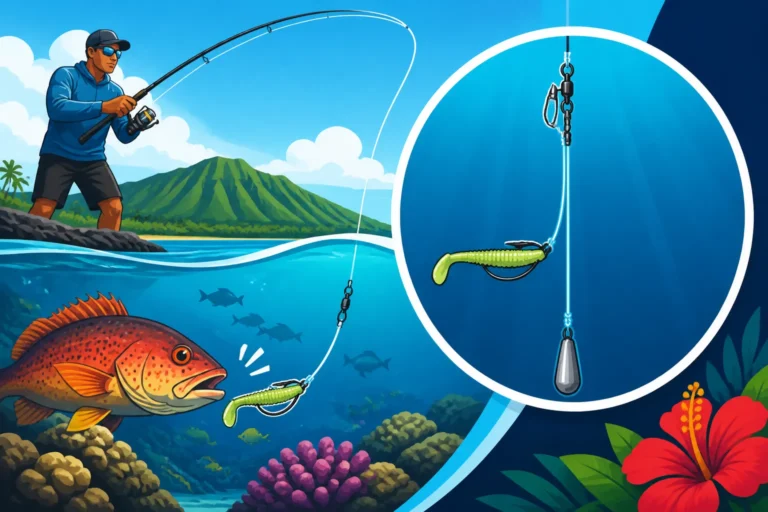
- Jigs: Heavy-duty vertical jigs are excellent for targeting ahi and other tuna species that might be holding deeper along the drop-off. Butterfly jigs, speed jigs, and knife jigs are all popular. Jig weights can range from 200 grams to over 500 grams, depending on depth and current. You might also use lead head jigs with soft plastic trailers for bottomfish if you decide to diversify your target, but for pelagics, the metal jigs are key.
- Live Bait: There's nothing quite like live bait for enticing a strike from a big pelagic. Opelu and akule are prime choices here in Hawaii. They can be caught with sabiki rigs or cast nets and then bridled onto large circle hooks. Slow trolling live bait along the drop-off or drifting them down can be incredibly effective, especially for wary tuna or marlin.
- Chunk Bait: For chumming and drift fishing for ahi, chunked bait (often cut opelu or squid) is highly effective. You'll steadily drop small pieces of bait into the water, creating a scent trail to draw tuna to your boat, where you can then present a hooked bait that matches the chum.
Effective Techniques for Targeting Pelagics on Drop-Offs
Fishing these deep drop-offs requires a strategic approach, combining knowledge of the environment with effective techniques. It's not just about dropping a line; it's about presenting your offerings in a way that appeals to these powerful, fast-moving predators. The dynamic nature of the Hawaiian ocean means you'll often need to adapt your strategy on the fly. You might be targeting Ahi (Yellowfin Tuna) Fishing in Hawaii one moment and then switching to tactics for Marlin Fishing off the Kona Coast the next.
Trolling the Edge
Trolling is perhaps the most common and effective method for covering ground and locating pelagic species along drop-offs. It involves dragging a spread of lures or baits behind a moving boat, mimicking a school of baitfish.
- Understanding Your Spread: A typical trolling spread can consist of anywhere from 4 to 8 lines, each rigged with a different lure or bait and deployed at varying distances and depths behind the boat. This creates a "school" effect and allows you to experiment with different presentations. Shorter lines might be closer to the prop wash, while longer lines might be run from outriggers or shotgun positions.
- Speed and Direction: Trolling speed is critical. For most pelagics, speeds between 6 to 10 knots are common, but this can vary depending on sea conditions and what the fish are biting. Cruising parallel to the drop-off is generally the most effective strategy, allowing your lures to stay in the prime feeding zone. Look for current lines, temperature breaks, or areas where birds are diving, and make passes through these productive zones. Sometimes, making an S-turn can cause your lures to dive and rise, triggering a strike.
- Lure Selection and Action: As mentioned, choosing the right lures is key. Experiment with colors and shapes until you find what's working. Some days, they want a big, flashy jet head lure; other days, a subtle, smaller chugger. Watch how your lures are running in the water; they should be swimming enticingly, not tumbling or spinning. Keeping your hooks razor-sharp is non-negotiable for success.
Deep Jigging and Live Baiting
While trolling covers horizontal ground, deep jigging and live baiting excel at targeting fish holding vertically in the water column along the drop-off.
- Deep Vertical Jigging: This technique is incredibly effective for ahi, especially when they are schooled up deeper along the drop-off or around submerged structures. It involves dropping a heavy metal jig straight down to the desired depth and then rapidly working it back up through the water column with a series of jerks and pauses, mimicking a wounded baitfish. Jigging for Bottomfish in Hawaii principles can apply, but for pelagics, the retrieve is often faster and more aggressive. The strike can be brutal, so be prepared!
- Live Bait Deployment: When you have live bait like opelu or akule, you have a few options. You can slow troll them along the edge of the drop-off, either on the surface or with a lead weight to get them deeper. Another incredibly effective method is to drift with live bait. Hook your bait (often through the nose or back) and let it swim freely, perhaps with a small sinker to get it down to a specific depth. This is especially good for finicky fish that might ignore trolled lures. Using a kite to suspend a live bait far from the boat can also be deadly for marlin or ahi.
- Chumming and Drifting: For ahi, chumming can be a game-changer. Once you've located some signs of tuna along the drop-off, deploy a steady stream of cut bait (your chum) downcurrent from your boat. This creates a scent trail that draws the tuna closer. While chumming, present a hooked live or dead bait that matches your chum, often with minimal weight, allowing it to drift naturally with the chum stream. This can lead to incredible bite-offs once the tuna start feeding aggressively.
Best Practices for Fishing Hawaii Drop-Offs
Regardless of the technique, a few best practices will always increase your chances:
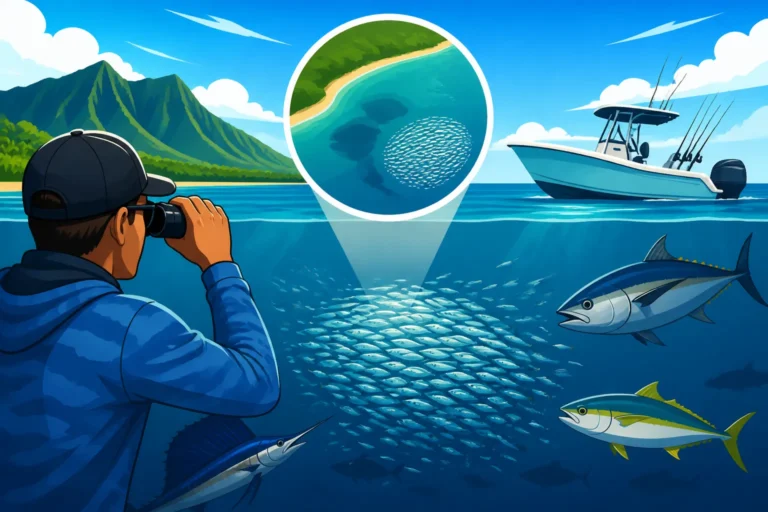
- Watch for Signs: Keep your eyes peeled for diving birds (especially white terns or boobies, which often indicate baitfish pushed to the surface), jumping fish, or even porpoises, which often feed on the same baitfish as tuna. These are all natural fish finders.
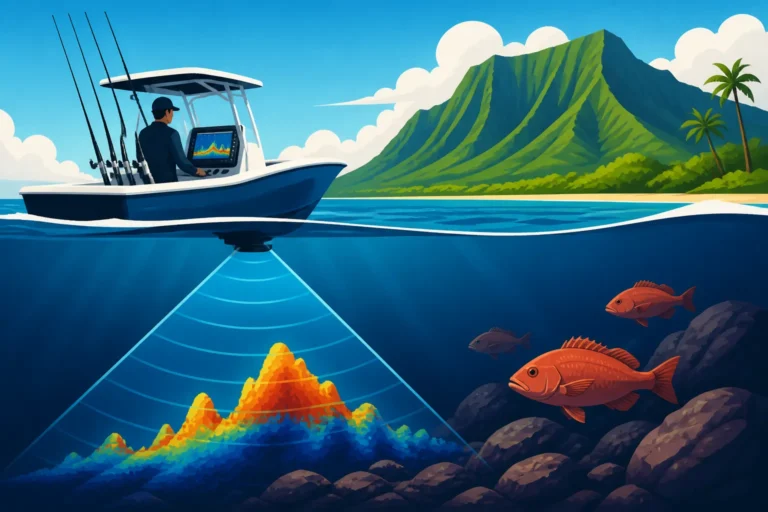
- Monitor Your Electronics: A good fish finder or sonar unit is invaluable. Pay attention to bait balls, individual fish marks, and the actual contours of the drop-off. Understanding what you're seeing below the surface is half the battle.
- Stay Hydrated and Protected: Out on the open ocean, the sun is intense. Make sure you have plenty of water, sunscreen, a hat, and polarized sunglasses. Staying comfortable allows you to stay focused. You can load up on these essentials and more before your trip, finding great deals on Amazon for outdoor gear.
- Handle Fish with Care: Whether you're keeping your catch or releasing it, ethical fish handling is important. If releasing, aim for a quick fight and minimize time out of the water. For larger species, you might be looking for Hawaii Pelagic Species Bag Limits so make sure you are aware of all regulations.
| Pelagic Species | Common Techniques | Ideal Depth (Approx.) | Preferred Bait/Lures |
|---|---|---|---|
| Ahi (Yellowfin) | Deep Jigging, Chunking, Trolling | 100-800 ft | Live Opelu, Squid, Metal Jigs |
| Marlin (Blue/Striped) | Trolling, Live Baiting | Surface to 500 ft | Skirted Lures, Live Tuna/Mackerel |
| Ono (Wahoo) | High-Speed Trolling, Trolling | Surface to 200 ft | Cedar Plugs, Jet Lures, Hard Baits |
| Mahimahi (Dorado) | Trolling, Pitch Baits, Drifting | Surface to 100 ft | Small Skirted Lures, Live Opelu |
Reading the Conditions and Safety Considerations
The ocean around Hawaii, while beautiful, can be unpredictable. Understanding how conditions affect fishing on drop-offs and prioritizing safety are paramount for a successful and enjoyable trip. Never take the ocean lightly; it demands respect. Staying informed about regulations, such as those found in Reading the Hawaii DLNR Fishing Regulations, is also a crucial part of preparation.
Current, Wind, and Water Temperature
These three factors are arguably the most critical environmental elements to consider when fishing drop-offs.
- Current: Ocean currents are a double-edged sword. They are often responsible for the upwelling that attracts bait and pelagics, but strong currents can make fishing difficult. When trolling, you want to work with or against the current to control your lure presentation. When drifting or jigging, understanding the current's direction and speed is vital for positioning your boat and presenting your bait naturally. Look for current lines where two different currents meet, as these often concentrate baitfish.
- Wind: Wind directly impacts wave height and chop, affecting boat comfort and fishing effectiveness. A strong wind can make it hard to maintain a steady trolling speed or a controlled drift. It can also make lure presentation difficult. Always check the marine forecast before heading out. A calm day might mean clear water and easy spotting of fish, but sometimes a bit of chop can actually make fish more aggressive as it breaks up the surface.
- Water Temperature: Pelagic species are highly sensitive to water temperature. They often congregate along "temperature breaks" where warmer and cooler water masses meet. These breaks can be subtle, sometimes only a degree or two difference, but they can signify a change in water chemistry and baitfish presence. Modern fish finders often include a water temperature gauge, which is a valuable tool for locating these productive zones. You might find that Hawaii Fishing Seasons by Month vary significantly due to these temperature changes.
Preparing for the Unexpected and Ensuring Safety
Even on the most beautiful Hawaiian day, things can go wrong offshore. Being prepared isn't just a good idea; it's essential.
- Vessel Maintenance: Before you even leave the dock, ensure your boat is in top mechanical condition. Check fuel levels, engine oil, battery charge, and all navigation lights. A breakdown far offshore can quickly turn into a dangerous situation.
- Safety Equipment: Always carry all required and recommended safety gear. This includes life jackets (one for every person on board, and children's sizes if applicable), flares, a horn or whistle, a first-aid kit, and a fire extinguisher. A VHF radio is non-negotiable for communicating with other vessels and shore in an emergency. Consider also carrying an EPIRB (Emergency Position Indicating Radio Beacon) or a personal locator beacon (PLB) for ultimate peace of mind.
- Float Plan: Let someone on shore know your detailed float plan. This should include where you're going, your planned route, who is with you, and your estimated return time. If you don't check in, they'll know when and where to start looking.
- Weather Monitoring: Keep an eye on the weather forecast not just before you leave, but continuously throughout your trip. Marine weather can change rapidly. If conditions worsen, don't hesitate to head back to shore. No fish is worth risking your life.
- Know Your Limits: Be realistic about your own experience and your boat's capabilities. If you're new to offshore fishing or operating a vessel, consider going with an experienced captain or How to Choose a Hawaii Fishing Charter. The deep ocean around Hawaii can be unforgiving, and having local knowledge and expertise can make all the difference. Fishing with a Best Half-Day Charters in Hawaii could be a great way to gain experience in a safe environment.
- Hydration and Sun Protection: As mentioned earlier, the sun's intensity in Hawaii is no joke. Dehydration and sunburn can lead to serious issues like heatstroke, which can impair judgment. Drink plenty of water and wear protective clothing.
- Emergency Contact: Always have a fully charged cell phone (though service can be spotty far offshore) and know the emergency marine radio channels.
By combining an understanding of these dynamic conditions with a steadfast commitment to safety, you'll be well-equipped to tackle the thrilling challenge of fishing Hawaii's pelagic drop-offs. It's an incredible experience, but one that always requires respect for the power and beauty of the open ocean.
Disclaimer
This article is for general informational purposes only and does not constitute professional advice. Laws, prices and regulations vary by location and change over time. Consult a qualified professional for guidance on your specific situation.