How to fish a channel for bonefish
Fishing for bonefish in Hawaii is an incredible experience, but those winding channels can feel like a whole different ballgame compared to the open flats. Many anglers get frustrated trying to figure out the swirling currents and how to present a fly or lure without spooking these notoriously wary fish. This guide is here to unravel the mysteries of channel fishing for bonefish, offering you clear strategies and practical tips to boost your success.
Understanding Bonefish Channels in Hawaii
Channels in Hawaii are often dynamic, high-energy environments where tidal flow can be quite strong. While challenging, they are also incredibly rewarding because bonefish use these channels as highways for feeding and migrating. Knowing what to look for and how to interpret the water is half the battle.
What Makes a Channel a Prime Bonefish Spot?
Bonefish are constantly on the hunt for food, and channels are natural funnels that concentrate their prey. Think of them as aquatic conveyor belts. The currents bring in small crabs, shrimp, and baitfish, making these areas irresistible dining spots. Beyond just food delivery, channels often feature distinct bottom structures like ledges, drop-offs, and even scattered coral heads or rocks that provide ambush points and protection. These features act as natural current breaks where bonefish can comfortably hold, conserving energy while waiting for a meal to drift by. For instance, a deeper channel might run between two shallower flats, and the bonefish will use it to move from one feeding area to another, especially with changing tides. Look for areas where a channel widens into a small basin or where smaller feeder channels branch off – these are often congregation points.
Reading the Tides and Currents for Bonefish
Understanding the rhythm of the ocean is paramount when fishing channels. Bonefish are highly sensitive to tidal movements and currents, which dictate when and where they feed.
- Inflow and Outflow: As the tide rises (inflow), water rushes into the flats and channels, bringing in nutrients and stirring up the bottom, making food more accessible. Conversely, as the tide falls (outflow), water drains back out, often sweeping prey with it. Both phases can be productive, but the transition periods – an hour or two before and after a high or low tide – are often when bonefish are most active in channels. They're either moving in to feed on rising water or positioning themselves to intercept food being flushed out.
- Eddy Lines and Current Breaks: These are your golden tickets. An eddy line forms where a strong current meets a slower current or an obstruction, creating a swirling pocket of calmer water. Bonefish will often sit in these eddies, conserving energy while waiting for food to drift past. Look for visual cues like foam lines, debris accumulation, or changes in water texture to identify these spots. Similarly, any structure that breaks the current – a large rock, a submerged log, even a subtle change in the channel bottom – can create a current break where bonefish will hold. You’ll often find several fish stacked up in these protected zones. Learning to spot these subtle differences is a skill that comes with practice, and it will significantly improve your chances of locating fish. You might find it helpful to consult resources like "Best time to fish for bonefish on the flats" to combine your channel knowledge with broader tidal patterns.
Essential Gear for Channel Bonefishing
Having the right tackle can make all the difference, especially when you're battling strong currents and powerful bonefish in tight quarters. You need gear that allows for accurate casting, powerful retrieves, and the strength to handle a surging fish.
Rods, Reels, and Line for Channel Tactics
When bonefishing channels in Hawaii, you'll want a setup that offers a good balance of power and finesse.
- Rods: For fly fishing, a 7-weight to 9-weight rod is usually ideal. The 7-weight is great for calmer conditions and smaller channels, offering a more delicate presentation, while the 8-weight is a versatile all-rounder, and the 9-weight provides more backbone for windier days or larger bonefish that might be using the deeper channels. The extra power helps turn bigger fish away from structure. For spin fishing, a medium-light to medium action rod, typically 7 to 8 feet long, is perfect. This length gives you good casting distance and leverage, crucial for working channels effectively. A fast action tip will help you feel those subtle takes and set the hook quickly.
- Reels: Your reel needs a smooth, reliable drag system. Bonefish are known for their blistering runs, and a sticky drag will lead to broken lines and heartbreak. For fly reels, choose one that's designed for saltwater with a sealed drag and ample backing capacity (at least 200 yards of 20-pound backing). For spinning reels, look for corrosion-resistant models with a solid drag that can hold at least 150 yards of 10-15 pound braided line. Durability is key; the saltwater environment is tough on gear.
- Line: For fly fishing, a weight-forward floating line matched to your rod weight is standard. You might consider an intermediate sinking tip line if the channel is particularly deep or if you need to get your fly down quickly in strong currents. For spin fishing, braided line in the 10-15 pound range is highly recommended. It offers incredible sensitivity, minimal stretch for solid hook sets, and excellent casting distance. Always add a fluorocarbon leader (15-20 pound test) of 3-5 feet. Fluorocarbon is nearly invisible underwater and is more abrasion-resistant, a big plus when fishing around rocks and coral in channels. Remember, you can often find a wide selection of these specialized fishing lines and leaders on platforms like Amazon, making it easy to gear up before your trip.
The Best Lures and Flies for Hawaii Channels
Bonefish are opportunistic feeders, but they can be incredibly picky. Matching the hatch, or at least presenting something that looks natural and appetizing, is crucial.
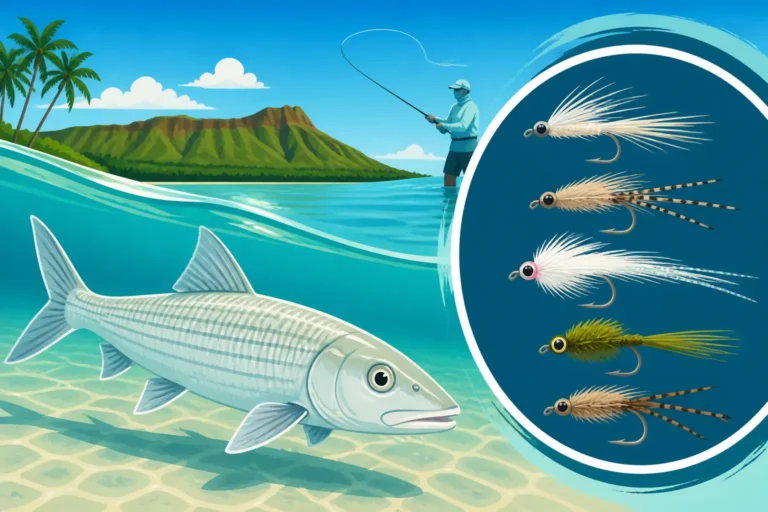
- Flies: When fly fishing for bonefish in channels, think about what they're naturally eating. Small crab and shrimp patterns are perennial favorites. The "Gotcha" (pink, tan, or chartreuse), "Crazy Charlie" (pearl or tan), and various "Squimp" patterns (tan, olive, or grey) are absolute staples. Don't forget realistic crab imitations like the "Flexo Crab" or "Merkin Crab" in natural tan, olive, or brown. The key is to have flies in various weights – unweighted, small lead eyes, or bead chain eyes – so you can adjust to the current and depth of the channel. A fly that's too heavy will sink too fast and snag, while one too light will drift unnaturally. For more options, check out "Best fly patterns for Oahu bonefish."
- Lures/Jigs: Spin anglers will find success with small, lead-head jigs dressed with soft plastics that mimic shrimp or small baitfish. Grubs, shrimp imitations, or small paddle-tail baits in natural colors like clear, smoke, pink, or tan are very effective. Jigs typically range from 1/8 to 1/4 ounce, depending on the current and depth. Some anglers also have luck with very small, slow-sinking twitch baits, especially when bonefish are actively chasing baitfish in the channel. Always work your lure or fly slowly along the bottom, mimicking the natural movement of prey. A slow, subtle retrieve with occasional twitches often works best. You can find quality jigs and soft plastic baits on Amazon, often in multi-packs, which is great for trying different colors and weights.
Techniques for Successfully Fishing Channels
Fishing channels for bonefish requires a thoughtful approach, combining stealth, precise casting, and a keen understanding of how your offering will behave in the current. It's less about blind casting and more about strategic execution.
Strategic Casting and Presentation
This is where many anglers either succeed or struggle. Bonefish in channels are often moving or holding in specific ambush points, so your cast needs to be accurate and your presentation impeccable.
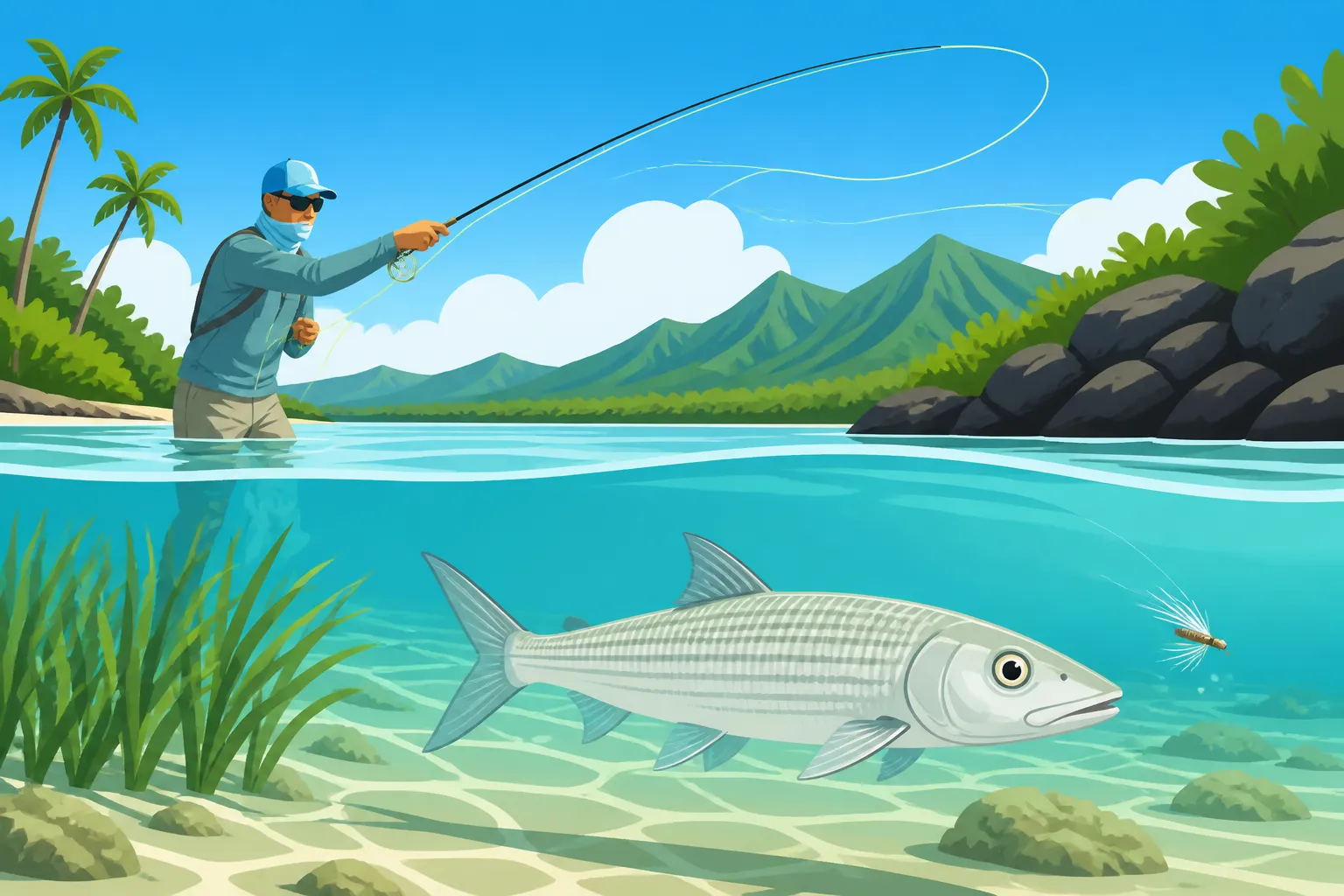
- Upcurrent, Downcurrent, or Across? Generally, casting slightly upcurrent of a visible fish or a likely holding spot is a good strategy. This allows your fly or lure to sink and drift naturally down to the fish, giving it time to spot and intercept the offering without being spooked by a direct overhead drop. If you cast directly to a fish or downcurrent, it often spooks them or results in an unnatural presentation. When casting across a channel, aim to land your lure or fly beyond the fish, allowing it to swing into their feeding zone.
- Retrieve Speed: A slow, subtle retrieve is almost always best. Think about how a crab or shrimp moves along the bottom – short, erratic twitches followed by pauses. Too fast, and it looks unnatural; too slow, and it might not attract attention. Experiment with your retrieve until you find what triggers a strike. Sometimes, a long, slow strip, just enough to keep tension, is all it takes. Other times, a few quick twitches followed by a dead drift is key.
- Staying Stealthy: Bonefish have incredible eyesight and are easily spooked by sudden movements, shadows, or loud noises. Approach channels slowly and quietly. Avoid wading directly into the middle if you can fish from the edges. When casting, use smooth, controlled motions. If you spot a fish, try to cast well ahead of it, giving your fly or lure time to settle. Never cast directly on top of a bonefish; this is almost guaranteed to send it rocketing away. For more general advice on how to approach these fish, consider reading "Best Bonefishing Techniques for Oahu Flats."
Wading and Boat Positioning in Channels
Your approach to the channel, whether on foot or by boat, significantly impacts your success. Stealth and strategic positioning are key.
- Wading Safely and Smartly: If you're wading, always shuffle your feet to avoid stepping on sharp coral or stingrays. Channels can have soft, silty bottoms or very sharp, uneven coral. Pay attention to the current; it can be much stronger than it looks, especially on a falling tide. Plan your route, looking for shallower edges or sand bars that allow for quiet movement. Avoid silting up the water, as this can easily spook fish downcurrent. When you spot fish, try to position yourself so you're casting with the sun at your back, eliminating shadows over the water. For safety first, review "How to wade a reef flat safely in Hawaii."
- Boat Positioning: If fishing from a kayak, SUP, or shallow-draft boat, use a push pole or quiet trolling motor to position yourself. Anchoring or drifting without control can cause too much disturbance. Always try to approach from downwind and downcurrent, allowing you to control your drift and minimize your footprint. Position the boat to give you the best casting angles, allowing you to present your lure or fly to fish holding in current breaks or along channel edges. The goal is to move slowly and deliberately, covering water while maintaining a low profile.
Overcoming Common Challenges
Channel fishing for bonefish can throw a few curveballs your way, from relentless currents to incredibly spooky fish. Knowing how to anticipate and react to these challenges will make you a more effective angler.
Dealing with Strong Currents and Debris
Strong currents are a double-edged sword: they bring in food but can make presentation tricky. Debris is also a common issue, especially after heavy rains or high surf.
- Weighting and Line Management: This is where having a range of weighted flies and jigs comes in handy. If the current is ripping, you'll need more weight to get your offering down to the bonefish's strike zone without it being swept away too quickly. For fly anglers, consider adding a small split shot above your leader, or switch to a fly with heavier lead eyes. For spin anglers, bump up your jig head weight. Line management is also critical. In strong currents, excess slack line will be immediately caught by the current, creating a belly that makes it hard to feel strikes and set the hook. Keep a tight line and use controlled mends (fly fishing) or slight rod tip adjustments (spin fishing) to keep your line as direct as possible to your lure or fly.
- Avoiding Snags: Channels, by their nature, often have structure. Strong currents can push your offering into rocks, coral, or debris, leading to frustrating snags. The key is to present your bait or fly just above the structure, letting it drift naturally without dragging too much on the bottom. If you feel your line ticking the bottom too frequently, either lighten your weight or adjust your retrieve to keep it slightly higher. Knowing the bottom contour, if possible, can help immensely. Sometimes, a quick strip or twitch can lift your offering over a potential snag. Carrying a few extra leaders and a wide selection of lures and flies on your Amazon order is never a bad idea!
Spotting and Approaching Wary Bonefish in Channels
Bonefish are notoriously skittish, and channels can sometimes provide more cover for them, making spotting tougher. Patience and keen observation are vital.
- Polarized Glasses are Non-Negotiable: Seriously, don't even try without them. High-quality polarized sunglasses cut the glare off the water, allowing you to see into the depths and spot the subtle movements of bonefish. Look for their shadows, their faint "tails" as they dig for food, or even the slight discoloration of their bodies against the bottom. Even a flicker of movement can indicate a fish.
- Slow, Silent Approach: This ties back to stealth. Whether wading or poling a boat, move as slowly and quietly as possible. Scan the water ahead, not just where you're about to step or drift. Bonefish often hold near channel edges, using the shallower water for feeding but staying close to the deeper channel for escape. Your approach needs to be calculated, minimizing any disturbance that could send them bolting. Never rush your cast. Take an extra moment to confirm the fish's direction and speed of travel before making your presentation. Sometimes, the best approach is to wait for the fish to move into a better casting position, rather than forcing a risky cast that will likely spook it. If you're looking for guidance, remember that "Best guide services for Oahu's bonefish flats" can provide invaluable on-the-water instruction for spotting and approaching.
Fishing a channel for bonefish in Hawaii is a challenging but incredibly rewarding pursuit. It demands patience, keen observation, and a precise understanding of the environment. By mastering these techniques, reading the water, and having the right gear, you'll be well on your way to experiencing the thrill of hooking into one of Hawaii's ghost of the flats.
Disclaimer
This article is for general informational purposes only and does not constitute professional advice. Laws, prices and regulations vary by location and change over time. Consult a qualified professional for guidance on your specific situation.