Best Techniques for Akule in Hawaii
Few things are more exhilarating than spotting a dark, shimmering patch of Akule (Bigeye Scad) just offshore, but translating that sighting into a full cooler can be a real head-scratcher. Many anglers find themselves frustrated, watching schools pass by without a single hookup. This guide will meticulously break down the most effective techniques, strategies, and gear you'll need to successfully target Akule in the vibrant waters of Hawaii, ensuring you're ready when those schools roll in.
Unveiling the Akule: Behavior and Habitat
To truly master the art of catching Akule, you first need to understand the fish itself. These aren't your typical solitary hunters; Akule are highly social schooling fish, and their behavior is heavily influenced by their environment and the presence of predators or prey. Knowing their habits can give you a significant advantage before you even cast a line.
The Life and Times of Bigeye Scad
Akule, known scientifically as Selar crumenophthalmus, are a schooling species found throughout tropical and subtropical waters worldwide. In Hawaii, they are a staple food fish and an essential part of the marine ecosystem. They're typically identified by their sleek, silvery bodies, large eyes (which give them their "bigeye" name), and a distinctive lateral line running along their sides. These fish generally range from about 6 to 12 inches, though larger specimens are certainly caught, especially in deeper waters or when targeting them with specific methods. They mature relatively quickly and can live for several years, forming massive schools that can number in the thousands. This schooling behavior is their primary defense mechanism against larger predators like tuna, ulua, and even sharks, which are often found hunting around Akule schools. Understanding what akule schools look like from shore can be a game-changer for spotting them before others do.
Akule are opportunistic feeders, primarily preying on zooplankton, small crustaceans, and larval fish. Their diet can shift based on availability, but their small, filter-feeding mouths tell you a lot about the size of the bait you should be presenting. They tend to be most active during low light conditions, such as dawn and dusk, when their large eyes give them an advantage over their prey, though they can be caught throughout the day, especially if a strong bite is on. They are also known to be attracted to lights at night, which can concentrate them into tight aggregations, making them easier targets for certain fishing methods.
Where to Find Schooling Akule in Hawaii
Akule are incredibly adaptable and can be found in a variety of Hawaiian habitats, from shallow bays to deeper offshore waters. However, they consistently gravitate towards certain areas where food is abundant and shelter is accessible. Harbors, coves, and protected bays with good water circulation are prime locations. Think about places like Kewalo Basin on Oahu or Hilo Bay on the Big Island, where Akule often congregate in huge numbers, especially during certain times of the year. They will often mill around piers, jetties, and other man-made structures that provide some protection and can concentrate baitfish.
Beyond nearshore structures, Akule are frequently found around FADs (Fish Aggregating Devices) and other offshore buoys. These floating structures provide a sense of cover in the vast ocean and often attract a wide array of baitfish, which in turn draws in predators, including Akule. When looking for them offshore, keep an eye out for bird activity, particularly diving terns or boobies, as this is a tell-tale sign of baitfish being driven to the surface by predatory fish below – Akule schools are often right in the middle of this chaos. They can also be found congregating along current lines, reef edges, and ledges where nutrients and bait are swept past, providing a consistent feeding ground. Knowing when akule schools show up on Oahu can help you plan your trips effectively.
Shoreline Strategies: Mastering Akule from the Land
For many local anglers and visitors alike, shore fishing is the most accessible way to target Akule. While it might seem straightforward, there are nuanced techniques that can significantly improve your success rate. From traditional casting to specialized netting, mastering these methods from the sand or rocks requires patience and precision.
"Whipping" and Light Tackle Casting Techniques
"Whipping" is the local term for light tackle casting, often used for smaller schooling fish like Akule and Papio. This method relies on casting small, shiny lures or baitfish imitations into feeding schools or known Akule holding areas. The key to successful whipping is using light gear that allows for long casts and presents your lure naturally. A 6-8 foot light-action spinning rod paired with a 1000-2500 size reel spooled with 6-10 lb test monofilament or braid is ideal. You’ll want a 10-20 lb fluorocarbon leader, about 2-3 feet long, to combat their keen eyesight.
When you spot a school of Akule, the tactic is to cast beyond them and retrieve your lure through the school. Akule are often very receptive to fast retrieves, mimicking fleeing baitfish. Small metal jigs (like Kastmasters or similar spoons in silver or gold, usually 1/4 to 1/2 ounce), tiny soft plastics on jig heads, or even small, thin lipless crankbaits can be incredibly effective. Sometimes, a slow, steady retrieve works best, while other times a jerky, erratic retrieve will trigger more bites. Experiment with your retrieve speed and action until you find what the fish are responding to on that particular day. For those looking to stock up, a wide array of these effective lures can be found on Amazon, often in multi-packs, making it convenient to try various styles and colors without breaking the bank.
Navigating Net Fishing: Regulations and Practice
Net fishing for Akule from shore, primarily using throw nets (also known as cast nets), is a deeply ingrained part of Hawaiian fishing culture. However, this method is strictly regulated to ensure sustainability and prevent overfishing. Before you even think about throwing a net, you absolutely must familiarize yourself with the Hawaii net fishing restricted areas and general Hawaii fishing regulations explained. The Department of Land and Natural Resources (DLNR) provides clear guidelines on net mesh size, maximum dimensions, and specific locations where netting is prohibited, such as within Marine Life Conservation Districts (MLCDs).
A good throw net for Akule will typically have a mesh size between 3/8 inch and 1/2 inch and a diameter of 6 to 10 feet. The goal is to cast the net accurately over a tight school of Akule, allowing the lead line to sink quickly and trap the fish. This takes considerable practice to master the throw and achieve a full spread. Many local spots have specific windows of opportunity when Akule schools move close enough to shore to be targeted by netters. It's often a game of patience, waiting for the perfect moment. When successful, net fishing can yield a significant amount of Akule for consumption, often shared within families and communities. Always remember to check if you need a Hawaii fishing license or if you qualify for a Hawaii resident ocean fishing license exemption before engaging in any fishing activity, including netting.
Attracting Akule with Lights: Night Fishing from Shore
Akule's large eyes are perfectly adapted for low light conditions, and they are famously drawn to artificial lights at night. This behavior can be exploited by shore anglers, making night fishing an incredibly productive method, especially during the darker moon phases. The concept is simple: deploy a strong light source into or near the water to attract plankton and small baitfish, which in turn draw in Akule.
Portable submersible LED fishing lights, often powered by a 12V battery, are popular choices. These lights emit a green or white glow that penetrates the water effectively. Position your light from a pier, jetty, or even a rocky outcrop so that it illuminates a section of water without being too close to the surface, which might spook the fish. As the night progresses, you'll often see small baitfish like opelu or juvenile akule start to congregate around the light. This is your cue. Once the larger Akule schools move in, you can target them using light tackle whipping techniques with small jigs or by carefully deploying a throw net if regulations permit and you are skilled enough. This method is particularly effective in calm, clear waters where the light can penetrate well.
Offshore Pursuits: Boat-Based Akule Fishing
While shoreline fishing for Akule is popular, taking a boat out opens up a whole new world of opportunities, allowing access to larger, deeper schools and more diverse techniques. Boat-based Akule fishing can range from slow trolling to intricate chumming strategies, each designed to capitalize on the Akule's schooling nature.
Trolling and Drifting for Akule Schools
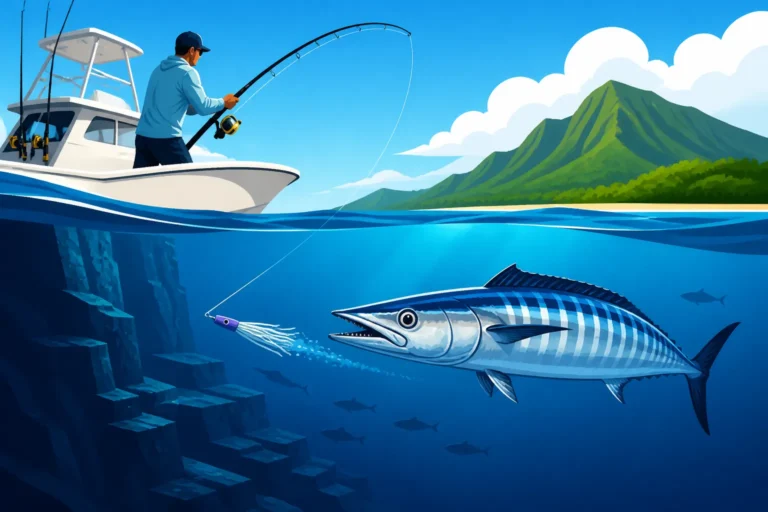
Trolling is an excellent method for covering large areas and locating dispersed Akule schools, especially when you're uncertain of their exact location. Small, light trolling lures are key here. Think tiny feathers, artificial squid skirts, or even bare hooks with a small piece of natural bait like a sliver of opelu. The goal is to mimic a small school of baitfish darting through the water. Trolling speeds should be relatively slow, usually between 2 to 4 knots, to allow the Akule to catch up and strike. Using several lines with different lure colors and depths can help you dial in what the fish are biting on that day.
Drifting is another highly effective boat-based technique, particularly when you've located a school but they're not actively chasing trolled lures. This involves shutting off the engine and allowing the boat to drift naturally with the current over or near a known Akule aggregation. As you drift, you can deploy sabiki rigs or small jigs, or even use a light chum slick to draw the school closer to the boat. The natural, unpressured presentation of a drifting bait or lure often proves irresistible to Akule. This method is particularly effective around FADs, current lines, or over reef structures where Akule are known to hold.
The Art of Chumming and Live Bait Presentation
Chumming is perhaps one of the most effective ways to bring Akule right to your boat and keep them there, especially when they are in a finicky mood. The idea is to create a consistent trail of attractive scent and small food particles that draws the fish in and stimulates a feeding frenzy. A good chum mix often consists of finely ground fish (like aku or opelu), stale bread, or even specialized commercial chum blocks. For those who prefer to make their own, having a good grinder and fresh bait is essential, and many specific chumming ingredients can be found readily on Amazon or local tackle shops.
Once you've anchored or positioned your boat near a suspected Akule school, start deploying small handfuls of chum into the water, letting it drift with the current. The key is consistency – a small, steady stream rather than large dumps. As the Akule gather, you can then present small live baits (like juvenile Akule if you've caught them previously, or small silversides) or artificial lures that match the size of the chum. A common rig for live baiting Akule is a small, light hook (size 6-10) tied directly to your fluorocarbon leader, with no weight, allowing the bait to swim naturally with the chum. This method is particularly deadly when targeting larger Akule or when fishing for them as bait for bigger pelagics like ahi or marlin.
Vertical Jigging and Sabiki Rigs from a Boat
Vertical jigging with sabiki rigs is the quintessential method for catching Akule from a boat, particularly when they are schooled tightly beneath the vessel. A sabiki rig is a multi-hook setup, typically featuring 6-8 small, shiny hooks adorned with iridescent material, fish skin, or synthetic fibers, designed to imitate small baitfish or plankton. These rigs are incredibly efficient for catching multiple fish at once.
To use a sabiki rig, simply tie it to your main line, add a sinker (usually 1-3 ounces, depending on current and depth) to the bottom of the rig, and lower it straight down into the Akule school. Once it reaches the desired depth, gently lift and drop your rod tip (jigging) in a rhythmic motion. This action makes the small flies "swim" and often triggers aggressive strikes from the schooling Akule. When you feel bites, continue jigging gently; often, you can hook several fish on one retrieve. Once you've caught a few, reel them up steadily but not too fast, as this can cause the fish to tear off. Sabiki rigs are widely available, and you can stock up on various sizes and colors easily through online retailers like Amazon to ensure you're prepared for any conditions. This technique is also excellent for gathering opelu (mackerel scad), another common baitfish in Hawaii.
Essential Gear and Tackle for Akule Success
Having the right gear makes a world of difference when targeting Akule. These fish, while not massive, can be surprisingly strong in a school, and their delicate mouths require a nuanced approach with your tackle. Skimping on quality can lead to frustration and lost fish.
Selecting the Right Rod, Reel, and Line Setup
For whipping Akule from shore or vertical jigging from a boat, a light to medium-light action spinning rod, typically 6 to 8 feet long, is your best friend. This length provides good casting distance from shore and enough leverage to work a sabiki rig or jig from a boat. The "light" action is crucial as it allows for a more sensitive feel of the subtle Akule bite and prevents hooks from tearing out of their soft mouths.
Pair this rod with a small spinning reel, size 1000 to 2500. These reels are light, well-balanced, and have a smooth drag system, which is important when you hook into multiple Akule on a sabiki rig. For line, 6-10 lb test monofilament is a classic choice, offering good knot strength and shock absorption. However, many anglers prefer 10-15 lb braided line for its thinner diameter (allowing for more line capacity and better casting distance), superior sensitivity, and minimal stretch. If using braid, a fluorocarbon leader of 10-20 lb test, about 2-3 feet long, is essential to make your presentation less visible to the sharp-eyed Akule. This leader also offers a bit of abrasion resistance against rough structures.
Best Baits, Lures, and Rigs for Akule
When it comes to baits and lures, matching the hatch is key for Akule. They feed on small prey, so your offerings should reflect that.
Natural Baits:
- Small cut bait: Tiny pieces of squid, opelu, or even other Akule can be very effective. A small sliver on a size 8-12 hook is often all it takes.
- Shrimp: Small pieces of peeled shrimp are a universal bait that Akule often can't resist.
- Bread ball: Believe it or not, a tiny, compressed bread ball can work wonders, especially in harbors where Akule are accustomed to scavenging for food.
Artificial Lures:
- Sabiki Rigs: As mentioned, these are indispensable for Akule. Carry a variety of hook sizes (typically #6 to #12) and color patterns to see what works best.
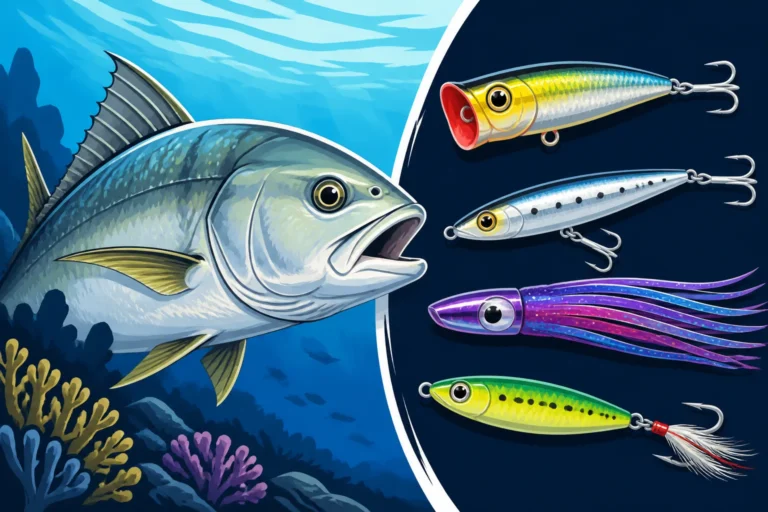
- Small Metal Jigs/Spoons: Chrome, silver, or gold jigs in 1/4 to 1/2 ounce are excellent for whipping. Brands like Kastmaster or similar spoon-style lures are proven performers. Retrieve them quickly with a twitching motion.
- Tiny Soft Plastics: Small grub tails or minnow imitations (1-2 inches) rigged on 1/16 to 1/8 ounce jig heads can be deadly, especially when Akule are being finicky.
- Small Feather Jigs/Flies: These are effective for both whipping and slow trolling, mimicking tiny baitfish.
Rigging for Success:
For bait fishing, a simple dropper loop rig with two or three small hooks above a small sinker (1/4 to 1/2 ounce) allows you to present multiple baits at different depths. For whipping, a single jig or lure tied directly to your fluorocarbon leader is standard. Always check your knots and leader for nicks, as Akule can be surprisingly strong and fight hard in a school.
| Technique | Recommended Gear | Bait/Lure Examples | Ideal Conditions |
|---|---|---|---|
| Shore Whipping | Light-action rod (6-8ft), 1000-2500 reel, 6-10lb mono/braid, 10-20lb fluoro leader | Small metal jigs (1/4-1/2oz), tiny soft plastics, small spoons | Active schools near shore, dawn/dusk, clear water |
| Shore Netting | Throw Net (6-10ft diameter, 3/8-1/2" mesh) | N/A (targets schooling fish directly) | Tight schools close to shore, calm water |
| Boat Jigging (Sabiki) | Medium-light rod, 2500-4000 reel, 10-20lb braid, 1-3oz sinker | Sabiki rigs (#6-#12 hooks, various colors) | Schools beneath boat, deeper water, any time |
| Boat Chumming | Same as boat jigging, or slightly heavier | Small live baits (juvenile Akule, silversides), cut bait | Dispersed schools, calm water, need to attract |
| Boat Trolling/Drifting | Light trolling rods, small conventional/spinning reels, 10-20lb line | Small feather jigs, tiny squid skirts, cut bait | Locating schools, covering ground, any time |
Timing is Everything: Akule Seasons and Conditions
Understanding the seasonal movements and daily habits of Akule is paramount to consistent success. These fish are creatures of habit, influenced by environmental factors that dictate their presence, feeding activity, and accessibility.
Seasonal Movements and Prime Fishing Months
Akule can be found in Hawaiian waters year-round, but their abundance and schooling behavior can fluctuate with the seasons. Generally, Akule tend to move into shallower, more accessible areas during the cooler months, roughly from late fall through spring. This is when you'll often see larger, denser schools appearing in harbors, bays, and close to shorelines, making them prime targets for both netters and shore anglers. The slightly cooler water temperatures and changes in current patterns during these months often concentrate baitfish, drawing the Akule in.
During the warmer summer months, Akule schools might disperse or move into deeper, offshore waters, though they can still be found. This is when boat-based techniques like trolling around FADs or offshore ledges become more effective. Keep an eye on local fishing reports and talk to veteran anglers; they often have a keen sense of Hawaii fishing season dates and closures and best time of year to fish in Hawaii for various species, including Akule, based on decades of observation. For example, some islands might see more consistent Akule runs at different times than others. On Oahu, certain periods are known for massive Akule school arrivals, particularly around areas like the sand flats near Sand Island.
Understanding Tides, Currents, and Moon Phases
Beyond seasonal shifts, daily conditions like tides, currents, and moon phases play a significant role in Akule behavior.
- Tides and Currents: Akule are often more active feeders during moving tides – either incoming or outgoing. The movement of water stirs up nutrients and dislodges baitfish, creating a feeding opportunity. Slack tide, when the water is relatively still, can often be slower for Akule. Strong currents can also concentrate baitfish, and by extension, Akule, along current breaks or eddies. Fishing the edges of these current lines can be very productive.
- Moon Phases: The moon's gravitational pull influences tides, and in turn, fish activity. While Akule can be caught during any moon phase, many experienced Akule anglers swear by the period around the new moon or full moon. New moon nights, being darkest, are particularly effective for light fishing, as the artificial light source stands out more dramatically. Full moon nights, with their brighter ambient light, can also lead to active feeding, though the fish might be more spread out. However, don't let the moon phase deter you; if you find a school, they can often be convinced to bite regardless.
- Time of Day: As mentioned earlier, Akule's large eyes give them an advantage in low light. Dawn and dusk are often peak feeding times. Early mornings, just as the sun starts to peek over the horizon, can be incredibly productive, as can the hour or two leading up to sunset. Night fishing, especially with lights, can also be phenomenal, drawing in entire schools.
Respecting the Resource: Regulations and Responsible Angling
Hawaii's marine ecosystem is precious and fragile. As anglers, we have a responsibility to adhere to regulations and practice sustainable fishing to ensure Akule populations thrive for generations to come. Ignoring these rules not only harms the environment but can also lead to significant penalties.
Key Hawaii Akule Regulations to Know
Fishing regulations for Akule in Hawaii are primarily set by the Division of Aquatic Resources (DAR), part of the Hawaii DLNR. These rules are designed to manage fish stocks and protect the marine environment.
- Bag Limits: While Akule are generally considered abundant, there are usually bag limits in place to prevent overharvesting, especially for recreational anglers. These limits specify the maximum number of fish an individual can keep per day. Always check the most current Hawaii pelagic species bag limits before you head out.
- Size Limits: Minimum size limits may apply to Akule, ensuring that fish have a chance to reproduce at least once before being harvested. Measuring your catch correctly is crucial.
- Gear Restrictions: This is particularly important for net fishing. There are strict rules on the type, size, and use of nets, including mesh size requirements and maximum dimensions for throw nets. Certain types of nets, like gill nets over a specific length, may be prohibited for recreational use or restricted to commercial operations with proper licensing. Remember to consult the Hawaii fishing regulations explained to understand all specific gear rules.
- Restricted Areas: Fishing, especially netting, is often prohibited or heavily restricted in certain areas. Marine Life Conservation Districts (MLCDs) like Hanauma Bay, and Fish Replenishment Areas (FRAs), have specific rules designed to protect sensitive habitats and allow fish populations to recover. Familiarize yourself with Hawaii Marine Life Conservation Districts, explained to avoid inadvertently fishing in a protected zone.
Ignorance of the law is not an excuse. Carrying a printed copy or having easy digital access to the current Hawaii DLNR fishing regulations PDF is highly recommended. Violations can result in hefty fines and confiscation of gear. If you are unsure about any regulation, err on the side of caution or contact the DAR for clarification.
Practicing Sustainable Akule Fishing
Beyond simply following the rules, responsible angling involves adopting practices that minimize your impact on the marine environment.
- Catch and Release When Possible: If you've caught more Akule than you need for a meal or for bait, consider releasing healthy fish. Handle them gently, minimize their time out of water, and use de-hooking tools if necessary. Releasing healthy fish ensures they can continue to contribute to the breeding population.
- Avoid Waste: Only keep what you can realistically consume or use for bait. Wasting fish is not only disrespectful to the resource but can also attract predators to shorelines, potentially creating dangerous situations.
- Clean Up After Yourself: Always pack out everything you pack in. This includes fishing line, hooks, bait containers, and any other trash. Ghost fishing gear (lost nets or lines) can continue to harm marine life for years. Leaving the shoreline cleaner than you found it should be every angler's goal.
- Report Violations: If you witness illegal fishing activity, such as exceeding bag limits, using prohibited gear, or fishing in restricted areas, report it to the DLNR. Protecting Hawaii's fisheries is a community effort.
- Educate Others: Share your knowledge of regulations and sustainable practices with fellow anglers, especially newer ones. A culture of conservation benefits everyone.
By understanding Akule, employing effective techniques, and committing to responsible practices, you can enjoy the rewarding experience of targeting these incredible schooling fish in Hawaii for many years to come.
Disclaimer
The information provided in this guide is for general informational purposes only and does not constitute legal advice. Fishing regulations in Hawaii are subject to change by the Department of Land and Natural Resources (DLNR). It is the responsibility of every angler to consult the most current Hawaii Administrative Rules (HAR) and any applicable federal regulations before engaging in any fishing activity. Always prioritize safety and environmental stewardship.