Best kayak fishing technique for offshore pelagics
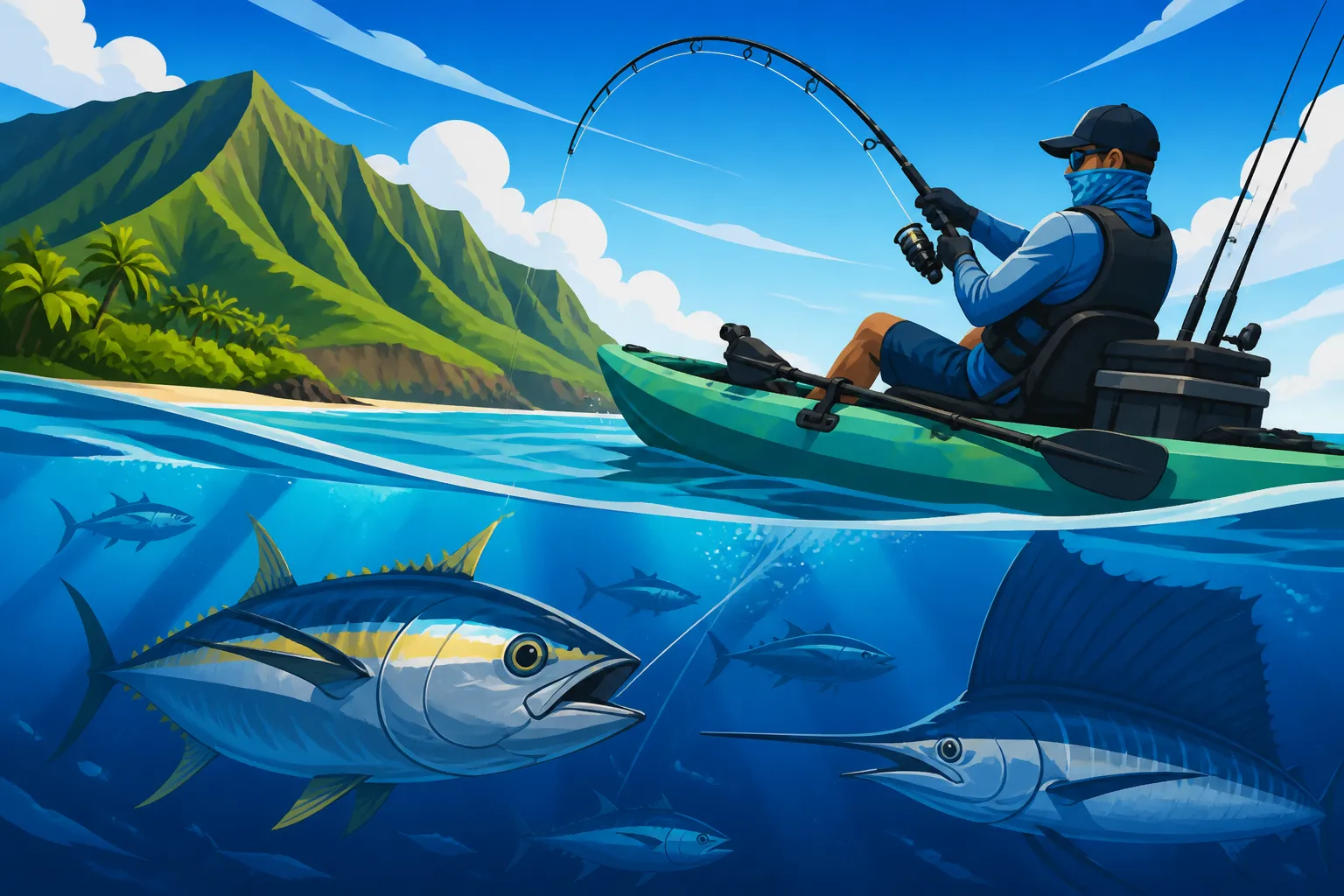
There's nothing quite like the immense challenge and exhilarating reward of paddling out into the vast, open ocean surrounding Hawaii, a tiny vessel cutting through the swells, with the sole purpose of targeting powerful pelagic species like ahi, marlin, ono, and mahimahi. It's a daunting prospect for many, feeling small against the immensity of the Pacific, but this guide is here to break down the most effective kayak fishing techniques, ensuring your offshore adventure is both safe and successful.
Understanding the Allure and Challenges of Offshore Kayak Fishing in Hawaii
Kayak fishing for pelagics in Hawaii isn't just about catching fish; it's about the deep connection to the ocean, the raw, unadulterated fight with a powerful creature, and the self-sufficiency required to venture far from shore. It’s an experience that tests your limits and rewards you with incredible memories, not to mention some of the best eating fish in the world. But it's also not for the faint of heart, demanding careful preparation, a keen understanding of ocean conditions, and respect for the powerful forces at play.
Why Offshore Pelagics from a Kayak?
The primary draw for many is the sheer thrill. Imagine hooking into a 100-pound ahi from a kayak – the fish can easily tow you for miles, turning your craft into a glorified sleigh ride. The fight is magnified tenfold when you're essentially at sea level, eye-to-eye with the spray and the power of the fish. This intimate interaction creates a memory that no large sportfishing boat can replicate. Furthermore, kayaks offer unparalleled stealth, allowing you to approach bait balls or feeding frenzies without spooking the fish that larger, noisier vessels might. You can quietly slip into areas that are inaccessible to bigger boats, sometimes finding untouched fishing grounds. It's a minimalist approach to a big game hunt, appealing to those who seek a true challenge and a more personal connection with their quarry and the ocean environment.
The Inherent Risks and How to Mitigate Them
Venturing offshore in a kayak, even in Hawaii's often-calm waters, comes with significant risks that cannot be understated. Rapidly changing weather, strong currents, and the sheer distance from shore can turn a pleasant day into a dangerous situation quickly. Your personal safety should always be the absolute priority. This means never going out alone, always filing a float plan with someone on shore, and carrying redundant safety equipment. You need to be acutely aware of the local weather forecasts and understand how quickly conditions can deteriorate. Sudden squalls, large swells, or unexpected winds can make paddling back to shore a monumental task. The best way to mitigate these risks is through thorough preparation, constant vigilance, and a healthy respect for the ocean's power. Before you even launch, check multiple weather sources and discuss conditions with experienced local kayak anglers.
Essential Gear and Rigging for Offshore Kayak Fishing
Success and safety in offshore kayak fishing heavily depend on your gear. It's not just about having the right rod; it's about a complete system that ensures you're prepared for anything the ocean throws at you. Investing in quality, purpose-built gear is paramount when you're miles from land.
Your Offshore Kayak Setup
For offshore work, stability and tracking are key. While any kayak can technically go offshore, certain designs are far superior. Pedal-drive kayaks, like those from Hobie, are incredibly popular because they free up your hands for fishing, rigging, and managing your tackle. They also offer continuous propulsion, which is a massive advantage when fighting a fish or battling a current. Paddle kayaks can work, but the effort required to cover long distances and fight fish simultaneously is much higher. Look for kayaks that are at least 13-14 feet long, offering ample storage for gear, ice, and your catch. Integrated rod holders, tackle storage, and a sturdy rigging system for electronics are also crucial. Make sure your kayak has enough scupper holes to drain water quickly, especially if a wave breaks over you. A well-designed offshore kayak will feel like a stable platform, not a tippy toy, giving you confidence when the ocean gets a bit lumpy. You might even consider checking out some Best Kayak Fishing Spots in Hawaii to get a feel for different conditions and what kind of kayaks others are using.
Must-Have Safety and Communication Gear
This is non-negotiable. Your life depends on it. A well-fitted Personal Flotation Device (PFD) is number one – wear it, don't just store it. Beyond that, a reliable VHF marine radio is essential for communicating with other vessels or the Coast Guard in an emergency. Cell phones often lose signal far offshore. A GPS device (many fish finders have this built-in) is critical for navigation, marking productive spots, and guiding you back to shore, especially if fog or squalls obscure visibility. Carry multiple signaling devices: an air horn, a whistle, a signal mirror, and a brightly colored flag. A personal locator beacon (PLB) or satellite messenger, such as those made by Garmin InReach or Spot, offers an extra layer of safety, allowing you to send distress signals even without cell service. Don't forget a sharp knife, plenty of fresh water, high-energy snacks, a comprehensive first-aid kit, and a basic repair kit for your kayak (duct tape, marine epoxy, zip ties). Remember, all boaters, including kayakers, should be aware of Life Jacket Requirements for Hawaii Boaters.
Rods, Reels, and Tackle for Hawaiian Pelagics
Targeting pelagics from a kayak requires tackle that can withstand immense pressure. For ahi (yellowfin tuna) and marlin, you'll want heavy-duty conventional setups. Think 50-80 lb class rods with matching reels spooled with at least 300-400 yards of 60-100 lb braided line, topped with a heavy monofilament or fluorocarbon leader. Brands like Penn, Shimano, and Daiwa offer excellent options that you can often find on Amazon. For ono (wahoo) and mahimahi, slightly lighter 30-50 lb class conventional or heavy spinning setups work well. You'll need an assortment of trolling lures, ranging from skirted pulsators for marlin and ahi, to smaller jet heads and diving plugs for ono and mahimahi. Ensure all hooks are sharp and strong enough to handle powerful, fast-swimming fish. Don't skimp on terminal tackle – swivels, snaps, and leader material must be top-notch. Carrying a flying gaff for larger fish is also highly recommended, as is a large fish bag or cooler to preserve your catch with plenty of ice. Before heading out, make sure you're familiar with the Hawaii Bag and Size Limits by Species to ensure your catch is legal.
Mastering Trolling Techniques for Pelagics from a Kayak
Trolling is perhaps the most effective technique for covering water and locating pelagic species from a kayak. It allows you to present multiple lures or baits at once, mimicking schooling baitfish and enticing predators. The key is understanding how different species react to various presentations and adapting your technique to ocean conditions.
High-Speed Trolling for Ono and Mahimahi
Ono (wahoo) and mahimahi (dolphin fish) are incredibly fast-swimming predators that often strike lures trolled at higher speeds. From a pedal kayak, you can often maintain speeds between 3-7 knots, which is ideal. For ono, focus on bullet-shaped lures, jet heads, or diving plugs in dark colors (purple/black, blue/black) or bright, reflective patterns. Mahimahi often prefer brighter, flashier colors like pink, chartreuse, or iridescent patterns, and will strike at skirted lures or small diving plugs.
- Lure Placement: When trolling multiple lines from a kayak, staggering your lures at different distances behind the kayak helps prevent tangles and allows you to cover a wider swath of water. Use outriggers or specialized kayak rod holders that extend out from the sides to achieve this spread.
- Trolling Speed: Experiment with your speed. Sometimes a slight acceleration or deceleration can trigger a strike. Pay attention to how your lures are running in the water; they should be swimming naturally, not skipping or spinning excessively.
- Current Considerations: Troll with or against the current, or across it, to see what triggers bites. Fish often orient themselves into the current, waiting for bait to come to them. Trolling against the current might allow your lures to appear more natural to a feeding fish.
You can learn more about general trolling strategies in Trolling Techniques for Hawaii Pelagics.
Slow Trolling and Live Bait for Ahi and Marlin
When targeting larger, more elusive species like ahi and marlin, live bait can often be the ticket. These powerful predators are less likely to fall for artificial lures every time, especially if they are well-fed or wary. Slow trolling a live baitfish, such as an opelu (mackerel scad), akule (bigeye scad), or small skipjack tuna, can be incredibly effective.
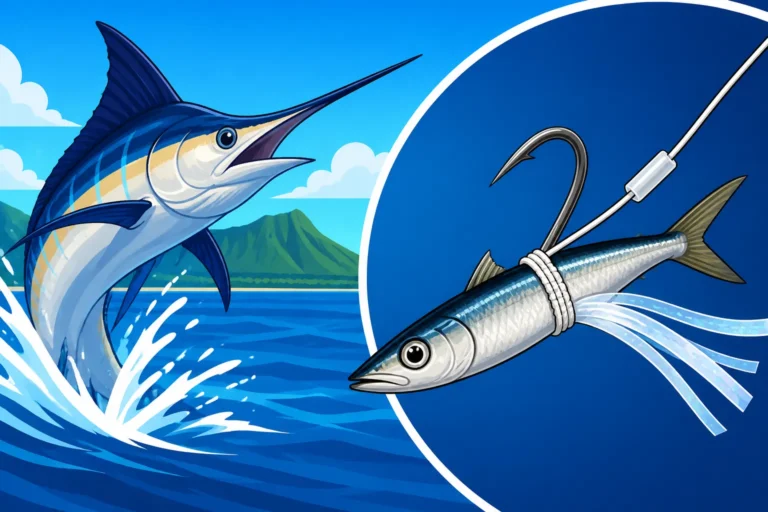
- Bait Rigging: Rigging live bait is an art. For marlin and larger ahi, a bridle rig with a single large circle hook through the nose or back is common, allowing the bait to swim freely and improving hookup ratios. Ensure your leader is heavy fluorocarbon (100-200 lb) to withstand the fish's abrasive mouth.
- Finding Bait: Catching your own live bait is part of the adventure. Small sabiki rigs or cast nets can be used over shallow reefs or around harbor entrances early in the morning. Keep your bait alive in a kayak-friendly livewell system, powered by a small battery and aerator, which you can also find on Amazon.
- Presentation: Slow troll your live bait along current lines, depth changes, or around Fish Aggregating Devices (FADs). Ahi often congregate around FADs, while marlin patrol deeper ledges and bait schools. The goal is to make your live bait appear as natural and vulnerable as possible. Be ready for an explosive strike! For specific information on catching tuna, check out How to Catch Ahi in Hawaii.
Reading the Ocean and Locating Pelagics
Successful offshore kayak fishing isn't just about technique; it's about understanding the ocean's language. Pelagic species are constantly on the move, following bait and temperature breaks. Learning to read the signs will dramatically increase your chances of finding them.
- Bird Activity: Diving birds, especially boobies and terns, are excellent indicators of baitfish schools being driven to the surface by predatory fish below. Where there are birds diving, there are almost certainly ahi, mahimahi, or ono feeding. Paddle towards the commotion, but do so quietly to avoid spooking the fish.
- Current Lines and Temperature Breaks: Look for distinct lines on the water where different currents meet, often visible as a change in water color or texture. These lines concentrate baitfish and, consequently, the predators that feed on them. Similarly, subtle changes in water temperature can hold fish. A good fish finder with a temperature sensor can be invaluable here.
- FADs and Submerged Structure: Hawaii has numerous FADs (Fish Aggregating Devices) deployed offshore, which act as magnets for pelagic fish. These buoys are public knowledge, and maps are often available from the Department of Aquatic Resources. Fishing around FADs requires patience and a watchful eye, as fish may be holding at various depths. Submerged seamounts and ledges also provide structure that can hold bait and attract larger fish.
Advanced Tactics and Best Practices for Success
Even with the right gear and basic techniques, the open ocean presents unique challenges, especially when you've got a powerful fish on the line. Knowing how to handle the unexpected and prepare for various scenarios is what sets a successful offshore kayak angler apart.
Managing a Large Fish from a Small Craft
Hooking into a substantial pelagic from a kayak is a wild ride, and safely landing it requires a specific skillset. You become part of the fight, being towed around by the fish.
- The Sleigh Ride: When a big fish like a marlin or ahi takes off, don't try to paddle against it initially. Let the fish pull you, conserving your energy. This is often called the "Kona Sleigh Ride" because of how common it is when Marlin Fishing off the Kona Coast. Use your rudder to steer the kayak in the direction the fish is heading to minimize drag and maintain control.
- Fighting Technique: Keep your rod tip up and maintain steady pressure. Let the drag do its job. When the fish pauses or changes direction, quickly gain line. Pumping the rod and reeling down helps, but remember you're also trying to control your kayak.
- Safety First: Be mindful of your line's angle and avoid getting it wrapped around your legs, arms, or the kayak's rudder. Once the fish is alongside, be extremely cautious. A thrashing marlin or a powerful ahi can cause serious injury or even capsize your kayak. Have your gaff ready and know how to use it efficiently. For large fish, a single, decisive gaff shot to the head is often necessary. If you're planning on a catch-and-release, consider using barbless hooks and practicing your release technique beforehand.
Fish Care and Preservation
Once you've landed your hard-earned catch, proper fish care immediately becomes critical, especially in Hawaii's warm climate. Your kayak doesn't have a giant chill plate, so you need to be smart.
- Ike Jime and Bleeding: For optimal eating quality, dispatch your fish quickly using the "ike jime" technique (spiking the brain) to minimize stress and prevent lactic acid buildup in the meat. Immediately bleed the fish by cutting the gill arches or severing the caudal artery near the tail. This improves flavor and extends freshness.
- Icing: Get the fish on ice as quickly as possible. A well-insulated fish bag, like a Reliable Kill Bag or similar products found on Amazon, is essential. Fill it with a good amount of ice before you launch. Lay the fish flat and cover it completely with ice. The goal is to rapidly bring down the core temperature of the fish to preserve its quality for the table. For pelagics, cooling them down immediately can make a huge difference in taste.
Environmental Responsibility and Regulations
As stewards of Hawaii's precious marine environment, kayak anglers have a responsibility to adhere to all fishing regulations and practice sustainable fishing. This isn't just about avoiding penalties, but about ensuring healthy fish stocks for future generations.
- Licensing: While many recreational ocean fishing activities in Hawaii do not require a license for residents, freshwater and commercial fishing have specific requirements. It's always best to be clear on whether you need a Hawaii Fishing License Guide for 2026 or if you are exempt, especially if you are a non-resident.
- Bag and Size Limits: Strictly adhere to all bag limits and minimum/maximum size limits for each species. These rules are in place to protect populations. Ignorance of the law is no excuse, and penalties for Fishing Without a Required License in Hawaii: Penalties or violating bag limits can be severe. Consult the Hawaii Division of Aquatic Resources (DAR) regulations before every trip.
- Protected Species: Be aware of any protected or endangered species in Hawaiian waters and know how to properly release them if accidentally caught. Avoid fishing in Marine Life Conservation Districts (MLCDs) or other restricted areas. Always respect wildlife, maintaining a safe distance from marine mammals, turtles, and seabirds. Leave no trace – pack out everything you pack in, including any discarded fishing line or trash.
Hawaii Pelagic Species & Best Lures/Bait from a Kayak
To help you get ready, here's a quick reference for common pelagic species you might encounter and some effective strategies from a kayak.
| Species | Common Size (Kayak) | Preferred Trolling Speed | Effective Lures/Bait | Notes |
|---|---|---|---|---|
| Ahi (Yellowfin Tuna) | 20-100+ lbs | Slow to Medium (2-5 knots) | Live Opelu, Akule, Squid; Cedar Plugs, Small Jet Heads, Skirted Trolling Lures (dark/natural colors) | Often around FADs, current lines. Powerful, long fights. |
| Ono (Wahoo) | 15-60 lbs | Fast (5-10+ knots) | Bullet Lures, Jet Heads, Diving Plugs (dark, metallic, or reflective) | Incredibly fast, often hit on initial run. Razor-sharp teeth. |
| Mahimahi (Dolphin Fish) | 10-40 lbs | Medium to Fast (4-8 knots) | Skirted Trolling Lures (bright colors like pink, green, chartreuse); Small Diving Plugs | Often found under floating debris or around FADs. Good fighters. |
| Marlin (Blue/Striped) | 50-500+ lbs | Medium (4-7 knots) | Large Skirted Trolling Lures, Live Skipjack Tuna, Opelu (bridled) | Ultimate kayak challenge. Be prepared for a long "sleigh ride." |
| Aku (Skipjack Tuna) | 5-20 lbs | Medium to Fast (4-7 knots) | Small Lures, Feathers, Spoons; Live Bait | Often found in large schools. Great bait for larger pelagics. |
| Spearfish (Shortbill) | 20-50 lbs | Medium to Fast (4-7 knots) | Small to Medium Skirted Lures, Diving Plugs | Often mistaken for small marlin. Fast, acrobatic fighters. |
Remember that each day on the water is different. Pay attention to what's working, what the baitfish are doing, and what the ocean is telling you. This adaptability is the hallmark of a truly skilled Hawaii kayak angler.
Disclaimer
Fishing in Hawaii, especially offshore, carries inherent risks. The information provided in this guide is for informational purposes only and should not replace professional advice or local regulations. Always prioritize safety, check current weather and ocean conditions, and adhere to all local, state, and federal fishing laws. The ocean can be unpredictable, so be prepared and exercise caution.