Best leader material for reef structure
There's nothing quite as frustrating as feeling that solid thump on your line, fighting a good fish, only for everything to go slack. That sickening feeling often means your line, specifically your leader, has met its match against the unforgiving lava and coral reefs that define Hawaii's fishing landscape. This guide is here to help you navigate the crucial decision of choosing the best leader material, ensuring your connection to that prized catch stays strong against the sharp edges below.
The Reef's Relentless Reality: Why Leader Material Matters So Much
Hawaii's fishing isn't just about beautiful scenery and plentiful fish; it's also about a constant battle with the environment beneath the waves. The very structure that attracts so many desirable species — the vibrant coral gardens, the ancient lava flows, and the barnacle-encrusted rocks — also poses the greatest threat to your fishing line. Understanding this inherent challenge is the first step to conquering it.
Understanding the Enemy: Abrasive Reefs and Coral
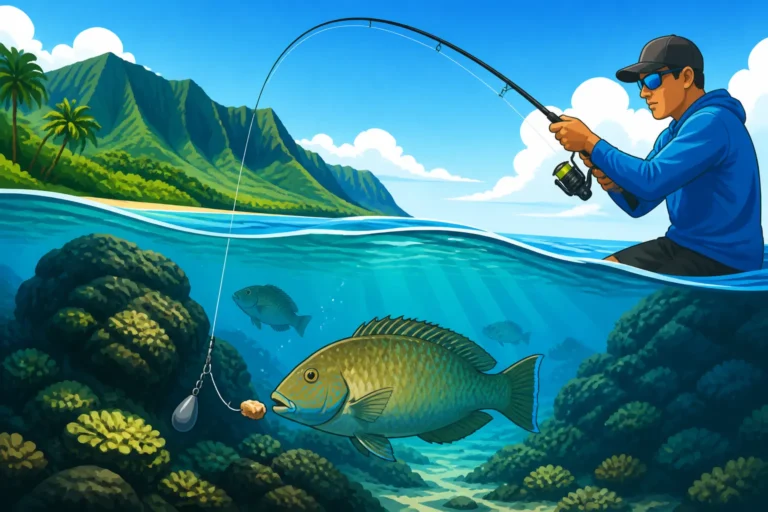
Imagine a surgeon's scalpel, or perhaps a thousand tiny razor blades, all waiting to slice through your fishing line. That's essentially what a coral reef can be for an unsuspecting angler. Live coral, even though it appears soft, has incredibly sharp, calcified edges. Dead coral breaks down into jagged, crystalline structures. Then there are the volcanic rocks, a staple of the Hawaiian coastline, often riddled with sharp crevices and coated in coarse barnacles, each one a potential cutting edge.
When a fish like a powerful ulua or a feisty papio takes your bait and immediately dives for cover into these structures, your leader will be dragged, scraped, and tested against these brutal surfaces. It's not a matter of if it will rub, but how much and against what. That moment when your line goes taut and you feel that grating vibration, you know the fight isn't just with the fish anymore; it's with the entire reef. It's a heartbreaking scenario we've all faced, pulling back a limp line with a frayed, wispy end where your hook and fish once were.
The Cost of Weak Links: Lost Fish and Gear
Beyond the sheer disappointment of losing a potential trophy fish, there are tangible costs associated with choosing the wrong leader material. Think about it: you spend money on quality hooks, maybe some specialized jig heads or a nice lure, not to mention the precious bait. All of that is gone in an instant if your leader can't withstand the abuse. Losing multiple rigs in a single session can quickly add up, turning an enjoyable day into an expensive lesson.
But it's not just about the money. There's also the ecological impact. Every piece of lost line, every sinker, every hook left behind on the reef can potentially become marine debris, snagging other fish or damaging the delicate ecosystem. While some gear is biodegradable, a lot of conventional fishing tackle is not. We, as anglers, have a responsibility to minimize our footprint, and choosing a more abrasion-resistant leader is one way to do that. Imagine finally hooking into a magnificent ulua, only for your leader to snap against a lava shelf. That fish, with a hook in its mouth and a length of line trailing, might not survive. This is why investing in the right leader material isn't just good for your success, it's good for the ocean, too. Landing your fish quickly and cleanly, especially those that qualify under Hawaii Bag and Size Limits by Species or Hawaii Papio and Ulua Size Rules, is always the goal.
The Contenders: Monofilament vs. Fluorocarbon for Hawaii's Reefs
When it comes to leader material, the choice often boils down to two main players: monofilament and fluorocarbon. Each has its strengths and weaknesses, and understanding these differences is crucial for effective reef fishing in Hawaii. Let's break them down.
Monofilament: The Classic Choice and Its Limitations
Monofilament, or "mono," has been a staple in fishing for decades, and for good reason. It's generally more affordable, easier to tie knots with, and offers a bit of stretch, which can be forgiving when a fish makes a sudden run. For many types of fishing, especially in open water where there's little to no structure, mono leaders perform admirably. They have decent knot strength, and their visibility isn't usually a major concern in stained or deeper waters.
However, when you're specifically targeting fish around Hawaii's sharp, abrasive reefs, monofilament leaders quickly show their limitations. Their abrasion resistance is significantly lower than fluorocarbon. A sharp coral edge or a rough piece of lava rock can nick and fray mono with alarming ease, leading to premature break-offs. I've seen countless anglers, new to the islands or just new to fishing these types of environments, pull in their main line with a perfectly cut end where their mono leader used to be. It's a harsh lesson learned firsthand when a promising strike from a bottom-dwelling kumu turns into a sudden slack line. While it's great for many applications, if you're seriously challenging the reef, mono just doesn't offer the protection you need.
Fluorocarbon: The Reef Angler's Best Friend
This is where fluorocarbon truly shines for Hawaii reef fishing. Fluorocarbon is often hailed as the "reef angler's best friend," and for very good reasons. Its molecular structure makes it much denser and harder than monofilament, giving it superior abrasion resistance. When dragged across sharp coral or rough lava, fluorocarbon is far less likely to fray or cut. This is paramount when you're targeting species like ulua or papio, which are notorious for immediately heading for the nearest cave or rock pile once hooked.
Beyond its toughness, fluorocarbon boasts significantly lower visibility in water compared to monofilament. Because it has a refractive index very similar to water, it essentially becomes nearly invisible once submerged. This stealth factor is incredibly important in Hawaii's clear, pristine waters, especially when fishing for wary reef dwellers. It means you can often use a slightly heavier leader without spooking the fish. Its lower stretch also provides increased sensitivity, allowing you to feel subtle bites and the texture of the bottom more clearly. While it's generally more expensive and can be a bit stiffer to tie, the benefits for reef fishing far outweigh these minor drawbacks. Many anglers find great quality fluorocarbon leaders from reputable brands available conveniently on platforms like Amazon, making it easy to stock up.
Hybrid and Coated Lines: A Middle Ground?
In an attempt to combine the best of both worlds, some manufacturers have developed hybrid lines or monofilaments with fluorocarbon coatings. These lines aim to offer a balance between the affordability and user-friendliness of mono with enhanced abrasion resistance and lower visibility. They might be marketed as a "tougher mono" or a "more supple fluoro."
For some specific scenarios, these hybrid lines can offer a decent compromise. Perhaps you're fishing in an area with some structure, but not the relentless, knife-edge coral bommies of an untouched reef. Or maybe you're dealing with budget constraints but still want a step up from basic monofilament. However, for truly heavy-duty reef fishing, where a big fish is guaranteed to rub your line against the sharpest edges, these hybrids generally don't stand up to pure fluorocarbon. While they're a good step in the right direction, they often fall short of providing the ultimate protection that a dedicated fluorocarbon leader offers. Always consider the specific conditions you're fishing in and the value of the fish you're targeting before settling for a compromise.
Choosing the Right Strength and Length for Your Reef Adventures
Selecting the material is only half the battle. Just as important is deciding on the appropriate test strength and length for your leader. These choices will depend heavily on what you're fishing for, where you're fishing, and your chosen technique.
Matching Leader Strength to Target Species and Structure
The "right" leader strength is always a balance. You want it strong enough to handle the fish and the abrasive environment, but not so heavy that it spooks wary fish or hinders your presentation. For smaller reef fish like kumu or taape (which is an invasive species, so catch all you can!), a 20-30 lb fluorocarbon leader might suffice. This provides a good balance of stealth and some protection. However, when you're targeting larger, more powerful fish like a good-sized papio or especially a trophy ulua, you need to step it up considerably. Many experienced ulua anglers will go as high as 80-120 lb fluorocarbon leaders, sometimes even more, especially when fishing directly into very heavy structure or using techniques like slide-baiting.
Consider the type of structure, too. Fishing over relatively smooth lava rock might allow for a slightly lighter leader than fishing directly into a dense, sharp coral garden. If you're using bait, you can often get away with a heavier leader because the fish is focused on the meal. But if you're whipping small lures for papio, a leader that's too thick can definitely reduce strikes. It's a strategic decision that comes with experience. Landing that fish is paramount, so ensure your leader is up to the task for the potential fish size and the gnarly habitat. You certainly don't want to lose a fish that's perfectly legal under the Hawaii Bag and Size Limits by Species just because your leader was too light.
Leader Length: Finding the Sweet Spot
Leader length is another critical, often debated, aspect. A longer leader offers more abrasion protection, as more of the line is made of the tough fluorocarbon material that will encounter the structure. It also provides greater stealth, keeping the more visible main line further away from the bait or lure. For general shore fishing, a leader anywhere from 3 to 6 feet is common. For specific techniques like sliding bait for ulua, some anglers might use leaders 10 feet or even longer to maximize abrasion resistance during the prolonged fight near rocks.
However, longer leaders can also introduce challenges. They can make casting more difficult, especially with heavier weights or lures, as the leader knot repeatedly passes through the rod guides. A long leader can also be unwieldy to manage on the shoreline, getting tangled in rocks or vegetation. The key is to find a length that offers adequate protection and stealth without compromising your casting ability or fishing comfort. Experimentation is often key, but for most reef applications, having at least a few feet of solid fluorocarbon leader is a wise move. The connection of this leader to your main line, via a strong knot, is absolutely crucial.
Knots and Connections: The Unsung Heroes
Even the best leader material in the world is useless if the knot connecting it to your mainline fails. Knots are, without exaggeration, the unsung heroes of your fishing setup. For connecting fluorocarbon leader to braided mainline, which is a very common setup in Hawaii, the FG knot is widely considered the strongest and most streamlined option. It passes through guides smoothly and retains nearly 100% of the line's strength. However, it can be tricky to tie, especially in windy conditions or on a rocking boat.
Other reliable options include the Albright knot, the Uni-to-Uni knot, or the Double Uni knot. While perhaps not as strong or as sleek as the FG, they are easier to learn and tie quickly. No matter which knot you choose, practice is essential. Always moisten your knots before tightening them fully to prevent friction damage, and trim your tag ends neatly. A poorly tied knot can reduce your line's breaking strength by 50% or more, essentially negating all the effort you put into selecting the perfect leader material. Remember, the entire integrity of your setup is only as strong as its weakest link – and that's often a knot. For more advanced shore fishing techniques, understanding these connections is vital, as discussed in Shore Fishing Techniques for Hawaii.
Practical Tips for Maximizing Leader Performance in Reef Environments
Even with the best fluorocarbon leader and the strongest knots, there are still habits and practices that can further enhance your success and prevent frustrating break-offs around Hawaii's challenging reef structures.
Regular Inspection and Replacement
This might seem obvious, but it's astonishing how many anglers overlook the simple act of regularly inspecting their leader. After every fish, especially if it put up a good fight near the rocks, or even after retrieving your lure from a snag, take a moment to run your fingers slowly along the last few feet of your leader. Feel for any nicks, rough spots, or areas of fraying. Look closely for any discoloration or thin spots. If you find any signs of damage, no matter how small, cut off that section and re-tie your rig.
It's a proactive measure that saves you heartache. Think of it as cheap insurance. Replacing a couple of feet of leader material is far less costly, both in time and money, than losing a valuable lure or, worse, that fish of a lifetime because you tried to stretch one more cast out of a compromised leader. Make it a habit to check your leader every time you re-bait or if you even suspect it might have touched the reef. This vigilance is a key factor in consistent success.
Carrying an Assortment and Tools
A truly prepared angler fishing Hawaii's reefs doesn't just carry one spool of leader material. You should have an assortment of fluorocarbon leaders in various test strengths. For example, you might carry 30 lb for lighter whipping for papio, 60 lb for general reef casting, and 100 lb or more for dedicated ulua fishing with heavier baits. This allows you to quickly adapt to changing conditions, target species, or the specific structure you encounter. Sometimes, you might find that the fish are extra wary, and you need to drop down in leader strength, or perhaps you've moved to a particularly jagged spot and need to bulk up.
Alongside your leader spools, ensure you have the right tools. Sharp line cutters are non-negotiable for cleanly snipping fluorocarbon. A good knot-tying tool can also be a game-changer, especially for intricate knots like the FG, or for ensuring consistent tension. A small headlamp is also invaluable for night fishing when visibility is low but the ulua are active, helping you tie knots effectively. Many of these essential tools and leader spools can be found on sites like Amazon, making it convenient to build up your tackle box.
Adjusting to Conditions and Techniques
The "best" leader isn't a static choice; it adapts to the day's conditions and your chosen technique. For instance, in crystal clear, calm waters, you might opt for a slightly lighter fluorocarbon leader than usual to maximize stealth. Conversely, if the water is murky after heavy rain runoff, or if you're fishing in high surf conditions, you can often get away with a much heavier leader, as visibility is less of a factor. For tips on battling big waves, check out Best Techniques for High Surf Shore Fishing.
Your fishing technique also plays a huge role. When actively whipping for papio on a shallow reef flat, a leader that's too heavy and stiff might negatively impact the lure's action. However, when you're bottomfishing with heavy sinkers in deep, rocky crevices for opakapaka or onaga, a robust leader is absolutely essential to prevent abrasion against every rock and crevice. If you're using live bait for big game fish like ulua, the fish's natural movements can often help keep your leader away from the absolute sharpest parts, but you still need strength for the initial strike and subsequent fight. Even for techniques like spearfishing techniques for Hawaii reefs with a pole spear and line, the connection points to your tip and float line need to be incredibly abrasion-resistant. Continuously evaluating and adjusting your leader setup based on these variables will significantly increase your hook-up-to-land ratio in Hawaii's challenging reef environments.
Leader Material Comparison for Hawaii Reef Fishing
| Feature | Monofilament (Mono) | Fluorocarbon (Fluoro) | Hybrid/Coated Lines |
|---|---|---|---|
| Abrasion Resistance | Low to Moderate; easily cut by sharp reef/coral | Excellent; highly resistant to nicks and cuts | Moderate to Good; better than pure mono, but not fluoro |
| Visibility in Water | Moderate to High; more visible due to light refraction | Very Low; nearly invisible due to low refraction | Low to Moderate; generally better than mono |
| Stretch | Moderate to High; provides cushion, less sensitivity | Low; high sensitivity, direct hooksets | Low to Moderate |
| Sensitivity | Low; cushion absorbs subtle bites | High; transmits subtle bites and bottom feel | Moderate |
| Knot Strength | Good; generally easy to tie strong knots | Good, but can be stiffer; requires careful tying | Good |
| Cost | Generally lower | Higher | Mid-range |
| Sink Rate | Slow (floats) | Fast (denser than water) | Medium |
| Best Use for Reefs | Light tackle, open areas, or if cost is primary concern | Primary choice for all reef fishing | Compromise for light-medium structure, budget-conscious |
Disclaimer
This article is for general informational purposes only and does not constitute professional advice. Laws, prices and regulations vary by location and change over time. Consult a qualified professional for guidance on your specific situation.