How to catch fish around a lava rock point
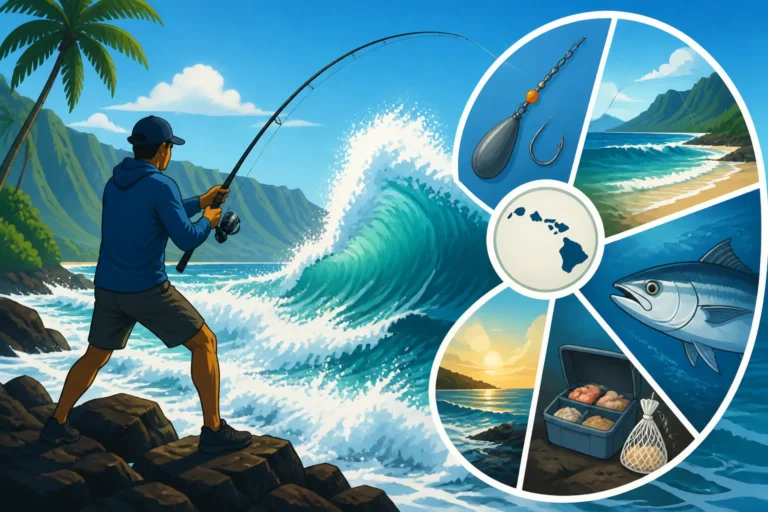
Fishing around lava rock points in Hawaii can feel like a double-edged sword: you see all that incredible structure, those churning waters, and you just know the fish are there, but getting to them and landing them without losing all your gear can be a real headache. This guide is all about helping you unlock the potential of these unique fishing grounds, offering practical tips and strategies to navigate the challenges and successfully hook into some amazing Hawaiian fish.
Understanding the Lava Rock Point Ecosystem
When you look at a lava rock point jutting out into the ocean, it's not just a collection of hard, jagged edges. It's a vibrant, dynamic underwater city teeming with life, and understanding why fish love these areas is your first step to success.
Why Fish Love Lava Points
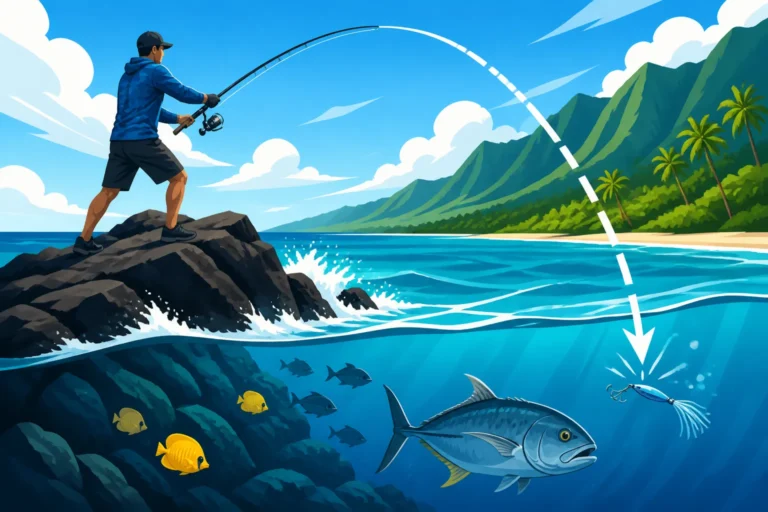
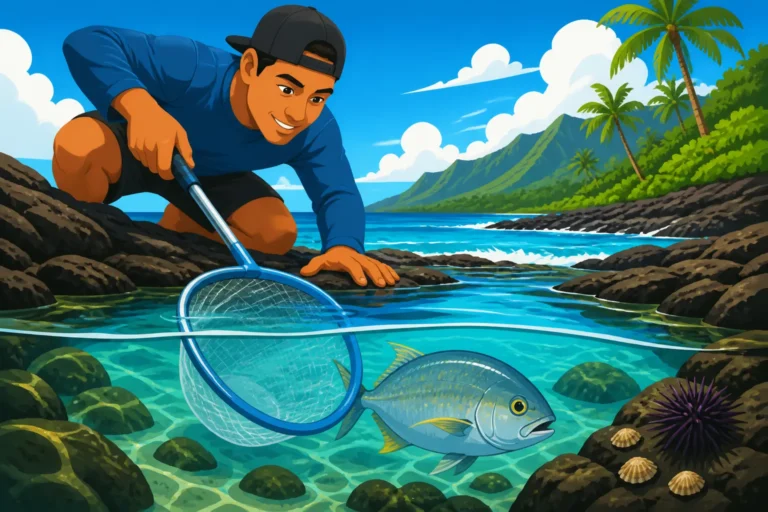
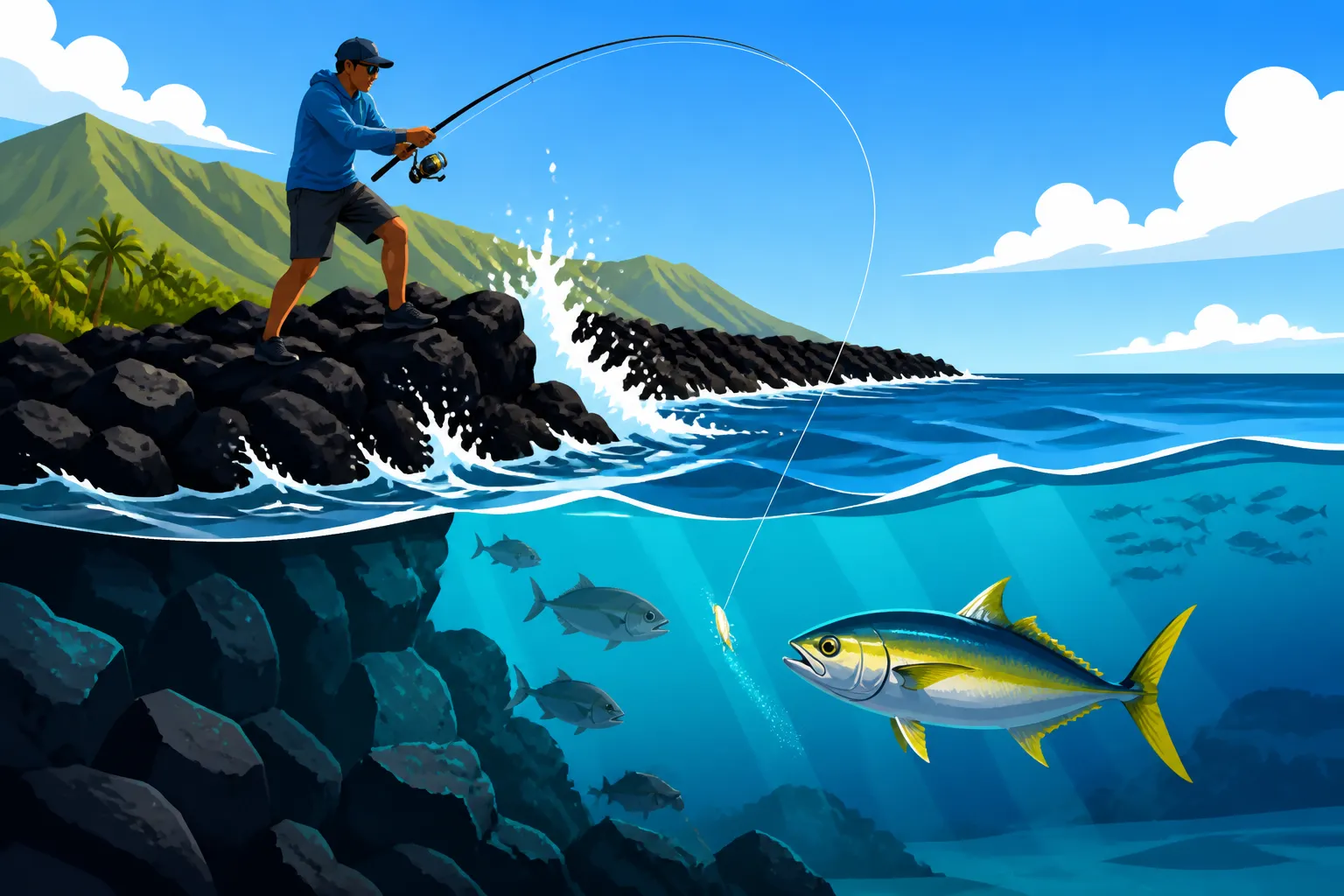
It's easy to stand on a point, cast out, and feel like you're just throwing bait into a void, especially when the snags start piling up. But trust me, those same snags are exactly why the fish are there! Lava rock points provide an incredible amount of structure, creating countless nooks, crannies, and caves where smaller baitfish can hide from predators. These natural hiding spots also serve as perfect ambush points for larger, more predatory species like ulua (giant trevally) and papio (juvenile trevally), who will lurk just out of sight, waiting for an unsuspecting meal to swim by.
Beyond shelter, the way lava points interact with ocean currents is crucial. As water flows around these protrusions, it creates eddies, current breaks, and areas of upwelling. These turbulent zones concentrate nutrients, which in turn attract baitfish, forming a natural food chain buffet. The whitewater and surge that often crash against the rocks also add oxygen to the water and provide excellent cover, allowing bigger fish to move in close to shore without feeling exposed. When you look at a lava point, try to visualize it as a giant, submerged reef system that extends from the land, offering everything a fish could want.
Reading the Water Around Lava
Successfully fishing a lava point isn't just about casting; it's about observation. The ocean rarely stays the same, and around these points, conditions can change dramatically within minutes. Learning to read the water helps you identify productive zones and understand fish behavior.
Firstly, pay close attention to currents and eddies. Strong currents can carry bait and scents, directing fish to specific feeding lanes. Eddies, those swirling pockets of calmer water often found on the down-current side of a point, are prime spots where baitfish gather to rest and feed, and where predators will position themselves to intercept them. Look for surface disturbances, lines of foam, or debris that indicate current direction and strength. A strong rip current pulling away from the point can be a goldmine, often holding pelagic species closer to shore.
Next, consider the depths and drop-offs. While you might not have a fish finder strapped to your chest while shore fishing, you can often infer depth changes by watching the waves. Areas where waves suddenly stand up taller or break more violently often indicate a shallower reef or a sudden drop-off. Conversely, areas where waves pass smoothly might signal deeper water close to the point. Lava formations often have dramatic underwater topography, with deep channels, ledges, and caverns that aren't visible from above. These submerged features are critical habitat.
Finally, don't overlook turbulence and whitewash. The crashing waves and aerated water along a lava point provide excellent camouflage and disorient baitfish, making them easy targets. Predatory fish are incredibly comfortable in this chaotic environment and will often patrol the edges of the whitewash. Spotting baitfish schools, either visually on the surface or by observing diving birds, is another huge clue. If you see small fish jumping or scattering, it's a sure sign something bigger is on the hunt. Paying attention to these subtle cues will dramatically increase your chances of finding where the fish are hiding.
Essential Gear and Tackle for Lava Point Fishing
Now that we understand the environment, let's talk about what you need to bring to the fight. Lava rock points demand specific gear that can withstand the harsh conditions and the powerful fish that inhabit them. This isn't the place for your ultralight trout setup!
Rods, Reels, and Line Built for Battle
Nothing is more frustrating than hooking into a strong fish around a lava point, only to have your line snap or your rod buckle under pressure. We've all been there, feeling that sickening slack in the line as a big ulua darts into a crevice. That's why your gear needs to be robust.
For rods, think heavy-duty. A sturdy spinning rod, typically 9 to 12 feet long with a medium-heavy to heavy action, is ideal for casting heavy lures and baits from shore and handling powerful runs. Some anglers prefer conventional (baitcasting) reels for their brute strength and direct line pull, especially when targeting larger ulua. The extra length of the rod helps you keep your line out of the water and away from sharp rocks during a retrieve or a fight, giving you a better angle over the immediate obstacles.
Your reel should match the rod's power, capable of holding a substantial amount of heavy line and boasting a smooth, reliable drag system. A quality reel will prevent frustrating snags and ensure you can apply steady pressure without fear of binding. When it comes to line, braided line is almost a necessity. Its thin diameter for its strength, combined with its incredible abrasion resistance, makes it superior to monofilament in these rocky environments. Opt for 50-80 pound test braid, which will give you the pulling power needed to wrestle fish away from structure and minimize break-offs.
Always, and I mean always, attach a fluorocarbon leader. While braid is strong, it can be visible in clear Hawaiian waters. Fluorocarbon, which is nearly invisible underwater and highly abrasion-resistant, creates a stealthy connection to your lure or hook. A 50-100 pound test fluorocarbon leader, a few feet long, is a good starting point. You can find excellent options for all these components on Amazon, which offers a wide variety of brands and specifications to suit your needs. Remember, a robust setup isn't just about landing fish; it's about reducing frustration and protecting your investment in lures and time.
Rigs and Baits That Work Best
Choosing the right rig and bait is paramount when fishing around lava. The goal is to present your offering naturally while minimizing snags.
For bottom fishing, a simple dropper rig or a Carolina rig (often called a sliding sinker rig) can work well, but you need to be mindful of heavy structure. Some anglers even use breakaway sinker setups, where a lighter piece of line connects the sinker, designed to break off if snagged, saving your main line and hook. For larger predatory fish like ulua, the Sliding Bait Techniques for Ulua article has some great insights. Live bait is often king here. Small fish like opelu, akule, or moi fry, if you can catch them, are irresistible to big predators. Hook them carefully through the nose or back to keep them lively. If live bait isn't an option, fresh cut bait, such as strips of bonito, skipjack tuna, or even octopus, can be highly effective due to its strong scent trail.
Artificial lures can also be incredibly productive. Heavy metal spoons, like a Kastmaster or similar designs, can be cast a mile and retrieved quickly through the water column, imitating fleeing baitfish. Poppers and stickbaits are fantastic for surface action, especially at dawn or dusk, creating commotion that draws strikes from aggressive papio and ulua. For deeper water or when fish are less active, heavy jigs or large soft plastics rigged weedless can also be effective, allowing you to probe the structure with less risk of snagging. You can explore a vast array of effective lures for Hawaiian waters on Amazon, making it easy to experiment with different styles and colors.
Safety and Essential Accessories
Fishing around lava rock points is not for the faint of heart, and safety should always be your top priority. The unpredictable nature of the ocean combined with jagged terrain means you need to be prepared for anything.
Firstly, proper footwear is non-negotiable. Felt-soled boots or boots with carbide spikes offer superior grip on slippery, algae-covered rocks, dramatically reducing your risk of a nasty fall. Never wear flip-flops or open-toed shoes.
Always carry a well-stocked first aid kit. Cuts and scrapes from sharp lava are incredibly common, and having antiseptic wipes, bandages, and medical tape readily available can prevent minor injuries from becoming major issues. A sturdy wading staff can provide extra balance and help you test footing before stepping onto questionable ground.
If you plan to fish before dawn or after dusk, a reliable headlamp is essential for hands-free illumination, allowing you to tie knots, rig bait, and navigate safely. Sun protection is also vital under the Hawaiian sun: wear long-sleeved shirts, a wide-brimmed hat, and polarized sunglasses. Polarized sunglasses are particularly helpful as they cut glare, allowing you to spot submerged rocks, channels, and even cruising fish.
Other essential accessories include heavy-duty pliers for de-hooking fish and cutting wire, a sharp knife, and a cooler to keep your catch fresh (and your drinks cold!). For all these safety and comfort items, a quick search on Amazon will reveal countless options to outfit your lava point adventure responsibly. Being prepared not only keeps you safe but also allows you to focus on the fishing.
Proven Techniques for Targeting Lava Point Fish
Now that you're geared up and have an understanding of the environment, let's dive into the actual fishing techniques that will make a difference around these challenging but rewarding spots.
Casting and Retrieving Strategies
Casting effectively around a lava point is an art form. It's not just about distance; it's about precision and understanding where the fish are likely to be. Begin by fan casting, which means making casts to different angles across the water in front of you. Start with casts parallel to the shoreline, then gradually widen your angle to cover as much water as possible. This ensures you're not missing any potential holding areas.
The key is to target specific structure. Look for areas where waves are breaking differently, indicating a submerged rock or channel. Cast into the "washouts" – the areas where waves surge onto the rocks and then drain back out, often carrying dislodged food. These are prime ambush points. For species like papio, casting topwater lures right onto the sudsy edge of the whitewash and working them erratically can trigger explosive strikes.
Varying your retrieve speed and depth is critical. Sometimes fish want a fast, erratic retrieve that mimics a fleeing baitfish; other times, a slow, jigging motion along the bottom is more appealing. If you're using lures, experiment with different retrieves until you find what the fish are responding to.
Dealing with snags is inevitable when fishing lava points. We've all been there, swearing at a snagged lure just moments after a perfect cast. When you feel a snag, don't just pull harder. Try to walk parallel to the shore, changing the angle of your pull. Sometimes a series of sharp, upward jerks can free a lure. If it's truly stuck, know when to cut your losses to avoid breaking your rod or losing your entire line. Using heavier leader material can sometimes help you muscle a snagged lure free, but it's often a balance between snag resistance and stealth. Always carry extra lures and plenty of leader material.
Live Baiting and Sliding Rigs
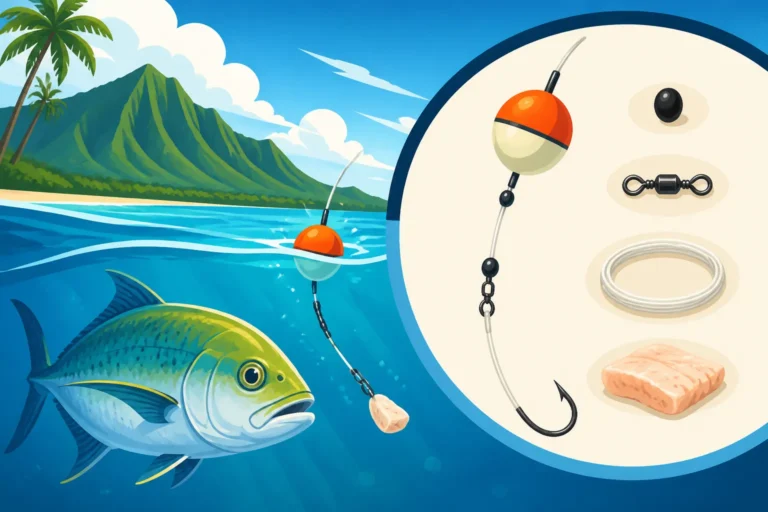
For many local anglers, especially those targeting trophy ulua, live bait fishing with a sliding rig is the ultimate technique around lava points. This method allows you to present a large, lively bait far out from shore, often beyond casting distance, into deeper water where big fish cruise. The Sliding Bait Techniques for Ulua article goes into greater depth.
The setup typically involves a heavy weight that slides freely on your main line, followed by a swivel, a heavy fluorocarbon leader, and a large, strong hook. The weight helps cast the bait a good distance or hold it in place against strong currents. The sliding action allows the fish to pick up the bait and run without feeling the resistance of the weight immediately, leading to more confident takes.
The importance of fresh, lively bait cannot be overstated. Opelu (mackerel scad) and akule (bigeye scad) are top choices, but even smaller moi (Pacific threadfin) or other local baitfish can be effective. If you're fortunate enough to catch your own bait, it's a huge advantage. Getting your bait out to the target zone can be done by simply casting it if you have the right rod and reel, but for extreme distances, some anglers use specialized casting devices or even balloons to carry the bait out with the wind or current.
Once your bait is deployed, patience is key. You're often waiting for that single, significant strike from a large predator. Keep your rod in a sturdy rod holder, often cemented into the rocks or a sand spike if available, and keep your drag set appropriately – tight enough to set the hook, but loose enough to allow a powerful fish to take line without snapping it. The bite will often be violent and unmistakable. For more insights on when to target these monsters, check out Best Time of Day to Catch Ulua and Night Fishing for Ulua in Hawaii.
Reading the Tides and Conditions
Just like understanding the general water patterns, knowing how tides and specific conditions influence lava point fishing is crucial. The best time to fish can vary significantly.
Generally, moving water is preferred. Incoming or outgoing tides often stimulate feeding activity as currents stir up food and position fish in ambush points. The "slack tide" periods, when the water movement is minimal between the change of tides, can sometimes be slower, but not always. Some fish, like certain bottom dwellers, might be more active during slack tide when they don't have to fight a strong current. Observing local tide charts and noting when you have success can help you build a personalized understanding of your favorite spots.
Swell and wave action are another major factor. On very calm days, the water can be crystal clear, making fish more wary. However, too much swell, especially when combined with a king tide, can make fishing treacherous and unproductive. A moderate swell, creating good whitewash and turbulence without being dangerous, is often ideal. This kind of chop provides cover for fish and dislodges food. You might find the Best Techniques for High Surf Shore Fishing helpful for those more aggressive days.
Finally, don't underestimate the power of time of day and moon phases. Dawn and dusk are almost universally productive times, as many predatory fish are most active during low light conditions. The changing light provides cover for them to hunt. Some anglers swear by specific moon phases, particularly the new and full moons, which create stronger tides and can trigger more aggressive feeding. However, consistency in fishing whenever you can, combined with careful observation, will ultimately be your best guide.
Common Challenges and How to Overcome Them
Fishing lava rock points is inherently challenging, but with experience and the right mindset, you can mitigate many of the common frustrations.
Minimizing Snags and Lost Gear
The Hawaiian lava can be a tackle eater, no doubt about it. We've all seen our expensive lures disappear into the jagged depths. The key to minimizing snags is understanding the bottom structure and adjusting your technique.
Firstly, assume there's structure everywhere. Instead of dragging your bait or lure directly on the bottom, try to keep it just above. When using jigs or soft plastics, use a "lift and drop" retrieve rather than a continuous drag. For lures that dive, try a faster retrieve in shallower areas to keep them from hitting the bottom. If you feel your lure scraping, speed up your retrieve or lift your rod tip higher.
Consider using sacrificial leaders, especially when fishing directly on the bottom. This means connecting your sinker to a lighter piece of monofilament line that will break before your main line or hook leader if the sinker gets snagged. While this still means losing a sinker, it saves your entire rig. Strong knots are also crucial; a weak knot is a guaranteed failure point when fighting a fish or a snag. Practice your leader knots, like the FG knot for braid to fluorocarbon, to ensure maximum strength. You can find excellent information on the best leader materials in Best Leader Material for Reef Structure.
When casting, be precise. Aim for sandy pockets between rocky outcrops if possible, or target areas where you know there's a slightly clearer bottom. If you consistently snag in one spot, either change your cast angle, adjust your retrieve, or simply avoid that particular zone. It's better to fish productively in a slightly less "fishy" area than to constantly lose gear in a snag-ridden honey hole.
Navigating Tricky Footing and Waves
Safety is paramount, and around lava rock points, the ocean is a relentless, powerful force. Never, ever turn your back on the ocean. A rogue wave, larger than the others, can come out of nowhere and sweep you off your feet, or worse, off the rocks. Always maintain situational awareness.
When moving around a lava point, especially if you're not intimately familiar with it, take your time. Test your footing with each step. Look for flat, stable sections of rock. Avoid areas covered in wet, dark algae, as these are incredibly slippery. If the swell is picking up or the tide is rising, reconsider your position. Know your limits – if a spot feels too dangerous or the waves are getting too big for comfort, it's time to move. A fish is never worth risking your life or serious injury.
If possible, fish with a buddy. Not only is it more fun, but having someone else there can be a lifesaver in an emergency. They can spot dangerous waves you might miss or assist if you get into trouble. Always let someone know where you are going and when you expect to return. For general safety information, refer to the Hawaii Boating Laws for Anglers for broader water safety, even for shore-based activities.
Respecting the Environment and Local Culture
Fishing in Hawaii is a privilege, and respecting the 'aina (land) and kai (ocean) is a fundamental part of the experience.
Always practice the "leave no trace" principle. Pack out everything you pack in, including fishing line scraps, bait wrappers, and any trash you might find. Leaving behind hooks, line, or plastic is not only disrespectful but also harmful to marine life.
Understand and adhere to local fishing regulations. These exist to protect Hawaii's precious marine resources. Be familiar with Hawaii Fishing Regulations Explained regarding bag and size limits, closed seasons (like Hawaii Moi Closed Season, Explained), and protected species. Ignorance of the law is not an excuse.
Be mindful of traditional and customary fishing rights, and respect private property. Many shorelines in Hawaii are accessible to the public, but some areas may be privately owned or have specific cultural significance. Always be polite to locals and other anglers, and if a spot is already occupied, find another. For more on access, look up Hawaii shoreline fishing rights and public access rules. These practices ensure that the incredible fishing opportunities around Hawaii's lava rock points remain vibrant for generations to come.
Choosing the Right Approach for Lava Point Fishing
Navigating the unique challenges of Hawaii's lava rock points requires a smart approach. Here's a quick comparison of fishing strategies to help you decide.
| Aspect | Live Bait / Sliding Rig | Artificial Lure Casting |
|---|---|---|
| Target Species | Large Ulua, Papio, predatory reef fish | Papio, smaller Ulua, Oio, various reef predators |
| Primary Goal | Trophy fish, patient waiting, larger catches | Active fishing, covering water, diverse catches |
| Gear Required | Heavy-duty rod/reel, heavy braid, fluorocarbon leader, large hooks, heavy sinkers, bait bucket/cooler | Medium-heavy rod/reel, braid/mono, fluorocarbon leader, diverse lures (spoons, poppers, jigs) |
| Skill Set | Patience, bait acquisition, strong casting, fighting large fish from shore | Diverse casting techniques, lure presentation, reading subtle strikes, lure retrieval strategy |
| Snag Potential | High (due to stationary bait/sinker), but manageable with breakaway rigs | Moderate to High (dependent on lure type and retrieve), can be reduced with weedless options |
| Best Conditions | Moving tides, dawn/dusk, moderate swell, night fishing (Night Fishing for Ulua in Hawaii) | Dawn/dusk, active feeding times, various tides, calm to moderate swell |
| Cost of Consumables | Can be higher if buying live bait, less lure loss | Higher initial lure cost, potential for frequent lure loss |
| Effort Level | Lower once bait is set, then bursts of high effort during a fight | Higher continuous effort (casting, retrieving) |
This table highlights that both methods have their merits. If you're after that once-in-a-lifetime ulua, investing in live bait and a robust sliding rig is often the way to go. If you prefer active fishing, constantly casting and trying different presentations, then a varied selection of artificial lures will be your companion. Both require respect for the ocean, the right gear, and an understanding of the terrain. Whether you're a seasoned local or a visiting angler, the thrill of hooking a powerful fish from a lava rock point in Hawaii is an unforgettable experience. For more general advice, don't forget to check out Shore Fishing Techniques for Hawaii and the Best Shore Fishing Spots in Hawaii.
Disclaimer
This article is for general informational purposes only and does not constitute professional advice. Laws, prices and regulations vary by location and change over time. Consult a qualified professional for guidance on your specific situation.