How to fish for akule right after a school arrives
Few things get a local Hawaii angler's heart pumping quite like the sudden appearance of a massive school of akule, also known as bigeye scad, churning the surface of our beautiful nearshore waters. That exhilarating moment, however, can quickly turn into a missed opportunity if you're not ready to act fast and effectively. This guide is dedicated to giving you the insider tips and quick-draw techniques needed to capitalize on those incredible, fleeting chances the instant an akule school arrives, transforming eager anticipation into a successful catch.
Understanding Akule Schools and Their Behavior
Before you can effectively fish for akule, it’s crucial to understand why they gather in such large, impressive numbers and what signals their presence. These aren't just random occurrences; they're driven by specific environmental factors and feeding patterns that smart anglers learn to read.
Why Akule Schools Are a Big Deal
Akule are a vital part of Hawaii's marine ecosystem and a highly prized catch for local fishermen. For many, they represent an excellent food source, providing delicious table fare, whether fried, grilled, or even prepared as sashimi when fresh. But beyond the dinner plate, akule are also the quintessential baitfish for targeting larger, more formidable species. Imagine having a live well full of prime, twitching akule just as you head out to chase an elusive ulua or a powerful ahi! When a school arrives, it’s not just about catching akule; it's about unlocking a whole new world of fishing possibilities. The sheer volume of fish means fast, exhilarating action, making it a thrilling experience for anglers of all skill levels. Understanding the dynamics of Hawaii Akule Schooling Behavior is key to consistently finding these valuable fish.
Signs of an Arriving Akule School
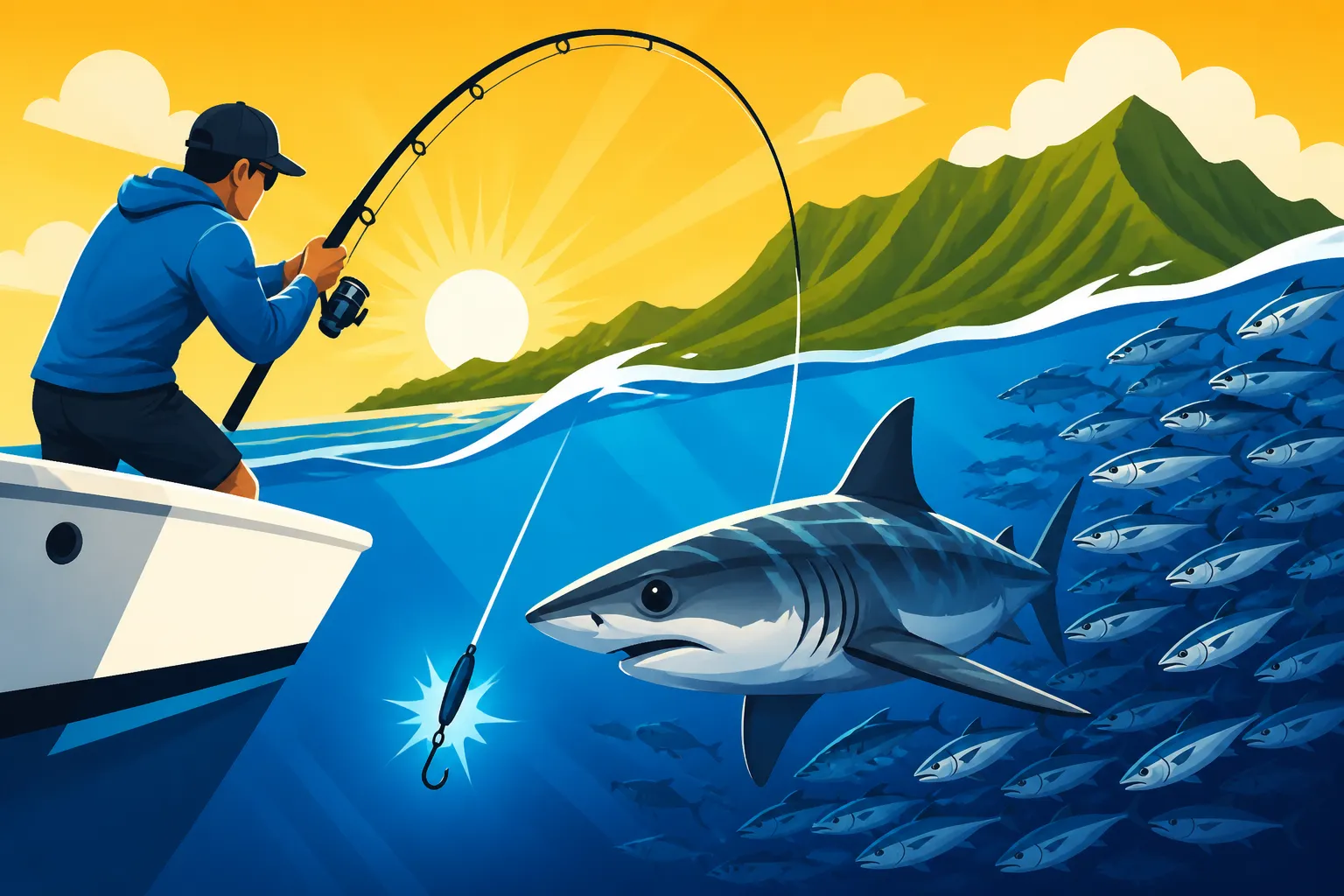
Spotting an akule school often requires a keen eye and a bit of local knowledge. From the shore, look for subtle disturbances on the water's surface, often appearing as dark, shifting patches or rippling boils. These aren't just reflections; they're thousands of fish moving in unison. Sometimes, you'll see seabirds like terns and boobies diving repeatedly into the water – they're not just fishing for fun, they're feasting on the akule, indicating a concentrated school beneath. From a boat, your sonar or fish finder will light up like a Christmas tree, showing dense bait balls. You might even hear the "pop" of the fish breaking the surface or see their silvery flashes as they dart around. Often, these schools will move relatively slowly along the coastline or near reef edges, making them accessible for quick strikes.
The Urgency of the Moment
Akule schools, especially those actively feeding near the surface, are a transient phenomenon. They might be here one minute and gone the next, driven by tides, currents, predators, or simply moving to new feeding grounds. This fleeting nature is why preparedness is paramount. Hesitation means a missed opportunity. If you spot an akule school, you need to be ready to deploy your gear almost instantly. There’s no time for rigging up lines or digging through tackle boxes. This immediacy is what separates the consistently successful akule fishermen from those who only hear stories about the "one that got away" after the school has vanished over the horizon. Knowing your Hawaii Fishing Season Dates and Closures can also give you a heads-up on general periods when akule might be more prevalent.
Essential Gear for Quick Akule Action
Being prepared is half the battle when an akule school shows up. Having the right tools ready to go means you can jump into the action without fumbling, ensuring you convert sightings into successful catches.
Cast Net Essentials
For sheer volume and speed, a cast net is often the fastest way to acquire a significant amount of akule, whether for bait or dinner. Choosing the right net is crucial:
- Size: A 6-foot or 8-foot radius net (meaning a 12-foot or 16-foot diameter when fully spread) is a good all-around choice. Larger nets are harder to throw but cover more area; smaller nets are more manageable but less efficient for big schools.
- Mesh Size: For akule, a 3/8-inch or 1/2-inch mesh is ideal. Anything larger, and smaller akule can "gill" themselves or simply swim through; anything smaller, and it becomes too heavy and slow to sink.
- Weight: Look for nets with at least 1 pound of lead per foot of radius. This helps the net sink quickly, enveloping the school before they can react. A heavier net sinks faster, which is critical for fast-moving akule.
- Material: Monofilament nets are common and durable.
Always keep your cast net clean, dry, and neatly flaked in a bucket or specialized net bag, ready for an immediate throw. Many quality cast nets suitable for Hawaii's conditions can be found on Amazon, often with customer reviews that can help guide your purchase. Remember to be mindful of Hawaii Akule Net Fishing Rules before deploying your net.
Rod and Reel Setup for Akule
While cast nets are great for volume, sometimes a rod and reel offer a more sporting or targeted approach, especially if the school is a bit more spread out or if you prefer the thrill of a fight.
- Light Tackle: A light to medium-light spinning rod, around 6 to 7 feet long, paired with a 2000 or 3000 size spinning reel, is perfect. This setup offers sensitivity for the light bites of akule and enough backbone to handle multiple fish at once.
- Line: Spool your reel with 10-15 pound monofilament or braid. Braid offers better sensitivity and casting distance, while monofilament is more forgiving.
- Sabiki Rigs: This is the bread and butter of akule fishing with a rod and reel. A Sabiki rig consists of multiple small hooks (usually 4-6) dressed with shiny material, often resembling tiny baitfish or shrimp. The smaller the hooks (size 6-10), the better for akule. Keep several pre-tied and ready to go. You can find a wide variety of effective Sabiki rigs on Amazon, ensuring you have the right size and color for the conditions.
- Weight: A 1/2 to 1-ounce sinker at the bottom of your Sabiki rig will help it sink quickly to the depth of the school.
Bait and Lure Choices
While Sabiki rigs are technically lures, there are other options depending on the akule's mood.
- Small Jigs: Tiny metal jigs, often 1/8 to 1/4 ounce, can be incredibly effective when akule are aggressively feeding. Cast them into the school and retrieve with a fast, erratic jigging motion.
- Chum: A small amount of frozen fish bait, like crushed akule or opelu, can be used to "chum" the water, drawing the school closer to your boat or shore position. Just a handful is often enough to create a feeding frenzy.
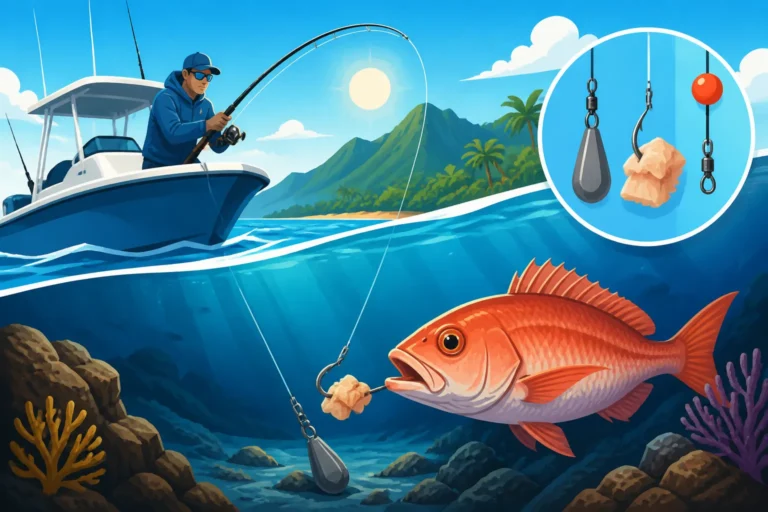
- Tiny Pieces of Bait: If you're struggling with artificials, a small piece of shrimp, squid, or even a tiny chunk of another fish on a small hook can be irresistible to akule. This is usually reserved for a single hook setup rather than a Sabiki.
Step-by-Step Guide to Fishing an Arriving Akule School
When that tell-tale ripple or boil appears on the water, you've got precious seconds to act. Here’s how to maximize your chances from the moment you spot them.
Rapid Deployment: Getting Your Net or Line in the Water
The first few minutes are critical. As soon as you spot an akule school, assess its movement and depth. If they're on the surface and within casting range from shore or boat, grab your cast net. If they're a bit deeper or further out, your pre-rigged rod and Sabiki rig are your best bet.
- From Shore: If you're on a pier, jetty, or a clear beach, observe the direction the school is moving. Try to position yourself ahead of their path, or at least directly into the densest part of the school. Have your cast net ready to unfurl or your Sabiki rig tied on and ready to cast. Remember that Hawaii shoreline fishing rights and public access rules generally allow access, but be mindful of private property.
- From a Boat/Kayak: Approach the school slowly and quietly to avoid spooking them. If using a cast net, get into a position where you can throw over the densest part without drifting directly over it. If using a rod, position your vessel to allow for easy casting and drifting through the school. Ensure your boat adheres to Hawaii boat registration requirements if applicable.
Maximizing Your Catch with a Cast Net
Throwing a cast net takes practice, but the faster you can get it to open and sink, the better your haul.
- Preparation: Before the school arrives, practice throwing your net. When the moment comes, quickly flake the net so it's tangle-free. Hold the lead line in one hand and the net's horn in the other, ready to spin and launch.
- Aim and Throw: Aim for the densest part of the school, preferably where the fish are actively breaking the surface or where birds are diving. A smooth, controlled throw that allows the net to spread fully is key.
- Sink Time: Let the net sink. The faster it sinks, the less chance the akule have to escape. You'll often feel the tugging as fish get gilled or trapped.
- Retrieve: Once it has sunk sufficiently (a few seconds, depending on depth), begin a steady, firm retrieve. Don't yank it too hard, as this can tear the net or cause fish to escape.
- Emptying: Carefully empty your catch into a cooler or livewell. Repeat the process quickly if the school is still present. This immediate action is the core of Casting Nets for Bait Fish in Hawaii strategies.
Jigging and Sabiki Techniques
When using a rod and reel, the technique for akule is fairly straightforward, but precision helps.
- Cast Into the School: Make a long cast directly into or just beyond the visible school.
- Let it Sink: Allow your Sabiki rig with its sinker to descend to the depth where you believe the main body of the school is located. Watch your line for any twitches on the drop – akule often hit on the fall.
- Jigging Action: Once at depth, begin a gentle "lift and drop" motion with your rod. This simulates small baitfish swimming. The key is not to be too aggressive; a subtle up-and-down movement of about 1-2 feet is often all it takes.
- Feel for Bites: Akule bites can range from a light tap to a solid thud as multiple fish hook up. When you feel a bite, don't necessarily set the hook hard. Often, just maintaining tension and continuing the jigging motion will encourage other akule to hit the remaining hooks on your Sabiki. This is part of the "Best Techniques for Akule in Hawaii".
- Steady Retrieve: Once you have multiple fish hooked, perform a steady, controlled retrieve. Avoid rapid cranking, which can cause hooks to pull out or lines to tangle.
Handling and Storing Your Catch
Proper handling ensures your akule remain fresh, whether for immediate consumption or for use as bait.
- Cooler with Ice: Always have a cooler filled with ice ready. As soon as you catch akule, get them on ice to preserve their quality. This is especially important in Hawaii's warm climate.
- Bleeding (Optional but Recommended): If you plan to eat them, quickly bleeding akule by cutting a gill arch can significantly improve their taste and texture. This removes blood, which can contribute to a "fishy" flavor.
- Livewell for Bait: If using them for live bait, have a well-aerated livewell with circulating fresh ocean water. Don't overcrowd the livewell, as this can stress the fish and lead to premature death. A small battery-operated aerator, easily found on Amazon, can be a lifesaver for keeping bait lively.
Common Mistakes and How to Avoid Them
Even seasoned anglers can make missteps when the excitement of an akule school takes over. Being aware of these common pitfalls can save you a lot of frustration.
Not Being Prepared
This is arguably the biggest mistake. You might think, "Oh, I'll just use what I have," but when akule are schooling, every second counts.
- Solution: Always have your primary akule gear (cast net, Sabiki rigs, cooler with ice) clean, organized, and ready to go at a moment's notice. If you're shore fishing, have a bucket of water nearby to quickly wet your cast net before throwing, or to keep a few akule alive. For those fishing from boats, keep a Hawaii fishing license guide for 2026 handy and ensure your license is up to date to avoid any penalties.
Spooking the School
Akule can be surprisingly skittish, especially if they are shallow or actively being pursued by predators.
- Solution: Approach quietly, whether by foot, kayak, or boat. Avoid loud noises, sudden movements, or casting directly on top of the densest part of the school if you can help it. Instead, cast slightly ahead of their movement or to the edges and let your lure/net drift into the main body. If you're using a boat, cut your engine or switch to a trolling motor if possible when you get close. Never motor directly through a visible school.
Ignoring Regulations
In the excitement of a fast bite, it's easy to forget about the rules. However, neglecting them can lead to hefty fines and a spoiled day.
- Solution: Always be aware of the current Hawaii Bag and Size Limits by Species, especially for akule if specific limits are in place. While akule generally have generous limits due to their abundance, it's good practice to know. Also, be aware of any Marine Life Conservation Districts or restricted areas where fishing or netting might be prohibited. Ignorance of the law is no excuse, and Fishing Without a Required License in Hawaii: Penalties can be severe. A quick check of the Hawaii DLNR Fishing Regulations PDF before you head out is always a good idea.
Overcrowding and Poor Handling
Catching a lot of fish quickly is thrilling, but if you don't handle them properly, they'll spoil rapidly.
- Solution: As mentioned, get those fish on ice immediately. If using a livewell, ensure it's not overpacked. A few healthy live akule are better than a dozen stressed, dying ones. This also applies to other desirable species you might catch as bait, like small Hawaii Papio and Ulua Size Rules if you intend to keep them for food later.
Akule Fishing Quick Reference Guide
| Gear Type | Best Use Case | Key Considerations | Tips for Success |
|---|---|---|---|
| Cast Net | High volume, fast bait acquisition | 6-8 ft radius, 3/8"-1/2" mesh, 1lb/ft lead | Keep flaked, throw with a wide spread, sink quickly |
| Sabiki Rig | Sporting catch, lighter tackle, specific sizes | Size 6-10 hooks, 4-6 hooks/rig, 1/2-1oz sinker | Gentle jigging, multi-hookups, steady retrieve |
| Small Jigs | Aggressive schools, specific target | 1/8-1/4 oz metal jigs, shiny colors | Fast, erratic retrieve, mimic fleeing baitfish |
| Chum | Attracting/holding schools, drawing closer | Crushed akule/opelu, frozen bait chunks | Use sparingly, create a slow scent trail |
| Cooler/Ice | Preserving freshness | Plenty of ice, drain plug, easy access | Chill immediately, bleed if desired for eating |
| Livewell | Keeping bait lively | Aeration, circulation, avoid overcrowding | Ensure ample oxygen, monitor water quality |
Disclaimer
The information provided in this guide is for general informational and educational purposes only. Fishing regulations in Hawaii, including bag limits, size restrictions, and gear restrictions, are subject to change by the Hawaii Department of Land and Natural Resources (DLNR). Always consult the most current official Hawaii fishing regulations before heading out on the water. Local conditions and fish behavior can vary, and personal safety should always be your top priority.