Best months to catch ono in Hawaii
You've finally made it to Hawaii, dreaming of that epic battle with a powerful game fish, and for many, the ono, or wahoo, is high on that list. There's nothing quite like the blistering run of an ono after it smashes your lure, but hitting the islands at the wrong time of year can leave you wondering where all the action is. This guide is here to cut through the guesswork, helping you understand the best months to target ono in Hawaii so you can maximize your chances of reeling in one of these prized pelagics.
Understanding Ono (Wahoo) Seasonality in Hawaii
It’s a common misconception that fishing in Hawaii is always hot, year-round, for every species. While our waters are truly productive, each species has its peak seasons, driven by factors like water temperature, spawning cycles, and baitfish migration. For the lightning-fast ono, these patterns are particularly pronounced, and knowing them can make all the difference between a memorable day on the water and a slow one.
Why Ono Movements are Seasonal
Ono are nomadic, highly migratory fish that travel in schools, often found near temperature breaks, current lines, and around offshore structures or FADs (Fish Aggregating Devices). Their movements are largely dictated by their feeding habits and reproductive cycles. As warm, nutrient-rich waters sweep through the Hawaiian archipelago, they bring with them schools of baitfish—like mackerel scad (opelu) and bigeye scad (akule)—which ono eagerly follow. When the bait is abundant, ono are close behind, creating prime fishing opportunities. Conversely, when these conditions aren't present, ono can be much harder to locate, scattering to other feeding grounds or deeper waters. This means that while you can catch an ono in any given month, certain times of the year offer significantly better odds for both quantity and size.
General Ono Habits and Behavior
Before we dive into specific months, it's helpful to understand a bit about Ono Habits and Feeding Behavior. These sleek, torpedo-shaped fish are built for speed, capable of reaching speeds up to 60 mph. They are ambush predators, often lurking near structure or current lines, waiting to dart out and strike unsuspecting baitfish. Their razor-sharp teeth mean that heavy leader material is absolutely crucial, as is a quick retrieve when they hit. Ono tend to be more active during daylight hours, especially around dawn and dusk, but can bite throughout the day if conditions are right. They're typically found in offshore waters, often congregating around the 100-fathom curve or deeper drop-offs, but they will venture closer to shore if there's an abundance of bait or favorable currents.
Prime Ono Fishing Seasons in Hawaii
While ono can be caught year-round, there are definitely periods when the bite heats up significantly. If you’re planning a trip specifically to target these incredible fish, aiming for these windows will greatly increase your success.
Late Summer and Fall: The Peak Ono Season
The absolute best months to catch ono in Hawaii generally fall within the late summer and fall period, specifically from August through November. This is when the ocean currents bring the warmest waters to the islands, creating ideal conditions for baitfish aggregations, and subsequently, for predatory species like ono.
During these months, you’ll find that charter boats out of places like Honokohau Harbor on the Big Island or Maalaea Harbor on Maui often report consistent ono catches. The fish are actively feeding, preparing for colder months, and are generally more aggressive. You might encounter them in larger schools, making it possible to land multiple fish in a single outing. This is also a fantastic time for other pelagic species like mahimahi and ahi, so it's not uncommon to enjoy a mixed bag if you're out trolling. The water is typically calm and clear, making for comfortable days offshore. If you're looking for Best Techniques for Fall Ono Fishing, this is when they truly shine.
Early Summer: A Strong Secondary Season
Before the peak of fall, the early summer months of May, June, and July also offer excellent ono fishing. As the water temperatures begin to steadily climb, more baitfish move into offshore waters, signaling the start of the pelagic season. While not quite as consistent as the fall, these months still present fantastic opportunities.
Many anglers find that the ono caught during early summer can be quite large, as they are actively feeding after their spawning periods. Charter captains often focus their efforts on trolling along current breaks and around FADs, where these fish are known to hold. This is a great time to experiment with different trolling spreads and lures, as the fish are often less pressured than during the absolute peak. You might consider booking one of the Best Trolling Charters for Ono during this period to capitalize on the increasing activity.
The Cooler Months: Still Possible, But Less Consistent
From December through April, ono fishing tends to slow down, but it's important to remember that "slower" in Hawaii doesn't mean "impossible." The cooler water temperatures and changes in current patterns can make the fish more scattered and less predictable. However, skilled captains and persistent anglers still manage to put good numbers of ono in the boat.
During these months, you might need to cover more ground or focus on specific deep-water structures and temperature breaks that are still holding bait. The fish tend to be more solitary, and the bite windows can be shorter. If you're visiting during this time and targeting ono, hiring a knowledgeable local charter is highly recommended, as their expertise in finding fish during off-peak seasons is invaluable. It’s also a good idea to check the Hawaii Fishing Seasons by Month for a broader picture of what else might be biting.
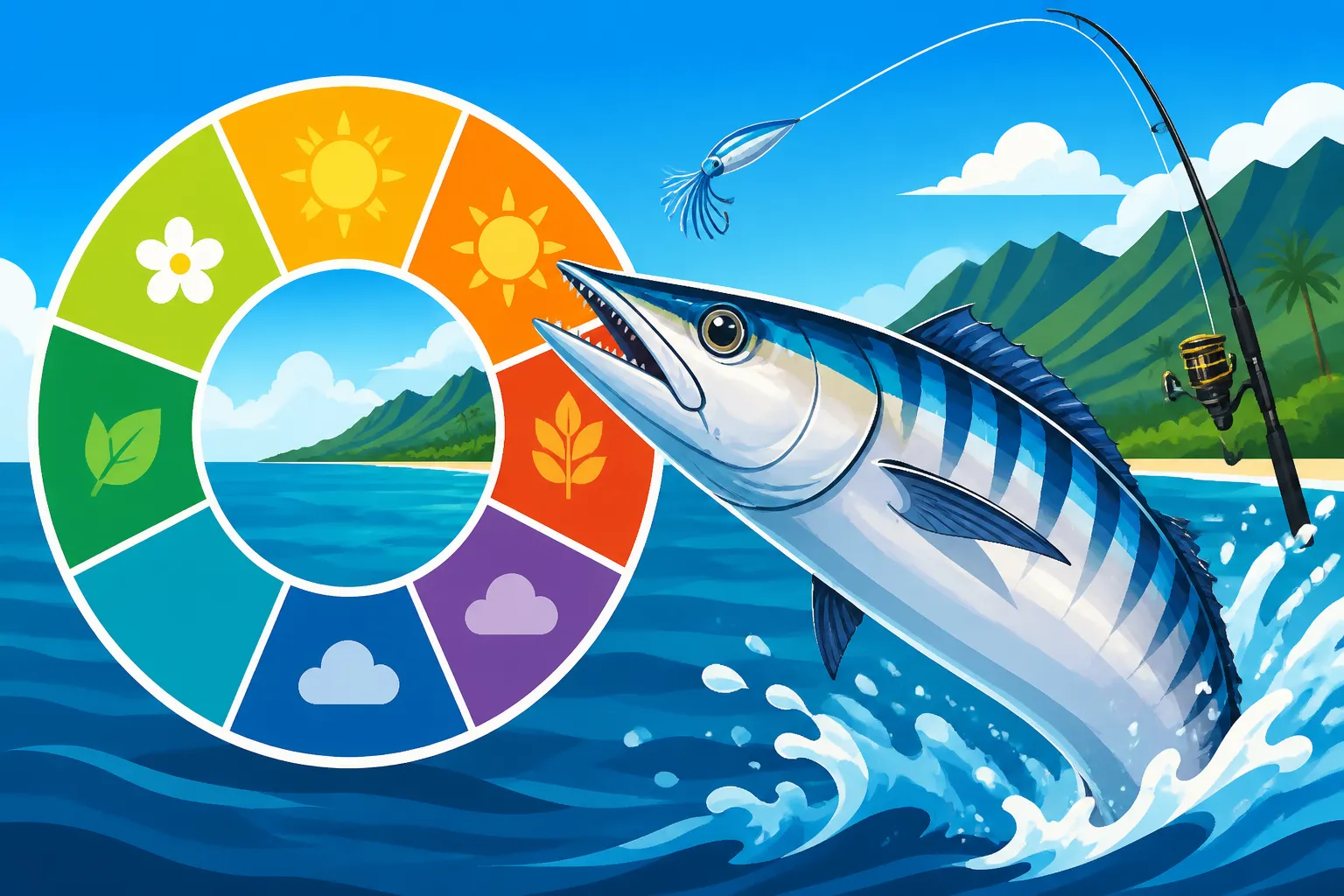
Here’s a quick overview of ono activity throughout the year:
| Month | Ono Activity Level | Typical Conditions | Notes |
|---|---|---|---|
| January | Moderate-Low | Cooler water, can be choppy | Requires more searching, often deeper. |
| February | Moderate-Low | Cooler water, variable conditions | Focus on specific offshore structures and temperature breaks. |
| March | Moderate | Warming waters begin | Increasing bait, more consistent bites. |
| April | Moderate-High | Warming waters, good clarity | Pre-summer bite often strong, good for larger fish. |
| May | High | Warm, stable conditions, abundant bait | Early summer peak, consistent action. |
| June | High | Excellent conditions, prime baitfish presence | Strong summer bite continues, great for mixed bags. |
| July | High | Very warm water, peak bait migration | Consistent catches, often school-sized fish. |
| August | Peak | Warmest waters, huge bait schools | Absolute peak season, aggressive fish, often in numbers. |
| September | Peak | Ideal warm water temps, post-spawn aggression | Continues strong, excellent for trophy ono. |
| October | Peak | Warm water, stable weather, consistent bait | One of the most reliable months for ono. |
| November | High | Water cooling slightly, but still warm | Strong bite continues as fish feed heavily before winter. |
| December | Moderate | Cooling water, choppier seas | Bite tapers off but still good potential, especially early in the month. |
Factors Influencing Ono Activity Beyond Just Months
While seasonality is a huge factor, the ocean is a dynamic environment, and other elements play a critical role in whether ono are biting on any given day. Ignoring these could mean missing out, even in a peak month.
Ocean Conditions and Bait Presence
Ono are finicky about their environment. They prefer clear, blue water and will often shy away from murky, green water that can follow heavy rains or large swells. Look for distinct color changes in the water, which often indicate current lines where baitfish gather. Areas where multiple currents converge, creating rips or eddies, are prime ono hunting grounds.
And let's be real, fish gotta eat! The presence of bait is paramount. If you see schools of mackerel scad (opelu), bigeye scad (akule), or even flying fish, there's a good chance ono are nearby. Bird activity, especially diving terns or boobies, is a tell-tale sign of baitfish being pushed to the surface by predators below, often including ono. Being able to read the water and spot these subtle signs can drastically improve your odds.
Moon Phases and Tides
Just like many other pelagic species, ono activity can be influenced by moon phases and tidal movements. While there's no hard-and-fast rule that guarantees a bite on a specific moon phase, many experienced anglers report increased activity around the full and new moons. These periods often correlate with stronger tidal currents, which can concentrate baitfish and make them more vulnerable to predators.
However, it's not just the moon; the actual tide changes themselves are often more critical. Slack tide, where the water is neither rising nor falling strongly, can sometimes be slow. The periods of strong incoming or outgoing tide, especially around reef edges or offshore pinnacles, can spark a feeding frenzy. Understanding your local tide charts and trying to fish the peak movement times can be a real game-changer when you're out there.
Water Temperature and Depth
Ono prefer specific water temperatures, generally in the range of 75-82°F (24-28°C). While Hawaii's waters are consistently warm, slight variations can influence where ono are found. If surface temperatures are too high or too low, they may move to deeper thermoclines to find their preferred comfort zone. Modern fish finders with temperature gauges can be invaluable for identifying these subtle temperature breaks offshore.
Similarly, ono are often found at specific depths. While trolling near the surface is a common method, they can also hold deeper, especially during the middle of the day or in cooler months. Downriggers or planer boards can help you present your lures or baits at different depths, increasing your chances of finding where the fish are holding. This is particularly useful when you're trying to figure out their pattern on a given day.
Gear and Techniques for Targeting Ono During Peak Times
Knowing when to fish is only half the battle; knowing how to fish for ono is just as crucial, especially during those prime seasons when they are most active.
Essential Trolling Setups
Trolling is by far the most popular and effective method for catching ono in Hawaii. Their speed and aggressive nature make them perfect targets for high-speed trolling. For ono in Hawaii, you'll want a medium-heavy to heavy conventional rod and reel setup, spooled with 50-80 pound braided line, topped with a 100-200 pound monofilament or fluorocarbon leader. Remember those razor teeth? A short section (12-24 inches) of wire leader (single strand or multi-strand cable) connected to your lure or bait is absolutely essential to prevent cut-offs.
A typical trolling spread might involve running 4-6 lines at varying distances and depths. Outriggers are key for spreading your lines and creating a wider presentation. You'll typically troll at speeds between 7-15 knots, depending on the lures and conditions. Often, the fastest lures get the most attention from ono. Many anglers find great deals on specialized high-speed trolling lures and heavy leader material on Amazon before their trip.
Lure and Bait Selection
When it comes to lures for ono, bright, flashy colors and shapes that imitate small baitfish or squid are highly effective. Common choices include:
- Jet heads: These lures create a significant smoke trail and disturbance, mimicking a fleeing baitfish. Colors like black and purple, blue and silver, or green and yellow are classic ono producers.
- Bullet heads: Streamlined and designed for speed, these lures are excellent for high-speed trolling and often run deeper.
- Plungers: These lures have a cupped face that creates a pronounced popping and diving action.
- Feather jigs: Simple yet effective, especially when ono are keyed in on smaller baitfish.
For natural bait, a well-rigged ballyhoo or strip bait trolled behind a lead-head lure can be deadly. Some anglers also have success with live bait, such as akule or opelu, slow-trolled or drifted in areas where ono are known to congregate, but this is less common for ono than for other pelagics like marlin or ahi. No matter your choice, ensure your hooks are sharp and strong; ono hit hard. If you're looking to dive deeper, check out specific Trolling Techniques for Hawaii Pelagics.
Where to Find Ono: Key Locations
While ono are pelagic and can be found almost anywhere offshore, they do favor certain areas. The waters off the Kona Coast of the Big Island are legendary for pelagic fishing, and ono are a frequent target. The deep drop-offs and consistent currents create a perfect hunting ground for them. Other productive areas include the channels between islands, offshore FADs (Fish Aggregating Devices), and current lines where nutrient-rich water meets clearer, bluer water.
If you’re looking at specific areas, Honokohau Harbor is a major hub for sportfishing charters, and the captains there are intimately familiar with the local ono grounds. The waters around Maui, particularly out of Maalaea Harbor or Lahaina, are also excellent, especially in the channels between Maui, Molokai, and Lanai. Knowing the Best Deep Sea Fishing Spots in Hawaii can give you a head start.
Ultimately, the best approach is to cover water, watching your fishfinder for bait schools and keeping an eye on the surface for any signs of feeding activity. A good captain will know the usual haunts and how to adapt to changing conditions.
Disclaimer
Fishing regulations, seasons, and licensing requirements can change. Always consult the most current Hawaii Department of Land and Natural Resources (DLNR) Division of Aquatic Resources (DAR) rules and regulations before heading out. This guide is for informational purposes only and should not replace official guidelines.