Best Techniques for Fall Ono Fishing
Oh, the crisp air of fall in Hawai'i! While many folks think about cooler weather and holidays, for us anglers, it’s a prime time to target one of the ocean's most exhilarating predators: the ono, or wahoo. But if you’ve ever found yourself scratching your head wondering why your usual summer tactics aren’t quite cutting it, you're not alone. Fall brings a shift in baitfish patterns and ocean conditions, and with it, a need to adapt your strategy to consistently find and hook these speedy, toothy torpedoes. This guide is all about equipping you with the knowledge and proven techniques to make your fall ono fishing trips a roaring success.
Understanding Ono Behavior in Fall
Just like how the leaves (if we had any) change color, the ocean's dynamics shift in the fall. Ono are creatures of habit to some extent, but those habits are heavily influenced by their environment. Knowing what makes them tick during these months is your first step to a productive day on the water.
Seasonal Movements and Feeding Habits
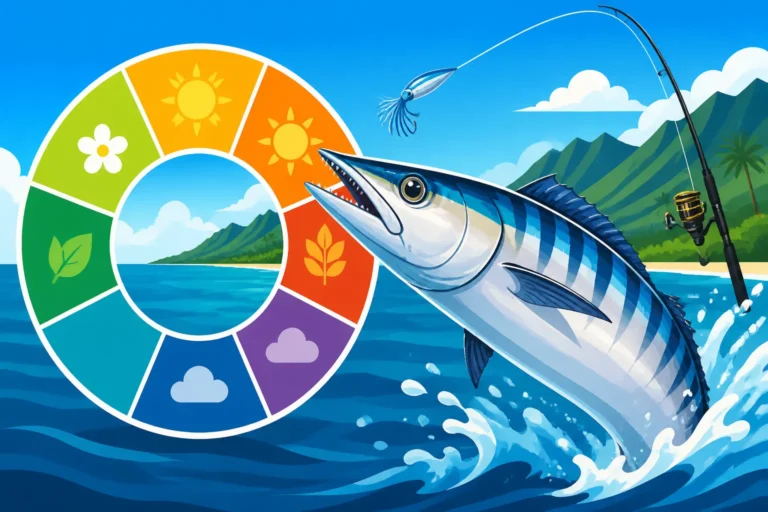
As summer fades into fall, usually from September through November, we often see subtle changes in the ocean currents and water temperatures around the Hawaiian Islands. While our tropical waters don't experience drastic temperature drops like temperate zones, even a few degrees can influence baitfish schools. Ono are highly migratory and opportunistic feeders, always following the food. In the fall, they might move slightly closer to shore or concentrate around specific offshore structures and current breaks as baitfish like akule, opelu, and even smaller mahimahi become more abundant or shift their locations.
You'll find that ono are incredibly aggressive, known for their lightning-fast strikes. They prefer to ambush their prey, often hanging around ledges, drop-offs, and submerged seamounts where currents bring food to them. During the fall, with potentially stronger currents and more dynamic weather patterns, these natural ambush points become even more crucial. They're also often found lurking around FADs (Fish Aggregating Devices), those buoys out in the deep blue, as these attract smaller baitfish and, consequently, bigger predators. Don't be surprised if you find them holding in depths anywhere from 50 to several hundred feet, often just below the surface, waiting for an unsuspecting meal to swim by.
Fall Weather Patterns and Their Impact
Fall in Hawai'i can be a mixed bag when it comes to weather. While we still enjoy plenty of sunshine, it's also the time when we start to see more frequent kona low systems, which can bring stronger winds, bigger swells, and heavier rain squalls compared to the calmer summer months. These weather shifts aren't just a nuisance for anglers; they actively influence where ono will be and how they behave.
For instance, after a few days of strong trade winds, the lee side of the islands (like the Kona Coast of the Big Island or the leeward side of Maui) often experiences calmer conditions. This can create ideal scenarios for ono, as baitfish might congregate in these protected areas, drawing in the predators. Conversely, a strong swell can stir up the water, pushing bait offshore or making it harder for ono to hunt effectively near the surface. Paying close attention to marine forecasts – wind speed, swell direction, and potential rain – will help you decide not just if you can go fishing, but where to fish and what techniques might be most effective. Sometimes, fishing just before a front moves in, or right after one settles, can be incredibly productive as fish feed aggressively in response to the changing conditions.
Essential Gear for Fall Ono Fishing
Having the right tackle for fall ono fishing isn't just about catching fish; it's about making sure you're prepared for their incredible speed, razor-sharp teeth, and the potentially rougher ocean conditions. There’s nothing worse than hooking into a monster ono only to have your gear fail because it wasn’t up to the task.
Rods, Reels, and Line Selection
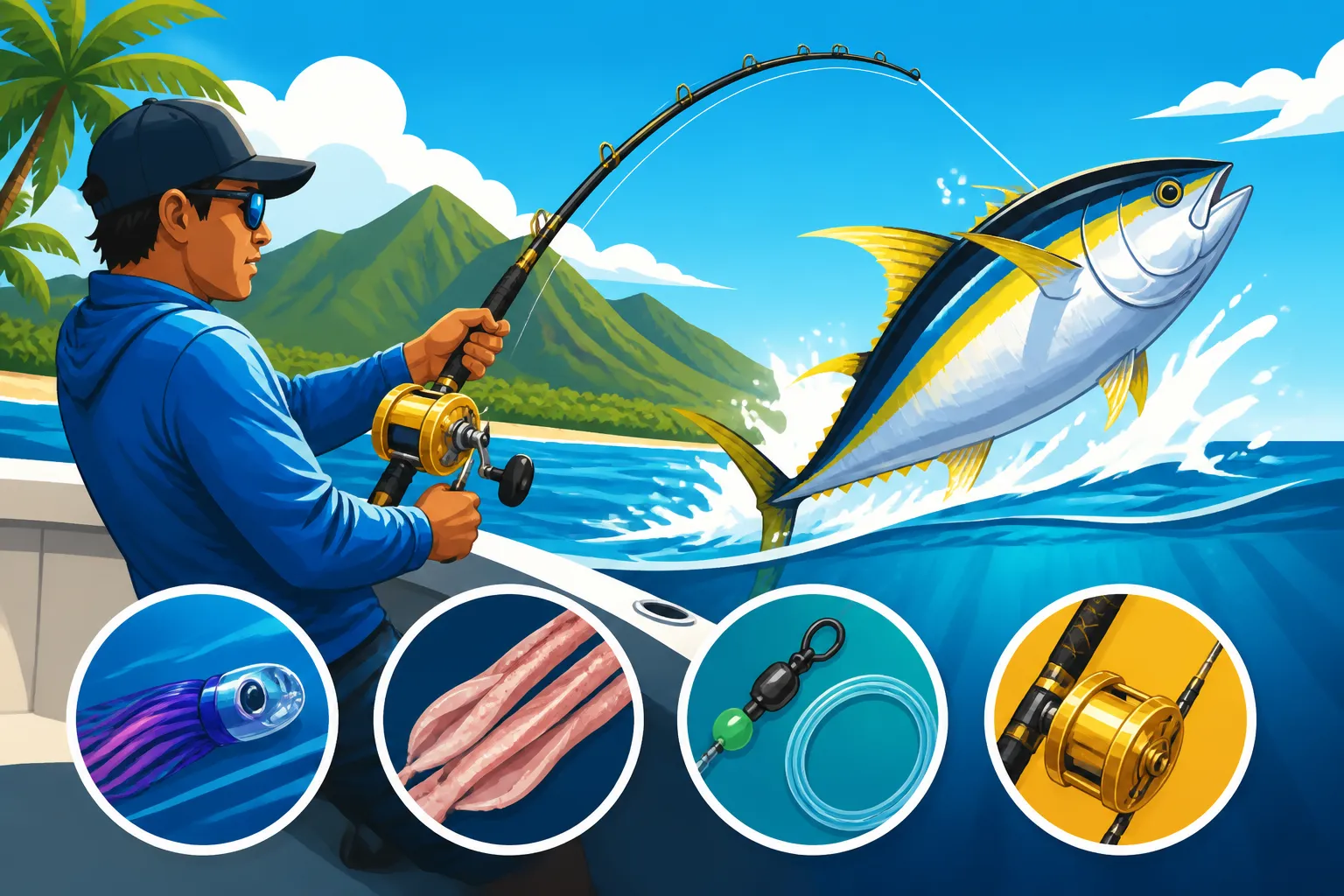
For targeting ono, you’re going to want gear that can handle serious speed and a powerful initial run. We're talking about heavy-duty conventional setups, often in the 30-pound to 50-pound class. A medium-heavy to heavy action rod, typically 6 to 7 feet long, with a fast tip, is ideal. This combination allows for powerful hooksets, absorbs the shock of their initial blistering runs, and gives you the leverage needed to battle a strong fish. Brands like Penn, Shimano, and Accurate make excellent conventional reels that are widely used here in Hawai'i for pelagic species. When selecting a reel, look for high retrieve ratios to keep up with a fast-running fish, and a smooth, reliable drag system that won't falter under pressure.
As for line, many local anglers prefer a braided main line, often 50 to 80 pounds, due to its incredible strength-to-diameter ratio and lack of stretch. This allows for more line capacity on your reel and better sensitivity. However, a long top shot of monofilament, usually 80 to 100 pounds test, is crucial to absorb shock and provide a little stretch to prevent hooks from pulling when that ono tries to throw the lure. Most importantly, due to their famously sharp teeth, you must use a wire leader. A 12-inch to 24-inch section of single-strand wire, 80 to 120 pounds test, is non-negotiable. Without it, you’ll be losing a lot of lures and a lot of fish to bite-offs. You can find robust wire leader material and crimping sleeves on online marketplaces like Amazon, making it easy to stock up before your next trip.
Lures, Baits, and Terminal Tackle
When it comes to lures for fall ono, speed is the name of the game, so think hydrodynamic and durable. High-speed trolling lures are king. These often feature bullet heads, jet heads, or chugger styles designed to track straight at high speeds and create a commotion. Color can be important, and while personal preferences vary, dark colors like black/purple, blue/silver, and green/yellow are consistent producers. Local lure makers, as well as established brands like Zuker, C&H Lures, and Nomad Design, all offer excellent options. For insight into what's currently working, you might check out our guide on Best lure color for marlin trolling off Kona, as many similar principles apply to ono.
While high-speed trolling with artificials is popular, natural baits can also be incredibly effective, especially when dead-baited and skirted. Rigging a ballyhoo, Spanish mackerel, or even a local opelu under a skirted lure provides both the natural scent and action that ono can’t resist. Terminal tackle includes sturdy, corrosion-resistant hooks (single or double hook rigs are common for trolling lures), heavy-duty ball bearing swivels to prevent line twist, and reliable crimps for making strong leader connections. Always carry a good selection of these, as you’ll be re-rigging frequently after bite-offs or when switching tactics. Having a dedicated tackle box for your trolling lures and wire leader makes a huge difference in staying organized on the water.
Top Trolling Techniques for Fall Ono
Trolling is undeniably the most effective and widely used method for targeting ono, especially in the vast open waters of Hawai'i. Fall ono fishing often means covering a lot of water to find scattered schools or lone wolves patrolling specific structures.
High-Speed Trolling Strategies
Ono are built for speed, and one of the best ways to elicit a strike from these incredible fish is to match that speed. High-speed trolling involves pulling lures at speeds typically ranging from 8 to 15 knots, sometimes even faster depending on conditions and the specific lures you’re running. The idea is to make your lures appear like fleeing prey, triggering the ono’s predatory instinct. When doing this, it's crucial to ensure your lures are designed for high speed – bullet heads and jet heads track best without spinning out.
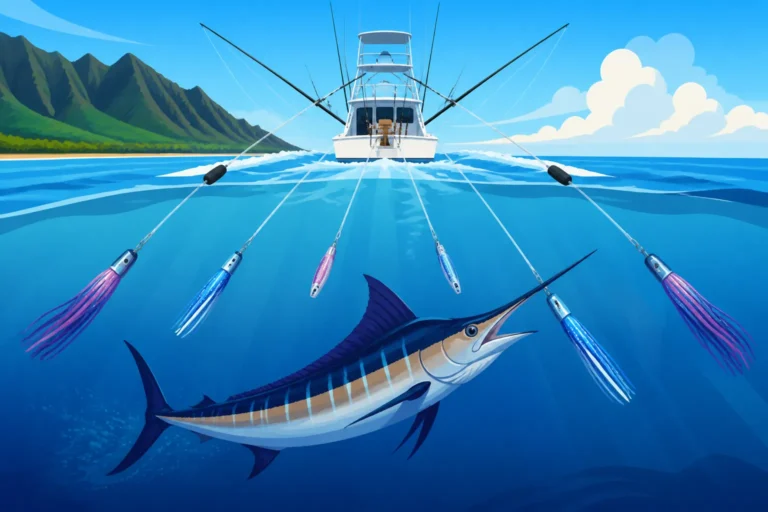
A typical spread for high-speed ono trolling might involve 4-6 lines, with the shortest lines running closest to the boat (the "shotgun" or "wahoo lure") and longer lines staggered further back. Experiment with lure placement to find the 'sweet spot' in your boat's wake where the lures are swimming most enticingly. Don't be afraid to make subtle S-turns or figure-eights while trolling. This variation in speed and direction can often be the trigger that makes an ono commit to a strike. For more detailed insights, you’ll want to review our comprehensive guide on Best technique for ono trolling, which dives deep into the nuances of rigging and running these spreads.
Live Bait Trolling and Skirted Baits
While high-speed trolling with artificials is effective, sometimes a more subtle, natural presentation is the ticket, especially if ono are being finicky or if baitfish are particularly abundant. Live bait trolling for ono, though less common than high-speed artificials, can be incredibly deadly. Using a frisky opelu, akule, or even a small mahimahi trolled at slower speeds (around 3-6 knots) can be irresistible. The key here is to rig your live bait correctly to allow it to swim naturally and to use a wire leader to prevent bite-offs.
Skirted baits offer a fantastic hybrid option, combining the visual appeal and flash of a lure with the scent and natural action of dead bait. Rigging a ballyhoo or a strip of mackerel under a colorful trolling skirt is a time-tested method. The skirt adds color, flash, and makes the bait swim with an enticing wobble, while the natural scent draws in predators from a distance. Often, these skirted baits are trolled at medium speeds (around 6-10 knots), providing a versatile approach that can entice both actively feeding and more hesitant ono. For a broader understanding of how these tactics fit into the larger picture of targeting pelagics, check out our article on Trolling Techniques for Hawaii Pelagics.
Reading Water and Structure
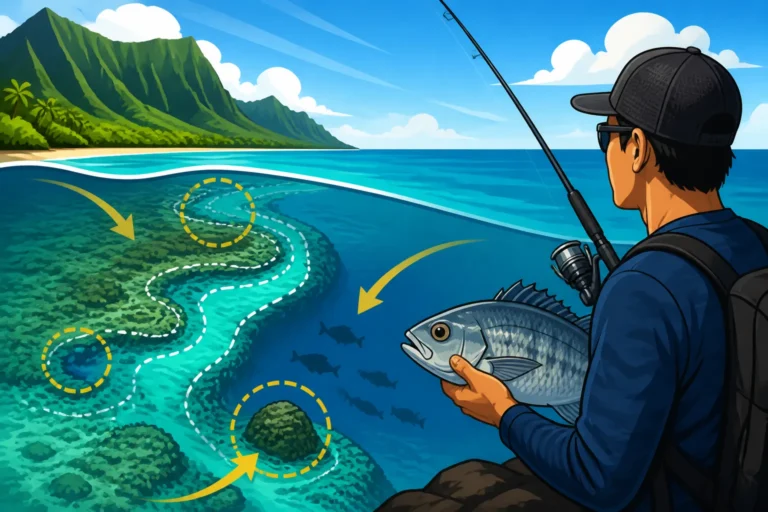
Successfully targeting fall ono isn't just about what you're dragging behind the boat; it's about where you're dragging it. Ono are highly structure-oriented fish, and they gravitate towards areas where food is concentrated. This means understanding how to read the water for subtle clues and knowing the underwater topography. Look for current lines, where different bodies of water meet and create a visible seam on the surface. These are often highways for baitfish and, consequently, for predators like ono. Temperature breaks, even slight ones, can also indicate where bait is holding.
Underwater, focus on drop-offs, ledges, seamounts, and even the FADs (Fish Aggregating Devices) that are deployed around the islands by the state. These FADs are essentially magnets for bait and predators. Use your sonar to identify these structures and to mark bait schools. Ono will often position themselves on the upcurrent side of a structure, ambushing bait as it flows over. If you're not seeing any activity on the surface, don't be afraid to target slightly deeper depths by running a planer or a downrigger. Learning how to interpret what your electronics are telling you about the water column is paramount. To further enhance your understanding of how to translate these observations into successful catches, our guide How to catch ono on the troll provides even more detailed strategies.
Alternative Fall Ono Fishing Methods
While trolling might be the go-to for ono, especially in our vast Hawaiian waters, it's not the only way to catch them. Being adaptable and having a few alternative tricks up your sleeve can make all the difference, particularly when conditions aren't ideal for trolling or when you find a concentrated school of fish.
Casting and Jigging for Schooling Ono
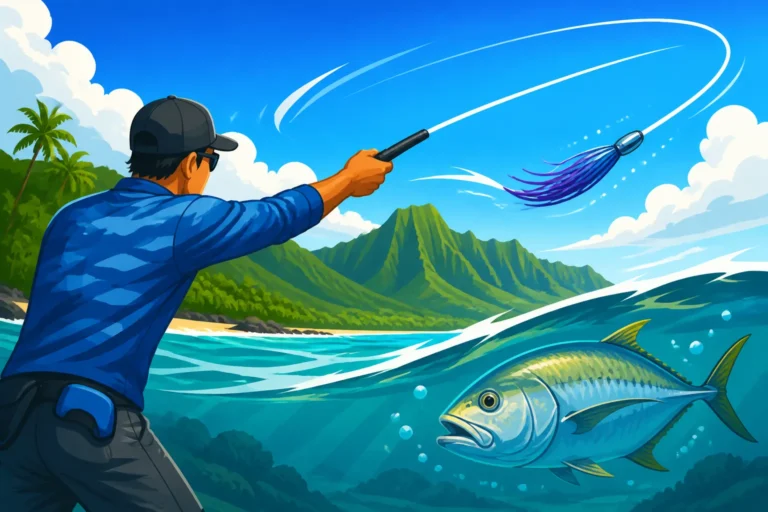
Sometimes, you’ll be lucky enough to stumble upon a school of ono busting bait on the surface. This is a common occurrence in the fall, particularly when large schools of opelu or akule are active. When this happens, a "run-and-gun" approach with casting gear can be incredibly effective and exhilarating. Keep a spinning rod or a lighter conventional setup rigged and ready with a fast-retrieve reel.
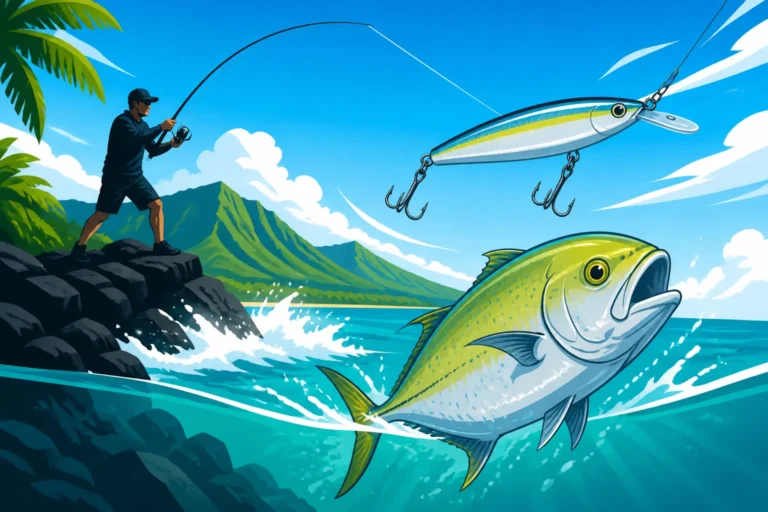
For casting, heavy metal jigs, poppers, and stickbaits are your best friends. The key is to get your lure into the busting school quickly. Cast beyond the school and retrieve aggressively. For poppers and stickbaits, a fast, erratic retrieve that mimics a fleeing baitfish is usually best. Metal jigs, on the other hand, can be cast and retrieved rapidly, or allowed to sink and then jigged vertically through the school. Ono will often strike on the drop or during the retrieve. A good pair of polarized sunglasses is essential to spot these surface explosions. You can find a wide array of effective jigs and poppers on Amazon, perfect for those fast-action scenarios. For a more detailed look at how to approach surface feeders, take a peek at How to fish a popper for schooling ono.
Downrigging and Subsurface Tactics
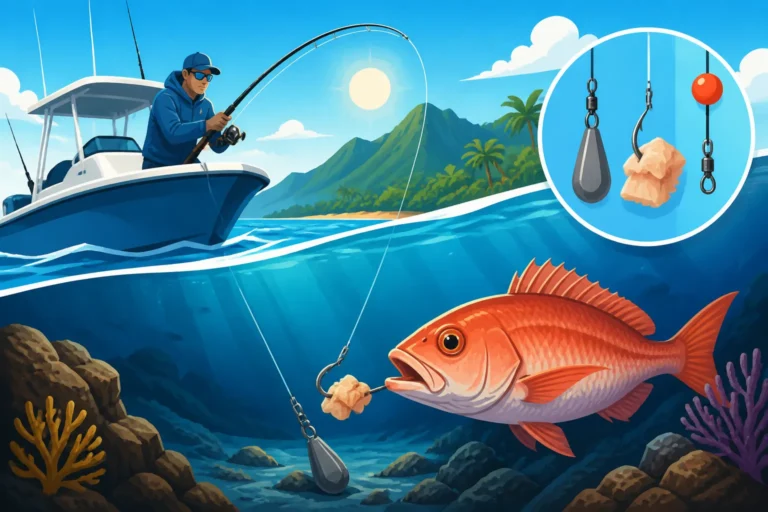
Not all ono are found crashing bait on the surface or actively chasing high-speed lures. In the fall, especially if baitfish are holding deeper or if the surface bite is slow, ono might be lurking in the middle of the water column, or even near the bottom over specific structures. This is where downriggers become invaluable. A downrigger allows you to present lures or live baits at a precise, predetermined depth, getting your offering right into the strike zone.
You can rig a variety of lures or baits behind a downrigger. Small bullet-head lures, skirted ballyhoo, or even live baits can be clipped to the downrigger release, sent down to the desired depth, and trolled at slower speeds. When an ono strikes, the line releases from the downrigger clip, and you're fighting the fish directly. This technique is particularly effective when you've marked fish on your sonar at a specific depth and you want to ensure your bait is presented right in front of them. It's a fantastic way to target those deeper-holding fish that might be ignoring surface presentations, offering a consistent strategy when the surface bite is quiet.
Fall Ono Hotspots and Timing
Knowing the techniques and having the right gear is only part of the equation. To truly succeed, you need to know where and when to deploy these strategies. Hawai'i offers incredible fishing grounds, but some spots consistently outperform others for fall ono.
Island-Specific Concentrations
Each Hawaiian island has its unique fishing grounds, and for ono, specific areas tend to be more productive. Off the Big Island, the Kona Coast is legendary. The deep, volcanic drop-offs, ledges, and numerous FADs offshore create a perfect environment for ono. Concentrate your efforts along the 100-fathom curve, where current often brings bait close to these structures. Popular starting points include Honokohau Harbor. On Maui, the waters off Ma'alaea Harbor and Lahaina Harbor are excellent. The channel between Maui and Lana'i, with its deep contours and current, can be especially productive. Look for areas with current rips and temperature changes.
For Oahu, the leeward side, particularly off the Waianae Coast, is a prime area. The waters here have deep structures and FADs that attract bait and ono. The North Shore can also be good, especially during periods of calmer conditions between swells. Always check your charts for specific depth contours and seamounts that might hold fish. Remember, ono are pelagic, so they're always on the move, but these areas consistently provide the right conditions for them to gather.
Optimal Time of Day and Moon Phases
Ono are known for being active feeders throughout the day, but certain times can be more productive. Generally, the early morning bite, from dawn until a few hours after sunrise, and the late afternoon bite, leading into sunset, are often the most prolific. During these periods, baitfish are typically more active, and the changing light conditions can make it easier for ono to ambush their prey. However, don't dismiss the mid-day hours entirely. If you're trolling over productive structure or have found a good current line, ono can strike at any time.
Moon phases can also play a subtle but noticeable role. Many local anglers swear by the days leading up to and just after a full or new moon. The increased tidal movement associated with these phases can stir up baitfish, making them more vulnerable and prompting aggressive feeding from predators. While it's not a hard and fast rule, keeping an eye on the lunar calendar can give you an edge. For a broader overview of seasonal patterns that can influence your timing, our article Best months to catch ono in Hawaii will give you a comprehensive understanding of ono seasonality.
Regulations and Conservation for Ono
Being a responsible angler means more than just catching fish; it means understanding and respecting the rules that help sustain our precious marine resources. Hawaii's unique ecosystem requires diligence from all of us who enjoy its waters.
Understanding Bag and Size Limits
The Division of Aquatic Resources (DAR) under the Hawaii Department of Land and Natural Resources (DLNR) sets specific regulations for recreational fishing, including bag and size limits for various species, like ono. These regulations are in place to ensure that fish populations remain healthy and abundant for future generations. While ono are not typically subject to strict size limits like some reef fish, there may be bag limits or other rules specific to pelagic species.
It is absolutely crucial to familiarize yourself with the current regulations before you head out. These can change, so always check the latest Hawaii DLNR Fishing Regulations. A good place to start would be our detailed guide on the Hawaii Fishing License Guide for 2026, which covers the basics of what you need to know to fish legally in Hawai'i. Beyond licenses, understanding Hawaii Fishing Regulations Explained and specifically reviewing the Hawaii Pelagic Species Bag Limits will give you the precise information you need regarding ono. Ignorance of the law is no excuse, and penalties for violations can be significant, so be informed!
Responsible Angling Practices
Beyond just legal compliance, practicing responsible angling is about stewardship and ensuring the health of the ocean. For ono, this often means considering catch-and-release practices, especially if you've already met your bag limit or are targeting trophy fish that you don't intend to harvest. If releasing an ono, handle it with care. Minimize its time out of the water, support its body weight, and revive it gently by holding it in the water, facing into the current, until it swims away strongly.
Additionally, be mindful of your impact on the environment. Properly dispose of all fishing line, hooks, and trash. Avoid leaving any pollutants in the water. Respect other anglers, boaters, and marine life. If you encounter marine mammals like dolphins or whales, give them a wide berth. When fishing around FADs or other structures, avoid damaging them. By adhering to these practices, we all contribute to a healthier ocean and a more enjoyable fishing experience for everyone. It's about preserving the magic of Hawaii's fishing for years to come.
Fall Ono Fishing Technique Comparison
To help you visualize the different approaches to targeting ono in the fall, here's a quick comparison of the most common and effective techniques:
| Technique | Speed (Knots) | Target Depth | Gear Focus | Best Conditions | Pros | Cons |
|---|---|---|---|---|---|---|
| High-Speed Trolling | 8-15+ | Surface to 50 ft | Heavy conventional, wire leader, bullet/jet lures | Open water, moderate chop, actively feeding fish | Covers vast areas, provokes aggressive strikes, very efficient | Fuel intensive, requires specific lures, less "feel" for the bite |
| Live Bait Trolling | 3-6 | Surface to mid-column | Medium-heavy conventional, wire leader, circle hooks | Calm to moderate seas, finicky fish, bait schools present | Natural presentation, highly effective for wary fish | Requires live bait, slower coverage, potential for bait loss |
| Skirted Dead Bait | 6-10 | Surface to 30 ft | Medium-heavy conventional, wire leader, ballyhoo/mackerel | General conditions, versatile approach | Combines scent of bait with flash of lure, good compromise | Requires rigging bait, can be messy |
| Casting/Jigging | Run-and-gun | Surface to deep | Spinning or light conventional, poppers/jigs | Surface bust-ups, schooling fish, calm waters | Highly exciting, great for active schools, immediate feedback | Opportunistic, requires quick boat maneuvers, can be physically demanding |
| Downrigging | 3-8 | 50-200+ ft | Conventional, downrigger, lures/baits, release clips | When fish are holding deeper, slow bite on surface | Precise depth control, targets specific marked fish | Equipment intensive, slower to deploy/retrieve |
Disclaimer
The information provided in this article is for general guidance and informational purposes only. Fishing regulations, conditions, and fish behavior can vary. Always consult the latest official regulations from the Hawaii Department of Land and Natural Resources (DLNR) Division of Aquatic Resources (DAR) before fishing. Exercise caution and good judgment when on the water.