How to fish a popper for schooling ono
There's nothing quite as heart-pounding as seeing a school of 'ono (wahoo) erupting on the surface, slashing through baitfish with incredible speed, but sometimes, getting them to actually commit to a lure can feel like trying to catch smoke. It's a common frustration for anglers in Hawaii, watching those explosive strikes without a hookup. This comprehensive guide is here to walk you through the ins and outs of fishing poppers for schooling 'ono, helping you turn those tantalizing surface busts into thrilling catches.
Understanding Schooling Ono Behavior
Ono, or wahoo as they're known elsewhere, are pelagic predators famous for their blistering speed and razor-sharp teeth. When they decide to school up and hunt, it's an event not to be missed, but it also means they can be highly focused on specific bait. Understanding why they school and how to spot their activity is the first step to success.
Why Ono School
Ono typically school for two primary reasons: feeding and migration. When baitfish like 'opelu or akule gather in large concentrations, the 'ono will often form loose schools to corral and ambush them. This coordinated hunting effort allows them to more efficiently overwhelm and consume prey. Imagine a wolf pack cornering a herd; it's a similar dynamic. These feeding frenzies are what create those spectacular surface boils and splashes that get any angler's pulse racing.
Beyond feeding, 'ono also exhibit migratory patterns, moving between different areas depending on water temperature, current, and the availability of their food sources. While these migrations might not always involve surface busting, the presence of a school often means they are actively hunting. Targeting these groups during their feeding windows, when they are most aggressive and competitive, is key to enticing them with a popper. You can learn more about their movements in our guide on Ono Habits and Feeding Behavior.
Reading the Water for Surface Activity
Spotting schooling 'ono isn't always easy, but there are definite tell-tale signs. The most obvious, of course, are violent surface explosions – baitfish scattering, white water erupting, and sometimes even the 'ono themselves briefly breaching the surface. This is often referred to as a "boil" or "bust." Keep a keen eye out for flocks of diving seabirds, especially terns and boobies, as they are excellent indicators of baitfish being driven to the surface by predators below. If birds are actively diving and feeding, chances are there's something big pushing the bait up.
Sometimes, the signs can be more subtle. Look for unusual ripples or nervous baitfish skipping across the surface, even without a full-blown boil. A slight discoloration in the water or a slick on the surface can also indicate feeding activity, as oils and scales from consumed baitfish can gather there. Learning to differentiate between small trevally (papio) activity and the more powerful, sustained commotion of 'ono can take time, but the distinct, hard slashes of an 'ono are usually unmistakable once you've seen them. Patience and constant observation are your best friends here.
Choosing the Right Popper and Gear
Selecting the appropriate popper and ensuring your tackle can handle the brute force of a schooling 'ono is critical. The wrong lure or a weak link in your setup will lead to heartbreak.
Popper Styles and Sizes for Ono
Poppers come in a dazzling array of shapes, sizes, and colors, each designed to mimic different prey or provoke a specific reaction. For 'ono, you're generally looking for poppers in the 5 to 8-inch range, mimicking the size of common baitfish like mackerel scad ('opelu) or small tunas. Larger poppers can sometimes draw a bigger fish, but too large, and they might ignore it entirely if they're focused on smaller bait.
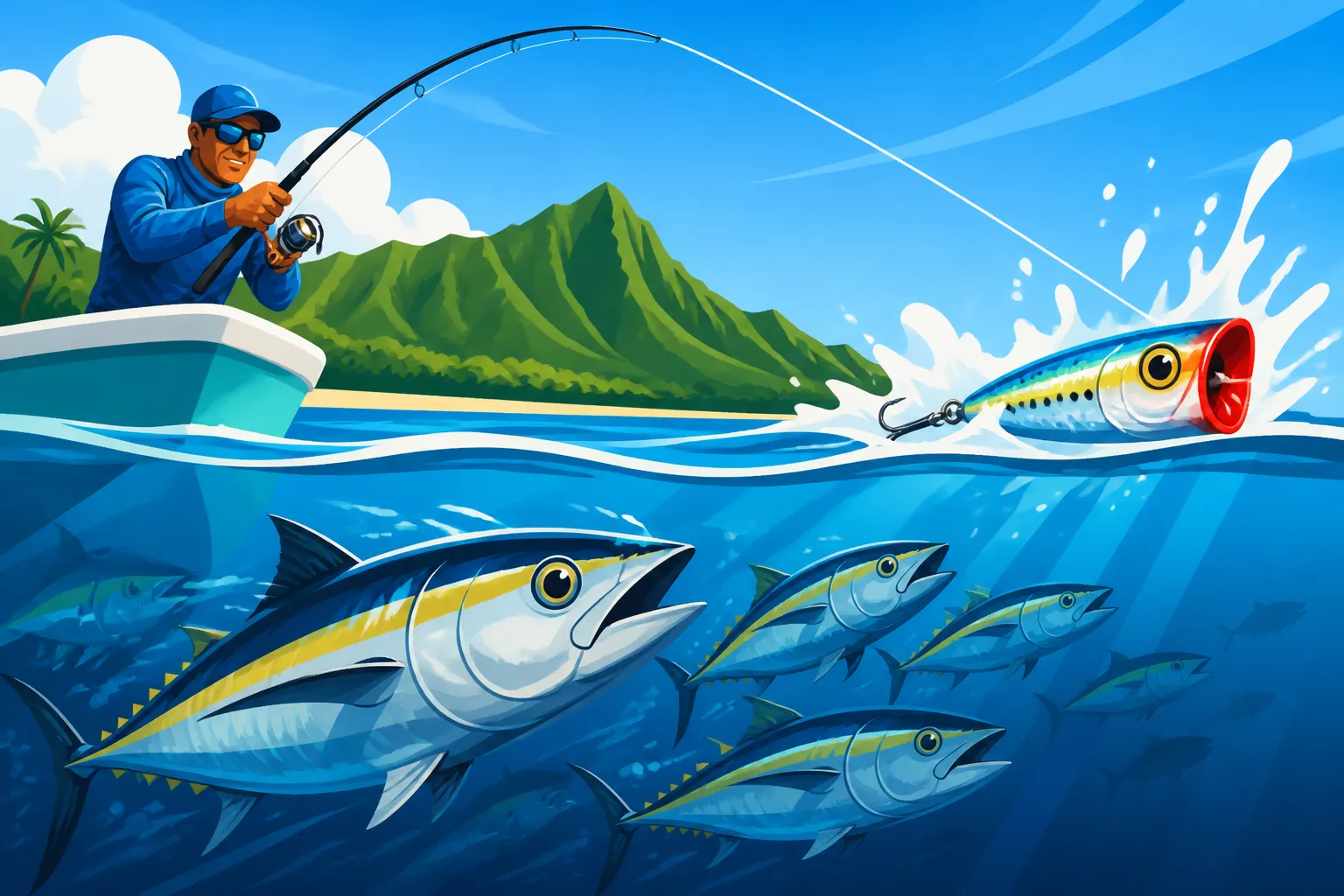
When it comes to style, "cup-faced" poppers are a classic for good reason. Their concave face displaces a lot of water, creating that loud "bloop" or "pop" sound and splash that mimics a struggling baitfish. "Chugger" style poppers have a less aggressive face, creating more of a subtle "gurgle" and spray. Both can be effective. Color-wise, natural baitfish patterns like blue and silver, green and silver, or even a simple white are often very effective. On brighter days, flashier, holographic finishes can draw attention, while on overcast days, something with a bit more contrast, like a black back and silver belly, might stand out better. It's smart to have a few different options in your tackle box. Many reputable brands offer excellent poppers for pelagic species, and you can easily find a wide selection of proven designs on platforms like Amazon.
Rod, Reel, and Line Considerations
Tackling 'ono with poppers is an active and demanding style of fishing, requiring robust gear. You'll want a heavy-action spinning rod, typically in the 7 to 8-foot range, capable of casting heavy poppers a long distance and handling the immense pressure of fighting a fast-moving fish. A fast tip will help with casting accuracy, while a strong backbone is essential for leverage.
Pair this with a high-quality, heavy-duty spinning reel that has a smooth, powerful drag system and excellent line capacity. A reel in the 8000 to 14000 size range, depending on the manufacturer, is usually appropriate. Spool up with 50 to 80-pound braided line. Braid offers superior casting distance, sensitivity, and strength-to-diameter ratio compared to monofilament. Crucially, you'll need a stout leader. Ono have incredibly sharp teeth, so a 80 to 150-pound fluorocarbon leader, at least 3 to 4 feet long, is a must to prevent bite-offs. Some anglers even prefer a short section of wire leader if 'ono are particularly aggressive, though this can sometimes deter bites. Ensure all your knots are strong and reliable, as 'ono will test them to their limits. A heavy-duty swiveling snap can also be used to quickly change poppers. For more details on heavy tackle, refer to our guide on Best Lures for Marlin Trolling off Kona, which shares some similar gear principles.
| Popper Style | Action/Sound | Ideal Conditions | Pros | Cons |
|---|---|---|---|---|
| Cup-Faced | Loud "Bloop" & Big Splash | Choppy water, aggressive fish | Maximum commotion, draws fish from afar | Can be tiring to work, may spook wary fish |
| Chugger | Gurgle & Subtle Spray | Calm water, finicky fish | More subtle, natural presentation | Less noise, might not draw fish as far |
| Stickbait/Walker | Side-to-side "Walk the Dog" | Calm to moderate, searching | Erratic swimming, mimics injured bait | Requires more skill to work effectively |
| Pencil Popper | Fast side-to-side, minimal splash | Fast retrieve, active fish | Covers water quickly, triggers chase | Less surface commotion, less versatile |
Mastering Popper Presentation Techniques
Once you've got the gear, the real art begins: how to make that popper irresistible to a schooling 'ono. It's not just about casting; it's about making the lure come alive.
Casting Accuracy and Distance
When 'ono are busting on the surface, they're often moving fast, and the window of opportunity can be brief. This means casting accuracy and distance are paramount. You need to be able to place your popper right into the heart of the activity or, even better, slightly ahead of the school's direction of travel. Overthrowing or landing too far behind might mean the school has moved on by the time your retrieve starts.
Practice casting in open areas to dial in your technique. A long, smooth cast using the whole rod is more effective than a jerky, short cast. When you see a bust, try to anticipate where the fish will be next. Sometimes, casting beyond the school and working the popper back through it can be more effective than landing right on top, which can sometimes spook them, especially if they are particularly wary. Using braided line will significantly aid in getting that extra distance you need. It can feel like a rush, but taking that extra second to aim properly can make all the difference between a missed opportunity and a tight line.
The Retrieve: Pop, Pause, and Rip
This is where the magic happens. The way you work your popper can be the key to getting an 'ono strike. There isn't one single "right" way, as fish preferences change, but a common and highly effective retrieve involves a "pop, pause, and rip" rhythm.
Start with a hard, downward sweep of the rod tip, causing the popper's face to grab water and create a loud "bloop" and splash. This mimics a struggling baitfish. Immediately after the pop, let the lure pause for a second or two. This pause is often when an 'ono will strike, as it gives them a chance to catch up and inspect the "injured" bait. Then, give a quick, sharp rip of the rod to make the popper dart and splash again. Experiment with the cadence: sometimes short, aggressive pops work best, other times a longer pause is the ticket. When 'ono are in a full-blown frenzy, a faster, more continuous popping and ripping retrieve can ignite their competitive instincts. Remember, the goal is to make your popper look like an easy, wounded meal. Varying your retrieve is crucial because what worked five minutes ago might not work now. This is where your intuition and observation come in, figuring out what the fish want on any given day. Check out Best Techniques for Fall Ono Fishing for more insights on different retrieves.
Hookset and Fighting Strategy
When an 'ono hits a popper, it's usually with explosive force, often a violent splash that can make you jump! Resist the urge to yank the rod back immediately. Instead, wait until you feel the weight of the fish on the line, then lean into a strong, sweeping hookset. Ono often swipe at baits, and setting the hook too early can pull the lure away from their mouth. Once hooked, brace yourself for a blistering run.
Ono are known for their initial, incredibly fast dash. Let your drag do its job, but don't let it be too loose, or they'll spool you. Keep the rod tip up and apply steady pressure. Their sharp teeth are a major concern, so avoid giving them any slack line, as a sudden change in direction with a loose line can allow them to cut through your leader. Once they slow down, you can start to gain line, but be prepared for subsequent, shorter runs. Work the fish steadily to the boat or shore, always maintaining pressure. When boat fishing, communicate with your captain or boatman to chase the fish if necessary. Landing a large 'ono is a team effort and a true test of your angling skill.
When and Where to Target Schooling Ono with Poppers
Timing and location are everything when it comes to intercepting schooling 'ono. Knowing the ideal conditions and understanding where to look can drastically improve your chances.
Ideal Conditions and Times
Ono, being pelagic predators, are highly influenced by environmental factors. Generally, clearer water and strong currents that bring baitfish through an area are ideal. Look for current lines, tide rips, or areas where two different water masses meet, as these are natural highways for bait and, consequently, for 'ono. The prevailing currents around islands like Oahu and the Big Island often concentrate baitfish in specific zones.
While 'ono can be caught throughout the day, early mornings and late afternoons are often prime times. These are periods of lower light, when baitfish are more active near the surface and predatory fish feel more comfortable hunting in shallow or near-surface waters. Overcast days can extend these feeding windows. Pay attention to tide changes as well; incoming or outgoing tides often stimulate feeding activity, especially around points, channels, and reef edges where current is concentrated. Strong wind can make popper fishing challenging, but a light chop on the water can actually help mask your lure and line from wary fish. For a broader view of seasonal patterns, refer to Hawaii Fishing Seasons by Month.
Locating Ono Schools from Shore or Boat
Whether you're casting from a rocky point or trolling from a boat, knowing where to look for schooling 'ono is paramount.
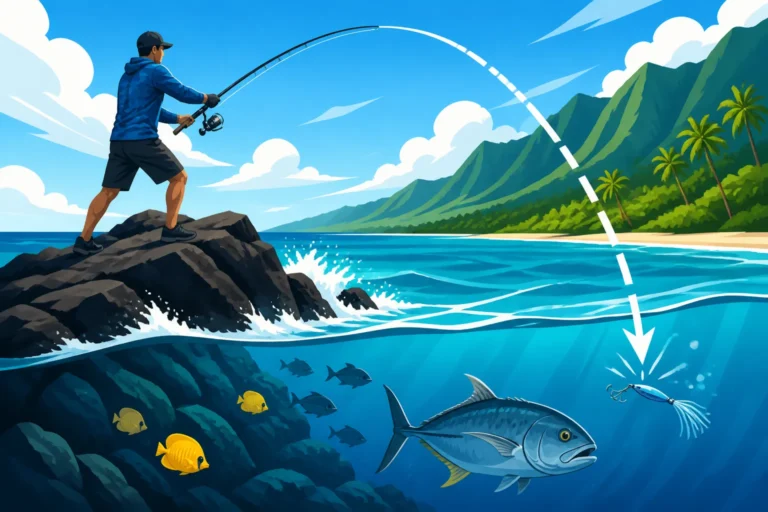
From shore, focus on areas with good deep water access close to the coastline, such as rocky points, jetties, or steep drop-offs. These locations often attract baitfish and provide ambush points for 'ono. Look for signs of current, as discussed above, and keep an eye on the horizon for bird activity. Patience is key when shore fishing; you're waiting for the 'ono to come to you. Areas near the mouths of harbors or bays can also be productive if baitfish are congregating there.
From a boat, your options expand significantly. Troll along the 100-fathom curve or offshore banks, but always keep an eye out for bird piles, floating debris (FADs or fish aggregating devices), or any surface commotion. 'Ono love structure, even if it's just a floating pallet or log in the open ocean, as these provide cover for baitfish. Running and gunning – speeding to a visible bust, casting poppers, and then moving on when the activity subsides – is a highly effective tactic for schooling 'ono. Sometimes, just cruising through an area known for 'ono, like the Kona Coast, will bring you into contact with a school, even if they aren't actively busting the surface. When you're out there, remember, you're looking for signs of life. For good general tips on locating fish, consider reading Hawaii Pelagic Species Identification Guide for Hawaii to understand what other fish might be in the area too.
Keeping Schooling Ono Fired Up
You've found the school, you're casting your popper, and they're hitting it! Now, how do you keep the action going and maximize your chances for multiple hookups?
Chasing the Bust and Staying Connected
Schooling 'ono, especially when in a feeding frenzy, can move incredibly fast. One moment they're busting right in front of you, the next they're a hundred yards away. When fishing from a boat, it's crucial to be nimble. As soon as you see a bust, your captain should be moving the boat to intercept or get ahead of the school. Don't waste time; get your casts out quickly. It's often better to make several short, accurate casts into the moving school than one long, hopeful cast that lands too far behind.
If you're hooked up, try to keep the fish away from the rest of the school as much as possible to avoid tangles. Once you land a fish, immediately get another cast out. The presence of a hooked fish in the water can sometimes keep the school interested, but the longer your lure is out of the water, the more likely the school will move on. Having multiple rods rigged and ready with poppers can be a huge advantage when the bite is hot. Communication between anglers and the boat crew is vital for staying on top of the action.
The Importance of Teamwork on the Boat
When the 'ono are schooling and hitting poppers, it's often a chaotic and exhilarating scene. This is where teamwork truly shines. On a charter, the captain and crew are working to put you on the fish, but anglers also have a role to play.
If one person is hooked up, other anglers should be casting, either to keep the school engaged or to try and hook another fish. Avoid casting over a line that's already hooked up. When a fish is being brought to the boat, clear the deck and be ready with gaffs or nets if the crew requests it. Knowing when to reel in, when to cast, and when to step aside is critical for a smooth operation. Even simple things like having drinks and snacks easily accessible so you don't have to search for them during a hot bite can make a difference. Good teamwork helps keep the school fired up and maximizes the number of fish brought to the boat. This cooperative spirit is a big part of what makes Best Half-Day Fishing Charters in Hawaii so successful.
Popper Maintenance and Durability
Ono are toothy critters, and their aggressive strikes can take a toll on your poppers. Proper maintenance ensures your lures last longer and perform effectively.
Inspecting and Replacing Hooks
The stock hooks on many poppers, especially those designed for less aggressive freshwater species, simply aren't up to the task of handling 'ono. Before you even tie on a new popper, inspect the hooks. Are they heavy-duty enough? Are they sharp? Many experienced 'ono anglers immediately upgrade their poppers with stronger, corrosion-resistant treble hooks or single hooks. Brands like VMC or Owner offer excellent aftermarket hooks that can withstand the abuse of pelagic species. You can find these high-quality hooks on Amazon to ensure your popper is ready for the fight.
After each fishing trip, or even after a particularly brutal strike, inspect your hooks for damage. Ono can bend or dull hooks, and a dull hook dramatically reduces your hookup ratio. Replace any bent, corroded, or excessively dull hooks immediately. Also, check the split rings connecting the hooks to the lure body; these can sometimes straighten or open under extreme pressure. Upgrading to stronger, heavier-duty split rings is a small investment that can save you a trophy fish.
Repairing and Protecting Popper Bodies
While the hooks take the brunt of the abuse, the popper body itself isn't immune. Ono teeth can leave nasty gashes and gouges in the plastic or wood body, compromising its integrity and sometimes its action. After each trip, give your poppers a good rinse with freshwater to remove salt and debris. Then, visually inspect them.
If you notice deep gouges or cracks, especially around the hook hangers, consider repairing them with marine-grade epoxy or super glue to prevent water intrusion. Waterlogged poppers lose their buoyancy and action. Some anglers even apply a protective clear coat to new poppers to add an extra layer of defense against those sharp teeth. Storing your poppers in a separate tackle box or compartment, away from other lures, can also help prevent them from getting scratched or chipped during transport. Taking a little time for maintenance will ensure your favorite 'ono poppers are always ready for the next feeding frenzy.
Disclaimer
This article is for general informational purposes only and does not constitute professional advice. Laws, prices and regulations vary by location and change over time. Consult a qualified professional for guidance on your specific situation.