Best Lures for Marlin Trolling off Kona
Figuring out which lures to drag behind your boat when you’re chasing big marlin off the Kona Coast can feel like a high-stakes guessing game. With so many options, colors, and styles, it's easy to second-guess your spread, especially when the bite is slow. This comprehensive guide will pull back the curtain on the best lures for marlin trolling in Kona, helping you understand their characteristics, how to rig them, and when to deploy them for the greatest chance of success.
Understanding Kona's Marlin Fishing Environment
The waters off the Big Island of Hawaii are legendary for marlin fishing, particularly the leeward side known as the Kona Coast. This isn't just a pretty backdrop; the unique oceanography here plays a huge role in why certain lures perform better than others. It's a vast, deep blue playground, but understanding its nuances can give you a significant edge.
The Deep Blue Waters and Their Currents
Kona's fishing grounds drop off rapidly into incredibly deep water, often reaching thousands of feet just a few miles offshore. This deep, clear water is home to massive pelagic species, and the currents here are incredibly complex. You're not just dealing with the surface current; there are often subsurface currents, eddies, and upwellings that can create current lines and temperature breaks. Marlin, especially the mighty blue marlin, are expert navigators of these ocean highways. They use these current edges as ambush points, riding the thermoclines to find baitfish that get pushed up from the depths or concentrated along these invisible boundaries.
This means your lures aren't just swimming in a straight line; they're dancing and diving, sometimes being pushed around by conflicting currents. A good marlin lure needs to have a stable, consistent action that holds true even when the ocean isn't perfectly flat or the currents are swirling. If a lure is constantly blowing out or tumbling, it's not going to look natural, and a discerning marlin will simply pass it by. Understanding the water conditions on any given day – whether it's flat calm, a slight ripple, or a choppy mess – is crucial for selecting a lure that will maintain its enticing presentation.
Baitfish and Forage Species
Marlin are apex predators, but they're also opportunistic. Their diet in Kona is heavily influenced by the abundant baitfish and forage species that thrive in these waters. Skipjack tuna (aku), mackerel scad (opelu), mahi-mahi (dorado), and even smaller yellowfin tuna (ahi) are all on the menu. The presence and size of these baitfish schools can dictate what kind of lure a marlin might be keying in on. For instance, if you're seeing schools of smaller aku jumping, a smaller profile lure mimicking that bait might be more effective. Conversely, if there are larger ahi or mahi-mahi around, a bigger, more substantial lure could be the ticket to attracting a grander.
It's not just about size, though. The coloration, flash, and swimming patterns of these baitfish are also important. For example, aku often have iridescent blue and silver flanks, while mahi-mahi shimmer with greens, yellows, and blues. Your lures should ideally mimic these natural prey items in both appearance and action. Savvy captains often keep an eye on what's being regurgitated by caught fish or what birds are diving on to get clues about the predominant forage. For more insights into what these majestic fish consume, check out our guide on what marlin eat off the Kona Coast.
Key Characteristics of Effective Marlin Lures
When you're shelling out good money for a marlin lure, you're not just buying a piece of plastic or resin; you're investing in a complex tool designed to trick one of the ocean's most powerful predators. The best lures share a few critical characteristics that set them apart from the crowd.
Action and Movement in the Water
This is arguably the most crucial factor. A marlin lure's "action" describes how it moves through the water when trolled. Does it dive and resurface? Does it swim with a side-to-side wobble? Does it dart erratically like a fleeing baitfish? The goal is to imitate natural prey in distress or actively swimming. Different lure shapes create different actions:
- Plungers: These lures have a concave face and a tapered body. When trolled, they "plunge" under the surface, creating a distinct smoke trail and then darting back up, often with a seductive head shake. This action mimics a fleeing baitfish or one struggling at the surface.
- Chuggers: Similar to plungers but often with a wider, more aggressive concave face. Chuggers create a more violent "pop" and splash on the surface, pushing a significant amount of water. This imitates a frantic baitfish or a surface disturbance that attracts attention from a distance.
- Bullet Heads: With their streamlined, bullet-like shape, these lures are designed for speed and stability. They typically run just under the surface with a tight, snake-like wiggle or straight tracking action, making them excellent for faster trolling speeds or rougher conditions where other lures might blow out. They're often seen as mimicking a fast-swimming pelagic baitfish.
The best lures maintain their desired action consistently, even through varying boat speeds, turns, and wave conditions. A lure that "blows out" (comes completely out of the water and tumbles) or spins erratically isn't presenting a convincing meal to a marlin. Kona captains are constantly watching their lure spread, making sure each lure is performing its job perfectly.
Color Patterns and Skirt Materials
While action is king, color and skirt material are the lure's wardrobe, and they play a significant role in getting noticed. Marlin have excellent eyesight, and the visual appeal of a lure can trigger a strike.
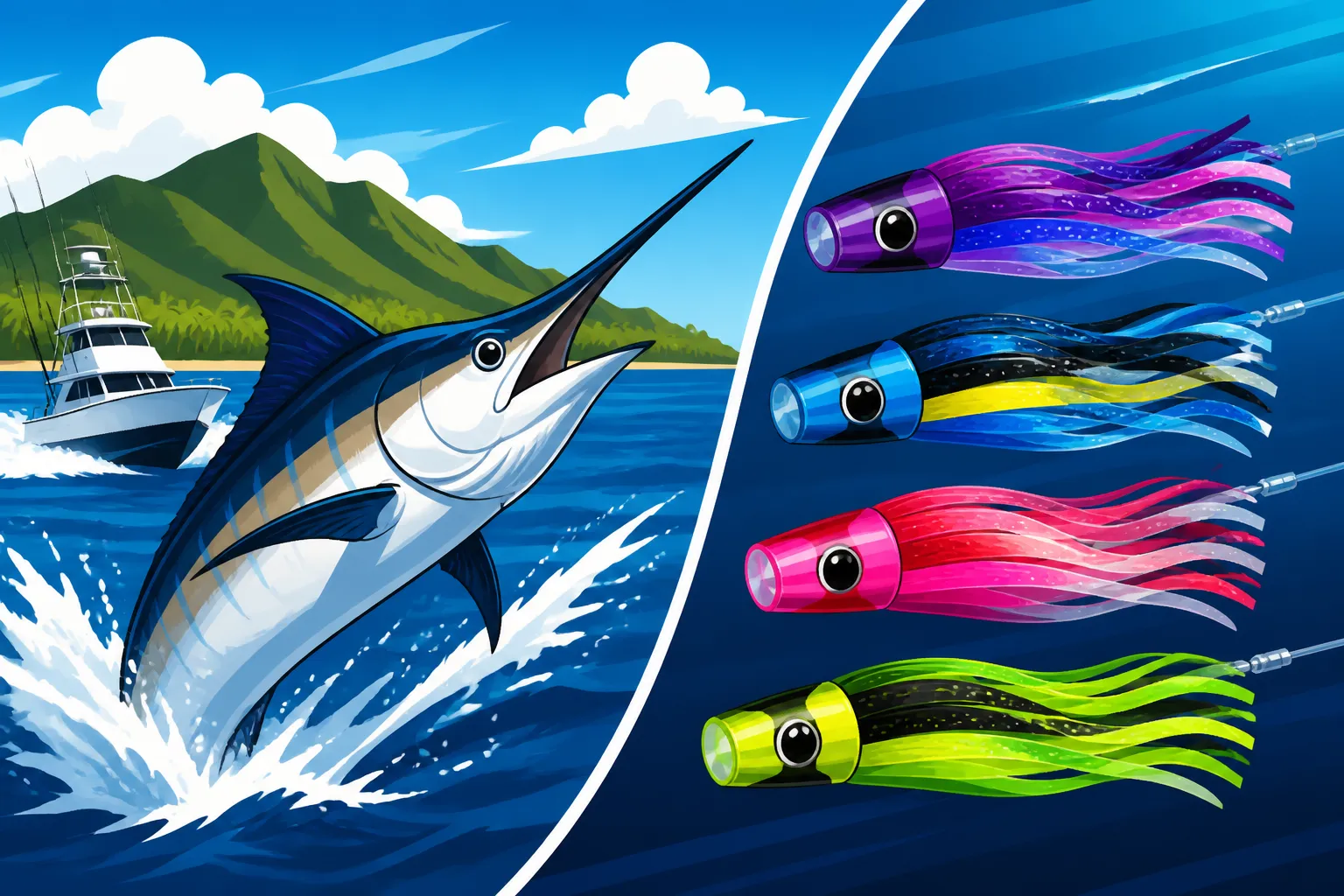
- Color Patterns: There's an old saying, "fish for the fisherman with bright colors, fish for the fish with subtle ones." While there's some truth to that, specific color combinations consistently produce in Kona. Classic combinations like "Evil" (black and purple), "Scandal" (pink and blue), "Grander" (green and yellow), and "Aku" (blue and silver) are perennially popular because they often mimic natural baitfish or create a strong silhouette against the water. However, don't be afraid to experiment. Sometimes, a bright, unnatural pattern like "chartreuse" or "pink and white" can stand out in murky water or during low-light conditions, triggering an aggressive, curious strike. Water clarity and sunlight penetration also influence color visibility. For a deeper dive into choosing the right hues, explore our guide on Best lure color for marlin trolling off Kona.
- Skirt Materials: The skirt is the "tail" of the lure and provides much of its enticing movement and visual bulk. Most skirts are made from soft vinyl, often with metallic flakes or iridescent strands woven in for added flash. The texture and flow of the skirt material are crucial. A good skirt should pulsate and undulate naturally in the water, giving the lure a lifelike appearance. Some skirts are thick and full, creating a larger profile, while others are thinner and more translucent for a subtler look. Durability is also key; marlin strikes are brutal, and a flimsy skirt will be shredded quickly. Many anglers keep a selection of replacement skirts on hand, often purchasing them from tackle shops or online retailers like Amazon, to quickly change patterns or replace damaged ones.
Size and Profile Considerations
Matching the hatch is a common mantra in fishing, and it applies strongly to marlin trolling in Kona. The size and overall profile of your lure should generally correspond to the size of the baitfish marlin are feeding on, or the size of the marlin you're hoping to attract.
- Lure Length: Marlin lures can range from small, 6-inch "short rigger" lures to massive 16-inch or even 20-inch "long corner" monsters. If you're targeting juvenile blue marlin or striped marlin, a smaller lure in the 8-12 inch range might be more effective. For grander-sized blue marlin, however, you'll want to deploy larger lures that present a substantial meal. Keep in mind that bigger lures often require heavier tackle and can be more fatiguing to troll.
- Head Shape and Bulk: Beyond just length, the overall bulk and shape of the lure's head contribute to its profile. A wider-faced plunger will have a different visual footprint than a slender bullet head, even if they are the same length. Think about the silhouette the lure creates against the surface and subsurface. A larger, bulkier profile can be more easily seen from a distance and can suggest a bigger, more rewarding meal to a hungry marlin. Experimenting with different sizes and profiles within your spread can help you identify what the fish are keying in on for that particular day.
Types of Marlin Trolling Lures
The world of marlin lures is incredibly diverse, but for Kona trolling, a few staple categories dominate. Each type has its own unique action and is suited for different positions in your spread and varying conditions.
Plunger Lures
Plunger lures are a cornerstone of any serious marlin fisherman's tackle box, especially in Kona. Their defining feature is a concave or dished face combined with a tapered body. This design allows them to create a distinctive and highly effective action in the water. As they're trolled, they "plunge" beneath the surface, trapping air in their concave face, which then creates a substantial bubble trail or "smoke" as the lure resurfaces. This action is incredibly realistic, mimicking a panicked or injured baitfish struggling at the surface, which is an irresistible trigger for a predatory marlin.
The specific plunge and pop can vary. Some plungers have a deep, aggressive cup that creates a massive eruption, while others have a shallower, more subtle face that produces a smoother, more rhythmic action. The weight distribution within the lure head also influences its performance; heavier plungers tend to run deeper and more consistently, while lighter ones might have a more erratic, surface-oriented action. Plungers are often favored in the short rigger or long rigger positions in the spread, where their prominent surface disturbance can draw fish up from the depths. Brands like Black Bart and Marlin Magic are renowned for their plunger designs, often meticulously hand-crafted to achieve specific, proven actions.
Chugger Lures
Chugger lures are the boisterous cousins of plungers, designed to create an even more exaggerated surface commotion. While they also feature a concave face, it's typically wider and deeper than that of a plunger, sometimes with a more blunt nose. This amplified design allows chuggers to generate an enormous splash, a powerful "pop," and a dense, foamy smoke trail as they're trolled. This aggressive action is perfect for attracting attention from a long distance, especially in choppy conditions or when you're trying to raise a curious marlin that might be holding deeper.
The heavy surface disturbance of a chugger often imitates a large baitfish actively feeding or frantically fleeing a predator. They are particularly effective when marlin are aggressively feeding or when you need to make a statement with your spread. Chuggers are frequently deployed in the short corner or short rigger positions, where their energetic action can be clearly seen by the boat operator, allowing for immediate adjustments if the lure isn't running correctly. While some anglers prefer a more subtle approach, a well-placed chugger can be the ultimate attention-grabber, sometimes being the only lure in the spread to get hit on a slow day.
Bullet Head Lures
In stark contrast to the aggressive surface action of plungers and chuggers, bullet head lures are all about speed, stability, and a sub-surface presentation. As their name suggests, these lures feature a sleek, aerodynamic head shape that tapers to a point, minimizing water resistance. This design allows them to track incredibly straight and run exceptionally fast, making them ideal for high-speed trolling or for maintaining a consistent action in rougher seas where other lures might struggle. Bullet heads typically run just below the surface, creating a tight, shimmering swim pattern rather than a large splash or smoke trail.
Their subtle, stable action often mimics a fast-swimming pelagic baitfish, like a small ahi or aku, that is not necessarily in distress but rather cruising confidently. This can be particularly effective when marlin are being finicky or when you're trying to cover a lot of ground quickly. Bullet heads are often placed in the long rigger or shotgun positions, where they can be trolled further back from the boat and operate in cleaner, less disturbed water. Because of their stability, they are also a favorite for adding natural bait, such as rigged ballyhoo, inside the skirt to create a deadly combination. For those keen on mastering the art of high-speed presentations, our guide on Trolling Techniques for Hawaii Pelagics offers excellent insights.
Jets and Other Specialty Lures
While plungers, chuggers, and bullet heads form the backbone of a Kona marlin spread, there are several other specialty lures worth considering, with "jets" being a prominent example.
- Jet Lures: These lures feature holes drilled through the head, allowing water to pass through and create a unique, sputtering, and bubbling action. The water jetting out the back of the lure creates a substantial smoke trail, often more consistent than a plunger, and gives the lure a distinct "engine-like" sound and vibration that can attract marlin from a distance. Jet lures combine aspects of both bullet heads (speed and stability) and chuggers (smoke trail), making them versatile options. They can be particularly effective in choppy conditions as the water flow through the jets helps stabilize their action. Many jet lures also incorporate shiny Mylar or reflective inserts in the jets themselves, adding an extra flash element.
- Other Specialty Lures: Beyond jets, you'll encounter a variety of other unique designs. Some lures feature intricate internal weighting systems that create unpredictable, erratic darting movements. Others have specialized lip designs that make them dive deep or wiggle in specific patterns. There are also lures designed for specific conditions, like those with extremely heavy heads for rough seas or lures with glow-in-the-dark features for low-light or night fishing scenarios. The key with specialty lures is to understand their intended action and how they might fit into your overall trolling strategy. Often, these are experimental lures or those designed by local legends who've spent decades perfecting specific patterns for Kona's unique conditions.
Rigging and Spreading Your Lures for Success
Having the best lures is only half the battle; knowing how to rig them correctly and present them effectively in a trolling spread is where experience truly shines. A well-rigged lure that's positioned optimally can make all the difference between a slow day and a banner day.
Leader Materials and Hook Setups
The connection between your main line and the lure, and the hooks themselves, are critical components that must withstand the immense power of a marlin. Skimping here is a recipe for heartbreak.
- Leader Materials: Marlin leaders are typically made from heavy monofilament or fluorocarbon, ranging from 300 lb to 600 lb test, sometimes even heavier for grander hunting. Monofilament offers good abrasion resistance and a bit of stretch, acting as a shock absorber. Fluorocarbon is less visible in the water, which can be an advantage for finicky fish, and also offers excellent abrasion resistance. The length of the leader is important too; it needs to be long enough to absorb lunges and keep the main line away from the marlin's abrasive bill and tail, but not so long that it becomes cumbersome to handle at the boat. Typically, leaders are 10-25 feet long. Always inspect leaders for nicks, chafing, or signs of wear after every fish or every few hours of trolling.
- Hook Setups: Most marlin lures are rigged with a single, large J-hook or a single-strand cable or braided wire leader to a single hook. Some prefer double-hook rigs, but this is less common for Kona marlin and can sometimes lead to foul hooking or leader wrap issues. The hook should be super sharp, chemically sharpened, and sized appropriately for the lure and target species. For example, a 12/0 or 14/0 stainless steel hook is common for larger blue marlin lures. The hook should ideally ride in the "sweet spot" of the lure's skirt, typically about two-thirds of the way back, ensuring good hook-up ratios without hindering the lure's action. The hook point should be exposed and clear of the skirt material. Understanding proper rigging is so important that we even have a specific guide on How to rig ballyhoo for marlin trolling, which shares similar principles for lure rigging.
Trolling Spreads and Positions
A "trolling spread" refers to the arrangement of your lures behind the boat, each at a specific distance and position. The goal is to create a dynamic, enticing presentation that covers a wide area and mimics a school of baitfish. In Kona, most boats run a five-lure spread, though some may run more or fewer.
A common five-lure spread typically includes:
- Short Corner: Closest to the boat, on the corner closest to the prop wash. Often a chugger or aggressive plunger, creating significant splash and drawing attention.
- Long Corner: Further back than the short corner, usually opposite the short corner. Another aggressive lure, sometimes a larger plunger or chugger, working the clean water just outside the prop wash.
- Short Rigger: Positioned on one of the outriggers, closer to the boat than the long rigger. This is a versatile spot for a plunger, chugger, or a medium-sized bullet head.
- Long Rigger: On the opposite outrigger, further back than the short rigger. Often a bullet head or a more subtle plunger, designed to be seen from a distance.
- Shotgun (or Stinger): The furthest lure back, often set down the center in the undisturbed "clean" water. This is usually a bullet head or a smaller, fast-tracking lure, sometimes considered the "surprise" lure.
The distances are staggered to prevent tangles and allow each lure to work in its own clean water. Captains constantly adjust lure positions based on current, wind, and how the lures are running. The goal is to create a "V" shape or "W" shape in your spread, with the lures dancing and interacting without interfering with each other. Mastering these arrangements takes time and observation. For a broader understanding of how these techniques fit into offshore fishing, our article on Trolling Techniques for Hawaii Pelagics is a great resource.
Utilizing Teasers and Dredges
While not lures themselves, teasers and dredges are invaluable tools for attracting marlin into your spread and prompting them to strike. Think of them as the ultimate wingmen for your lures.
- Teasers: These are lure-like devices that are trolled without hooks, purely to create a commotion and visual attraction. They come in many forms:
- Chain Teasers: A string of small, skirted lures (often with bird-like heads) trolled in a line, simulating a school of baitfish.
- Squid Nation Dredges: These are large, artificial baitfish arrays (often mimicking ballyhoo or squid) that create the illusion of a massive school of bait. When pulled through the water, they look incredibly realistic from above and below, often bringing marlin right into the prop wash.
- Bird Teasers: Surface-skipping birds (plastic or wood) that create splashes and spray, drawing attention to themselves and any lures or other teasers behind them.
- Dredges: More substantial than chain teasers, dredges consist of multiple arms with dozens of artificial or natural baits (such as dead ballyhoo or mullet) attached. They are trolled deeper in the water column, often just out of sight, to create the impression of a huge baitball. A marlin approaching the dredge will often then "switch" its attention to a trolled lure that has hooks, seeing it as an easier, isolated target.
Teasers and dredges are typically deployed from dedicated teaser rods or specialized dredge setups. They should be positioned to complement your lure spread, adding to the illusion of a bustling bait school without fouling your hooked lures. The excitement of seeing a marlin "come up" on a teaser, crashing it repeatedly before veering off to slam a lure, is one of the most thrilling moments in offshore fishing.
Matching Lures to Conditions and Target Species
The art of marlin trolling in Kona is less about having a single "magic" lure and more about intelligently deploying a variety of lures based on the specific conditions you encounter and the species you're hoping to entice.
Daytime vs. Low Light Conditions
The amount of light penetrating the water has a significant impact on how fish see your lures, making certain colors and actions more effective at different times of the day.
- Daytime (Bright Sun): In bright Hawaiian sunshine and clear blue water, lures with reflective properties and natural baitfish colors often excel. Blue, silver, green, and iridescent skirts mimic the flash of skipjack tuna or mahi-mahi under the sun. Lures with a tight, subtle swimming action (like bullet heads) can be effective as they look like fast-moving prey. The strong contrast of dark colors (black and purple) can also create a clear silhouette against the bright surface, making them visible from below. This is also when you can really see the "smoke" trail of plungers and chuggers working their magic.
- Low Light (Dawn/Dusk, Overcast): During dawn, dusk, or heavily overcast days, visibility decreases, and marlin may rely more on movement and silhouette. This is when lures with brighter, more fluorescent colors like pink, chartreuse, or even white can stand out. Lures that create a lot of commotion—chuggers with a big pop or jet lures with a strong smoke trail—can be effective because they generate noise and disturbance that attract attention when visual cues are diminished. Some lures incorporate glow-in-the-dark features, although these are less common for marlin trolling in Kona compared to other fisheries. The key is to make your lure noticeable in the reduced light without appearing unnatural.
Targeting Blue Marlin vs. Striped Marlin
While both are magnificent billfish, blue marlin and striped marlin exhibit different behaviors and preferences, which can influence your lure selection.
- Blue Marlin: These are the giants of the Pacific, often exceeding 500 pounds and known for their incredible power and aggression. Blue marlin tend to prefer larger, more aggressive lures that imitate substantial prey. Plungers and chuggers with a significant splash and smoke trail are often favorites, especially when run in the short rigger and corner positions. Blue marlin are also attracted to high-speed trolling. Their strikes are often incredibly violent, and they can engulf a large lure whole. When targeting blue marlin, don't be afraid to go big with your lures and leaders. For more on distinguishing these majestic creatures, read our article on Blue Marlin vs Striped Marlin Identification.
- Striped Marlin: While still powerful, striped marlin are generally smaller and often more acrobatic than their blue counterparts. They tend to be found in cooler, shallower waters and are often more prevalent during certain seasons. Striped marlin can be a bit more finicky, sometimes preferring smaller, more subtle lures. Bullet heads or smaller plungers in the 8-12 inch range, sometimes incorporating natural baits like ballyhoo, can be very effective. Their strikes are often characterized by multiple "bill slaps" before they commit to eating the lure. While they'll certainly hit larger lures, don't overlook downsizing your offerings if striped marlin are the primary target or if they're showing up in the spread.
Sea Conditions and Water Clarity
The state of the ocean and its clarity are constantly changing factors that demand adaptability in your lure selection.
- Calm Seas: In flat-calm conditions, every detail of your lure's action and the condition of your spread is magnified. This is when subtle, lifelike actions can be most effective. Bullet heads running cleanly just under the surface, or plungers with a smooth, rhythmic pop, can shine. In very clear, calm water, less visible leaders (fluorocarbon) and more natural baitfish colors might be preferred. It's also a good time to observe exactly how each lure is performing and make fine-tuned adjustments.
- Choppy/Rough Seas: When the ocean kicks up, many lures can struggle, blowing out or tumbling uncontrollably. This is where stable, heavier lures truly earn their keep. Bullet heads and certain jet lures are designed to run true in rough water. Chuggers with a deep, aggressive cup can also maintain their action, using the waves to enhance their splash and pop rather than being disrupted by them. In rougher conditions, the increased surface disturbance can help mask your boat's presence, and a lure with a strong, visible smoke trail or splash can cut through the chop to get noticed. Also, water clarity can decrease in rougher conditions due to churned-up sediment or plankton blooms, making brighter, more contrasting lure colors potentially more effective. Kona's waters can shift rapidly, making constant observation and quick lure changes essential.
Maintaining Your Marlin Lure Arsenal
Marlin lures are an investment, and like any valuable tool, they require proper care and maintenance to ensure they perform optimally and last for many seasons. Neglecting your lures can lead to diminished performance, lost fish, and a shorter lifespan for your tackle.
Post-Fishing Care and Storage
After a long day of trolling in the saltwater, simply tossing your lures back into a tackle box is a surefire way to shorten their life. Proper care starts immediately after you pull them from the water.
- Rinse Thoroughly: As soon as you're off the water, give all your lures, leaders, and hooks a thorough rinse with fresh water. Saltwater is highly corrosive, and even "stainless steel" hooks will eventually show rust or degrade if not cleaned. Pay special attention to the lure heads, making sure to flush out any salt crystals that might accumulate in cups or jet holes. Don't forget to rinse the skirts as well, as salt buildup can stiffen and degrade the material over time.
- Inspect and Dry: After rinsing, carefully inspect each lure. Check the skirt for tears, nicks, or signs of wear. Examine the leader for any abrasion, kinks, or weaknesses, especially near the crimps or knots. Most importantly, scrutinize your hooks. Look for rust, dull points, or any signs of bending or stress. It's a good practice to run your fingernail over the hook point; if it doesn't dig in, it needs sharpening or replacement. Allow all components, especially skirts, to air dry completely before storing them. Storing wet skirts can lead to mold or mildew growth and can damage the material.
- Proper Storage: Once clean and dry, store your lures in a way that protects them. Many anglers use dedicated lure bags with individual pockets, which keeps skirts from getting tangled or crushed. Hard tackle boxes with dividers also work well. Keep your lures out of direct sunlight for extended periods, as UV rays can degrade skirt materials and cause colors to fade. Store hooks separately or in rust-resistant containers if they're not part of a permanently rigged lure. Proper storage ensures your lures are ready for action the next time you hit the water, whether you're targeting Kona marlin or planning a trip to explore Best Deep Sea Fishing Spots in Hawaii.
Replacing Skirts and Rigging
Even with the best care, components of your marlin lures will wear out or get damaged. Knowing how to replace skirts and re-rig your lures is a fundamental skill for any serious angler.
- Replacing Skirts: Lure skirts take a beating. They can get chewed up by bill strikes, torn by fish teeth, or simply degrade over time from UV exposure. Replacing a skirt is relatively straightforward. Most lure heads have a channel or groove where the skirt slides on. Carefully remove the old, damaged skirt. If it's stubborn, a little dish soap can help it slide off. Then, gently slide on a new skirt, making sure it sits flush against the lure head. It's a good idea to have a variety of replacement skirts in different colors and materials on hand, especially popular patterns you know work well in Kona. You can often find high-quality replacement skirts from various tackle brands on Amazon, allowing you to easily refresh your favorite lure heads. This also gives you the flexibility to change colors mid-trip if you notice fish are responding better to a different pattern.
- Re-rigging Lures: The leader and hook setup are often the first things to show wear, especially after fighting a strong marlin. Don't hesitate to re-rig a lure if there's any doubt about the integrity of the leader, crimps, or hook. This usually involves cutting off the old leader, carefully removing the hook (if it's still sharp), and then crimping on a new, fresh leader with a new, razor-sharp hook. Use high-quality crimps and a proper crimping tool to ensure a strong, reliable connection. Learning to tie a reliable knot, like a crimp, is crucial. For anglers looking to expand their knowledge on maintaining tackle, you might find valuable tips in our guide on Hawaii Fishing License Guide for 2026, as general tackle maintenance goes hand in hand with preparedness for any fishing trip. Always double-check your rigging; a weak link in your setup is the easiest way to lose the fish of a lifetime.
Disclaimer
The information provided in this guide is for general informational purposes only. Fishing regulations, conditions, and best practices can change. Always consult the latest Hawaii Department of Land and Natural Resources (DLNR) regulations and local weather and ocean forecasts before heading out. Fishing involves inherent risks, and safety should always be your top priority.