Best Techniques for Spring Marlin Fishing
Spring in Hawaii can be an absolutely magical time, but for us anglers, it often comes with a unique set of challenges and incredible rewards when it comes to chasing marlin. The transition from cooler winter currents to the warmer, more active waters of spring brings with it changes in fish behavior and ocean conditions that can leave even seasoned veterans scratching their heads. This comprehensive guide will dive deep into the best techniques for targeting these magnificent billfish during Hawaii's vibrant spring season, helping you unravel the mysteries and increase your chances of that dream catch.
Understanding Spring Marlin Behavior in Hawaii
The spring months in Hawaii, generally from March through May, represent a dynamic period for marlin fishing. It's a time of transition, where the ocean starts to warm up, baitfish migrations intensify, and the big pelagics like marlin become increasingly active. Understanding these subtle shifts is crucial for developing successful strategies.
Migration Patterns and Timing
During the spring, we often see a noticeable increase in the presence of both Pacific blue marlin and striped marlin as they follow warmer currents and burgeoning bait schools. While blue marlin are year-round residents in Hawaii, their activity can certainly spike in the spring as conditions become more favorable for feeding and spawning. Striped marlin, on the other hand, are often more prevalent in the cooler months, but many can still be found well into spring, especially in deeper, offshore waters before they move on. This overlap presents unique opportunities, sometimes allowing anglers to encounter both species in a single trip. The key is to pay attention to subtle environmental cues, like current lines and temperature breaks, which often indicate the path these migratory giants are taking. For a broader understanding of when different species are biting, you might want to check out our guide on the Hawaii Fishing Seasons by Month.
Preferred Depths and Water Temperatures
As the ocean warms in spring, marlin tend to adjust their preferred depths. They might be found shallower earlier in the season, capitalizing on bait schools pushed up by thermoclines, and then disperse more widely as the entire water column warms. Blue marlin typically prefer water temperatures between 75 and 85 degrees Fahrenheit, and spring sees more areas within this range becoming available. Striped marlin, often found in slightly cooler waters, might linger longer in areas where colder currents persist or dive deeper to find their comfort zone. Monitoring sea surface temperature charts and looking for subtle temperature breaks – even a degree or two difference can concentrate fish – becomes an invaluable tool. Often, the transition zones between different water masses are where bait congregates, and where marlin will be actively hunting.
Forage and Feeding Habits
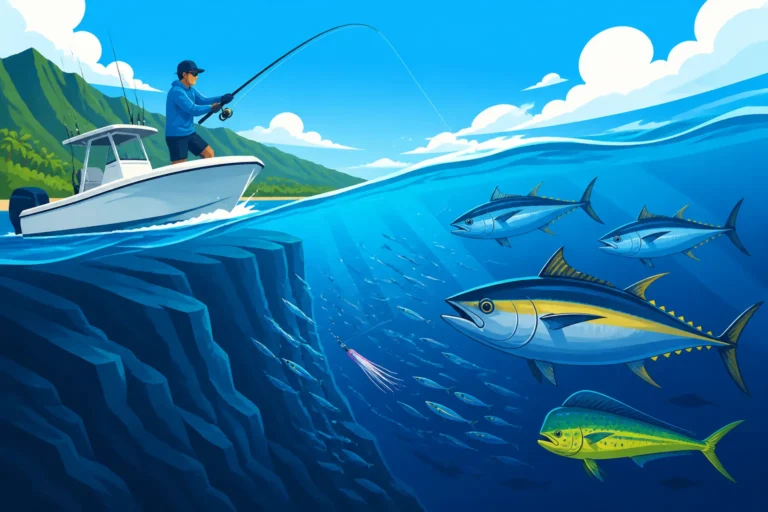
Spring brings an explosion of life to Hawaii's waters, and with it, an abundance of forage for marlin. Skipjack tuna (aku), mackerel scad (opelu), and various species of squid become prime targets for hungry marlin. Observing signs of baitfish, such as working seabirds or subtle disturbances on the surface, can be a major indicator of marlin presence. During this time, marlin are often more aggressive, chasing down larger baits as they bulk up. They’re less finicky than in other seasons, making them more likely to strike a well-presented lure or bait. Understanding What Marlin Eat Off the Kona Coast can help you select the most effective lures and baits for the season. Look for areas where these baitfish are abundant, often near current lines, underwater ledges, or offshore seamounts, as these are natural aggregation points.
Essential Gear and Tackle for Spring Marlin
Having the right equipment is non-negotiable when you’re targeting a powerful fish like a marlin. Spring conditions, with potentially larger fish and choppier seas, demand robust and reliable gear. Cutting corners here will almost certainly lead to heartbreak.
Rods, Reels, and Line Selection
For blue marlin, especially the grander-sized beasts that roam Hawaiian waters, you'll want heavy-duty stand-up or chair rods, typically in the 80 to 130-pound class. These rods need serious backbone to handle the immense pressure a large marlin can exert. Pair them with large, lever-drag conventional reels designed for big game, like those from Shimano or Penn, spooled with 80 to 130-pound monofilament or braided line. Many anglers now opt for a braid main line with a long top shot of monofilament for its sensitivity and reduced diameter. For striped marlin, which are generally smaller but incredibly fast and acrobatic, you might use slightly lighter tackle, perhaps 50-pound class outfits, which still offer plenty of fight while providing a more sporting challenge. Ensure your drags are smooth and properly set, as a jerky drag can easily snap a line or pull a hook during a marlin's blistering first run. If you're looking to upgrade your tackle, you can find a wide selection of quality big game reels and rods on Amazon.
Lures and Baits for Spring Conditions
Spring marlin in Hawaii are often aggressively feeding, making them susceptible to a variety of presentations. Large, colorful trolling lures are a staple. Skirted lures in popular Hawaiian patterns, mimicking mahi-mahi, skipjack tuna, or even squid, are highly effective. Colors like blue/silver, green/yellow, black/purple, and pink are perennial favorites. The size of the lure can vary, but generally, 10 to 16-inch lures are a good starting point for blues, while slightly smaller lures might tempt stripers. For live baiting, skipjack tuna, opelu, or even small mahi-mahi are excellent choices. Many captains have their secret weapon lures, but having a diverse spread of sizes and colors is always a good strategy. Check out our detailed guide on the Best Lures for Marlin Trolling off Kona for specific recommendations. For sourcing high-quality, durable lures, many top brands are available for purchase on Amazon, offering a convenient way to expand your tackle box.
Rigging Techniques for Success
Proper rigging is paramount for marlin fishing. For trolling lures, ensure your leaders are heavy-duty, typically 300 to 500-pound test fluorocarbon or monofilament, at least 10-15 feet long to handle chafing and provide shock absorption. The hooks need to be razor-sharp and appropriately sized for the lure and target species, usually 10/0 to 14/0 J-hooks or circle hooks for catch and release. When live baiting, the rigging needs to be discreet yet strong. Often, a single circle hook through the nose or dorsal fin, attached to a heavy fluorocarbon leader, is preferred. The goal is to allow the bait to swim naturally while still providing a solid hookup. The use of crimps, rather than knots, for leader connections to swivels and hooks is often favored for maximum strength and reliability in big game fishing. Learning How to Rig Ballyhoo for Marlin Trolling can also be a game-changer, even if you’re using different natural baits.
Advanced Trolling Strategies for Spring Marlin
Trolling is arguably the most popular and effective method for covering water and finding actively feeding marlin in Hawaii. It’s not just about dragging lures; it’s an art form that involves understanding ocean dynamics, boat mechanics, and fish behavior.
Lure Spreads and Positioning
A well-designed lure spread is critical for maximizing your chances. Most boats will run a spread of 5-7 lures at varying distances behind the boat, creating a "pattern" that attracts attention. Short rigger lures typically run closest, followed by long riggers, then flat line lures off the transom, and sometimes a "shotgun" lure way back in the center. The goal is to create a dynamic presentation that looks like a school of baitfish or an injured straggler. Varying the head shapes and colors of your lures also adds to the allure. For example, a chugger on the short rigger might create a lot of commotion, while a bullet head on the long rigger runs clean and fast. The boat's wake plays a huge role here; you want your lures to be "working" in and out of the propwash, popping and diving. Getting your Best Trolling Spread for Marlin dialed in can take practice, but it's an essential skill.
Trolling Speeds and Boat Maneuvers
Optimal trolling speeds for marlin typically range from 7 to 10 knots, depending on sea conditions, lure design, and target species. In rougher seas, you might need to speed up slightly to keep your lures running true, while in calm conditions, a slower pace might allow lures to work more erratically. Watch your lures constantly to ensure they're swimming correctly; if a lure is spinning or fouled, it's not going to get a bite. Boat maneuvers are just as important. Instead of trolling in straight lines, experienced captains will often perform S-turns or figure-eights, especially around suspected bait concentrations or structure. These turns cause your lures to speed up and slow down, rise and fall, mimicking an injured baitfish and often triggering a strike. Always be prepared for a bite during a turn!
Reading the Water and Targeting Structure
The ocean is full of subtle clues, and learning to "read the water" is a skill that develops over years of experience. Look for current lines, where two different bodies of water meet, often marked by debris, weed lines (especially sargassum), or color changes. These are prime areas where bait congregates, and where marlin will patrol. Birds actively working the water, especially diving seabirds, are almost always a sign of baitfish below, and potentially predators like marlin feeding on them. Underwater structure, even if it's miles offshore, such as seamounts, ledges, and deep pinnacles, can also hold bait and, consequently, marlin. Using your boat's sonar to identify bait balls or deeper thermoclines can provide invaluable intel. The Kona Coast Fishing Guide provides specific details on local hot spots and structures to target.
Live Baiting and Chunking Tactics
While trolling lures is effective, sometimes live bait or chunking can be the secret weapon, especially when marlin are being finicky or when targeting a specific area where fish are known to hold. These methods require a bit more effort but can yield incredible results.
Sourcing and Keeping Live Bait
The freshest live bait is often the most effective. Skipjack tuna (aku) are a top choice for blue marlin and can be caught by trolling small lures or feathers around tuna schools. Opelu (mackerel scad) are another excellent option, typically caught with sabiki rigs or small baits around FADs (Fish Aggregating Devices) or in calmer inshore waters. The challenge is keeping these baits alive and frisky. A large, well-aerated livewell with constant water circulation is essential. Avoid overcrowding and ensure the water quality remains good. Stressed or dying baits are far less effective. Having a few different sizes of live bait on hand can also be beneficial, allowing you to adapt to what the marlin are feeding on that day.
Presenting Live Baits Effectively
Once you have your live bait, presenting it naturally is key. For trolling live bait, a simple bridle rig with a circle hook allows the bait to swim freely and prevents it from spinning. You can slow troll these baits around current lines, FADs, or areas where you’ve seen marlin activity. For drifting or slow-trolling, some anglers will use a kite to present a live bait on the surface, keeping it away from the boat's shadow and mimicking a struggling fish. This can be incredibly exciting, watching a marlin blow up on a surface bait. Another effective technique is free-lining a live bait in areas where marlin are busting bait on the surface. The goal is always to make your bait look as appealing and natural as possible.
The Art of Chunking for Marlin
Chunking involves cutting up baitfish (like skipjack tuna or mahi-mahi) into small pieces and throwing them overboard to create a scent trail, or "chum line," that attracts marlin to your boat. This is often done while drifting. The idea is to entice a marlin into your spread, where you'll have a baited line (often a whole dead bait or a live bait) ready for a strike. Consistency is key when chunking; a steady stream of small chunks keeps the marlin interested without overfeeding them. Watch your chum line carefully for any signs of fish, whether it's baitfish getting nervous or a dark shape appearing from the deep. This method requires patience and a good supply of bait.
Fighting and Landing Your Spring Marlin
Hooking a marlin is just the beginning of the battle. These are incredibly powerful and athletic fish, and the fight can be long and grueling. Knowing how to manage the fight effectively is crucial for both landing the fish and ensuring a successful release.
Rod Pumping and Reel Management
Once a marlin strikes, the initial run will be explosive. Let the fish run, allowing the drag to do its job. Don't try to stop it, or you'll likely snap the line. Once the initial run subsides, it's time to start working the fish. This involves "pumping" the rod: lifting the rod tip up to gain line, then dropping it quickly while reeling down to recover the slack. This technique puts constant pressure on the fish while allowing you to gain line efficiently. Avoid high-sticking (lifting the rod too high), which can break the rod. Keep the drag consistent; a common mistake is to over-tighten the drag as the fish gets closer, which can lead to pulled hooks or snapped lines. Maintain smooth, consistent pressure.
Boat Handling During the Fight
The captain's role during a marlin fight is almost as important as the angler's. The captain needs to maneuver the boat to keep the line tight and prevent the fish from getting to the bow or stern, where the line can get fouled in the props or rudder. Often, this involves "backing down" on the fish, driving the boat in reverse to gain line quickly. This can be a wet and wild ride! Communication between the angler, wireman, and captain is vital. The captain needs to anticipate the fish's moves and react quickly to keep the angle in the angler's favor. This coordinated effort is what brings big fish to the boat. If you’re considering a charter, understanding How to Choose a Hawaii Fishing Charter can help you find one with experienced captains and crews.
Safe Release and Handling Practices
Many anglers choose to release marlin, especially blue marlin, to conserve the species and allow them to continue their life cycle. If you intend to release, the goal is to bring the fish to the boat quickly and handle it as little as possible. Once the fish is alongside, the wireman will grab the leader and bring the fish in close. If using circle hooks, they often hook in the corner of the mouth, making for an easy release by simply cutting the leader as close to the hook as possible. If the fish is deeply hooked, or you’re targeting a potential record, the crew might try to remove the hook, but this should be done quickly and carefully. Avoid dragging the fish onto the boat or handling it by the bill excessively. Instead, support it in the water, take a quick photo if desired, and then send it off strong. Our guide on Marlin Catch and Release Survival Tips offers more in-depth advice on this crucial aspect.
Spring Marlin Hotspots and Conditions
Knowing where to go and what conditions to look for dramatically improves your odds of encountering spring marlin in Hawaii. While marlin can be found anywhere in the open ocean, certain areas consistently produce better results.
Kona Coast Specifics
The Kona Coast of the Big Island is world-renowned for its marlin fishing, and spring is no exception. The deep water is incredibly close to shore, making for quick access to prime fishing grounds. The offshore FADs (Fish Aggregating Devices) and various seamounts become active bait magnets, drawing in skipjack and other pelagics, which in turn attract marlin. The calm waters on the leeward side of the island also make for comfortable trolling conditions, even when other areas might be too rough. The "Grander Alley" stretch, known for its massive blue marlin, is always a prime target. While marlin are present year-round, spring offers a great window of opportunity, especially before the full heat of summer. You can read more about Marlin Fishing off the Kona Coast to truly appreciate this unique fishery.
Weather and Ocean Influences
Spring weather in Hawaii can be variable. While generally pleasant, strong winds and accompanying swells can make offshore fishing challenging. Always check the marine forecast before heading out. Look for periods of calm weather with stable barometric pressure, as these often coincide with increased fish activity. Ocean currents play a massive role; a strong current can push bait and marlin into specific areas, while a weak or absent current might scatter them. Keep an eye on sea surface temperature (SST) charts, looking for warm water pushing in or distinct temperature breaks. These are often high-percentage areas. Also, be mindful of moon phases; some anglers swear by certain moon phases for marlin activity, particularly around the full and new moons when tidal currents are stronger and often concentrate bait.
Comparing Spring Marlin Tactics
To help you visualize the various approaches, here's a quick comparison of popular spring marlin fishing tactics:
| Tactic | Best for Species | Primary Bait/Lure | Typical Speed (Knots) | Key Advantages | Considerations |
|---|---|---|---|---|---|
| Lure Trolling | Blue, Striped Marlin | Large Skirted Lures | 7-10 | Covers large areas, triggers aggressive strikes | Requires consistent boat speed, often smaller hook-up rate than live bait |
| Live Bait Trolling | Blue, Striped Marlin | Skipjack, Opelu, Mahi-mahi | 2-5 | Natural presentation, higher hook-up rate | Sourcing and keeping live bait can be challenging |
| Live Bait Drifting | Blue, Striped Marlin | Skipjack, Opelu | 0-1 (with current) | Very natural, effective for finicky fish | Slower coverage, requires active chumming (optional) |
| Chunking | Blue Marlin | Cut Bait (Aku, Mahi) | 0-1 (with current) | Creates strong scent trail, attracts fish from afar | Requires large amount of bait, can attract sharks |
Each method has its strengths and weaknesses, and often the most successful trips involve a combination of these tactics, adapting to the conditions and fish behavior encountered on the day.
Conclusion: Embracing the Challenge of Spring Marlin
Spring marlin fishing in Hawaii is a truly unique experience. It’s a season of promise, with warming waters, increasing bait activity, and the chance to encounter some truly magnificent fish. Whether you're a seasoned big-game angler or looking to challenge yourself, understanding the nuances of marlin behavior, having the right gear, and employing sophisticated techniques will significantly increase your success. Remember, preparation is key, from your tackle selection to your knowledge of the ocean. The exhilaration of a marlin strike and the epic battle that follows are what make Hawaiian spring marlin fishing an unforgettable adventure. We hope this guide helps you navigate these exciting waters and brings you closer to that trophy fish.
Disclaimer
Fishing regulations and best practices can change. Always consult the most current Hawaii Division of Aquatic Resources (DAR) rules and regulations before heading out on the water. This guide provides general information and should not be considered a substitute for official guidelines. Practice safe boating and fishing, and always prioritize conservation.