Kona Coast Fishing Guide
Many anglers dream of fishing Hawaii, but the sheer scale of the Pacific and the unique regulations can feel overwhelming, especially on an island as diverse as the Big Island. Kona, on the leeward side, offers some of the most consistent and exhilarating big-game fishing in the world, renowned for its calm waters and colossal catches. This comprehensive guide will peel back the layers of Kona fishing, helping you understand its unique appeal, target the right species, navigate prime spots, and plan an unforgettable adventure.
Why Kona is a World-Class Fishing Destination
The Kona Coast isn't just another pretty stretch of Hawaiian shoreline; it's a geographical marvel perfectly designed for incredible fishing. The unique oceanography here creates an environment unparalleled anywhere else, making it a bucket-list destination for serious anglers and casual vacationers alike.
Deep Water Proximity and Unique Currents
What truly sets Kona apart is how quickly the ocean floor drops off just a stone's throw from shore. Within a mile or two, you're often in thousands of feet of water. This dramatic underwater topography, where the volcanic slopes plunge directly into the deep Pacific, creates an underwater "highway" for pelagic species like marlin, tuna, and wahoo. These deep-water currents bring nutrient-rich waters from the abyss closer to the surface, attracting massive schools of baitfish, which, in turn, draw in the formidable predators. It’s this incredibly swift transition from shallow reefs to deep ocean that provides constant access to prime fishing grounds without long, arduous boat rides.
Calm Leeward Waters
Another significant advantage of the Kona Coast is its typically calm, sheltered waters. Situated on the leeward side of Mauna Loa and Hualalai, two immense volcanoes, Kona is protected from the prevailing northeasterly trade winds. This means fewer choppy seas and more comfortable fishing days, even when other parts of the island chain might be experiencing rough conditions. Anglers, especially those prone to seasickness, often find the Kona experience much more enjoyable. The gentle swells allow captains to maintain higher trolling speeds, cover more ground, and give anglers a stable platform from which to fight powerful fish. This isn't to say it's always glassy smooth, but compared to many other deep-sea fishing destinations, Kona's reputation for calm conditions is well-earned.
The Pelagic Highway Effect
Combine the deep-water access with the calm conditions and you get what many refer to as a "pelagic highway." This unique convergence of factors means that migratory species don't have to travel far from the depths to find food, making the Kona coast a natural aggregation point. The area around Honokohau Harbor is particularly famous for this, acting as a gateway to this incredible marine ecosystem. This means you don't necessarily need to embark on an all-day journey to reach productive waters; often, the action starts just minutes from the harbor. This constant flow of bait and predators creates a dynamic fishing environment where anything can happen on any given day, from a massive blue marlin to a school of hard-fighting ahi.
The Prized Pelagic Species of Kona
When you think of fishing off Kona, you're almost certainly picturing some of the ocean's most iconic and powerful predators. This region is truly a mecca for big-game enthusiasts, offering consistent shots at species that provide both a thrilling fight and, often, delicious table fare.
Blue Marlin and Striped Marlin
The undisputed royalty of Kona's waters are the marlin. Blue marlin, in particular, are what put Kona on the global fishing map. This coast is famously known as the "Grander Alley" because of the sheer number of grander marlin – those weighing 1,000 pounds or more – that have been caught here. These magnificent creatures are incredibly powerful, known for their blistering runs, acrobatic jumps, and prolonged battles that test even the most experienced anglers. Targeting blue marlin often involves trolling large lures or live bait, waiting for that explosive strike that signals the start of an epic fight. While the peak season for blue marlin generally runs from summer through fall, they can be caught year-round.
Striped marlin are also prevalent, especially in the cooler months from late winter through spring. Though smaller than their blue counterparts, typically ranging from 50 to 200 pounds, they are incredibly fast and put on an exhilarating aerial display when hooked. Many anglers consider them even more acrobatic than blue marlin. You'll often encounter them while trolling for other pelagic species, and they provide a fantastic fight on lighter tackle. Both species are highly sought after, and a day spent pursuing them is always an adventure. For those specifically dreaming of these giants, our guide on Marlin Fishing off the Kona Coast offers even more in-depth insights.
Yellowfin Tuna (Ahi)
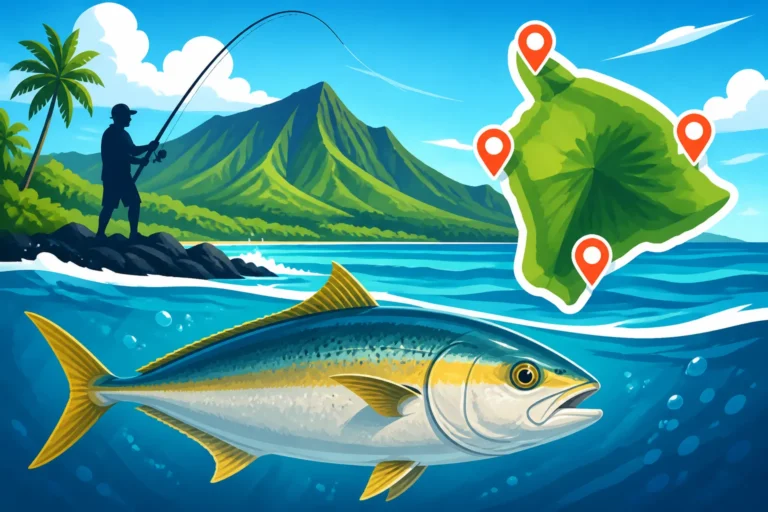
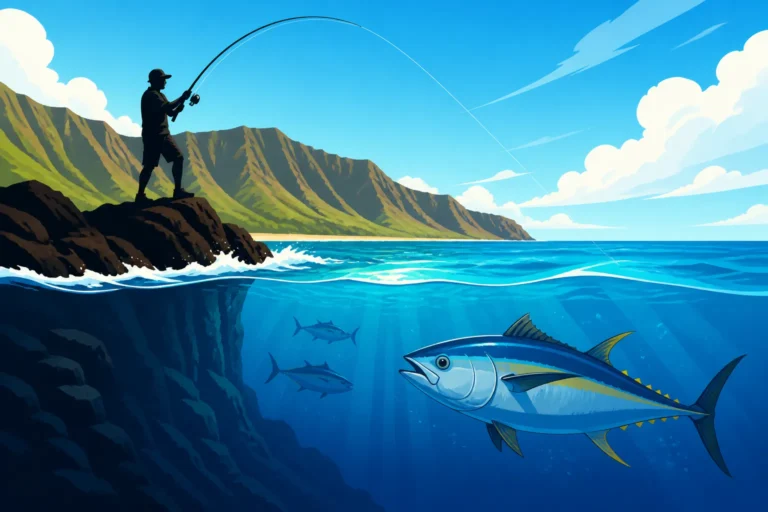
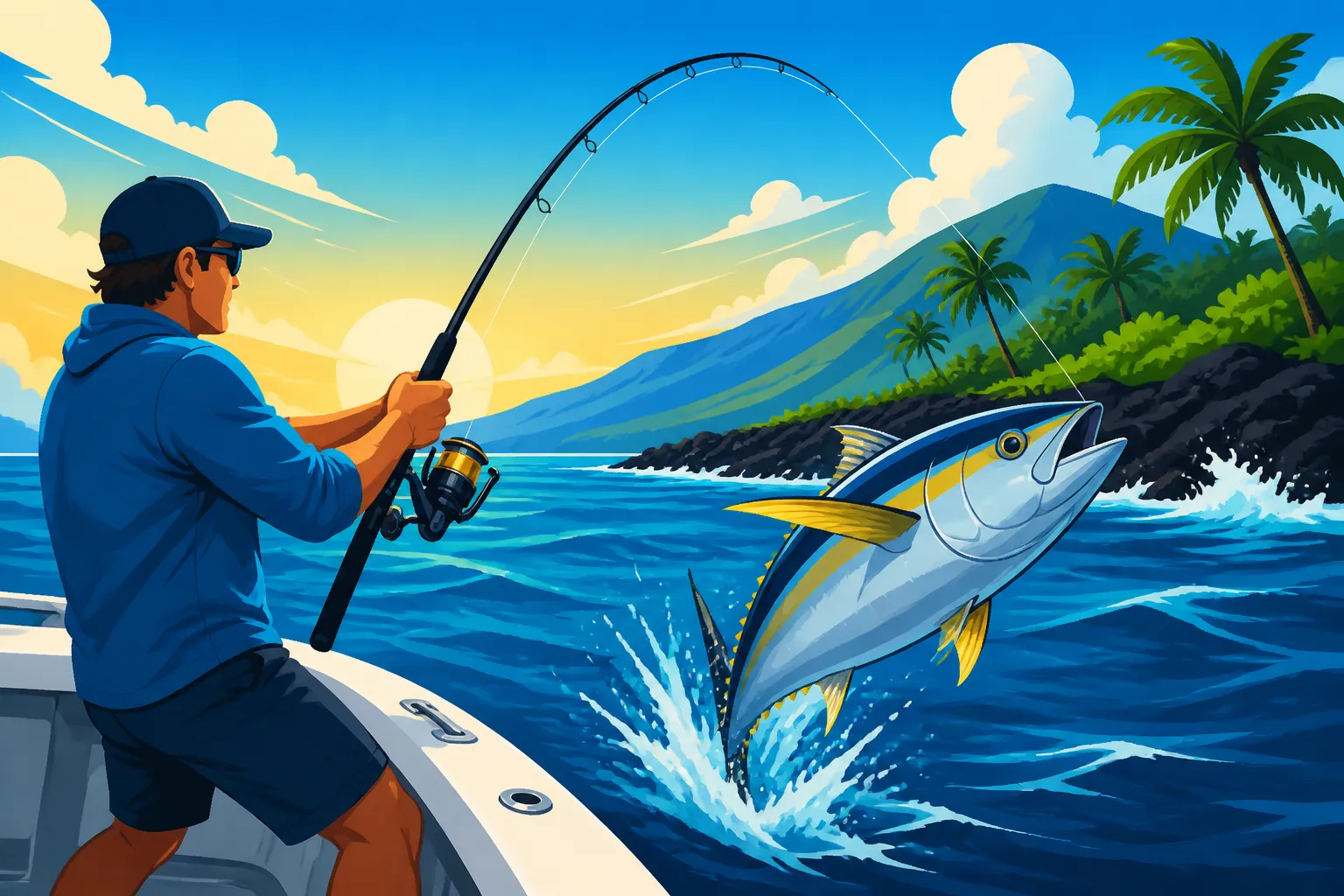
Known locally as Ahi, yellowfin tuna are another cornerstone of Kona's pelagic fishery. These powerful, football-shaped fish are prized for their speed, strength, and exquisite sushi-grade meat. Ahi in Kona can range from "schoolie" size (20-60 pounds) to absolute giants exceeding 200 pounds, especially those caught around offshore structures. They are often found patrolling current lines, bait schools, and near FADs (Fish Aggregating Devices).
Anglers target ahi using a variety of methods, including trolling lures, chunking with bait, or vertical jigging. The fight of a large ahi is a brutal, down-and-dirty affair, characterized by long, powerful runs and a relentless pull straight down into the depths. They are a staple of the local economy and culture, and catching a big ahi is a truly rewarding experience. To learn more about how and when to target these prized fish, check out our article on Ahi (Yellowfin Tuna) Fishing in Hawaii.
Wahoo (Ono) and Dolphinfish (Mahimahi)
While marlin and ahi often steal the spotlight, wahoo (Ono) and dolphinfish (Mahimahi) are equally exciting and delicious catches in Kona's waters. Ono, meaning "delicious" in Hawaiian, perfectly describes this torpedo-shaped predator. They are incredibly fast, making scorching runs that often empty a reel in seconds. Their razor-sharp teeth require wire leaders, and they are typically caught by high-speed trolling. Ono are more common during the warmer months, especially summer, and provide excellent table fare. For more specific information on targeting these speedy fish, refer to our Ono (Wahoo) Fishing in Hawaii guide.
Mahimahi, also known as dolphin fish (though unrelated to marine mammals), are stunningly colorful and acrobatic. They often travel in schools and are frequently found around floating debris, weed lines, or FADs. Mahimahi are voracious eaters and strike trolled lures, live bait, and even surface poppers with aggressive enthusiasm. Their aerial displays and vibrant colors make them a favorite among many anglers, and their firm, white meat is incredibly versatile in the kitchen. They are most abundant in spring and fall. Delve deeper into catching these beautiful fish with our Mahimahi Fishing in Hawaii article.
Shortbill Spearfish
Often considered a delightful bonus catch while trolling for marlin, the shortbill spearfish is a beautiful and feisty billfish. They are smaller than marlin, typically weighing between 15 and 50 pounds, but possess all the fight and spirit of their larger relatives. Spearfish are characterized by their slender bodies and short, pointed bill, and they are incredibly fast swimmers. They are more prevalent during the spring months and provide an exciting fight on light to medium tackle, often making impressive jumps. While not specifically targeted as frequently as marlin or ahi, hooking a spearfish is always a welcome surprise on a Kona deep-sea charter.
Navigating Kona's Prime Fishing Grounds
The Kona Coast boasts a variety of fishing grounds, each offering unique opportunities to hook into different species. Understanding these zones, from the legendary offshore deep waters to the productive nearshore structures, is crucial for maximizing your success.
The "Grander Alley" and Offshore Zones
The term "Grander Alley" isn't just a catchy nickname; it signifies the legendary offshore waters directly off the Kona Coast where many 1,000-pound-plus blue marlin have been landed. This area extends from just a few miles offshore to about 10-15 miles out, encompassing the steep drop-offs and seamounts that rise from the ocean floor. The deep blue water here, often thousands of feet deep, is where the largest pelagic predators roam. This is primarily a trolling zone, where charter boats deploy large lures, often referred to as "Kona lures," or live bait like skipjack tuna or mahimahi. The goal is to cover ground, find temperature breaks, current lines, and bait schools, and entice a monster strike. It’s here that the true giants of the deep-sea lurk, making every pass an anticipation-filled moment. Finding these blue marlin often depends on the captain's intimate knowledge of these specific contours and current patterns. Our guide on Where to Find Blue Marlin off Kona offers more specific insights.
FADs (Fish Aggregating Devices) and Buoys
Scattered throughout the offshore waters of Hawaii are numerous FADs (Fish Aggregating Devices). These are essentially buoys moored in deep water, designed to attract baitfish, which in turn attract larger predatory species. These FADs act as natural magnets for ahi, mahimahi, and ono, as well as smaller tuna species like skipjack (aku). Fishing around FADs can be incredibly productive, whether you're trolling nearby, drifting with live bait or chunk, or vertical jigging. The concentration of marine life around these structures can be astounding, offering a different style of fishing than simply trolling the open ocean. It's common for charter captains to check several FADs during a trip, as some will be more active than others on any given day. These locations are constantly monitored and maintained by the state, providing reliable targets for anglers.
Nearshore Reefs and Drop-offs
While Kona is famous for its deep-sea fishing, don't overlook the productive nearshore reefs and immediate drop-offs. These areas, closer to the coastline, hold a different array of species and offer varied fishing opportunities. Here, you might target smaller pelagics like papio (juvenile trevally), smaller ahi, or even reef species like ulua (giant trevally), kumu (goatfish), and opakapaka (snapper). These areas are excellent for bottomfishing, jigging, or even light-tackle trolling. The transition zones where the shallow reefs meet the deep blue are particularly active. This environment provides excellent opportunities for both boat anglers and those looking to try kayak fishing in Hawaii's calmer waters. The waters near places like Honokohau Harbor itself provide access to these dynamic inshore zones.
Honokohau Harbor
No guide to Kona fishing would be complete without mentioning Honokohau Harbor. This bustling marina just north of Kailua-Kona is the heart of the sportfishing fleet on the Big Island. It's not just a place to dock boats; it's a vibrant hub where charters depart, fish are weighed, and fishing stories are shared. The harbor provides excellent access to the offshore fishing grounds with minimal travel time, a huge advantage for maximizing fishing time.
Beyond being a launching point, the waters immediately surrounding Honokohau Harbor and its entrance can hold baitfish, papio, and even transient larger predators. Many local anglers find success shore fishing from the harbor jetties or nearby rocky points for various reef and inshore species. The facilities here are top-notch, with amenities for anglers and a constant buzz of activity that encapsulates the spirit of Kona fishing. For detailed access information, check out our guide to Honokohau Harbor Fishing Access.
Mastering Kona Fishing Techniques
Kona's diverse marine environment calls for a range of fishing techniques, each finely tuned to target specific species and conditions. Whether you're chasing billfish giants or filling the cooler with tuna, understanding these methods is key to success.
High-Speed Trolling
High-speed trolling is the quintessential Kona technique, particularly for marlin, ahi, ono, and mahimahi. This method involves dragging a spread of artificial lures or natural baits (like rigged skipjack or small tunas) behind a boat at speeds typically ranging from 7 to 12 knots, though sometimes faster for ono. The goal is to cover a lot of water, mimicking fleeing baitfish and enticing aggressive strikes from pelagic predators. The lures used are often brightly colored and specifically designed to create a significant "smoke trail" and commotion in the water, attracting fish from afar.
A typical trolling spread will involve multiple lines, with lures placed at different distances from the boat and in various positions (e.g., flat lines, outriggers, shotgun). The captain and crew constantly monitor the spread, looking for signs of a strike – a reel screaming, a rod bending violently, or a marlin crashing the surface behind a lure. This technique is as much an art as it is a science, requiring skill in lure selection, placement, and knowing where to troll along current lines, temperature breaks, or around offshore structures. Many of Kona's charter captains are masters of this craft. If you're looking for more details on lures, our article on Best Lures for Marlin Trolling off Kona might be helpful.
Live Baiting and Chunking
While trolling lures is highly effective, live baiting and chunking offer a more targeted approach, especially when fish are finicky or when a specific species is desired.
- Live Baiting: This involves slow trolling or drifting a live baitfish, such as a skipjack tuna (aku) or a smaller mahimahi, for larger predators like marlin or big ahi. The natural movement and scent of live bait can be irresistible to game fish. Often, boats will catch their own bait, or "bait fish," before heading out to the prime grounds. The technique is often employed when a marlin is sighted "tailing" on the surface or when a school of tuna is located. The excitement of a live bait strike is often instantaneous and incredibly violent, as a large predator ambushes its prey.
- Chunking: This method is primarily used for yellowfin tuna (ahi) and involves drifting with the boat, throwing out small pieces ("chunks") of baitfish (often squid or sardine) into the water to create a scent trail and draw tuna closer to the boat. As the tuna follow the scent trail, anglers present baited hooks that drift naturally with the chum line. This can be an incredibly effective way to target ahi, especially when they are schooling deep or feeding subtly. It requires patience and a good understanding of current and drift, but the payoff can be a cooler full of fresh tuna. To deepen your understanding of these methods, particularly for tuna, refer to Best Bait for Ahi Fishing.
Deep Dropping and Jigging
For those interested in Kona's incredible bottomfish fishery, deep dropping and vertical jigging are the go-to techniques. Kona's waters are home to a diverse array of deep-water snappers and groupers, often referred to as "Hawaii Bottomfish Species."
- Deep Dropping: This involves lowering baited hooks, often on electric reels, to depths ranging from 300 to over 1,000 feet. Target species include highly prized fish like opakapaka (pink snapper), onaga (ruby snapper), ehu (red snapper), and hapu'upu'u (sea bass). The baits are typically squid, cut fish, or even whole dead baitfish. It's a method that requires specialized gear to handle the extreme depths and the powerful currents, but it yields some of the finest eating fish in the ocean.
- Vertical Jigging: While not as prevalent as trolling for pelagics, vertical jigging is gaining popularity, especially for ahi and some of the larger bottomfish. This technique involves dropping heavy metal jigs to various depths and then working them with an erratic retrieve to simulate a wounded baitfish. It's a physically demanding but highly interactive and rewarding method. Jigging can be done around FADs for ahi or over specific deep-water structures for bottomfish. For more on this, our guide on Jigging for Bottomfish in Hawaii provides greater detail.
Planning Your Epic Kona Fishing Adventure
A fishing trip to Kona isn't something you just spontaneously decide to do (though some do!). To truly make the most of this world-class destination, a bit of planning, especially concerning charters, timing, and local regulations, goes a long way.
Choosing a Charter and What to Expect
For most visitors, fishing in Kona means booking a charter boat. With the deep offshore waters starting so close to shore, a boat is essential for accessing the prime pelagic fishing grounds. Kona boasts a large fleet of reputable charter boats, ranging from luxurious sportfishing yachts to more modest but equally effective vessels. When choosing a charter, consider several factors:
- Type of Trip: Do you want a full-day (8-10 hours) for serious big-game hunting, a 3/4-day, or a half-day (4-5 hours) for a taste of offshore action? Full-day trips offer the best chance at trophy fish due to more fishing time and the ability to travel further.
- Private vs. Shared: Private charters give you the boat to yourself, allowing you to dictate the pace and target species, while shared charters (often called "split charters") are more budget-friendly, as you share the cost with other anglers.
- Captain and Crew: Look for experienced captains with a solid reputation. A good crew makes all the difference, from helping with gear to providing local knowledge. Many people start their search for charters on platforms like FishingBooker, where you can read reviews and compare options. Check out our detailed guide on How to Choose a Hawaii Fishing Charter for more tips.
- Inclusions: Most charters provide all necessary fishing gear, bait, and tackle. Some might offer drinks and snacks, but it's always wise to confirm and bring your own.
- Catch Policy: Understand the boat's policy on catch. Many Kona charters are "catch and release" for marlin, or they keep a percentage of the catch for the boat, especially for commercial-grade pelagics like ahi. If you want to take fish home, discuss this beforehand. Expect to tip the deckhand generously (15-20% is standard for good service). For those looking specifically for marlin, our guide on Best Marlin Charters off the Kona Coast can help narrow your search.
Best Times to Visit for Specific Species
While Kona offers year-round fishing opportunities, certain seasons are better for targeting specific species:
- Blue Marlin: Peaks in summer and fall (June-October), but granders can be caught any time.
- Striped Marlin: Best in late winter and spring (February-May).
- Ahi (Yellowfin Tuna): Excellent year-round, with peaks in spring and fall (April-June, September-November), often coinciding with the full moon.
- Ono (Wahoo): Strongest in summer (May-September) when the waters are warmest.
- Mahimahi: Abundant in spring and fall (March-May, September-November).
- Bottomfish: Consistent year-round, but specific species might be more active at certain times.
Remember, fishing is unpredictable, and these are general guidelines. A good charter captain will know where the fish are biting regardless of the calendar. For a broader overview, check out our Hawaii Fishing Seasons by Month and Best Time of Year to Fish in Hawaii guides.
Fishing Licenses and Regulations
This is a crucial aspect of planning your trip. While Hawaii is unique in that residents generally do not need a license for saltwater fishing (unless harvesting for commercial purposes), non-residents do require a license for marine recreational fishing.
- Non-Resident Marine License: If you're visiting and plan to fish from shore or on a private boat (not a licensed charter), you'll need a non-resident marine fishing license. These can be purchased for 1-day, 7-day, or annual durations. However, if you're fishing on a licensed Hawaii charter boat, you typically do not need your own license, as the charter operator's commercial license covers all passengers. Always confirm this with your charter captain when booking.
- Freshwater Fishing: If you plan to explore any freshwater fishing opportunities (like for rainbow trout in Kokee, Kauai, or bass in Oahu's Wahiawa Reservoir), a separate freshwater fishing license is required for both residents and non-residents.
- Bag and Size Limits: Hawaii has strict regulations on bag limits, size limits, and closed seasons for various species to ensure sustainability. These vary significantly by species (e.g., moi, uhu, opihi) and often by fishing method. It's absolutely vital to be aware of these rules. Your charter captain will handle this for you offshore, but if you're fishing on your own, it's your responsibility to know and follow them. Always consult the Hawaii Division of Aquatic Resources (DAR) website for the most current information. Our comprehensive guide on Hawaii Fishing Regulations Explained and Hawaii Bag and Size Limits by Species can provide an excellent starting point.
Exploring Kona's Shoreline Fishing Scene
While Kona is world-renowned for its offshore big-game fishing, the Big Island also offers fantastic opportunities for shore anglers. This accessible and often overlooked aspect of Kona fishing allows for a more relaxed experience, connecting you directly with the island's unique coastal environment.
Accessible Shoreline Spots
The Kona Coast, with its dramatic lava rock formations, sandy coves, and calm bays, provides a variety of spots for land-based fishing. Unlike some other islands, many areas are relatively accessible, though always be mindful of private property, cultural sites, and protected areas.
- Kailua-Kona Piers and Harbors: The Kailua Pier itself is a popular spot for locals and visitors alike, offering a chance to catch papio, small jacks, and various reef fish. The areas around Honokohau Harbor also provide good shore access, particularly the jetties and rocky outcroppings.
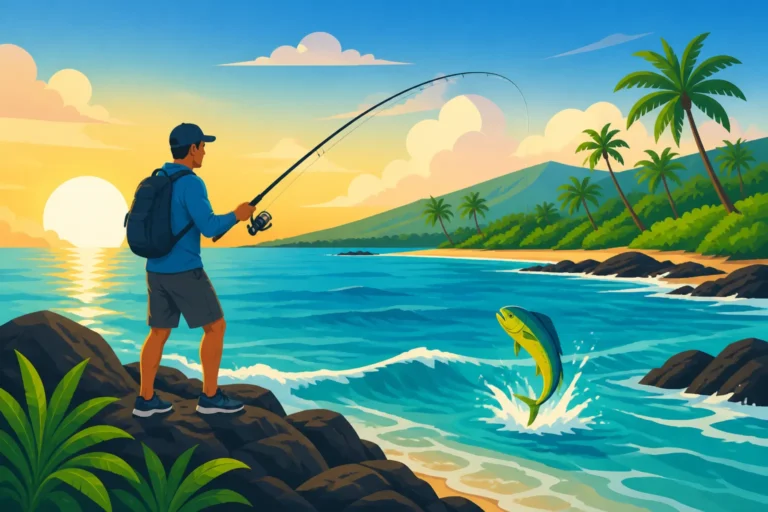
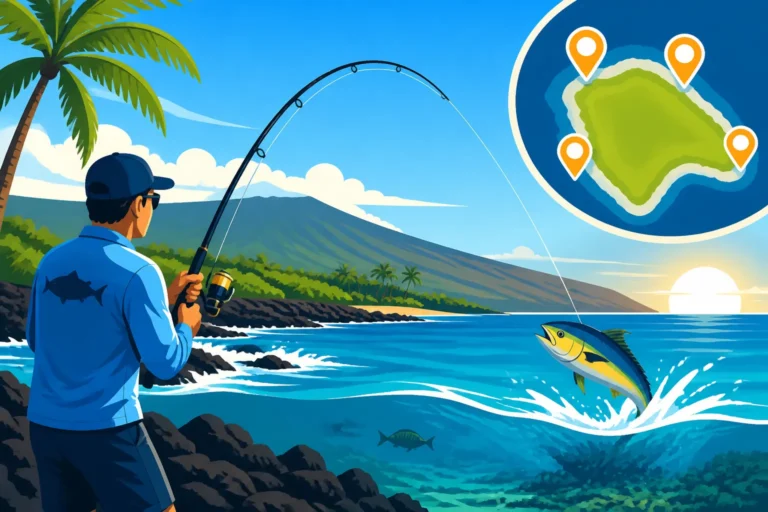
- Lava Flows and Rocky Points: Much of the Kona coastline is characterized by ancient lava flows. These rocky points, particularly where deep water comes close to shore, are prime spots for ulua (giant trevally) and papio. Areas like Old Kona Airport State Recreation Area, though subject to strong currents, can be productive. Always wear sturdy shoes and be mindful of rogue waves when fishing from these exposed positions.
- Sandy Beaches and Coves: While less common on the central Kona Coast than rocky shores, sandy stretches and protected coves can hold bonefish (oio), moi (Pacific threadfin), and various schooling baitfish. These spots are often better suited for light tackle or fly fishing. The key is to look for channels, drop-offs, or areas with good current flow that will attract bait.
Always respect the local 'aina (land) and kai (ocean), practice 'malama i ke kai' (care for the ocean), and pack out everything you pack in. Be aware of private property boundaries and do not trespass.
Target Species from Shore
Kona's shoreline fishery offers a diverse range of species, providing a different challenge and reward than offshore pursuits.
- Papio and Ulua: These are juvenile and adult giant trevally, respectively, and are the holy grail for many shore anglers in Hawaii. Papio (under 10 lbs) are abundant and offer a fantastic fight on light tackle, while ulua (10 lbs and up) are powerful, elusive fish that require heavy gear and considerable patience. They are often targeted from rocky points and ledges, especially at night.
- Moi (Pacific Threadfin): Highly prized for their delicate white meat, moi are often caught from sandy beaches or near reef edges. They are a protected species with strict size and bag limits, as well as closed seasons, so knowing the Hawaii Moi Closed Season, Explained is crucial. They respond well to small live baits or fresh chunks of shrimp.
- Bonefish (Oio): While more commonly associated with specific flats on Oahu, bonefish can be found on the sand flats and shallow, clear water areas along the Kona Coast. They are incredibly wary and offer a thrilling challenge on light spinning gear or fly rods.
- Reef Fish: A variety of smaller reef fish like goatfish (kumu, weke), snappers (to'au), and various jacks can be caught from shore, providing consistent action and often good eating. These are typically caught on bait or small artificial lures.
Rigging and Bait for Shore Fishing
Shore fishing in Kona, especially for larger species, often requires specialized tackle and techniques.
- Heavy Tackle for Ulua: For trophy ulua, anglers use long, powerful rods (10-15 feet), heavy-duty spinning or conventional reels spooled with 50-100 lb braided line, and robust leaders. The "slide bait" technique, where a live baitfish is sent out on a separate line and then attached to the main line, is popular for getting baits out to distant deep water.
- Whipping for Papio: This technique uses lighter spinning gear (7-9 foot rods, 15-30 lb line) to cast small lures, plastics, or baitfish (like opelu or akule) from shore. It’s an active, engaging method that can yield exciting results for smaller jacks and other aggressive predators.
- Bait Choices: Common baits include fresh squid, octopus (tako), cut fish (like opelu or mackerel scad), shrimp, and live baitfish. The freshness of your bait is paramount for success.
- Safety First: When fishing from lava rock, always be aware of rogue waves and sharp, unstable terrain. Wear appropriate footwear, bring plenty of water, and never turn your back on the ocean. For more general advice on land-based fishing, our article on Shore Fishing Techniques for Hawaii is a valuable resource.
Beyond the Bite: Kona's Fishing Culture and Conservation
Fishing in Kona is more than just catching fish; it's a deep dive into a vibrant culture steeped in tradition, community, and a growing commitment to the health of the ocean.
Conservation Efforts and Sustainable Practices
Hawaii, and Kona in particular, has a strong connection to the ocean, and this translates into significant conservation efforts. The state's Division of Aquatic Resources (DAR) actively manages marine resources through regulations like bag limits, size restrictions, and seasonal closures (e.g., for moi and uhu) to ensure fish populations remain healthy for future generations. Many charter captains and local anglers are also proponents of sustainable fishing practices.
- Catch and Release: While keeping some fish for table fare is part of the experience, many Kona charters, especially for marlin, practice catch and release, particularly for non-record-breaking billfish. This helps preserve these magnificent breeding fish. Responsible handling techniques are crucial to ensure high survival rates for released fish.
- Reporting and Monitoring: Anglers and charter operations contribute to scientific data by reporting catches, which helps DAR monitor fish stocks.
- Invasive Species Management: Hawaii also faces challenges with invasive species like taape (bluestripe snapper) and roi (peacock grouper). Anglers are encouraged to harvest these species, with no bag or size limits, to help protect native reef ecosystems.
Local Etiquette and Customs
When fishing in Kona, understanding and respecting local etiquette ("pono") can significantly enhance your experience.
- Share the Shore: If you're shore fishing, be mindful of others. Give them space and avoid casting over their lines. Often, prime spots are shared, and a simple "Aloha" and nod of respect go a long way.
- Respect the Land and Ocean: Never leave trash behind. This is not just a rule, but a deeply ingrained cultural value. Pack out everything you bring, and avoid disturbing cultural sites or sensitive marine habitats.
- Ask for Advice: Locals are often friendly and willing to share tips, but approach them respectfully. A humble attitude and genuine interest are always appreciated.
- Safety First: Always prioritize safety, especially when fishing from rocky shores or in unfamiliar waters. The ocean can be unpredictable.
Annual Tournaments and Events
Kona is home to a robust calendar of sportfishing tournaments, drawing anglers from around the world. These events are not just about competition; they are celebrations of the fishing community and the incredible resource that is the Kona Coast.
- Kona's Triple Crown of Fishing: This series of prestigious tournaments (typically including the Hawaiian International Billfish Tournament, the Skins Marlin Derby, and the September Shootout) attracts top teams vying for glory and significant prize money.
- Smaller Local Tournaments: Throughout the year, various smaller, more casual tournaments focus on specific species like ahi or bottomfish, often with a strong emphasis on community and camaraderie.
- Weigh-Ins: Even if you're not participating, watching the weigh-ins at Honokohau Harbor after a major tournament is an experience in itself. It's a chance to see truly massive fish, hear the stories from the captains and crew, and soak in the vibrant atmosphere.
These tournaments not only showcase Kona's incredible fishing but also contribute significantly to the local economy and perpetuate the island's rich fishing heritage.
Equipping Yourself for Kona's Diverse Waters
Whether you're hitting the open ocean on a charter or casting from the rugged shoreline, having the right gear is essential for a successful and enjoyable Kona fishing experience. While charters provide most of what you need offshore, independent anglers will need to be well-prepared.
Offshore Trolling Gear (If on a Private Boat)
If you're bringing your own boat or joining a private vessel, the tackle needed for Kona's pelagic species is robust and specialized.
- Rods and Reels: Heavy-duty conventional rods (80-130 lb class for marlin, 50-80 lb for ahi and ono) paired with large, lever-drag reels are standard. Brands like Penn, Shimano, and Accurate are popular choices, known for their powerful drags and line capacity.
- Line: Dacron backing with a top shot of monofilament (e.g., 80-130 lb test) is common for marlin, offering shock absorption and stealth. For ahi and ono, heavy braid with a fluorocarbon leader is often preferred.
- Lures: A wide assortment of Kona-style trolling lures in various shapes, sizes, and colors. These are often resin heads skirted with Mylar or natural feathers, designed to run well in Kona's typically calm waters. It’s always good to have a mix for different conditions and target species.
- Terminal Tackle: Heavy-duty swivels, snap swivels, leader material (fluorocarbon in various weights, wire for ono), crimps, and gaffs are all necessary.
- Electronics: A reliable fishfinder/sonar, GPS, and VHF radio are critical for safety and finding fish. High-end CHIRP sonar systems are invaluable for identifying bait schools and distinguishing species.
Shore Casting Setup
For land-based fishing, your gear will differ significantly, emphasizing casting distance and versatility.
- Rods: Long spinning rods (9-12 feet, sometimes up to 15 feet) are favored for casting baits and lures long distances from shore, especially over lava shelves. Medium-heavy to heavy power is typical for handling larger papio and ulua.
- Reels: Durable spinning reels (size 6000-10000) with good line capacity and a strong drag system are essential. Saltwater-specific models from Daiwa or Shimano are highly recommended.
- Line: Braided line (30-60 lb test) is popular for its sensitivity and casting distance, often with a monofilament or fluorocarbon leader to absorb shock and provide stealth.
- Lures: A variety of casting lures are effective: metal jigs, poppers, stickbaits, and swimbaits are all popular for papio and smaller jacks. Different weights and colors will be effective depending on the conditions and time of day.
- Bait Rigs: Depending on what you're targeting, you'll need various weights (pyramid sinkers, surf sinkers), hooks (circle hooks are often preferred for conservation and self-setting), and swivels. For ulua, a "sliding bait" rig with a heavy weight to anchor the bait on the bottom is common.
- Essentials: Sturdy closed-toe shoes with good grip (for navigating lava rock), a headlamp for night fishing, a small cooler for bait and catch, pliers, line clippers, and a first-aid kit are absolute must-haves. A backpack for carrying gear is also very useful.
Safety and Essentials for All Anglers
Regardless of how or where you're fishing, certain safety items and personal essentials should always be on your checklist.
- Sun Protection: The Hawaiian sun is intense. High-SPF sunscreen, wide-brimmed hats, polarized sunglasses, and UV-protective clothing (long sleeves, neck gaiters) are non-negotiable.
- Hydration: Bring plenty of water and stay hydrated. Dehydration can sneak up on you, especially on a hot boat or while standing on the shore.
- First Aid Kit: A basic kit for cuts, scrapes, and seasickness medication (if prone to it) is always a good idea.
- Documentation: Carry your fishing license (if required) and ID.
- Camera: You’ll want to capture the memories, whether it's a stunning sunrise over the ocean or the thrill of your catch.
Being well-prepared ensures that you can focus on the fishing and fully enjoy the incredible experiences Kona has to offer. Remember, fishing in Kona, whether offshore or from the shore, is a journey into one of the world's most dynamic marine environments.
Disclaimer
The information provided in this guide is for general informational purposes only. Fishing regulations in Hawaii are subject to change by the Department of Land and Natural Resources (DLNR). Always consult the official Hawaii DLNR Division of Aquatic Resources website or a local licensed professional for the most current regulations, bag limits, and licensing requirements before engaging in any fishing activity. Adherence to all local, state, and federal laws is the sole responsibility of the angler. Fishing carries inherent risks; always prioritize safety and never fish beyond your capabilities or in unsafe conditions.