Maui Fishing Guide
Maui, with its stunning volcanic landscapes and azure waters, isn't just a paradise for sunbathers and surfers; it's an angler's dream come true. However, navigating the diverse fishing opportunities here can feel overwhelming, from understanding the best spots to knowing the unique regulations. This comprehensive guide will unravel the mysteries of fishing on Maui, helping you plan an unforgettable angling adventure, whether you're casting from shore or heading out into the deep blue.
Why Maui is a Dream Destination for Anglers
There's something truly special about fishing off Maui. The island's unique geology, combined with its position in the vast Pacific, creates an aquatic environment that supports an incredible array of marine life, making it a hotspot for both recreational and serious anglers. It's not just about the size of the fish; it's about the sheer diversity and the breathtaking backdrop of lush mountains meeting the ocean.
The Island's Unique Aquatic Landscape
Maui is a geological marvel, and its underwater terrain is just as dramatic as its visible peaks. The slopes of Haleakala plunge directly into the ocean, creating immediate deep water close to shore, especially on the western and southern coasts. This means you don't have to travel far offshore to reach prime pelagic fishing grounds, a huge advantage for many charters and shore anglers alike.
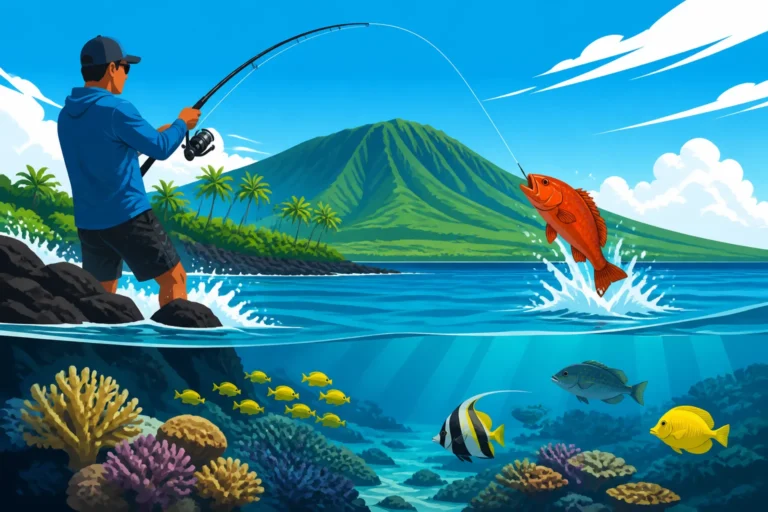
Beneath the surface, you'll find a complex network of volcanic reefs, lava flows, and sandy flats. These structures provide perfect habitats for an extensive range of inshore species, from feisty trevally to colorful parrotfish. The ocean currents around Maui are also incredibly rich, bringing in nutrients that sustain a vibrant food chain, from microscopic plankton all the way up to apex predators like marlin and tuna. The water clarity is often astounding, which can make for some challenging but incredibly rewarding sight-fishing opportunities on the shallower flats and reefs.
A Rich Tapestry of Fish Species
When you drop a line in Maui's waters, you truly never know what you might encounter. The island boasts a staggering variety of fish, making every trip a potential encounter with a new personal best or a bucket-list catch. This diverse ecosystem caters to all styles of fishing, from light tackle enthusiasts to heavy-duty big game hunters.
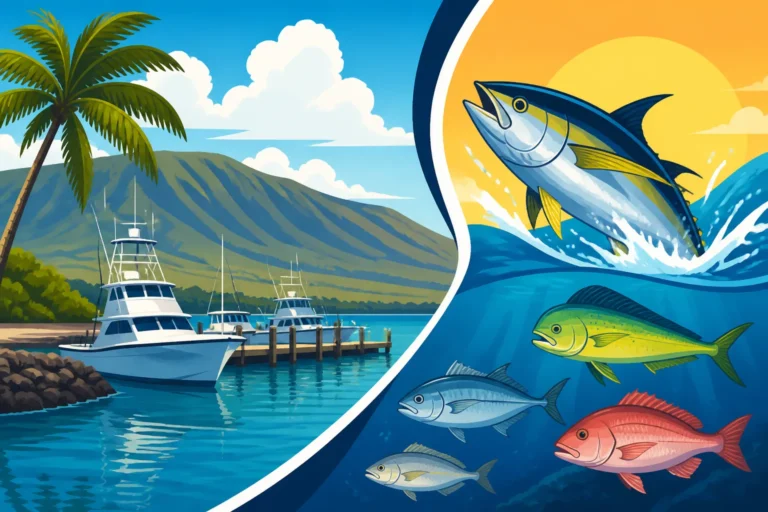
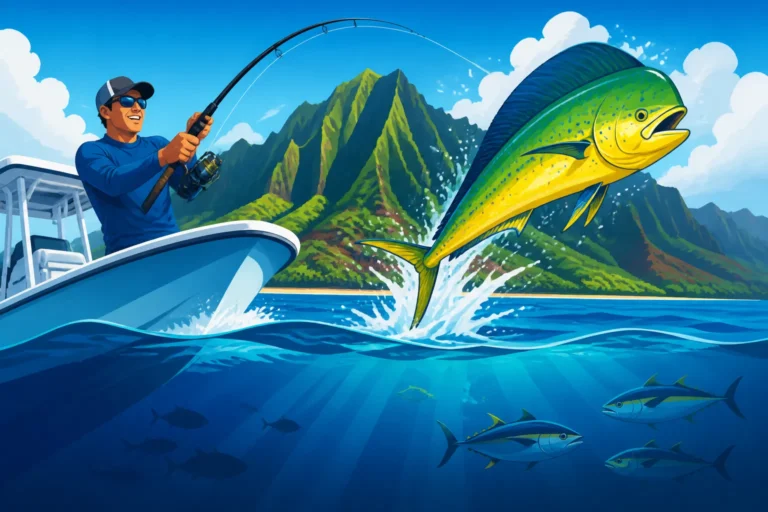
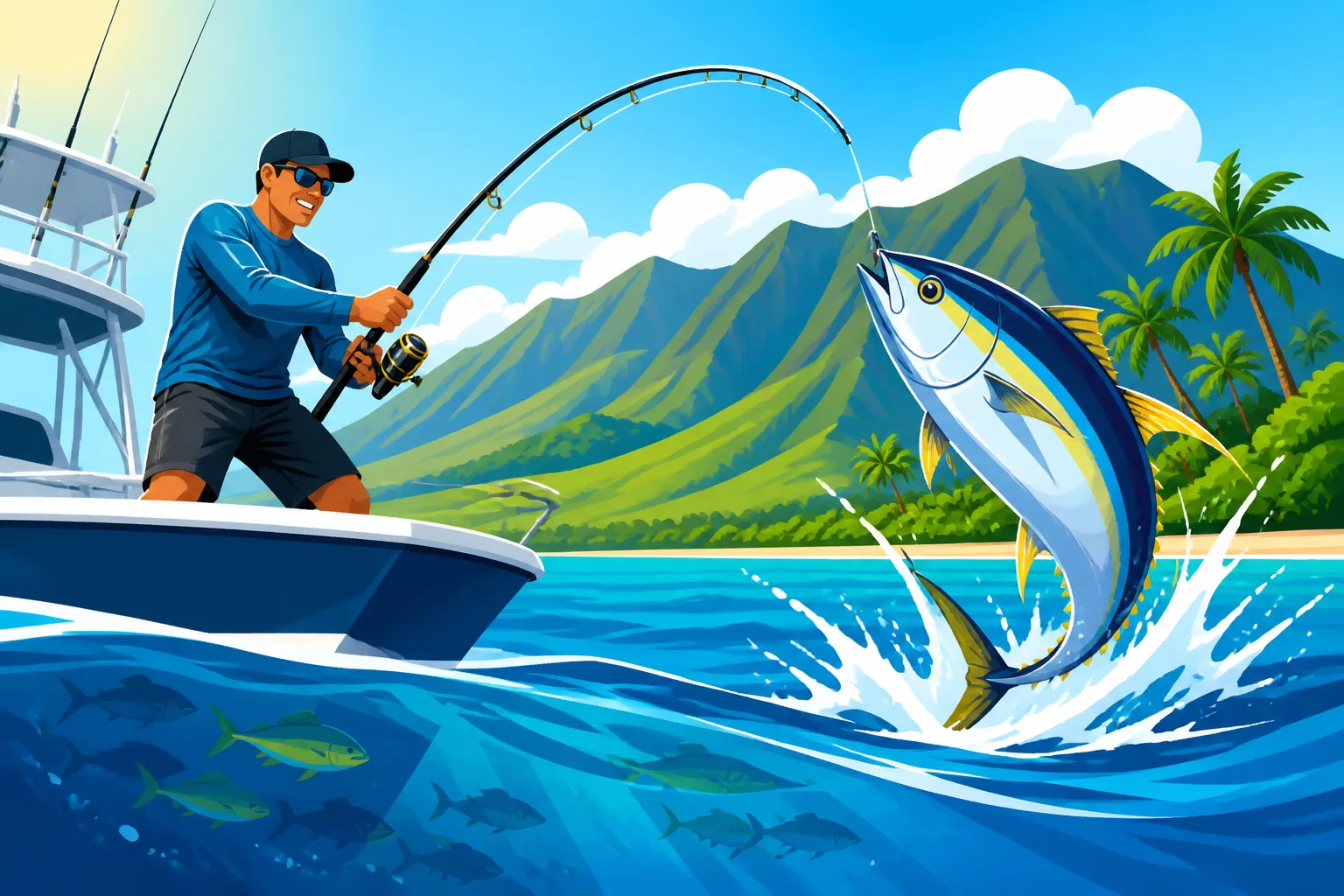
Offshore, Maui is world-renowned for its pelagic species. Giant blue marlin and striped marlin patrol the deep waters, often chasing schools of baitfish. Ahi, or yellowfin tuna, are a prized catch, known for their incredible speed and fighting power. You'll also find sleek ono (wahoo), famous for their razor-sharp teeth and lightning-fast strikes, and the vibrant mahimahi (dorado), which are not only beautiful but put up a fantastic aerial fight. For those who venture to the depths, bottomfish like opakapaka (pink snapper) and onaga (ruby snapper) offer a delicious reward. Closer to shore, the reefs and sandy bottoms are teeming with ulua (giant trevally) and their smaller counterparts, papio. You might also hook into moi (Pacific threadfin), kumu (goatfish), and a variety of colorful uhu (parrotfish). Whether you're after a trophy fish or simply looking to put some fresh dinner on the table, Maui's waters are truly abundant.
Best Offshore Fishing Spots and What You'll Find There
Heading out into the deep blue off Maui is an experience unlike any other. The proximity of deep water to shore makes for relatively short runs to prime fishing grounds, giving you more time with lines in the water. Maui's offshore fishery is primarily about targeting those fast-moving, hard-fighting pelagic species that migrate through the Hawaiian waters.
The Legendary Lahaina Coast
The waters off Lahaina on Maui's west coast are arguably the island's most famous offshore fishing grounds, and for good reason. Lahaina Harbor is a bustling hub where many of Maui's premier fishing charters launch their vessels each morning. From here, captains can quickly access some incredibly productive fishing zones.
The deep ocean trenches and submerged ledges just a few miles offshore create natural highways for baitfish and, consequently, for the larger predators that follow them. This area is particularly renowned for its marlin fishing, with blue marlin being a primary target, especially during the warmer summer months. Striped marlin are also frequently encountered, particularly in cooler seasons. Anglers often troll a spread of lures and natural baits here, hoping to entice a bite from these magnificent billfish. Beyond marlin, the Lahaina coast offers excellent opportunities for ahi (yellowfin tuna), especially around the numerous Fish Aggregating Devices (FADs) that dot the area. Ono (wahoo) and mahimahi are also abundant, providing consistent action throughout the year. If you're looking to experience a classic Hawaiian big-game fishing adventure, the Lahaina coast is definitely where you'll want to focus your efforts. For those specifically chasing marlin, much of the strategy applies whether you're off Maui or further south; learning about techniques like those for Best Marlin Charters off the Kona Coast can be highly beneficial.
Ma'alaea Harbor and the South Shores
On Maui's south-central coast, Ma'alaea Harbor serves as another vital departure point for offshore fishing excursions. While Lahaina might grab many of the headlines, Ma'alaea offers access to different, equally productive fishing grounds, often with slightly different current patterns and underwater structures.
From Ma'alaea, charters tend to work the waters along the south shore, often heading towards the channels between Maui and the neighboring islands of Kaho'olawe and Lanai. These channels act as natural funnels for marine life, concentrating baitfish and the larger pelagics that feed on them. This region is particularly known for consistent mahimahi and ono catches, providing thrilling topwater action. Anglers can also encounter ahi, particularly during their seasonal runs. The deeper ledges and underwater pinnacles further out can hold various bottomfish, though pelagics remain the primary focus for most Ma'alaea charters. The fishing here can be quite diverse, with opportunities to switch between trolling for speedsters and potentially dropping baits for some of the deeper dwellers. It's a fantastic option if you're staying on the south side of Maui, like in Kihei or Wailea, offering a convenient departure and often calmer waters, especially when the Lahaina side is experiencing larger swells.
FADs and Offshore Seamounts
A key element to successful offshore fishing in Hawaii, including Maui, is understanding and utilizing FADs (Fish Aggregating Devices) and natural offshore seamounts. These aren't just random spots on the ocean; they are strategic points that concentrate marine life. You can read more about some of Hawaii's premier destinations and what to expect when targeting these fish in a general sense in our guide to the Best Deep Sea Fishing Spots in Hawaii.
FADs are buoys anchored in deep water, often several miles offshore, designed specifically to attract pelagic fish. Over time, these buoys become mini-ecosystems, with algae growing on them, attracting small baitfish, which in turn attract larger predatory species. Maui has several publicly maintained FADs (known as "buoys") that are regularly fished by commercial and recreational boats. These are hotspots for ahi, mahimahi, ono, and various billfish. Charters will often visit a series of FADs, trolling around them or deploying live baits, as these structures act like magnets, holding fish in specific areas. Anglers should always be respectful of other boats fishing around FADs, maintaining a safe distance and proper etiquette.
Beyond the FADs, Maui's offshore landscape includes numerous seamounts and underwater ridges. These are submarine mountains that don't break the surface but rise significantly from the deep ocean floor. They disrupt currents, creating upwellings that bring nutrient-rich water closer to the surface, again attracting baitfish and the larger gamefish. These seamounts are prime locations for both pelagic species passing by and deep-dwelling bottomfish like the highly prized opakapaka and onaga. Fishing these deeper structures often involves specialized deep-dropping techniques, using heavy electric reels and specialized rigs to reach depths of hundreds or even thousands of feet. Understanding the seasonality and specific bag limits for these deeper species, as well as the open ocean ones, is crucial; our guide on Hawaii Pelagic Species Bag Limits provides valuable information on this.
Prime Shore Fishing Locations on Maui
While deep-sea charters often steal the spotlight, Maui offers incredible opportunities for shore-based anglers. The island's diverse coastline provides a myriad of accessible spots where you can cast a line and have a great chance of catching something exciting. Shore fishing here is an art form, steeped in local tradition and requiring a keen understanding of the tides, currents, and fish habitats.
Rocky Points and Lava Flows
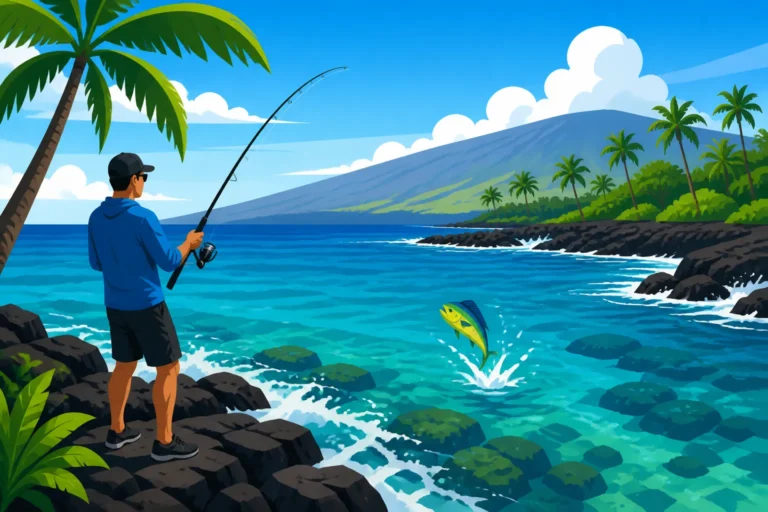
Maui's rugged coastline, sculpted by ancient volcanic activity, features numerous rocky points and expansive lava flows that extend into the ocean. These areas are prime hunting grounds for powerful gamefish like ulua (giant trevally) and papio (smaller trevally). The turbulent waters and abundant structure provide excellent ambush points for these predatory fish.
Iconic spots like La Perouse Bay on the southwest tip of Maui are legendary among local shore casters. The expansive lava fields here create countless nooks, crannies, and ledges where fish can hide and feed. Fishing these areas often involves heavy tackle, long casting rods, and robust reels capable of handling powerful runs and the abrasive environment. Anglers typically target ulua using techniques like slide baiting with large live or dead baits (like opelu or akule) or casting heavy metal jigs and large poppers. The challenge is not just hooking the fish, but landing it over the sharp lava rock without getting cut off. Safety is paramount when fishing these rocky areas; always watch your footing and be aware of incoming swells. Knowing how to effectively target these powerful fish from the land is a skill honed over time, and our guide on How to Catch Ulua from Shore offers excellent tips for maximizing your chances.
Sandy Beaches and Reef Flats
For a slightly less intense but equally rewarding experience, Maui's numerous sandy beaches and expansive reef flats offer fantastic shore fishing opportunities. These areas are often more accessible and can be great for families or those looking for a relaxing day by the water.
Beaches such as Sugar Beach in Kihei, Kahana Beach on the west side, or sections of the coastline near Kaanapali offer miles of sandy bottom interspersed with patch reefs. Here, you can typically find papio, bonefish (oio), various goatfish (kumu, weke), and sometimes small jacks. Techniques here include light tackle whipping with small artificial lures (grubs, Kastmasters), bait fishing with natural baits like shrimp, squid, or limu (algae), and fly fishing for bonefish on the expansive flats. Wading the flats at low tide can be particularly productive for bonefish, but always wear sturdy wading boots to protect against sharp coral and urchins. It's a more nuanced approach than brute force, focusing on presentation and stealth. Many of the fundamental approaches to angling from the beach are covered in our guide on Shore Fishing Techniques for Hawaii, which details methods suitable for various coastal conditions. Remember to be mindful of swimmers and other beachgoers, especially in popular tourist areas.
Piers and Harbors
For convenience and often family-friendly access, piers and harbor jetties offer another excellent avenue for shore fishing on Maui. While not as numerous or extensive as on some other islands, the accessible spots can be quite productive, especially for smaller species and baitfish.
The Lahaina Breakwater (though access can be restricted or limited to certain sections) and areas around Ma'alaea Harbor's jetties (where public access is permitted) are examples where anglers might drop a line. These locations typically provide sheltered waters, making them ideal for casual fishing. You can expect to catch smaller papio, various reef fish like menpachi (squirrelfish), goatfish, and even some juvenile trevally. The setup here is usually simpler: a spinning rod with a light to medium action, baited with cut bait, squid, or shrimp. Sabiki rigs are also popular for catching baitfish like opelu or akule, which can then be used as live bait for larger targets. These spots are also fantastic for observing marine life and enjoying the ocean atmosphere without needing a boat. For a broader overview of similar accessible spots across the islands, you might find inspiration in our guide to the Best Pier Fishing Spots in Hawaii. Always check for local signage regarding fishing regulations or restrictions specific to harbor areas, as commercial operations often take precedence.
Freshwater Fishing on Maui (The Lesser-Known Gem)
When most people think of fishing in Hawaii, their minds immediately go to the deep blue ocean. And while Maui certainly excels in that department, the island also holds a lesser-known, often overlooked secret: freshwater fishing. It's not as extensive as the marine fishery, but for those seeking a different kind of angling experience, Maui's freshwater opportunities can be surprisingly rewarding.
Hidden Reservoirs and Streams
Maui's freshwater fishing primarily revolves around a few man-made reservoirs tucked away in the island's interior, particularly in the Upcountry region. Unlike Oahu or Kauai, Maui isn't famous for its freshwater streams teeming with trout. Instead, its reservoirs offer a unique chance to target introduced species.
The most notable areas for freshwater angling on Maui are typically privately owned reservoirs or watershed areas that may occasionally grant public access for fishing, often through specific permits or organized events. It's crucial to understand that public access to many of these freshwater bodies can be limited, and regulations differ from marine fishing. When access is available, these reservoirs might hold species like tilapia, largemouth bass, and even peacock bass (though peacock bass populations are more prominent on Oahu). These fish thrive in the warmer, nutrient-rich waters of the reservoirs, providing a different kind of fight than their saltwater cousins. Fishing techniques range from conventional spin fishing with lures like spinnerbaits, crankbaits, or soft plastics for bass, to simple bait fishing with worms or bread for tilapia. Always check with the Hawaii Department of Land and Natural Resources (DLNR) Division of Aquatic Resources (DAR) for specific access rules, permit requirements, and current regulations for any freshwater body you plan to fish on Maui. For a comprehensive overview of the licensing requirements, which are indeed distinct from ocean fishing, be sure to consult our detailed guide on the Hawaii Freshwater Fishing License and Rules.
Essential Maui Fishing Techniques and Gear
To truly make the most of your Maui fishing adventure, it's helpful to understand the primary techniques employed here, both offshore and from the shoreline. Having the right gear and knowing how to use it can significantly enhance your success and enjoyment. Hawaii's diverse fishing scenarios demand a versatile approach.
Offshore Trolling and Live Baiting
For those chasing the big pelagics offshore, trolling and live baiting are the bread and butter techniques. These methods are designed to cover large expanses of water and present baits or lures in a way that mimics natural prey.
Trolling involves dragging multiple lines with lures or rigged baits behind a moving boat at various speeds. High-speed trolling with artificial lures (often brightly colored skirts or jet heads) is particularly effective for species like ono (wahoo) and mahimahi, as it allows for covering extensive ground quickly. For marlin and ahi, captains often employ a spread of larger lures, sometimes combined with rigged natural baits like ballyhoo or mackerel, trolled at slower speeds. The idea is to create a "school" of bait behind the boat, drawing the attention of predators. Different lure colors and sizes are chosen based on water conditions, time of day, and target species. Many charters will have a sophisticated trolling spread, using outriggers to spread the lines and increase their effective coverage. For a deeper dive into the nuances, our article on Trolling Techniques for Hawaii Pelagics provides invaluable insights.
Live baiting is another highly effective offshore method, especially for wary or finicky fish like large ahi or marlin. This involves catching or acquiring live baitfish (such as opelu, akule, or small skipjack tuna) and then deploying them on heavy tackle, either slow-trolled or drift-fished. The natural movement and scent of a live bait are often irresistible to a predatory fish, leading to explosive strikes. When a school of bait is located, or fish are spotted on sonar, live bait can be the key to triggering a bite. Charters typically have dedicated live bait wells to keep these precious baits healthy throughout the day.
Shore Casting, Whipping, and Slide Baiting
Shore fishing on Maui demands a different set of skills and techniques, adapting to the diverse coastal environments, from sandy beaches to jagged lava flows.
Shore Casting is a broad term encompassing various methods used from land. This can involve casting artificial lures or baited rigs from beaches, rocky points, or jetties. For general reef fish and smaller jacks, a medium-action spinning rod with 15-30 lb braided line is common. Baits like cut squid, shrimp, or limu are popular, as are small plastic grubs or metal jigs.
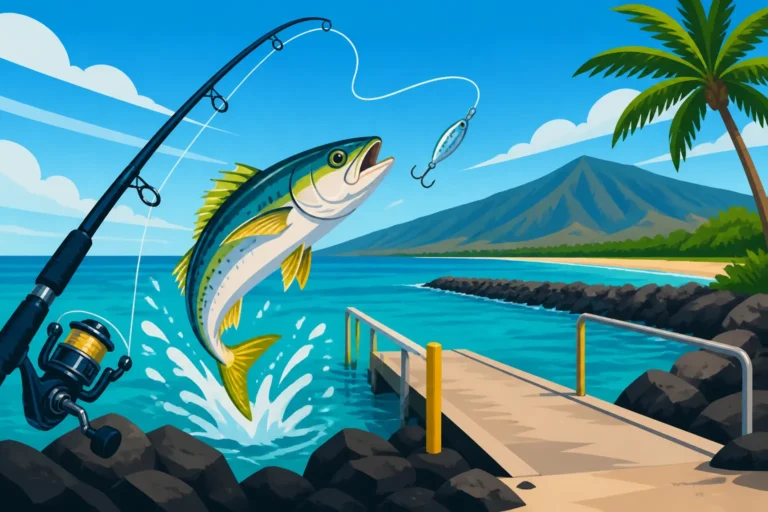
Whipping is a fast-paced, active form of shore casting particularly effective for papio (trevally) and other aggressive predators on shallow reefs and sandy flats. It involves repeatedly casting and retrieving small, fast-moving artificial lures like Kastmasters, spoons, or soft plastics with jig heads. The action often mimics fleeing baitfish, triggering reactive strikes. Success in whipping often comes down to covering ground, quick retrieves, and knowing where fish are likely to ambush. When targeting specific reef fish like uhu, your lure choice becomes even more critical; you can explore options in Best Lures for Uhu on the Reef.
Slide Baiting is a specialized technique for targeting large ulua and other big game from rocky shorelines, especially in areas with deep drop-offs close to shore. This method involves casting out a heavy sinker and a strong main line first, allowing it to settle on the bottom. Then, a live or large dead bait (like an entire fish or octopus) is attached to a separate leader with a slide clip, which is then clipped onto the main line and allowed to slide down to the water, often carried by current or gravity. This technique allows anglers to present very large baits far out from shore without having to cast the heavy bait itself, which is often impossible with conventional casting gear. It requires specialized heavy-duty surf rods, robust reels, and incredibly strong line and leader materials to withstand the power of a trophy ulua.
Bottomfishing and Jigging
Beyond the high-speed trolling for pelagics, Maui also offers excellent opportunities for bottomfishing, targeting the various snapper and grouper species that inhabit the deeper reefs and underwater structures.
Bottomfishing involves dropping baited lines down to the ocean floor, often at depths ranging from 100 to over 1,000 feet. The goal is to present baits near the habitat of prized bottomfish like opakapaka (pink snapper), onaga (ruby snapper), ehu (red snapper), and hapu'upu'u (grouper). Charters typically use electric reels with multiple hook rigs baited with squid, cut fish, or even whole small fish. The boat is either anchored or drift-fished over specific underwater pinnacles, ledges, or trenches that are known to hold these species. It's a game of patience and precision, relying heavily on good sonar to locate promising structure and fish concentrations. The reward is often a cooler full of some of the best eating fish Hawaii has to offer. For a more detailed understanding of the species and methods, our guide on Bottomfishing in Hawaii is a fantastic resource.
Jigging, specifically vertical jigging, is a more active form of bottomfishing that has gained popularity. This technique involves dropping heavy metal jigs (often 4-16 oz or more) to the desired depth and then rhythmically working the rod to make the jig dart and flutter, mimicking an injured baitfish. It's an incredibly effective way to entice strikes from both bottomfish and some pelagic species that might be cruising mid-water. Jigging requires specialized jigging rods, high-speed reels, and strong braided line. It can be physically demanding but incredibly rewarding when a powerful fish slams the jig. Both traditional bottomfishing and jigging are often combined on dedicated bottomfishing charters, offering a varied and exciting deep-water experience.
Planning Your Maui Fishing Adventure
A successful and enjoyable fishing trip to Maui requires a bit of thoughtful planning. From choosing the right charter to understanding local rules and preparing what to bring, a little preparation goes a long way. This section aims to equip you with the knowledge to organize an unforgettable angling experience.
Choosing the Right Charter
If you're looking to target offshore species or simply want the ease of having all the gear and expertise provided, a fishing charter is your best bet on Maui. However, with many options available, picking the right one can feel daunting. Factors like the type of fishing you want to do, your budget, and the size of your group will all influence your choice.
First, decide on your fishing preference: do you want to target big game like marlin and tuna, or are you more interested in bottomfishing for snapper? Some charters specialize, while others offer a mix. Next, consider the duration – half-day trips are great for families or those prone to seasickness, while full-day trips offer more time to reach distant grounds and hunt for larger fish. You'll also need to choose between a private charter, which gives you the entire boat and crew to yourselves, or a shared (split) charter, which is more budget-friendly as you share the cost and the fishing experience with other anglers. Research the boat's reputation, read reviews, and don't hesitate to ask questions about their catch policy (e.g., do they share the catch, or is it strictly catch and release for certain species?). Utilizing platforms like FishingBooker can be incredibly helpful for comparing options, reading reviews, and booking reputable charters, making the process much smoother. For a deeper dive into making this crucial decision, consult our guide on How to Choose a Hawaii Fishing Charter.
Navigating Regulations and Seasons
Hawaii's fishing regulations are designed to protect its precious marine resources and ensure sustainable fishing for future generations. It is absolutely critical for all anglers, both residents and visitors, to be aware of and comply with these rules. Ignorance of the law is not an excuse, and penalties can be significant.
The Hawaii Department of Land and Natural Resources (DLNR), Division of Aquatic Resources (DAR) is the governing body for all fishing regulations in the state. Their website is the official source for the most up-to-date information. Key regulations to familiarize yourself with include:
- Bag and Size Limits: Many species have specific daily bag limits (how many you can keep) and minimum/maximum size limits. For instance, specific reef fish like uhu often have precise size windows.
- Closed Seasons: Certain species, particularly during their spawning periods, may have closed seasons where they cannot be harvested. Moi (Pacific threadfin) often have such closures.
- Restricted Areas: Marine Life Conservation Districts (MLCDs) and Fish Replenishment Areas (FRAs) have strict rules, often prohibiting or limiting fishing. It's vital to know where these areas are and what restrictions apply.
- Gear Restrictions: Certain types of fishing gear or methods might be prohibited in specific areas or for certain species.
- Licenses: While a marine fishing license is not required for recreational ocean fishing for Hawaii residents, non-residents will likely need one. Freshwater fishing always requires a license for everyone.
Always make it a habit to check the current year's regulations before you fish, as rules can change annually. Our comprehensive guide on Hawaii Fishing Regulations Explained is an excellent starting point to understand the broader legal landscape of fishing in the islands. Being informed not only keeps you legal but also contributes to the conservation efforts that keep Maui's waters abundant.
What to Pack and Expect
Preparing adequately for your Maui fishing trip, whether it's a charter or a solo shore excursion, will ensure comfort and readiness for whatever the ocean throws your way. Beyond your fishing gear, there are several essential items to consider.
For offshore charters, pack light. Most reputable charters provide all the necessary rods, reels, tackle, and bait. Your focus should be on personal comfort and sun protection. Bring a wide-brimmed hat, sunglasses (polarized are a huge plus for spotting fish), and plenty of high-SPF, reef-safe sunscreen. Light, breathable clothing that offers good sun protection is ideal. Staying hydrated is key, so bring water and non-alcoholic beverages; some charters may provide these. Snacks are also a good idea, especially for full-day trips. Seasickness can quickly ruin a trip, so if you're prone to it, take preventative measures like Dramamine or motion sickness patches before you board the boat. A camera is a must to capture those trophy shots, but ensure it's protected from spray. A small, waterproof bag for your essentials (phone, wallet, keys) is also advisable. For a more comprehensive checklist, our article on What to Bring on a Hawaii Fishing Charter is an excellent resource.
For shore fishing, in addition to sun protection, consider sturdy, closed-toe footwear suitable for walking on uneven terrain or wading. A backpack to carry water, snacks, extra tackle, and a first-aid kit (especially for rocky areas) is recommended. If you plan to keep your catch, a cooler with ice is essential. Always bring a trash bag to pack out everything you bring in, and leave no trace.
Regardless of your chosen method, expect variable conditions. The ocean can be calm and glassy one moment, and choppy the next. Be prepared for early mornings, as prime fishing times often coincide with sunrise. Most importantly, bring a good attitude and a sense of adventure – Maui fishing is about the experience as much as the catch!
Maui's Unique Fishing Culture and Conservation
Fishing on Maui isn't just a recreational activity; it's deeply intertwined with the island's rich cultural heritage and a profound respect for the natural world. Understanding and embracing this ethos of conservation and community will only enhance your angling experience.
Respecting the Aina and Kai
The Hawaiian concept of mālama Aina (to care for the land) and mālama Kai (to care for the ocean) is central to local fishing culture. It's a philosophy of stewardship, recognizing that humans are an integral part of the ecosystem and have a responsibility to protect it for future generations. This isn't just an abstract idea; it translates into practical actions and an inherent respect for marine resources.
For anglers, this means practicing responsible fishing. Catch-and-release is encouraged for species that are not intended for consumption or if bag limits have been met, ensuring that breeding populations thrive. Avoiding wasteful harvesting and taking only what you need is also a core principle. Furthermore, being mindful of your impact on the environment, such as avoiding damaging coral reefs, using reef-safe sunscreens, and properly disposing of all trash and fishing line, embodies mālama Kai. It's about recognizing that the health of the ocean directly impacts the abundance of fish. Many of Hawaii's Marine Life Conservation Districts (MLCDs) were established precisely to protect critical habitats and allow marine populations to flourish; understanding Hawaii Marine Life Conservation Districts, Explained is crucial for any responsible angler here. When you fish on Maui, you're not just a visitor; you're a temporary custodian of these precious waters.
Local Knowledge and Community
One of the greatest joys of fishing on Maui is connecting with the local fishing community. Hawaii has a vibrant and long-standing tradition of angling, and locals often possess an unparalleled depth of knowledge about the waters, the fish, and the subtle cues of the ocean.
Don't be shy about striking up conversations with local anglers on the pier, at the boat ramp, or in tackle shops. You'll often find a willingness to share tips, insights, and stories, embodying the spirit of aloha. Local tackle shop owners, in particular, are treasure troves of current information on what's biting, what baits are working, and any recent changes in conditions or regulations. They can point you towards the best local gear, explain specific techniques, and even share a secret spot or two if you show genuine respect and a willingness to listen. Charters often operate within this close-knit community, and a good captain will not only put you on fish but also share insights into the local ecosystem and culture. Engaging with the community enriches your trip, allowing you to learn from generations of experience and to appreciate the profound connection Hawaiians have with the sea.
Common Maui Fish Species and Where to Find Them
| Species | Common Location | Best Fishing Technique | Average Size (lbs) | Notes |
|---|---|---|---|---|
| Blue Marlin | Deep offshore waters, FADs | Trolling, Live Baiting | 150-1000+ | Iconic big game; catch & release often |
| Ahi (Yellowfin Tuna) | Offshore, around FADs, deep water | Trolling, Live Baiting, Jigging | 30-200+ | Powerful fighter, excellent eating |
| Ono (Wahoo) | Offshore, often near current lines | High-speed Trolling | 15-70 | Fast, sharp teeth; delicious |
| Mahimahi (Dorado) | Offshore, floating debris, FADs | Trolling, Live Baiting | 5-50 | Beautiful, acrobatic, great eating |
| Ulua (Giant Trevally) | Rocky points, reefs, harbors | Slide Baiting, Heavy Whipping | 20-100+ | Powerful, highly prized shore catch |
| Papio (Trevally) | Reef flats, beaches, harbors | Whipping, Light Baiting | 1-15 | Smaller version of ulua, aggressive |
| Moi (Pacific Threadfin) | Sandy beaches, calm reef areas | Light Baiting, Float Fishing | 1-5 | Prized eating fish; closed seasons |
| Opakapaka (Pink Snapper) | Deep bottom, seamounts | Deep Drop Bottomfishing | 5-25 | Excellent eating, deepwater species |
| Onaga (Ruby Snapper) | Deep bottom, rocky ledges | Deep Drop Bottomfishing | 5-20 | Highly valued, deepwater species |
Disclaimer
The information provided in this guide is for general informational purposes only and is not intended as legal advice. Fishing regulations in Hawaii, including those for Maui, are subject to change by the Department of Land and Natural Resources (DLNR) Division of Aquatic Resources (DAR). It is the sole responsibility of each angler to check and comply with all current local, state, and federal fishing laws, regulations, and licensing requirements before engaging in any fishing activity. Always prioritize safety and environmental stewardship.