Barbers Point Fishing Access
Finding a prime fishing spot on Oahu that offers a real shot at a diverse catch, especially one accessible without a long trek, can feel like a never-ending quest. Many public access points are crowded, overfished, or surrounded by restrictions that make a serious fishing session frustrating. But don't despair! This comprehensive guide is here to shed light on Barbers Point, a unique and often overlooked fishing access area on the southwestern tip of Oahu, revealing its potential and helping you navigate its waters for a successful outing.
Understanding Barbers Point: A Unique Fishing Landscape
Barbers Point, also known as Kalaeloa, stands out from other fishing locations on Oahu not just geographically, but in its very nature. It's a fascinating blend of industrial activity, deep-water access, and surprisingly rich marine life. For those who understand its nuances, it offers a distinct advantage for anglers seeking a productive day.
The Lay of the Land: What Makes Barbers Point Different
Geographically, Barbers Point is characterized by its significant harbor – Kalaeloa Barbers Point Harbor – and the vast, man-made structures that define its coastline. This isn't your typical pristine sandy beach or remote lava rock point. Instead, you'll find a working port, with industrial facilities, shipping lanes, and substantial breakwaters designed to protect the harbor entrance. This industrial backdrop might initially seem off-putting, but it's precisely these features that create an incredibly unique fishing environment. The breakwaters, in particular, provide sheltered waters and artificial reef structures that attract a wide array of fish. The deep-water channel leading into the harbor also brings larger pelagic species remarkably close to shore, a rare advantage for land-based anglers or those in smaller boats.
The proximity of deep water to the shoreline here is a game-changer. Unlike many other parts of Oahu where you need to travel miles offshore to hit significant depths, Barbers Point offers quick access to the deep ocean trenches and drop-offs. This means a wider variety of species, from schooling baitfish to formidable ulua and even pelagics like mahimahi or small tuna, can be found within a relatively short distance. The currents around the point, influenced by the deep ocean and the harbor's ebb and flow, also play a crucial role, concentrating bait and drawing in predators. Understanding these unique characteristics is the first step to unlocking the fishing potential of Barbers Point.
Navigating Access Points and Restrictions
One of the biggest frustrations anglers face at Barbers Point is understanding where they can and cannot legally fish. Given its blend of commercial, industrial, and historical military use, access is definitely not a free-for-all. Certain areas, particularly within the active harbor zones, shipping channels, and private industrial properties, are strictly off-limits to recreational anglers. Trying to sneak into these areas isn't just disrespectful; it can lead to serious fines or even legal trouble. It's paramount to respect signage and established boundaries.
However, there are still excellent public access points that offer fantastic fishing opportunities. The long breakwater extending out from the harbor entrance is a primary draw for many anglers. This massive rock structure creates ideal habitat and provides deep-water access. Additionally, certain stretches of shoreline, especially those away from the immediate harbor infrastructure, are open for shore casting. It's always a good idea to consult the Hawaii Department of Land and Natural Resources (DLNR) Division of Aquatic Resources (DAR) maps and regulations before heading out. Sometimes, what looks like an accessible spot might actually be part of a restricted zone, so a little homework goes a long way to avoid a wasted trip or an unpleasant encounter with security or law enforcement.
Prime Fishing Opportunities at Barbers Point
Barbers Point might not be the picture-perfect Hawaiian fishing postcard, but it’s a workhorse for anglers. Its unique environment provides both nearshore and offshore opportunities that are hard to beat in terms of accessibility and potential reward on Oahu.
Shoreline Angling Hotspots
For those who prefer to keep their feet on solid ground, Barbers Point offers some surprisingly productive shoreline fishing. The main breakwater, especially its outer edges, is a consistent hotspot. Anglers often brave the walk out onto the rocks, where they can cast into deeper water or target species that patrol the structure itself. Here, you'll find a mix of reef fish, papio (juvenile trevally), and even ulua (giant trevally) that cruise the channel edges. Using heavy tackle for sliding bait is common for ulua, while lighter setups for whipping or dunking bait can yield papio, goatfish (kumu, weke), and various invasive species like taape and roi. Remember, these invasive species are often found in abundance around harbor areas and are encouraged for harvest. Learn more about Invasive Taape and Roi in Hawaii and their impact.
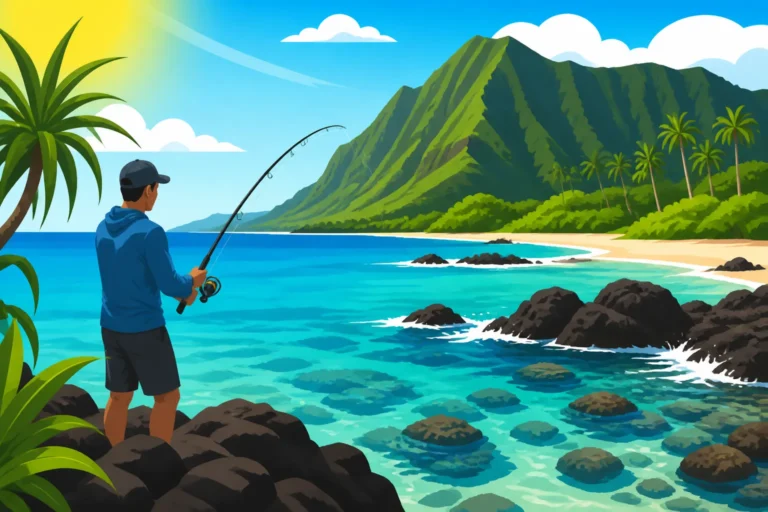
Beyond the breakwater, smaller pockets of accessible rocky shoreline and tide pools can offer exciting light-tackle action. These areas are excellent for targeting smaller papio, various wrasse, triggerfish, and even juvenile moi during their open season. The key is to look for areas with good current flow and some form of structure, whether natural lava rock or man-made debris, where fish can hide and ambush bait. Many local anglers also target the small bays and coves just outside the main harbor, especially during high tide or slack tide changes, when fish might move into shallower waters to feed. Always be mindful of the sharp coral and uneven footing common along Hawaii's rocky shores.
Boat and Kayak Access Adventures
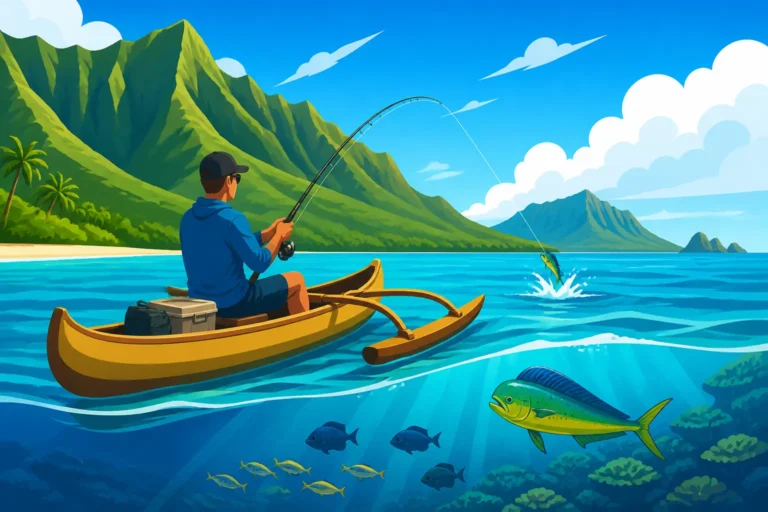
For anglers with small boats, kayaks, or even stand-up paddleboards, Barbers Point truly shines. The public boat ramp, located conveniently near the harbor entrance, provides relatively easy access to both nearshore and offshore waters. This is a huge advantage, as many other public ramps on Oahu can be crowded or offer less direct access to productive grounds. From here, kayakers can quickly paddle to the outer edges of the breakwater to target papio and ulua, or venture slightly offshore to explore the shallow reefs and drop-offs for bottomfish like opakapaka or even small amberjacks.
For those in larger boats, the deep-water access from Barbers Point is unparalleled. Within a short run, you can be in waters deep enough to troll for pelagic species such as mahimahi, ono, or even ahi. Many local charter captains and serious recreational anglers use Barbers Point as a jumping-off point for these offshore adventures. These deeper waters also hold excellent bottomfishing opportunities for species like onaga and opakapaka. If you're looking to explore these deeper waters but don't own a boat, consider booking a trip with a local guide through platforms like FishingBooker, which often lists captains operating out of Barbers Point or nearby Honokohau Harbor who specialize in these target species. They know the contours and the fish better than anyone.
Target Species and Proven Techniques for Barbers Point
Barbers Point, with its diverse environment from industrial structures to deep ocean currents, attracts a wide array of fish species. Knowing what to expect and how to target them can make all the difference in your fishing success.
Nearshore Brawlers: Papio, Ulua, and Reef Dwellers
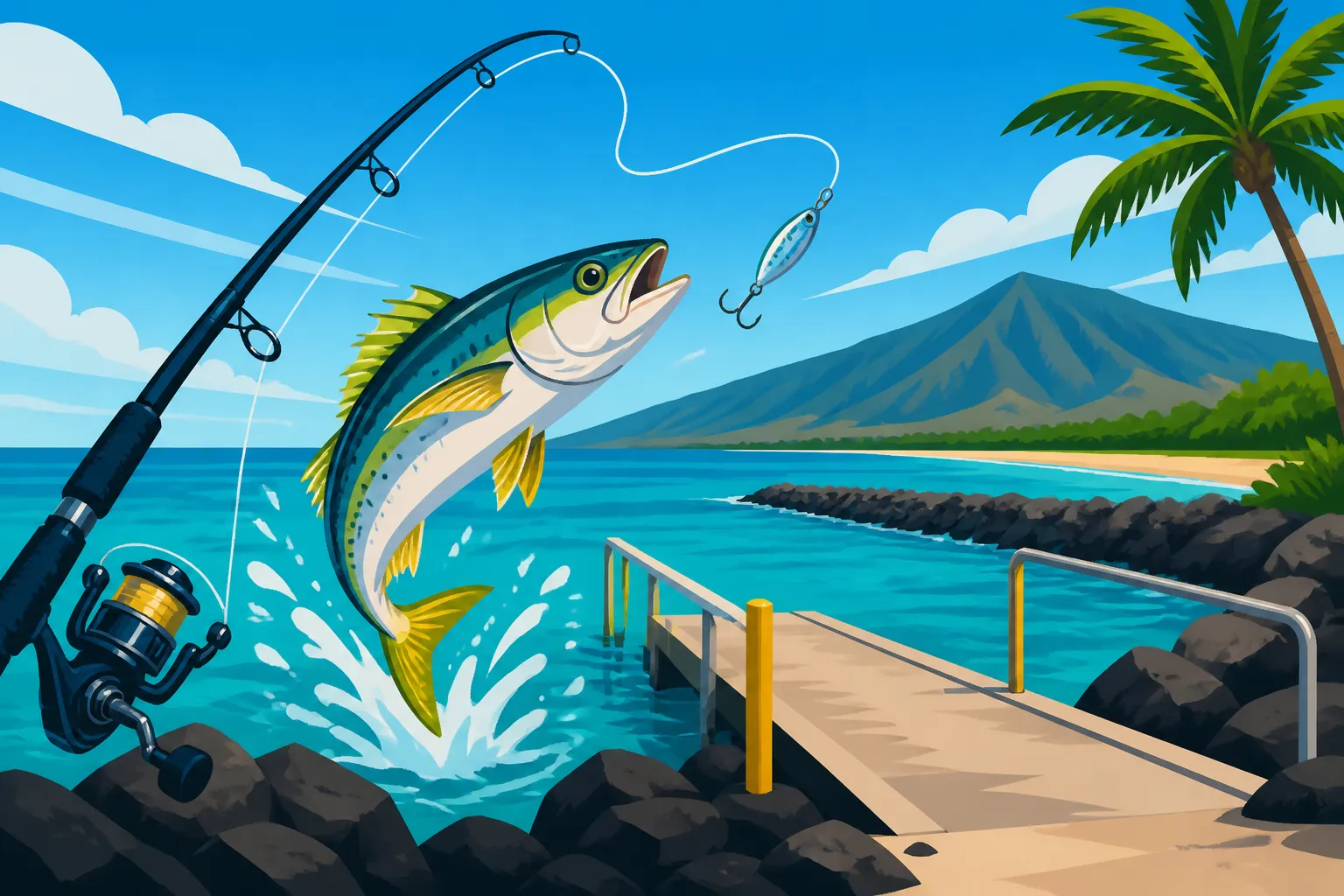
The shallow reefs and breakwater structures at Barbers Point are a playground for a variety of inshore species. Papio, the juvenile form of the formidable giant trevally (ulua), are abundant here. They can be caught using lighter spinning gear with small metal jigs, soft plastics, or live bait like opelu or akule. Whipping, a local technique involving fast retrieves of small lures, is incredibly effective for schooling papio. Often, you'll see them busting bait on the surface near the edges of the breakwater or in the calmer waters of the adjacent coves. For a more detailed approach, check out our guide on How to Catch Papio on Hawaii's Shoreline.
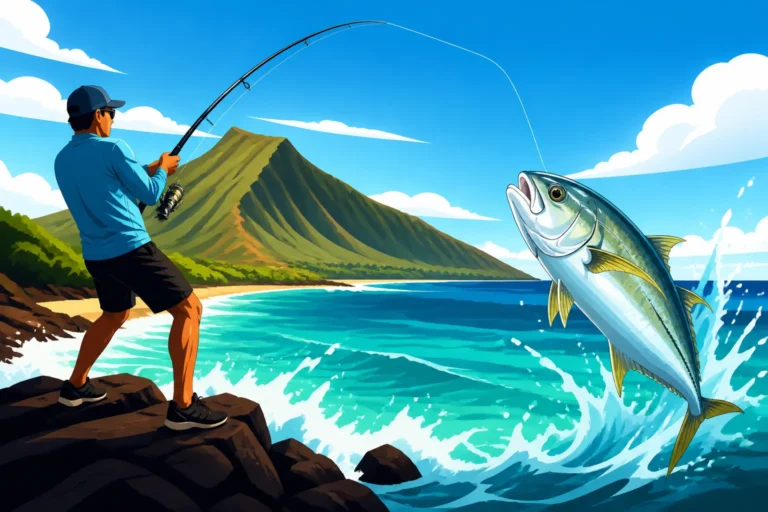
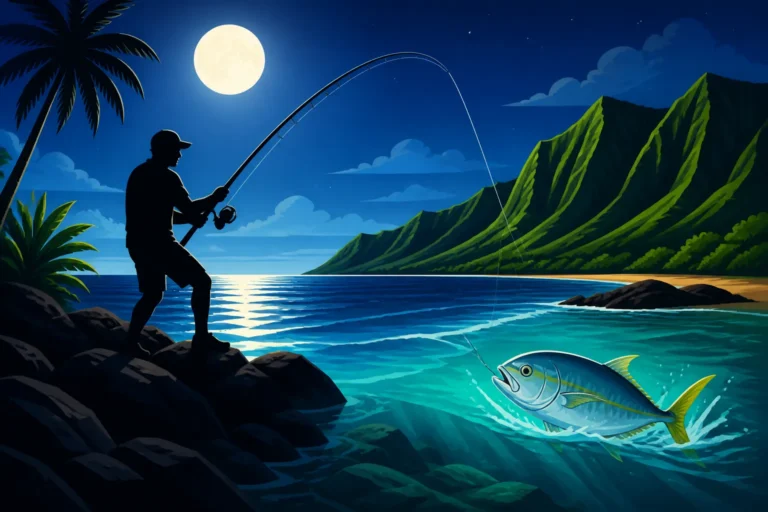
Ulua, the mature giant trevally, are the undisputed kings of Hawaii's nearshore waters, and Barbers Point is a prime location to target them. These powerful fish patrol the deeper channels and the outer edges of the breakwater, especially during night tides or when there's significant swell. Anglers typically use heavy-duty surf rods and reels, deploying large baits such as whole squid, fresh dead fish, or even live halalu (mackerel scad) on sliding bait rigs. The waiting game can be long, but the reward of battling a powerful ulua, which can easily exceed 50 pounds, is an unforgettable experience. Our comprehensive guide on How to Catch Ulua from Shore provides in-depth strategies. You'll also encounter various reef dwellers like goatfish (kumu, weke), menpachi (squirrelfish), and triggerfish (humuhumu), all of which can be caught on small pieces of shrimp or squid.
Offshore Giants: Tuna, Mahi, and Wahoo
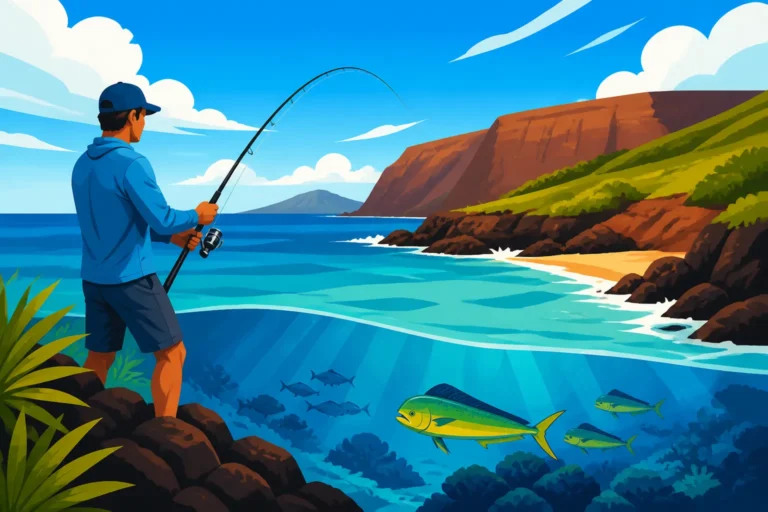
Venturing just a short distance offshore from Barbers Point opens up a world of pelagic fishing opportunities. The deep-water drop-offs and current lines that characterize the area are highways for some of Hawaii's most sought-after game fish. Mahimahi, known for their vibrant colors and acrobatic fights, are a common target, especially when conditions are right. They often congregate around floating debris or FADs (Fish Aggregating Devices) offshore. Trolling skirted lures or ballyhoo is a popular method, but they can also be caught on live bait if you locate a school. Dive deeper into catching these magnificent fish with our guide on How to Catch Mahimahi in Hawaii.
Ono, or wahoo, are another fast and aggressive species that frequent the waters off Barbers Point. These torpedo-shaped fish are prized for their speed and delicious white meat. They are typically caught while high-speed trolling using dark-colored, bullet-shaped lures designed to cut through the water efficiently. You'll want wire leaders to prevent bite-offs from their razor-sharp teeth. And then there's the legendary ahi, or yellowfin tuna. While the larger "grander" ahi are often found further offshore near Kona, schoolie ahi (smaller yellowfin) can be encountered off Barbers Point, especially when schools of baitfish are present. Chunking with cut bait or slow trolling live bait are effective techniques for ahi. Our article on How to Catch Ahi in Hawaii offers extensive tips for targeting these powerful tuna.
Essential Gear and Safety Tips for Barbers Point Fishing
Having the right gear and, more importantly, understanding the inherent safety considerations are absolutely crucial for a successful and enjoyable fishing trip to Barbers Point. This unique location demands preparedness.
Must-Have Tackle for Diverse Conditions
Given the variety of fishing available at Barbers Point, your tackle box might need to be more versatile than usual. For shoreline fishing, especially on the breakwater, a heavy-duty surf rod (10-14 feet) paired with a robust spinning reel (8000-14000 size) spooled with 50-80 lb braided line is essential for ulua. You'll need heavy lead weights (8-16 oz) to hold bottom in strong currents and stout circle hooks (10/0-16/0). For papio and smaller reef fish, a medium-heavy spinning rod (7-9 feet) with a 4000-6000 size reel and 15-30 lb braided line will suffice, along with a selection of metal jigs (1-3 oz), soft plastics, and bait hooks for shrimp or squid.
For boat or kayak fishing, a medium-heavy conventional or spinning setup (6'6"-7'6" rod, 30-50 lb class) with 40-80 lb braided line is versatile for bottom fishing, light trolling, or even casting to busting fish. For dedicated offshore trolling for mahimahi or ono, heavier conventional setups (50-80 lb class) with corresponding rods and appropriate lures (skirted trolling lures, diving plugs) are necessary. Don't forget a gaff or a large landing net, especially for offshore species. Regardless of your chosen method, carry a variety of leader materials (fluorocarbon 40-100 lb, wire leader for ono), swivels, and sinkers.
Here's a quick comparison of essential gear:
| Item Type | Shore Fishing (Ulua/Papio) | Boat/Kayak Fishing (Pelagics/Bottomfish) |
|---|---|---|
| Rod | Heavy Surf Rod (10-14 ft), Medium-Heavy Spin (7-9 ft) | Medium-Heavy to Heavy Conventional/Spinning (6.5-7.5 ft) |
| Reel | Large Spinning (8000-14000), Medium Spin (4000-6000) | 40-80 lb Class Conventional/Spinning Reels |
| Main Line | 50-80 lb Braid (Ulua), 15-30 lb Braid (Papio) | 40-80 lb Braid |
| Leader Material | 80-150 lb Mono/Fluoro (Ulua), 30-50 lb Fluoro (Papio) | 60-100 lb Fluoro (Mahi/Tuna), Wire Leader (Ono) |
| Baits/Lures | Whole Squid, Dead Fish, Live Bait, Metal Jigs, Soft Plastics | Skirted Lures, Diving Plugs, Live Bait, Jigs, Cut Bait |
| Key Accessories | Rod Holders, Heavy Weights, Headlamp | Gaff/Net, GPS/Fishfinder, Cooler, Safety Gear |
Staying Safe On and Around the Water
Safety at Barbers Point is paramount, given its potentially rugged conditions and industrial environment. If you're fishing from the breakwater, always wear appropriate footwear with good grip – those rocks can be slippery with algae or after a rain. Be acutely aware of wave conditions; rogue waves can sweep you off the rocks, especially on the outer sections. Never turn your back on the ocean. A PFD (Personal Flotation Device) is a wise choice, even for shore anglers on exposed structures.
For boaters and kayakers, weather conditions can change rapidly in Hawaii. Always check the marine forecast before heading out and be prepared to turn back if conditions deteriorate. Strong currents, especially around the point and harbor entrance, can be challenging for smaller crafts. Ensure your vessel is equipped with all required safety gear, including life jackets for everyone on board – remember, Life Jacket Requirements for Hawaii Boaters are strict. Carry a marine radio or fully charged cell phone in a waterproof bag, and let someone know your float plan. Be vigilant for commercial vessel traffic, as Barbers Point is a busy port, and larger ships have the right of way and limited maneuverability. Understanding basic Hawaii Boating Laws for Anglers is not just good practice, it's essential for your safety and avoiding penalties.
Navigating Regulations and Environmental Stewardship
Fishing in Hawaii, especially in a dynamic area like Barbers Point, means understanding and respecting the rules. The regulations are put in place to ensure the health of our marine ecosystems for future generations.
Permitting and Local Rules You Need to Know
First and foremost, if you're planning to fish anywhere in Hawaii, you generally need a freshwater fishing license if you're targeting freshwater species. However, for ocean fishing, Hawaii historically has not required a recreational marine fishing license for residents or visitors. This is a common point of confusion for many newcomers, especially those from the mainland where ocean licenses are standard. As of late 2023, legislation was passed that introduced a new statewide recreational marine fishing license program, which is expected to be implemented in 2024 or 2025. It's absolutely critical to stay informed on the latest requirements. Always check the Hawaii DLNR Division of Aquatic Resources (DAR) website for the most up-to-date information, or consult our guide: Hawaii Fishing License Guide for 2026.
Beyond the general license requirements (or lack thereof for marine fishing currently), Barbers Point may have specific localized rules due to its unique industrial and potentially military-adjacent status. These can include restrictions on access times, areas where certain types of gear are prohibited, or even temporary closures. Always look for signage in the area. Additionally, general statewide regulations apply, covering everything from bag and size limits to seasonal closures for certain species. Familiarize yourself with Hawaii Fishing Regulations Explained to avoid any unwelcome surprises. Ignorance of the law is not an excuse, and penalties for violations can be steep.
Practicing Sustainable Fishing at Barbers Point
Environmental stewardship is a shared responsibility, especially in a place as ecologically precious as Hawaii. When fishing at Barbers Point, it’s vital to practice sustainable fishing habits. This means strictly adhering to all Hawaii Bag and Size Limits by Species for every fish you catch. Taking more than your share or keeping undersized fish depletes stocks and undermines conservation efforts. If you're targeting a species with a closed season, like moi during its spawning months, be absolutely certain you can correctly identify your catch and release it unharmed if it's not legal to keep.
Beyond regulations, "malama i ke kai" – care for the ocean – is a core Hawaiian value. This translates to simple but impactful actions like proper trash disposal. Harbors and industrial areas, unfortunately, often see more litter. Pack out everything you pack in, and if you see discarded fishing line or plastics, consider taking a moment to remove them. Avoid leaving behind tangled lines, hooks, or other debris that can harm marine life. Many invasive species, like the taape and roi that frequent harbor waters, are encouraged for harvest as they outcompete native species. Knowing how to identify them and contributing to their removal is a proactive way to support local ecosystems. By being mindful and responsible, you contribute to ensuring Barbers Point remains a productive fishing ground for years to come.
Planning Your Trip to Barbers Point
A successful fishing trip to Barbers Point isn't just about showing up with a rod; it's about smart planning. Knowing when to go and what amenities are available can significantly enhance your experience.
Best Times to Visit and Local Considerations
The best time to fish Barbers Point often depends on your target species and preferred method. For ulua and papio from shore, the low light hours of dawn and dusk, and especially during night tides, are often most productive. A rising or falling tide, particularly around the new and full moons, can also concentrate bait and trigger feeding frenzies. After a significant swell has settled, the outer breakwater can be extremely hot for ulua as they move in to feed on dislodged prey. However, this also means potentially hazardous conditions, so always prioritize safety. For deeper insights into yearly patterns, our guide on the Best Time of Year to Fish in Hawaii can help you align your trip with peak seasons for various species.
For offshore species like mahimahi, ono, and ahi, conditions are often more dependent on water temperature, current lines, and the presence of bait. Generally, summer months see a greater abundance of pelagics, but good fishing can be found year-round if you hit the right conditions. Always check the marine weather forecast for wind and swell, as open ocean conditions can change quickly and make for an uncomfortable, or even dangerous, boat ride. Weekdays tend to be less crowded than weekends at the boat ramp and on the breakwater, offering a more peaceful experience.
Amenities and Nearby Services
While Barbers Point itself is primarily an industrial area, there are essential services nearby that anglers will find useful. The public boat ramp has ample parking, though it can fill up on busy mornings. There are typically restrooms available at the ramp area. For bait and tackle, you'll likely need to stop in towns slightly further east like Kapolei or Ewa Beach, where there are several well-stocked fishing shops. These stores often carry local baits like frozen opelu, squid, and a wide array of lures popular with Hawaiian anglers. It's a good idea to call ahead to ensure they have what you need, especially if you're looking for something specific.
For those planning an extended stay or multiple fishing trips, accommodations are available in the Kapolei area, ranging from hotels to vacation rentals. There are also numerous restaurants and grocery stores to stock up on supplies for your day on the water. While Barbers Point might not have the immediate tourist infrastructure of Waikiki, its proximity to these essential services makes it a very practical and accessible fishing destination for serious anglers willing to explore its unique charms.
Disclaimer
Please note that fishing regulations and access policies in Hawaii can change. It is always the angler's responsibility to consult the latest rules and guidelines from the Hawaii Department of Land and Natural Resources (DLNR) Division of Aquatic Resources (DAR) before any fishing trip. The information provided in this guide is for general informational purposes only and should not be considered legal advice.