Best night fishing spots on Oahu
The sun-drenched shores of Oahu are undeniably beautiful, but when it comes to fishing, the daytime hustle and bustle can sometimes make finding that peaceful, productive spot feel like a pipe dream. If you've ever felt that frustration, trying to cast a line amidst swimmers, surfers, and curious onlookers, you're not alone. This guide is all about embracing the magic of the night on Oahu, revealing the prime locations and essential knowledge you need to turn those evening hours into your most successful and serene fishing experiences yet.
Why Night Fishing on Oahu is a Game Changer
There's something uniquely captivating about fishing under the Hawaiian stars. It's not just about the tranquility; it's about unlocking a whole new dimension of angling opportunities. Many seasoned local anglers will tell you that the night isn't just an alternative; it's often the preferred time to target some of Hawaii's most sought-after species.
Escaping the Day's Heat and Crowds
Let's be real: Oahu during the day, especially popular spots, can be a vibrant, sometimes overwhelming, place. The intense tropical sun can drain your energy, and the sheer number of people enjoying the ocean can make casting a challenge, let alone finding a quiet stretch of water. Night fishing offers a welcome reprieve from all of that.
As evening falls, the temperatures drop to a much more comfortable level, allowing you to focus on your line, the subtle tugs, and the peaceful sounds of the ocean without battling the heat. More importantly, the crowds dissipate significantly. You'll find yourself sharing the shoreline with far fewer people, giving you ample space to spread out your gear, cast freely, and truly immerse yourself in the experience. This solitude often leads to a more relaxed and ultimately more productive fishing session, free from distractions and the need to constantly watch your back for errant beach balls or curious tourists.
Targeting Nocturnal Predators
One of the biggest draws to night fishing on Oahu is the behavior of the fish themselves. Many of the larger, more prized species become significantly more active under the cloak of darkness. Think about it: during the day, they might be hiding in deeper water or reef crevices, wary of predators (including us anglers!) and the bright sunlight. But as night descends, a whole new hunting dynamic begins.
Species like ulua (Giant Trevally), papio (young Trevally), various types of eels, and even certain reef sharks become formidable nocturnal hunters. They use the reduced visibility to their advantage, ambushing unsuspecting baitfish that venture too close to the surface or shoreline. This means that your chances of hooking into a trophy-sized ulua, known for its incredible fighting power, dramatically increase after sundown. The same goes for large papio, which can be surprisingly aggressive at night. Anglers specifically targeting these powerful predators often swear by the late-night hours, knowing that's when their quarry is most likely to be on the prowl.
The Thrill of the Unknown
There's an undeniable allure to the mystery of night fishing. With limited visibility, your other senses heighten. You become acutely aware of the subtle sounds of the ocean, the gentle sway of your rod tip, and the scent of the sea air. Every little bump or twitch on your line sends a jolt of anticipation through you. You can't always see what you're casting into, or what's taking your bait, which adds an extra layer of excitement to every retrieve.
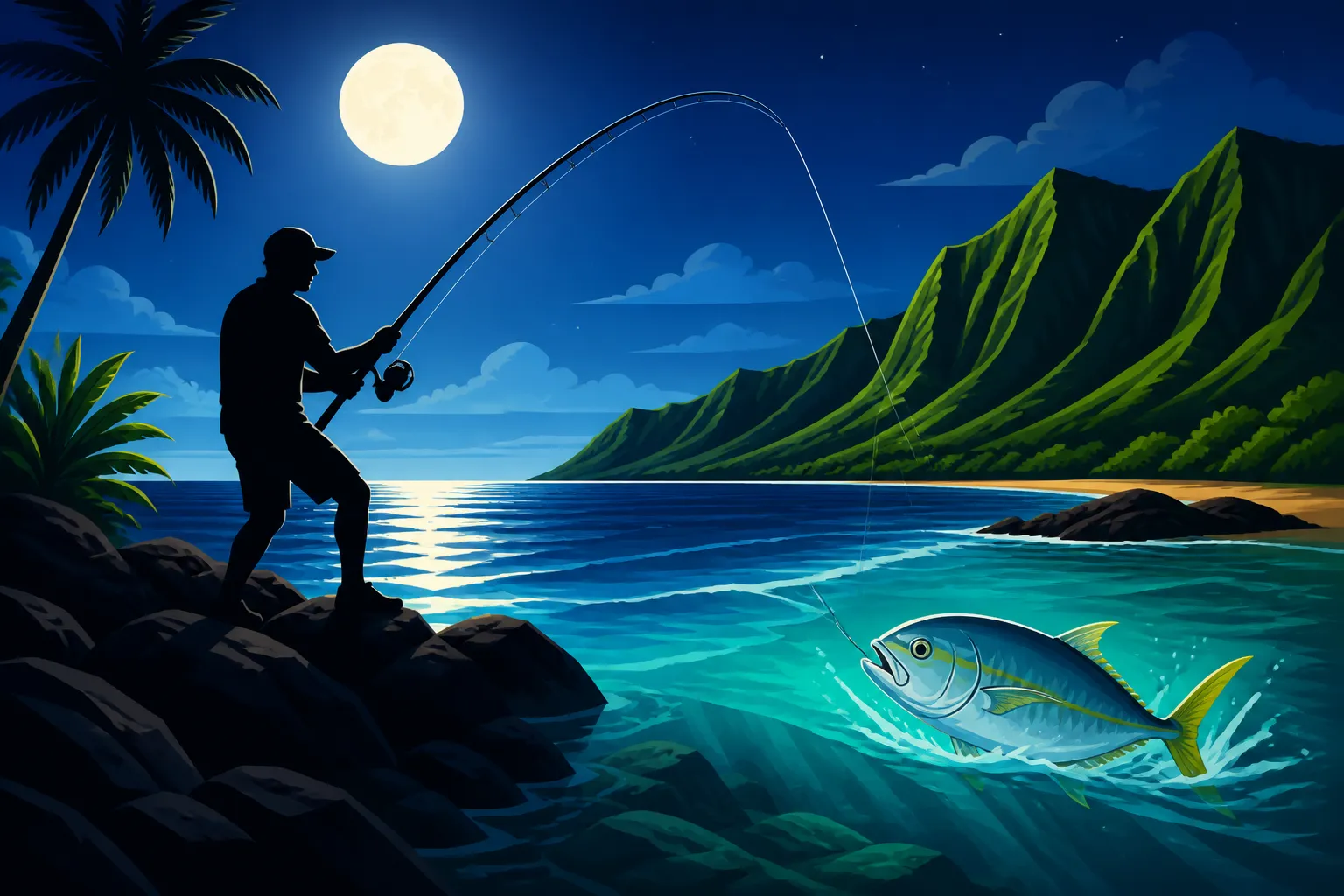
The stars above, often brilliant and unobstructed away from city lights, provide a breathtaking backdrop, making the experience feel truly primal and connected to nature. Landing a powerful fish in the dark is an especially rewarding challenge, relying on feel and instinct rather than sight. It's an adventure that engages your mind and senses in a way that daytime fishing simply can't match, creating unforgettable memories under the vast Hawaiian sky.
Top Shoreline Night Fishing Spots on Oahu
Oahu offers a fantastic array of shoreline spots that come alive after dark. Each location has its own unique character, target species, and challenges. Knowing these nuances can make all the difference in your night fishing success.
Sand Island State Recreation Area
Sand Island, located just outside of Honolulu Harbor, is a perennial favorite for night anglers, and for good reason. Its accessibility from town, coupled with decent access to varied depths, makes it a prime location. You'll find a mix of sandy bottom, rocky outcrops, and some deeper channels, offering diverse habitats for different fish. The area is generally well-lit in some parts, which can attract baitfish, and in turn, larger predators.
For those targeting bigger game, sliding bait for ulua is a popular and effective technique here, especially near the deeper drop-offs or channel edges. Anglers often use heavy gear, casting out large baits like whole opelu or akule. For those looking for more active action, whipping for papio with artificial lures or bait chunks can be productive, particularly around the calmer coves or near structure that holds smaller fish. Even light tackle can yield good results for various smaller reef fish or even barracuda that come into the shallows at night. Remember to bring your own lighting and always be aware of your surroundings, as it's still a public area. If you're into specialized techniques, you might even find opportunities for Sand Island Bonefishing on the surrounding flats during higher tides.
Kewalo Basin
Kewalo Basin, a bustling boat harbor during the day, transforms into a productive night fishing spot once the charter boats are docked. The piers and surrounding seawalls offer easy access and the advantage of being in a somewhat urbanized area, meaning there's usually some ambient light to work with. The harbor environment provides shelter from strong currents and swells, making for a more comfortable fishing experience, especially for beginners or families.
Bottom fishing is a go-to technique here, targeting smaller reef species like menpachi (squirrelfish), papio, and even occasional moi if you're lucky. Using small pieces of squid or shrimp as bait on a basic paternoster rig can be very effective. Casting artificial lures, like small grubs or jigs, near the lights around the harbor can also attract opportunistic papio or even a small barracuda. While it’s still relatively busy compared to more remote spots, the crowds thin out considerably after sunset, providing a relaxed atmosphere. For those who love the convenience and structure, Kewalo is one of the Best Pier Fishing Spots in Hawaii you'll find on Oahu. It also stands out as one of the Best Harbor Fishing Spots in Hawaii for nocturnal anglers.
Haleiwa Boat Harbor (North Shore)
Venturing up to the North Shore, Haleiwa Boat Harbor offers a different kind of night fishing experience. While it's known for its surf during the day, the protected waters of the harbor provide calmer conditions for night fishing. The key here is the proximity to deeper ocean access and the natural channels that funnel baitfish and larger predators. The vibe is decidedly more laid-back than urban Honolulu, offering a quintessential North Shore experience.
Anglers here often employ heavier tackle, especially if they're targeting big ulua or even sharks that might cruise the harbor entrance or deeper channels. Live bait, such as akule or opelu, fished on a sliding rig or ledger rig, is highly effective. You might also find success casting larger poppers or stickbaits for an explosive topwater strike from an aggressive papio. Be mindful of boat traffic, even at night, and respect any posted regulations regarding fishing within the harbor. The rugged coastline near Haleiwa also offers some fantastic Best Rocky Point Fishing Spots in Hawaii if you're willing to venture further out.
Makapu'u Point
Makapu'u Point, on Oahu's southeastern tip, is for the adventurous night angler seeking big thrills and potentially big fish. This rugged, exposed coastline faces strong currents and often powerful swells, so it demands extreme caution and respect. However, its deep drop-offs and turbulent waters are magnets for large pelagic and shore-based predators, making it one of the most exciting spots for trophy hunters.
Heavy tackle is non-negotiable here. Slide baiting with large live or dead baits is the most common technique for ulua, sharks, and even occasional ono or mahimahi that come surprisingly close to shore. Some dedicated anglers even employ drone fishing to get baits out to truly distant waters. Safety is paramount: always fish with a buddy, wear appropriate footwear for slippery rocks, and constantly monitor the surf conditions. A powerful headlamp and knowledge of the area are essential. This iconic location is famous for its access, making it a key entry in guides like Makapuu Point Fishing Access.
Navigating Oahu's Reservoirs for Night Fishing
While the ocean calls to many, Oahu's freshwater reservoirs offer a unique and often overlooked night fishing experience, targeting different species altogether. These tranquil inland waters provide a stark contrast to the dynamic ocean, perfect for a different kind of challenge.
Wahiawa Public Fishing Area
Wahiawa Reservoir, often simply called Lake Wilson by locals, is Oahu's largest freshwater body and a fantastic spot for night fishing, especially if you're keen on bass. It's home to largemouth bass, peacock bass, tilapia, and channel catfish, all of which can be more active after sunset when temperatures cool and the water is calmer.
Night fishing here often involves targeting structure like submerged trees, weed lines, or rocky points. Topwater lures, such as poppers or buzzbaits, can be incredibly exciting at night, as you hear the explosive strike before you see it. Jigs, spinnerbaits, or even live bait (like small tilapia or crayfish, where permitted) fished slowly along the bottom can also be highly effective for bass and catfish. Remember that a specific Hawaii Freshwater Fishing License and Rules is required for fishing in Wahiawa. Always check the Wahiawa Reservoir Fishing Guide for the latest access rules and regulations, as hours and areas can sometimes be restricted.
Nuuanu Reservoir No. 4
Nuuanu Reservoir No. 4, nestled in the scenic Nuuanu Valley, offers another opportunity for freshwater night fishing, though access can be more limited compared to Wahiawa. This reservoir also holds populations of largemouth bass and tilapia, providing a quieter, more secluded experience for anglers. The cooler, higher-elevation environment can make for particularly pleasant night fishing conditions.
Similar to Wahiawa, focus your efforts around any visible structure. Soft plastic worms, jigs, or slow-moving crankbaits can entice bass lurking in the shadows. Live bait, if allowed and sourced responsibly, can also be a game-changer. Given its slightly more remote nature, good lighting is crucial here, and it's always wise to let someone know your plans. Always consult the Nuuanu Reservoir Fishing Guide or the DLNR website for the most current access information and any specific rules that might apply to Nuuanu, as regulations can change.
Essential Gear and Safety for Oahu Night Fishing
Night fishing isn't just about changing your schedule; it's about changing your approach to gear and, most importantly, safety. The darkness introduces unique challenges that need to be addressed to ensure a successful and secure outing.
Lighting Up Your Night
This might seem obvious, but proper lighting is paramount for night fishing. A reliable headlamp is your best friend, allowing you to keep your hands free for tying knots, rigging baits, or handling fish. Look for models that are waterproof or water-resistant and offer multiple brightness settings, including a red-light option to preserve your night vision.
Beyond personal lighting, a powerful lantern or floodlight can be invaluable for illuminating your immediate fishing area, making it easier to see your tackle box, bait cooler, and surrounding terrain. Waterproof lights that can be attached to your line or bobber (like chemical light sticks or small LED lights) are also incredibly useful for tracking your bait and detecting subtle bites. Always carry spare batteries for all your lighting devices – running out of light in the dark can quickly turn a fun night into a dangerous situation.
Tackle for the Dark
While your daytime tackle might suffice, some adjustments can greatly enhance your night fishing experience. Since many nocturnal predators on Oahu are powerful fighters like ulua, opting for heavier rods and reels than you might typically use for similar-sized fish during the day is a wise choice. This gives you more leverage and control when fighting a fish you can't clearly see.
Using glow-in-the-dark or UV-reactive lures can sometimes be effective, though natural baits often outperform them. The real key is your terminal tackle: strong hooks are essential, as you won't have the same visual cues to ensure a perfect hookset. Consider heavier monofilament or fluorocarbon leaders, especially in areas with rocky structure, as fish might be more likely to rub your line against sharp edges in the dark. For sliding bait rigs, ensure your mainline is robust enough to handle the powerful runs of an ulua.
Prioritizing Personal Safety
Night fishing on Oahu, while rewarding, carries inherent risks. Never fish alone if possible; having a buddy is the best safety measure. Before you even head out, thoroughly check the tide charts and swell forecasts. High surf or king tides can drastically change a shoreline's safety profile under the cover of darkness.
Always wear appropriate footwear with good grip, as rocks can be incredibly slippery with dew, algae, or recent splashes. Familiarize yourself with your chosen fishing spot during the day, noting any potential hazards like drop-offs, submerged rocks, or tricky access points. Carry a fully charged cell phone, a basic first-aid kit, and enough water and snacks. If you're near water, even if you don't plan on boating, understanding Hawaii Boating Laws for Anglers can sometimes provide useful context for general water safety, especially around harbor areas where small craft might still be moving. Similarly, being aware of Life Jacket Requirements for Hawaii Boaters and considering wearing one, even for shore fishing in risky areas, is a smart decision.
Planning Your Night Fishing Adventure
Successful night fishing on Oahu isn't just about showing up with a rod and reel after sunset. It requires a bit of homework, local insight, and smart preparation to maximize your chances and ensure a safe, enjoyable experience.
Checking Conditions and Regulations
Before you even pack your cooler, the first step in planning any night fishing trip to Oahu should be checking the conditions. The moon phase, for instance, can significantly impact nocturnal fish activity; a full moon might offer more visibility but also make fish warier, while a new moon can mean darker waters where predators feel more confident. Wind direction and strength, along with swell size and direction, are crucial for shoreline safety and fishing comfort.
Equally important are the regulations. Hawaii's Department of Land and Natural Resources (DLNR) updates its fishing rules regularly, and certain areas might have specific night fishing restrictions or closures. Always consult the official DLNR website for the latest information on bag limits, size restrictions, and protected areas. It's not uncommon for certain marine protected areas or conservation districts to have altered rules, even at night. For a comprehensive overview, familiarize yourself with the Hawaii Fishing Regulations Explained and make it a habit to check Reading the Hawaii DLNR Fishing Regulations before any trip.
Leveraging Local Knowledge and Charters
While this guide gives you a great starting point, nothing beats local knowledge. Pop into a local tackle shop like Brian's Fishing Supply or Pacific Rim Fishing Tackle during the day. The folks working there are often avid anglers themselves and can provide invaluable, up-to-the-minute advice on what's biting, what baits are working, and any specific nuances of the local spots. They can tell you about recent catches, current conditions, and even point out lesser-known access points.
If you're new to night fishing, or Hawaii fishing in general, considering a guided trip can be a fantastic investment. While most charters focus on daytime offshore pelagic species, some specialized guides offer night fishing excursions, particularly for ulua or specific reef species. These guides provide all the necessary gear, expertise, and, most importantly, local knowledge to put you on fish safely in the dark. Platforms like FishingBooker can be an excellent resource for finding experienced local guides who specialize in night fishing or can arrange custom trips. They allow you to read reviews, compare options, and connect directly with captains and guides who know Oahu's nocturnal waters like the back of their hand. Exploring options for Best Shore Fishing Guides in Hawaii can also lead you to experts focused on land-based night fishing. When evaluating options, remember to think about How to Choose a Hawaii Fishing Charter that aligns with your night fishing goals.
Oahu Night Fishing Spot Comparison
To help you visualize your options, here's a quick comparison of some popular night fishing locations on Oahu:
| Location | Primary Target Species | Accessibility | Best Conditions | Key Considerations |
|---|---|---|---|---|
| Sand Island S.R.A. | Ulua, Papio, Barracuda | Easy (from town) | Calm to moderate swell | Can be crowded, bring bug spray |
| Kewalo Basin | Menpachi, Papio, Eels, small reef fish | Easy (piers, seawall) | Calm water, any tide | Urban environment, some ambient light helps |
| Haleiwa Boat Harbor | Ulua, Papio, small sharks | Moderate | Calm to moderate swell | Boat traffic, North Shore conditions, deeper water |
| Makapu'u Point | Ulua, Sharks, Pelagics | Challenging | Low swell, stable tides | Extreme caution, slippery rocks, strong currents, big gear |
| Wahiawa Reservoir | Largemouth Bass, Peacock Bass, Tilapia, Catfish | Moderate (inland) | Calm, cooler temperatures | Freshwater license, check access times, insects |
| Nuuanu Reservoir No. 4 | Largemouth Bass, Tilapia | Limited (inland) | Calm, cooler temperatures | Check specific DLNR access rules, remote |
Disclaimer
The information provided in this guide is for general informational purposes only and is subject to change. Fishing regulations in Hawaii, including those for specific locations, species, and seasons, are set by the Department of Land and Natural Resources (DLNR) and can be updated at any time. It is the responsibility of every angler to consult the most current official DLNR regulations before engaging in any fishing activity. Always prioritize your safety, fish responsibly, and respect marine life and the local environment.