Invasive Taape and Roi in Hawaii
One of the ongoing challenges facing Hawaii's precious marine ecosystems is the presence and proliferation of invasive fish species like taape and roi. These unwelcome guests disrupt the delicate balance of our local reefs, outcompeting native fish and even posing potential health risks to anglers. This comprehensive guide will help you understand these invaders, learn how to identify them, and equip you with the knowledge and techniques to fish for them responsibly, contributing to the health of our ocean environment.
What are Taape and Roi? Understanding These Invasive Species
When you're out fishing in Hawaii, it's not uncommon to encounter species that aren't native to our waters. Among the most prevalent and impactful are the taape and roi. These two species, while distinctly different in their appearance and behavior, share a common trait: they were intentionally introduced to Hawaii's waters decades ago with good intentions, but have since become significant ecological challenges. Understanding their origins and basic characteristics is the first step in addressing their presence.
Introducing the Bluestripe Snapper (Taape) and Bluespotted Grouper (Roi)
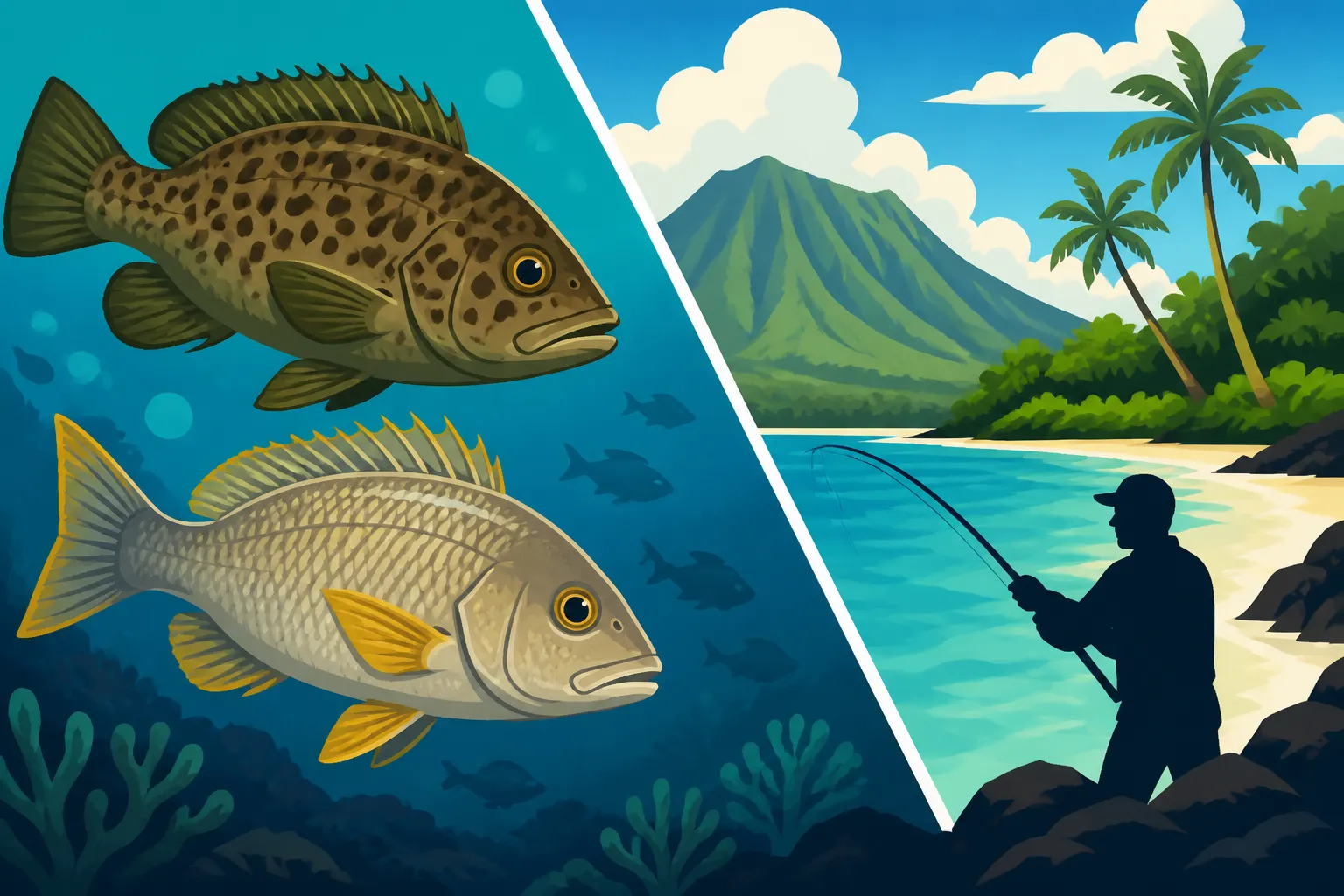
Let's get acquainted with our two main characters. First, we have the taape, scientifically known as Lutjanus kasmira. You might also hear them called the bluestripe snapper. These fish are easily recognizable by their distinctive bright yellow bodies adorned with four prominent blue stripes running horizontally from head to tail. They tend to be medium-sized, often reaching lengths of 10 to 14 inches, though larger specimens are certainly caught. Taape are schooling fish, often found in large aggregations, which makes their impact on local food resources even more significant. They are voracious feeders, readily taking a variety of baits.
Then there's the roi, or Cephalopholis argus, commonly known as the bluespotted grouper or peacock grouper. The roi is a bottom-dwelling predator with a mottled brown and olive body covered in numerous small, iridescent blue spots, each often ringed in black. Their coloration provides excellent camouflage against coral and rocky substrates. Roi are solitary and stealthy hunters, capable of growing much larger than taape, sometimes exceeding two feet in length and weighing several pounds. They are ambush predators, lying in wait for unsuspecting prey, and their predatory nature makes them a particular concern for native reef fish populations.
Their Unintended Arrival in Hawaiian Waters
The story of how taape and roi came to Hawaii is a classic example of unintended consequences. Both species were introduced to Hawaiian waters in the 1950s and 1960s by the state's Division of Fish and Game (now part of the Department of Land and Natural Resources, or DLNR). The goal at the time was noble: to enhance Hawaii's recreational and commercial fisheries by introducing new food fish species that could thrive in local waters. The taape, native to the Indo-Pacific, and the roi, also from the Indo-Pacific region, were chosen for their perceived hardiness and edibility.
Unfortunately, what seemed like a good idea on paper quickly turned into an ecological dilemma. These species, without their natural predators or environmental checks and balances, flourished far beyond expectations. They adapted remarkably well to Hawaii's reef environments, reproduced prolifically, and began to establish dominant populations. The full extent of their ecological impact wasn't immediately apparent, but over the decades, it became clear that these introductions were having a detrimental effect on Hawaii's unique and often fragile native marine life. It's a sobering reminder that even with the best intentions, introducing non-native species can have long-lasting and complex consequences.
Why are Taape and Roi a Problem in Hawaii? Ecological Impact and Concerns
The presence of taape and roi isn't just a matter of having a few extra fish in the sea. Their unchecked proliferation has led to significant disruptions in Hawaii's delicate reef ecosystems, impacting everything from the availability of food for native species to the overall biodiversity of our nearshore waters. Understanding these impacts is crucial for appreciating why responsible angling for these species is so important.
Outcompeting Native Species for Food and Habitat
One of the most pressing issues with taape and roi is their competitive nature. Hawaii's native reef fish have evolved over millennia to fill specific ecological niches, and their populations are often naturally limited by available resources. When taape and roi moved in, they didn't just find an empty space; they moved into an already established community.
Taape, being schooling and opportunistic feeders, compete directly with native snappers, goatfish (like kumu and weke), and other reef fish for food resources such as small invertebrates, crustaceans, and smaller fish. Their sheer numbers mean they can quickly deplete food sources that native species rely on for survival and reproduction. Imagine a group of polite diners at a buffet suddenly being overwhelmed by a much larger, more aggressive crowd – that's often what happens on the reef.
Roi, on the other hand, are apex predators in many shallow reef environments. They prey heavily on smaller native reef fish, including species like papio (juvenile giant trevally), smaller wrasses, and surgeonfish. Many of these native species play vital roles in reef health, such as grazing algae, which helps corals thrive. A decline in these native prey species due to roi predation can have cascading effects throughout the food web. They also occupy prime habitat space, pushing out native predators or reducing their hunting success. This competition for both food and territory puts immense pressure on already vulnerable native fish populations, hindering their ability to sustain healthy numbers.
Disrupting the Delicate Balance of Reef Ecosystems
Beyond direct competition, taape and roi actively disrupt the intricate balance of Hawaii's reef ecosystems. Reefs are complex communities where every species plays a role, from algae grazers to primary predators. When a new, highly successful species is introduced, it can throw this entire system off kilter.
Consider the role of native grazers: parrotfish (uhu) and surgeonfish are critical for keeping algae growth in check, preventing it from overgrowing and smothering corals. If roi populations increase and prey heavily on these grazers, it can lead to an increase in algal cover, which in turn stresses corals and degrades the overall health of the reef. Similarly, taape's consumption of invertebrates can reduce food availability for native invertivores, affecting their numbers and potentially altering sediment dynamics on the reef. These invasive species essentially create a domino effect, where their presence at one level of the food chain impacts multiple other levels, leading to a less resilient and less biodiverse ecosystem. The long-term consequences can be a decline in reef health and a reduction in the populations of many beloved native fish, changing the very character of Hawaii's underwater world.
Potential Ciguatera Risk: A Health Concern for Anglers
For anglers, there's another critical concern associated with invasive fish like roi: the risk of ciguatera fish poisoning. While taape are generally considered safe to eat, roi are known carriers of ciguatera toxin, especially larger individuals. This toxin is naturally produced by certain microalgae (dinoflagellates) that grow on reef surfaces. Herbivorous fish consume these algae, and then carnivorous fish, like roi, accumulate the toxin as they eat the herbivorous fish. The toxin bioaccumulates up the food chain, meaning older, larger predatory fish typically have higher concentrations.
Ciguatera is a serious foodborne illness that can cause a range of debilitating symptoms in humans, including gastrointestinal issues (nausea, vomiting, diarrhea), neurological symptoms (numbness, tingling, temperature reversal, fatigue, muscle aches), and cardiovascular problems. Symptoms can be severe and long-lasting, sometimes for months or even years. What makes it particularly insidious is that the toxin does not alter the appearance, taste, or smell of the fish, nor is it destroyed by cooking. Because of this significant health risk, the Hawaii Department of Health strongly advises against consuming roi, particularly larger ones. Even if you're an experienced angler, exercising extreme caution or simply releasing roi back to the ocean after harvest (though the DLNR encourages harvest of invasives, for roi the ciguatera risk must be considered) is the safest approach to protect yourself and your family. For more on this, you might want to read Is Roi Safe to Eat in Hawaii?.
Where to Find and How to Identify Taape and Roi
Knowing where to look and what to look for is key when targeting any fish, and it's especially important for invasive species like taape and roi. Because they thrive in various Hawaiian reef environments, you'll likely encounter them across the islands. Being able to correctly identify them on sight ensures you're helping manage the right species.
Common Habitats: From Reefs to Harbors
Both taape and roi are highly adaptable, which is part of what makes them such successful invasive species. You'll generally find them in nearshore marine environments, from shallow reefs to deeper drop-offs, and even within harbor areas.
Taape are particularly fond of structured habitats. You'll often spot large schools of them around coral heads, rocky ledges, artificial reefs, and even piers and jetties. They are frequently found in shallower waters, from just a few feet deep down to about 60 feet. They tend to congregate around any structure that offers shelter and a food source. This means if you're Shore Fishing Techniques for Hawaii around a rocky point on Oahu, casting into a small bay on Maui, or even fishing near a harbor entrance on the Big Island, you're likely to encounter taape. They are opportunistic and will explore new territories, sometimes appearing in areas where they weren't previously dominant. Look for them hovering over the reef, often in fairly active schools, readily visible in clear Hawaiian waters.
Roi, on the other hand, prefer more solitary and territorial living. They are ambush predators and will hide amongst the nooks and crannies of rocky reefs, inside small caves, or under ledges. While they can be found in relatively shallow water (down to around 10-15 feet), they are often more common in slightly deeper reef environments, say 20-80 feet, especially where there are plenty of hiding spots. They are less likely to be found in open, sandy areas. If you're Bottomfishing in Hawaii around complex reef structures or near the edges of a drop-off, particularly with spear-fishing gear, you stand a good chance of encountering roi. They are masters of camouflage, blending seamlessly with their surroundings, so a keen eye is necessary. Dive tours often spot them tucked away in their rocky lairs, patiently waiting for prey.
Spotting the Differences: Identification Tips
Correctly identifying taape and roi is straightforward once you know what to look for, but it's crucial to avoid misidentification with native species.
For taape (Bluestripe Snapper), the key identifiers are:
- Coloration: Bright yellow body with four distinct, vivid blue horizontal stripes running from head to tail. These stripes are usually unbroken and quite prominent.
- Shape: Typically elongated, snapper-like body, with a pointed snout and slightly forked tail.
- Eyes: Moderately large eyes, often with a hint of red or yellow.
- Behavior: Often seen in schools, actively swimming and foraging.
- Size: Generally smaller to medium-sized, rarely exceeding 16-18 inches.
You might confuse them with some native goatfish species that also have yellow bodies, but the distinct blue stripes are the giveaway for taape. Native yellow goatfish, like the weke or kumu, will have different stripe patterns or facial markings and lack those vibrant blue lines.
For roi (Bluespotted Grouper), look for these features:
- Coloration: Mottled brown, olive, or greenish-brown body covered in numerous small, iridescent blue spots. Each spot often has a darker ring around it, giving it a 'peacock' feather appearance. The intensity of spots can vary.
- Shape: Stocky, robust body typical of groupers, with a large mouth and broad head. Their dorsal fin is continuous.
- Eyes: Large, dark eyes.
- Behavior: Solitary and cryptic. They tend to stay close to structure, often motionless, waiting to ambush prey. They are not schooling fish.
- Size: Can grow significantly larger than taape, easily reaching over two feet in length.
A common misidentification for roi could be with some native rockfish or certain wrasses if you're not paying close attention to the overall body shape and the characteristic blue spotting. However, the grouper body shape and unique spot pattern are usually unmistakable. Referencing a good Reef Fish Species Identification Guide for Hawaii can be incredibly helpful when you're first learning to tell the difference.
Here’s a quick comparison table to help:
| Feature | Bluestripe Snapper (Taape) | Bluespotted Grouper (Roi) |
|---|---|---|
| Common Name | Taape, Bluestripe Snapper | Roi, Bluespotted Grouper, Peacock Grouper |
| Scientific Name | Lutjanus kasmira | Cephalopholis argus |
| Appearance | Bright yellow body, 4 prominent blue stripes | Mottled brown/olive, iridescent blue spots |
| Body Shape | Elongated, snapper-like | Stocky, robust, grouper-like, large mouth |
| Size | Typically 10-18 inches | Can exceed 2 feet |
| Habitat | Schooling around reefs, rocks, piers, harbors | Solitary, hiding in reef crevices, caves, ledges |
| Behavior | Active, schooling, opportunistic feeder | Stealthy ambush predator |
| Ciguatera Risk | Generally low/none | High, especially for larger individuals |
Fishing Techniques and Gear for Taape and Roi
Fishing for taape and roi isn't just about catching dinner; it's about actively participating in the management of Hawaii's marine ecosystems. Because they are invasive, there are no bag or size limits on these species, and anglers are encouraged to harvest them. The good news is, both are quite catchable, though they require slightly different approaches due to their distinct behaviors.
Targeting Taape: Baits, Rigs, and Strategies
Taape are notoriously opportunistic and relatively easy to catch, which is part of why they've been so successful at proliferating. They're often referred to as "trash fish" by some, but for responsible anglers, they represent an important target for invasive species removal.
Baits: Taape are not picky eaters. Almost any natural bait will work, making them a great target for beginners or those just looking to bend a rod. Popular choices include:
- Squid: Cut squid strips are incredibly effective and widely available. Their scent and durability make them a go-to.
- Shrimp: Fresh or frozen shrimp, cut into pieces, are also excellent.
- Small pieces of fish: Any small chunk of fish, particularly oily ones like aku (skipjack tuna) or opelu (mackerel scad), can be irresistible.
- Opihi: If you can legally gather opihi, their soft meat is a taape favorite.
- Limu (seaweed): Believe it or not, taape will sometimes hit small pieces of limu, especially green limu.
Rigs: A simple bottom fishing rig is all you need for taape.
- Basic Sinker Rig: A small hook (size 4 to 1/0, depending on bait size) tied directly to your leader, with a small weight (1/4 to 1/2 ounce) about 12-18 inches above the hook. This allows your bait to sit naturally on the bottom or drift just above it.
- Dropper Loop Rig: For multiple baits, a two-hook dropper loop rig can be very effective, allowing you to present two baits at different depths.
- Bobber or Float Rig: If taape are schooling higher in the water column, a small bobber or float can suspend your bait at the desired depth.
Strategies: Taape love structure. Cast your bait near coral heads, rocky ledges, or around pilings. Once your bait hits the bottom, give it a few gentle twitches to attract attention. Because they often school, if you catch one taape, chances are there are many more in the vicinity. Chumming with small bits of bait (like ground squid or stale bread) can draw schools closer to your fishing spot, making them even easier to catch. You'll feel a rapid succession of taps or a steady pull when they bite. There are no Hawaii Bag and Size Limits by Species for taape, so keep as many as you'd like.
Targeting Roi: Methods for this Stealthy Predator
Roi are a bit more challenging than taape due to their solitary and ambush-predator nature, but they are equally important to remove from the ecosystem. Since they often hide in rocky crevices, direct approaches are sometimes necessary.
Baits: Roi are primarily piscivores (fish-eaters), so live or cut baitfish are your best bet.
- Live Bait: Small live fish, such as juvenile akule, opelu, or even taape, are highly effective. A lively baitfish struggling near their hiding spot is often too tempting to resist.
- Cut Bait: Chunks of fresh, oily fish like mackerel, skipjack tuna, or even pieces of taape can also work. The scent trail is key.
- Squid: While not their primary food, a large piece of squid presented properly might entice a strike, especially if it looks like a struggling creature.
Rigs: A sturdy rig is essential, as roi will quickly try to dive back into structure once hooked.
- Heavy Duty Bottom Rig: Use a strong leader (40-60 lb fluorocarbon or monofilament) to prevent abrasion on rocks. A single, strong circle hook (3/0 to 6/0) is preferred, snelled directly to the leader, with a heavy sinker (1-3 ounces, depending on current) above a swivel.
- Live Bait Rig: A basic live bait rig with a single hook through the nose or back of a baitfish, allowing it to swim naturally, is ideal. No weight might be needed if the baitfish can swim freely towards structure.
Strategies: Roi are masters of ambush. You need to get your bait close to their hiding spots.
- Drifting/Jigging: If fishing from a boat, drift baits or jigs near rocky outcrops, ledges, or underwater caves. Let your bait or jig descend to the bottom and work it slowly, mimicking a wounded fish.
- Spearfishing: This is arguably the most effective way to harvest roi, especially larger ones. Their tendency to hold still in their lairs makes them a prime target for freedivers or SCUBA divers (though remember Hawaii SCUBA Spearfishing Ban rules for certain species and areas).
- Structure Fishing: Cast or drop your bait as close as possible to visible reef structures, rock piles, or artificial reefs. Be patient, as a roi might take time to decide to strike. When you get a bite, set the hook firmly and try to pull the fish away from the structure quickly to prevent it from "holing up" and breaking your line.
Remember, for both species, you're not just fishing; you're actively helping to restore the balance of Hawaii's reefs. It's an important conservation effort that directly benefits native marine life.
Recommended Gear: What Works Best
Having the right gear makes all the difference, whether you're targeting taape from shore or venturing offshore for roi. You don't need highly specialized equipment, but durability and strength are key for fishing Hawaii's often rugged environments and for dealing with these tenacious invasives. Many of these items are readily available on platforms like Amazon.
For Taape:
- Rod: A medium-light to medium action spinning rod, 7 to 9 feet in length, is ideal for shore casting or pier fishing. This provides enough backbone to fight a schooling fish but is sensitive enough to detect their often subtle bites.
- Reel: A reliable spinning reel in the 3000-4000 size range, capable of holding 150-200 yards of line. Look for models that are somewhat corrosion-resistant.
- Line: 10-20 lb monofilament or braided line. Braided line offers superior sensitivity and casting distance, which can be a huge advantage for detecting soft bites and reaching distant structures. If using braid, a fluorocarbon leader (15-25 lb test) of 2-3 feet is recommended for abrasion resistance and stealth.
- Hooks: Small J-hooks or circle hooks in sizes #4 to 1/0. Circle hooks are great for preventing gut-hooking if you plan to practice catch and release for other species while targeting taape.
- Sinkers: Small egg sinkers, split shots, or pyramid sinkers in 1/4 to 1/2 ounce range.
For Roi:
- Rod: A medium-heavy to heavy action spinning or conventional rod, 6 to 7 feet long. This robust rod is necessary to muscle a hooked roi away from reef structure before it can cut your line.
- Reel: A robust spinning reel (5000-8000 size) or a conventional reel with a strong drag system and high line capacity (200-300 yards). Look for saltwater-specific models for durability. Many reputable brands offer excellent options through retailers like Amazon.
- Line: 30-50 lb braided line is highly recommended for its strength, sensitivity, and lack of stretch, which helps with quick hook sets. Pair this with a heavy-duty fluorocarbon leader (40-80 lb test) of 3-5 feet for maximum abrasion resistance against sharp coral and lava rock.
- Hooks: Strong, sharp circle hooks in sizes 3/0 to 6/0. J-hooks can also be used, but circle hooks reduce gut-hooking, which is generally good practice even for invasives.
- Sinkers: Heavy egg sinkers, bank sinkers, or pyramid sinkers, 1 to 4 ounces depending on depth and current. You might need to experiment to find what gets your bait to the bottom effectively without getting swept away.
General Accessories:
- Pliers/Forceps: Essential for hook removal, especially from toothy fish or deep-set hooks.
- Net or Gaff: A sturdy net or a small gaff can assist in landing larger roi, keeping your hands away from their sharp fins.
- Cooler with Ice: Absolutely necessary if you plan to keep your catch, especially in Hawaii's warm climate.
- Sun Protection: Hat, sunglasses, long-sleeved shirts, and reef-safe sunscreen are a must for long days on the water.
- Gloves: Can protect your hands from fish spines and line cuts.
By equipping yourself properly and understanding the distinct behaviors of taape and roi, you can make your fishing efforts more successful and impactful in supporting Hawaii's marine conservation goals.
Regulations and Responsible Practices for Invasive Species
Angling for invasive species like taape and roi is more than just a recreational activity; it's an act of environmental stewardship. Because of their detrimental impact on native ecosystems, specific regulations and responsible practices are in place to encourage their removal and prevent further harm. It’s vital for every angler to understand and adhere to these guidelines.
DLNR Stance on Invasive Species
The Hawaii Department of Land and Natural Resources (DLNR), specifically the Division of Aquatic Resources (DAR), actively encourages the harvest of established invasive species like taape and roi. Unlike native fish, where strict Hawaii Bag and Size Limits by Species and seasons are often in place to ensure sustainability, these invaders have no such protections. In fact, their removal is seen as a beneficial action for the overall health of Hawaii’s reefs.
This stance means:
- No Bag or Size Limits: Anglers can legally catch and keep as many taape and roi as they wish, regardless of their size. This is a clear directive to reduce their populations.
- No Closed Seasons: There are no specific times of the year when fishing for taape or roi is prohibited. They can be targeted year-round.
- Encouraged Harvest: The DLNR views every taape and roi removed from the ecosystem as a positive step towards restoring balance. This is a unique opportunity for anglers to contribute directly to conservation efforts.
However, it's critical to remember that while the harvest is encouraged, introduction or release of any non-native species (including these) into new waters is strictly prohibited and can carry severe penalties. This helps prevent similar ecological disasters from happening again. Always double-check current regulations, as rules can occasionally change. The official Hawaii DLNR website is the best source for the most up-to-date information, and you can always refer to our guide Reading the Hawaii DLNR Fishing Regulations.
Is it Safe and Legal to Eat Taape and Roi?
This is where things get a bit nuanced, particularly with roi.
Taape (Bluestripe Snapper):
Generally, taape are considered a good eating fish and are safe to consume. Their flesh is white, flaky, and has a mild flavor, similar to other snappers. They can be fried, baked, or steamed. While some people may find them bony due to their smaller size, they are a common catch for local consumption. There are no known widespread ciguatera concerns with taape in Hawaii, although it’s always prudent to be aware that any reef fish could theoretically carry toxins, especially in certain areas. For the most part, enjoy your taape!
Roi (Bluespotted Grouper):
This is where significant caution is advised. As discussed earlier, roi are known carriers of ciguatera toxin, especially larger individuals. The Hawaii Department of Health strongly advises against eating roi due to this risk. While some very small roi might not carry enough toxin to cause symptoms, there's no way for an angler to visually detect the toxin. It doesn't alter the fish's appearance, smell, or taste, and it's not destroyed by cooking.
Given the potential for severe and long-lasting illness from ciguatera poisoning, the safest and most responsible practice for roi is to harvest and dispose of them, rather than consume them. This means you are still contributing to the ecological management by removing them from the reef, but you are protecting yourself and others from a serious health risk. If you choose to remove roi from the water, be sure to dispose of them properly, not back into the ocean, and not in a way that could attract scavengers or spread the problem. Always remember, the goal for roi is removal, not necessarily consumption. Our article Are Roi Safe to Eat in Hawaii? delves deeper into this topic.
Preventing Further Spread and Impact
Beyond directly fishing for taape and roi, responsible anglers play a crucial role in preventing the spread of all invasive species and mitigating their impact. This involves adopting a few key practices:
- Never Release Non-Native Species: This cannot be stressed enough. Whether it's baitfish you brought from another location, aquarium pets, or even live taape you've caught in one area and thought about releasing in another, never introduce or release any non-native species into Hawaiian waters. Even if a species seems harmless, its introduction can have unforeseen and devastating consequences for native ecosystems. The Hawaii DLNR strictly prohibits this practice.
- Clean Your Gear Thoroughly: If you're moving between different fishing locations, especially between freshwater and saltwater, or even different islands, ensure your fishing gear, boats, and waders are completely clean and free of any plant matter, mud, or small aquatic organisms. Invasive hitchhikers can easily be transported this way. This is particularly important for those engaging in Hawaii Freshwater Fishing License and Rules and then moving to the ocean.
- Educate Yourself and Others: Share your knowledge with fellow anglers, friends, and family. The more people who understand the problem of invasive species and how to address it, the more effective our collective conservation efforts will be. Understanding Hawaii Fishing Regulations Explained broadly contributes to better stewardship.
- Support Local Initiatives: Look for local community efforts or DLNR programs aimed at invasive species removal. Sometimes there are organized fishing derbies or volunteer days focused on these efforts. Your participation, even as an individual angler, is a significant contribution.
- Report Unusual Sightings: If you encounter a fish species you don't recognize, especially one that seems out of place or is found in an area it's not typically seen, report it to the DLNR. Early detection of new invasive species can make a huge difference in controlling their spread.
By embracing these responsible practices, every angler becomes a valuable partner in protecting Hawaii’s unique and irreplaceable marine environments.
The Importance of Responsible Angling for Hawaii's Future
When we talk about fishing in Hawaii, it's rarely just about the catch itself. It's deeply intertwined with the health of our ocean, the traditions of our people, and the legacy we leave for future generations. For invasive species like taape and roi, responsible angling takes on a dual role: not only providing recreation but also serving as a direct form of ecological stewardship.
Contributing to Reef Health Through Harvest
Every taape or roi you successfully catch and remove from Hawaii's waters is a small victory for the native ecosystem. Think of it this way:
- Reduced Competition: Each taape removed means one less mouth competing with native fish for limited food resources. This can allow native populations to thrive, grow larger, and reproduce more successfully.
- Less Predation: Each roi removed means one less efficient predator targeting our precious native reef fish, giving species like juvenile papio, surgeonfish, and parrotfish a better chance to survive and contribute to the reef's health.
- Ecological Relief: By thinning the ranks of these invasives, you're helping to alleviate pressure on the entire food web, potentially allowing native species to reclaim their traditional niches and helping to restore the natural balance that has been disrupted.
This isn't about eradicating every single taape or roi – that's likely an impossible task given their established populations. Instead, it's about active management and population control. Anglers are on the front lines, providing a consistent, widespread effort that supplements larger scientific programs. It's a tangible way to make a difference with your hook and line, turning a day of fishing into an act of conservation. Consider joining a Best Bottomfishing Charters in Hawaii that specifically targets these invasive species, often under the guidance of knowledgeable local captains.
Community Effort in Managing Invasives
The challenge of invasive species is too big for any single agency or group to tackle alone. It requires a concerted community effort, and local anglers are absolutely central to this.
- Knowledge Sharing: Experienced local anglers often have invaluable knowledge about where these fish congregate, what baits they prefer, and the most effective techniques. Sharing this information openly helps new anglers and visitors become more effective at targeting invasives.
- Collective Impact: When hundreds, or even thousands, of anglers across the islands are consistently removing taape and roi, the cumulative effect can be significant. It's a grassroots conservation movement powered by the passion of those who love Hawaii's ocean.
- Setting an Example: When you responsibly fish for invasives, properly dispose of roi (if not consumed), and adhere to all fishing regulations, you set a positive example for others. This helps foster a culture of responsible fishing and environmental awareness within the broader community.
- Local Economy: While the primary goal is ecological, responsible harvest of taape also supports local food systems and reduces reliance on native fish stocks. Some smaller local restaurants might even feature taape on their menus, highlighting a sustainable invasive species option.
This collaborative spirit is what makes Hawaii's fishing community so special. Whether you're a lifelong resident or a visitor enjoying a day on the water, your efforts in managing invasive taape and roi contribute directly to the health and sustainability of Hawaii's unique marine environment for generations to come. It’s about being a kahu (guardian) of the ocean, one fish at a time. The more people that understand the implications of fishing in Hawaii, the better off our waters will be. Guides like Do You Need a Fishing License in Hawaii and Hawaii Fishing License Age Requirements are important stepping stones for any angler looking to contribute.
Disclaimer
This article is for general informational purposes only and does not constitute professional advice. Laws, prices and regulations vary by location and change over time. Consult a qualified professional for guidance on your specific situation.