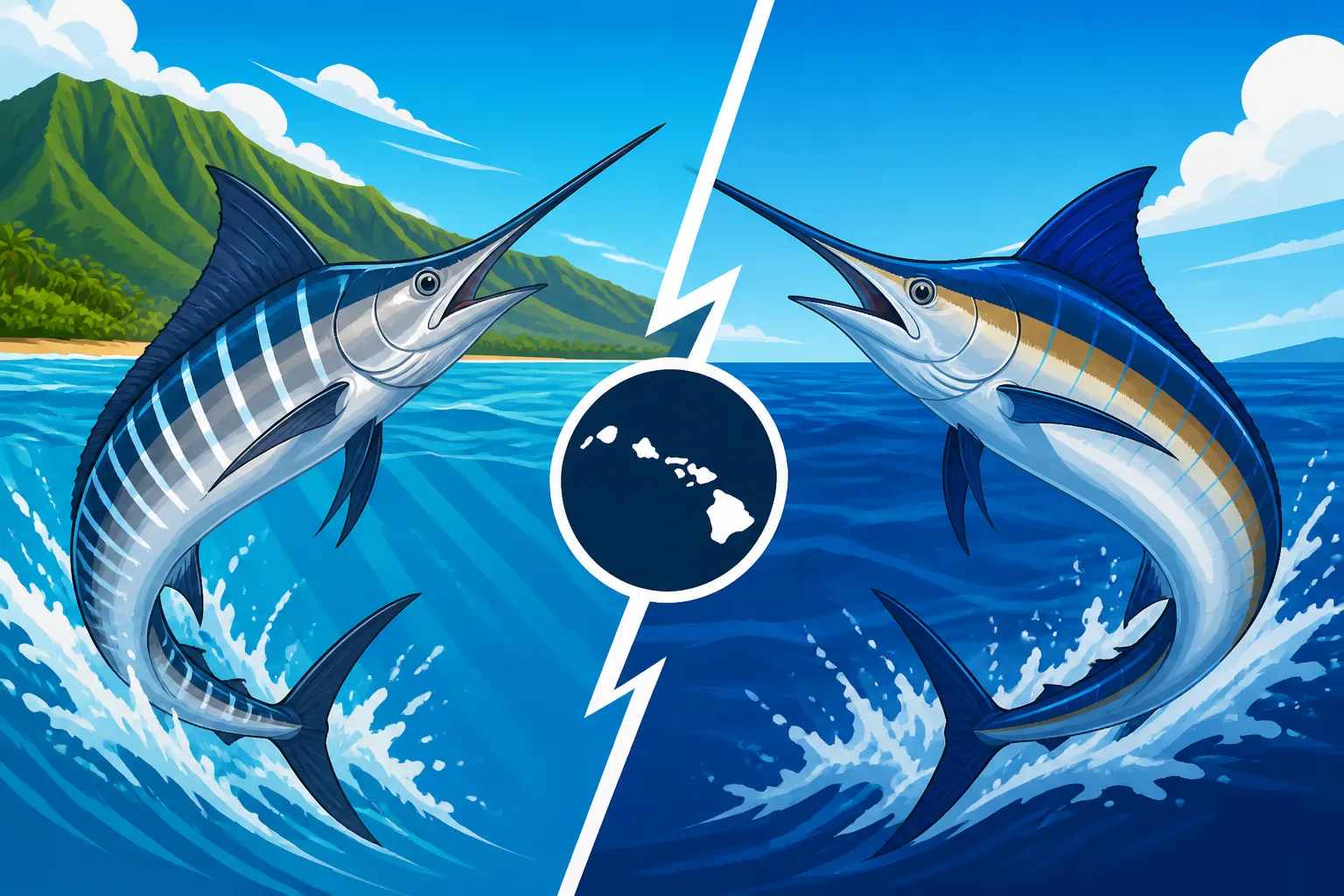
What striped marlin look like compared to blue marlin
It’s a common scenario out on the deep blue waters of Hawaii: you hook into a powerful billfish, and your heart starts pounding. Is it a blue marlin, a true giant of the ocean, or a spirited striped marlin, known for its incredible acrobatics? Distinguishing between these two magnificent species can be surprisingly tricky, especially when they're battling at the end of your line. This guide will help you understand the key differences in appearance, behavior, and where you're most likely to encounter each, so you can confidently identify your next Hawaiian marlin catch.
Telling the Difference: Key Physical Characteristics
When you're out on the water, especially in the excitement of a fight, it can be tough to pinpoint the exact species of marlin. However, blue marlin and striped marlin, while both incredible gamefish, have distinct physical characteristics that set them apart. Knowing these identifiers can help you appreciate your catch more and ensure you're following any specific regulations that might apply. It's not just about bragging rights; it's about truly understanding the fish you're engaging with.
Dorsal Fin and Pectoral Fin Features
One of the quickest ways to differentiate a blue marlin from a striped marlin lies in examining their fins. Pay close attention to the dorsal fin, which runs along their back, and their pectoral fins, located just behind the gills. These are not subtle differences once you know what to look for, and they provide reliable identification cues. Even if the fish is still in the water, a quick glance at these areas can often tell you what you're dealing with.
A blue marlin, particularly a larger one, will have a relatively low dorsal fin, especially compared to its body depth. More importantly, this fin, along with its pectoral fins, is rigid and cannot be folded completely flat against the body without breaking. Imagine trying to fold a stiff piece of cardboard; it's just not going to lay flat. This rigidity is a defining characteristic. The pectoral fins themselves are broad and somewhat stubby, looking quite powerful and designed for long-distance cruising. When you see a fish with these characteristics, especially if it's a behemoth, you're likely looking at a blue.
In contrast, a striped marlin possesses a much taller, more pointed dorsal fin. It looks almost sail-like, especially when fully extended. Crucially, both the dorsal and pectoral fins of a striped marlin are flexible and can be folded almost entirely flat into grooves along its body. This aerodynamic feature likely aids in their incredible bursts of speed and agility. Their pectoral fins are also noticeably longer and more slender than those of a blue marlin, tapering to a point. This ability to "tuck away" their fins is a dead giveaway for a striped marlin, often making them appear sleeker in the water.
Body Shape, Coloration, and Striping
Beyond the fins, the overall body shape, general coloration, and the presence or absence of distinctive markings are vital clues. These features are often what give the fish their common names and are visible from a distance or even as the fish jumps clear of the water during a fight. Observing these traits is part of the thrill of big-game fishing in Hawaii.
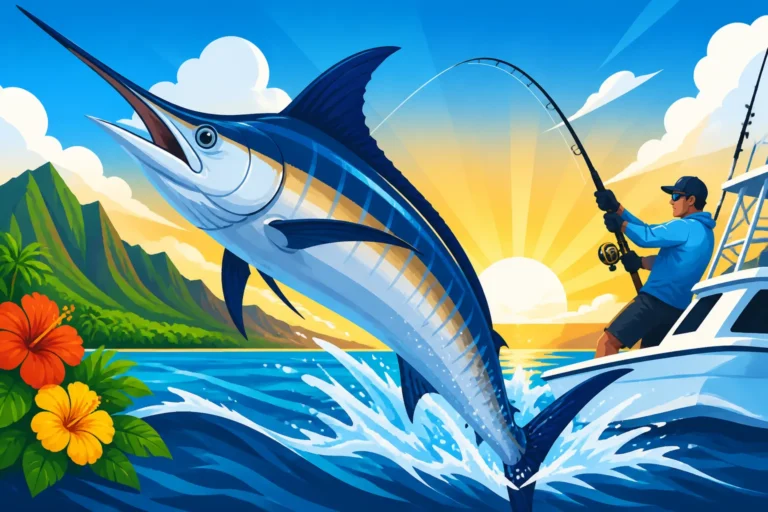
Blue marlin are built like absolute tanks. They have a massive, robust, and heavily muscled body that tapers significantly towards the tail. Their coloration is typically a deep, iridescent cobalt blue on their back, fading into a silvery-white belly. They usually lack any prominent vertical stripes on their sides, although some smaller or stressed individuals might show faint, temporary bars. When you see that deep blue back and immense power, think "blue marlin." They are designed for brute strength and enduring long, hard fights in the open ocean. You can find robust fishing gear suitable for these powerful fish on Amazon, from heavy-duty reels to strong leader material.
Striped marlin, on the other hand, are much more slender and compressed laterally, meaning they are flatter from side to side than a blue marlin. While still powerful, their body shape is built for speed and quick turns. Their back is typically a lighter, more purplish-blue or blackish-blue, often with a bronze or brown tint. Their most distinguishing feature, and the origin of their name, is the presence of 15 to 20 iridescent, light blue or lavender vertical stripes or bars running down their sides. These stripes are often quite vivid and can glow intensely when the fish is excited or actively feeding. These visual cues are unmistakable once you've seen them clearly.
Size and Weight Expectations
Perhaps the most dramatic difference between these two marlin species is their potential size. While both can grow to impressive dimensions, there is a clear distinction in their maximum growth potential, which often helps anglers identify them even before they're fully brought alongside the boat. The sheer scale of a blue marlin is a thing of legend in Hawaiian waters.
Blue marlin are the undisputed heavyweights of the billfish world, especially in the Pacific. They are the largest of the marlin species, with females growing significantly larger than males. A common blue marlin caught in Hawaii might range from a couple hundred pounds to well over 1,000 pounds, with the current world record hovering closer to 2,000 pounds. Landing a "grander" (a marlin weighing 1,000 pounds or more) is the ultimate dream for many anglers, and these are almost exclusively blue marlin. When discussing record-breaking fish, you'll often hear about Marlin Growth Rate to Grander Size as a topic of fascination. Their immense size dictates the heavy tackle required, which dedicated anglers often source from reputable retailers like Amazon.
Striped marlin are considerably smaller than blue marlin. While they are still formidable gamefish and excellent fighters, they rarely exceed 300 pounds. A typical striped marlin in Hawaii might weigh anywhere from 50 to 150 pounds. A striped marlin of 200 pounds is considered a very large specimen. Don't let their smaller size fool you, though; they are renowned for their incredible aerial displays and blistering runs, making them a thrilling catch on lighter tackle. If you hook into a fish that's jumping like crazy and isn't quite the size of a Volkswagen, chances are it's a striped marlin. For accurate identification, you can refer to a comprehensive Pelagic Species Identification Guide for Hawaii.
Here's a quick comparison table to help you keep these distinctions straight:
| Feature | Blue Marlin | Striped Marlin |
|---|---|---|
| Dorsal Fin | Relatively low, rigid, cannot fold flat | Taller, more pointed, flexible, folds into groove |
| Pectoral Fins | Broad, stubby, rigid, cannot fold flat | Longer, slender, flexible, folds into groove |
| Body Shape | Robust, massive, thick, round in cross-section | More slender, compressed laterally, sleek |
| Coloration | Deep iridescent cobalt blue back, silvery belly | Lighter purplish-blue/blackish-blue, bronze tint |
| Stripes | Generally absent (faint, temporary bars possible) | 15-20 distinct, iridescent vertical blue/lavender bars |
| Average Size | 200-800+ lbs (can exceed 1000 lbs) | 50-150 lbs (rarely exceeds 300 lbs) |
| Speed | Powerful, sustained runs | Blistering bursts, highly acrobatic |
Habitat and Behavioral Differences
Beyond their looks, blue and striped marlin also exhibit different preferences when it comes to their environment and how they behave in the vast Pacific. Understanding these distinctions can greatly influence your fishing strategy, helping you target the species you're most eager to encounter on your Hawaiian fishing adventure. It’s about knowing where to look and what to expect from each incredible fish.
Preferred Waters and Depths
The Hawaiian Islands are surrounded by immense depths, and while both marlin species are pelagic, meaning they live in the open ocean, they tend to favor slightly different areas of this vast blue expanse. This often comes down to water temperature, bait availability, and the characteristics of the ocean floor. Best Deep Sea Fishing Spots in Hawaii often highlights areas where these pelagics congregate.
Blue marlin are true denizens of the deep, warm, open ocean. They prefer warmer tropical and subtropical waters, typically staying offshore in depths where the water temperature is consistent. In Hawaii, this means they are often found around deeper drop-offs, underwater seamounts, and along the thermocline where baitfish aggregate. The Kona coast of the Big Island, for example, is world-famous for its blue marlin fishing precisely because the deep water is so accessible close to shore. You might find them cruising along current lines or near floating objects miles offshore. When you charter a boat for Marlin Fishing off the Kona Coast, your captain will likely head to these types of prime blue marlin territories.
Striped marlin, while still offshore dwellers, tend to prefer slightly cooler waters than blue marlin. They are often found closer to shore than their larger cousins, sometimes even within sight of the coastline, particularly where baitfish schools are abundant. They might patrol shallower banks, underwater ridges, or areas where upwellings bring nutrient-rich waters to the surface. While they are still open ocean fish, they might be found in areas that are not quite as far out as typical blue marlin grounds. This preference means that sometimes, anglers can target striped marlin on slightly shorter charter trips or in areas where the continental shelf drops off more gradually.
Feeding Habits and Prey Selection
Both marlin are apex predators, but their differing sizes, preferred habitats, and body structures lead to some variations in their hunting strategies and the types of prey they target. Understanding what's on their menu can help you choose the right baits and lures. After all, "matching the hatch" is a time-honored fishing principle.
Blue marlin are opportunistic and voracious feeders. Given their immense size and power, they'll tackle almost anything they can overpower. Their diet primarily consists of large pelagic fish like tuna (especially skipjack and yellowfin), mahimahi, ono (wahoo), and even smaller billfish or squid. They're also known to feed on larger baitfish schools. Their hunting strategy is often one of brute force and speed, smashing into schools of fish with their bill to stun prey before consuming them. Fishing for blue marlin often involves trolling large lures or rigged baits that mimic these substantial prey items.
Striped marlin, being smaller and more agile, tend to have a diet composed of smaller, schooling baitfish such as mackerel, sardines, anchovies, and squid. They are incredibly fast and use their sharp bills to slash through bait balls, circling back to pick off stunned or injured prey. Their movements are often more precise and acrobatic during a feed, contrasting with the blue marlin's more powerful, direct attacks. Because of their preference for smaller prey, anglers targeting striped marlin might use lighter tackle and smaller baits or lures. You might even find them rounding up baitfish schools with other predators, creating a feeding frenzy that's a sight to behold.
Fishing Techniques and Peak Seasons in Hawaii
Knowing the differences between blue and striped marlin extends beyond identification; it also heavily influences how and when you target them in Hawaii. The techniques, gear, and even the time of year can vary depending on which species you hope to encounter. Fishing in Hawaii is a blend of tradition and modern methods, and success often comes from tailoring your approach to the specific fish.
Lures, Baits, and Tackle Considerations
The choice of tackle, lures, and bait is paramount when targeting either of these magnificent billfish. You wouldn't use the same tools to cut down a small bush as you would a giant redwood, and the same principle applies to marlin fishing. The gear must match the potential power of the fish. If you're looking for a general overview, check out How to Catch Marlin off the Kona Coast.
For blue marlin, especially the giants that roam Hawaiian waters, heavy tackle is an absolute must. We're talking 80-pound class or even 130-pound class rods and reels. The lures are typically large, often 12 to 16 inches or more, designed to imitate large tuna or mahimahi. Colors can vary, but dark over light or brighter "skirted" lures are popular. Live baiting with large tunas or skipjack is also a highly effective method when targeting trophy blues. Everything from your leader material to your hooks needs to be top-tier, capable of withstanding immense pressure. You can easily find high-quality, heavy-duty fishing lines and terminal tackle suitable for blue marlin on Amazon, ensuring your setup is ready for battle.
Striped marlin, while still powerful, can be targeted with lighter tackle, typically in the 30 to 50-pound class range. This allows for a more sporting fight and better appreciation of their acrobatic displays. Lures for striped marlin are generally smaller than those for blues, often 6 to 10 inches, mimicking smaller baitfish. Trolling rigged natural baits like small dead skipjack, scad (opelu), or strip baits can also be incredibly effective. Given their preference for schooling baitfish, teasers that create a "bait ball" effect can also draw them in. You'll find a wide array of smaller, more colorful skirted lures and effective terminal tackle perfect for striped marlin on Amazon.
Peak Seasons and Locations for Each Species
While marlin can be caught year-round in Hawaii, there are definite peak seasons and specific locations where your chances of encountering one species over the other dramatically increase. Understanding these seasonal patterns is key for planning a successful fishing trip. Best Time of Year to Fish in Hawaii provides a broader perspective on optimal fishing conditions.
The blue marlin season in Hawaii is generally considered to be from late spring through late fall, roughly May to October. This is when the warmer waters bring in larger schools of their preferred prey like ahi (yellowfin tuna) and aku (skipjack tuna), and the big blues follow them. The Kona Coast of the Big Island is internationally renowned as a prime blue marlin hotspot, thanks to its calm waters and deep-water access very close to shore. Other islands, like Oahu and Maui, also produce blue marlin, but Kona is often considered the epicenter. If you're dreaming of a grander, these are the months and locations to focus on. When considering a charter, make sure to ask about the Best Fishing Charters in Hawaii during these peak seasons.
Striped marlin are more prevalent during the cooler months, typically from late fall through spring, roughly November to April. During this time, they often move closer to the islands, following baitfish schools. While they can be found around all the main Hawaiian Islands, areas off the west side of Maui, the south shores of Oahu, and around Kauai can be particularly productive. They are known for their schooling behavior, and it’s not uncommon to find multiple striped marlin in a concentrated area, especially when they are actively feeding on a bait ball. Their seasonal preference means that even outside the prime blue marlin season, there's still fantastic billfishing to be had in Hawaii.
Conservation and Responsible Angling Practices
As anglers, we have a vital role to play in the conservation of these incredible marine species. Both blue and striped marlin populations face various pressures, and practicing responsible angling ensures that future generations can also experience the thrill of encountering these magnificent fish. Understanding regulations and ethical practices is just as important as knowing how to catch them. All anglers should familiarize themselves with Hawaii Fishing Regulations Explained to stay informed.
Regulations and Catch Limits in Hawaii
Hawaii has specific regulations in place to manage its marine resources, and while billfish are often managed differently than reef fish, it's crucial to be aware of any applicable rules. These regulations are designed to maintain healthy fish populations and ensure sustainable fishing practices. Ignorance of the law is never an excuse, so doing your homework is essential.
For blue and striped marlin in Hawaii, recreational anglers typically do not have daily bag limits as strict as those for certain bottomfish or reef species. However, there are often minimum size requirements. For example, a blue marlin might have a minimum length requirement from the lower jaw to the fork of the tail. Striped marlin often have similar size limits. These measures are intended to allow fish to mature and reproduce before being harvested. While regulations can change, the general philosophy is to allow smaller fish to grow. Always check the latest Hawaii Division of Aquatic Resources (DAR) guidelines before heading out.
Additionally, some tournaments might have specific rules regarding catch and release for certain marlin sizes, or even encourage it for all billfish. The intent is to promote the conservation of these highly migratory species. While some anglers prefer to harvest their catch for consumption, many choose to release marlin, especially the smaller striped marlin, to fight another day. It's a personal choice, but one that should always be made within the bounds of current regulations and a strong sense of ethical angling.
Promoting Catch and Release for Marlin
Catch and release is a cornerstone of responsible big-game fishing, particularly for species like marlin. The goal is to maximize the fish's survival chances after the battle, allowing it to contribute to the population and provide sport for other anglers in the future. It's a practice that truly embodies respect for the ocean's resources.
When practicing catch and release for marlin, several techniques can significantly improve survival rates. First, try to minimize the fight time; long, drawn-out battles can exhaust the fish beyond recovery. Use appropriate tackle to bring the fish to the boat quickly but safely. Second, avoid removing the fish from the water if possible, especially for larger specimens. Unhooking it at the boat side, or cutting the leader as close to the hook as possible, is the best approach. Specialized de-hooking tools and release gloves, which you can easily find on Amazon, can make this process safer for both you and the fish.
Finally, if the fish appears lethargic, hold it alongside the boat with water flowing over its gills until it regains its strength and can swim away under its own power. Avoid touching the fish's eyes or gills, and handle it gently. The sight of a majestic marlin swimming strongly away after a tough fight is, for many, more rewarding than any trophy. It’s a powerful gesture of aloha for these incredible creatures of the Hawaiian seas.
Disclaimer
This article is for general informational purposes only and does not constitute professional advice. Laws, prices and regulations vary by location and change over time. Consult a qualified professional for guidance on your specific situation.