Best technique for fall trolling
As the days shorten and the trade winds occasionally shift, many anglers in Hawaii find that their go-to summer trolling techniques just aren't cutting it anymore. The frustration of endless pulls with no bites is real when the fish seem to vanish or change their habits. This comprehensive guide will dive deep into the best techniques for fall trolling in Hawaii, helping you adapt your approach to keep those lines tight and coolers full as the seasons change.
Understanding Fall Trolling Conditions in Hawaii
Fall in Hawaii isn't a dramatic swing from summer to winter, but it brings subtle yet significant changes to our ocean environment that every serious troller needs to understand. The weather can become a bit more unpredictable, and the fish, well, they certainly notice these shifts. Ignoring these environmental cues is like trying to catch a wave in a flat spell – you'll just be wasting your energy.
Shifting Baitfish Patterns
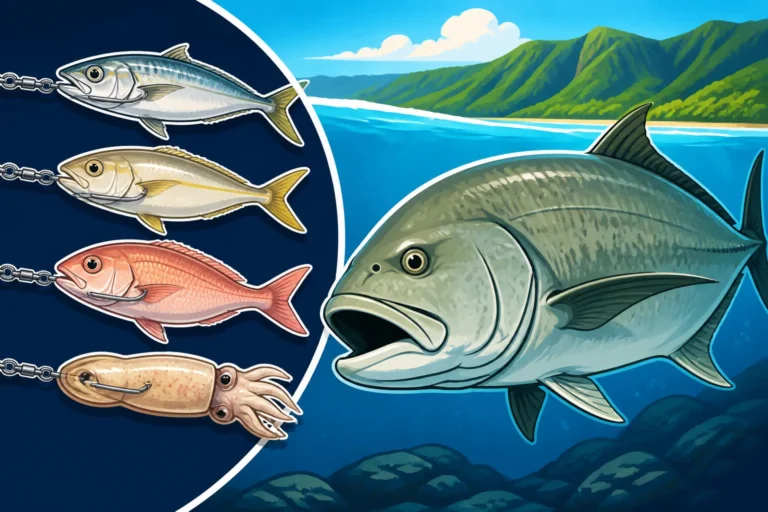
One of the biggest factors influencing successful fall trolling is the movement of baitfish. As water temperatures start their subtle decline from the peak summer warmth, and current patterns might alter, the massive schools of bait that were prevalent in certain areas during summer begin to disperse or move to new feeding grounds. This often means predatory pelagic species like ahi, mahimahi, and ono will follow their food source. You might find bait congregating closer to shorelines or around deeper structures, rather than spread out across vast open ocean expanses.
Imagine you've been consistently finding schools of opelu or akule off a particular point all summer. Come fall, those schools might have thinned out, moved further offshore, or even dispersed into smaller, less concentrated groups. This forces us as anglers to be more observant, constantly looking for signs of life. Sometimes, the bait might be deeper, requiring different lure presentations. Other times, they might be scattered, meaning the fish hunting them are also more spread out, making a consistent trolling pattern crucial. Understanding these shifts is key to anticipating where your target species will be hunting.
Water Temperature and Currents
While Hawaii doesn't experience the drastic temperature drops of temperate climates, fall often sees a slight cooling of surface waters, especially in deeper offshore areas. These subtle temperature gradients, even just a few degrees, can influence where pelagic species choose to feed or hold. Cooler water might push certain baitfish, and thus the predators, into different thermoclines or areas where the temperature remains more to their liking. Furthermore, fall can sometimes bring stronger or more variable currents, which are vital for successful trolling.
Stronger currents can concentrate bait and create rips or current lines where debris and bait accumulate, forming perfect ambush points for larger fish. Think about those distinct lines on the water where the color changes or you see floating seaweed; these are often highways for pelagic game fish. Conversely, unusual currents can scatter bait or push fish out of their usual haunts. Keeping an eye on ocean conditions, even before you leave the harbor, can give you a significant advantage. It's not just about the absolute temperature, but the change in temperature and how that interacts with the currents to create productive feeding zones.
Weather Variability
The fall season, particularly later in the fall, can introduce more unstable weather patterns to the Hawaiian Islands. While we're blessed with relatively consistent weather year-round, occasional cold fronts or stronger kona winds can roll through. These weather systems can stir up the ocean, change swell direction, and impact feeding behavior. A sudden drop in barometric pressure, for instance, can sometimes trigger a feeding frenzy, while prolonged rough seas might push fish deeper or further offshore.
You might wake up to calm seas, only to have a squall line move in by midday, bringing choppy conditions and strong gusts. This variability means you need to be prepared for anything. It can also influence your choice of trolling speeds, lure types, and even where you decide to fish. Rougher conditions might make it harder for fish to see certain lures, or they might prefer to feed deeper where the water is more settled. Conversely, a sudden change after a period of calm can sometimes ignite the bite. Always check the marine forecast, be flexible with your plans, and prioritize safety on the water.
Essential Gear and Rigging for Fall Trolling
Transitioning into fall trolling often means a slight adjustment to your tackle box and rigging strategy. What worked perfectly under the scorching summer sun might not be as effective when conditions become a bit more nuanced. Having the right gear, and knowing how to rig it for success, is paramount to converting those subtle fall bites into solid hook-ups. This isn't about buying all new expensive equipment, but rather being smart about your selections and how you present them.
Lure Selection for Fall
The baitfish that predatory species key in on can change in fall, and your lure selection should reflect that. Often, fish become a little more discerning. Instead of just throwing out any flash, you might need to think about specific profiles, colors, and actions that mimic the predominant bait in the area. For instance, if you're targeting ono that might be chasing smaller, faster baitfish, a slim, bullet-head lure in natural baitfish colors could be more effective than a large, chugging head. For mahimahi, which can be less picky but might be scattered, a skirted lure with some UV properties could help them find it.
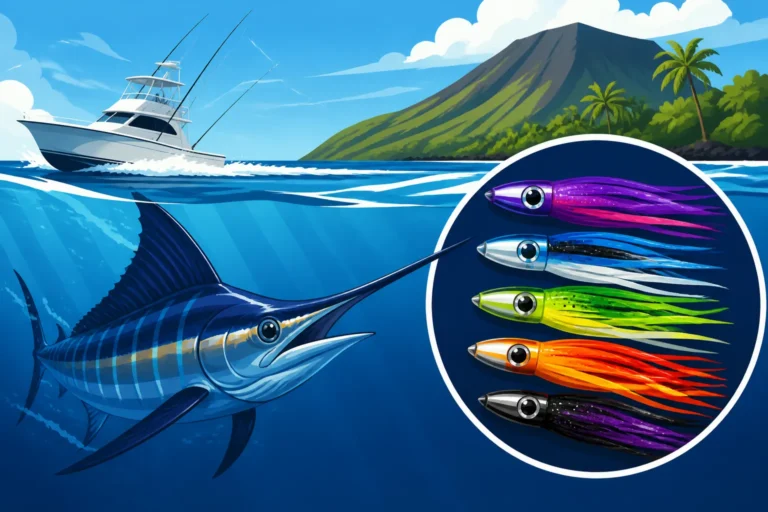
Consider integrating a mix of sizes and styles into your spread. Sometimes, a smaller lure might entice a wary fish, while a larger one could still draw an aggressive strike. Darker colors like purple, black, or blue often work well in clearer water or on overcast days, mimicking squid or deeper-water bait. Brighter colors like green, yellow, or pink can be effective in stained water or on bright, sunny days. Don't be afraid to experiment with lures that have a lot of flash or iridescent properties, as these can really grab attention. Many anglers find great success with a variety of proven trolling lures you can find from retailers like Amazon that offer both traditional and innovative designs.
Rod, Reel, and Line Setups
Your rod, reel, and line setup need to be robust enough to handle the powerful runs of pelagic species, but also sensitive enough to detect subtle strikes, especially when fish might be feeding a bit more cautiously. For general fall trolling, a medium-heavy to heavy conventional rod, often in the 50 to 80-pound class, paired with a matching conventional reel spooled with braided line and a monofilament top shot, is a solid choice. The braid offers incredible strength and sensitivity, while the mono top shot provides stretch and abrasion resistance.
The line class you choose often depends on your target species. If you're primarily targeting grander marlin, you'll obviously go heavier. But for a mix of ahi, ono, and mahimahi, a versatile 50 to 80-pound setup allows you to handle most encounters. For light tackle enthusiasts who might be focusing on smaller mahimahi or papio, a 30-pound setup can be incredibly exciting. Ensure your drags are smooth and properly set before you even leave the dock. A consistent drag prevents break-offs and ensures you can tire out a powerful fish effectively.
Terminal Tackle and Leader Choices
Terminal tackle is where the rubber meets the road, or rather, where your line meets the fish. For fall trolling, you'll want to ensure all your connections are strong and reliable. High-quality swivels, snap swivels, and crimps are non-negotiable. Using appropriate knot-tying techniques or crimping tools for your leader material is crucial. You don't want to lose a trophy fish due to a preventable tackle failure.
Leader material is especially important. Fluorocarbon leaders are often preferred for their low visibility in clear Hawaiian waters, which can be a huge advantage when fish are picky. The length and strength of your leader will depend on the species. For toothy critters like ono, a heavier monofilament leader (200-400 lb test) or even a short wire trace might be necessary to prevent bite-offs. For ahi and mahimahi, a 100-200 lb fluorocarbon leader provides both strength and stealth. Always check your leaders for nicks and abrasions after each fish or if you suspect a weak spot. Having a good selection of pre-rigged leaders can save valuable time when the bite is hot.
Top Trolling Techniques for Hawaii's Fall Season
Successful fall trolling in Hawaii demands a nuanced approach, blending traditional wisdom with a willingness to adapt. The fish aren't always in the same spots or behaving in the same ways they did in summer. Knowing which techniques to deploy for specific species, and when, will significantly boost your chances of a productive day on the water.
High-Speed Trolling for Ono (Wahoo)
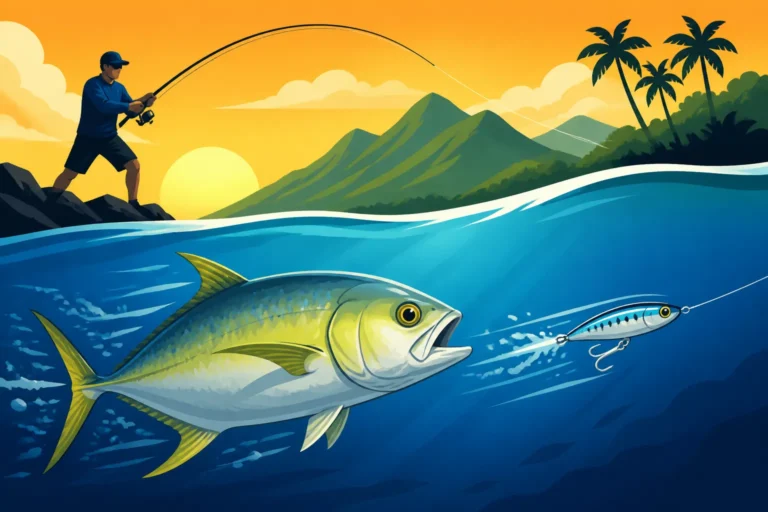
Fall can be an excellent time to target the notoriously fast and aggressive ono, often called wahoo. These fish are built for speed, and they often react well to lures presented at higher trolling speeds. When you're looking for ono, think about picking up the pace. Instead of a typical 6-8 knot trolling speed for other pelagics, you might bump it up to 9-15 knots. This faster presentation often triggers a reaction strike from ono that are chasing down fast-moving bait.
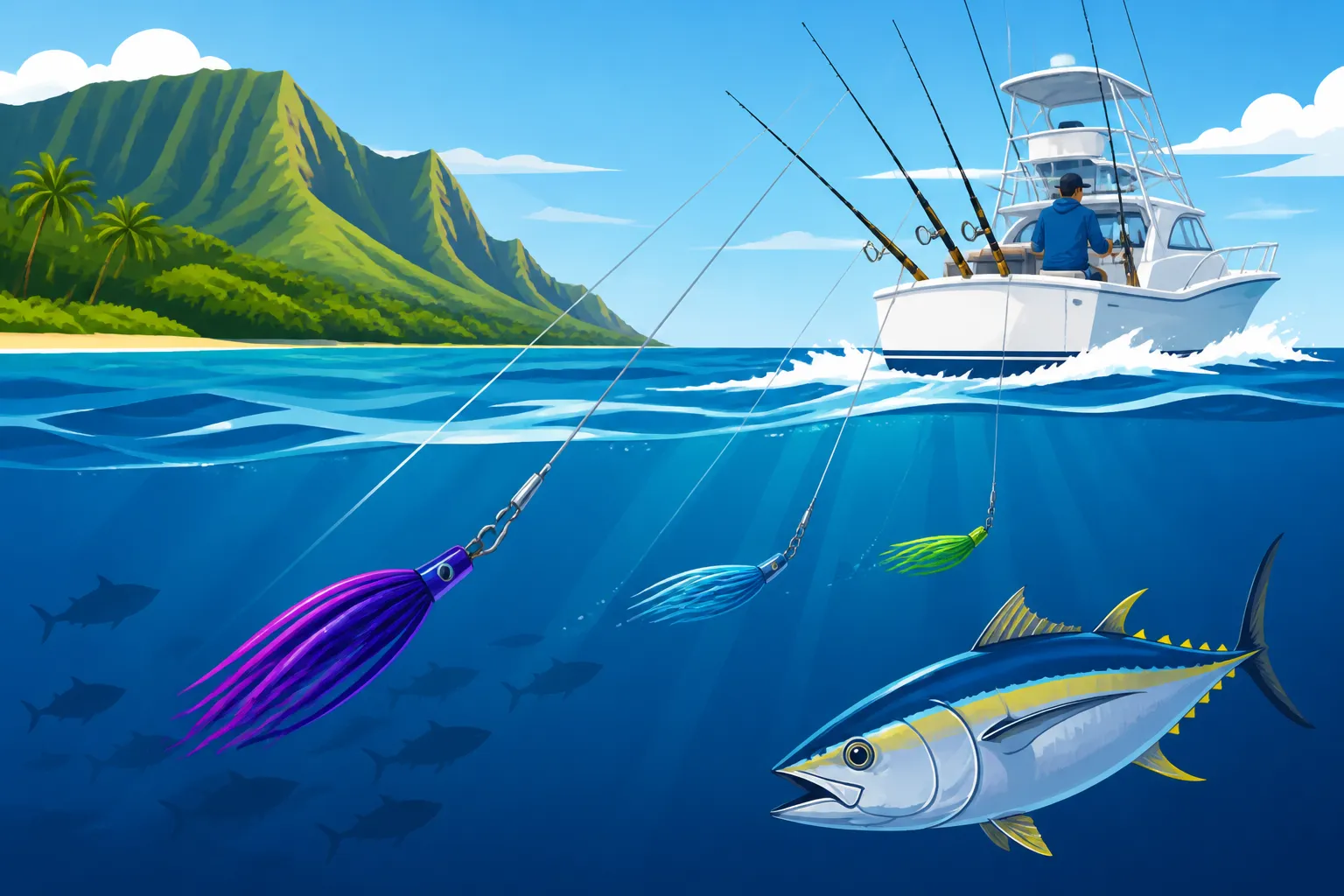
Your lure choice for high-speed ono trolling is key. Bullet-head lures, jet heads, and torpedo-style lures are excellent choices because they track straight and don't blow out of the water at high speeds. Bright colors like chartreuse, pink, and orange, often combined with black or purple, tend to be very effective. Set your lures further back in the spread, as ono tend to come from behind and slash at their prey. A good technique is to run a few lures far back, often called "shotgun" lures, to capitalize on their speed and aggression. Be sure your knots and crimps are impeccable, as an ono strike at high speed can be explosive and put immense pressure on your gear. To learn more about targeting these speedsters, check out our guide on How to Catch Ono in Hawaii.
Slower Trolling for Ahi (Yellowfin Tuna) and Mahimahi
While ono might prefer speed, ahi and mahimahi in the fall often respond better to a slightly slower, more deliberate troll. We're talking speeds in the 6-9 knot range, which allows your lures to swim naturally and present a tempting, easy meal. Ahi can be a bit more finicky, especially if they're keyed into a particular type of bait. Mahimahi, while aggressive, will often investigate a lure that's swimming erratically but not too fast for them to catch.
For ahi, dark-colored lures mimicking squid or skipjack are often productive, especially at dawn or dusk, or on overcast days. Green-and-yellow, or blue-and-silver patterns are also reliable. Lures that have a more lifelike swimming action, like chuggers or plungers, can be very effective in attracting ahi. For mahimahi, almost any bright, flashy lure can work, but skirted lures in pink, green, yellow, or combinations thereof are perennial favorites. Don't be afraid to pull some larger lures for mahimahi, as they are not shy. When you're trolling for these species, pay close attention to your sounder for bait schools and structure, and watch for diving birds, which are a dead giveaway for feeding activity. You can deepen your understanding of these target species by reading up on How to Catch Ahi in Hawaii and How to Catch Mahimahi in Hawaii.
Dredges and Teasers
Dredges and teasers are game-changers for fall trolling, particularly when fish might be more spread out or less actively feeding. These tools don't have hooks but are designed to create a massive bait ball illusion in your spread, drawing fish closer to your boat and, ultimately, to your hooked lures. Think of it as putting out a giant, irresistible buffet sign for passing predators.
A good dredge, whether it's a natural ballyhoo dredge or a synthetic mudflap or squirt chain dredge, creates a significant disturbance and visual appeal. You run these off your outriggers or special dredge booms, positioning them just below the surface so they appear as a dense school of baitfish. Teasers, which are typically smaller, individual lures or chains of squid, are run closer to the boat and often pop and splash, mimicking fleeing bait. The visual and audible commotion created by dredges and teasers can make a huge difference in raising fish from deeper water or attracting them from a distance. Many anglers purchase their dredges and teasers from popular online fishing stores like Amazon to have a wide array of options readily available. They can turn a slow day into a memorable one by bringing fish right into your lure spread.
Locating Fish in Fall and Adjusting Tactics
Finding fish in the fall often requires a bit more detective work than in the summer. The patterns can be less predictable, and relying solely on historical hotspots might leave you scratching your head. This is where keen observation, understanding ocean dynamics, and a willingness to adapt become your greatest assets.
Reading the Water: Bird Activity and Current Lines
One of the most reliable indicators of pelagic fish activity, especially in the fall, is birdlife. Frigatebirds, terns, and boobies diving or congregating over a specific area are almost always a sign of baitfish being pushed to the surface by predatory fish below. Learn to distinguish between birds just cruising and those actively working an area – the latter is what you're looking for. Follow the birds, but approach cautiously so you don't spook the school.
Beyond birds, look for current lines, weed lines, and temperature breaks. These are often convergence zones where different water masses meet, concentrating baitfish, debris, and marine life. A distinct color change in the water, a ripple line, or a visible band of floating seaweed can all be fish magnets. Trolling along these lines, zig-zagging back and forth, often puts your lures right in front of patrolling game fish. Even subtle differences in water temperature, which you can often see on your boat's electronics, can indicate productive zones. Always keep your eyes peeled for any unusual activity on the surface.
Targeting FADs and Structure
Fish Aggregating Devices (FADs) are man-made buoys strategically placed by the Hawaii Division of Aquatic Resources in deeper offshore waters. These FADs act as beacons, attracting baitfish and, consequently, the larger pelagic predators that feed on them. In fall, when bait might be more dispersed, FADs can become even more crucial as reliable focal points for fish activity. Often, the resident baitfish around a FAD will hold closer to the structure, so make sure to troll a wide pattern around the FAD first, then gradually tighten your circles, and even make a few passes directly over or very close to it.
Beyond FADs, don't forget about natural underwater structure. Seamounts, ledges, and deep-water pinnacles can hold bait and game fish year-round. While you might not be able to troll directly over the most rugged spots, trolling along the edges or "shoulders" of these structures can be highly effective. The change in depth or current created by these features creates upwellings and eddies that concentrate food. Consult detailed bathymetric charts to identify these underwater features before your trip. For more information on where these hotspots might be, explore our article on the Best Deep Sea Fishing Spots in Hawaii.
Adapting to Changing Conditions
The most critical skill for successful fall trolling is adaptability. The ocean is dynamic, and what worked an hour ago might not work now. If you're not getting bites, don't just keep doing the same thing. Change your trolling speed – speed up, slow down. Change your lure spread – swap out colors, sizes, or types of lures. Try adjusting your lure placement in the spread. If you're running all chuggers, try adding a bullet head. If you've been running deep, try a few surface lures, or vice versa.
Consider changing your location entirely. If a FAD isn't producing, move on to another one, or try exploring a current line further offshore. Sometimes, simply changing the direction of your troll can make a difference, as fish might be positioned to feed into the current from a particular angle. Pay attention to the subtle cues from the environment and your electronics. Are you seeing bait but no predators? Try downsizing your lures. Are you seeing big marks but no bites? Maybe slow down or try a more natural presentation. The anglers who consistently catch fish in the fall are those who are willing to experiment and adjust their tactics until they find what the fish want on that particular day. For general guidance, check out our insights on the Best Time of Year to Fish in Hawaii for seasonal patterns.
Disclaimer
This article is for general informational purposes only and does not constitute professional advice. Laws, prices and regulations vary by location and change over time. Consult a qualified professional for guidance on your specific situation.