Best technique for vertical jigging for opakapaka
There’s nothing quite like the thrill of hauling up a prized opakapaka from the deep waters surrounding Hawaii, but let’s be real, it’s not always easy. Many anglers struggle to pinpoint these elusive pink snapper or find the right technique to entice them from their rocky lairs. This comprehensive guide will equip you with the best vertical jigging techniques, refined over years, to help you consistently target and land opakapaka, transforming those deep-water struggles into triumphant catches.
Understanding Opakapaka and Their Deep-Water Domain
Before we even talk about dropping a jig, you've got to understand the fish you're after. Opakapaka, often called pink snapper, are a real gem of Hawaii's deep-sea bottomfish. They're not just beautiful with their iridescent pinkish-red scales; they're also incredibly delicious, making them a highly sought-after species by both commercial and recreational anglers.
The Life and Habits of Pink Snapper
Opakapaka are fascinating creatures of the deep. They're typically found in waters ranging from about 180 to 600 feet, sometimes even deeper. These aren't your shallow-reef dwellers; they prefer the cooler, darker depths. They're known to aggregate around specific types of underwater structure – ledges, pinnacles, seamounts, and even wrecks. Think of them as the connoisseurs of the deep, picking out the prime real estate where food is plentiful and currents are favorable. They're opportunistic feeders, preying on smaller fish, crustaceans, and squid that drift or swim near their haunts. Understanding these Opakapaka Pink Snapper Habits is crucial because it dictates where and how you’ll approach them with your jig.
You might be out there scanning your sonar, seeing plenty of bait schools, but if you're not seeing the right kind of structure, you might be in the wrong neighborhood for opakapaka. They tend to be more active during certain times, often around dawn and dusk, but with vertical jigging, you can often provoke a strike even during slower periods if your presentation is spot-on. They're schooling fish, so when you find one, there's a good chance you'll find more, which is where effective vertical jigging truly shines.
Prime Opakapaka Habitats in Hawaiian Waters
When you're out on the water, you're not just looking for "deep water"; you're looking for specific features. Opakapaka love areas where the ocean floor dramatically changes depth or where current provides an upwelling of nutrients. For example, offshore banks and submerged ledges that drop from 200 feet to 500 feet quickly are prime targets. The edges of these structures, where the current sweeps food past, are often where you'll find the biggest concentrations.
These fish don't typically hang out on flat, featureless sandy bottoms. They need cover and ambush points. So, your sonar becomes your best friend, not just for marking fish, but for mapping out the underwater topography. Look for those distinct "hooks" on the fish finder that signify bottom structure. You might also find them alongside other prized Bottomfish Species of Hawaii like onaga and ehu, which often share similar deep-water environments. Paying attention to historical fishing charts and talking with local charter captains can give you invaluable insight into productive opakapaka grounds.
Essential Gear for Vertical Jigging Opakapaka
Let’s be honest, you can’t just grab your standard shore casting rod and expect to pull up a big opakapaka from 300 feet down. Vertical jigging in these depths requires specialized gear that can handle the immense pressure, the weight of the jig, and the power of a strong bottomfish. Skimping on tackle here will lead to frustration and lost fish.
Rods, Reels, and Line That Can Take a Beating
For opakapaka, you need a heavy-duty setup.
- Rods: Look for a jigging rod that is stout yet sensitive. A good vertical jigging rod will typically be 5'6" to 6'6" long, with a fast action tip to transmit subtle bites, but a powerful backbone to handle the fight. You’ll want a rod rated for jigs in the 200-500 gram range, and a line rating of 50-80 lb braided line. Brands like Shimano, Daiwa, and Penn make excellent jigging rods specifically designed for this kind of deep-water work.
- Reels: A high-quality conventional (star drag or lever drag) reel is often preferred over a spinning reel for deep vertical jigging. It offers better leverage and cranking power, which you’ll absolutely need when fighting a fish hundreds of feet down. Look for reels with a high gear ratio for quick line retrieval, but also robust drag systems that can withstand a sustained battle. Capacity for at least 400-500 yards of braid is essential.
- Line: Your main line should be braided, typically 50 to 80 lb test. Braid has almost no stretch, which is crucial for feeling those light bites in deep water and for efficiently working your jig. The lack of stretch also means more direct power transmission when setting the hook and fighting the fish. At the end of your braid, you’ll tie on a fluorocarbon leader. This leader should be 80-150 lb test, depending on the jig weight and potential for abrasion on structure. Fluorocarbon is nearly invisible underwater and is more abrasion-resistant than mono, which is important when fishing rocky bottoms. You can find excellent quality braided line and fluorocarbon leaders on Amazon from reputable brands.
Jigs: The Heart of the Vertical Jigging Technique
The jig itself is what entices the opakapaka, so choosing the right one is critical.
- Types: There are many types of vertical jigs, but for opakapaka, you'll generally be looking at "slow pitch" or "high pitch" jigs, or more traditional "knife jigs." Slow pitch jigs have a more erratic, fluttering fall that mimics a wounded baitfish, while high pitch and knife jigs are designed for faster, more aggressive retrieves. Experimentation is key, but many anglers find success with jigs that have a wider profile, allowing for a slower, more enticing drop.
- Weights: Jig weight is dictated by depth and current. In 300-500 feet of water with moderate current, you're often looking at jigs in the 200-400 gram (about 7-14 ounces) range. Too light, and your jig won't get down to the fish or will be swept away by the current; too heavy, and it loses its enticing action.
- Colors: While fish in deep, dark water rely more on vibration and profile, color can still play a role. Popular colors include luminous (glow-in-the-dark) for maximum visibility, silver, blue, pink, and combinations thereof. Many jigs come with reflective surfaces or intricate patterns that can catch what little light penetrates the depths. Ensure your chosen jigs are equipped with strong, sharp assist hooks, usually one at the top and one at the bottom, to maximize hook-up ratios. Don't forget, you can stock up on a wide variety of jigs and assist hooks on Amazon before your next trip.
Essential Accessories for a Smooth Operation
Beyond the core tackle, a few accessories will make your opakapaka jigging experience much more effective and enjoyable.
- Gloves: Heavy-duty fishing gloves are a must. They protect your hands from line cuts, jig hooks, and the rough scales of fish.
- Gaff or Net: For larger opakapaka, a sturdy gaff is essential for safely bringing the fish into the boat. A large, deep net can work for smaller ones, but gaffs are generally preferred for deep-water bottomfish.
- Fish Cooler/Ice: Opakapaka are prime eating fish, so having a well-iced cooler on board is non-negotiable to preserve their quality immediately after the catch.
- Line Cutter: A sharp pair of scissors or a knife is always needed for cutting heavy leader material.
- Dehooker: To minimize stress on released fish or for safer handling of hooked fish, a good dehooker tool can be very useful.
The Vertical Jigging Technique, Step-by-Step
Now that you've got your gear dialed in, let's get into the actual art of vertical jigging for opakapaka. This isn't just about dropping a lure; it's a nuanced dance between angler, boat, and fish, requiring focus and precision.
Locating the Sweet Spot and Positioning the Boat
This is where your investment in good electronics truly pays off.
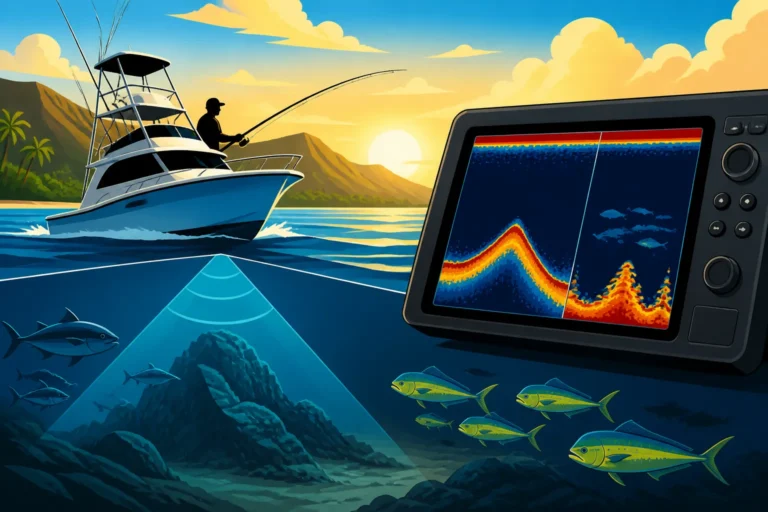
- Sonar Reading: Start by slowly cruising over known bottomfish grounds. Watch your fish finder intently for those tell-tale arches or bait schools gathering around structure. Look for changes in depth, ledges, and pinnacles where opakapaka are likely to congregate. Remember, these fish live deep, so a powerful, high-frequency sonar will be invaluable. You're not just looking for fish; you're looking for the spot where fish are holding tight to the structure.
- Current and Drift: Once you've marked some fish or promising structure, you need to understand the current and wind. This dictates your drift. Ideally, you want to drift over or alongside the structure, not past it too quickly.
- Boat Positioning: This is crucial. Use your boat's engine, and possibly a sea anchor or trolling motor with GPS "spot-lock" capabilities if you have one, to control your drift. The goal is to keep the boat directly over the target zone or to drift slowly enough that your jig remains vertical or near-vertical as it drops and is retrieved. Too fast a drift, and your line will belly out, making it hard to feel bites and work the jig effectively. This is also where understanding factors like How deep bottomfish species live helps you adjust your drop strategy.
The Drop and the Retrieve: Making Your Jig Dance
Once you're positioned, it's time to get that jig down to the fish.
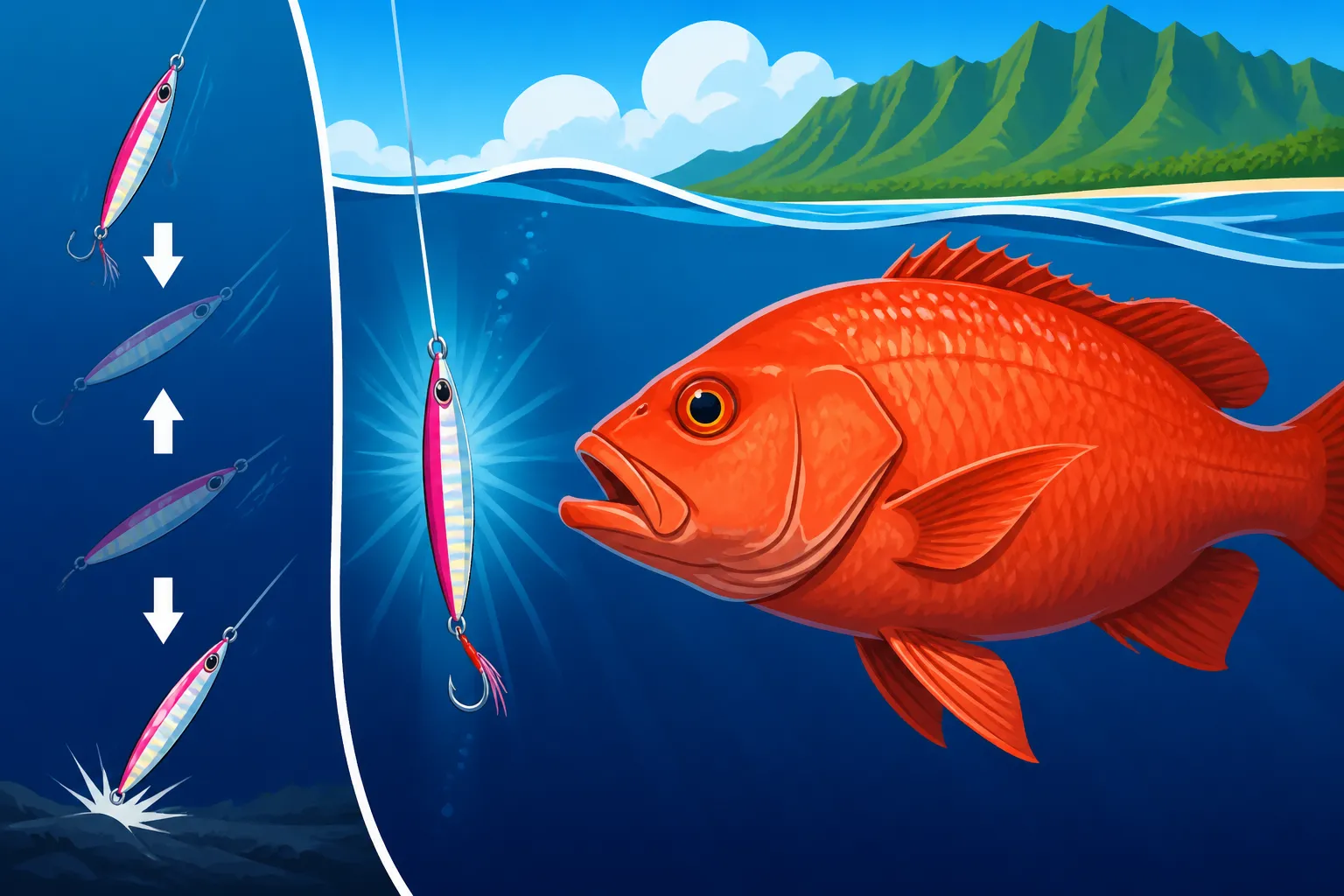
- Controlled Drop: Release your jig, allowing it to freefall towards the bottom. Keep a slight thumb pressure on the spool (if using a conventional reel) to prevent tangles and maintain some control over the descent. You want the jig to drop as vertically as possible. As it approaches the bottom, be ready. Many strikes occur on the initial fall, as the jig mimics a dying baitfish.
- Bottom Contact: As soon as you feel the jig hit the bottom (the line will go slack or you'll feel a thump), engage your reel. Don't let the jig sit on the bottom for long, especially if it’s a rocky area, to avoid snags.
- The Jigging Cadence: This is the "vertical jigging" part. The exact retrieve varies, but a common and effective technique involves a series of sharp lifts of the rod tip, followed by reeling in slack, then allowing the jig to flutter back down a short distance. This creates an erratic, injured baitfish action.
- High-Pitch Jigging: More aggressive. Lift the rod tip sharply and quickly reel in line as you drop the rod, repeating this sequence rapidly. This is great for getting a reaction strike.
- Slow-Pitch Jigging: More subtle. Lift the rod tip gently, perhaps a foot or two, and then allow the jig to slowly flutter back down on a semi-slack line, using minimal retrieves of the reel handle. The rod itself does most of the work, flexing and recoiling. This presentation is often irresistible to opakapaka.
- Depth Control: Work the jig through the strike zone, which is typically from the bottom up to about 50 feet above where you marked fish. If you don’t get a bite, drop it back down and repeat. Remember to periodically check for bottom contact again, as your drift will move you. You might also find other species in these zones; for instance, understanding Best bait for deep drop onaga fishing can inform if you need to switch techniques for a different bottomfish you're marking.
Strike Detection and Fighting the Fish
When an opakapaka hits, it’s usually not a subtle tap in these deep waters.
- Feeling the Bite: You'll often feel a solid thump or a sudden weight on your line. Sometimes, it might just feel like your jig stopped mid-drop. If anything feels unusual, set the hook! The braid's sensitivity will help you detect these deeper bites.
- Setting the Hook: When you feel that strike, give a swift, powerful upward sweep of the rod. Because of the depth and lack of stretch in braid, you don't need a huge theatrical swing, but a firm set is necessary to drive those assist hooks home.
- The Fight: Opakapaka are strong fighters, especially in their initial runs. They'll try to dive back into the structure, so it’s crucial to turn their head quickly. Keep steady pressure on the fish, pumping the rod and reeling down. Don't pump too aggressively, as this can wear out the fish or lead to a pulled hook. Maintain a smooth, consistent retrieve. If you feel the fish surging, ease off the retrieve but maintain pressure with the rod. If you’re fishing an area with current, the fish will feel even heavier, so brace yourself!
Tips for Success and Common Mistakes to Avoid
Vertical jigging for opakapaka can be incredibly rewarding, but it’s a skill that improves with practice. Here are some seasoned tips to increase your success rate and common pitfalls to steer clear of.
Maximize Your Opportunities with Smart Tactics
- Vary Your Presentation: Don't get stuck in a rut with one jigging style. If slow pitch isn't working, try a faster, more aggressive retrieve. Change jig colors or even switch to a different jig shape. Sometimes, a subtle change is all it takes to trigger a bite.
- Target Structure Edges: Opakapaka often hold on the edges of structure, waiting to ambush prey. Focus your efforts on these transition zones. When you mark fish on your sonar, try to drop your jig slightly upstream (with the current) of them, allowing the current to carry the jig right into their strike zone.
- Watch for Bait: Keep an eye on your fish finder for baitfish schools. Where there's bait, there are often predators. If you see clouds of bait near the bottom, that's a great sign that opakapaka are likely in the area.
- Check Your Knots and Leader: Before every trip, and periodically during your fishing day, check your knots (especially the braid-to-fluorocarbon connection) and inspect your leader for any nicks or abrasions from the bottom structure. A weakened leader is a recipe for heartbreak. You might want to review Hawaii Fishing Regulations Explained for general rules, and specifically Hawaii Bag and Size Limits by Species to ensure your catch is legal to keep.
Common Mistakes That Can Cost You Fish
- Not Staying Vertical Enough: Allowing your line to belly out too much due to fast drift or not enough jig weight is a common mistake. This makes it incredibly difficult to feel bites and impart proper action to your jig. Always strive for a vertical line.
- Fishing Too Shallow: Opakapaka are deep-water fish. While you might catch smaller bottomfish shallower, for opakapaka, you need to commit to those deeper zones, generally 200 feet and beyond.
- Ignoring Your Electronics: Your fish finder isn't just for decoration. Learn to interpret what it's telling you about structure, bait, and fish presence. Too many anglers blindly drop jigs without confirming fish are even there.
- Using Underpowered Gear: Trying to use a medium-heavy snapper rod for deep-water opakapaka will often lead to broken gear or lost fish. The right tools are essential for this specialized fishery.
- Not Knowing When to Move: If you've made several drifts over a promising spot and haven't had a bite, don't be afraid to move on. Sometimes the fish just aren't active, or they've moved off the structure. Covering ground and finding active fish is often more effective than stubbornly sticking to a dead spot.
Here's a quick table to help you think about jig selection for various conditions:
| Depth Range (feet) | Current | Recommended Jig Weight (grams) | Jig Type Examples | Common Approach |
|---|---|---|---|---|
| 150-300 | Light | 150-250 | Slow Pitch, Leaf Jigs | Subtle lifts, long pauses |
| 150-300 | Moderate | 200-350 | Knife Jigs, Asymmetrical | Medium pitch, varied retrieve |
| 300-500 | Light | 250-400 | Slow Pitch, High Pitch | Deeper water, slower cadence |
| 300-500 | Moderate | 300-500+ | Slim Knife Jigs, Heavy Metal | Aggressive rips, fast drops |
| 500+ | Any | 400-600+ | Very Heavy Knife Jigs | Minimal action, focus on drop |
Vertical jigging for opakapaka is a dynamic and thrilling way to experience Hawaii fishing. It’s a technique that rewards precision, patience, and the right gear. By understanding the fish, mastering your equipment, and employing strategic drops and retrieves, you'll be well on your way to adding these beautiful pink snapper to your cooler. Whether you’re heading out with a Best Bottomfishing Charters in Hawaii or trying your luck on your own, these techniques will give you a significant advantage. Don't forget, if you're looking to book a guided trip, consider reading How to Choose a Hawaii Fishing Charter and researching Best charters for bottomfishing opakapaka and onaga for specialized expertise. The deep waters of Hawaii hold incredible treasures, and with vertical jigging, you have a powerful key to unlock them.
Disclaimer
This article is for general informational purposes only and does not constitute professional advice. Laws, prices and regulations vary by location and change over time. Consult a qualified professional for guidance on your specific situation.