Best time to fish for bonefish on the flats
Oh, the bonefish! If you've ever spent time stalking the shallow flats of Hawaii, you know the immense joy and, let's be honest, sometimes soul-crushing frustration that comes with targeting these incredible fish. Their nickname, "ghost of the flats," isn't just for show – they're masters of camouflage and can vanish in a blink. This guide is all about helping you crack the code, specifically focusing on the absolute best times and conditions to fish for bonefish on the flats here in Hawaii, giving you a real edge in your pursuit.
Understanding Bonefish Behavior and Hawaiian Flats
To consistently hook into bonefish, or oio as they're known in Hawaiian, you first have to get into their heads a little bit. These aren't your typical aggressive predators; they're subtle, wary, and highly attuned to their environment. Understanding what makes them tick and what constitutes a prime feeding ground is your first step toward success.
The Elusive "Ghost of the Flats"
Bonefish truly earn their moniker, "ghost of the flats." They possess an uncanny ability to blend seamlessly into their surroundings, disappearing against sandy bottoms, coral rubble, or patches of seagrass with almost no effort. You can be scanning a flat, eyes peeled, and suddenly a shadow will move, or a tail will flash, and just as quickly, they're gone. It's a frustrating dance many anglers know all too well – spotting them one moment, only for them to vanish the next, leaving you wondering if you even saw anything at all. This incredible camouflage is their primary defense mechanism, making them one of the most challenging shallow-water game fish to spot and approach.
Their diet primarily consists of crustaceans like crabs and shrimp, as well as various worms and small baitfish that they root out from the bottom. This feeding habit means they spend a lot of time with their heads down, tails up, "tailing" in the shallows as they dig for a meal. This "tailing" behavior is often your best bet for spotting them, especially when the light is low or the water is choppy. However, even when tailing, they're constantly on alert, ready to bolt at the slightest disturbance. A heavy step, a dropped item, or even a sudden shadow can send an entire school scattering, leaving nothing but a puff of mud and a lingering sense of missed opportunity.
Characteristics of Productive Hawaiian Flats
Not all shallow-water areas are created equal when it comes to bonefishing. Hawaii's diverse coastline offers a variety of flats, but the most productive ones share common characteristics that make them irresistible to bonefish. These are the zones where their preferred food sources thrive and where they feel relatively safe while feeding. Think of it as their favorite restaurant with a built-in escape route.
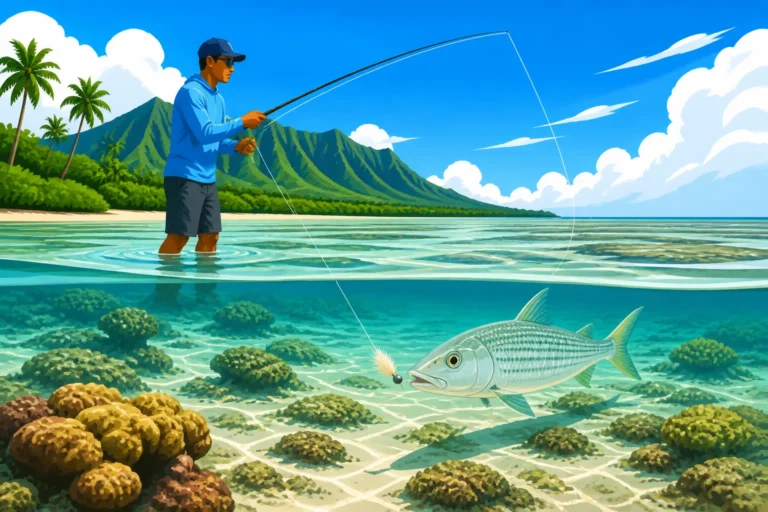
The ideal Hawaiian bonefish flat is typically a expansive area of shallow water, often ranging from ankle-deep to waist-deep, characterized by a mix of sandy patches, coral rubble, and sparse seagrass beds. The substrate itself is important; bonefish love to dig, so flats with a softer, muddier bottom where invertebrates burrow are often hotspots. However, they also frequent harder sand and broken coral areas, especially when hunting for small crabs. Good examples of these types of flats can be found in places like Keehi Lagoon Bonefishing and around Sand Island Bonefishing on Oahu, where tidal movements regularly flush new food onto the expansive shallows.
What truly makes a flat "productive" is its access to deeper water and strong tidal flow. Bonefish will move onto the flats with the incoming tide to feed, using the rising water as cover and to access areas that were previously dry or too shallow. As the tide recedes, they'll often drop back into nearby channels, deeper pockets, or the safety of the reef edge. Understanding these movements is key. A flat that's too isolated from deeper water, or one without distinct channels and edges, might hold some fish but won't likely be a consistent producer of large schools or trophy-sized individuals.
Optimal Tidal Conditions for Bonefishing
If there's one golden rule in bonefishing, it's that moving water is your best friend. Tides dictate everything from where the fish are to how actively they're feeding. Ignoring the tides is like trying to find a party before the guests have even arrived – you might get lucky, but you're probably going to miss out on the best action.
The Importance of Moving Water
Bonefish, like many shallow-water species, are incredibly responsive to tidal currents. The incoming and outgoing tides act as nature's conveyor belt, bringing in fresh food and carrying away detritus. When the water is moving, it stirs up the bottom, exposing worms, crabs, and shrimp that bonefish eagerly devour. It's during these periods that their metabolism kicks into high gear, and they become far more active and less wary. Trying to fish a slack tide, particularly during the high slack, can be incredibly frustrating. You know that feeling when the water just stops moving, everything feels still, and the fish seem to vanish? So do the fish. They often retreat to deeper, cooler water or simply become lethargic and much harder to entice.
For shore-based anglers, understanding the ebb and flow is even more critical. An incoming tide often pushes bonefish closer to shore, allowing access to flats that were previously too shallow or exposed. Conversely, as the tide begins to drop, fish might gather along the edges of channels or deeper depressions before retreating completely. This predictable movement allows you to position yourself strategically, minimizing unnecessary wading and maximizing your time in prime feeding zones. A good pair of polarized sunglasses, which you can easily find on Amazon, becomes an indispensable tool for spotting these subtle movements and shadows.
Best Tide Stages for Sight Fishing
While any moving water is generally good, certain tide stages are undeniably superior for sight fishing bonefish on Hawaii's flats. This is where precision in your planning really pays off.
-
Low Incoming Tide: This is often considered the holy grail for bonefishing. As the tide just begins to push water over the shallowest parts of the flat, bonefish will follow, eager to be among the first to access newly covered feeding grounds. The water clarity is usually excellent at this stage, and the fish are often aggressive, actively tailing with their heads down. This is when you can spot individual fish or small groups pushing onto the flat, making for exciting sight-casting opportunities. You might catch them in mere inches of water, giving you an adrenaline rush as they spool off line in the shallows.
-
Mid-Tide (Both Incoming and Outgoing): This period offers a slightly different dynamic. With more water on the flats, the fish have greater freedom of movement and can spread out. This means they might be harder to concentrate in one area, but you're also less likely to spook them as they have more water to swim in. During the mid-incoming, fish are still actively feeding, but they might be cruising more than tailing. On a mid-outgoing tide, they'll often move from the interior of the flat towards its deeper edges and channels, creating another excellent opportunity for intercepts. The trick here is to look for schools or individuals along current seams or defined edges where food might be concentrating.
-
High Outgoing Tide (First Hour or Two): As the tide begins its full retreat, especially after a particularly high tide, bonefish will start to funnel off the flats. This can be a fantastic time to target them, as they become concentrated in fewer, deeper areas before heading back to their deeper-water refuges. Look for them along the edges of channels, in depressions, or cruising just off the lip of the flat. The challenge here can be water clarity if the fish have been stirring up the bottom, but the predictability of their movement often outweighs this. Knowing How to Wade a Reef Flat Safely in Hawaii is crucial during these times, as changing depths can present hazards.
Reading the tide charts can feel a bit like cracking a secret code at first, especially with Hawaii's unique tidal patterns. But with practice, you'll start to recognize the patterns that consistently produce fish in your chosen locations. Websites and apps like Tides Near Me or local fishing forums are invaluable resources for this.
Seasonal and Daily Considerations for Success
While tides are paramount, the time of year and even the time of day can significantly influence your bonefishing success. Hawaii's relatively stable climate offers year-round opportunities, but certain periods can be more productive due to subtle shifts in conditions.
Seasonal Sweet Spots in Hawaii
Unlike some mainland fisheries that have distinct "seasons" for bonefish, Hawaii generally offers excellent bonefishing opportunities year-round. Our water temperatures remain relatively consistent, rarely dipping to levels that would send bonefish completely offshore or into a deep slumber. This is fantastic news for both residents and visitors, as it means you don't necessarily have to plan your trip around a small window of opportunity. Whether you're here in January or July, the oio are likely to be on the flats, if conditions are right.
However, there are subtle differences. During the warmer summer months (roughly May to October), the water on the flats can heat up more, especially during midday low tides. This can make bonefish a bit more lethargic or push them into slightly deeper channels for cooler water. Conversely, the cooler, but still mild, winter months (November to April) might see them more actively feeding on the flats throughout the day, as the water temperature is more consistently comfortable. This is also when we tend to see larger swells on the north shores, which can indirectly affect flats fishing on more protected, south-facing coasts by shifting baitfish patterns. For a broader understanding of how the year unfolds, check out a comprehensive guide like Hawaii Fishing Seasons by Month.
Another factor to consider is the trade winds. Hawaii's prevailing easterly trade winds are usually a blessing, offering consistent breezes that can ripple the water's surface, making it harder for fish to spot you and easier for you to approach. However, during periods of "kona winds" (southerly or westerly winds), conditions can become very calm and hot, making the fish incredibly spooky and difficult to sight-cast to. Rain, while less common on some leeward coasts, can also temporarily affect water clarity on the flats, pushing fish out until the sediment settles.
Best Time of Day: Sun, Wind, and Visibility
Beyond the tides, the daily dance of the sun and wind plays a huge role in successful bonefishing. Sight fishing is, by its very nature, dependent on being able to see the fish.
-
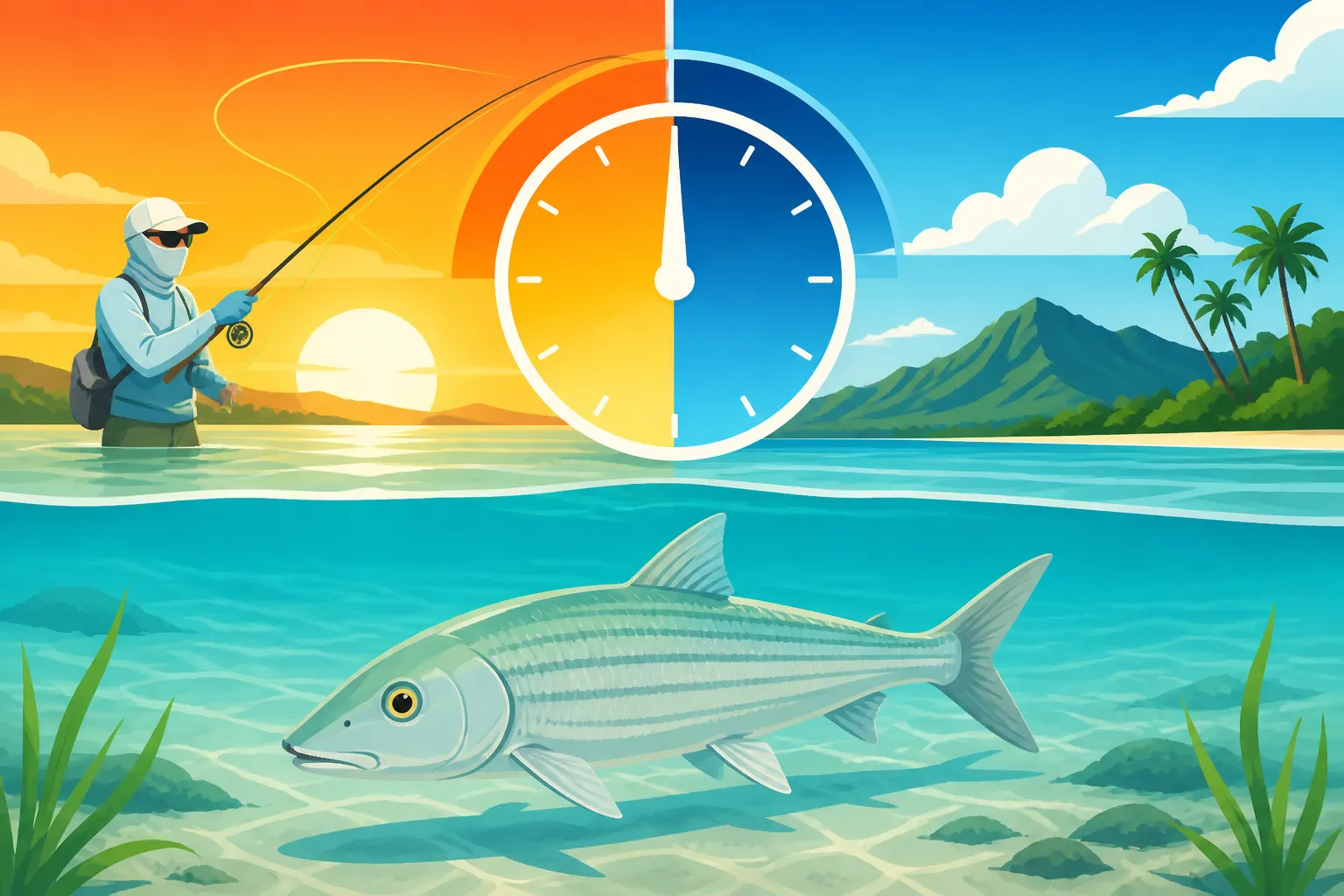
Dawn and Dusk: The Golden Hours for Aggressive Feeding: The early morning, just as the sun is rising, and the late afternoon, as it begins to dip towards the horizon, are often the most productive times of day. During these "golden hours," the light is softer, creating fewer harsh shadows, and the ambient temperature is cooler. Bonefish often become more aggressive and less wary, feeling safer under the subdued light. This is when you'll frequently see them tailing enthusiastically or cruising the edges of the flats with confidence. The challenge can be glare right at sunrise or sunset, making polarized sunglasses crucial.
-
Midday: The Visibility Sweet Spot (with caveats): Midday fishing, between roughly 9 AM and 3 PM, offers the advantage of direct overhead sunlight. This strong, high-angle light penetrates the water more effectively, making it easier to spot bonefish, especially if you're looking for subtle movements or flashes. This is particularly true if you're standing on a boat or a higher vantage point. However, midday can also mean higher air temperatures, stronger sun beating down, and potentially spookier fish if the water is dead calm. If there's a light chop on the water from a gentle trade wind, midday can be fantastic for spotting, as the chop breaks up your silhouette and the fish's outline. Without that chop, the fish can be incredibly sensitive to movement.
The wind's role cannot be overstated. A light, consistent breeze, ideally coming from over your shoulder, is a bonefisher's best friend. It creates a slight chop on the water, which helps mask your approach and makes it harder for the fish to see you. It also aids in casting, helping to carry your fly or lure to the target. Too much wind, however, can be detrimental. It makes spotting fish nearly impossible due to excessive surface chop and can turn casting into a wrestling match. On those super windy days, you might be better off exploring Best Rocky Point Fishing Spots in Hawaii rather than the exposed flats.
Other Factors Influencing Bonefish Activity
While tides, seasons, and daily conditions are major players, there are a few other nuanced factors that can tip the scales between a good day and a truly unforgettable one on the flats. Paying attention to these subtle cues can make all the difference.
Moon Phases and Their Influence
Just like many other saltwater species, bonefish activity is subtly influenced by the moon phases, primarily because the moon directly impacts tidal strength. Stronger tides mean more water movement, and as we've discussed, moving water is good.
-
New Moon and Full Moon (Spring Tides): These are often the most productive times for bonefishing. During the new moon and full moon phases, the gravitational pull of the sun and moon combine to create "spring tides" – meaning higher high tides and lower low tides. This translates to stronger currents and a greater volume of water moving on and off the flats. Bonefish will actively push onto the flats with these powerful tides, often in larger numbers and with more voracious appetites, as the stronger currents dislodge more food. They have a wider window to access previously unreachable feeding areas during the peak of these tides.
-
First Quarter and Last Quarter (Neap Tides): Conversely, during the first and last quarter moon phases, the sun and moon are at right angles to each other, creating "neap tides." These are characterized by weaker tidal currents and less extreme high and low tides. While you can still catch bonefish during neap tides, the fishing can be more challenging. With less water movement, fish might be less active, more spread out, and perhaps a bit more cautious. They also have a narrower window to feed on the highest parts of the flats. It's not that you can't catch them, but you'll likely have to work harder, and the peak feeding windows might be shorter.
Many experienced bonefish guides will factor moon phases into their booking recommendations, aiming for those spring tide periods to maximize client success. However, local knowledge of how specific flats react to different moon phases is invaluable, as some areas might fish better on particular tides regardless of the moon.
Water Clarity and Temperature
These two environmental factors are paramount for successful bonefishing, especially when sight fishing is your primary technique. If either one is off, your chances diminish significantly.
-
Crystal Clear Water: The Sight Fisherman's Dream: For sight fishing, water clarity is non-negotiable. You absolutely need to be able to spot those subtle movements, flashes, and tailing fish from a distance to make an accurate cast without spooking them. Hawaii is blessed with generally clear, pristine waters, which is a major advantage. However, heavy rains can wash sediment and debris from land into nearshore areas, temporarily clouding the flats. Similarly, strong winds or large swells can stir up the bottom, reducing visibility. If the water looks murky, your chances of sight fishing effectively plummet, and you might consider switching to blind casting in deeper channels or waiting for the water to clear. Always check local conditions before heading out; recent rainfall or unusual wave activity could mean a less-than-ideal day on the flats.
-
Ideal Temperature Ranges for Bonefish Activity: While Hawaii's water temperatures are fairly stable, bonefish do have preferred ranges. They are warm-water species, and generally thrive in temperatures between 75°F and 85°F (24°C to 29°C). Within this range, they are typically active and feed aggressively. If the water gets too cold (below 70°F), which is rare in Hawaii but can happen in exceptionally cold snaps or specific deep pockets, bonefish can become sluggish and retreat to deeper, more stable temperatures. Conversely, if the water on very shallow flats gets too hot (above 88-90°F) during a calm, sunny midday low tide, they can also become stressed and less likely to feed actively. Monitoring local water temperatures, often available through marine weather apps or surf reports, can give you an extra edge in predicting their behavior. Remember, a comfortable water temperature for you to wade in is often a comfortable temperature for the bonefish, too!
Putting all these pieces together is like solving a puzzle, and it's what makes bonefishing so incredibly rewarding when it all clicks into place. A good hat and sun protective clothing are essential additions to your gear, easily found on Amazon.
Here's a quick summary table of ideal bonefishing conditions:
| Factor | Ideal Condition | Why It Matters |
|---|---|---|
| Tide Stage | Low Incoming, First 1-2 hours of High Outgoing | Fish push onto flats to feed, or funnel off into channels, concentrating activity. |
| Water Movement | Strong, consistent current | Carries food, stirs bottom, increases fish metabolism and activity. |
| Moon Phase | New Moon or Full Moon (Spring Tides) | Strongest tides, maximizing feeding opportunities and fish access to flats. |
| Time of Day | Early Morning (Dawn), Late Afternoon (Dusk) | Softer light, cooler temperatures, more aggressive and less wary fish. |
| Sun Angle | Overhead (midday) or Low (dawn/dusk) | Overhead sun penetrates water for spotting; low sun creates less glare (polarized). |
| Wind | Light to Moderate Breeze (over shoulder) | Chops surface, masks angler, aids casting, but too much hinders spotting. |
| Water Clarity | Crystal Clear | Essential for sight fishing; allows you to spot subtle movements. |
| Water Temperature | 75°F – 85°F (24°C – 29°C) | Optimal metabolic rate for active feeding and comfortable fish. |
| Bottom Type | Mix of Sand, Rubble, Sparse Seagrass | Offers diverse food sources and camouflage. |
Disclaimer
Please note: Fishing regulations, including licensing requirements, bag limits, and protected areas, can change. Always check the latest Hawaii Division of Aquatic Resources (DAR) regulations before heading out. This guide is for informational purposes only and does not supersede official regulations.